
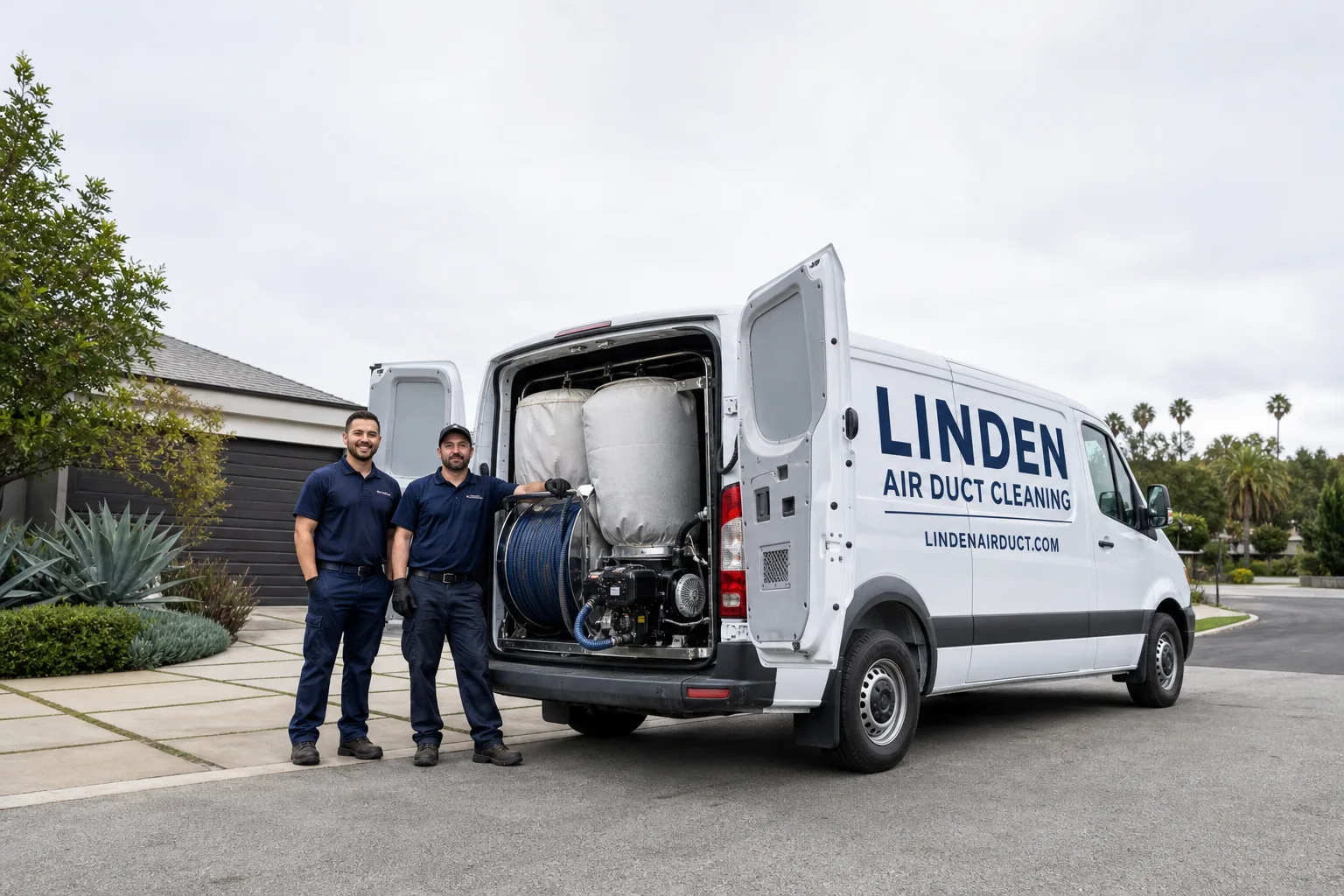
Whole-system duct and dryer vent check with before-and-after photos - you see exactly what came out of your vents
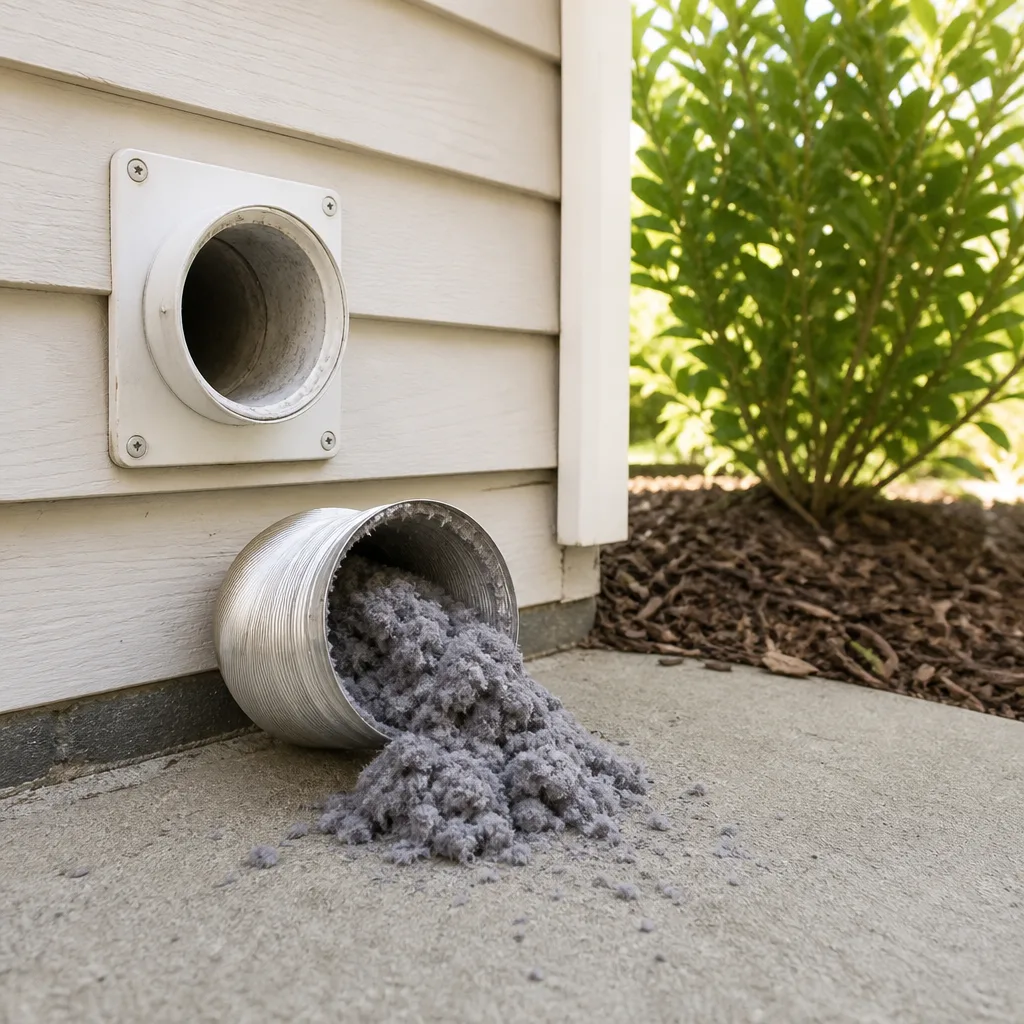
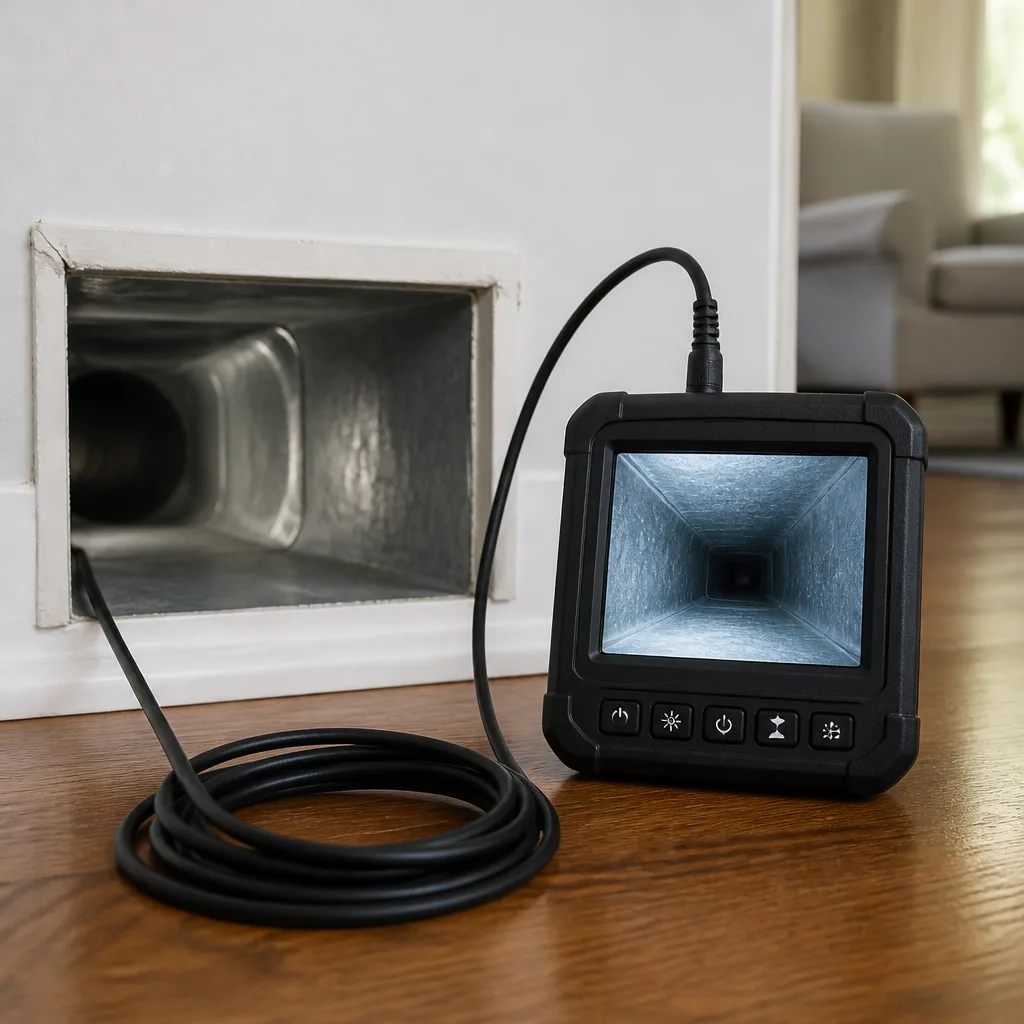
That "$99 whole-house special" is a bait ad - the real number appears once they are in your hallway, or the "clean" is a shop-vac at the register. We photograph the inside of your ducts before and after instead.
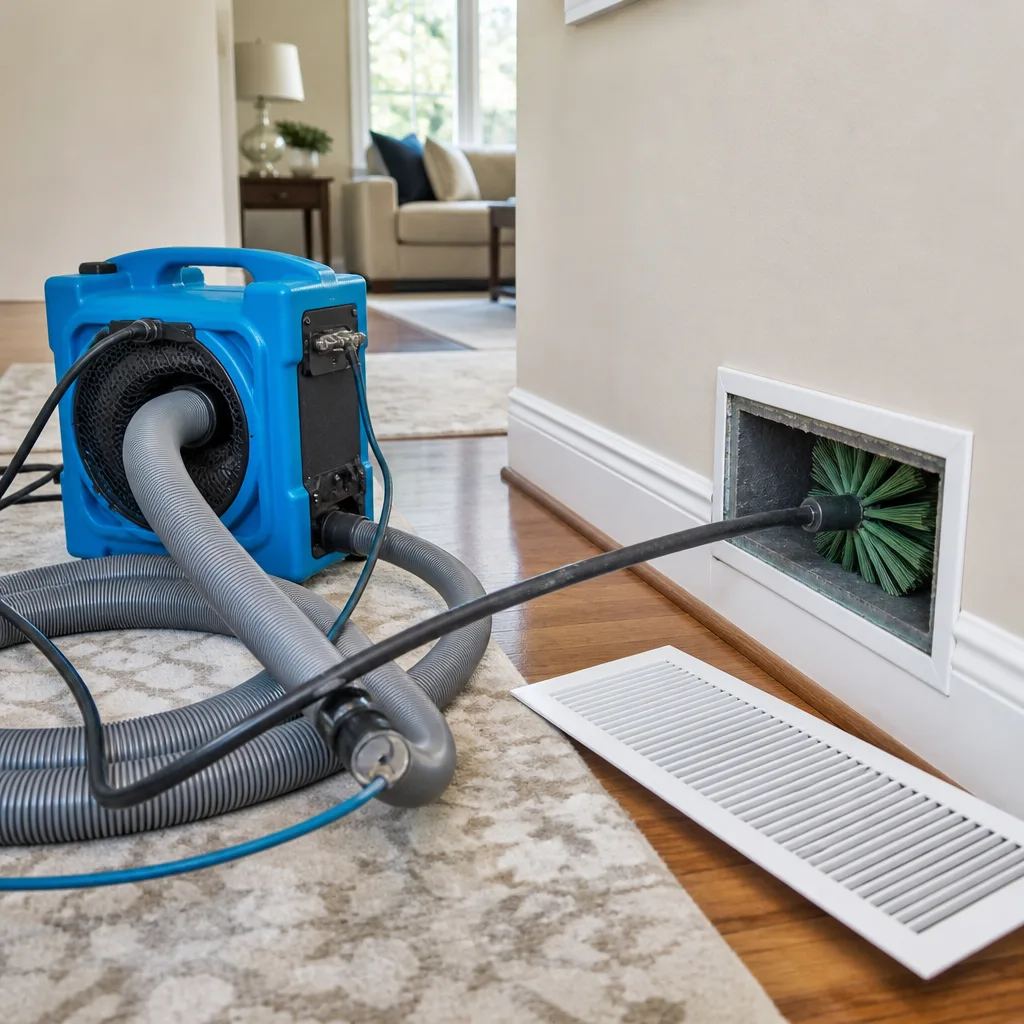
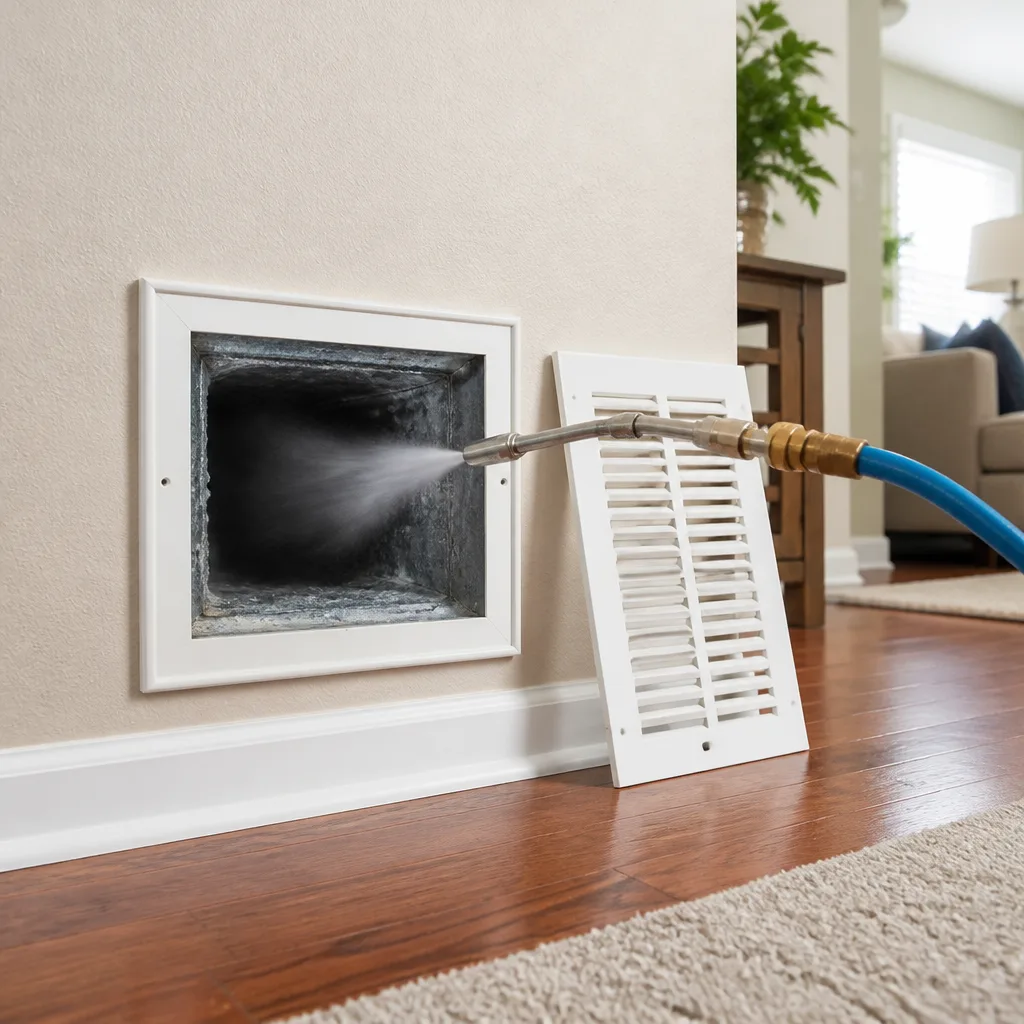
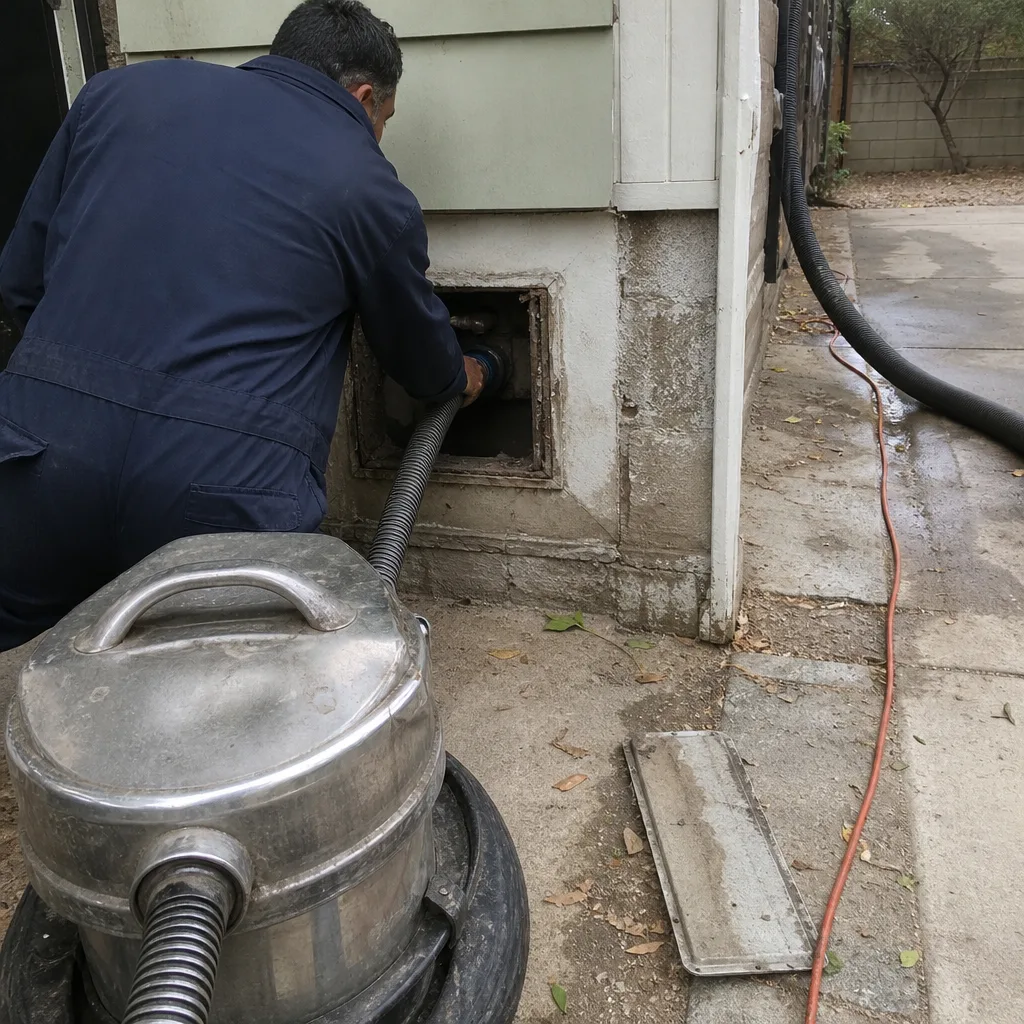 Before
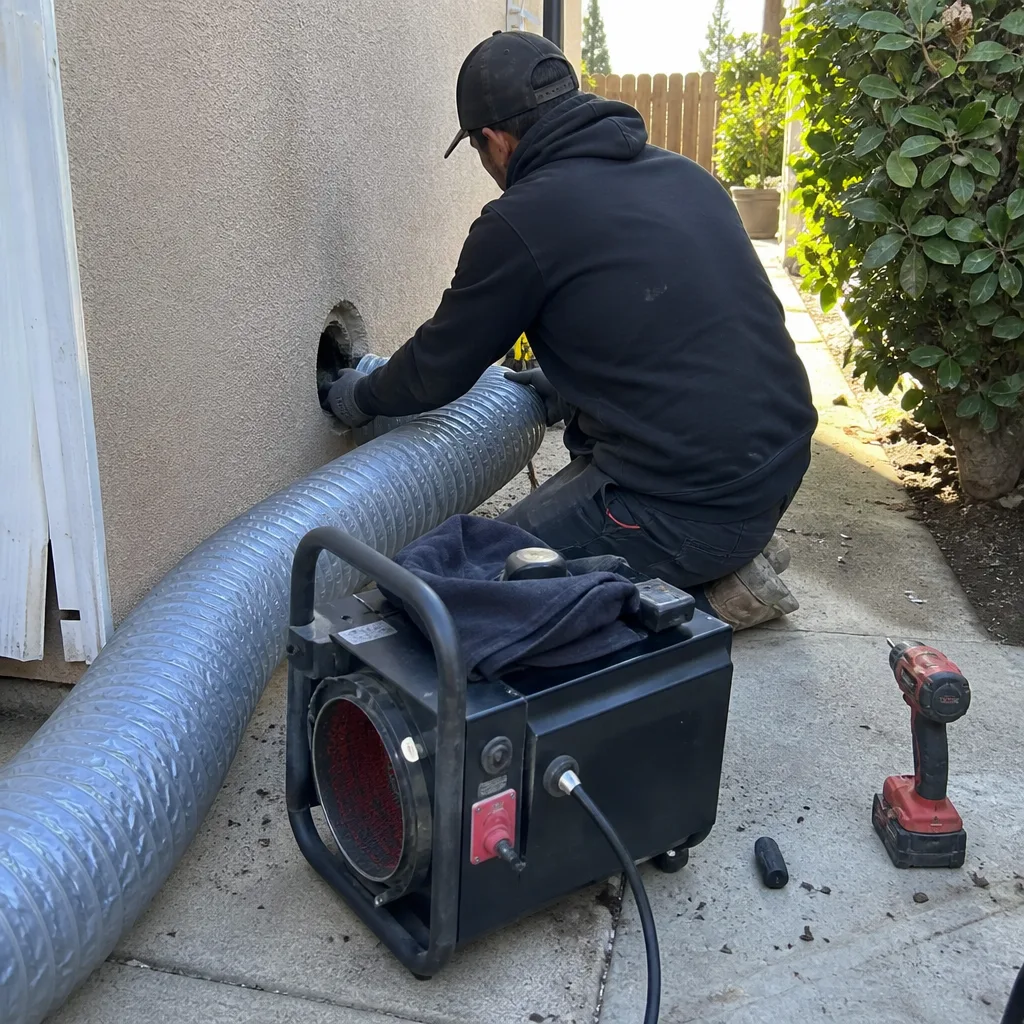 After
After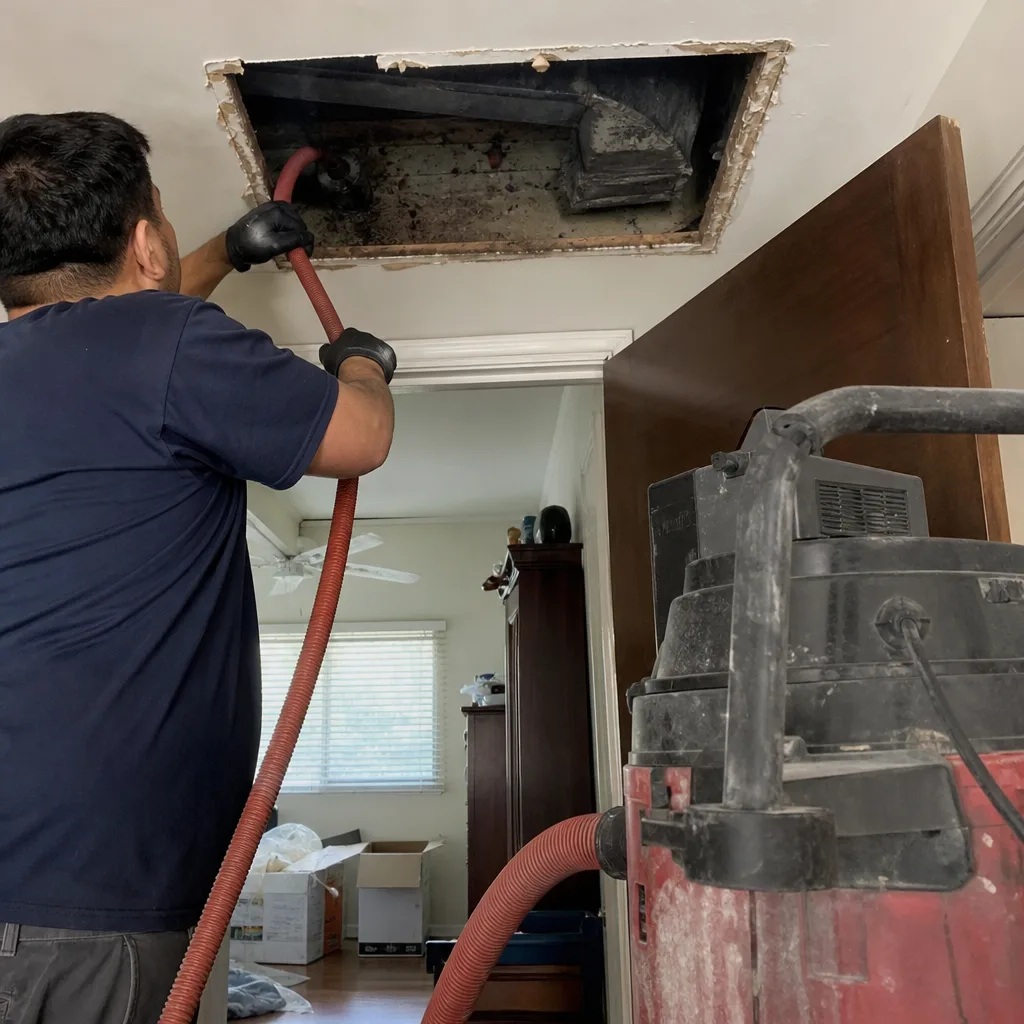 Before
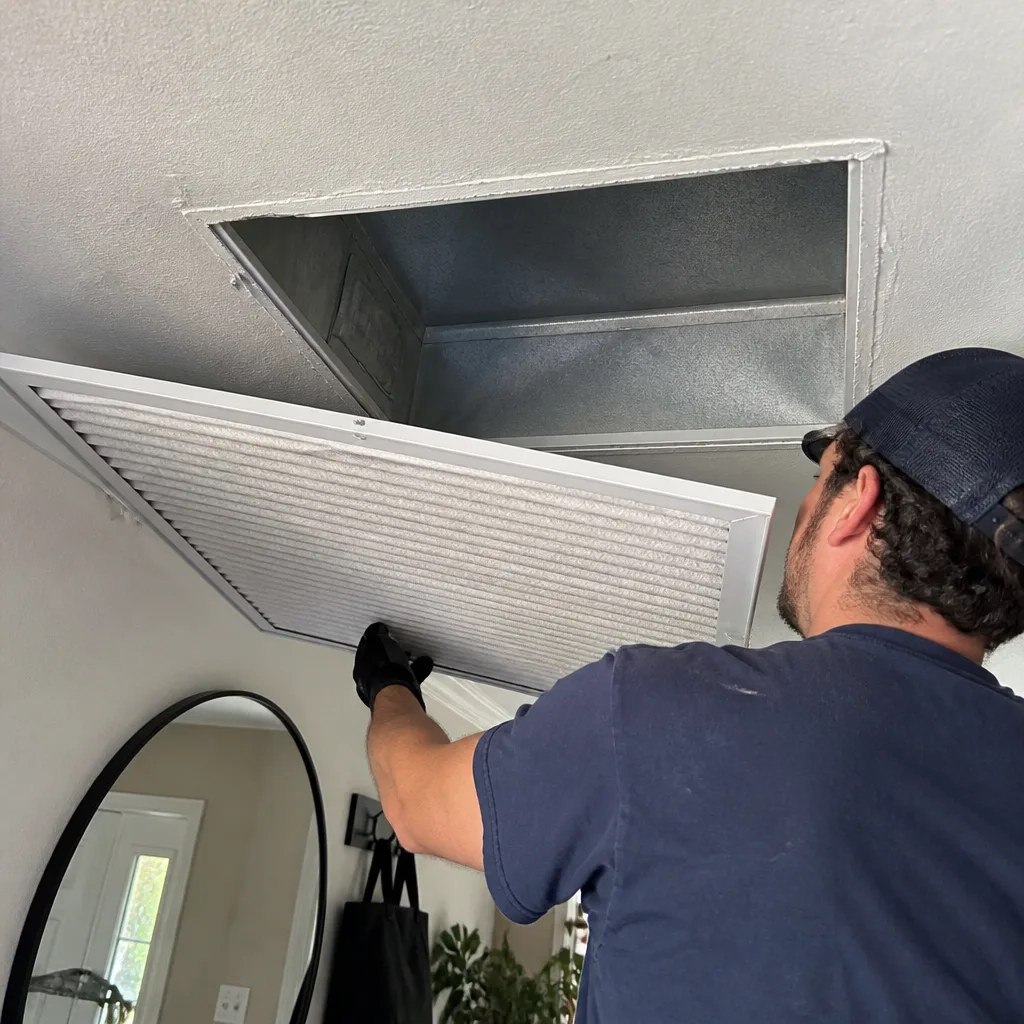 After
After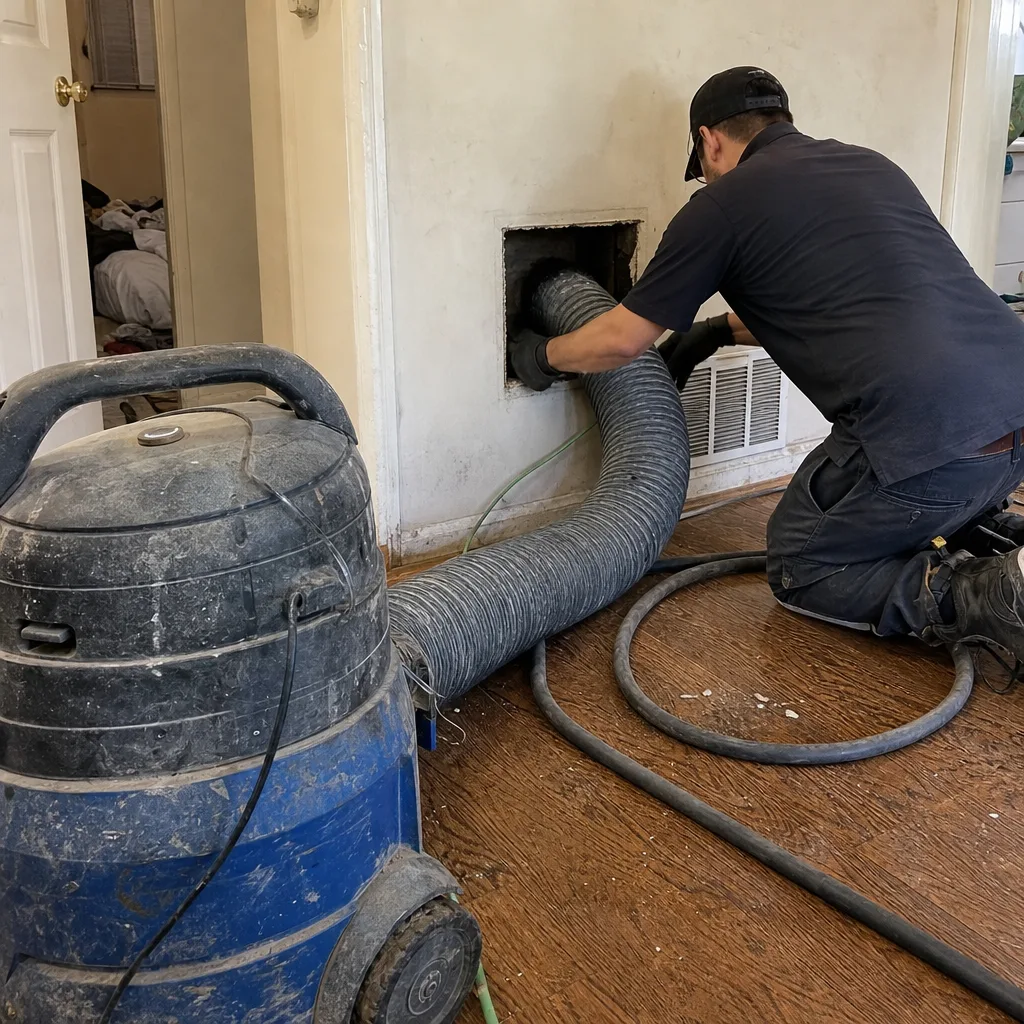 Before
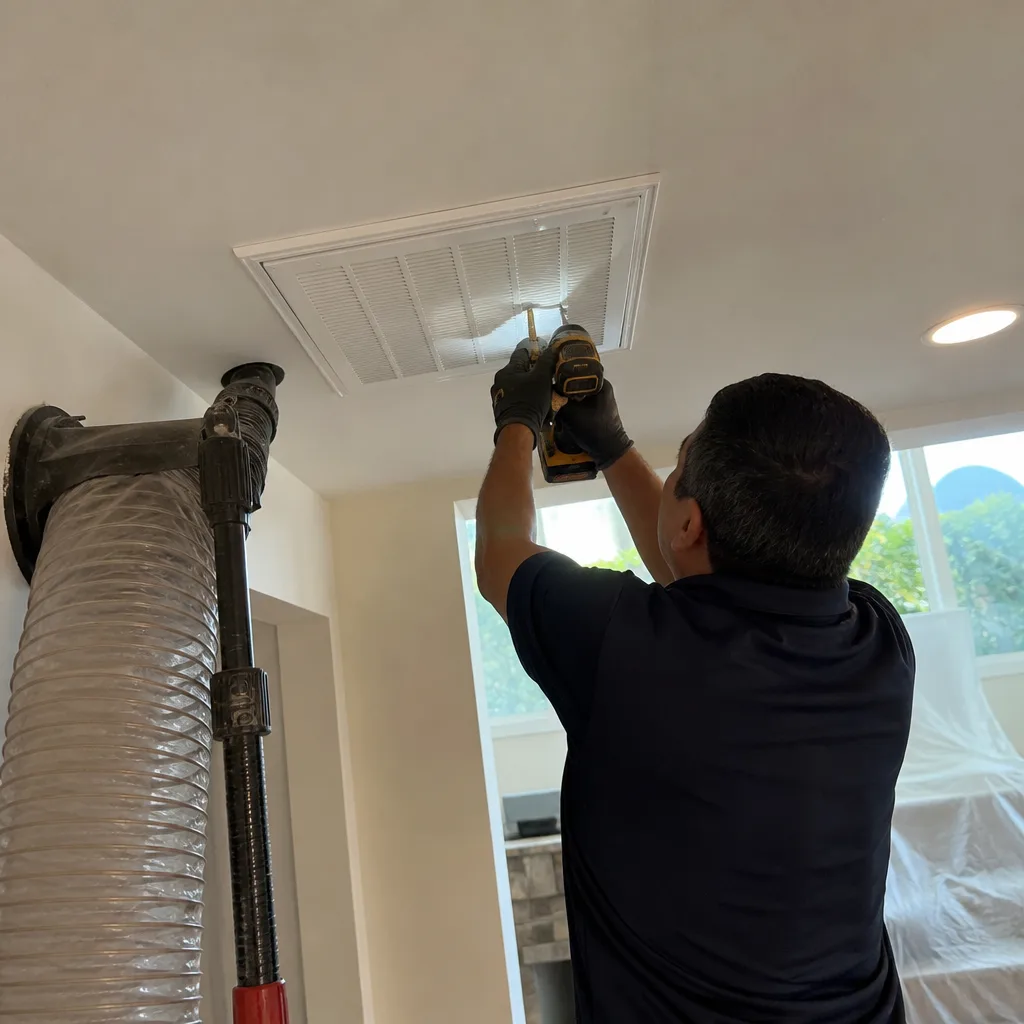 After
AfterBurning Smell When the Dryer Runs
A burning smell coming from your dryer is almost always a lint blockage somewhere in the exhaust path – the vent hose, the exterior duct, or the wall run between them. Lint is combustible, and when it builds up enough to restrict airflow, heat from the dryer has nowhere to go. The smell is the lint beginning to scorch. This is not a situation to run another load through and see what happens.
Most homeowners assume the smell means a mechanical problem inside the dryer itself – a belt, a motor, something electrical. That is possible, but it is not where to start. The far more common cause is a dryer vent system that simply has not been cleaned in too long. Restricted airflow forces the heating element to work harder, temperatures inside the drum climb well past normal, and lint that has collected anywhere along the duct line starts to cook. The fix is usually a thorough dryer vent cleaning, not an appliance repair call.
Why It Happens
Lint accumulation in the vent duct
This is the cause in the majority of cases. Over months and years, lint that slips past the lint trap works its way into the flexible vent hose and the rigid duct sections beyond it. The buildup gradually narrows the exhaust opening. You might notice clothes taking longer than one cycle to dry fully, the dryer feeling hot to the touch on the outside, or the laundry room itself getting warmer than usual during a cycle. Any of those alongside a burning smell is a strong indicator that the duct is clogged.
A kinked or crushed flexible vent hose
The short accordion-style hose that connects your dryer to the wall fitting can kink if the dryer gets pushed back too close to the wall. A kink traps lint at the bend, restricts airflow sharply, and creates a hot spot. Pull the dryer forward a foot or two and look behind it. If the hose has a sharp bend or is visibly compressed, that is likely contributing. Foil or plastic flexible hose also degrades over time and can partially collapse from the inside, which you would not be able to see without removing it.
Lint trapped at the exterior vent cap
The vent cap on the outside of your home – usually a louvered or flap-style fitting – can accumulate enough lint to restrict the flaps from opening fully. Birds sometimes nest in them too, which blocks exhaust completely. Go outside when the dryer is running and check whether air is moving out of the cap. If you feel little to no airflow, or if the cap is visibly packed with gray lint, that obstruction is forcing heat back into the duct line.
A worn or failing drive belt inside the dryer
If the smell is more of a sharp rubber or electrical odor rather than a hot, dusty burning smell, and you hear a squealing or thumping sound during the cycle, the problem may be inside the appliance itself – a drive belt starting to slip or a motor bearing wearing out. This is a different smell from scorching lint and usually comes with noise. If you suspect an internal mechanical issue, stop using the dryer and contact an appliance repair technician. Our scope is the vent system; we will tell you plainly if what we find points elsewhere.
What to Do Right Now
- Stop running the dryer. Do not start another load until the cause is identified. A burning smell during operation is the warning you get before a dryer vent fire – take it seriously and pause use now.
- Check and clean the lint trap. Pull it out, clear all lint, and look into the trap housing with a flashlight. A clogged trap housing can restrict airflow on its own and is safe to check yourself.
- Look at the flexible hose behind the dryer. Gently pull the dryer forward and inspect the hose for kinks, crushing, or any visible lint packed at the connection points. Do not pull on the hose forcefully if it is still attached at both ends – just look.
- Go outside and check the vent cap. With the dryer off, look at the exterior exhaust cap for visible lint blockage or anything nesting inside it. Note what you see – a photo is helpful when you describe the situation over the phone.
- Do not reach into the duct with a vacuum and assume the job is done. A household vacuum and a dryer vent brush from the hardware store can clear a few inches of the hose, but they cannot clean the full duct run, especially through bends or long wall sections. Incomplete cleaning leaves the bulk of the blockage in place.
How We Fix It
When your local Linden Air Duct Cleaning team arrives, the technician starts with a visual inspection of the entire exhaust path – the hose behind the dryer, the wall entry fitting, the duct run inside the wall or ceiling, and the exterior cap. Before any work starts, you receive a written price. That number does not change when the job is done. No surprises.
The cleaning itself uses professional-grade equipment, including Rotobrush and Nikro systems, designed specifically for dryer vent lines. The technician clears the full length of the duct, removes compacted lint at bends and junctions, clears the exterior cap, and verifies that airflow is restored before packing up. If the inspection turns up a damaged section of duct – a gap in a seam, a disconnected joint inside the wall, or a section of hose that needs replacing – that falls under our air duct repair service, and any repair comes with a written guarantee. If a covered repair does not hold, we come back at no charge. The cleaning itself typically takes under an hour, though longer or more complex duct runs take more time. Marcus and the team will give you a realistic timeframe when they see the setup.
Frequently Asked Questions
It is genuinely dangerous and should not wait. Dryer vent fires are a real and documented hazard, and a burning smell is the system telling you the conditions for one are present. The right move is to stop using the dryer now and get the vent inspected before the next load. Call us at (980) 447-2498 – a real person picks up around the clock, and we will help you figure out the next step.
Yes, that does happen. A sock or small garment caught against the heating element or exhaust opening will create a burning smell quickly, and it is worth checking before you call anyone. But if you look behind and around the dryer and find nothing obvious, do not assume it was nothing – go back to the vent duct as the more likely culprit.
Scheduling depends on your location and what the day looks like for your local Linden team. The best way to find out is to call (980) 447-2498 right now – someone picks up every time, at any hour, and they will tell you honestly what the earliest available appointment looks like. We do not hold slots open for fake urgency, but we do take a burning smell seriously and will do what we can.
We do not post flat prices here because the scope varies – duct length, number of bends, accessibility, and whether any repair work turns out to be needed all affect the price. What we can tell you is that you will receive a written price before any work begins, every time, with no obligation to proceed if it does not work for you. Call (980) 447-2498 and your local team will walk you through what to expect.
Get It Fixed
A burning dryer smell is not a “keep an eye on it” situation. Call (980) 447-2498 now – a live person answers around the clock – or book online. Your local Linden Air Duct Cleaning team will inspect the full vent line, give you a written price before touching anything, and get your dryer running safely again.
Written by Marcus Veale, Owner at Linden Air Duct Cleaning, part of the Threshold Group family since 2004.
What Our Customers Say
"Priced by the system, not by the vent, and he told me up front. No pressure to add the sanitizer and I said no without any fuss."
- Faith N."We had construction dust packed into every register after a remodel. They sealed off the returns, used negative pressure, and left the floors cleaner than they found them."
- Paul E."I liked that I knew who was coming in. Name and photo texted ahead, badge at the door. He was quiet, careful with the furniture, and thorough."
- Cheryl A.