
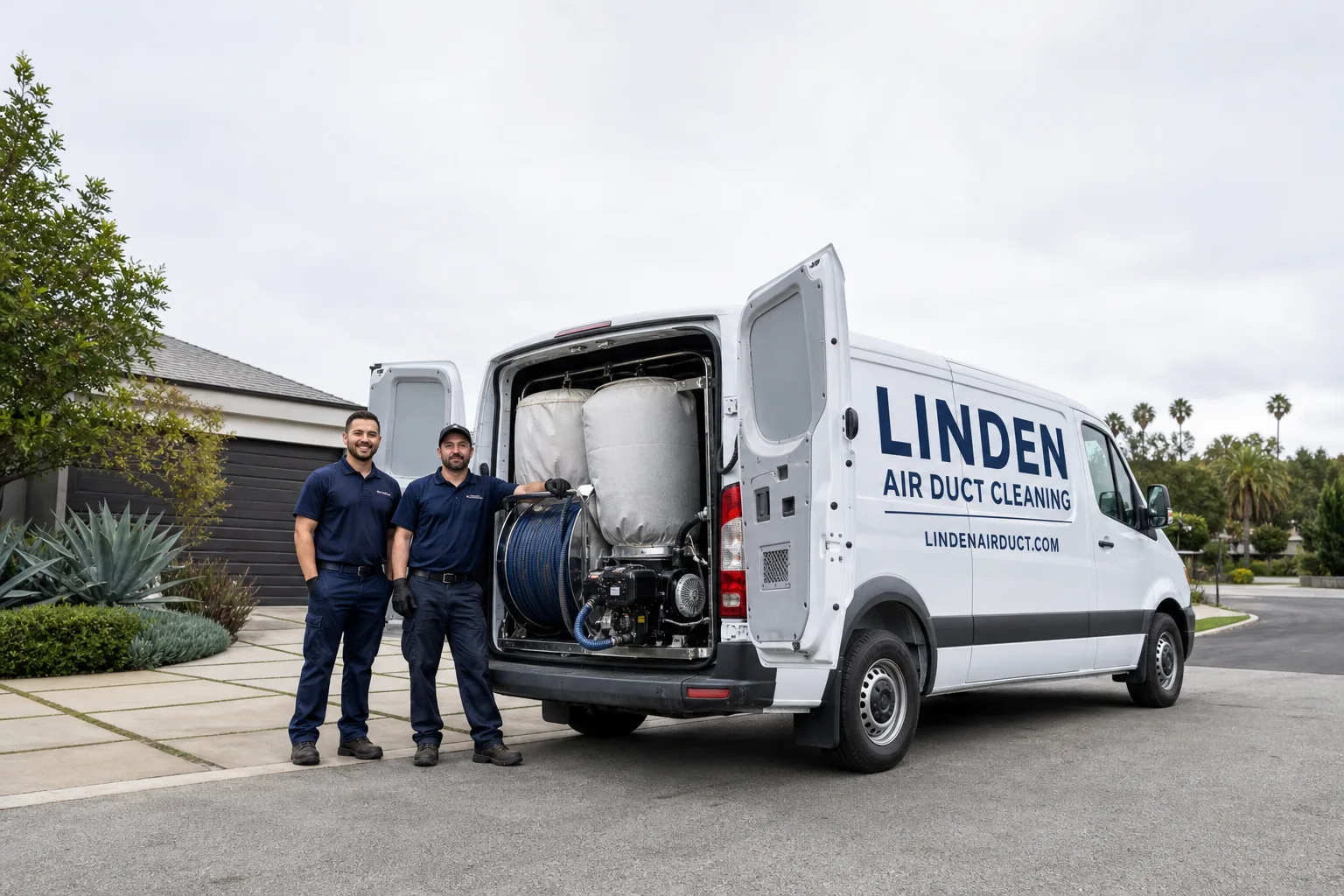
Whole-system duct and dryer vent check with before-and-after photos - you see exactly what came out of your vents
That "$99 whole-house special" is a bait ad - the real number appears once they are in your hallway, or the "clean" is a shop-vac at the register. We photograph the inside of your ducts before and after instead.
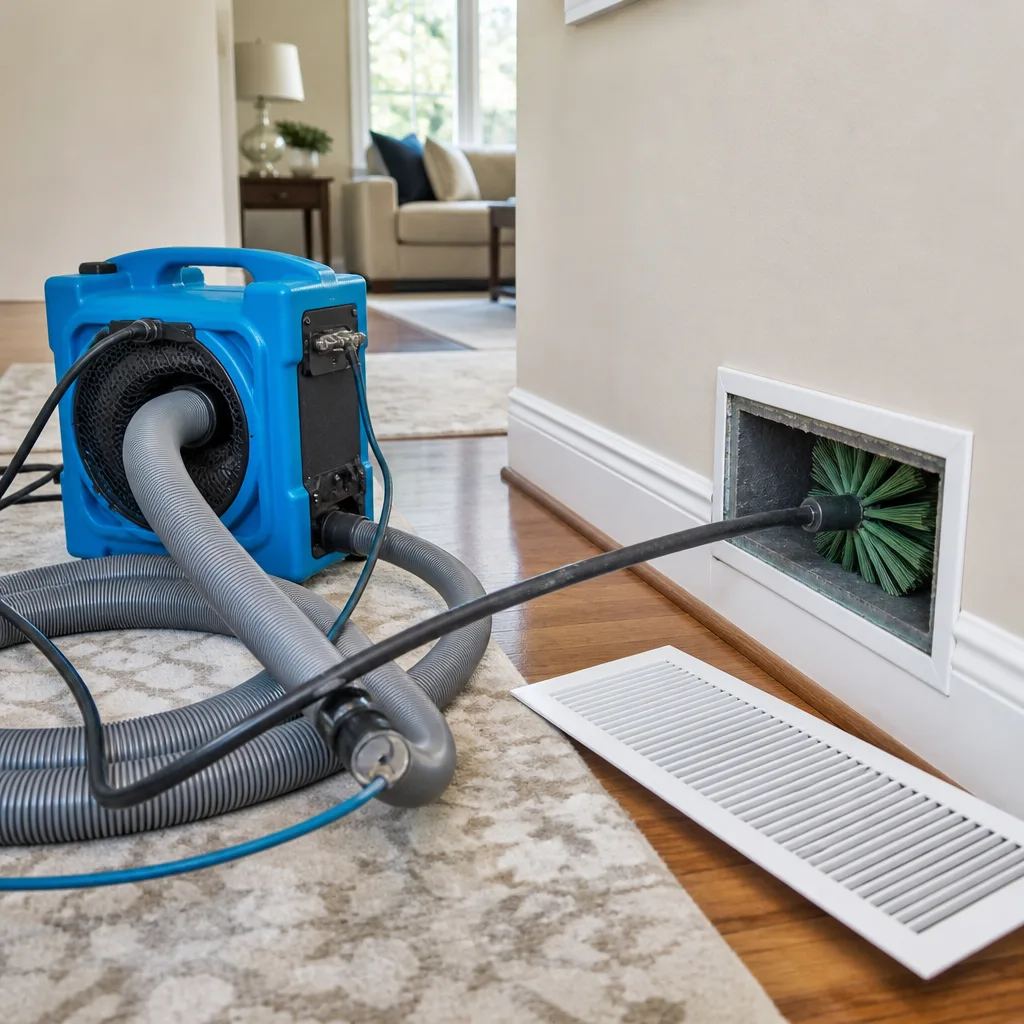
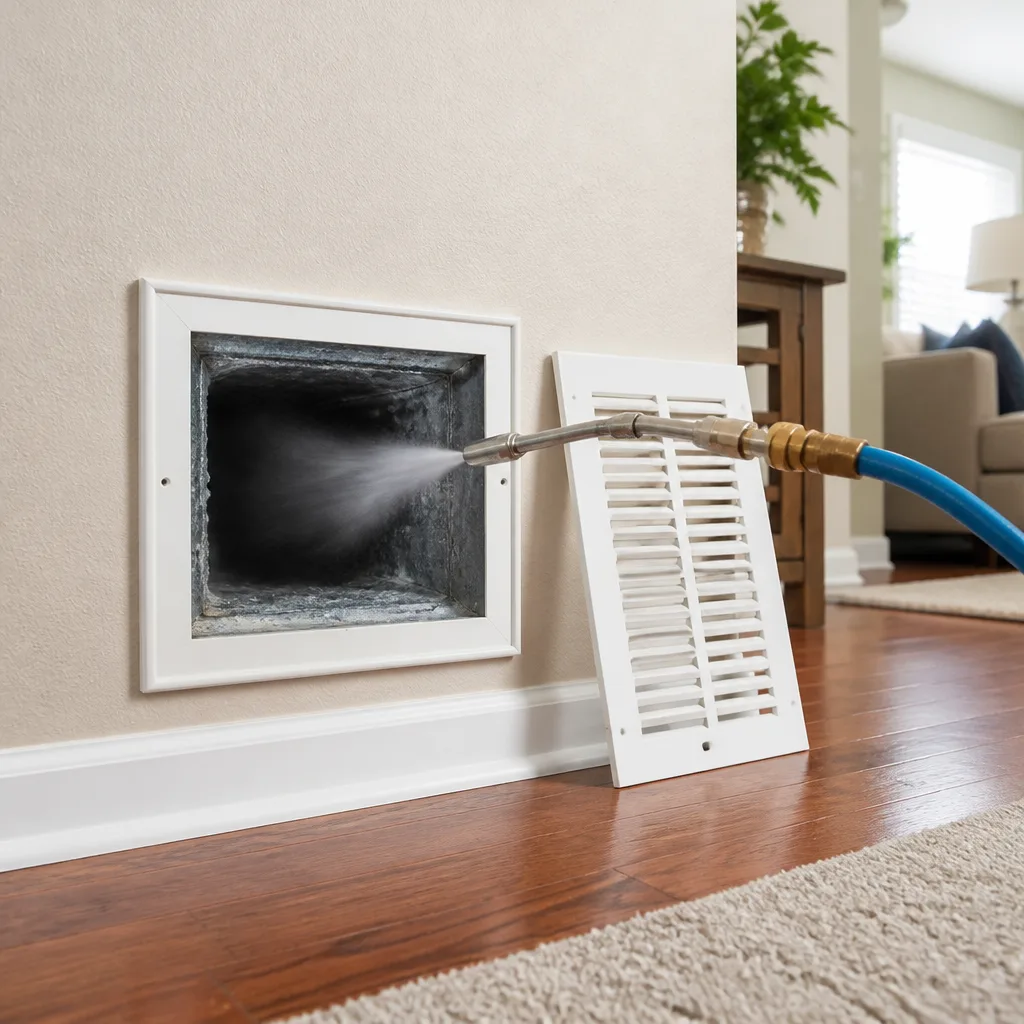
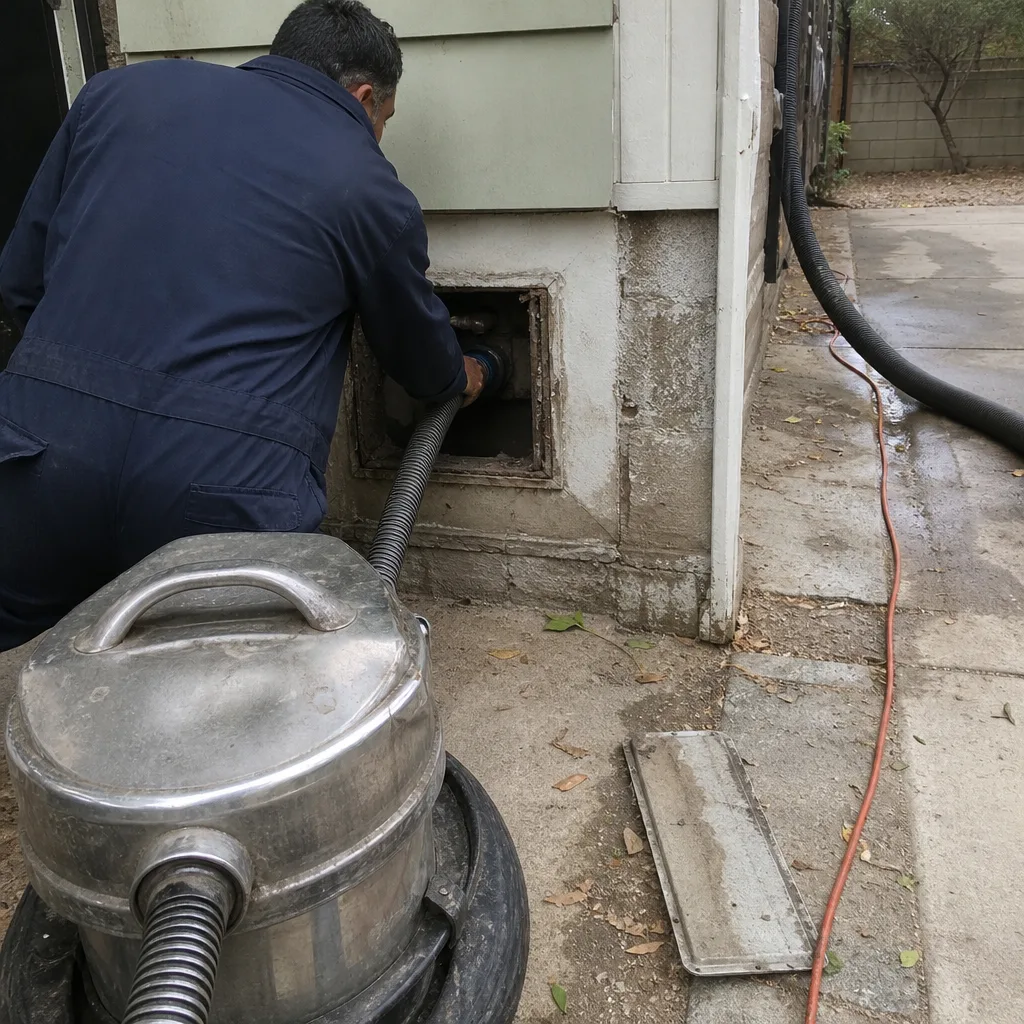 Before
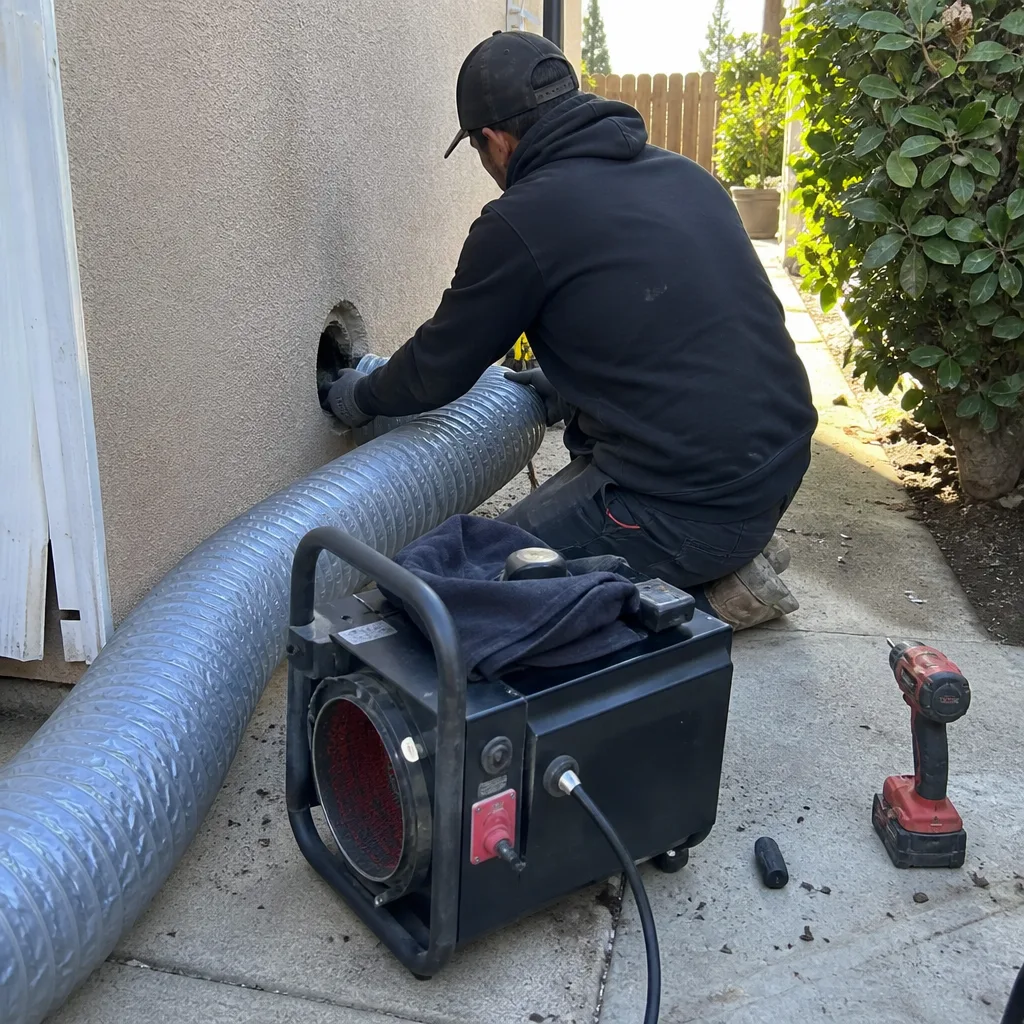 After
After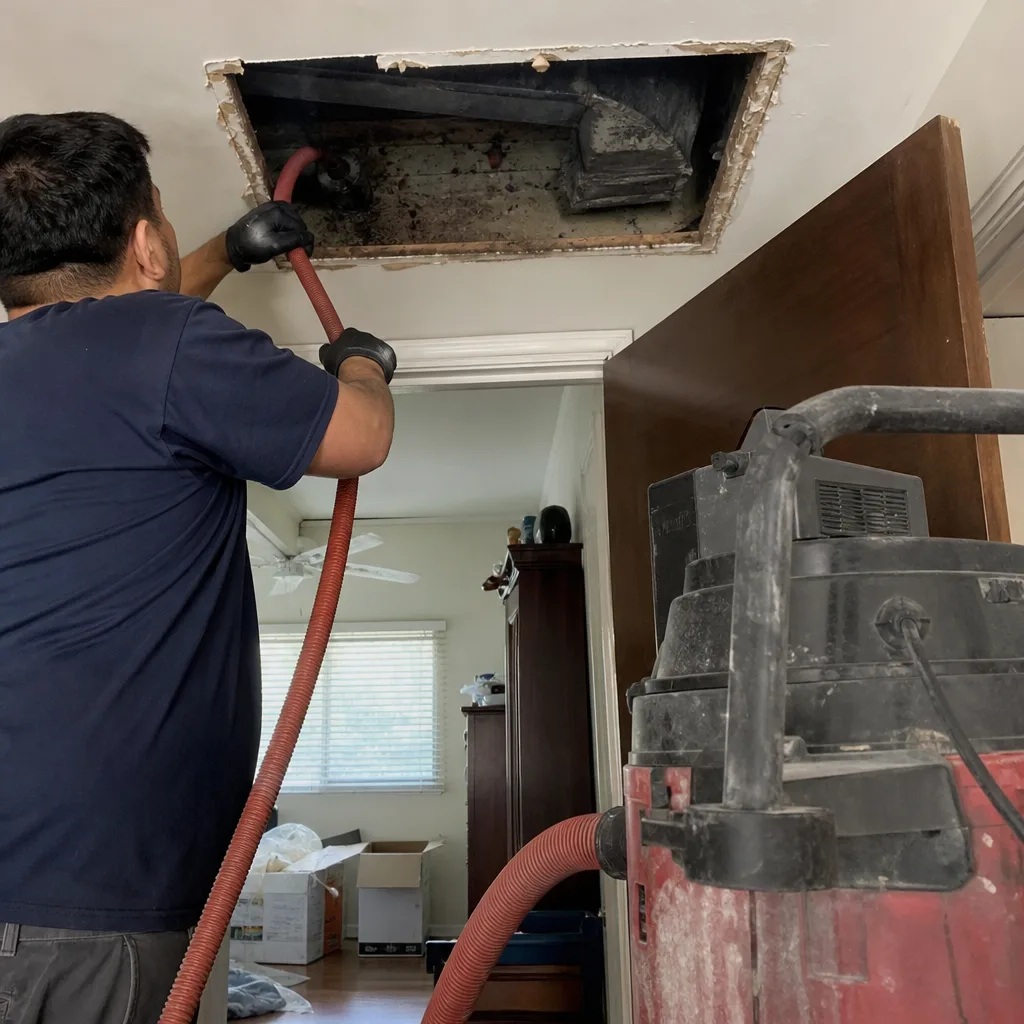 Before
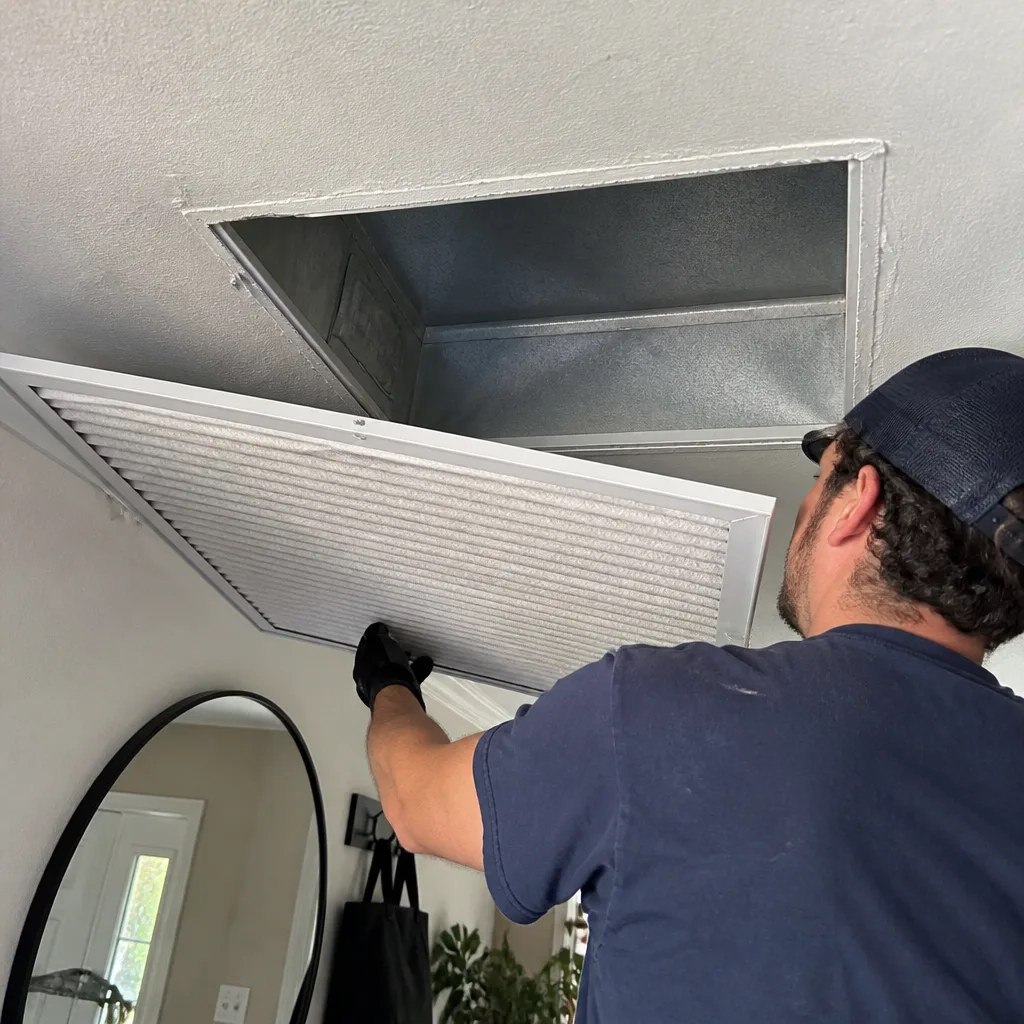 After
After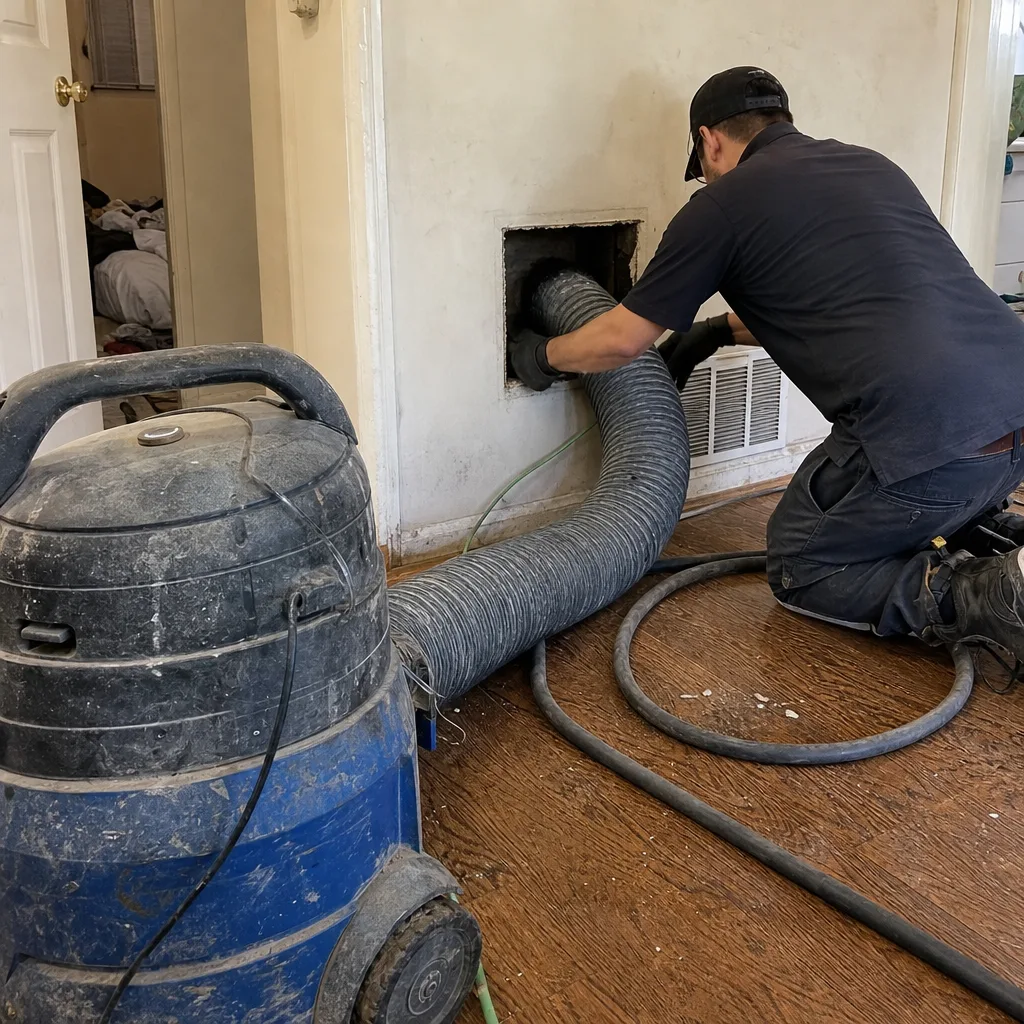 Before
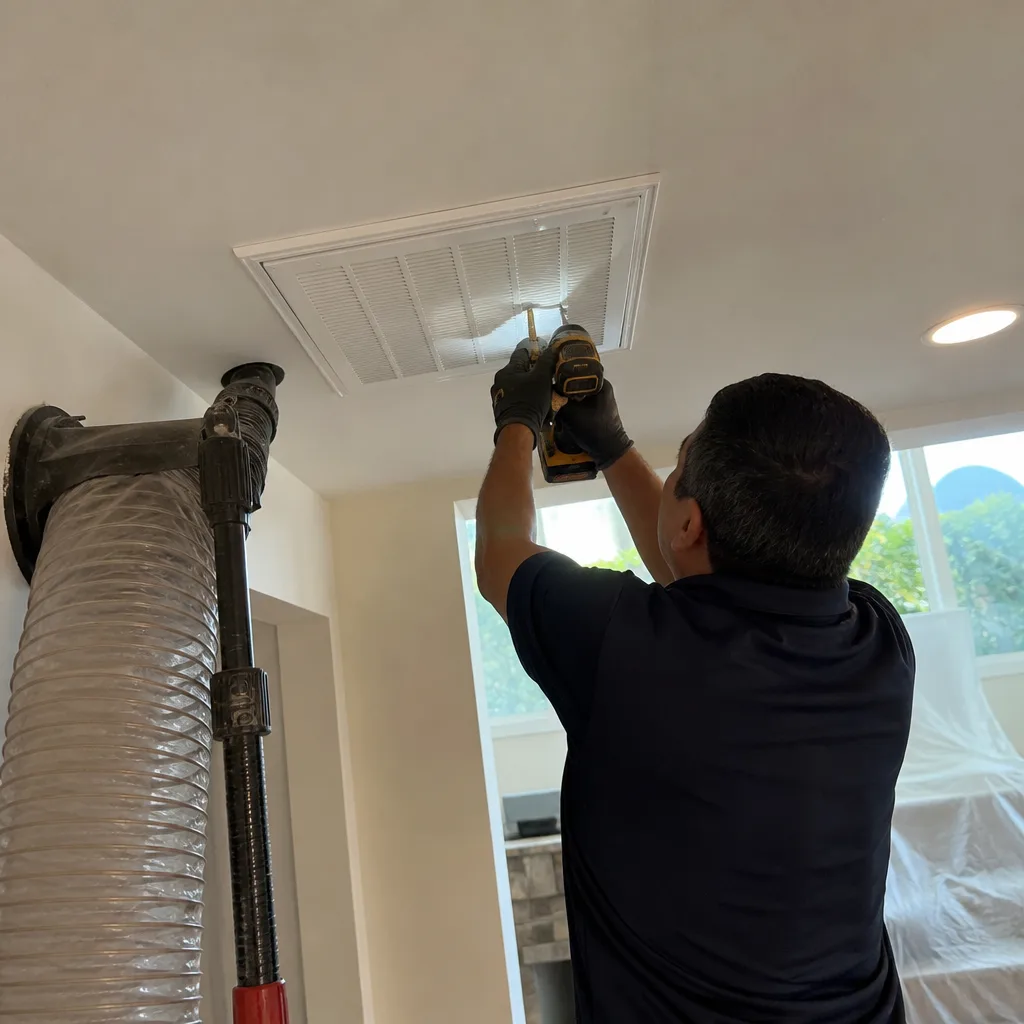 After
AfterSigns of a Clogged Dryer Vent
A clogged dryer vent is one of the more straightforward household problems to diagnose – and one of the more important ones to act on quickly. The signs are usually obvious once you know what you’re looking for, and this page will walk you through exactly what each symptom means and what to do about it.
What’s Happening
When your dryer vent is clogged, hot moist air and lint can’t escape the way they’re supposed to, so the machine works harder, runs hotter, and takes much longer to dry a load. In most cases, the culprit is a buildup of lint inside the vent duct itself – a gradual accumulation that tightens airflow over months or years until the system can barely breathe. Left alone, a severely blocked vent is a fire hazard.
The dryer vent’s only job is to carry hot, humid air from the drum outside your home. When that path narrows or closes – whether from lint, a crushed duct section, or a blocked exterior cap – the air has nowhere to go. Heat builds up inside the drum and the machine starts showing you symptoms: clothes that take two cycles to dry, a dryer cabinet that’s hot to the touch, a laundry room that smells musty or faintly burnt, or a duct flap outside that never seems to open anymore. Each of those is a signal worth paying attention to.
Why It Happens
Lint Accumulation Inside the Duct
Every load of laundry sheds fibers. Your lint trap catches most of them, but a percentage slips past and coats the inside of the vent duct over time. You can tell this is the likely cause if your dryer has been running fine for years and is now gradually taking longer and longer to dry a normal load. The buildup is slow and cumulative – there’s usually no dramatic moment when it hits, just a steady decline in performance.
A Blocked or Stuck Exterior Cap
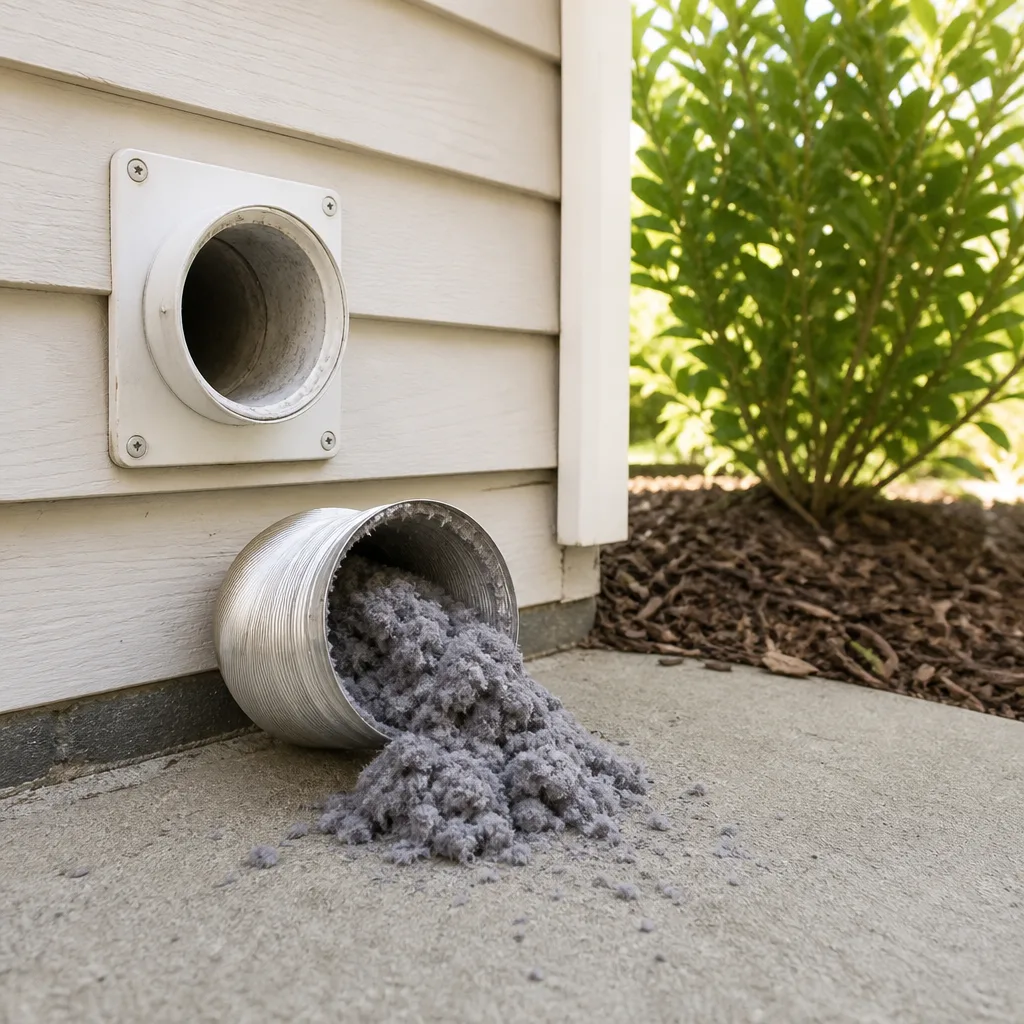
The flap or louvered cap on the outside of your home is supposed to open when the dryer runs and close when it doesn’t, keeping birds and weather out. If that cap is jammed with lint, bent shut, or has had a bird nest behind it, airflow backs up into the duct immediately. You can check this one yourself: step outside while the dryer runs and watch the vent cap. If nothing is moving – no flap opening, no rush of warm air – the exterior cap is worth a close look before anything else.
A Kinked or Crushed Duct Section
Flexible aluminum duct, the kind used for most of the run behind a dryer, collapses easily if the dryer gets pushed too close to the wall during a move or a cleaning. A kink can restrict airflow almost as much as a solid blockage. If you’ve recently moved the appliance and the symptoms appeared shortly after, pull the dryer out and look at the first few feet of duct behind it. A visible crease or tight bend is your answer.
Duct That’s Too Long or Has Too Many Bends
Building codes set limits on how long a dryer vent run can be and how many elbows it can have before the total effective length exceeds what a residential dryer can push air through. If your laundry room is far from an exterior wall, or the duct winds around obstacles, the system may have always been marginal and is now tipping into failure as the duct ages and accumulates minor buildup. Longer runs with multiple turns also collect lint faster than straighter ones.
What to Do Right Now
- Stop running the dryer. If you’re seeing warning signs – especially a burning smell, a very hot exterior cabinet, or a cycle that won’t finish – stop using the appliance until the vent is cleared. The risk of a lint fire is real, and running more loads through a blocked vent makes it worse.
- Check the exterior vent cap. Go outside and find where your dryer vents to the exterior wall or roof. Look for visible lint packed around the opening, a flap that won’t move, or any obvious obstruction. Don’t reach into the duct or dismantle anything – just look and photograph what you see.
- Pull the dryer away from the wall and photograph the duct connection. Look for any visible kinks, tears, or separation at the point where the flexible duct connects to the back of the dryer and to the wall fitting. A disconnected or torn section is immediately useful information for the technician.
- Note how long drying takes. A single-load drying time of more than 45 minutes on a normal cycle, or a load that’s still damp after two cycles, is a concrete symptom worth describing when you call. Specific details help the technician come prepared.
- Do not attempt to clean the duct yourself with a consumer brush kit if the vent run is long, goes through walls, or exits through the roof. Roof-exit vents involve height, and a brush that dislodges a heavy lint blockage inside a wall can push debris further in rather than out. Photograph what you can see and leave the rest for professional equipment.
How We Fix It
When your local Linden Air Duct Cleaning team arrives, the technician starts with a visual inspection of the full vent path: the connection at the back of the dryer, every accessible section of duct, and the exterior cap. Before any work begins, you get a written price for the job. That price doesn’t change when the work is done – it’s the number on the paper you agreed to, full stop.
For most clogged vents, the service is dryer vent cleaning, performed with professional-grade equipment from Rotobrush and Nikro that pulls lint out of the duct rather than pushing it further in. If the inspection reveals a crushed section, a disconnected joint, or a duct run that wasn’t built to code, air duct repair addresses those structural problems with a written guarantee on the repair work and a free second visit if any covered repair doesn’t hold.
Most dryer vent cleaning visits take under an hour. The technician photographs the duct before and after so you can see exactly what was there and what’s gone.
Frequently Asked Questions
It’s genuinely dangerous, not just inconvenient. Lint is highly flammable, and a blocked vent concentrates heat directly around it. A dryer that runs hot because it can’t exhaust properly is the classic setup for a lint fire – and those fires typically start inside the duct, out of sight. If you’re noticing a burning smell, a cabinet that’s hot to the touch, or a vent that’s been neglected for several years, treat it as urgent. Call (980) 447-2498 and let’s get a technician out to assess it.
If the dryer smells like it’s burning, the answer is no – stop using it now and call us at (980) 447-2498. If the symptoms are milder (longer drying times, a slightly warm laundry room), you can schedule it in the near term, but there’s no good reason to keep running the appliance through a blocked vent. Each load adds more heat stress and lint to an already-restricted system.
Call (980) 447-2498 and speak to a real person – our phones are answered by a live human 24 hours a day, seven days a week, not a voicemail system. Your local Linden team will tell you what’s available in your area and get something scheduled. Dryer vent cleaning is a scheduled appointment, not a drop-in service, so calling sooner gets you on the calendar sooner.
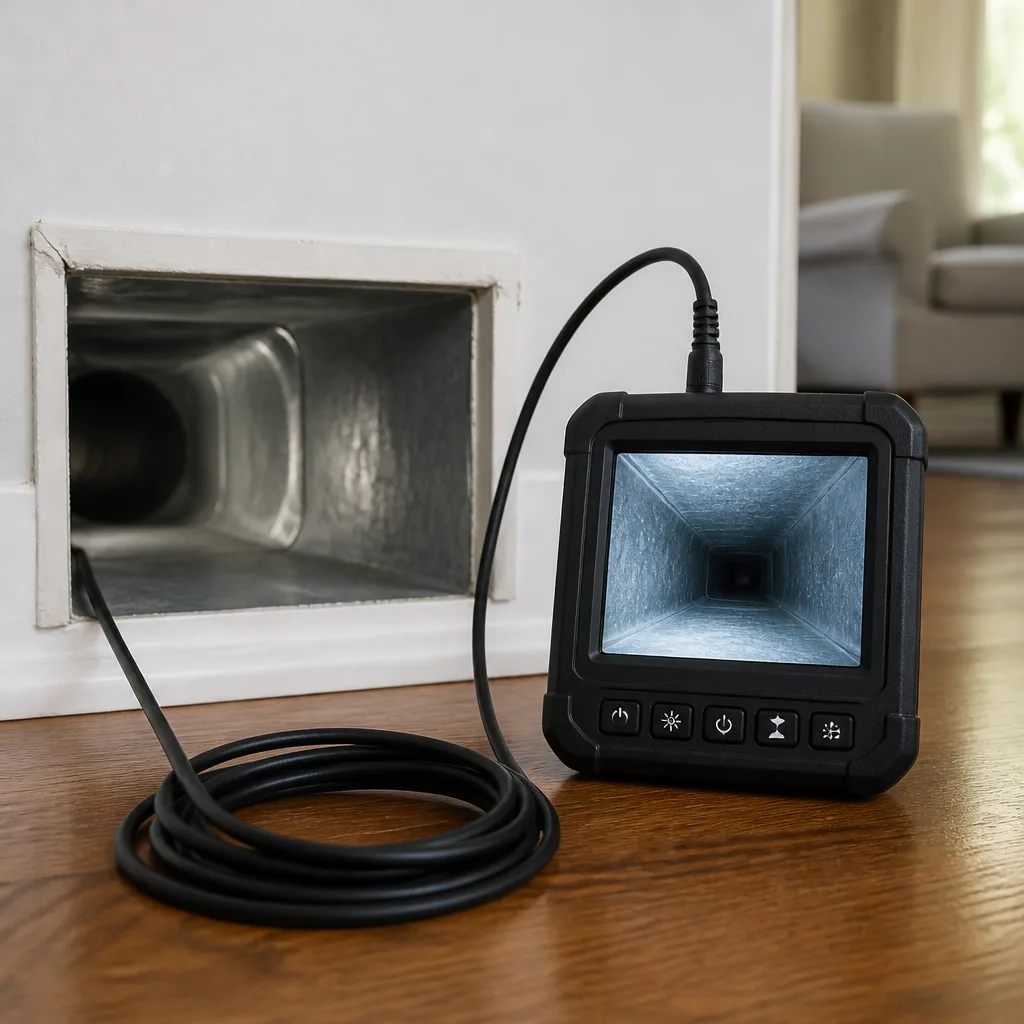
Your technician photographs the duct before the work starts and again after it’s done. You see both sets of images – what was in the duct and what’s gone. That’s not a policy we put in place because customers asked for it; it’s how we think the job should be documented. The 365-Day Done Right Promise backs every job in writing: if something isn’t right, we come back and make it right.
Get It Fixed
A blocked dryer vent isn’t a problem that clears itself. Call (980) 447-2498 – a real person answers, any time – or book online to schedule with your local Linden Air Duct Cleaning team. You’ll get a written price before any work starts and a crew you’ll be glad you let in.
Written by Marcus Veale, Owner at Linden Air Duct Cleaning, serving homeowners across our communities since 2004.
What Our Customers Say
"Thorough job on all eleven vents and the main trunk. Took longer than the three hours they quoted, but he told me early and kept working. Air feels fresher."
- Meredith L."Tech arrived with a badge and a printed sheet of what he'd be doing. Ran a camera through the main trunk before and after so I could see the dust difference. Vents smell cleaner already."
- Gina R."Priced by the system, not by the vent, and he told me up front. No pressure to add the sanitizer and I said no without any fuss."
- Faith N.