
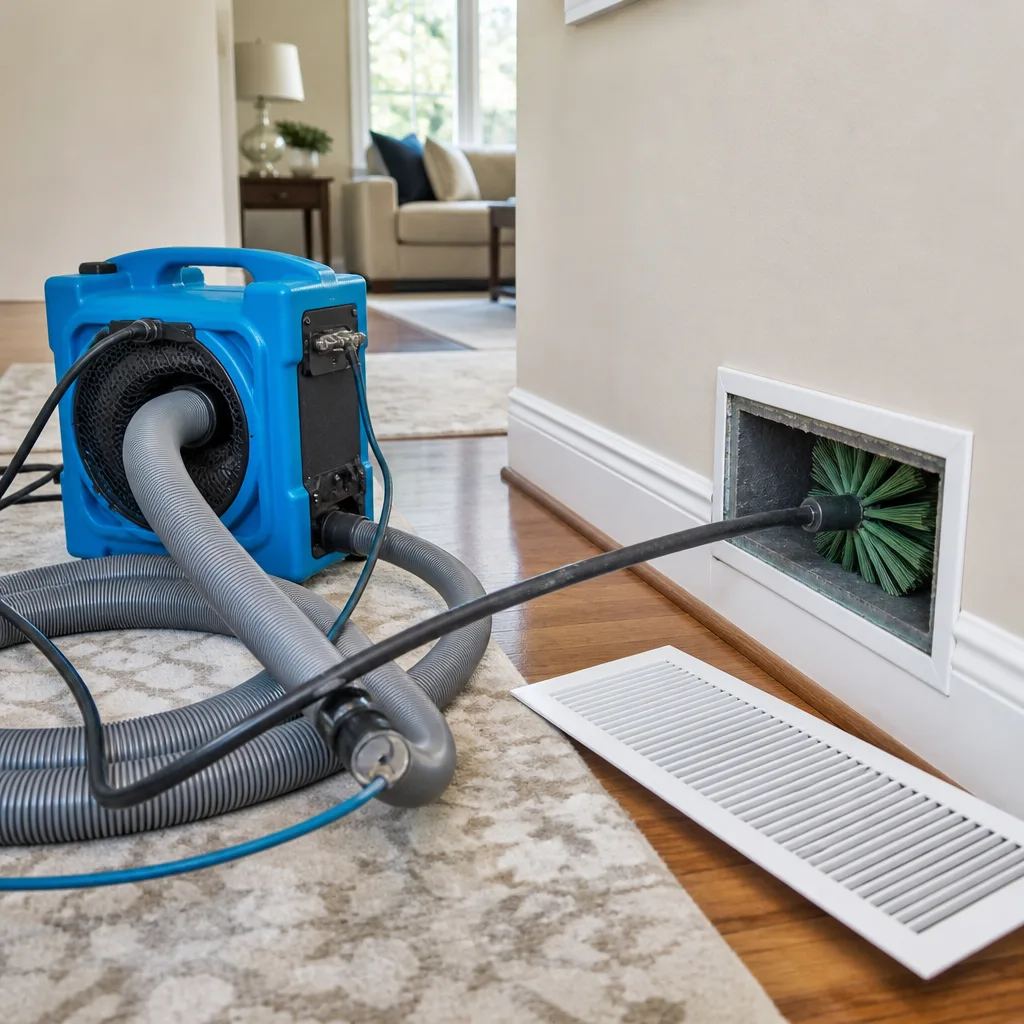
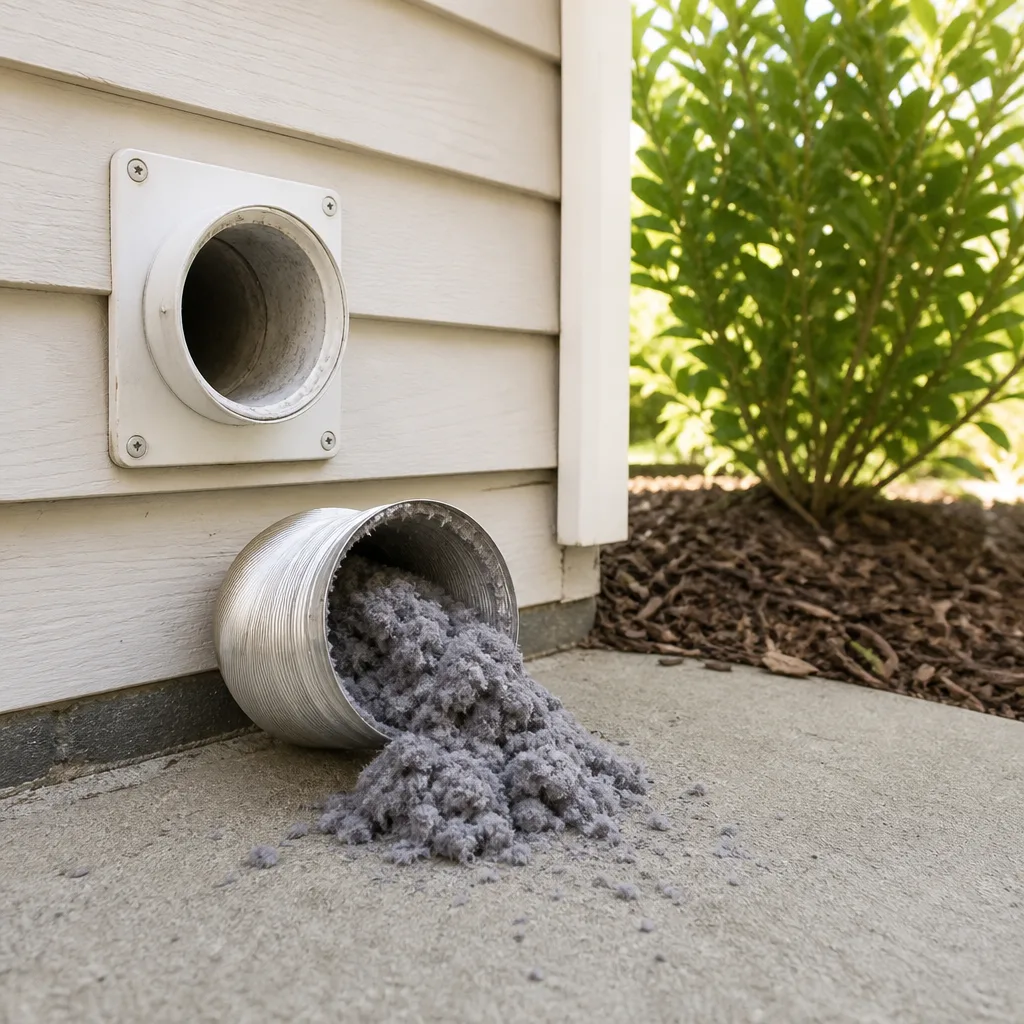
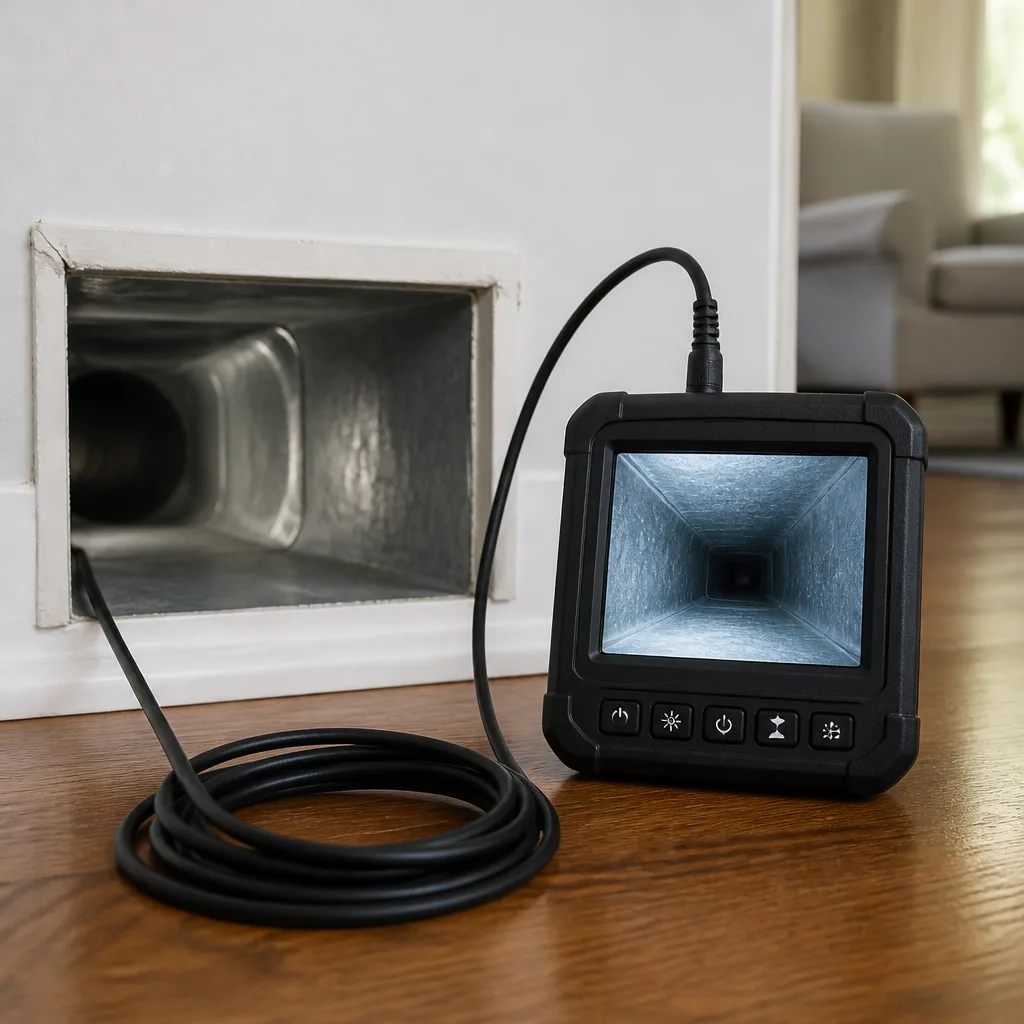
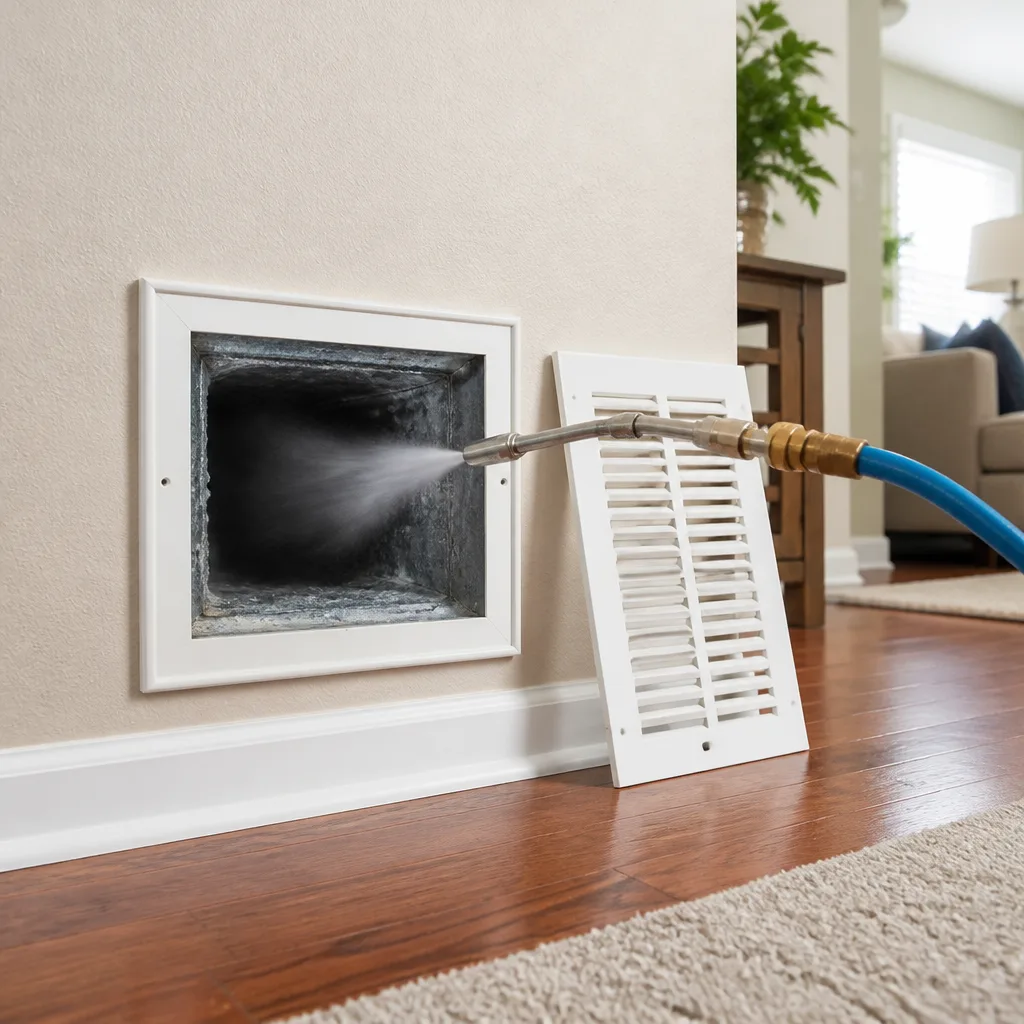
Whole-system duct and dryer vent check with before-and-after photos - you see exactly what came out of your vents
That "$99 whole-house special" is a bait ad - the real number appears once they are in your hallway, or the "clean" is a shop-vac at the register. We photograph the inside of your ducts before and after instead.
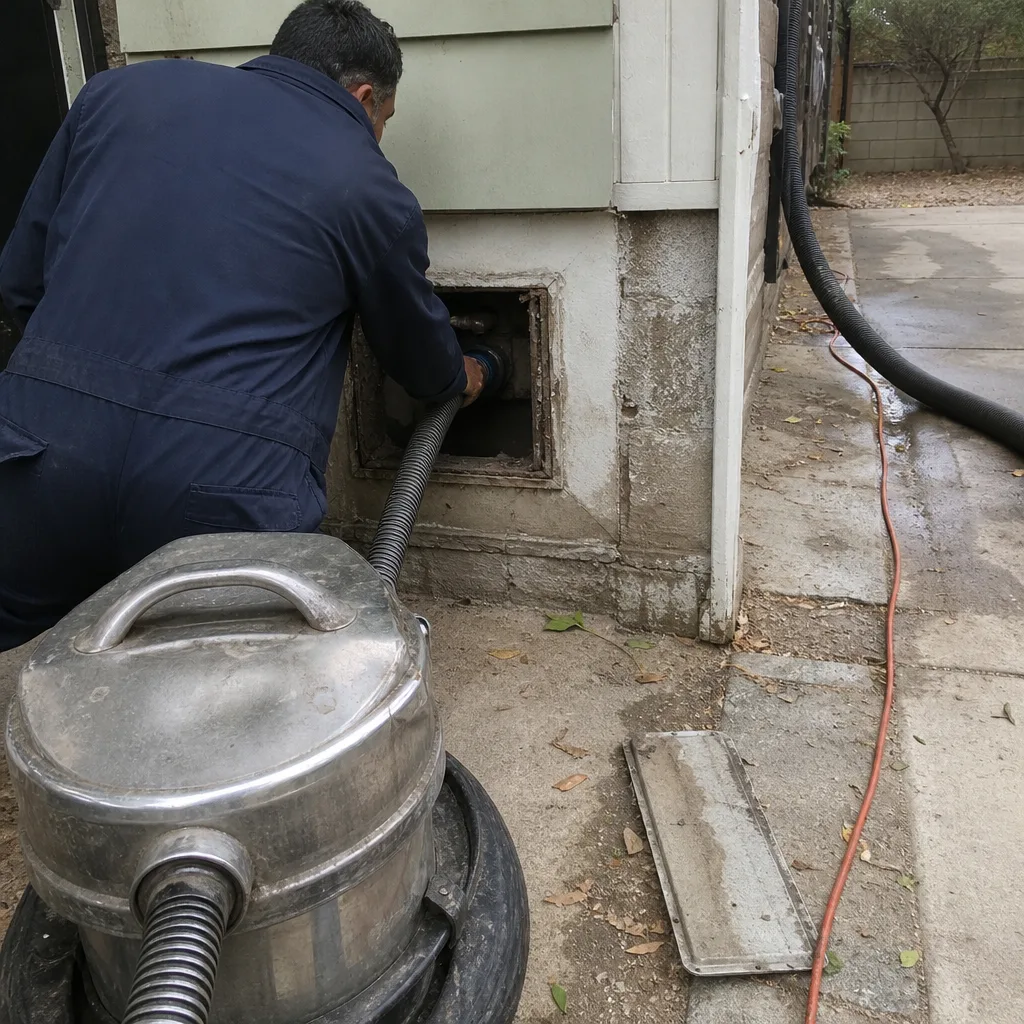 Before
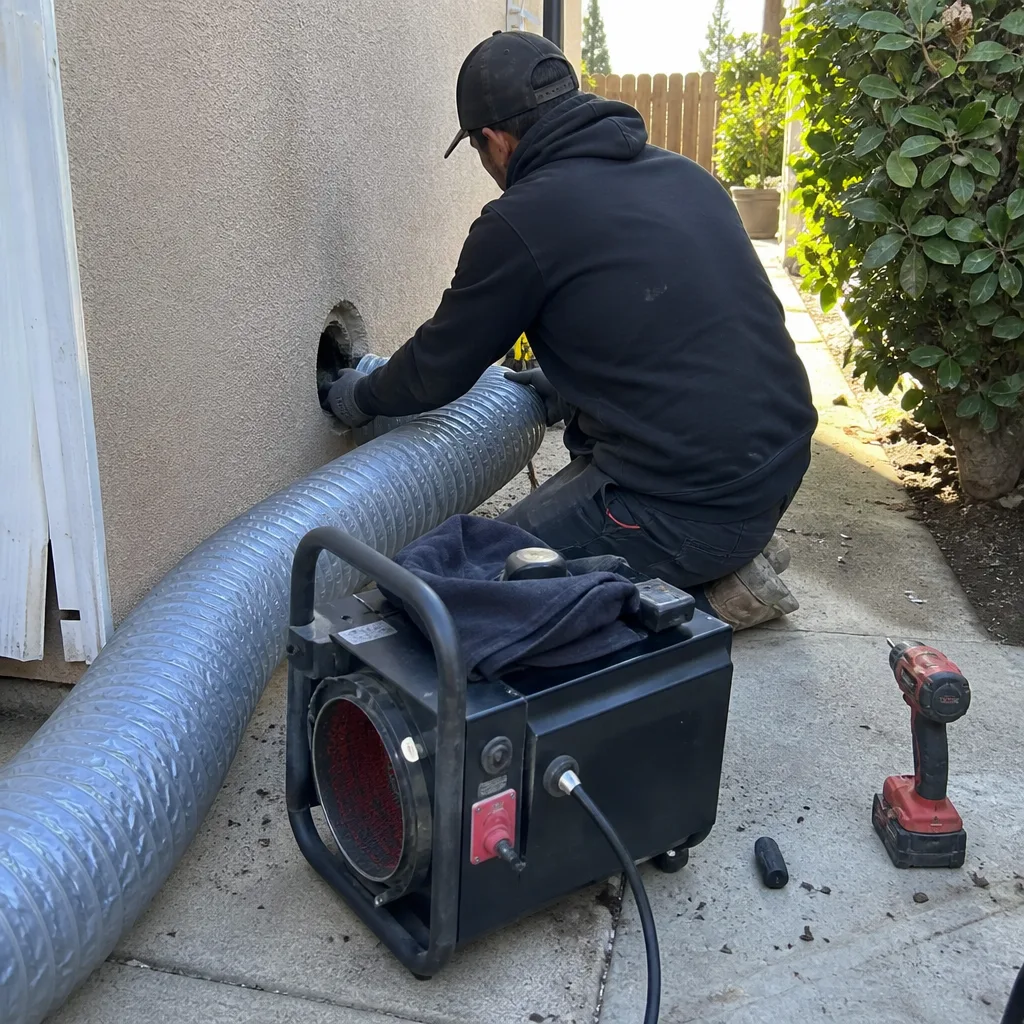 After
After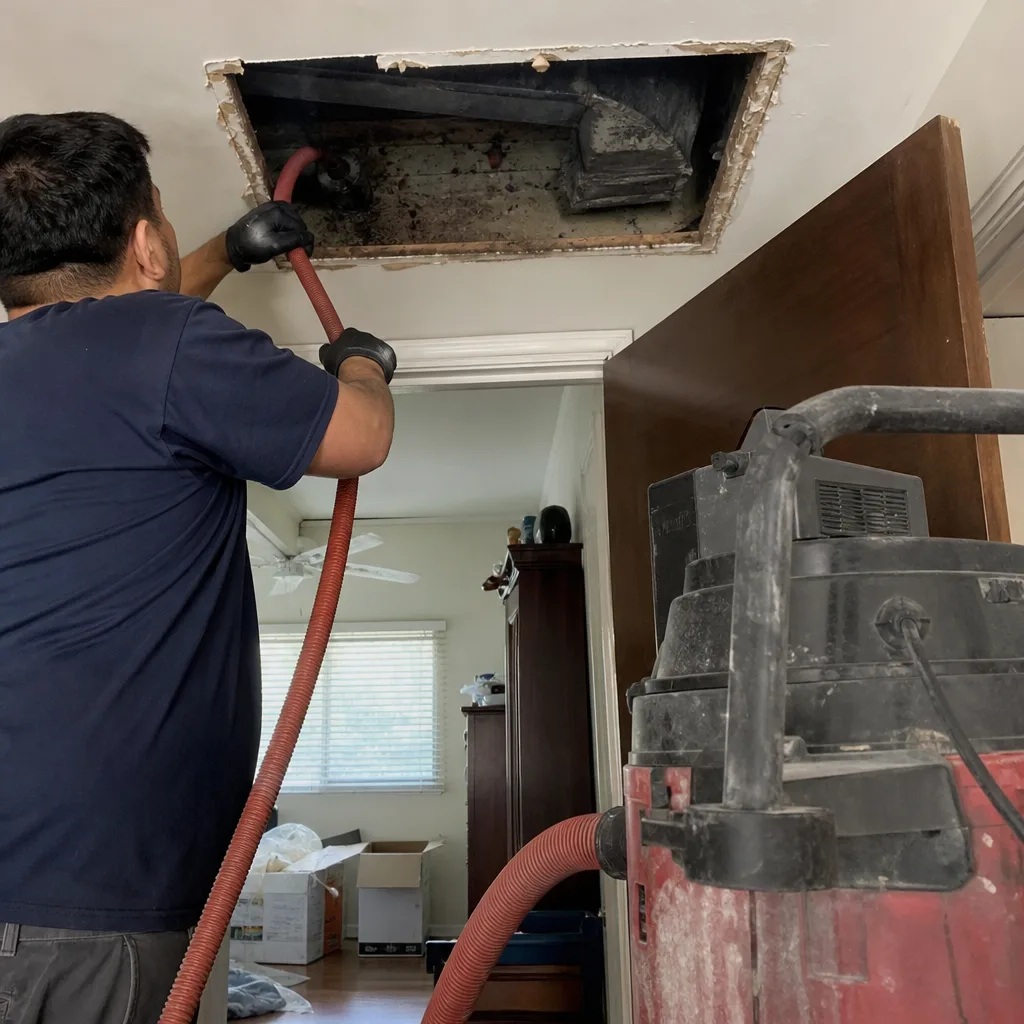 Before
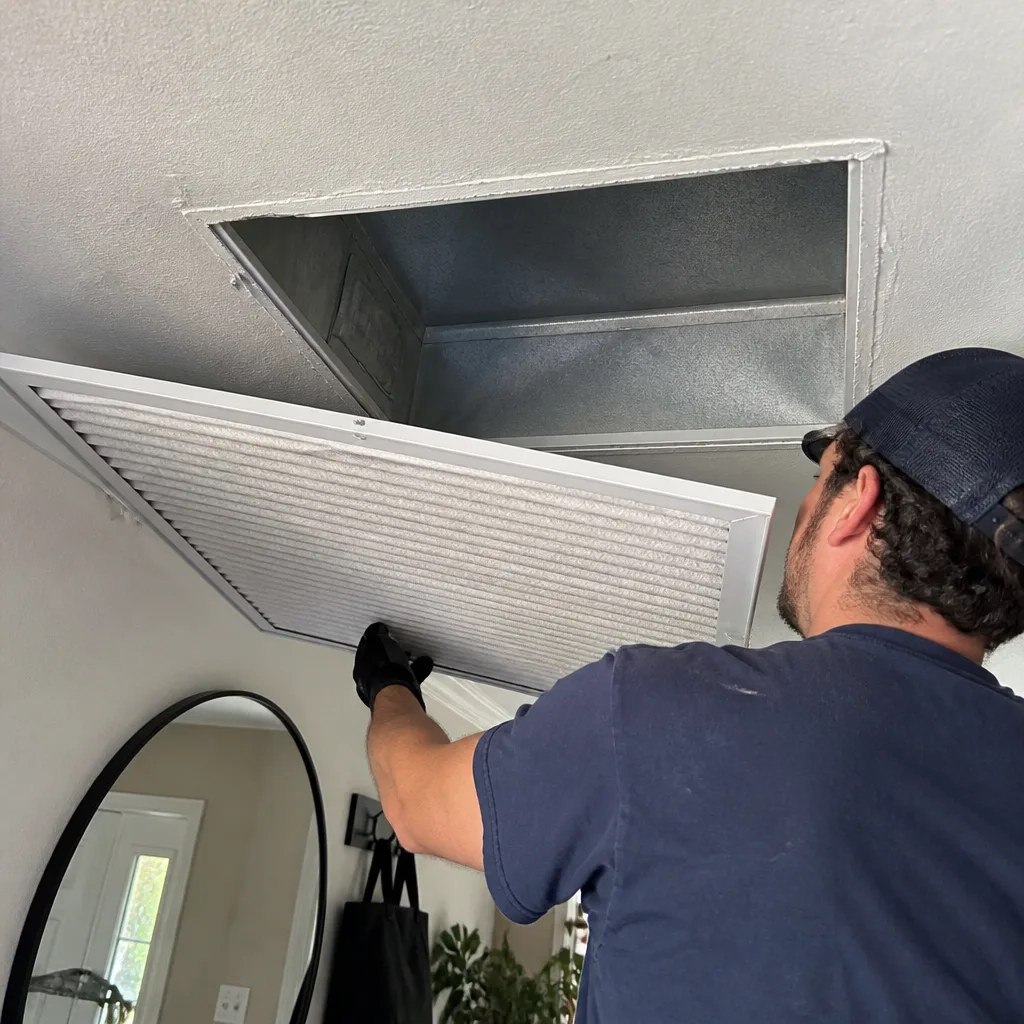 After
After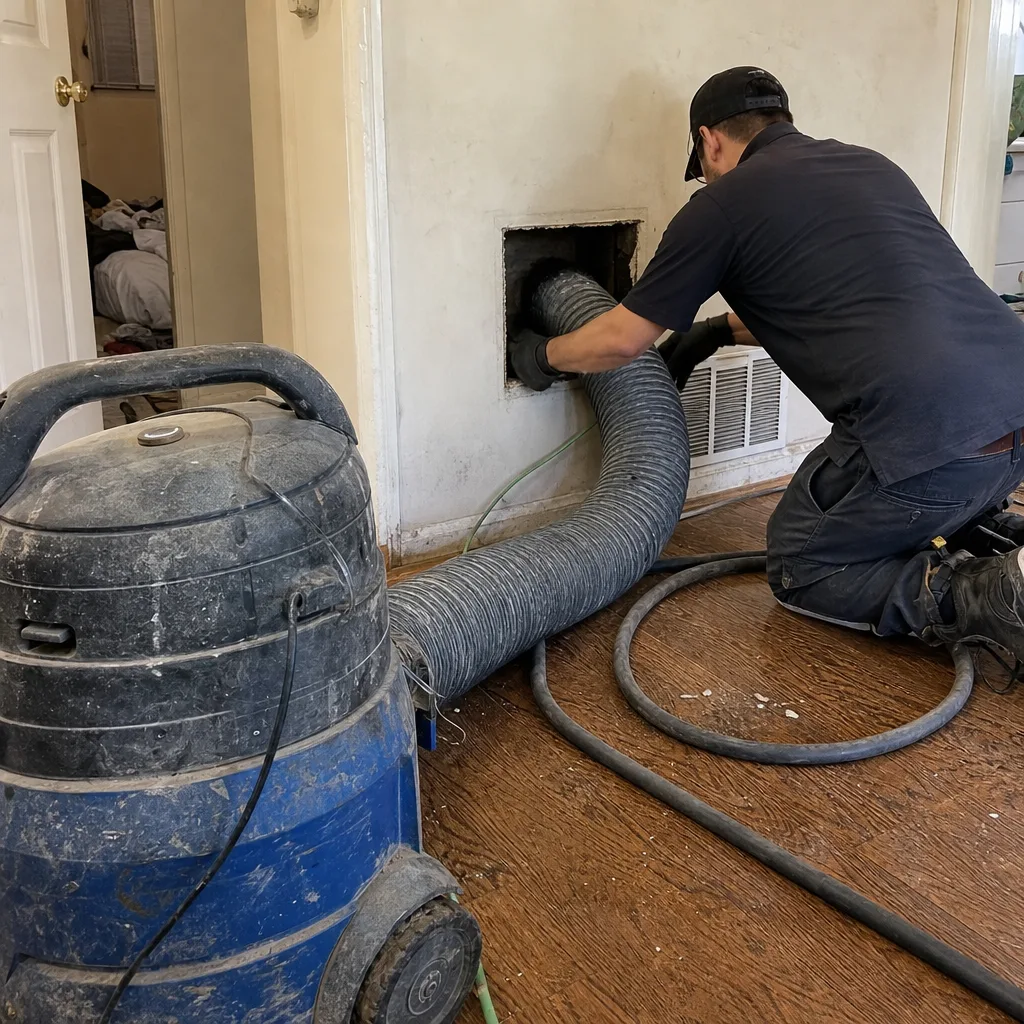 Before
 After
AfterNikro Dryer Vent Cleaning in Los Angeles: What to Know First
We provide independent Nikro dryer vent cleaning for homes throughout Los Angeles. A full Nikro system cleaning takes about two hours on site, and the price is written down before we touch the equipment. You’ll know exactly what the job will cost before the van even pulls up.
This page is for homeowners who own a Nikro dryer vent system and want someone who actually understands how that equipment works. If you’ve been told every dryer vent cleaning is the same, that’s not the case. Nikro builds their systems differently from most, and the failure points are different too. Call (980) 447-2498 for a free estimate. We’ll answer right away, no phone trees.
How Nikro Products Fail – and How We Fix Them
- Nikro VP Series – blade housing clog from overhead vent runs. These inline ventilators push air up through the roof in a lot of older Los Angeles homes with vertical duct runs. When lint settles back down onto the housing blades after the dryer stops, the blower struggles on the next cycle. We see this most often in West Adams and Leimert Park, where the rooflines make vertical vents the practical option. We open the housing, clean every blade by hand, and reseat the assembly to manufacturer torque settings. Then we verify airflow with a pressure differential test, not just a visual check.
- Nikro exterior wall caps – the LS and LX aluminum louvers get stuck open. In Los Angeles, the real culprit is dust plus morning marine layer moisture. The louver hinges bind shut, trapping lint against the backside of the damper. That’s a recipe for a half-clogged vent that still passes a basic inspection. We remove the louver assembly, clean the hinge channels, and re-lubricate with a dry silicone that won’t attract dust. If the louver is corroded beyond function, we replace it with an equivalent-spec part and tell you what we’re using before we do it.
- Nikro lint trap bypass design – owners think the external trap means the vent line stays clean, but no. The trap catches the big stuff. Fine lint still moves through the vent run and packs into the elbows, especially in longer runs. In newer Los Angeles construction with stacked townhomes, we regularly find four-inch double elbows inside the wall cavity packed to about 60 percent with fine lint. That’s invisible from both ends of the line. We run negative-pressure extraction the full length of the vent, not just at the access point.
- Nikro booster fans in long runs – thermal cutoff tripping repeatedly. Homes in neighborhoods like Sherman Oaks or Encino often have a converted garage laundry room, which means a forty-foot vent run with a booster fan in the middle. When lint loads down the fan blades, the motor runs hotter than the thermal cutoff allows and cycles off. The dryer still runs, the vent still looks okay from the outside, and the owner doesn’t know the booster has been failing for months. We disassemble the booster housing, clean the impeller and the squirrel cage, and test the thermal cutoff. If replacement is needed, we present the OEM-vs-aftermarket cost difference honestly and let you choose. Both options are on paper before we proceed.
- OEM vs. aftermarket parts on Nikro systems – what we’ll use and why. Nikro’s OEM replacement caps and housings are good, but they’re not always necessary. For louver assemblies and wall caps, a properly spec’d aftermarket part from a real ventilation supplier will often out-perform the OEM part in coastal Los Angeles conditions, where the marine air is the thing killing the metal. For anything inside the blower assembly – impellers, motor mounts, thermal switches – we use Nikro or an equivalent we can stand behind, because those tolerances actually matter. If it goes in a motor, we won’t use a part we can’t verify.
Our Nikro Dryer Vent Cleaning Process
- 1
You call, we answer. A live person picks up, asks a few questions about your setup, and books a two-hour window that works for you. You get the tech’s name and photo before the visit.
- 2
Arrival and visual inspection. Your technician shows a photo ID at the door, looks at the dryer connection, the vent run, and the exterior termination point. We note the Nikro model and condition before any work starts.
- 3
Written price before work begins. We put the scope and the total price on paper. You sign it or you don’t. There’s no invoice at the end that doesn’t match the number on that paper.
- 4
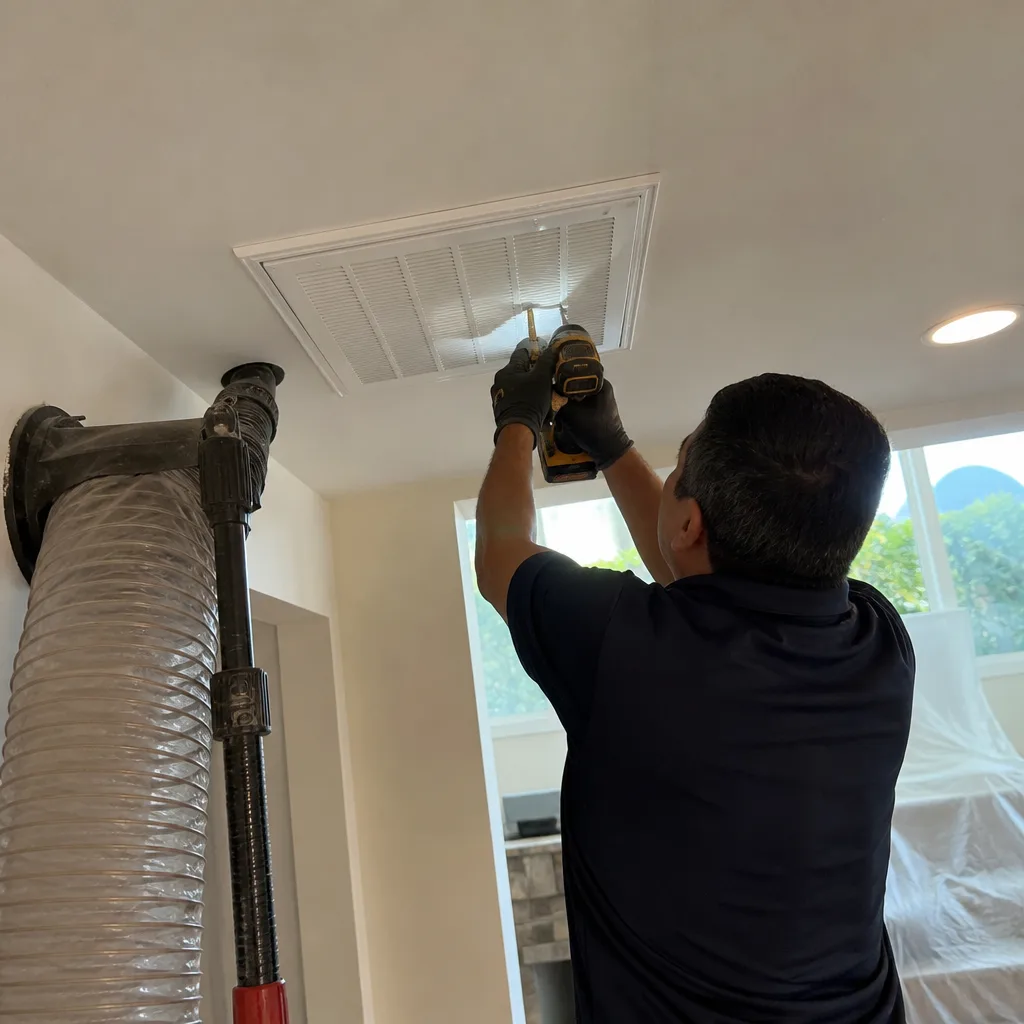
The cleaning itself. We disconnect the dryer, connect the negative-pressure extraction unit, and run brushes the full length of the vent. We open Nikro housings by hand and clean the internals manually. No shortcuts through the lint trap bypass.
- 5
Parts decision, if needed. If something is broken or worn, we stop and show you. You get OEM and aftermarket options with prices written down. You choose. We install.
- 6
Verification and warranty. We run the system through a full cycle, check airflow at the exterior vent, and walk you through what we found. Every repair is backed with a written guarantee. If a covered repair fails within 365 days, we come back at no charge. That’s not a promise we make on the phone. It’s a written commitment on every job we do.
What Nikro Dryer Vent Cleaning Costs in Los Angeles
For a standard Nikro vent cleaning with full extraction and manual housing service, expect to pay $160 to $300, depending on the vent run length and whether there are booster fans or roof terminations involved. If we need to replace a wall cap or louver assembly, add another $40 to $100. A replacement booster fan motor will run $200 to $400 installed, depending on whether we use OEM or equivalent-spec parts.
The distance from the dryer to the exterior vent is the single biggest price driver. More elbows, more time, more cost. Roof terminations cost more than wall terminations because the work takes longer and requires different safety precautions. We write the price down before any work starts, and that’s the number you pay. Call (980) 447-2498 and we’ll give you a straight answer on cost over the phone.
Why Los Angeles Homeowners Call Linden Air Duct Cleaning for Nikro Work
Most companies that clean dryer vents in Los Angeles clean them all the same way. Nikro systems are different, and our technicians know what to look for. Marcus Veale spent most of his life in the air duct trade here, starting with the HVAC program at Los Angeles Trade-Technical College and working his way through thousands of homes across the city. The Threshold Standard means every tech is background-checked, identity-verified, and introduced to you by name and photo before they arrive. A photo ID badge is shown at your door, not just mentioned in an email.
Every job gets a written price before work starts. Every repair gets a written 365-day guarantee. And if a covered repair fails, we come back at no charge. We also work on Lennox, Trane, and Carrier systems, so if your HVAC stays in the same room as your laundry, one visit can handle both. That’s not an upsell. It’s just the reality of how houses are built here.
FAQs
No. Cleaning a dryer vent system does not void a Nikro warranty, provided the work is done without damaging the equipment. We use non-destructive cleaning methods and hand-service the internal housings. That is the standard Nikro equipment owners in Los Angeles use every day. If you have concerns about a specific warranty provision, we can help you verify the language before we start.
Every 12 to 18 months for most homes. Homes with more than two people or with a pet that sheds heavily will fall closer to the 12-month side. Homes where the vent run is longer than 25 feet or includes a roof termination should be checked annually. The marine layer in the coastal neighborhoods adds moisture to the lint in the vent, which makes it clump and pack down faster than in dry climates.
We can usually tell by measuring airflow at the exterior termination while the system runs, then comparing that to what we’d expect from the vent run length and configuration. A 20 to 30 percent drop tells us there’s a restriction somewhere in the line. We find the exact location with a camera inspection before we start pulling things apart.
Usually because the cheaper quote doesn’t include what we do. A basic company will brush the first six feet of the vent from inside the laundry room and call it done, because they didn’t actually clean the full run. We clean the full vent run, open the Nikro housing, and verify airflow at the exterior. TWe also write the price down before we start, so there’s no invoice surprise at the end. If a cheaper quote looks too good to be true, ask the company what specifically they’ll clean and what equipment they’ll use. Then call us. Call (980) 447-2498 and we’ll walk you through what you’re actually paying for.
Sometimes. For motor internals and impellers, we typically recommend Nikro or an equivalent we trust. For exterior caps and louvers, a quality ventilation brand often makes a better part for coastal conditions, and we’ll tell you that up front with the prices written down. We never substitute without showing you the exact difference in cost and spec.
If you own a Nikro dryer vent system in Los Angeles and it hasn’t been cleaned in the last year, give us a call. We’ll answer right away, tell you what we’d do, and put a written price in your hand before any work starts. Clean ducts don’t fix everything, but dirty ones can quietly make a lot of things worse. Call (980) 447-2498 for a free estimate.
Written by Marcus Veale, Owner, Linden Air Duct Cleaning at Linden Air Duct Cleaning, serving Los Angeles and nearby areas.