
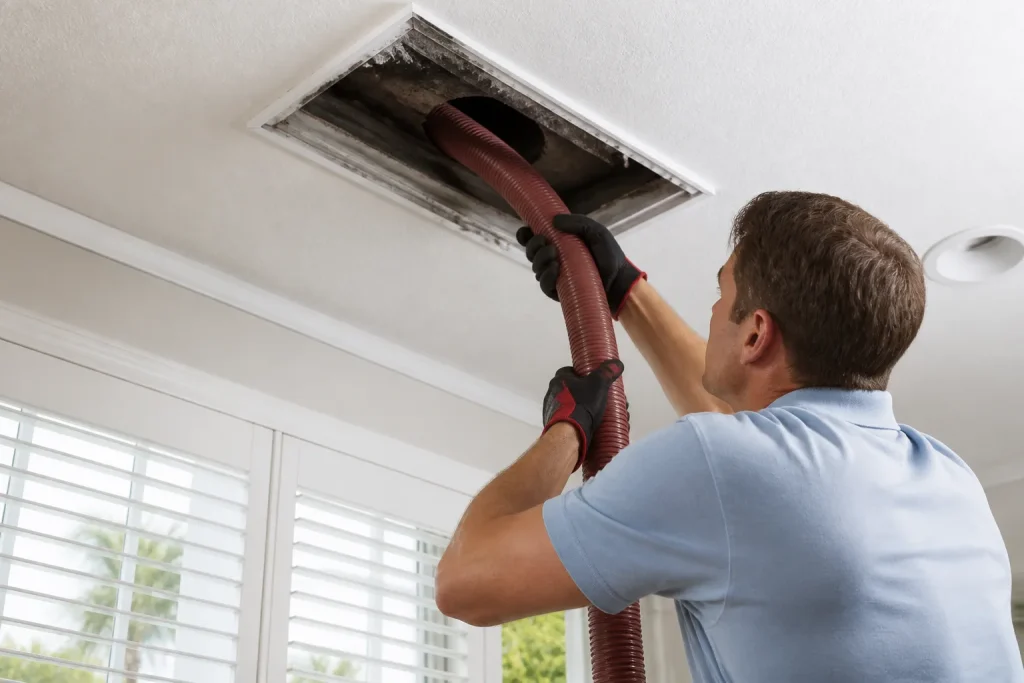
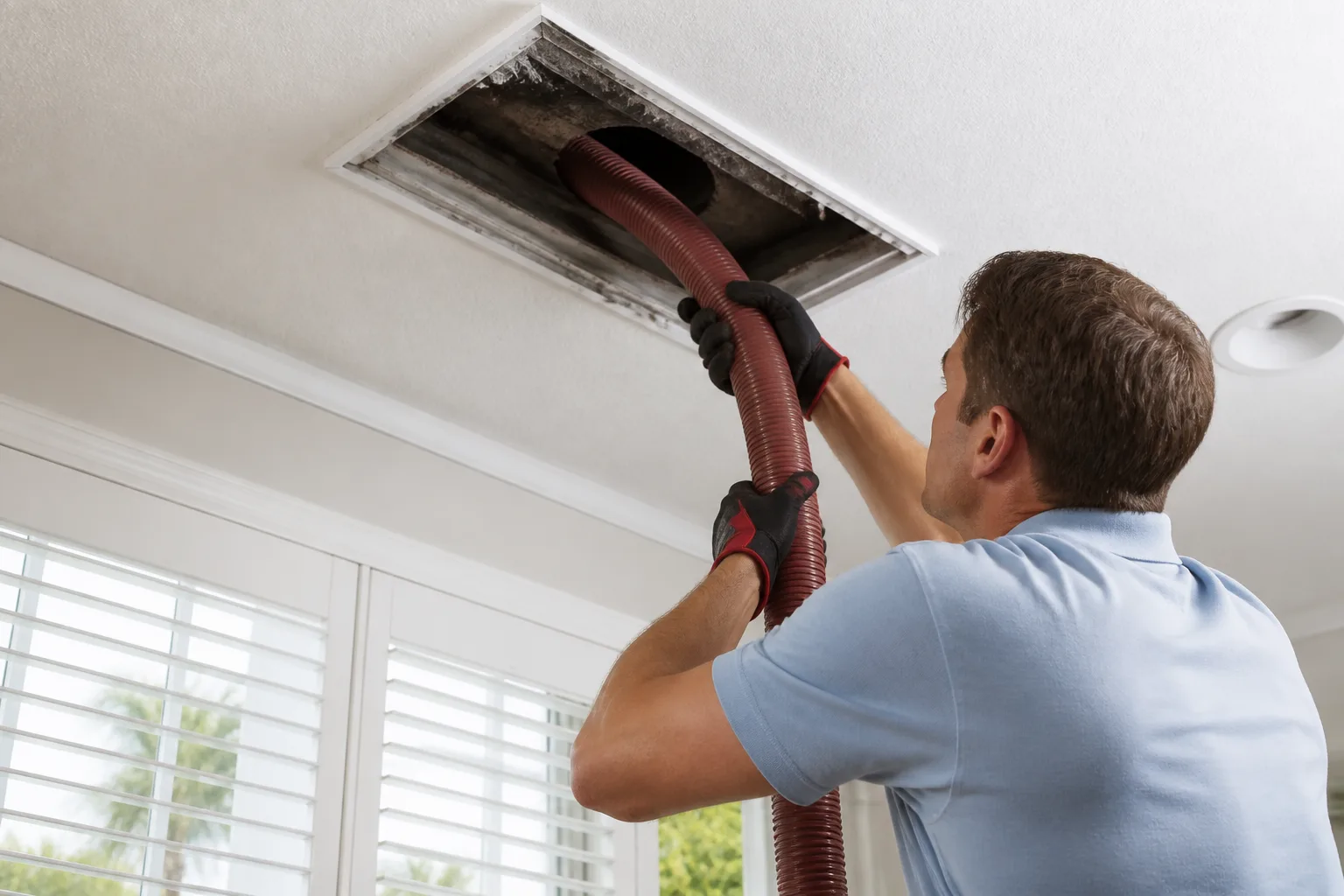
5 Mistakes to Avoid With Air Duct Repair
Most air duct repair failures trace back to the ten minutes before the work begins. A homeowner approves an estimate that says “repair duct leak” with no mention of what material gets used, what the seal should look like, or how the fix gets verified. That vagueness buys the contractor zero accountability, and it costs you a repair that fails inside eighteen months. If you’d rather skip the research and talk to a pro directly, call Linden Air Duct Cleaning at (980) 447-2498 and we’ll walk you through what a proper repair actually involves.
Key Takeaways:
- California mechanical code requires UL 181-rated tape or mastic on duct joints. Duct tape fails the standard and breaks down in attic heat within a year and a half.
- A specific, written scope of work with named products is the single strongest protection you have against a repair that doesn’t hold.
- Repairing ducts before cleaning them traps debris in the system and weakens the seal.
- A sealed duct that wasn’t balanced for airflow still underperforms. Sealing is half the job.
- Verbal mid-job expansion without a written change order is where repair costs balloon.
Mistake #1: Approving an Estimate With No Specified Materials
The costliest air duct repair mistake happens at the kitchen table, not in the crawlspace. A contractor hands you a line item that reads “seal duct leak: $380” and you sign it. What that line item doesn’t tell you is what product gets applied, how thick, and to which joints. In Los Angeles, where HVAC systems run for months at a stretch through summer, the wrong product on an attic duct degrades fast. We have pulled apart duct repairs in neighborhoods from Air Duct Repair in Los Angeles jobs where the previous contractor used silicone caulk on a supply plenum. It cracked within a season.
The fix is simple, and it doesn’t require you to become a duct expert. Before you sign anything, ask the contractor to write the specific product name and standard into the scope. If they say “sealant,” ask which one. If they say “tape,” ask if it meets UL 181. A contractor who hesitates on this answer is about to use whatever is on the truck. At Linden Air Duct Cleaning, every repair estimate names the mastic or tape product we plan to use, and that written scope is part of the price we agree on before work starts.
Mistake #2: Accepting Duct Tape on a Duct System
Duct tape, the gray fabric staple of every garage drawer, is not approved for sealing duct joints under California mechanical code. This surprises most homeowners, because the name suggests otherwise. But the adhesive on duct tape dries out and loses its hold when the duct surface gets hot. In a Los Angeles attic in August, the temperature above the insulation can hit 140 degrees. The adhesive fails, the tape peels back, and the leak returns. We have found duct tape still wearing its silvery sheen on the outside while air poured through the joint underneath it.
The code-driven standard is UL 181-rated tape, designed specifically for HVAC duct surfaces and rated for the temperature swings ducts actually experience. The alternative, and what we prefer for most repairs, is a water-based mastic that brushes on and cures into a durable, flexible seal. Mastic does not peel. It adheres to galvanized steel, flex duct connectors, and plenum seams. If a contractor pulls out a roll of gray duct tape on a repair, that is your signal to stop the job. The material cost-savings are maybe nine dollars. The cost to redo the repair later is hundreds.
Mistake #3: Skipping the Airflow Balance Check After the Repair
Here is a scenario we see from Air Duct Cleaning in Los Angeles service calls all the time: a homeowner pays for a duct repair, the leak is sealed, and a month later the back bedroom still feels five degrees warmer than the kitchen. The duct is sealed. The system is not balanced. Sealing a leak changes how air moves through the entire branch system. When one hole closes, airflow redistributes, and rooms that used to get adequate air may suddenly get less. A repair that doesn’t include a post-repair airflow check leaves you with a sealed duct that still doesn’t deliver.
A proper repair sequence ends with testing, not just a visual once-over. We use a combination of static pressure readings and manual airflow checks at the supply registers to confirm that the repaired duct is moving the volume of air the system expects it to move. Sometimes this means adjusting a damper. Sometimes it means adding a balancing collar at a branch. The point is that “sealed” and “functioning” are not the same word. When you are getting repair estimates, ask this question: “Does the scope include a post-repair airflow check?” A contractor who gives you a blank look just showed you what their definition of finished looks like.
Mistake #4: Repairing Ducts Before Cleaning Them
Sequence matters more than most contractors will admit. When a duct has a leak, it has been pulling unfiltered air from the surrounding space into the system. In Los Angeles, that surrounding space is often an attic full of dust, insulation fibers, and the kind of fine particulate that collects on every horizontal surface. If a repair crew seals the leak first and cleans the ducts second, the cleaning process agitates all that debris and pushes it toward the fresh seal. Some of it blows through the system and ends up in your living room. Some of it settles along the mastic while it cures, weakening the bond.
The right order is clean first, repair second. Clean ducts give the mastic or UL 181 tape a clean surface to hold. They also mean the debris that entered through the leak gets removed before you seal the system’s envelope. We run professional-grade negative-pressure extraction with Rotobrush and Nikro equipment to clean first, then we repair, then we confirm airflow. When you are interviewing companies, ask whether the repair is scheduled after the cleaning. If the answer is “we do both at once,” clarify exactly what that means. The two jobs are not simultaneous. They are sequential, and getting them backward costs you a weaker seal and dirtier indoor air.
Mistake #5: Approving a Verbal Change Order Mid-Job
This is the one that turns a $400 repair into a $900 invoice. The technician is in your attic. He comes down and says the original leak is sealed, but he found “additional damage” at the return plenum and he needs verbal approval to fix it because he is already up there. You say yes, because the alternative feels ridiculous. What just happened is a scope change without a written change order, and you have no record of what the second repair cost, what material was used, or what standard applies to it. In Los Angeles, where older homes in neighborhoods from Highland Park to Westchester have decades of layered ductwork, this is a common story.
Here is how to handle that moment. Tell the technician to stop work, come down, and write the new scope. It takes ten minutes. The change order should name the problem, the fix, the product, and the price. If the contractor resists, that resistance is information. A written change order protects both parties: you know what you are paying for, and the contractor has a record of your approval. Our policy at Linden Air Duct Cleaning is that no repair scope ever expands without a written change order signed by the homeowner. That is not a favor to the client. It is the only way to keep the job honest, and it is why every Linden repair also carries a written guarantee with a free second visit if the fix fails.
When to call a pro: If any repair estimate you receive does not name the product, the standard, or the verification method, call a professional. The cost of getting it wrong is not the first repair. It is the second repair, plus the re-cleaning, plus the months you spent moving air into an attic instead of a bedroom.
Related services in Los Angeles: If your ducts need repair and you have not had them cleaned recently, schedule the cleaning first. Our Linden Air Duct Cleaning home page covers pricing and process, and our Dryer Vent Cleaning in Los Angeles service addresses the vent side of your home’s air system, which carries its own set of repair considerations.
The Bottom Line
The five mistakes above share a common thread: they cost you money because they let a contractor work in the gray space between “done” and “done right.” The way out of that gray space is specificity before work begins. Know the product. Know the standard. Know the sequence. Know what verification looks like. In our experience at Linden Air Duct Cleaning, these are the questions that separate a repair that holds from one that fails quietly in an attic you never visit.
If you’re in Los Angeles and you want an air duct repair that comes with a written price before work starts, a written guarantee after it finishes, and a free second visit if the repair does not hold, call us at (980) 447-2498. We answer the phone with a live person, send you the technician’s name and photo before arrival, and show a photo ID badge at the door. No vague scopes, no verbal change orders, no surprises.
Frequently Asked Questions
Air duct repair in Los Angeles typically ranges from $350 to $1,200, depending on the number of leaks, the duct material, and whether the repair requires crawlspace or attic access. The low end covers a single accessible joint sealed with UL 181 mastic. The high end covers multiple leaks, plenum repairs, and post-repair airflow balancing. The price range is broad because duct systems are not standardized across LA’s housing stock, from 1920s bungalows to 1990s tract homes. Call (980) 447-2498 and we’ll give you a written, flat-price estimate for your specific system before any work begins.
Cheap quotes usually mean one of three things: the contractor is using non-compliant materials like standard duct tape, the scope doesn’t include verification of the repair, or the price is a loss leader that will grow through verbal change orders once the technician is on site. UL 181-rated tape and mastic cost more than duct tape, and a post-repair airflow check adds labor time. If a quote is hundreds of dollars below the others, ask which product they’ll use and whether the price includes verification. In Los Angeles, repairs that start cheap often end expensive.
Ask for three things: the product name in writing, a photo of the completed repair before the access panel goes back on, and a post-repair airflow reading at the affected registers. Any contractor doing honest work will provide all three without hesitation. At Linden Air Duct Cleaning, we photograph every repair before we close the system and we stand behind the work with a written 365-day guarantee. If the repair fails within that window, we return at no charge.
There is no fixed interval for duct repair in Los Angeles, because duct damage is driven by age, installation quality, pest intrusion, and temperature cycling. Ducts in unconditioned attics experience extreme temperature swings that stress seals over time. We recommend having ducts inspected any time you notice uneven room temperatures, a jump in your energy bill without a change in usage, or visible dust accumulating faster than before. Those are the early signals that a leak has opened somewhere. Call (980) 447-2498 for a free estimate and we’ll tell you what’s actually going on.
Written by Marcus Veale, Owner at Linden Air Duct Cleaning, serving Los Angeles since 2004.
Need Air Duct Cleaning Help?
Call Linden Air Duct Cleaning - licensed & insured, here with fast after-hours help in Los Angeles.
(980) 447-2498