
Rotobrush Air Duct Cleaning in Los Angeles: A Homeowner’s Guide
Rotobrush is not a generic term for duct cleaning. It’s one proprietary rotary-brush-and-vacuum method that performs very well on rigid sheet-metal ducts and can actually damage older flex-duct systems common across Los Angeles. Before you book, the question that matters is what your ducts are made of – not what machine the company owns. If you’d rather skip the research and just talk it through, call (980) 447-2498.
What Rotobrush Actually Is (and Isn’t)
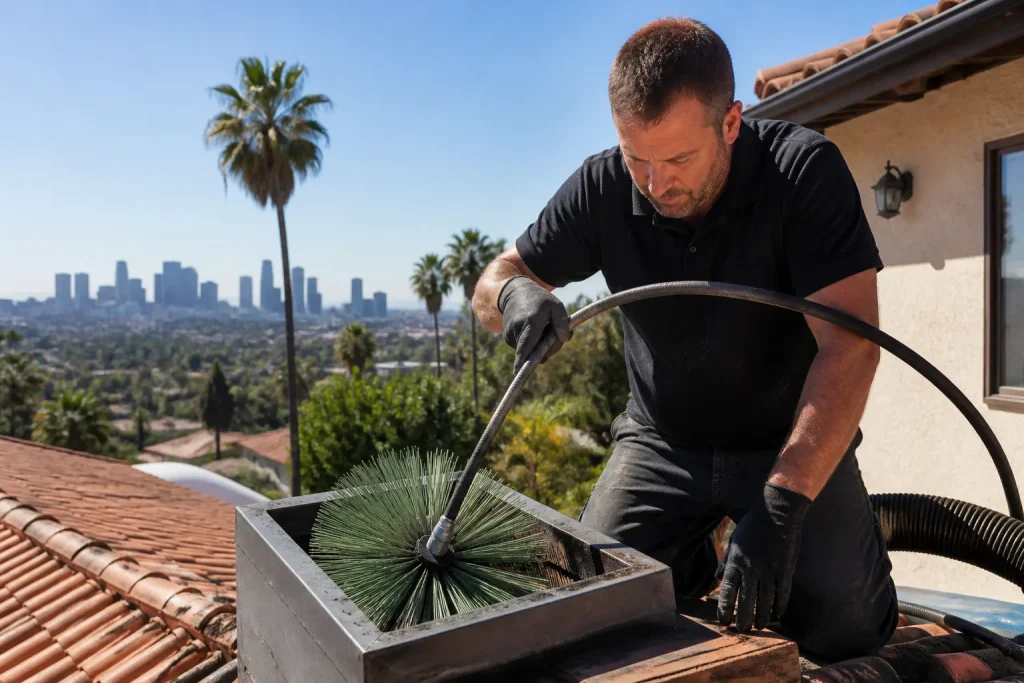
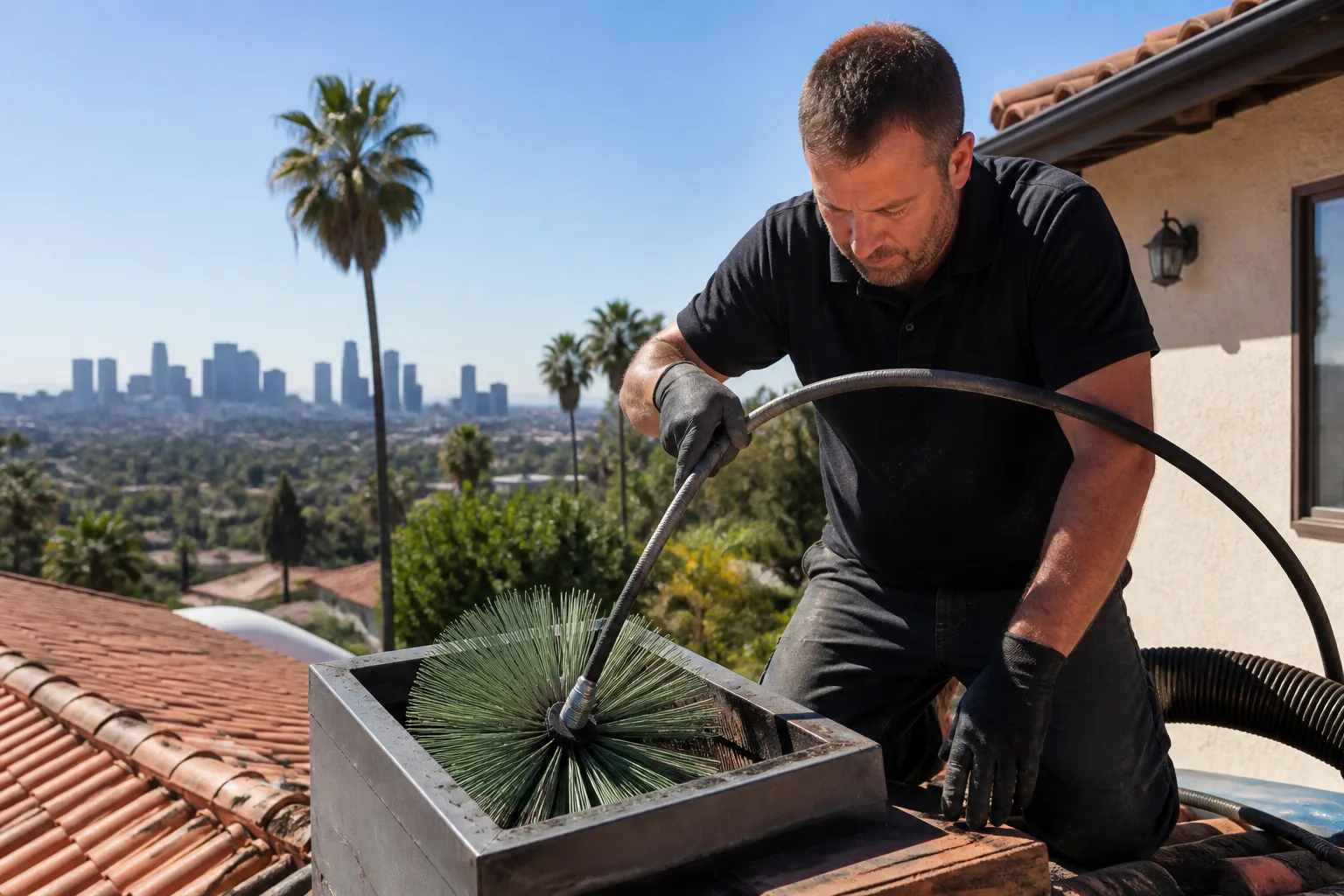
Rotobrush is a brand name that became shorthand for a cleaning method: a spinning nylon or polypropylene brush head pushed through the duct while a high-powered vacuum runs simultaneously. The brush agitates debris off the duct walls; the vacuum captures it before it re-enters the house. That’s the whole idea in two sentences.
The confusion starts when companies say “we use Rotobrush” as if it were a certification. It isn’t. It’s equipment. Plenty of reputable Los Angeles duct cleaners run negative-pressure extraction with pneumatic agitation tools and get the same or better results on most residential systems. Rotobrush is a solid tool in specific conditions, and a liability in others.
We run Rotobrush equipment on jobs where it’s the right fit. We also run Nikro negative-pressure systems, which are often the better call. The equipment matters less than whether the technician knows which tool matches your duct type.
When Rotobrush Is the Right Tool in Los Angeles
Rotobrush earns its reputation on one duct type: rigid sheet metal. If your Los Angeles home was built before roughly 1975 and still has its original trunk lines, you likely have galvanized steel ducts. Those ducts collect a stubborn film – decades of cooking grease, cigarette residue from a different era, construction dust that settled after the 1994 Northridge quake if the house is in the Valley. A rotary brush scrubs that surface mechanically in a way suction alone often can’t.
Here’s where the brush genuinely outperforms:
- Heavily soiled rigid metal ducts – the brush physically breaks the bond between the duct wall and caked-on particulate.
- Ducts with visible debris buildup – if you can see crud at the register openings, there’s more upstream.
- Post-renovation dust – drywall compound and sawdust that settled in the ductwork during a remodel in Silver Lake or Echo Park.
- Long straight runs – Rotobrush handles extended trunk lines well when the technician sizes the brush head correctly.
The key phrase is “sizes the brush head correctly.” Rotobrush heads come in several diameters. Running a too-large head through a duct doesn’t clean better; it scores the metal and can knock joints loose. A proper Rotobrush job in Los Angeles means the technician checks duct dimensions before the brush goes in, not after the damage is done.
When Rotobrush Is the Wrong Tool – and Why Most LA Homes Fall Here
Here’s the part most sales calls skip: the majority of Los Angeles housing stock does not have rigid metal ducts. Tract homes built in the San Fernando Valley from the 1980s onward, condos in West LA, apartments in Koreatown, the endless developments across the Inland Corridor of LA County – these overwhelmingly use flex duct. That’s the accordion-style tubing with a wire coil and a foil or plastic jacket. It’s cheap, it’s flexible, and aggressive rotary brushing can tear it.
The same applies to fiberglass duct board, which you’ll find in some 1960s and 1970s homes around the Fairfax district and Mid-Wilshire. Fiberglass duct board is compressed fiberglass formed into rigid panels. A rotary brush on that surface abrades the fibers, releasing material into the airstream – the opposite of what a cleaning is supposed to accomplish.
So when a company leads with “we use Rotobrush” on a Valley flex-duct house, the homeowner is paying a premium for equipment that is either unnecessary or actively harmful for their system. That’s the sales-line-versus-upgrade question from the opening. The honest answer for flex-duct homes is usually negative-pressure cleaning with soft agitation, not a brush.
What a Proper Rotobrush Job Looks Like
If you do have rigid metal ducts and you’ve confirmed Rotobrush is appropriate, here’s what the work should actually involve. Walk away from any company that skips these steps.
- Before photos of your actual ducts – taken through the register openings before work starts. If a company won’t show you the inside of your own ducts, there’s a reason.
- Brush head size confirmation – the technician should be able to tell you the duct dimensions and match the head to the opening.
- HEPA vacuum containment – the vacuum should be HEPA-filtered and run continuously while the brush is in motion. A shop-vac pointed at a vent is not Rotobrush cleaning.
- System depressurization – the vacuum creates negative pressure inside the duct so loosened debris doesn’t get pushed back into your living space through gaps.
- After photos from the same angles – you should be able to compare before and after and see the difference. We hand our customers their own before-and-after photos on every job. Not a stock image. Their ducts.
We pulled a brush head out of a garage in Sherman Oaks a couple years back where another company had used a 6-inch head on 4-inch flex runs. The homeowner had paid $650. The ducts were frayed in a dozen places. We ended up doing an Air Duct Repair in Los Angeles job that cost more than the original cleaning ever should have.
What Rotobrush Cleaning Should Cost in Los Angeles
Rotobrush is an upcharge, not a whole new pricing universe. The equipment is more expensive to run and the work is more labor-intensive on suitable duct types, so expect to pay a legitimate premium of roughly $150 to $250 over a standard negative-pressure clean. In the Los Angeles market, a standard whole-house air duct cleaning on a 3-bedroom home typically lands between $450 and $800. A Rotobrush job on appropriate metal ductwork might run $600 to $950 for the same house.
It should not cost $2,000. If a company quotes you that number, they’re not selling Rotobrush; they’re selling you a story.
Two more pricing red flags, because this industry is full of them:
- Per-vent pricing – “Just $39 per vent!” multiplies fast and obscures the total. Ask for one price for the whole system. At Linden Air Duct Cleaning, the price goes in writing before any work starts. One number. No surprises when the van is in the driveway.
- The bait-and-switch coupon – a “$99 whole-house special” that becomes $900 once the tech arrives and “finds” mold or asbestos. A reputable cleaner tells you what the job costs honestly, before they’re at your door.
For reference on standard pricing across the city, our guide to Air Duct Cleaning in Los Angeles breaks down typical cost ranges by home size and system type.
How to Verify the Work Was Actually Done
Ducts are invisible infrastructure. You can’t watch the work happen inside your walls. That’s why every legitimate cleaner in Los Angeles should give you proof you can check yourself. Here’s what to ask for:
- Before-and-after photos of your system, shot through the register openings, matched by location. This is the single most important verification tool. If the “after” photo shows the same gray film as the “before,” the job wasn’t done.
- A written report describing what was cleaned, what was found, and any recommendations. Not a verbal summary – written.
- Time on site – a proper whole-system cleaning on a 3-bedroom Los Angeles house takes 3 to 5 hours. A 45-minute “cleaning” is a walkthrough with a vacuum wand.
And when the job is done, the guarantee should be in writing too. Every repair we do carries a written guarantee and a free second visit if the repair fails. If a company won’t put its promises on paper, that tells you what its promises are worth.
The Bottom Line
Rotobrush is a legitimate, effective method – on rigid sheet metal ducts. On flex duct and fiberglass board, which cover a huge share of Los Angeles homes, it’s the wrong tool and can cause real damage. The company that leads with “we use Rotobrush” without asking what your ducts are made of is selling equipment, not solutions. Before you book, ask three questions: What type of ducts do I have? Is Rotobrush appropriate for them? Will the price be in writing before work starts? If the answers aren’t clear and specific, call someone else.
If you’re in Los Angeles and want an honest assessment of your duct system, Linden Air Duct Cleaning home is where you’ll find us. We’ll tell you straight whether Rotobrush makes sense for your house or whether standard negative-pressure cleaning with HEPA filtration is the better call. Free estimates – call (980) 447-2498.
Frequently Asked Questions
No. Rotobrush is designed for rigid sheet metal ducts and can tear flex duct or abrade fiberglass duct board. Most homes built in Los Angeles after the 1980s, especially tract communities in the San Fernando Valley, use flex duct where Rotobrush should not be used.
Expect $600 to $950 for a typical 3-bedroom Los Angeles home with metal ducts. That reflects a $150 to $250 premium over standard negative-pressure cleaning. A price above $1,000 for an average house should trigger questions.
Ask for before-and-after photos taken through the same register openings. A legitimate cleaner shows you the inside of your ducts before and after. Add a written report and 3 to 5 hours on site for a full-system clean, and you have a verifiable job.
The low quotes usually come with per-vent pricing or a bait price that climbs after the tech arrives. Higher quotes from companies that give you a written whole-system price before work begins are often cheaper in the end. Get the total in writing first.
Written by Marcus Veale, Owner at Linden Air Duct Cleaning, serving Los Angeles since 2004.
Need Air Duct Cleaning Help?
Call Linden Air Duct Cleaning - licensed & insured, here with fast after-hours help in Los Angeles.
(980) 447-2498