
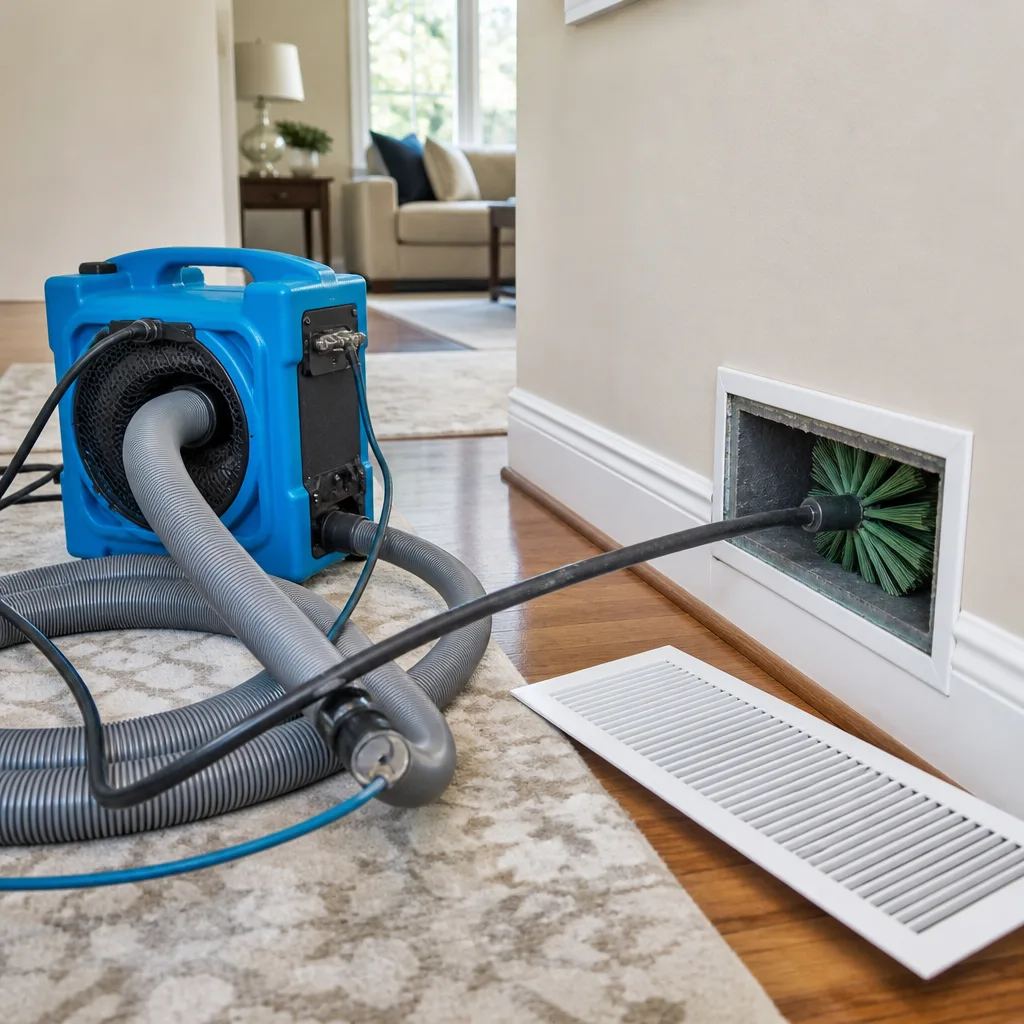
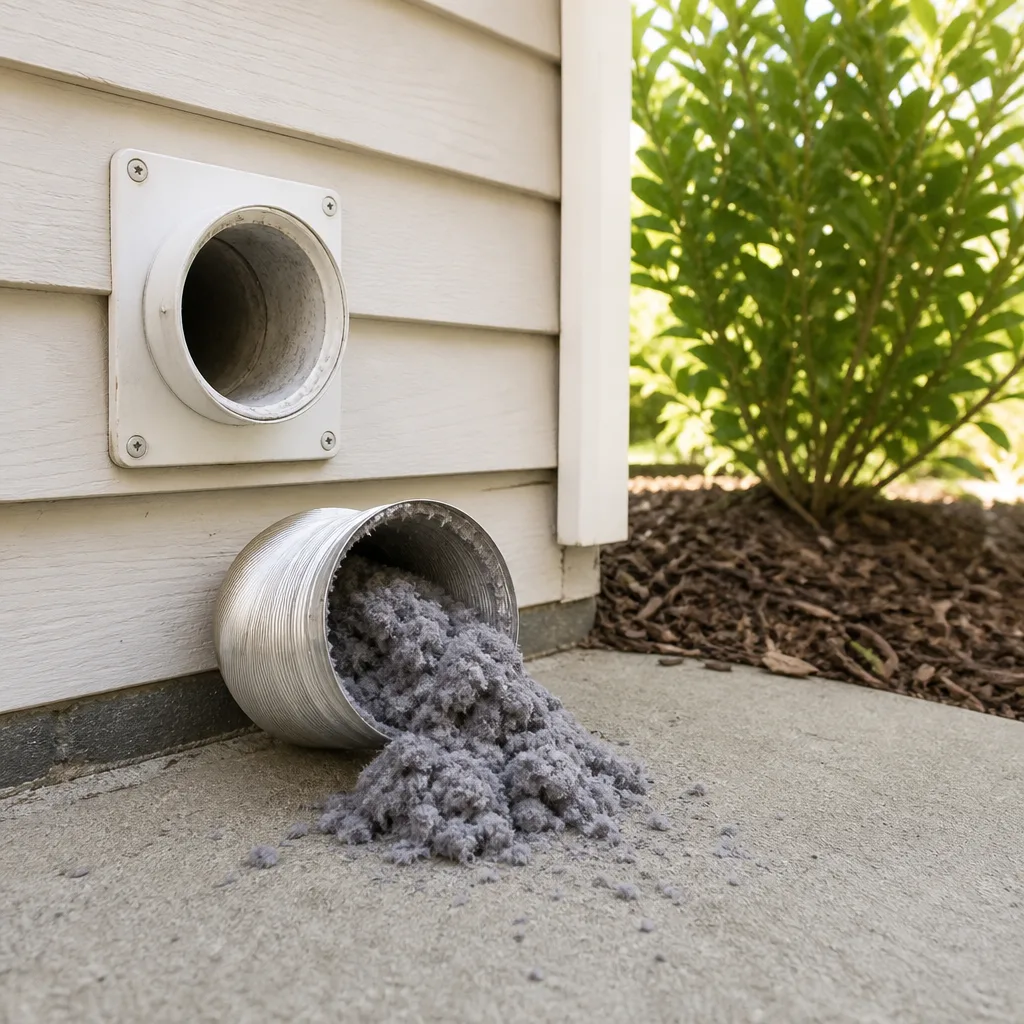
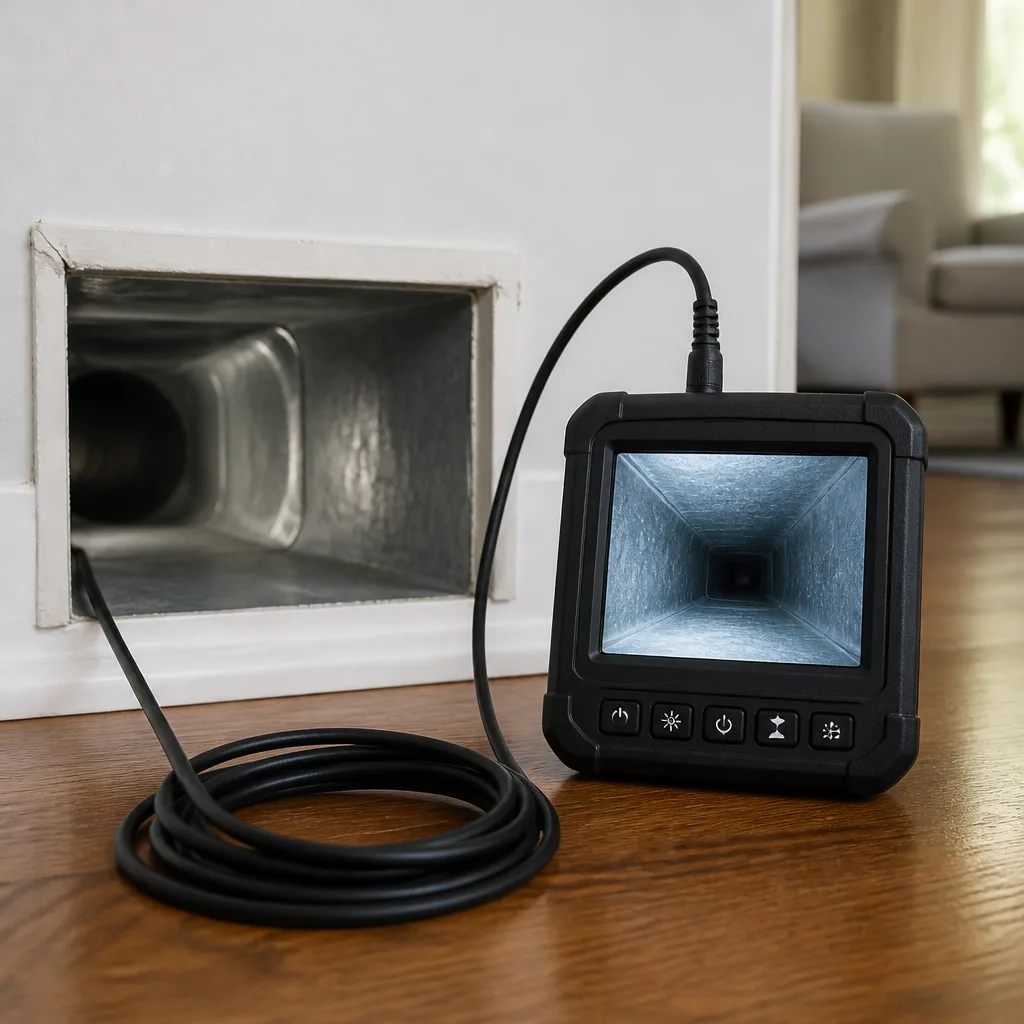
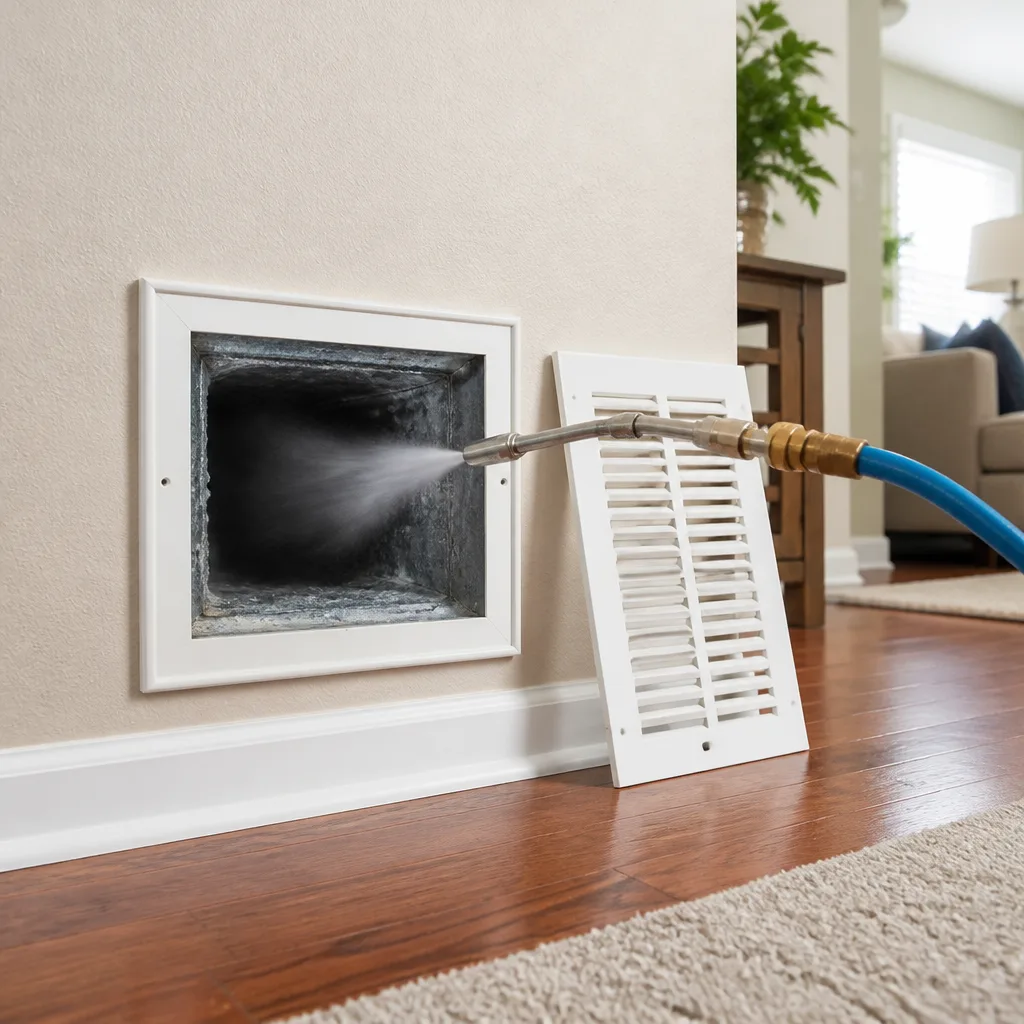
Whole-system duct and dryer vent check with before-and-after photos - you see exactly what came out of your vents
That "$99 whole-house special" is a bait ad - the real number appears once they are in your hallway, or the "clean" is a shop-vac at the register. We photograph the inside of your ducts before and after instead.
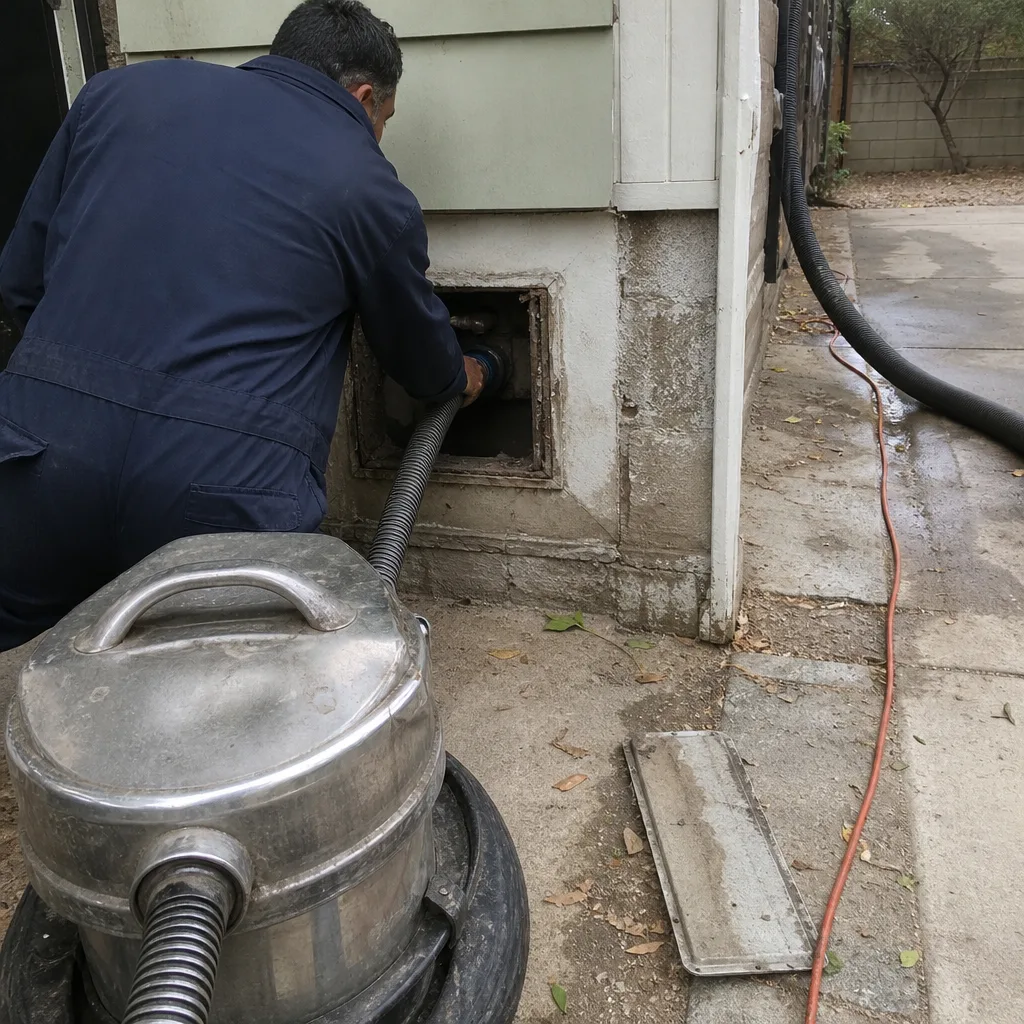 Before
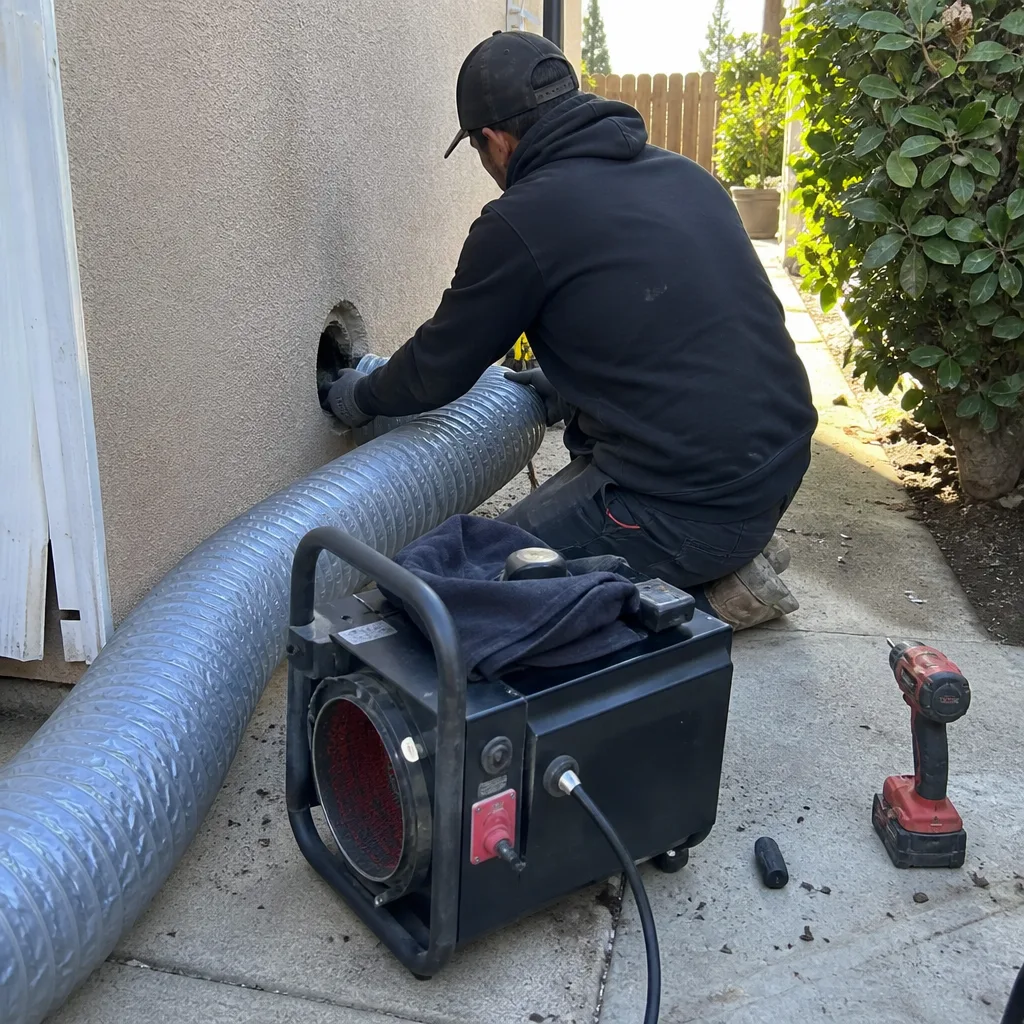 After
After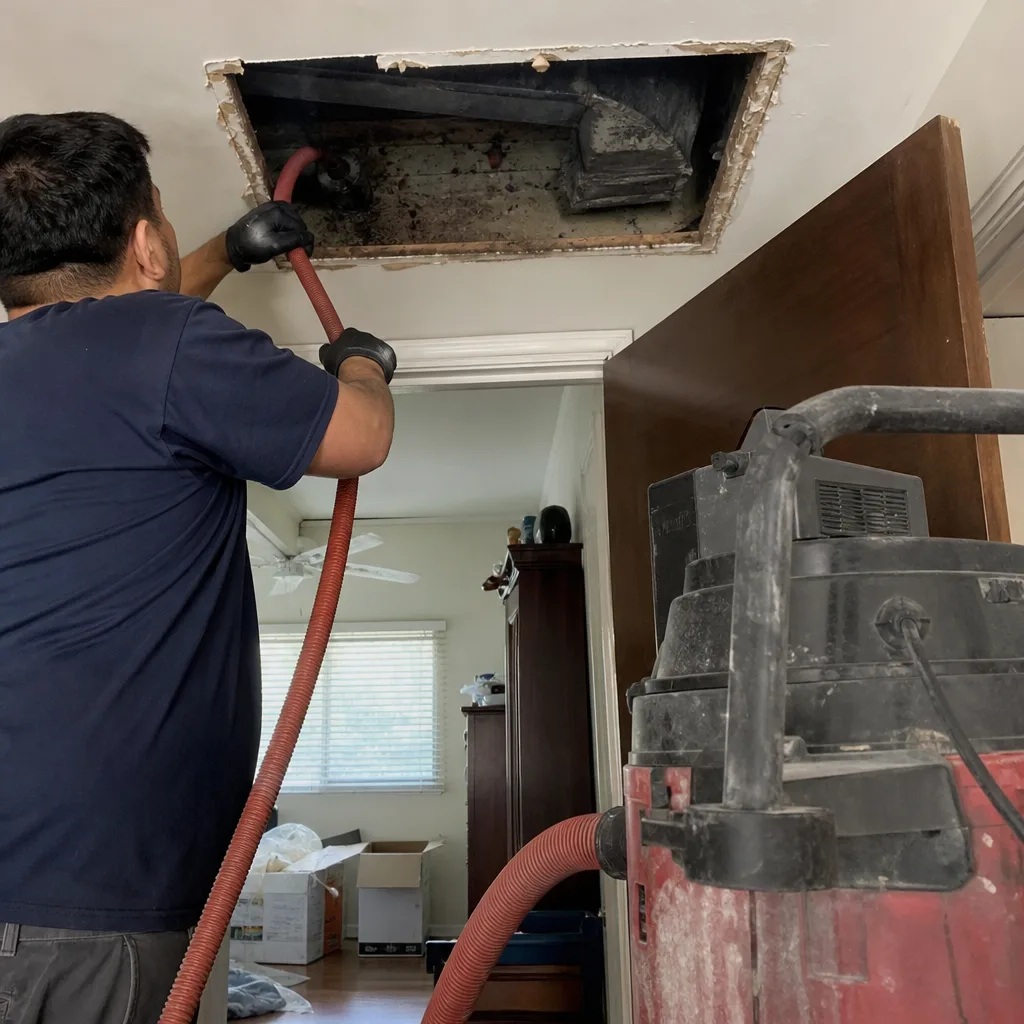 Before
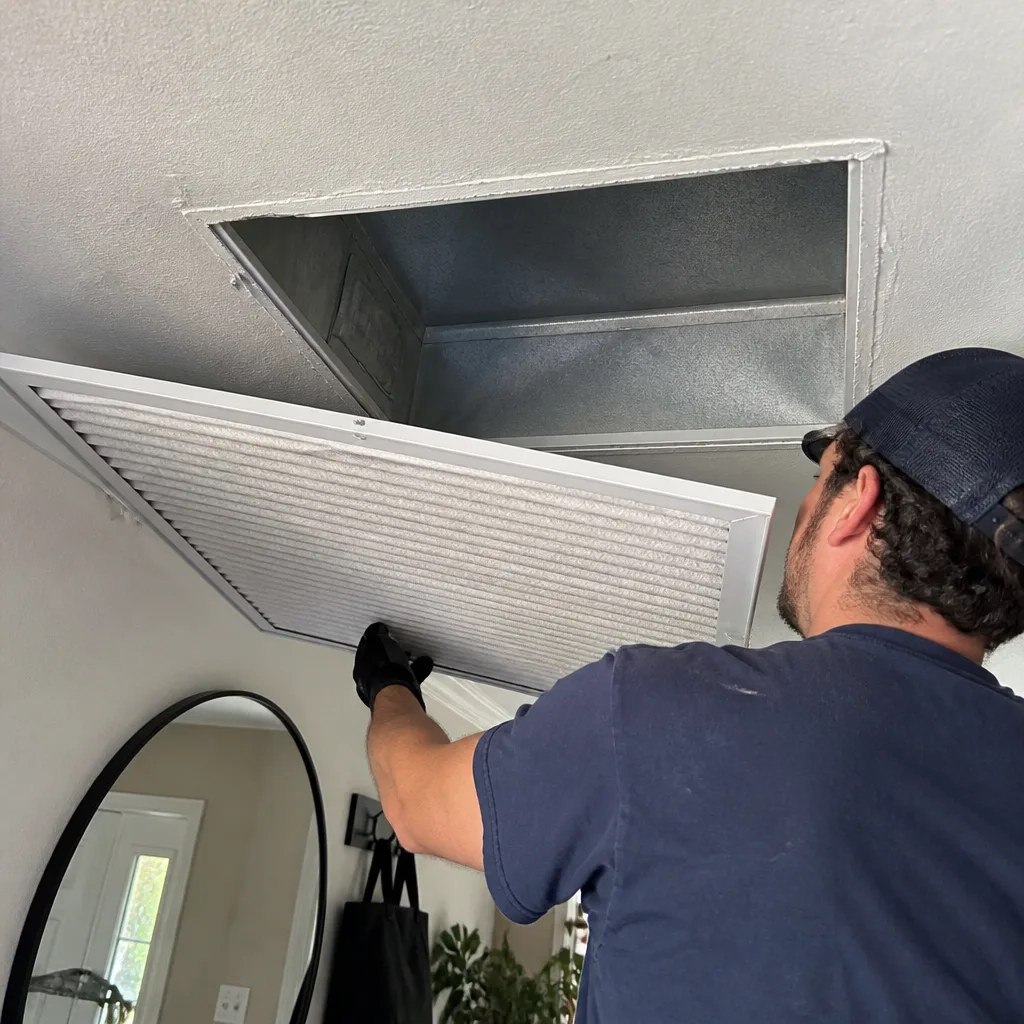 After
After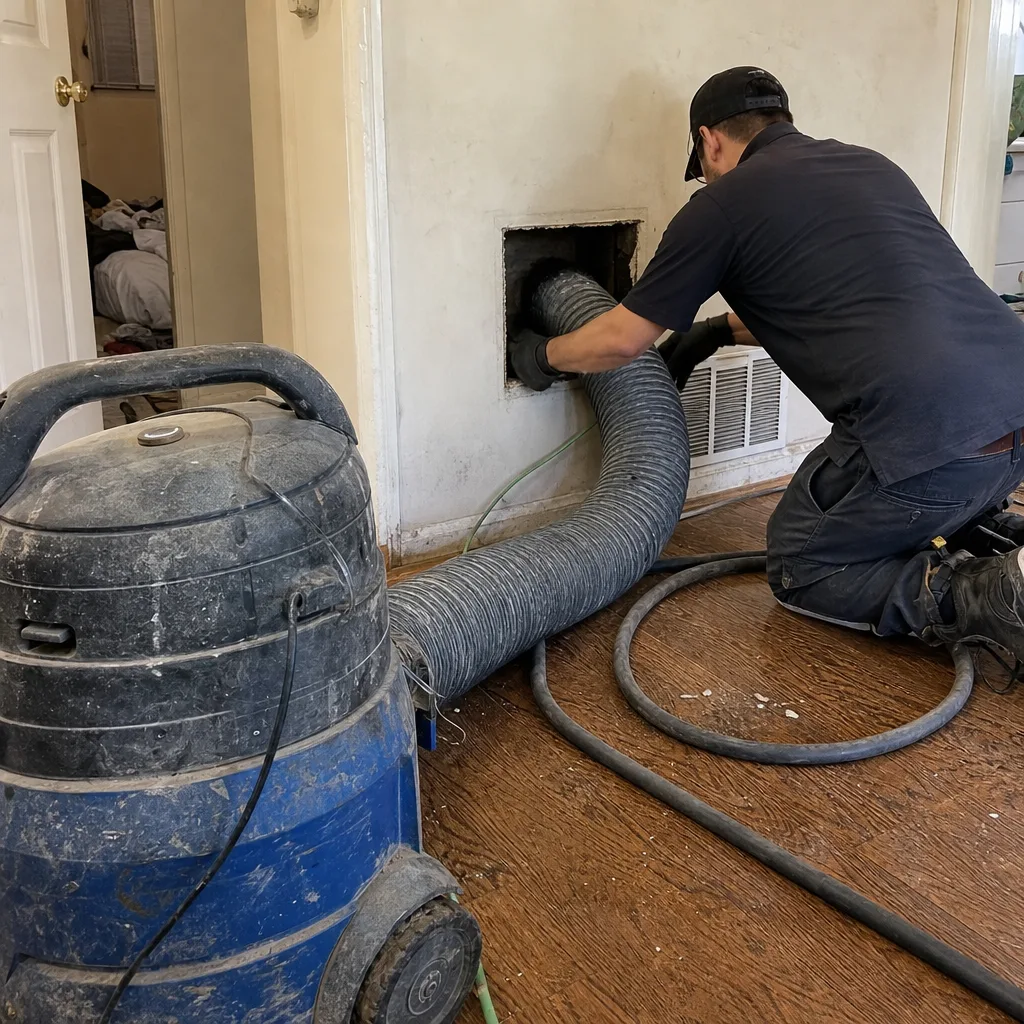 Before
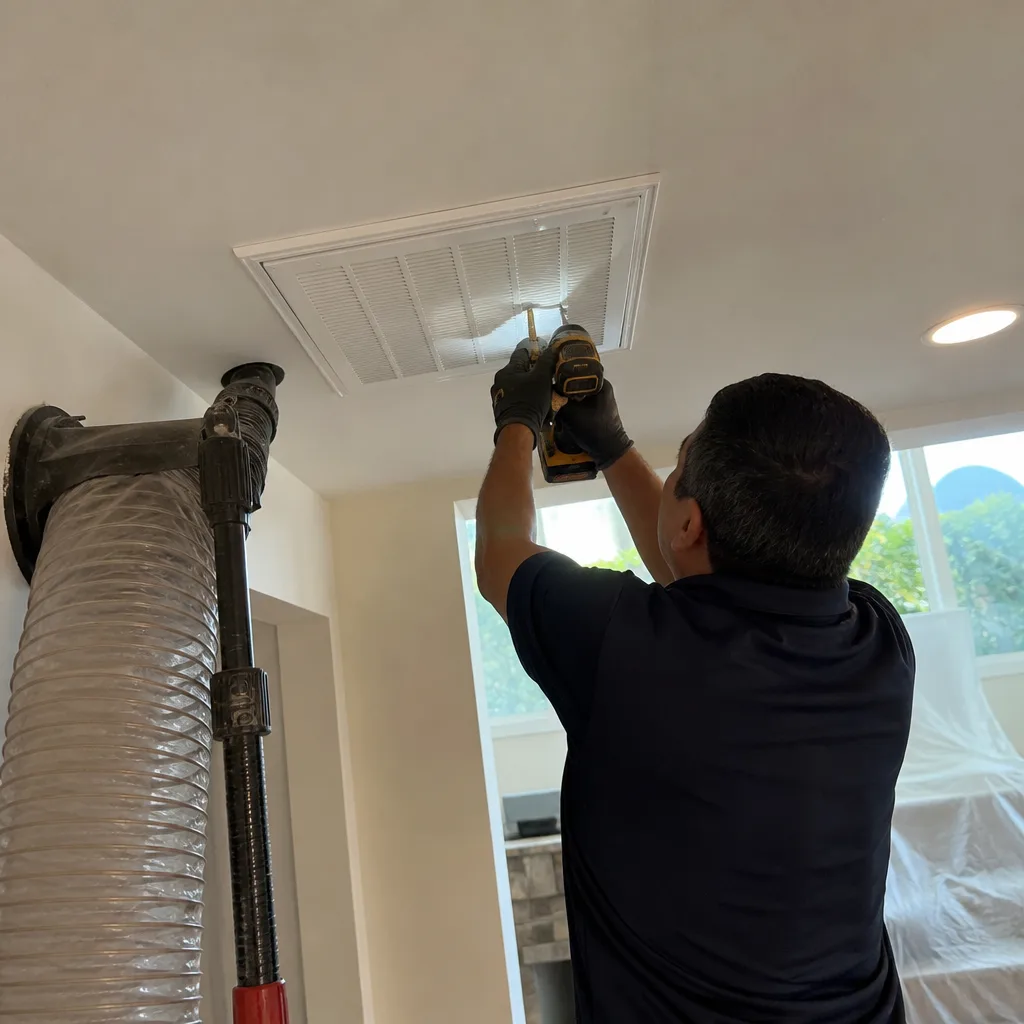 After
AfterNikro Duct Sealing & Repair: The Los Angeles Owner’s Guide
If your Nikro system’s sealing gaskets, access panels, or internal duct connections have failed, we stock the parts and do the repair in Los Angeles, typically for $210 to $440 installed depending on the part and how much disassembly your unit needs. Most owners discover the failure the same way: airflow drops, a musty smell returns a week after cleaning, or the system starts pulling air from places it shouldn’t. We’re an independent service provider, not affiliated with Nikro directly, but we work on their equipment regularly and keep common wear parts on the truck.
Here’s what’s actually going on: Nikro systems, like the RX series portable negative-air units and their truck-mounted siblings, rely on rubber gaskets and compression seals at every connection point. In Los Angeles, they fail on a schedule. The dry heat and the fine dust that settles into every garage, attic, and utility closet across the city hardens those gaskets, then the constant expansion and contraction from our wide temperature swings cracks them. Once a seal goes, your system loses negative pressure, which means it stops pulling air through the filters and starts pulling it through the leak instead. You won’t always hear it. You’ll notice the results.
Which Nikro Models This Applies To
We work on Nikro units across the RX series (RX-400, RX-500, RX-650), the IND series industrial extractors, and the older portable models that show up in a lot of Los Angeles condos and apartment maintenance closets. The part compatibility is honestly more finicky than most owners expect. A gasket for an RX-400 does not necessarily fit an RX-500, even though they look nearly identical from three feet away. The screw spacing is different, the channel depth varies, and the material spec changed between manufacturing years.
Your best move before calling is to find the model plate. On RX units, it’s a silver tag on the side of the motor housing, usually near the power switch. The serial number’s first two digits tell you the production year, and we’ll ask for both. If the tag’s worn off (common in coastal units where salt air eats the metal), we can identify the unit from the filter door shape and the hose diameter. And here’s the compatibility gotcha: Nikro changed the hose coupling design on RX-series units made after 2017. The old style used a twist-lock collar with a rubber O-ring; the new style uses a friction-fit sleeve with a different durometer. They do not interchange. If someone sells you a universal-fit coupling, it’ll leak under load and you’ll be right back where you started.
On OEM versus aftermarket: Nikro’s own replacement parts are fine, but the markup is real. For gaskets and standard collars, we stock quality aftermarket equivalents that match or exceed the OEM spec at about 40% less. For anything involving the motor seal assembly or the internal HEPA mounting ring, we stick with OEM. The tolerance matters there.
Signs Your Nikro Duct Sealing & Repair Is Failing
- Airflow drops mid-job. The system loses negative pressure because a seal has opened, so air stops moving through the extractor at full force. You’ll feel it at the hose end first: less pull, less debris capture, more dust settling back into the room.
- Dust collects around the unit itself. Leaking seals expel air outward, and that air carries whatever was in the duct. If you’re wiping fine gray dust off the top of the machine after every use, the leak is near the blower side, not the hose side.
- A musty or stale smell returns days after cleaning. This one frustrates Los Angeles owners the most. The system isn’t pulling through the filters, so unfiltered air bypasses them entirely. You’re not cleaning; you’re recirculating.
- Visible cracks or flattening on rubber seals and gaskets. In our climate, rubber compounds dry out and shrink. If the gasket looks glazed, brittle, or sits unevenly in its channel, it’s already leaking. The failure is progressive, not sudden.
- The unit runs louder than normal. Air whistling through a gap is high-pitched and intermittent. A properly sealed Nikro system has a steady mechanical tone, not a whistle. That sound is literally air finding the path of least resistance through a failed seal.
Marcus Veale has pulled more unrecognizable gaskets out of Los Angeles apartment units than he cares to count. His line on it: “Clean ducts don’t fix everything, but dirty ones can quietly make a lot of things worse.” A failed seal means your cleaning job isn’t actually happening, even when the machine is running.
Replacement Cost & What’s Included
Here’s the straight pricing for Los Angeles, because you should know before you call:
- Single gasket replacement: $210 to $290 installed, depending on the part and how much disassembly the model requires.
- Hose coupling replacement (post-2017 style): $260 to $340 installed, including the new coupling and a pressure test to confirm the seal holds.
- Full seal kit + internal duct inspection: $360 to $440 installed. We open the unit, replace every wear seal, clean the internal duct pathways, and run a smoke test to verify no leaks remain.
What drives the range is whether we’re doing one gasket or a full kit, and whether the unit needs a deep internal cleaning before the new parts go in. We don’t charge a diagnostic fee when you book the repair with us. Every Nikro repair we do in Los Angeles gets a written price before any work begins, and our repair work carries a written guarantee. If the covered repair fails, our second visit is free. That’s the only way Marcus will do it.
We also stock parts for Lennox, Trane, and Carrier systems, so if you’ve got a mixed fleet, one call covers it.
DIY or Call Us?
If you’re comfortable with a screwdriver and you’re working on a cold unit that’s unplugged and been sitting for an hour, you can safely check the obvious: visual cracks in gaskets, loose screws on access panels, a coupling that’s worked loose. Replacing a gasket on an RX-series portable is straightforward in theory. But the theory misses what actually happens in Los Angeles homes: stripped threads in the plastic housing, heat-baked screws that snap, and seal channels that clog with compacted dust so the new gasket won’t seat. We see more DIY attempts that made the leak worse than we see clean homeowner fixes.
The electrical side is the line most owners shouldn’t cross. If the motor seal assembly is leaking, that’s a repair that puts your hands near the blower motor, and getting it wrong means the unit pulls unfiltered air directly across the windings. That’s a fire hazard and a shock hazard. That one gets a trained tech, every time. If you’re not sure what’s actually leaking, call us at (980) 447-2498 and describe the symptom. Marcus will tell you over the phone whether it’s worth a service call or something you can handle yourself.
FAQs
In Los Angeles, expect 3 to 5 years from rubber gaskets and hose couplings, and less in the San Fernando Valley where summer heat pushes garage temps past 110°F. If you’re coastal, salt air shortens it further. The lifespan reality in California weather is simply shorter than the manufacturer’s general guidance, which doesn’t account for our specific climate. Call (980) 447-2498 for an exact quote on your model; estimates are free.
No. A cracked or hardened rubber gasket cannot be glued, taped, or reconditioned back to a working seal. The material has lost its elasticity and no adhesive holds under the constant vibration and pressure cycling of a running Nikro system. Replacement is the only fix that lasts, and we keep the common gaskets on the truck in Los Angeles. Call (980) 447-2498 and we’ll confirm we’ve got your part before we roll.
A single gasket or coupling swap takes about an hour once we’re on site. A full seal kit with internal cleaning takes 2 to 3 hours, because we’re pulling debris out of the internal duct pathways and running a smoke test to prove the system holds negative pressure before we leave. We’ll give you a clear window when you book.
We keep common RX-series gaskets, post-2017 hose couplings, and access panel seals stocked on our trucks in Los Angeles. Oddball parts, like motor seal assemblies for older IND-series units, usually arrive in 3 to 5 business days. When you call (980) 447-2498, we’ll check the truck before you book so you’re not waiting on a surprise.
We run a smoke test on every Nikro duct sealing repair in Los Angeles before we leave, and you’ll see the before-and-after pressure difference on our gauge. You also get a written guarantee on the repair. If a covered repair fails, the second visit is free. That’s the standard, not a special.
Call Linden Air Duct Cleaning for Nikro Repair in Los Angeles
If your Nikro unit isn’t holding negative pressure, the fix is usually quicker than you think. We’ll tell you what’s wrong, what it costs, and whether you need us on site at all. Call (980) 447-2498 for a free estimate. A live person answers every time, and the tech who shows up has a name and a photo you’ll see before they arrive. Written price before any work starts, written guarantee on every repair. No surprises.
Written by Marcus Veale, Owner, Linden Air Duct Cleaning at Linden Air Duct Cleaning, serving Los Angeles and nearby areas.