
Whole-system duct and dryer vent check with before-and-after photos - you see exactly what came out of your vents
That "$99 whole-house special" is a bait ad - the real number appears once they are in your hallway, or the "clean" is a shop-vac at the register. We photograph the inside of your ducts before and after instead.
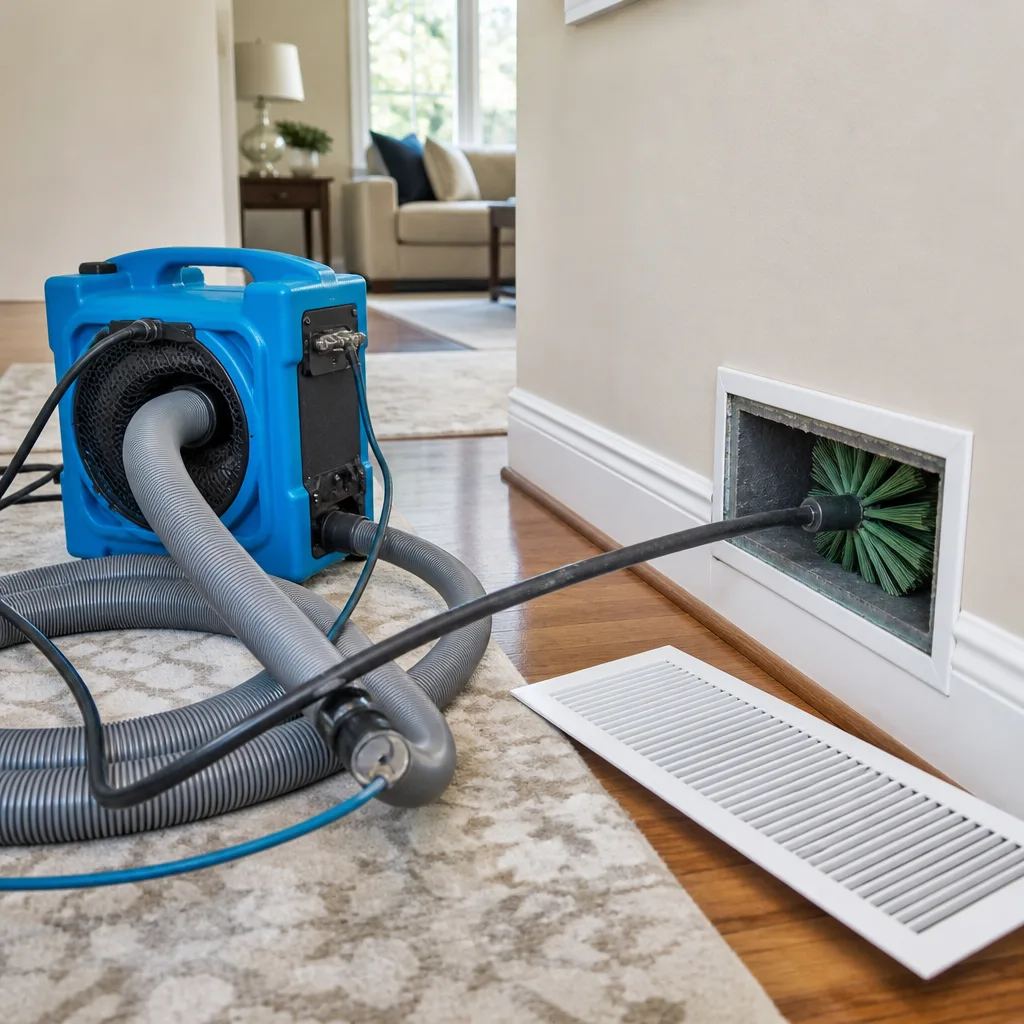
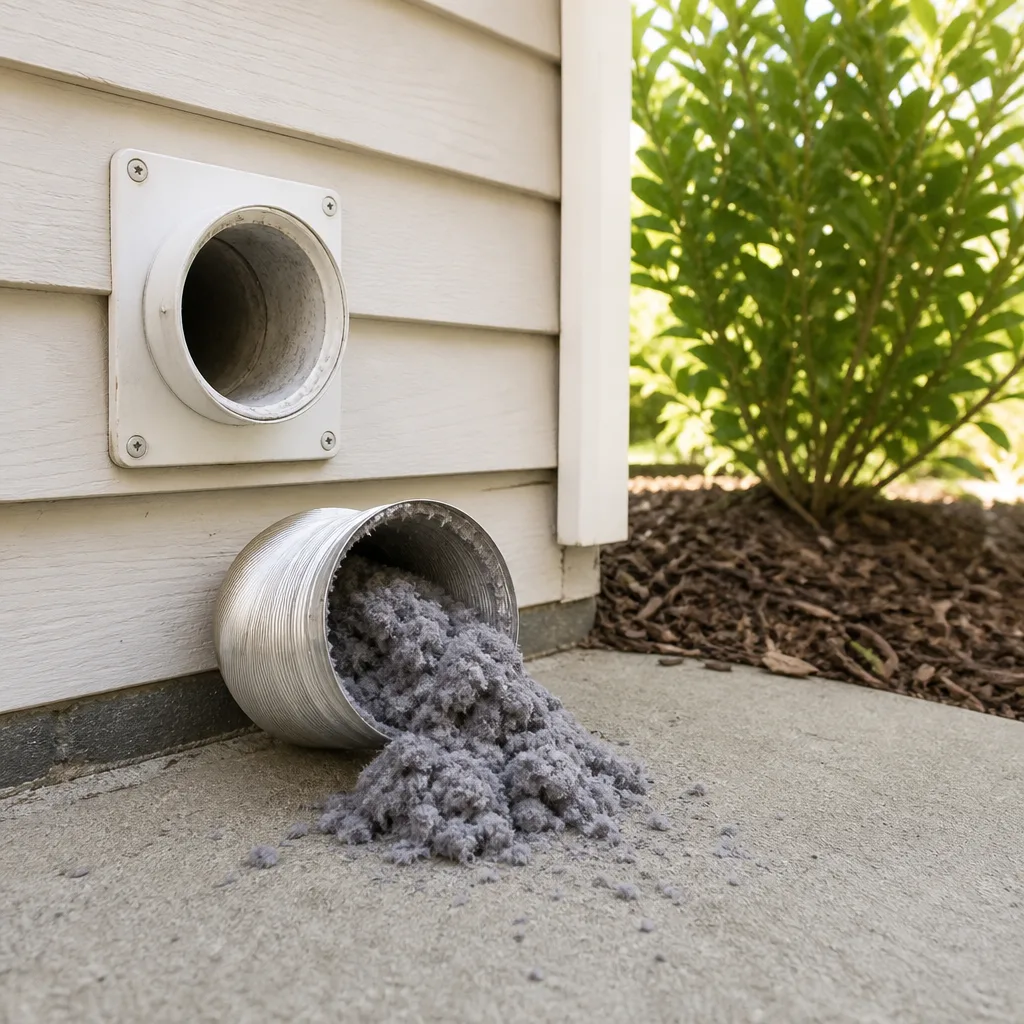
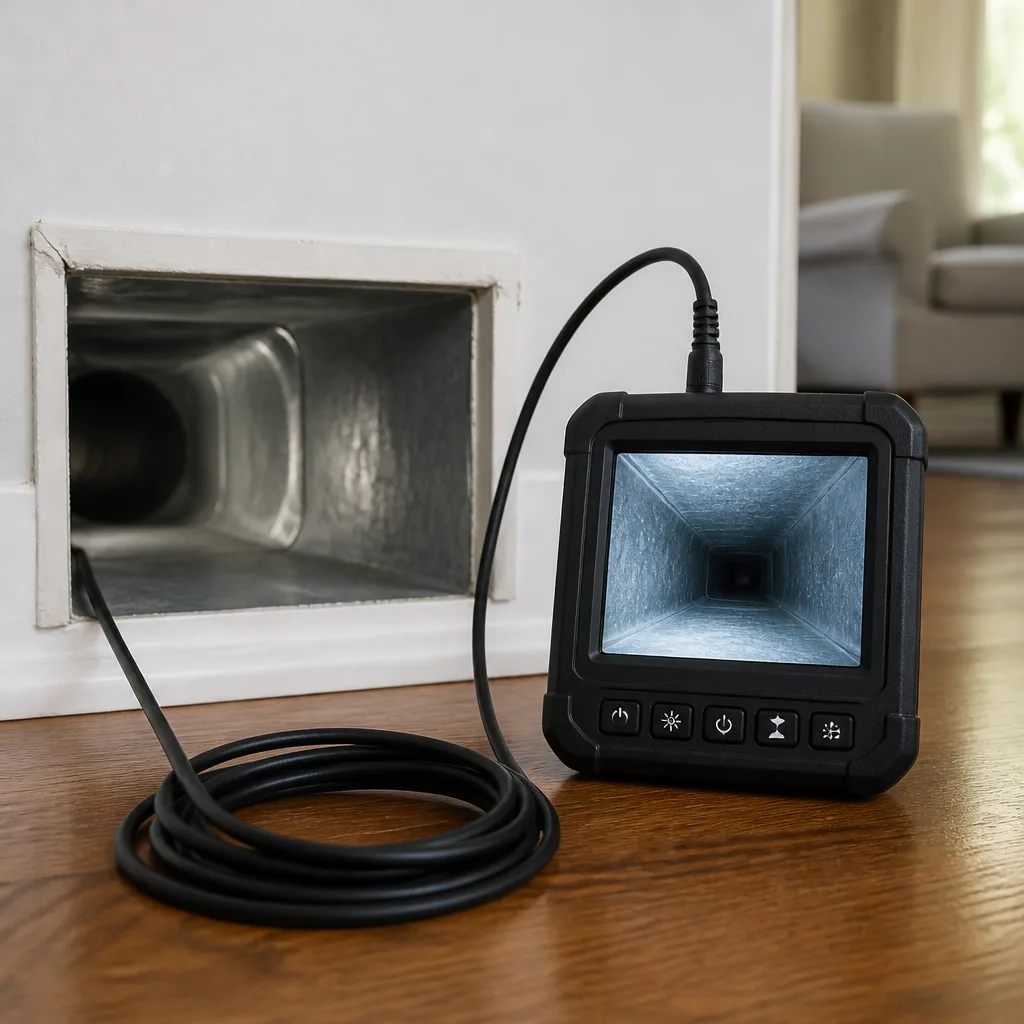
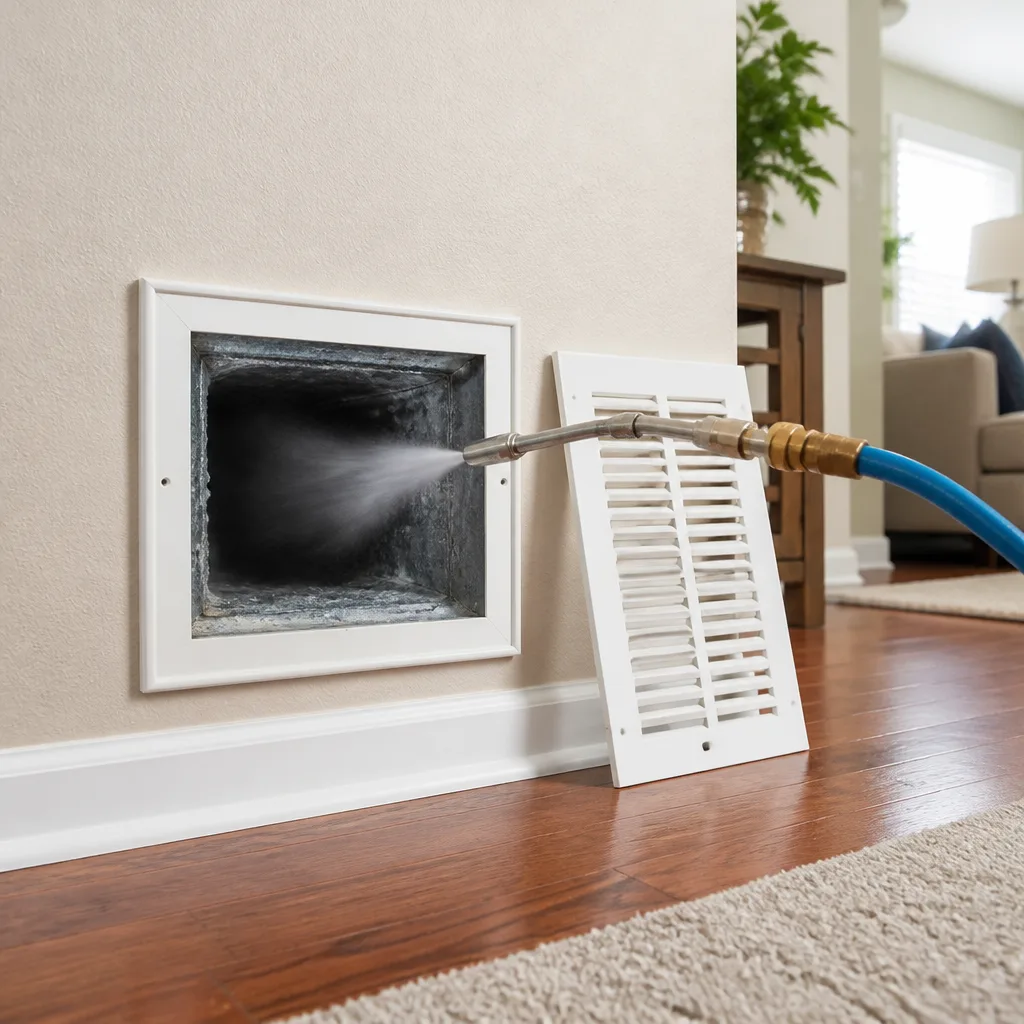
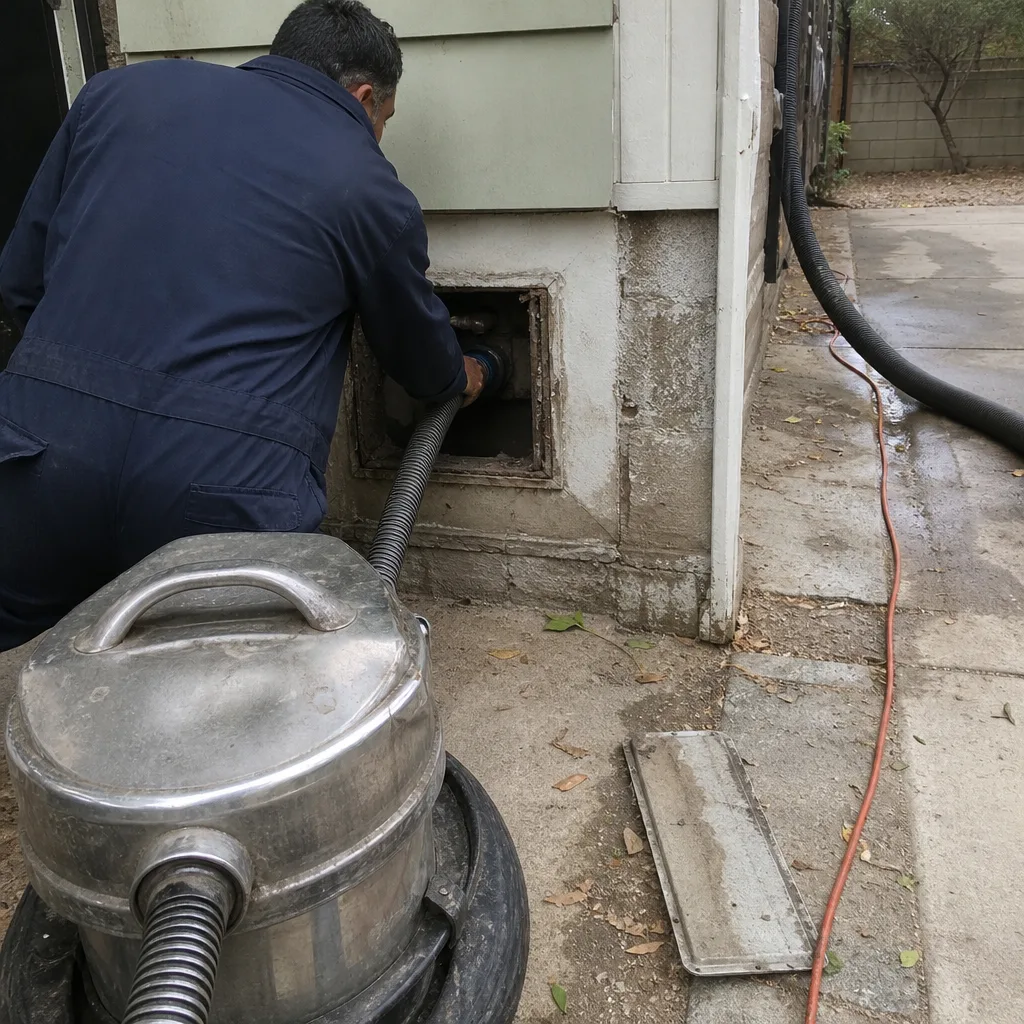 Before
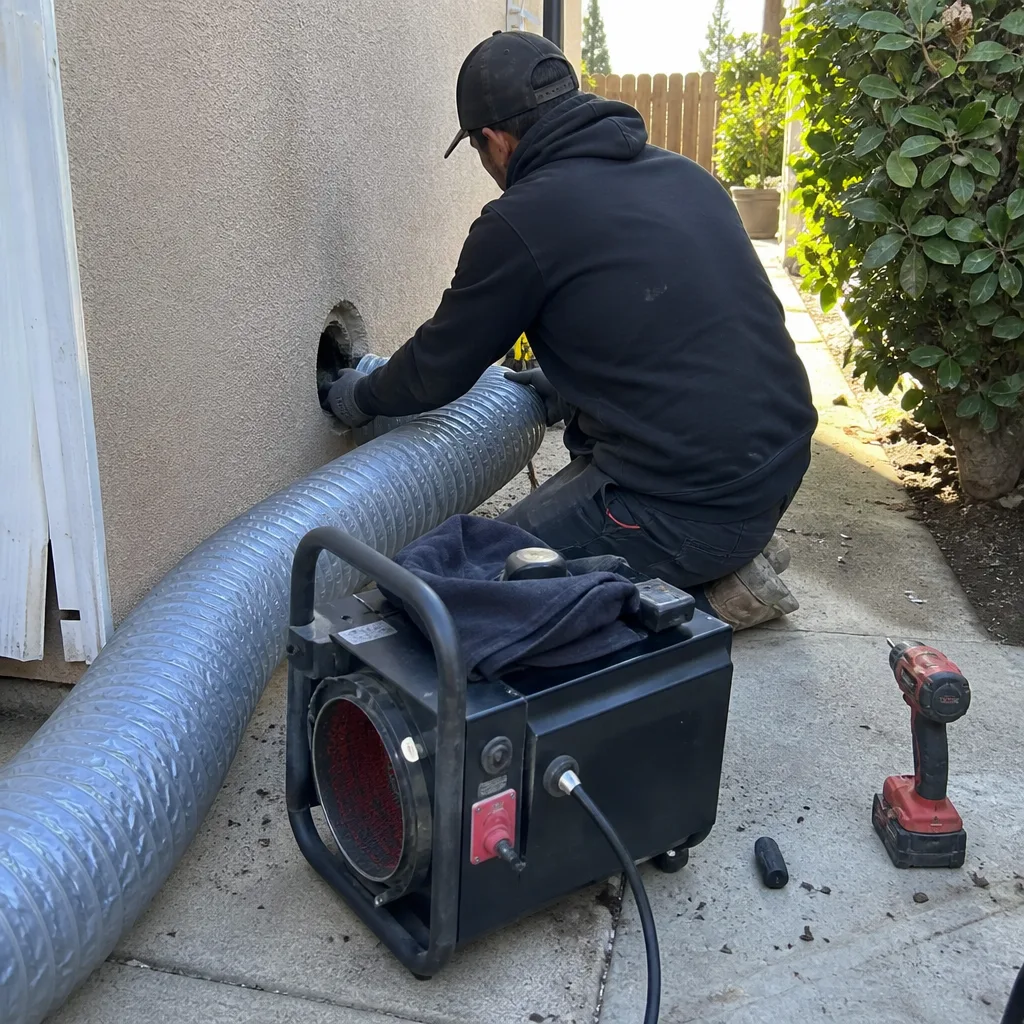 After
After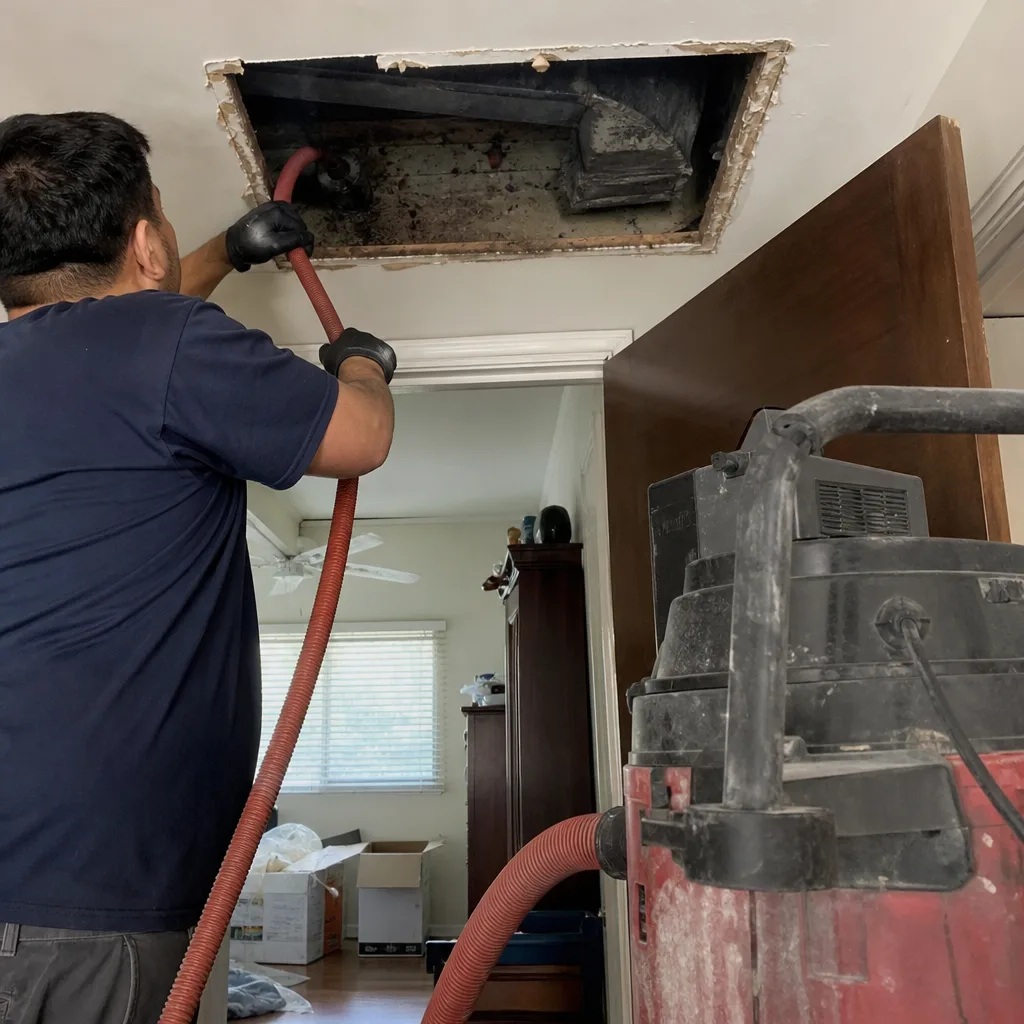 Before
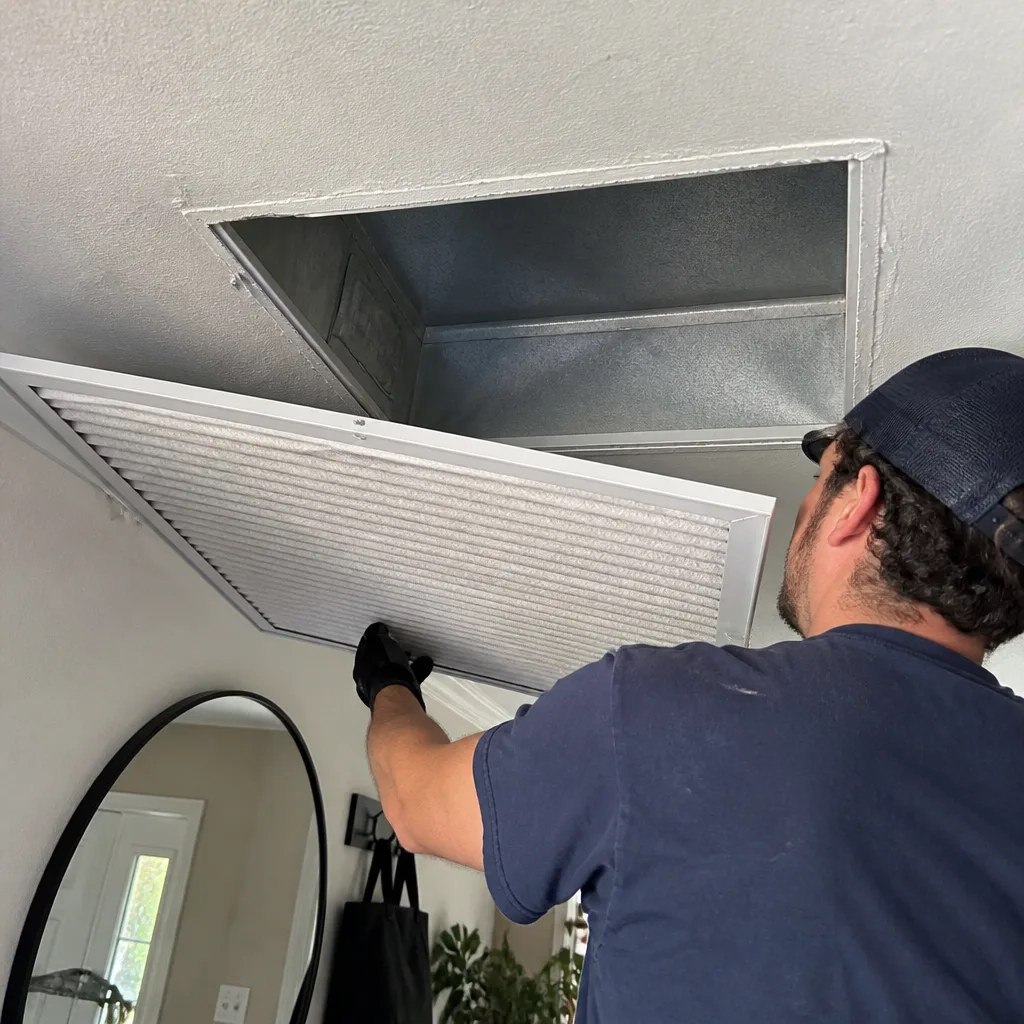 After
After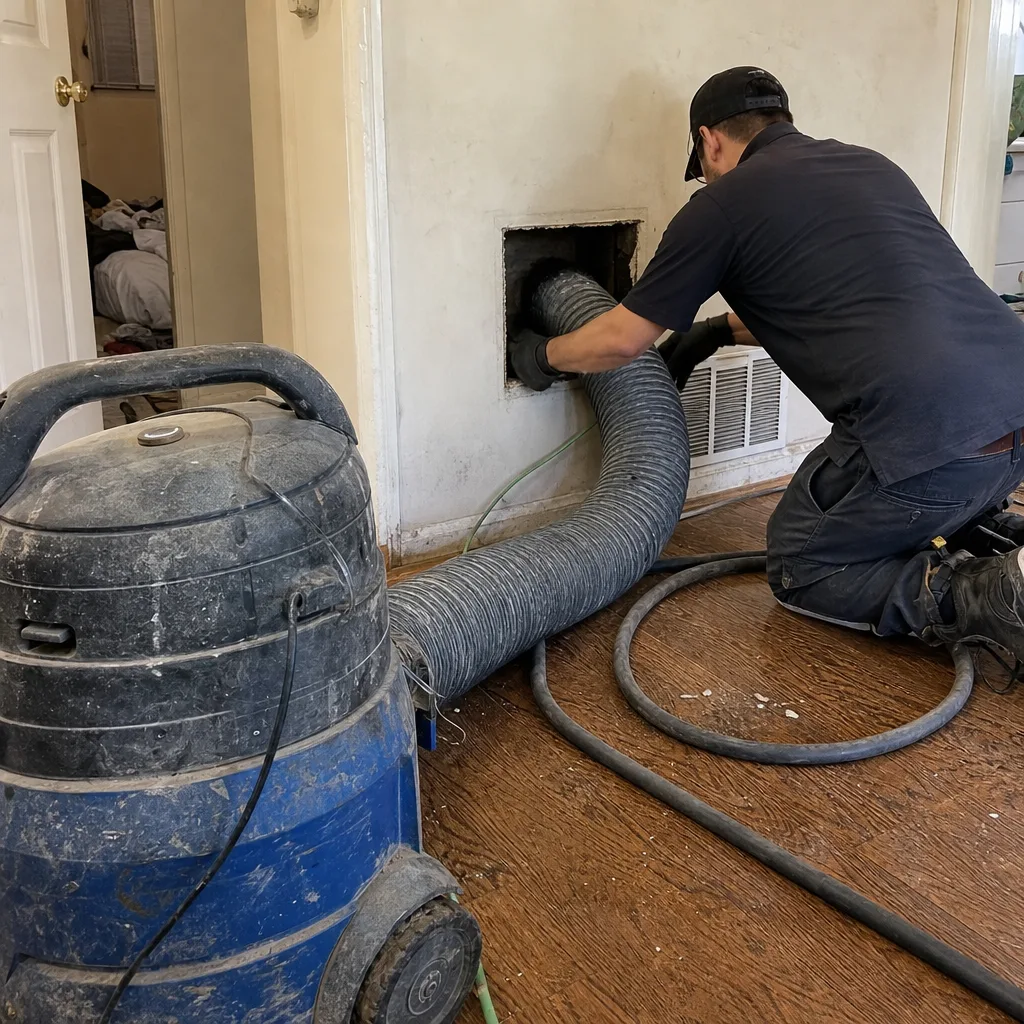 Before
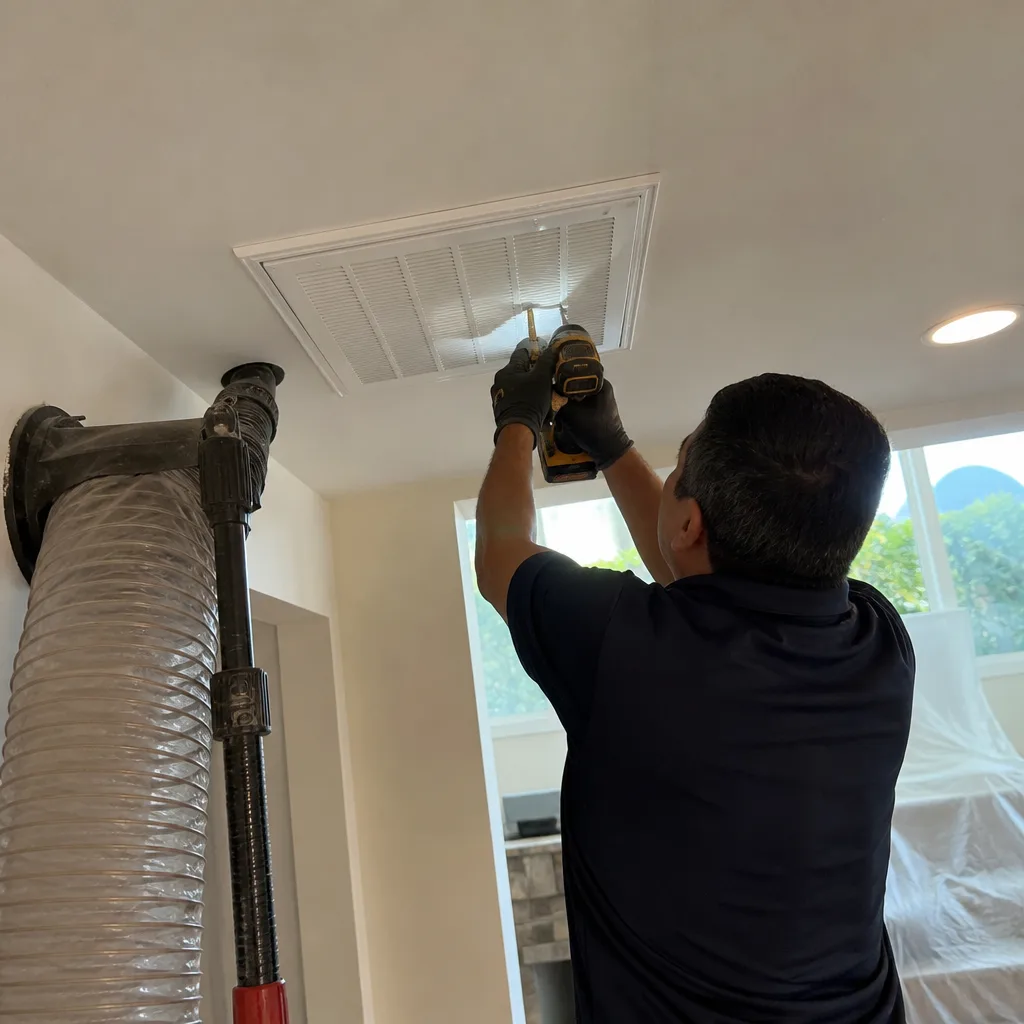 After
AfterNikro Vent Sanitizing: The Los Angeles Owner’s Guide
If you’re searching for Nikro vent sanitizing in Los Angeles, here’s the straight answer: we stock Nikro-compatible sanitizing components on our trucks, install them during standard service calls, and typical installed pricing in LA runs $95 to $210 depending on your system’s age and what’s failed. We’re an independent service provider, not a Nikro dealer, but we’ve worked on their equipment across hundreds of Los Angeles homes since 2004. Most owners discover a problem the same way: the system powers on, the fan spins, but the sanitizing agent stops atomizing, or a fitting has cracked and you can smell the solution pooling instead of dispersing.
Key Takeaways
- Typical installed cost: $95 to $210 in Los Angeles for most Nikro vent sanitizing component replacements
- Most common failure point: Atomizer nozzle and feed line seals degrade faster in LA’s dry heat
- Compatibility matters: Nikro changed fitting sizes between older and newer series – we check before quoting
- Warranty: Every repair we do carries a written guarantee, and if a covered repair fails, we return free
- Safety: Sanitizing agents are chemical concentrates – we handle storage, dilution, and disposal so you don’t have to
We’ve been called out more than once after a homeowner tried a mail-order part that didn’t seat correctly, and the result was a slow leak inside the cabinet that corroded wiring over six months. That’s an expensive fix that starts with a cheap part. Marcus Veale, who runs our Los Angeles operations, grew up in the Crenshaw district and has worked on vent systems in this city long enough to know which corners heat and hard water cut first.
Which Nikro Models This Applies To
Nikro has made several sanitizing configurations over the years, and not all parts interchange. The older NP and VP series used a barbed feed line with a 1/4-inch inner diameter; the newer Nikro air handlers and sanitizing modules moved to a quick-connect fitting that looks similar but seals differently. If you’re looking at a replacement part and it’s listed as “universal,” treat that claim with skepticism. A universal fitting on a Nikro is usually a compromise that weeps under pressure.
How to identify what you have: look on the module housing for a small silkscreened label, often on the underside where it’s easily missed. The model code typically follows a letter-number pattern like NP-250 or VP-400. If the label is gone or unreadable, measure the nipple where the sanitizing line connects. If it’s barbed and measures close to 6 millimeters at the base, it’s the older series. A push-to-connect collar usually means the newer generation. We keep both types on the truck because in Los Angeles, we see both in equal measure: original systems from the early 2000s still running in Mid-City bungalows, and newer retrofits in Sherman Oaks and Studio City remodels.
On the OEM versus aftermarket question: Nikro’s own replacement parts carry a premium, sometimes 40 to 60 percent over a quality aftermarket equivalent. For feed lines, check valves, and atomizer heads, we’ve had consistent results with aftermarket components from US suppliers that meet the same dimensional specs. For anything electronic – control boards, sensors, relays – we recommend OEM. The aftermarket electronics we’ve tested have a higher early-failure rate, and that’s not a gamble worth taking on a system that dispenses chemicals into your home’s air path.
Signs Your Nikro Vent Sanitizing Is Failing
- You smell the sanitizing solution too strongly or not at all. When the atomizer nozzle clogs or the pump diaphragm stiffens, the system either over-delivers in liquid form or stops dispersing entirely. Both mean the part isn’t doing its job. In Los Angeles, hard water mineral deposits accelerate this failure by roughly a third compared to homes with soft water systems.
- The feed line is discolored, stiff, or cracking at the bend. Nikro’s older barbed tubing was vinyl-based and doesn’t love LA’s combination of dry air and attic heat. Flex it gently; if you hear crackling, it’s done. A split feed line leaks solution where you can’t see it, usually inside the cabinet, until rust or electrical damage makes it obvious.
- The pump runs but the reservoir level doesn’t drop. This is the classic California failure: the pump’s internal check valve has mineralized shut. We’ve pulled apart pumps in Los Angeles homes where the valve looked like a tiny stalactite. Once that happens, the pump motor burns itself out trying to push fluid that has nowhere to go.
- You see residue building up around the nozzle tip. A crusty, crystalline ring means the atomizer isn’t breaking the solution into vapor properly. In LA’s low humidity, this happens faster than you’d think. The nozzle needs replacement when cleaning doesn’t restore the spray pattern.
- The control board gives intermittent error codes or the module won’t power on reliably. Loose connections, corrosion from past leaks, or a failing capacitor on the board are all common. This is also where we tell people to stop troubleshooting and call us, because the board controls chemical dosing and you don’t want unpredictable behavior in that system.
Replacement Cost & What’s Included
For most Nikro vent sanitizing repairs in Los Angeles, you’ll pay between $95 and $210 installed. The lower end covers a feed line replacement, a check valve clean or swap, or an atomizer nozzle replacement. The upper end typically means the pump itself has failed, or the control board needs replacement, which pushes parts cost up significantly – sometimes to $320 or more if the board is involved. We’ll tell you the number before we order anything.
Here’s how the pricing breaks down in LA:
- Feed line replacement: $95 to $125 installed
- Atomizer nozzle: $110 to $150 installed
- Check valve replacement: $80 to $120 installed
- Pump assembly: $180 to $260 installed
- Control board: $210 to $340 installed
Every price we give is a flat price for the complete repair, written down before we start work. That includes the part, the labor, the testing, and the cleanup. It’s not an estimate that drifts upward once the system is apart. And every Nikro component repair carries our 365-Day Done Right Promise: if the work isn’t right, we make it right, in writing, on every job. If a covered repair fails inside that year, the second visit is free.
DIY or Call Us?
Here’s our honest split. You can safely do a visual inspection: check the reservoir level, look for crust around the nozzle, examine the feed line for obvious cracking. You can wipe down the atomizer tip with a soft cloth and a manufacturer-recommended cleaner if you have it. That’s where safe DIY ends for most people.
What we don’t recommend is opening the pump housing, replacing a control board, or trying to flush the feed line yourself. These systems handle concentrated sanitizing chemistry, and the parts that fail are exactly the parts where a mistake sends that chemistry somewhere it shouldn’t go: onto a circuit board, into your ducts at full concentration, or onto your skin. In California, the liability and the cleanup are both ours to manage. We’re licensed, insured, and we carry the right parts on the truck so the job is done in one visit. If you’ve already got the system apart and you’re second-guessing what you’re looking at, call us at (980) 447-2498 and describe it. We’ll tell you honestly whether to stop or proceed.
FAQs
In our experience across Los Angeles, the core sanitizing module lasts 8 to 12 years before components start failing. What shortens that lifespan in LA specifically is hard water mineral buildup in the pump and nozzle, and the heat of unconditioned attics in the summer, which accelerates vinyl line hardening. Homes with water softeners typically get 2 to 3 extra years out of the same parts. Regular nozzle cleaning each year will extend the system meaningfully. Call (980) 447-2498 and we can tell you exactly what yours needs, not just what a manual says.
Some components can be repaired, but in most cases we replace. A check valve can sometimes be chem-flushed and reinstalled, but the labor often costs within $20 of a new part, so we’ll give you the choice and our honest recommendation. Atomizer nozzles can occasionally be cleaned, but if the orifice is worn or mineral-crusted, replacement is the only real fix. Feed lines are never worth repairing once they’ve started cracking. For an exact read on your system, call (980) 447-2498 and we’ll walk through what you’re seeing.
Most component replacements take 45 to 90 minutes on site, depending on what’s failed and how accessible your unit is. A simple nozzle or feed line swap is usually done in under an hour. A pump or control board replacement with full testing runs closer to two hours. We’ll give you a time window when you book, and the tech’s name and photo arrive before the visit. Every technician at our company is background-checked, identity-verified, and shows a photo ID badge at the door.
Yes. We carry the common failure components for Nikro systems: feed lines in both the older barbed and newer quick-connect fittings, atomizer nozzles, check valves, and pump assemblies. Control boards are ordered per model and typically arrive within two to three business days in the Los Angeles area. We also stock vent sanitizing parts compatible with Lennox, Trane, and Carrier systems, since many LA homes have mixed equipment. If you’re not sure what you have, the label check takes two minutes. We can do it over the phone before we ever set a schedule.
Clean ducts don’t fix everything, but dirty ones can quietly make a lot of things worse. If your Nikro vent sanitizing module isn’t doing its job, the air in your home is getting less protection than the system was designed to provide. Call us at (980) 447-2498 for a free estimate. We’ll match the part to your model, give you a written price before we begin, and stand behind the work for a full year. A real person answers, every time, day or night.
Written by Marcus Veale, Owner, Linden Air Duct Cleaning at Linden Air Duct Cleaning, serving Los Angeles and nearby areas.