
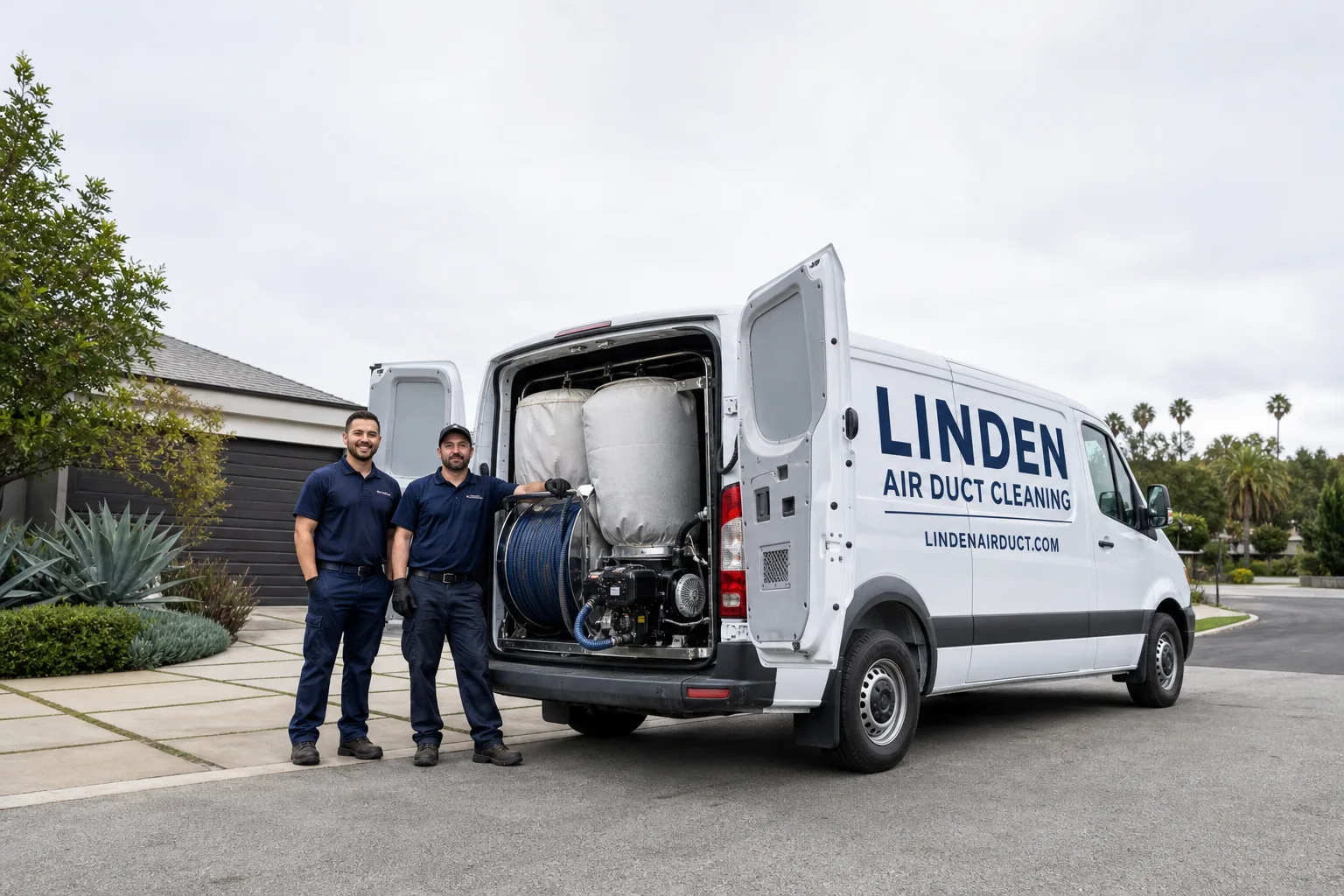
Whole-system duct and dryer vent check with before-and-after photos - you see exactly what came out of your vents
That "$99 whole-house special" is a bait ad - the real number appears once they are in your hallway, or the "clean" is a shop-vac at the register. We photograph the inside of your ducts before and after instead.
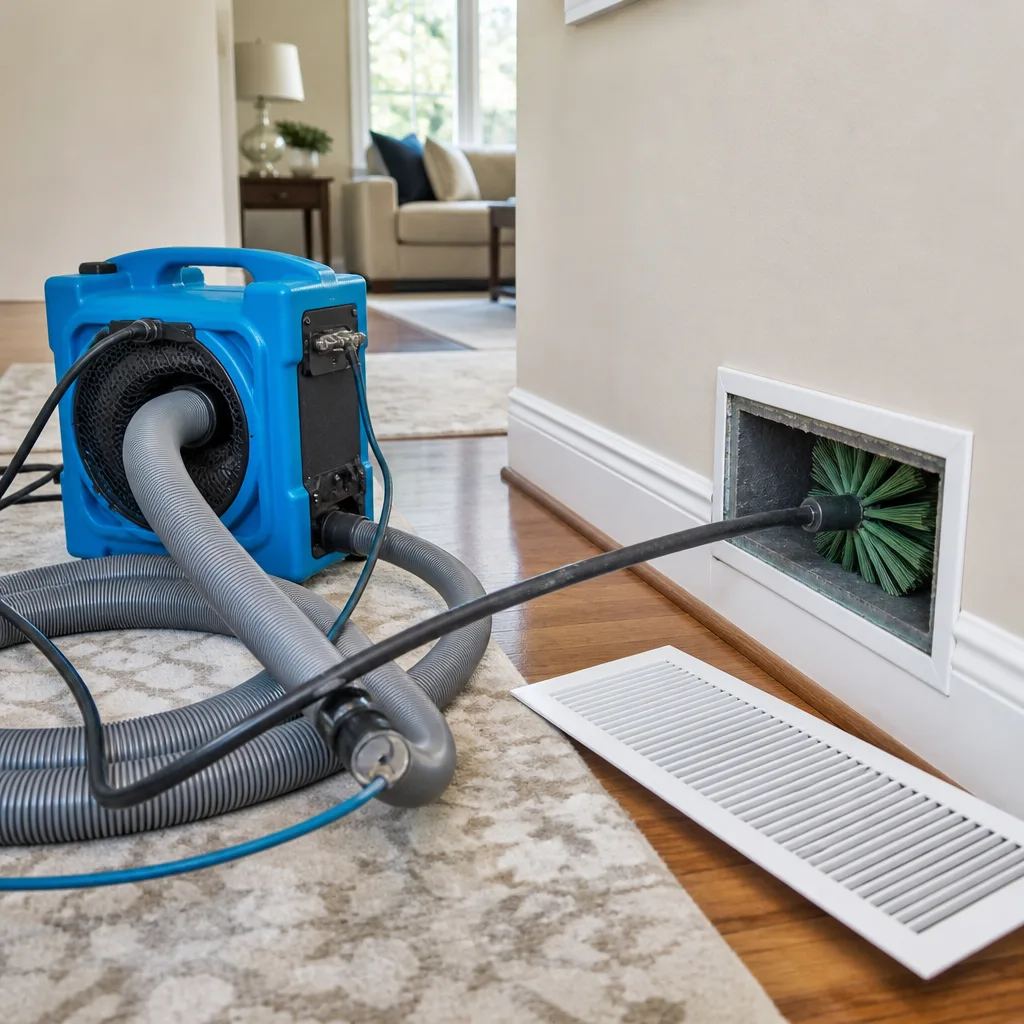
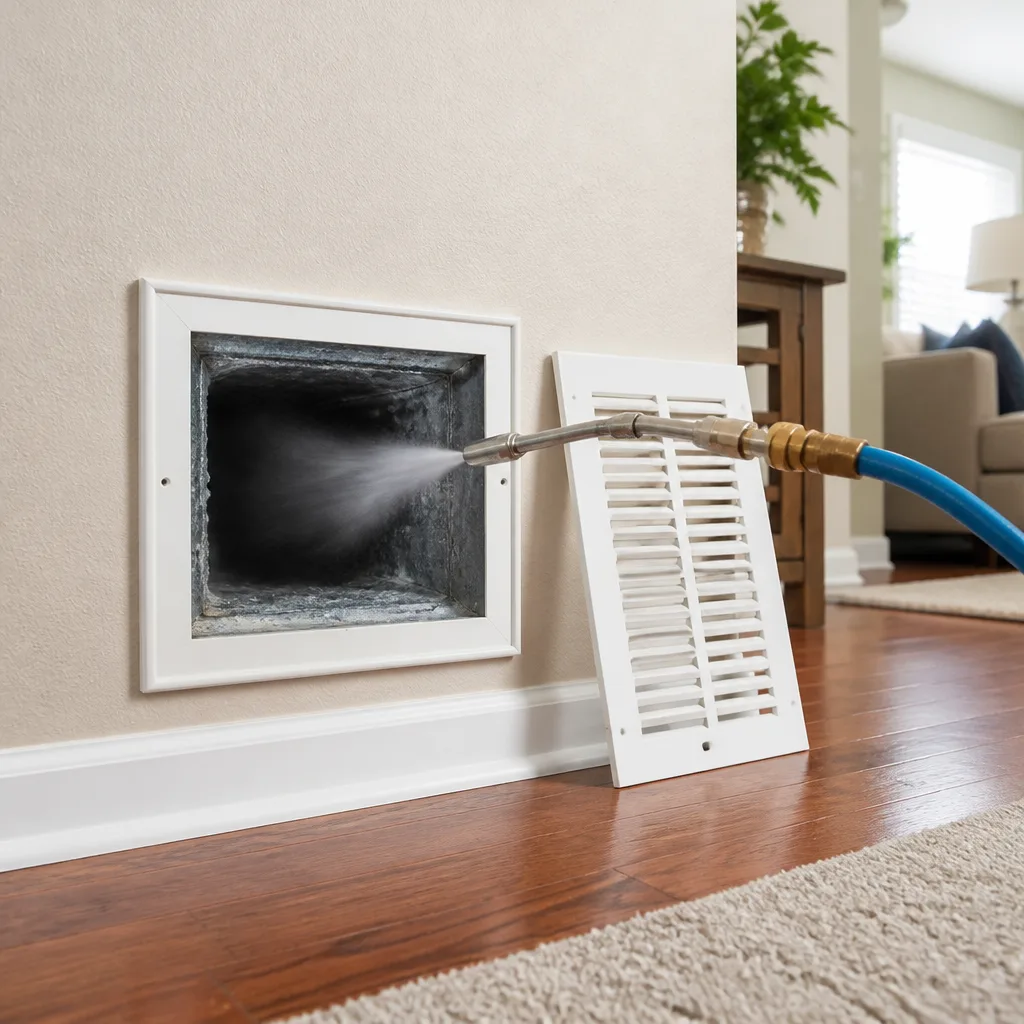
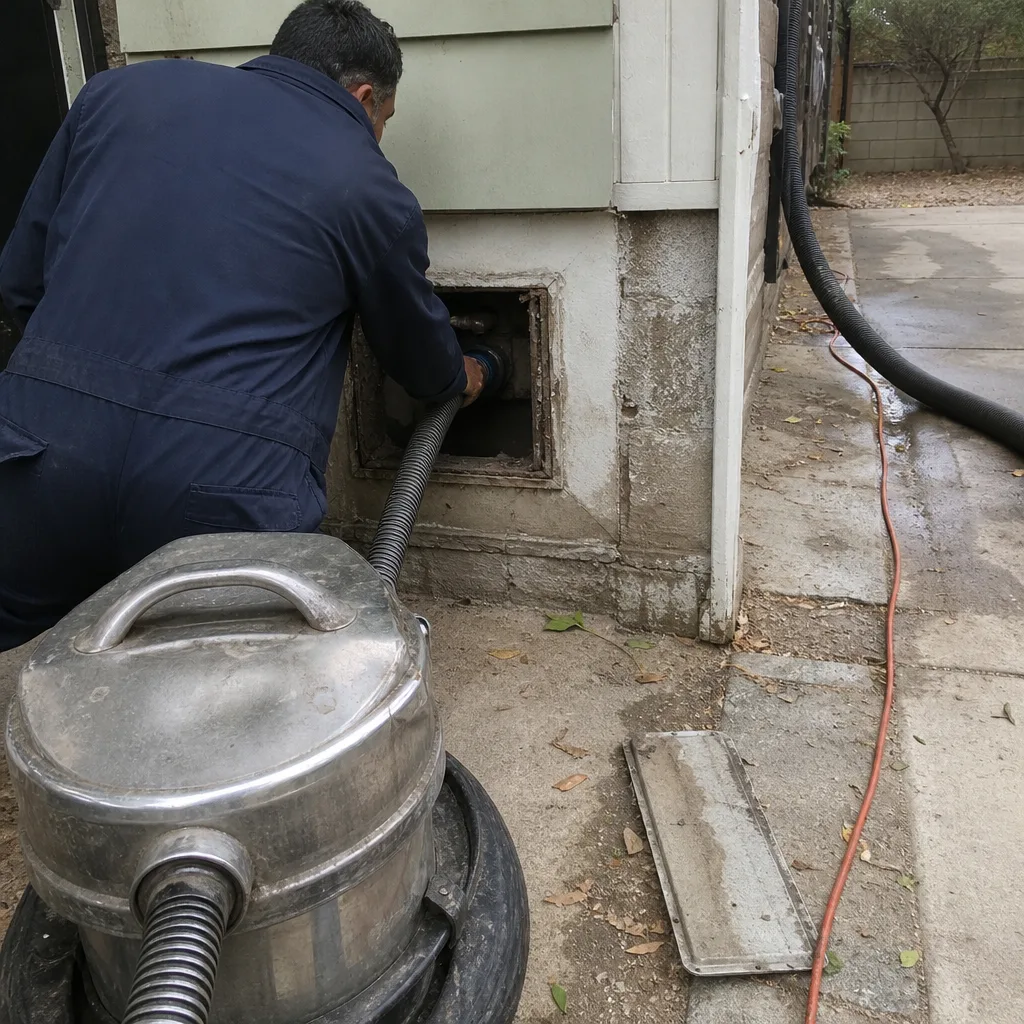 Before
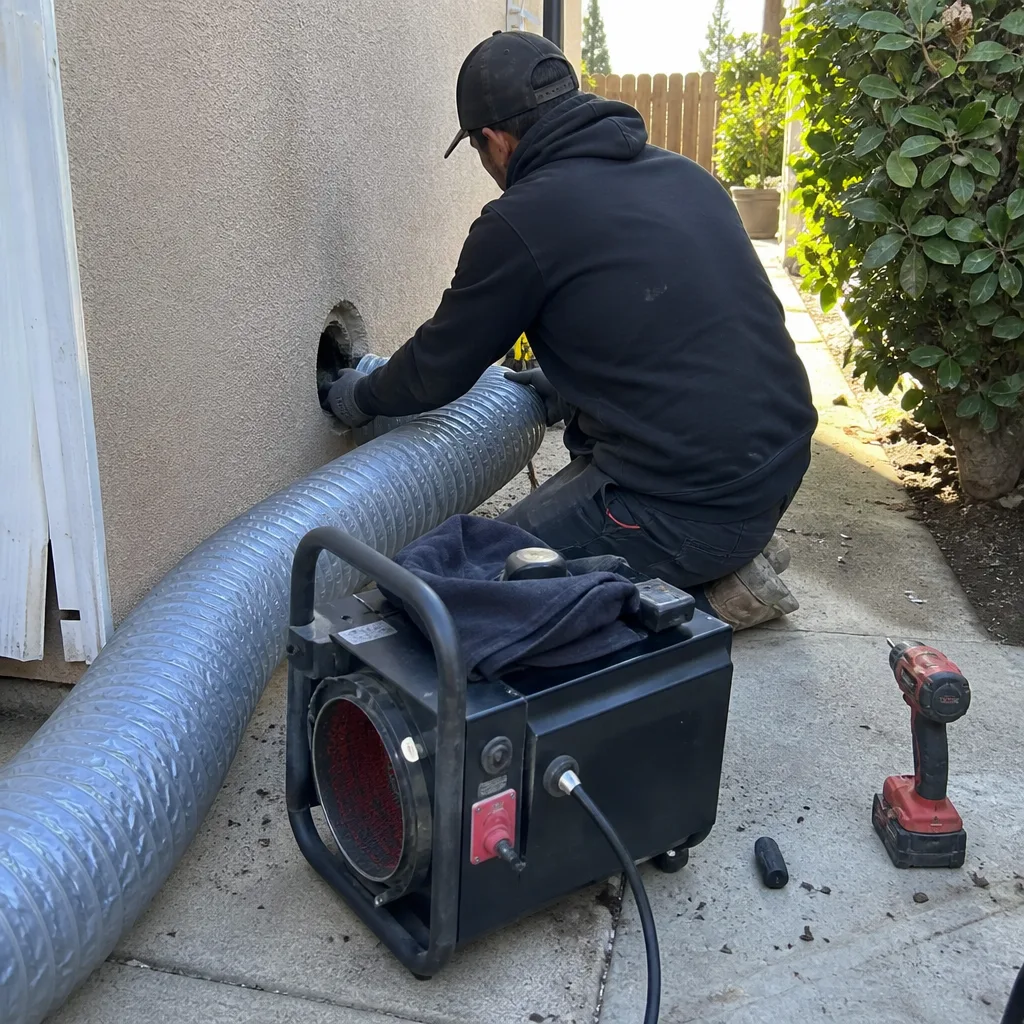 After
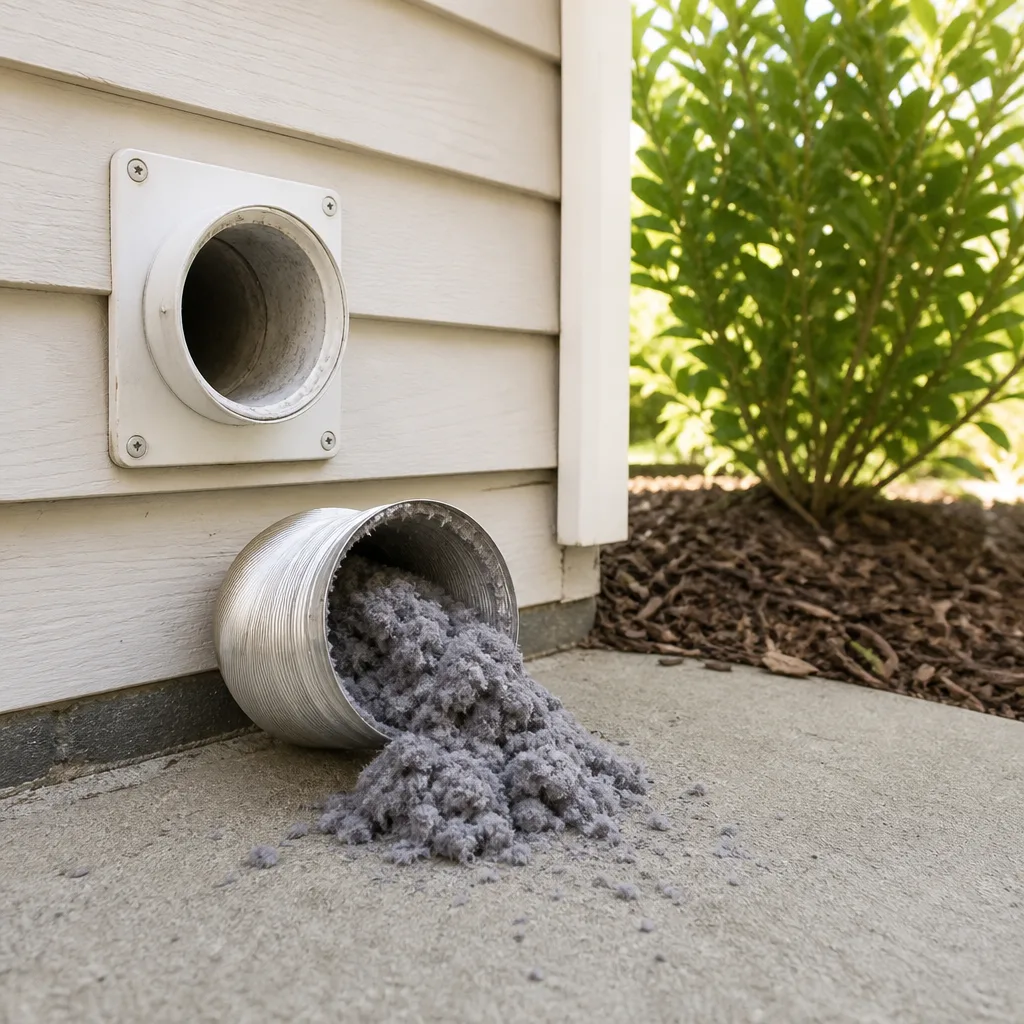
After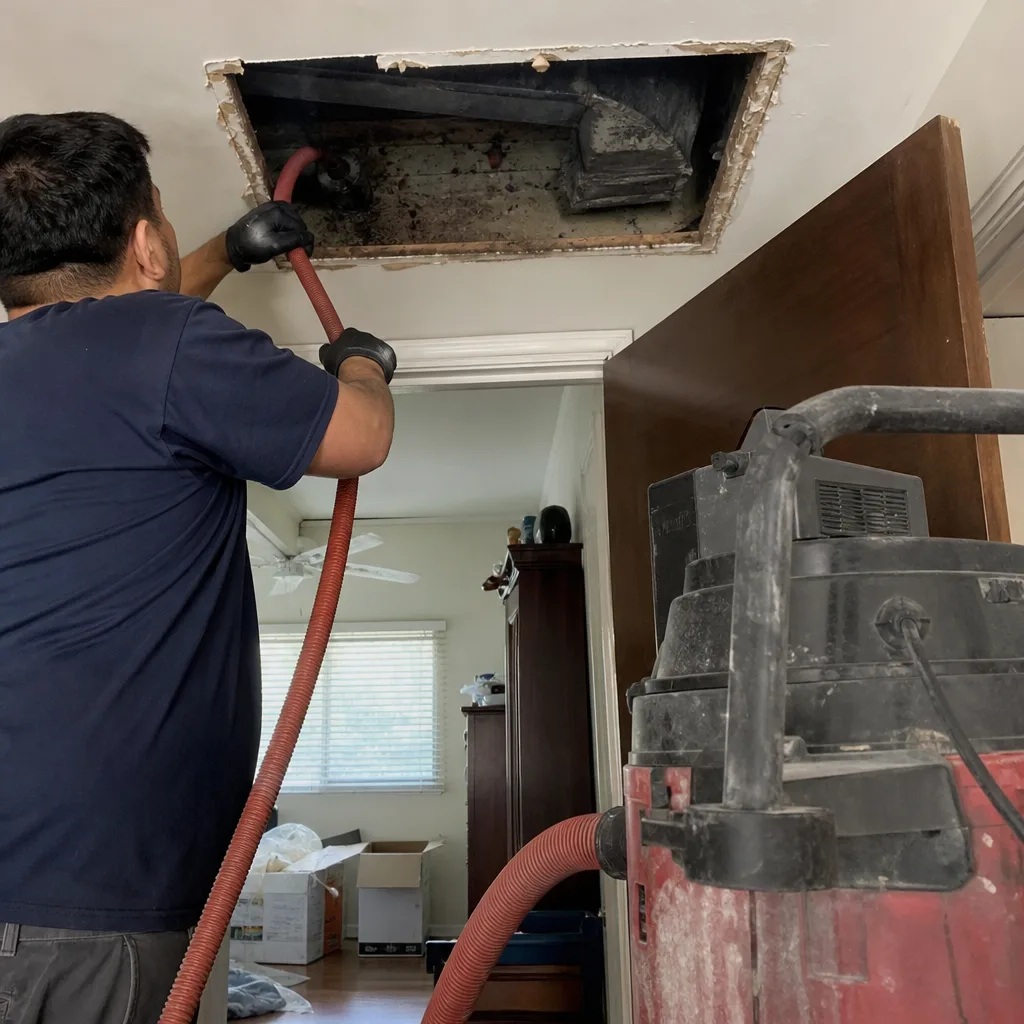 Before
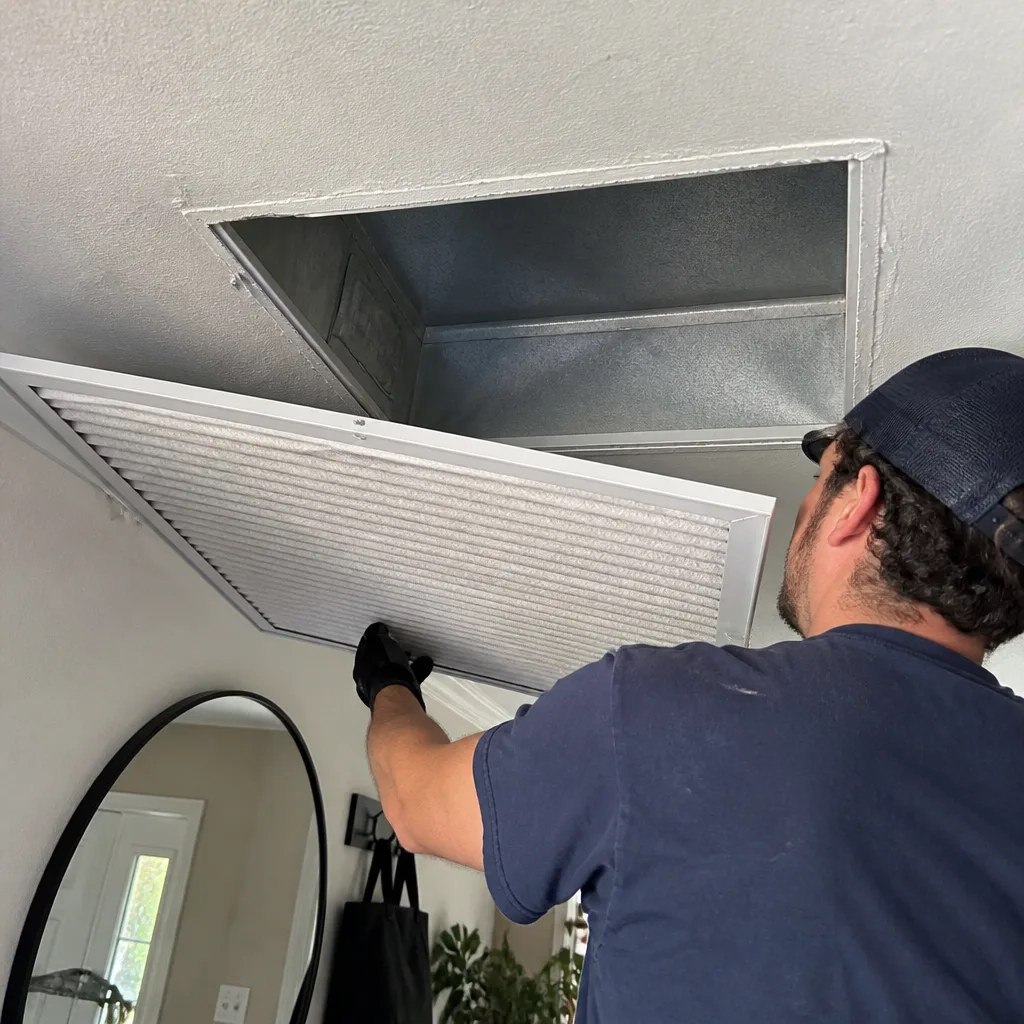 After
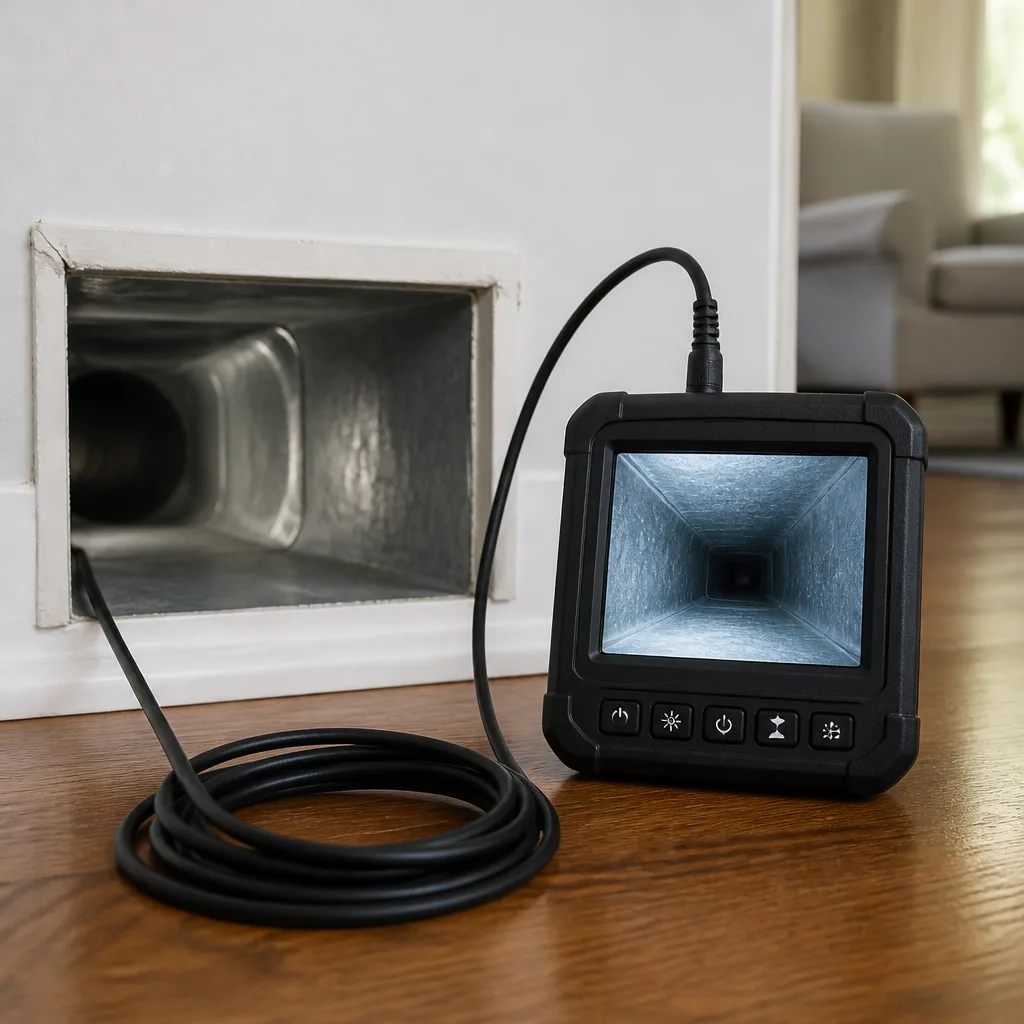
After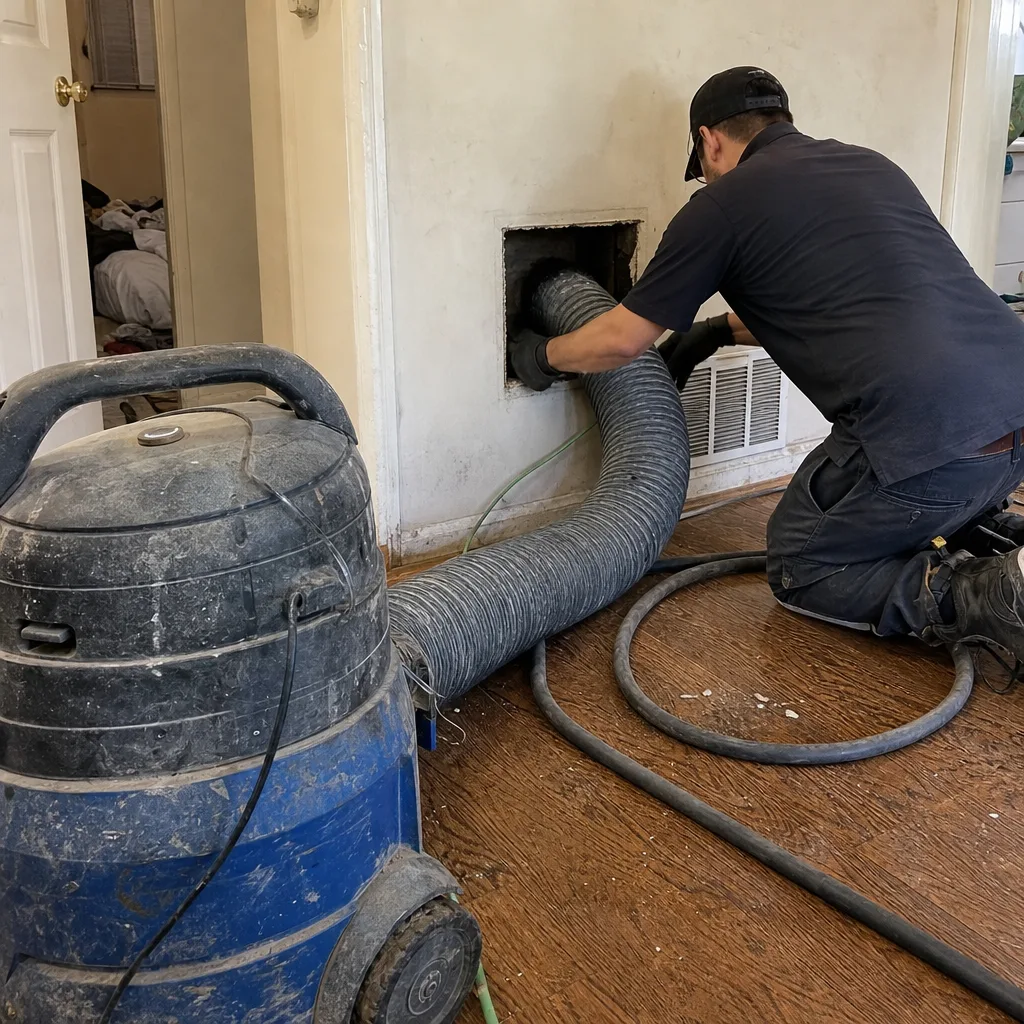 Before
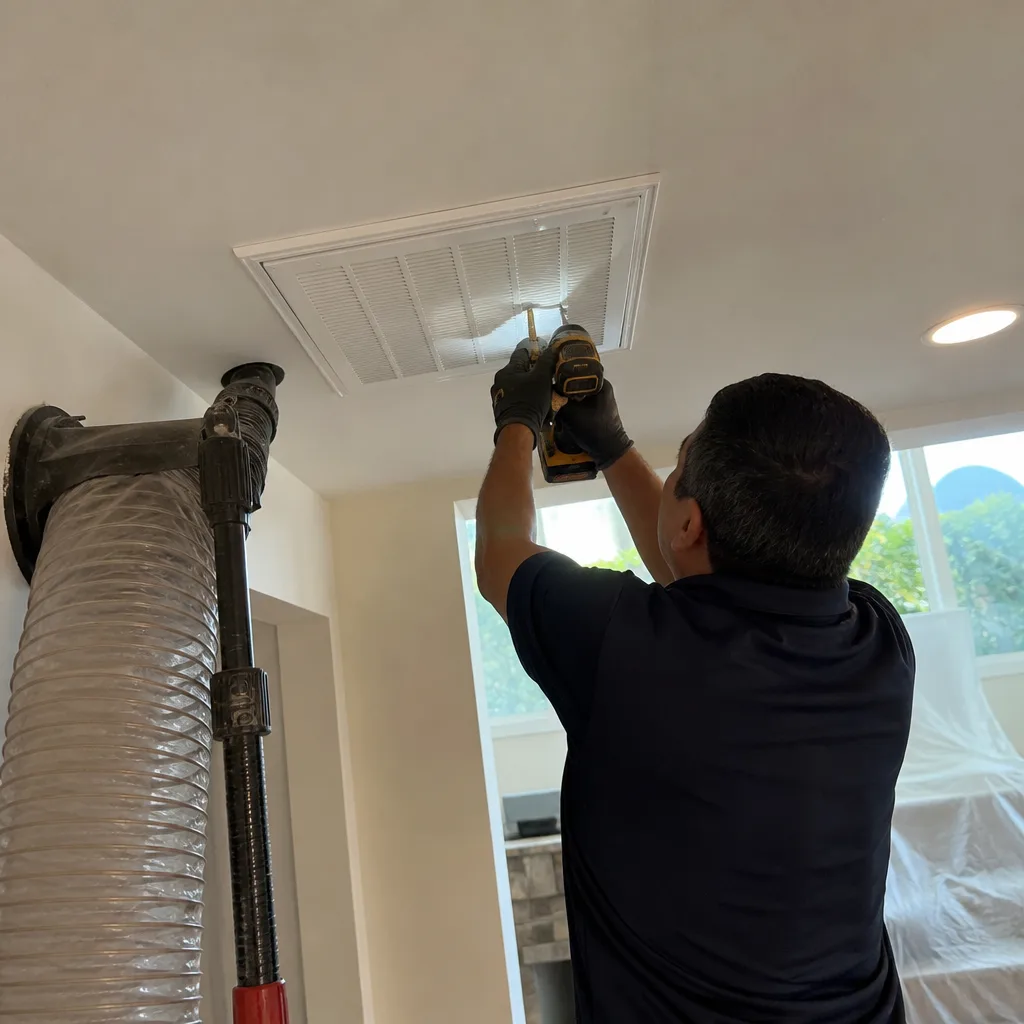 After
AfterClothes Take Two Cycles to Dry
If your dryer is running fine but your clothes are still damp after a full cycle, the problem is almost never the dryer itself. In most cases, a blocked or partially blocked dryer vent is trapping hot, moist air inside the drum instead of exhausting it outside. A dryer vent cleaning typically resolves this completely.
Here is what is happening: your dryer generates heat and tumbles the clothes, but it relies entirely on airflow to carry moisture out of the machine and through the vent line to the exterior of your home. When lint, debris, or a crushed section of duct restricts that airflow, the humid air has nowhere to go. The drum stays warm, but the clothes never actually dry. Running a second cycle does not fix the blockage – it just runs the machine harder and longer against a problem that will not go away on its own. The fix is clearing the vent line, not replacing the appliance.
Why It Happens
Lint Buildup Inside the Vent Line
The screen in your lint trap only catches a portion of the fiber shed by fabrics. The rest travels through the vent duct and gradually coats the inner walls. Over months and years this coating thickens until airflow is seriously restricted. You can get a rough sense of this yourself: go outside while the dryer runs and hold your hand near the exterior vent cap. If you feel little or no warm air pushing out, the duct is partially blocked.
A Crushed, Kinked, or Disconnected Duct Section
Dryer vent ducts often run through tight spaces behind the machine or through walls. A flexible duct that gets pinched when the dryer is pushed back against the wall, or a rigid duct section that has separated at a joint, will cut airflow just as effectively as a lint clog. Pull the dryer forward slightly and look at the section of duct you can see. A visible kink or a gap at a connection point tells you where the restriction is.
A Blocked or Malfunctioning Exterior Vent Cap
The flap or cover on the outside of your home is designed to open when the dryer exhausts and close when it does not. Bird nests, insect debris, or a warped flap that no longer opens fully will choke the exhaust end of the system. Check the exterior vent cap during a drying cycle – the flap should open noticeably and you should feel warm, moist air. If the flap barely moves or stays shut, that cap is the problem.
A Vent Line That Is Too Long or Has Too Many Bends
Every foot of duct length and every elbow in a dryer vent run reduces the system’s ability to push air out. Most manufacturers specify a maximum straight-run length and deduct from that for every 90-degree bend. If your laundry room is far from an exterior wall, or if the duct was routed through multiple turns, the system may have always been marginal and lint buildup has finally pushed it past the tipping point. This one is harder to diagnose visually, but a technician can measure the run and assess it on arrival.
What to Do Right Now
- Stop running the dryer until the vent is cleared. A blocked vent causes the dryer to overheat. Dryer fires are a documented hazard, and running the machine repeatedly against a blocked vent raises the risk with each cycle. Pause use until the line is inspected.
- Clean or replace the lint trap. Pull the lint screen, clean it thoroughly, and hold it up to light. If the mesh is coated with a film that water beads on, wash it with soap and a brush and let it dry. A clogged lint screen compounds a vent blockage.
- Check the exterior vent cap. Go outside, find the vent cap (usually on a side or rear wall, or through the soffit), and clear any visible debris – leaves, nest material, or trapped lint – from the cover. Do not disassemble the cap beyond what is reachable by hand.
- Photograph what you can see. A photo of the exterior vent cap, the visible duct connection behind the dryer, and any obvious kink or gap helps your technician arrive prepared. It takes two minutes and saves time on the visit.
- Do not attempt to clean inside the wall or through a rigid duct yourself. Proper dryer vent cleaning requires professional-grade equipment – rotating brushes, a powered vacuum system, and the right attachments for your duct type. Pushing a household vacuum hose into the duct often compacts the clog rather than removing it, making the blockage worse.
How We Fix It
When your local Linden Air Duct Cleaning team arrives, the technician’s first step is a visual inspection of the full vent run: the connection at the dryer, any accessible sections through the home, and the exterior cap. Before any cleaning starts, you will have a written price in hand – no surprises once the work is underway, every single time.
The cleaning itself uses professional-grade rotary brush equipment from Rotobrush and Nikro, paired with a high-powered vacuum that captures dislodged lint instead of redistributing it. The technician works from the dryer end toward the exterior, clearing lint accumulation, checking for crushed or disconnected sections, and confirming the cap opens and closes freely. If the inspection turns up a damaged or disconnected duct section, that is an air duct repair job – also covered by a written guarantee and a free return visit if the repair does not hold.
A standard dryer vent cleaning, start to finish, takes roughly 45 minutes to an hour for a typical residential run. More complex routes take longer – your technician will tell you before starting. The service is covered by our 365-Day Done Right Promise: if it is not right, we come back and make it right, in writing.
Frequently Asked Questions
A blocked dryer vent is a genuine fire hazard and should not be left running while you wait. Lint is highly flammable and a blocked duct causes the dryer’s internal temperature to climb well above normal operating range. If you need to run a load before the visit, use the shortest cycle possible and stay near the laundry room – but we would rather you called us at (980) 447-2498 and paused use until the vent is cleared.
It is possible, but airflow problems cause the majority of “takes two cycles” complaints. A quick test: if the exterior vent cap is barely moving air during a cycle, the duct is almost certainly the issue. If the cap exhausts strongly and the clothes are still damp, the dryer’s heating element or thermostat may be worth having a technician look at separately. We will tell you honestly what we find before we suggest any work.
Your local Linden Air Duct Cleaning team schedules visits based on current availability in your area, and we do our best to get to you quickly when there is a safety concern involved. Call us at (980) 447-2498 any time – a live person answers around the clock, no voicemail loops, no automated systems – and we will find the earliest opening that works for you.
The price for your specific job is put in writing before any work begins – that is a standing commitment on every Linden job, not a promotional offer. The technician inspects first, gives you the written estimate, and only proceeds with your approval. There are no add-on charges once the van is in the driveway. If you want a rough sense of what to expect before we arrive, call (980) 447-2498 and we can talk through your setup.
Get It Fixed
A blocked dryer vent does not clear itself, and it gets riskier the longer it runs. Call (980) 447-2498 any time – a real person will answer – or book online. Your local Linden Air Duct Cleaning team will inspect the full run, give you a written price before touching anything, and clear it right.
Written by Marcus Veale, Owner at Linden Air Duct Cleaning, part of the Threshold Group family serving homeowners since 2004.
What Our Customers Say
"Thorough job on all eleven vents and the main trunk. Took longer than the three hours they quoted, but he told me early and kept working. Air feels fresher."
- Meredith L."Tech arrived with a badge and a printed sheet of what he'd be doing. Ran a camera through the main trunk before and after so I could see the dust difference. Vents smell cleaner already."
- Gina R."Priced by the system, not by the vent, and he told me up front. No pressure to add the sanitizer and I said no without any fuss."
- Faith N.