
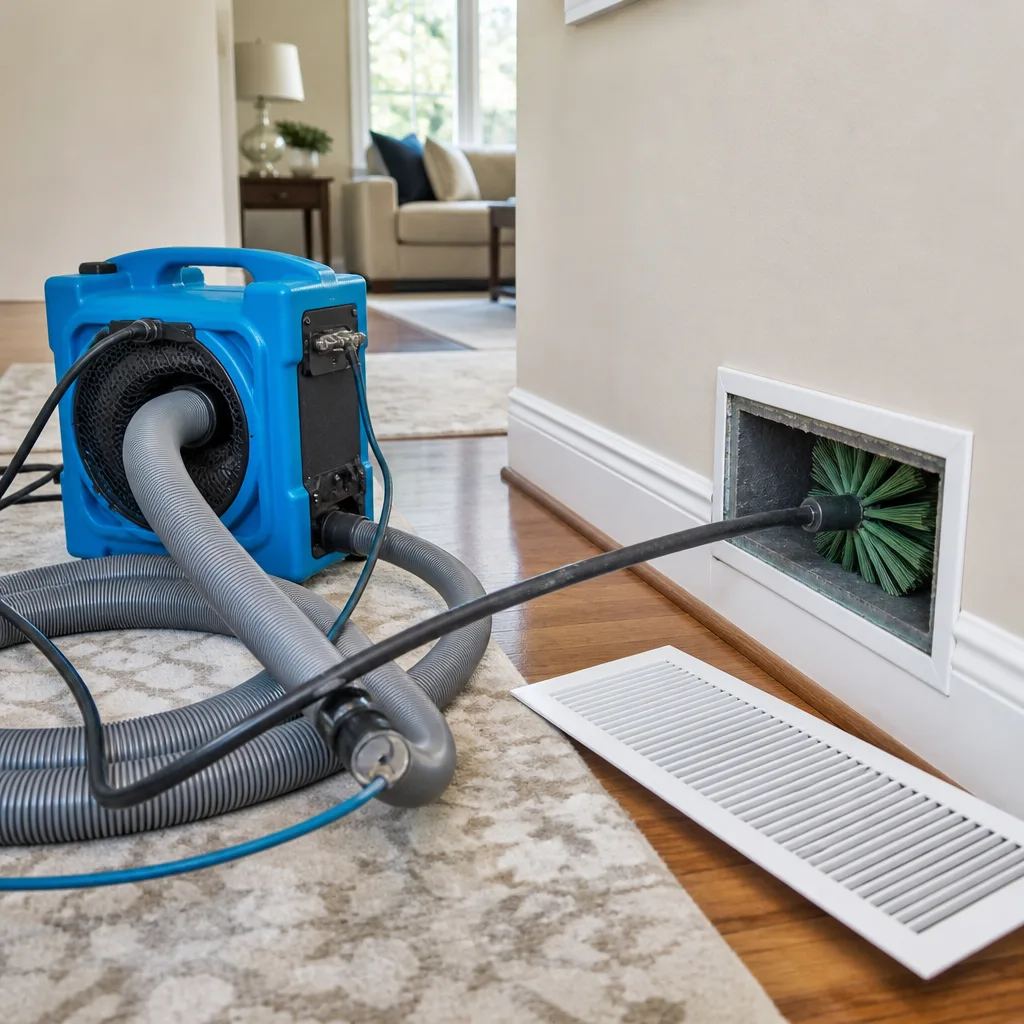
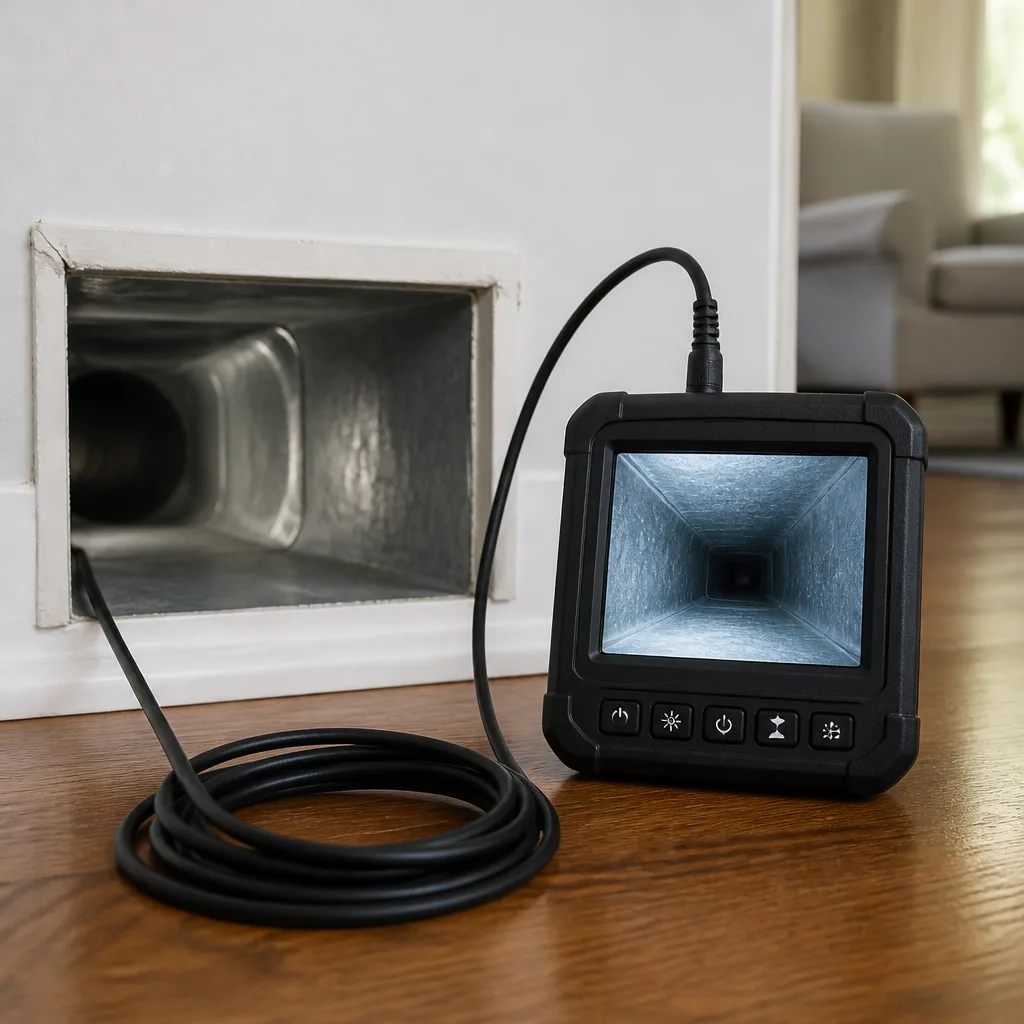
Whole-system duct and dryer vent check with before-and-after photos - you see exactly what came out of your vents
That "$99 whole-house special" is a bait ad - the real number appears once they are in your hallway, or the "clean" is a shop-vac at the register. We photograph the inside of your ducts before and after instead.
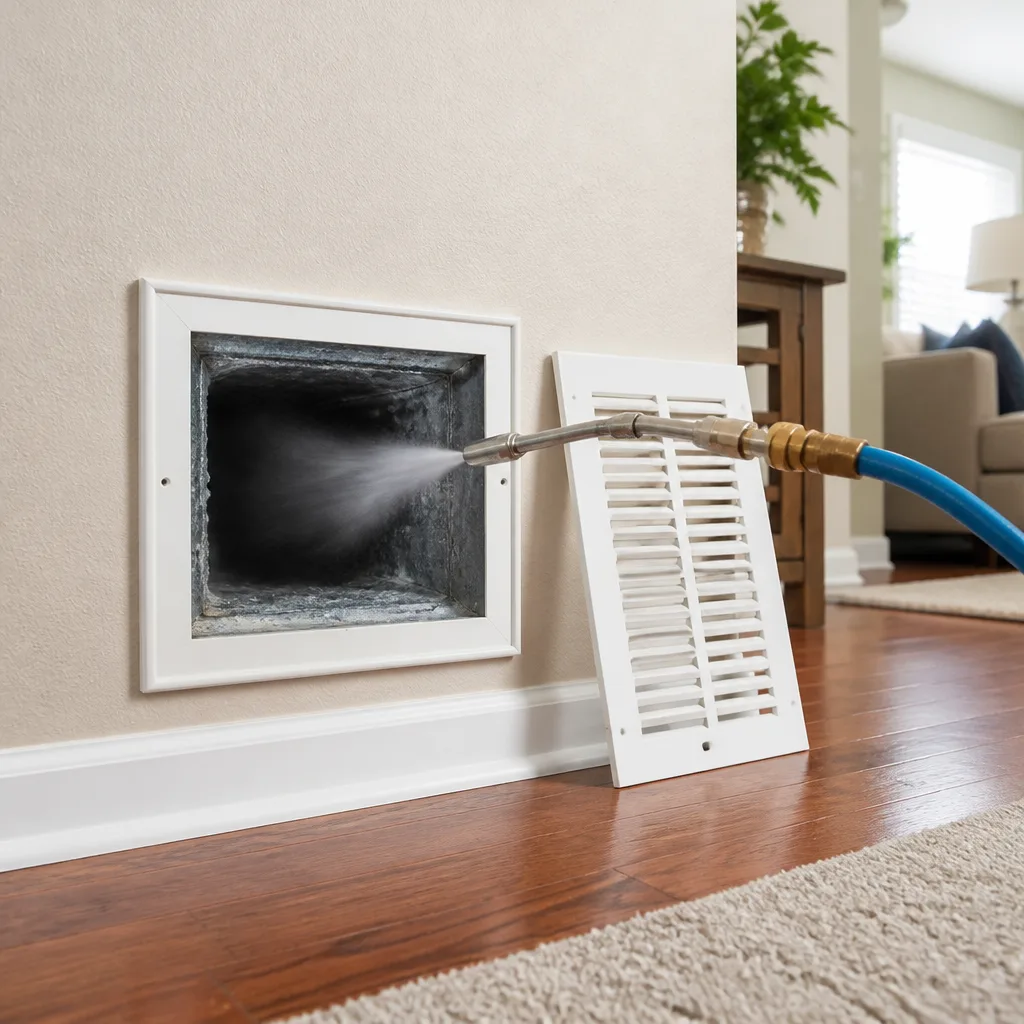
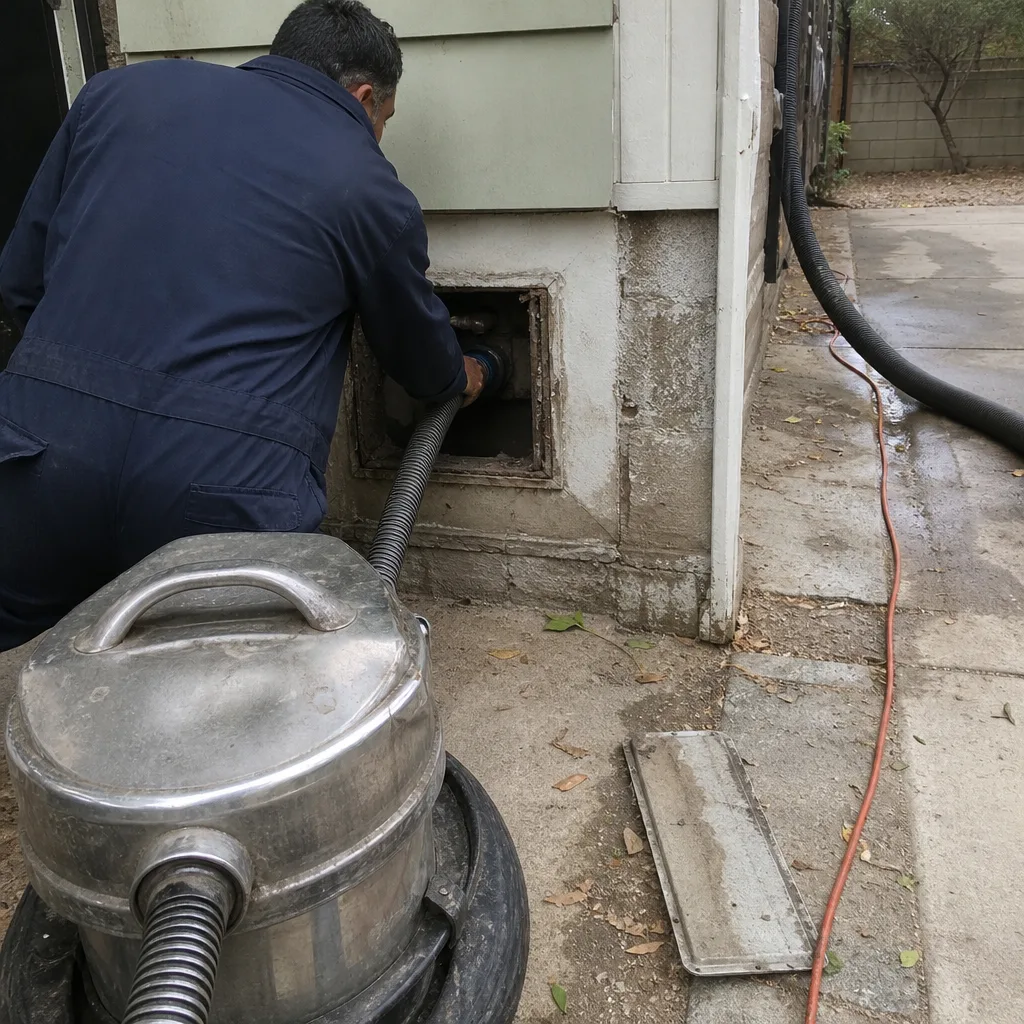 Before
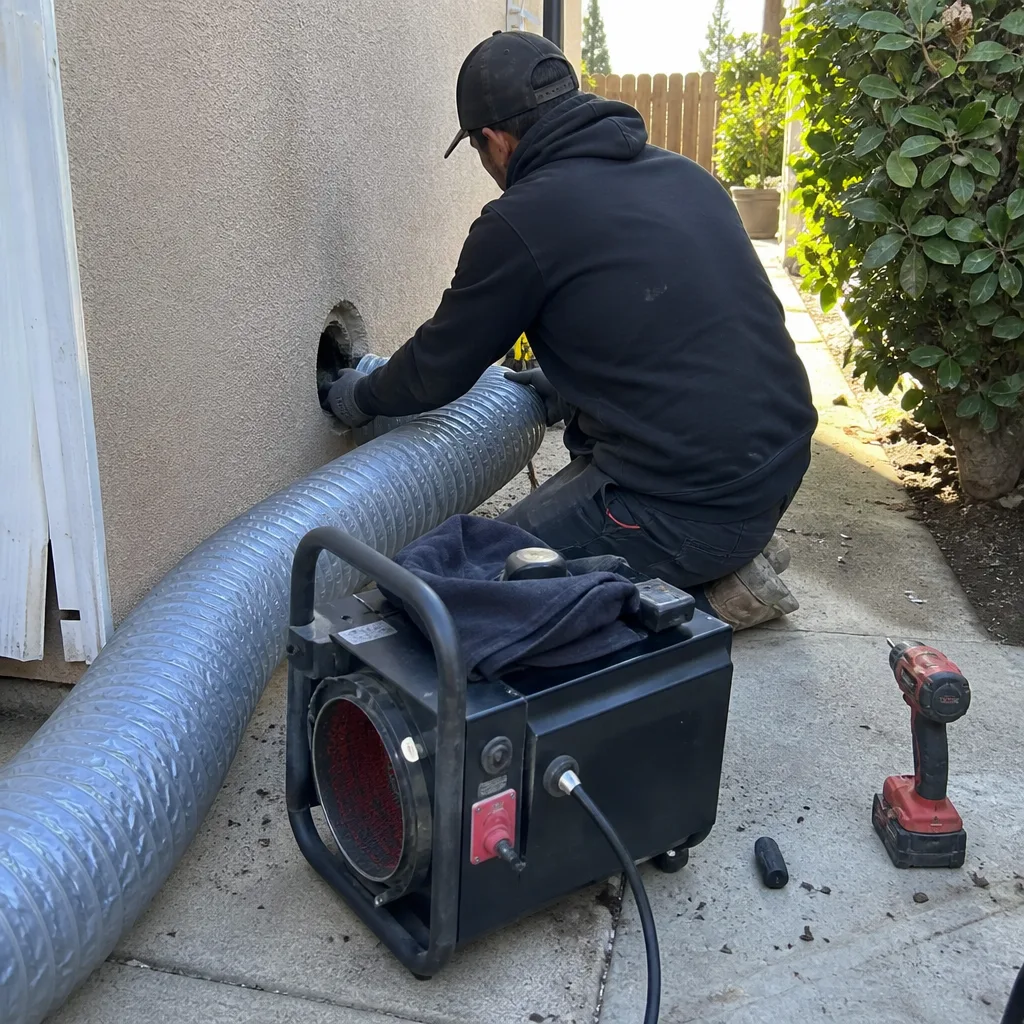 After
After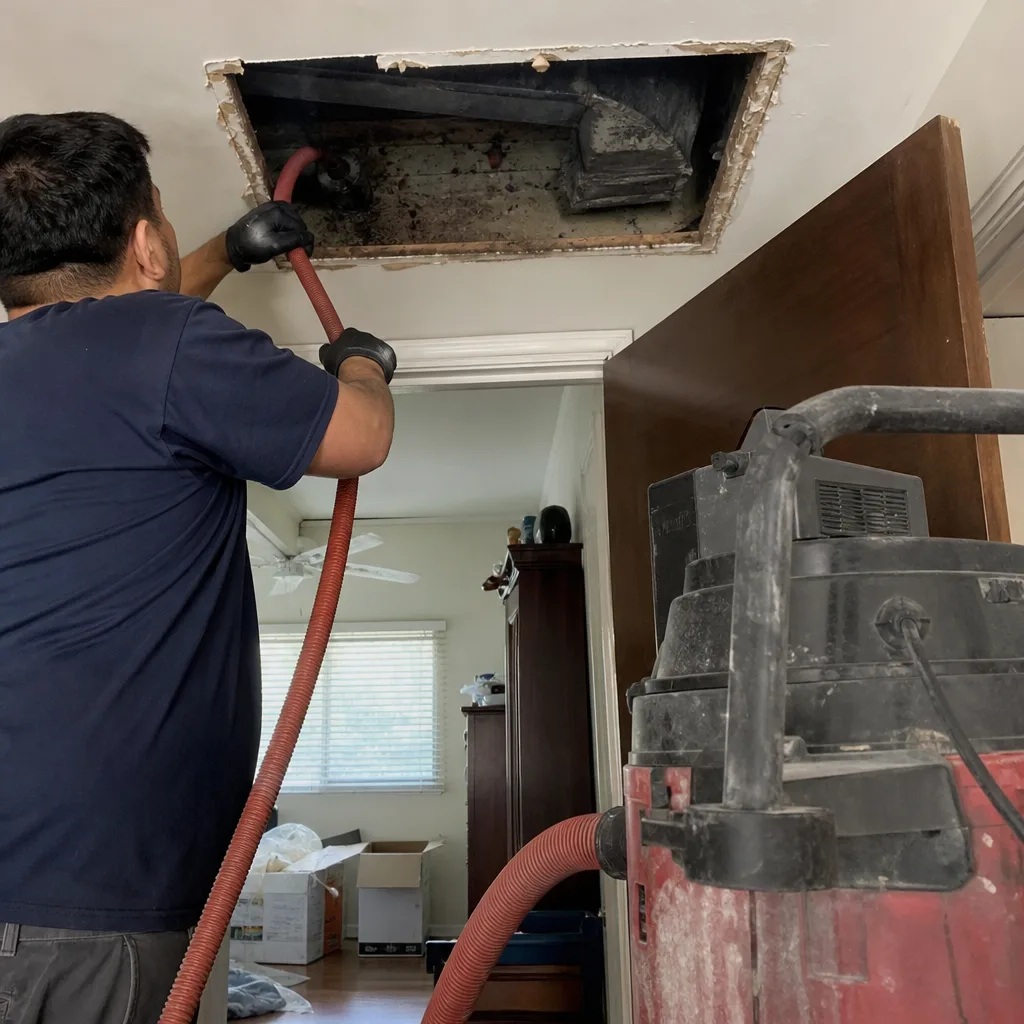 Before
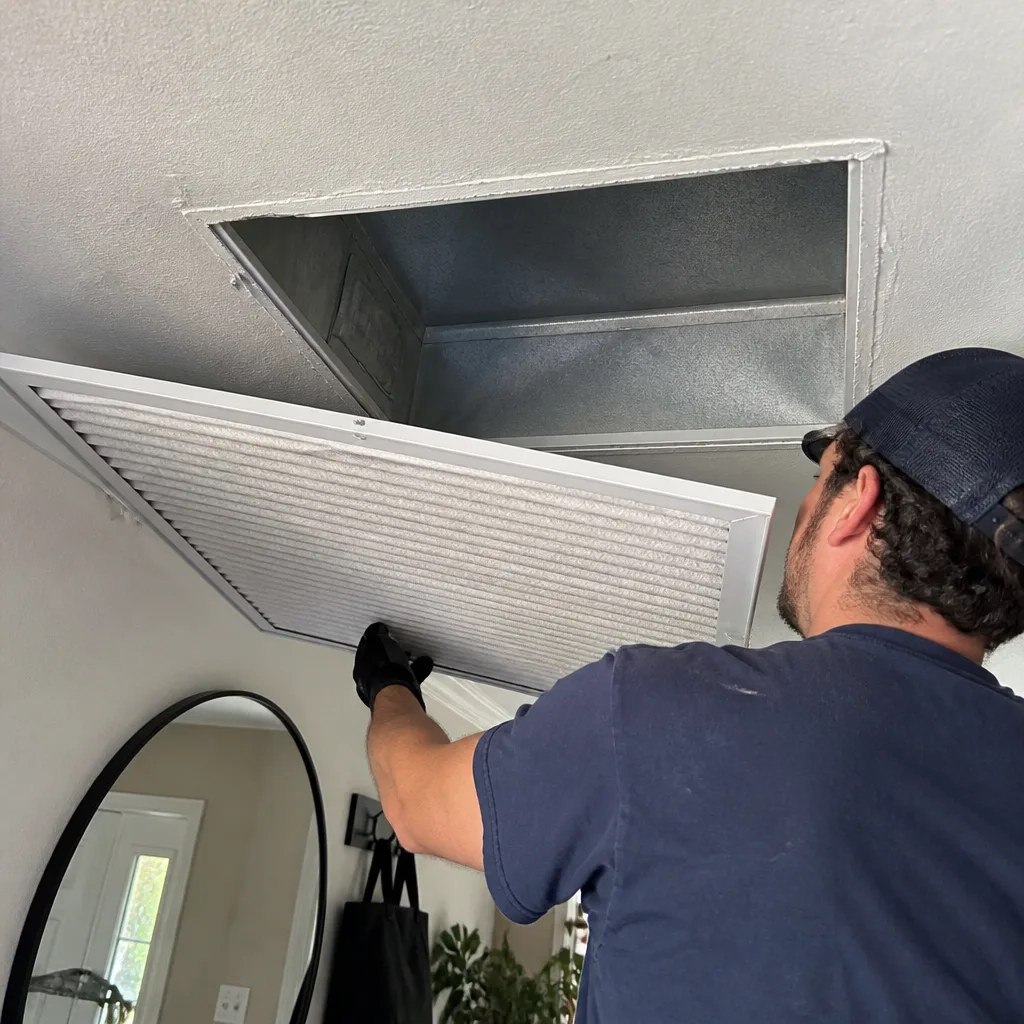 After
After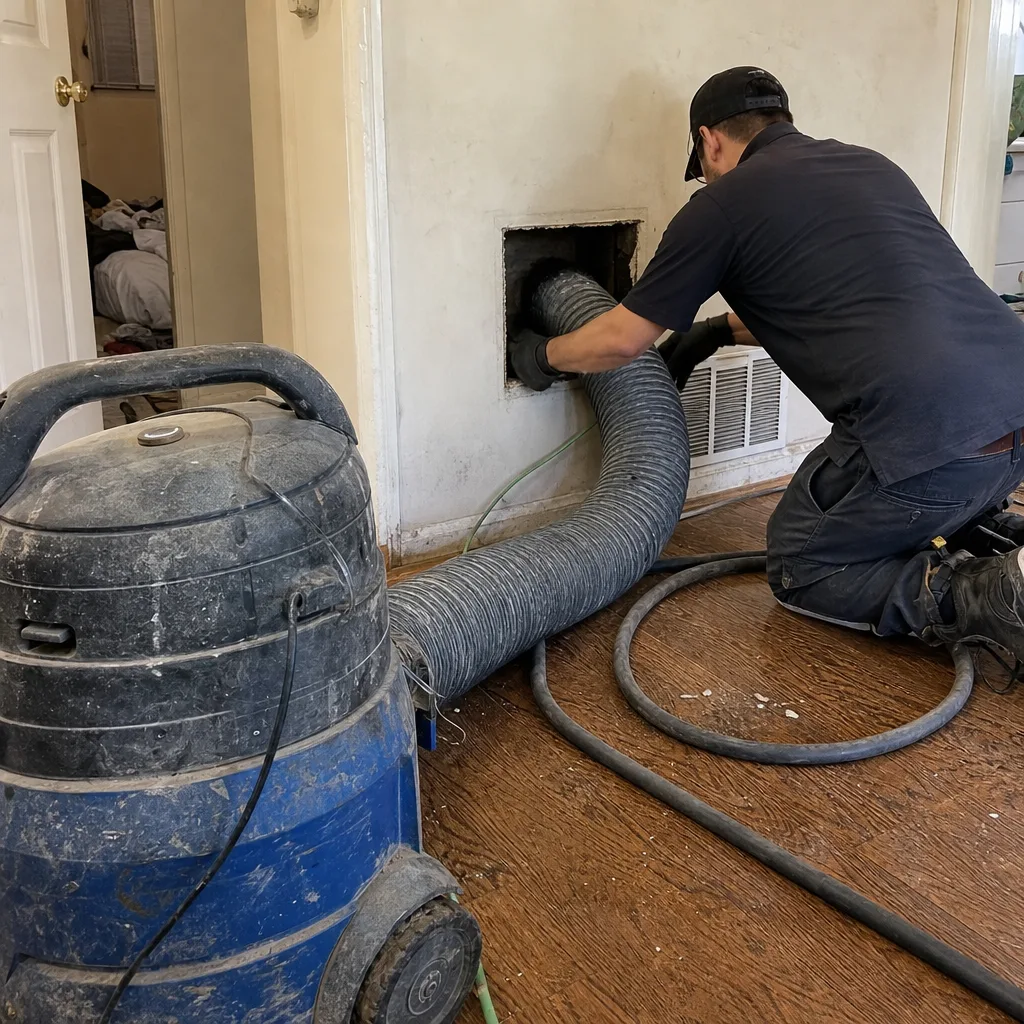 Before
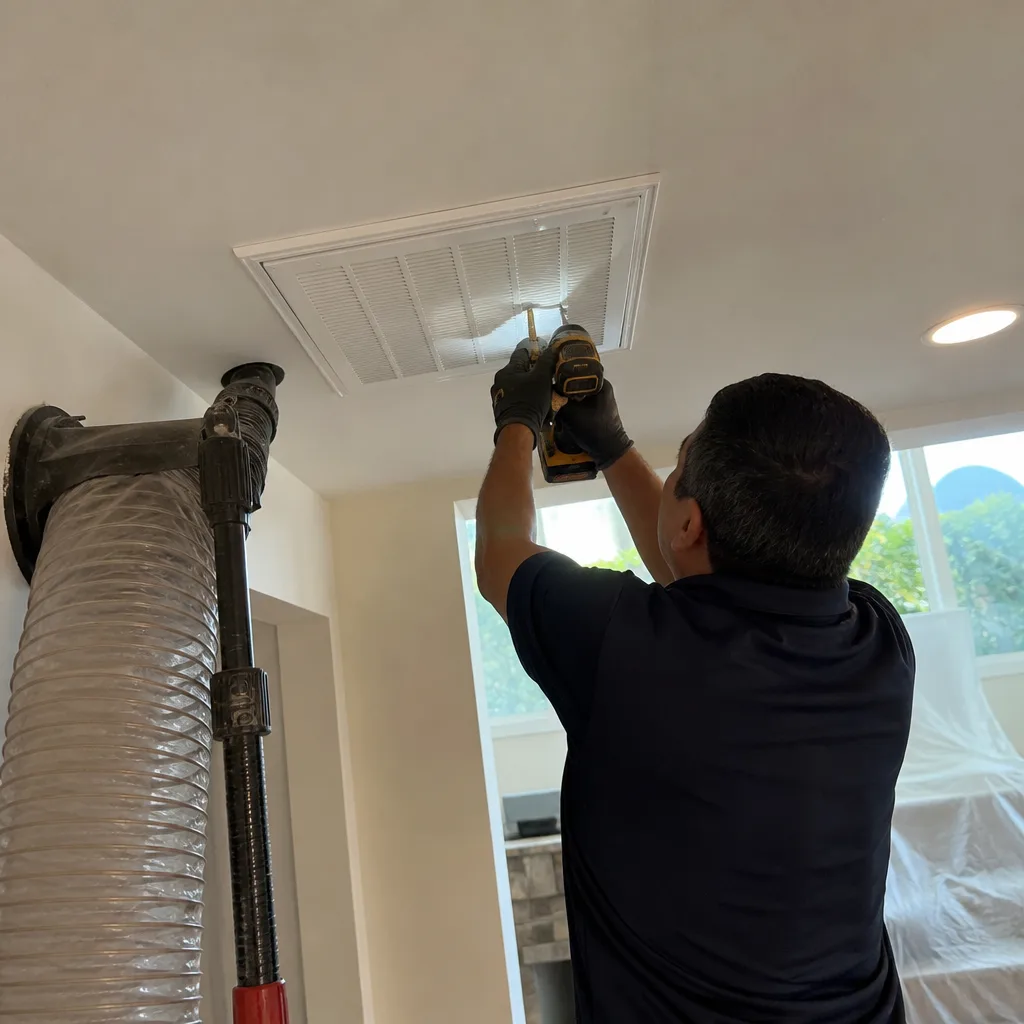 After
AfterLint Building Up Around the Outside Vent
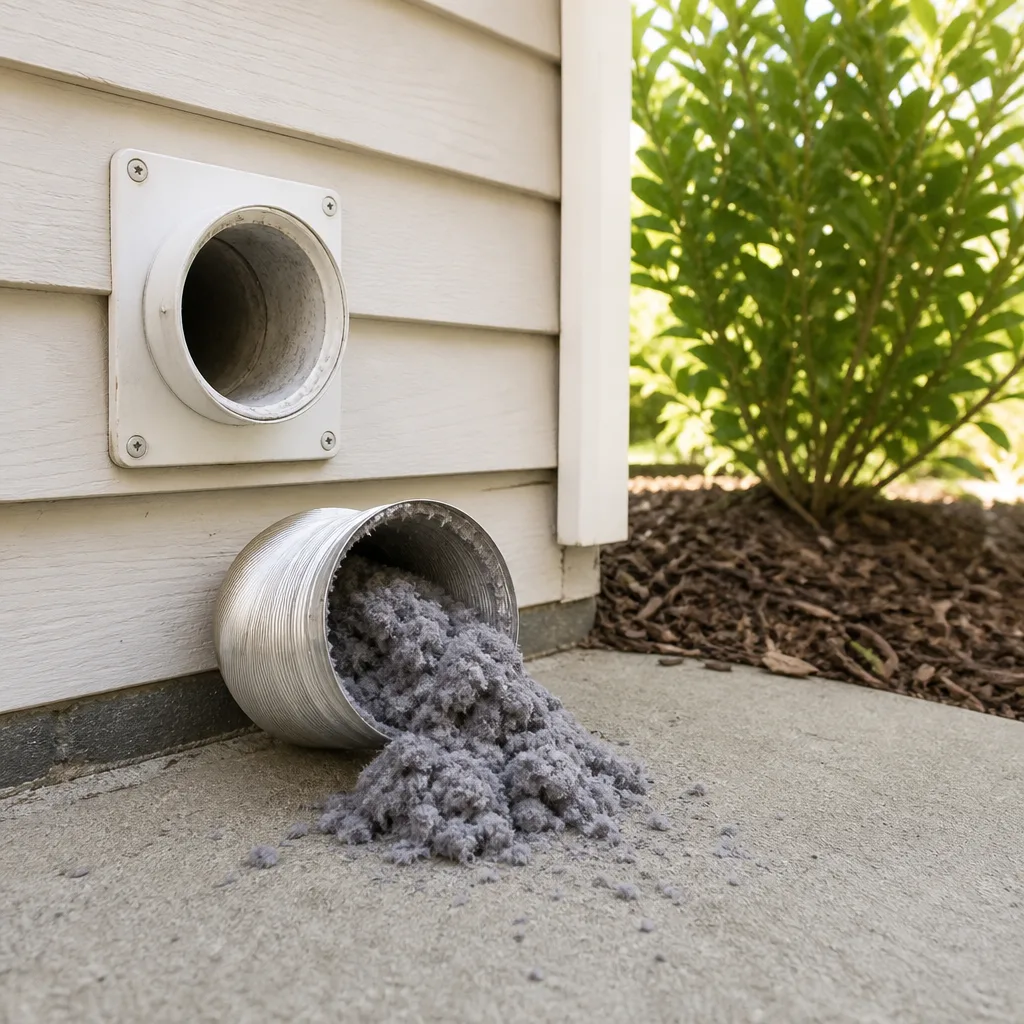
Lint collecting around your dryer’s outside vent cap is almost always a sign that airflow through the vent line has slowed down or partially blocked. The vent can’t push exhaust out cleanly, so lint settles where it exits instead of clearing away. This is a dryer vent problem, not a cosmetic one – and it gets more serious the longer it sits.
That clump of gray fuzz around the louvers isn’t just untidy. It’s your dryer’s way of telling you something is wrong upstream. A healthy dryer vent carries hot, moist, lint-laden air from the drum straight outside in a matter of seconds. When lint is accumulating at the cap, that air is slowing down somewhere along the line – inside the wall, around a bend, or right at the cap itself. A slow vent means your dryer runs hotter and longer to do the same job, which puts stress on the heating element and the drum motor. It also creates the exact conditions where a lint fire can start. The U.S. Fire Administration identifies clogged dryer vents as a leading cause of house fires, and visible lint at the cap is one of the clearest early warnings you can get.
Why It Happens
The vent line has a partial or full blockage inside the wall
Lint slips past the lint trap on every single load – a small amount each time, but it adds up. Over months and years it sticks to the inside walls of the flexible or rigid duct that runs from the dryer to the outside cap. When enough builds up to narrow the passage, the airflow pressure drops and lint starts piling up at the exit instead of flying out of it. If your dryer is taking noticeably longer to dry a normal load, or if the outside of the machine feels unusually hot to the touch, a blocked line inside the wall is the most likely explanation.
The exterior vent cap is clogged or stuck shut
Most exterior caps have hinged flaps or a louvered cover that open when the dryer runs and close when it stops. Those flaps collect lint, get gunky with outdoor moisture and debris, and eventually stop opening all the way. When the cap is only partially open, exhaust backs up slightly with each cycle and deposits more lint around the opening. You can often spot this from the ground: the flaps look gummed up, sit at an uneven angle, or won’t swing freely when you nudge them.
Too many bends in the duct run
Every 90-degree elbow in a dryer vent line adds resistance to airflow – roughly the equivalent of several feet of straight pipe. A duct that was routed with too many turns, or that uses tight flexible accordion hose instead of rigid metal, creates low-velocity zones where lint drops out of the airstream and sticks to the walls. If your laundry room is far from an exterior wall and the vent takes a winding path to get there, this geometry is part of the problem and doesn’t fix itself with cleaning alone.
The duct line is too long for the dryer’s blower
Manufacturers publish a maximum allowable vent length for every dryer model – usually somewhere between 25 and 35 feet of straight rigid pipe, reduced by a set amount for every elbow. If your duct run exceeds that spec, the dryer’s blower simply can’t maintain enough velocity to carry lint all the way to the exterior. Lint drops and builds instead. If a previous owner added ductwork, or if the dryer was moved further from the outside wall at some point, length could be the root issue your technician will check when they measure the run.
What to Do Right Now
- Stop using the dryer until this is assessed. Running a dryer with a restricted vent raises the temperature inside the duct and increases fire risk. If your loads are already taking two cycles to dry, the restriction is significant enough to warrant pausing use until someone has checked the line.
- Photograph what you see at the cap. Take a close-up photo of the lint buildup and another that shows the whole cap and the wall around it. This gives your technician useful before-visit context and gives you a clear before-and-after record of the job.
- Look at the cap from the outside without touching the duct itself. Check whether the flaps open and close freely, whether the cap is damaged or partially blocked by a nest or debris, and whether the area around it shows staining or discoloration from heat. Note what you see – it helps narrow down the cause before anyone arrives.
- Check behind the dryer for obvious kinks or crushed hose. If you can safely pull the dryer out a few inches, look at the flex connector between the back of the machine and the wall. A kinked or accordion-collapsed hose behind the dryer restricts airflow before air even reaches the wall duct. Don’t attempt to reach inside wall cavities or work on the rigid ductwork – that’s what the technician is there for.
- Do not attempt to clear a bird or animal nest from inside the duct yourself. Nests push deeper into the duct when probed, and disturbing nesting material can expose you to pathogens. If you suspect an animal has been using your exterior cap as a home, mention it when you call so the technician comes prepared.
How We Fix It
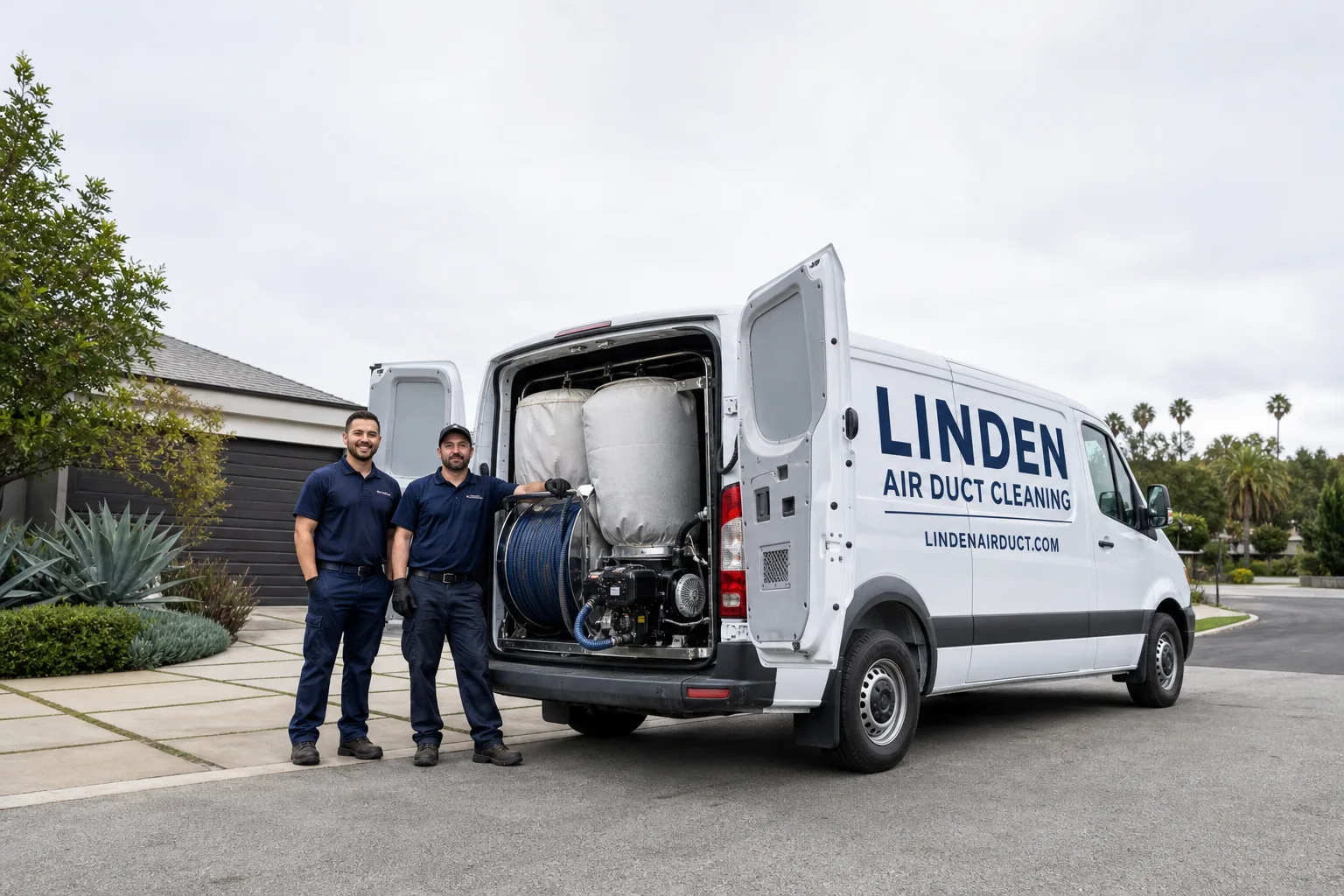
When your local Linden Air Duct Cleaning team arrives, the technician will walk the full duct line first – measuring the run, checking every elbow and transition, and inspecting the exterior cap before touching anything. That inspection tells us exactly what we’re dealing with: a blockage, a cap issue, a geometry problem, or some combination.
For most homes, the fix is a professional dryer vent cleaning. Using equipment from Rotobrush and Nikro, we run a brush system and high-powered vacuum through the full length of the duct line to break up compacted lint and pull it out cleanly – not just push it around. We clear and test the exterior cap, confirm the flaps move freely, and run the dryer afterward to verify that airflow has returned to the right velocity.
If the inspection finds a duct section that’s damaged, crushed, or poorly routed, we’ll scope air duct repair work into the estimate as well. You’ll have the written price for everything in front of you before a single tool comes out of the van – that’s how every Linden job works, without exception. Most dryer vent cleanings are completed within an hour or two, and if any repair work is covered under our 365-Day Done Right Promise and it doesn’t hold, we come back at no charge.
Frequently Asked Questions
It’s a real fire risk, and waiting makes it worse. Lint is highly flammable, and a restricted dryer vent raises the temperature inside the duct every time the dryer runs. The lint accumulating at your cap is a sign that the restriction is already affecting airflow. We’d recommend stopping dryer use and getting the vent inspected soon rather than running more loads through a compromised line. Call us at (980) 447-2498 and a live person will help you figure out how quickly you need to act.
Clearing visible lint from the cap exterior might make it look better, but it doesn’t address the buildup inside the duct wall – which is almost certainly what caused the exterior accumulation in the first place. A surface clean at the cap is like wiping the overflow from a clogged sink while leaving the pipe alone. The duct line itself needs to be brushed and vacuumed from inside, which requires professional equipment to do properly.
Your local Linden team schedules jobs based on current availability, and dryer vent cleaning appointments are typically available within a short window – especially when there’s a fire-risk concern. The fastest way to find out is to call (980) 447-2498 right now. Our phones are answered by a live person around the clock, so you won’t hit a voicemail loop regardless of when you call.
We don’t publish a flat rate here because the price depends on the length of your duct run, the number of elbows, the type of ductwork in the wall, and whether any repair work is needed. What we can tell you is that your written price is handed to you before any work starts – no estimate that turns into a larger invoice once the technician is already in your home. Call (980) 447-2498 for a free written estimate based on your actual setup.
Get It Fixed
Lint at the outside vent is a warning your dryer is trying to hand you. Your local Linden Air Duct Cleaning team will inspect the full duct run, give you a written price before touching anything, and clear the problem with professional equipment. Call (980) 447-2498 – a real person answers – or book online today.
Written by Marcus Veale, Owner at Linden Air Duct Cleaning, part of the Threshold Group family serving homeowners since 2004.
What Our Customers Say
"Priced by the system, not by the vent, and he told me up front. No pressure to add the sanitizer and I said no without any fuss."
- Faith N."We had construction dust packed into every register after a remodel. They sealed off the returns, used negative pressure, and left the floors cleaner than they found them."
- Paul E."I liked that I knew who was coming in. Name and photo texted ahead, badge at the door. He was quiet, careful with the furniture, and thorough."
- Cheryl A.