
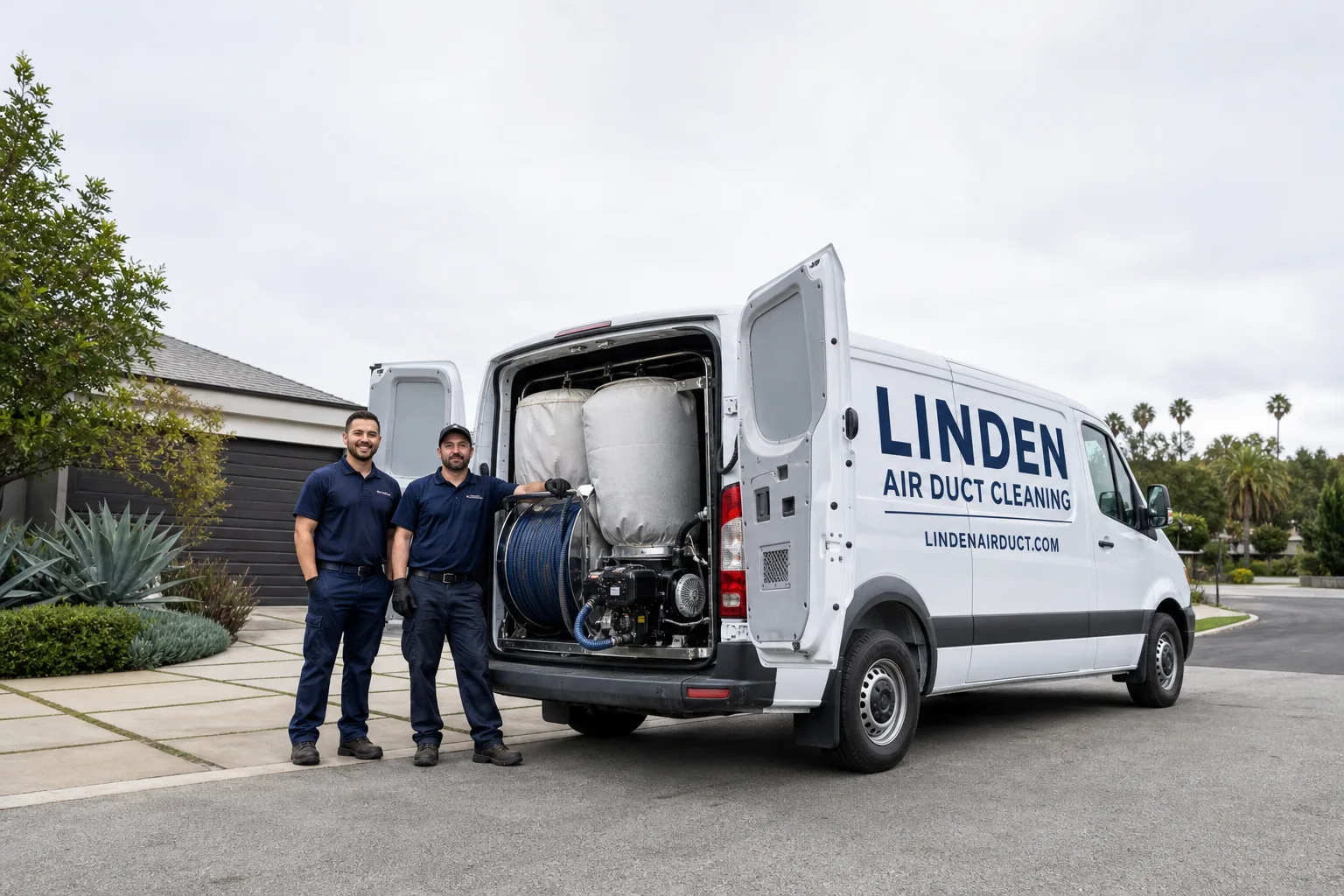
Whole-system duct and dryer vent check with before-and-after photos - you see exactly what came out of your vents
That "$99 whole-house special" is a bait ad - the real number appears once they are in your hallway, or the "clean" is a shop-vac at the register. We photograph the inside of your ducts before and after instead.
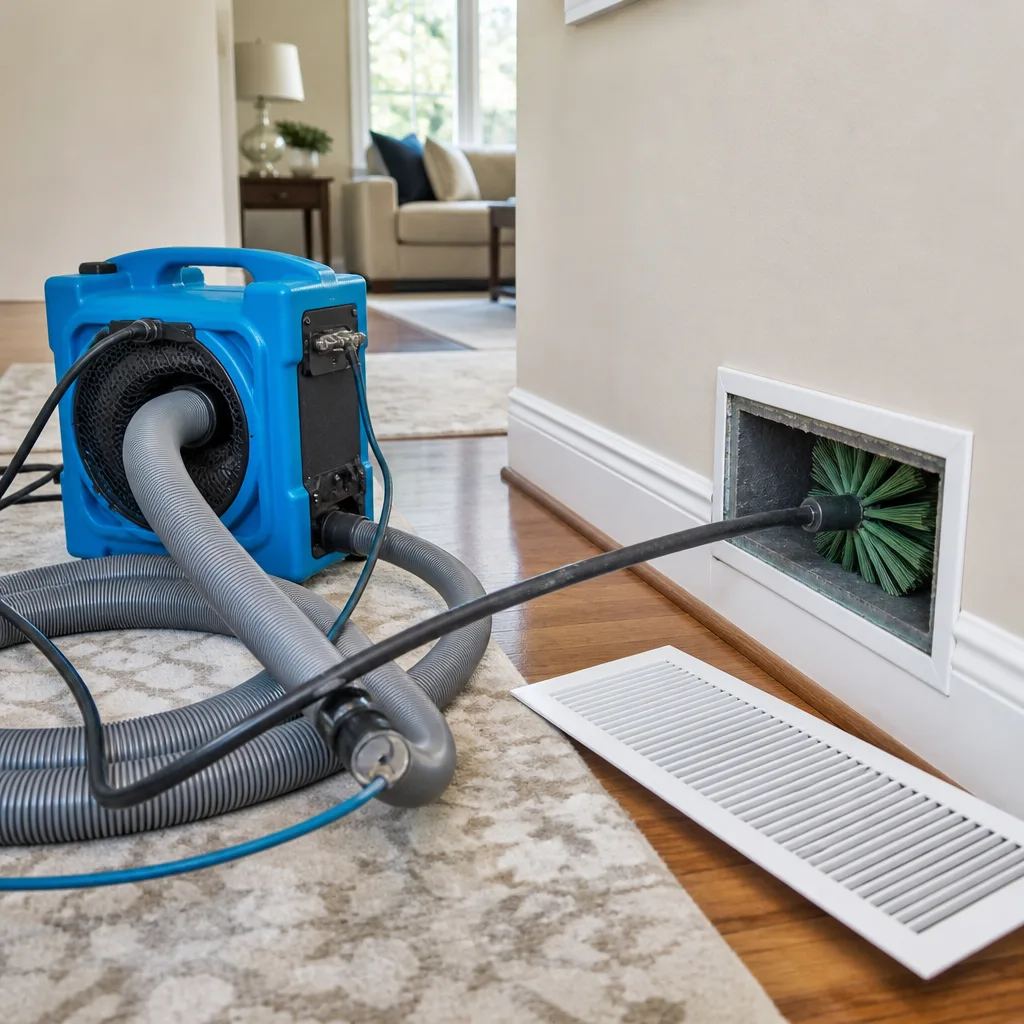
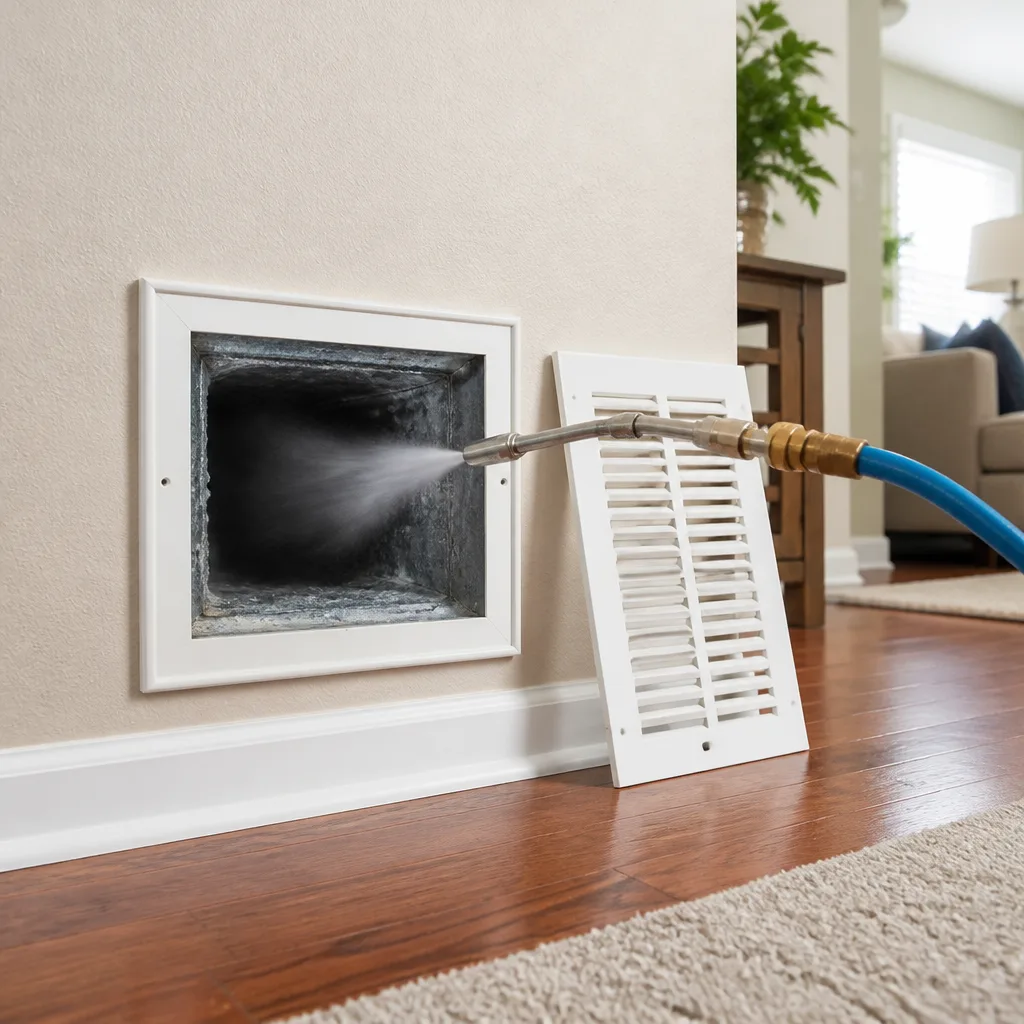
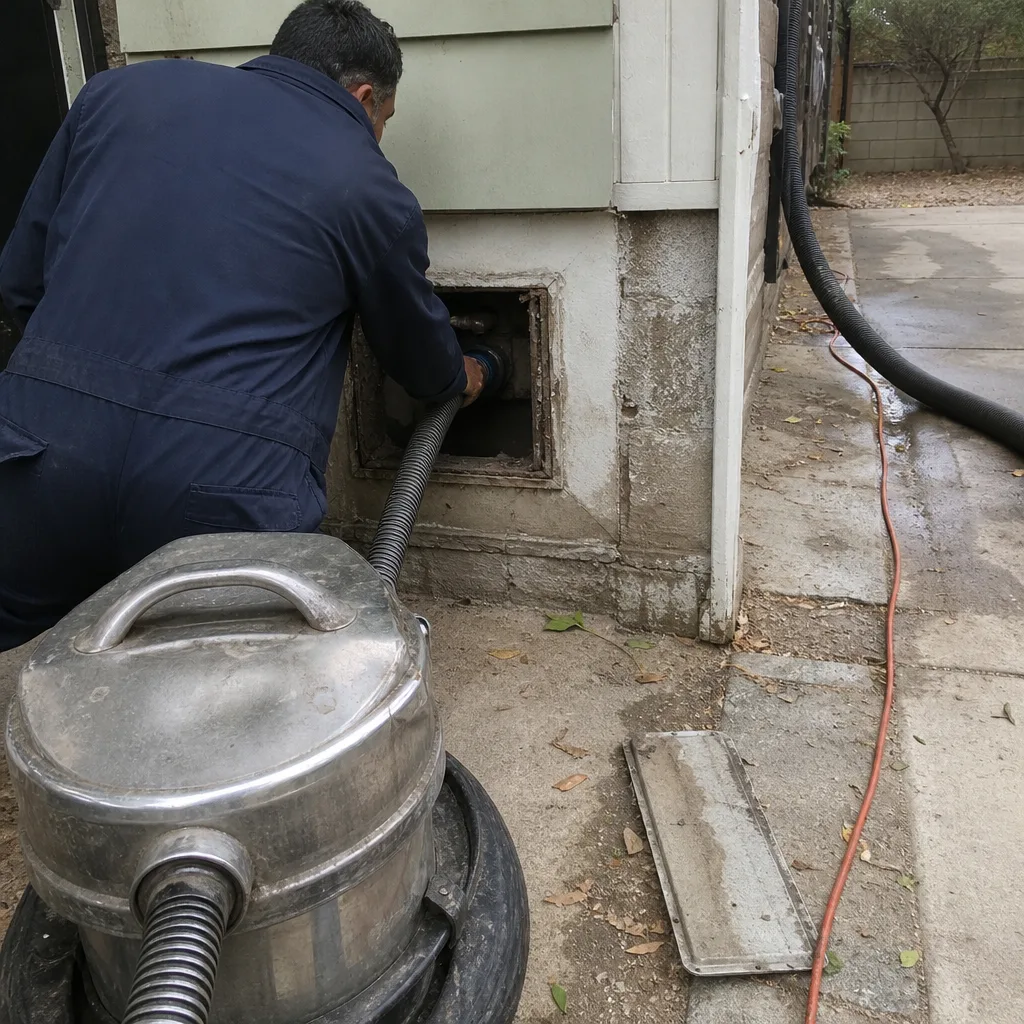 Before
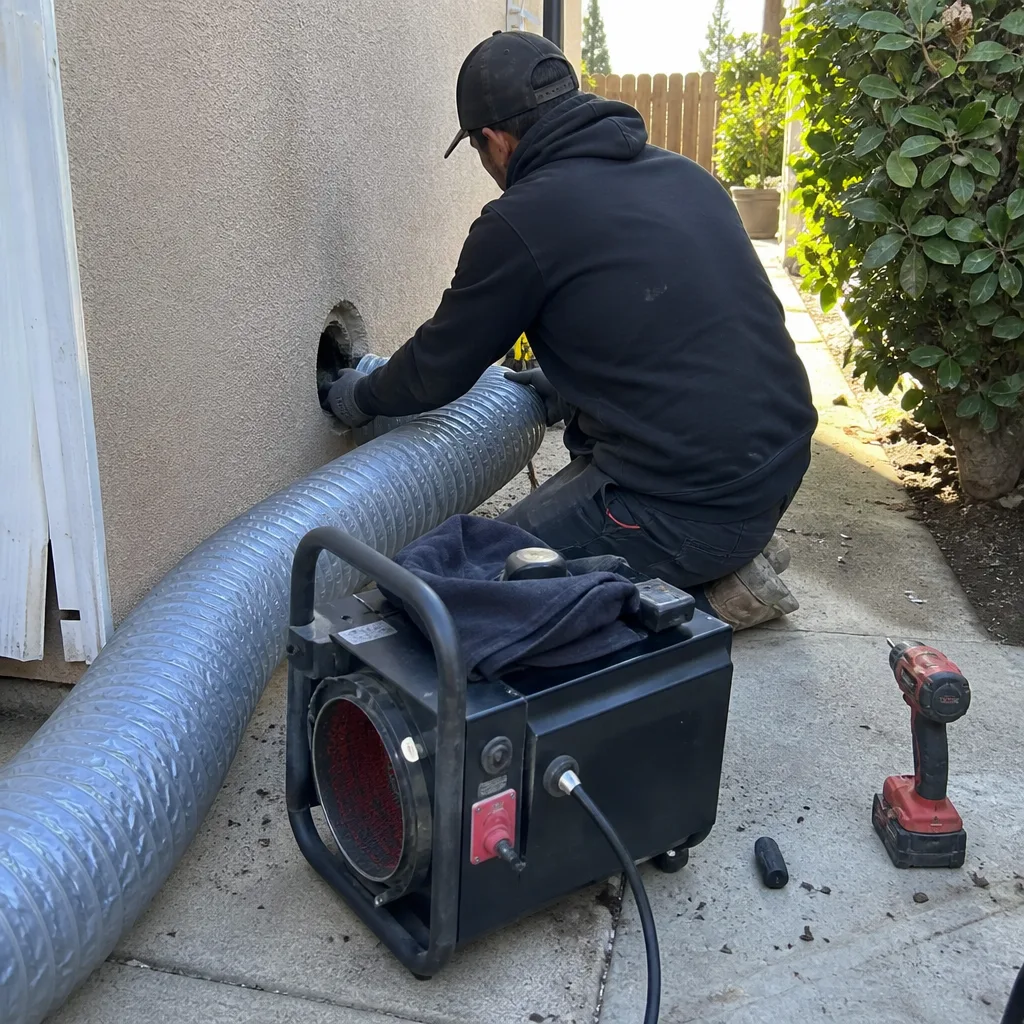 After
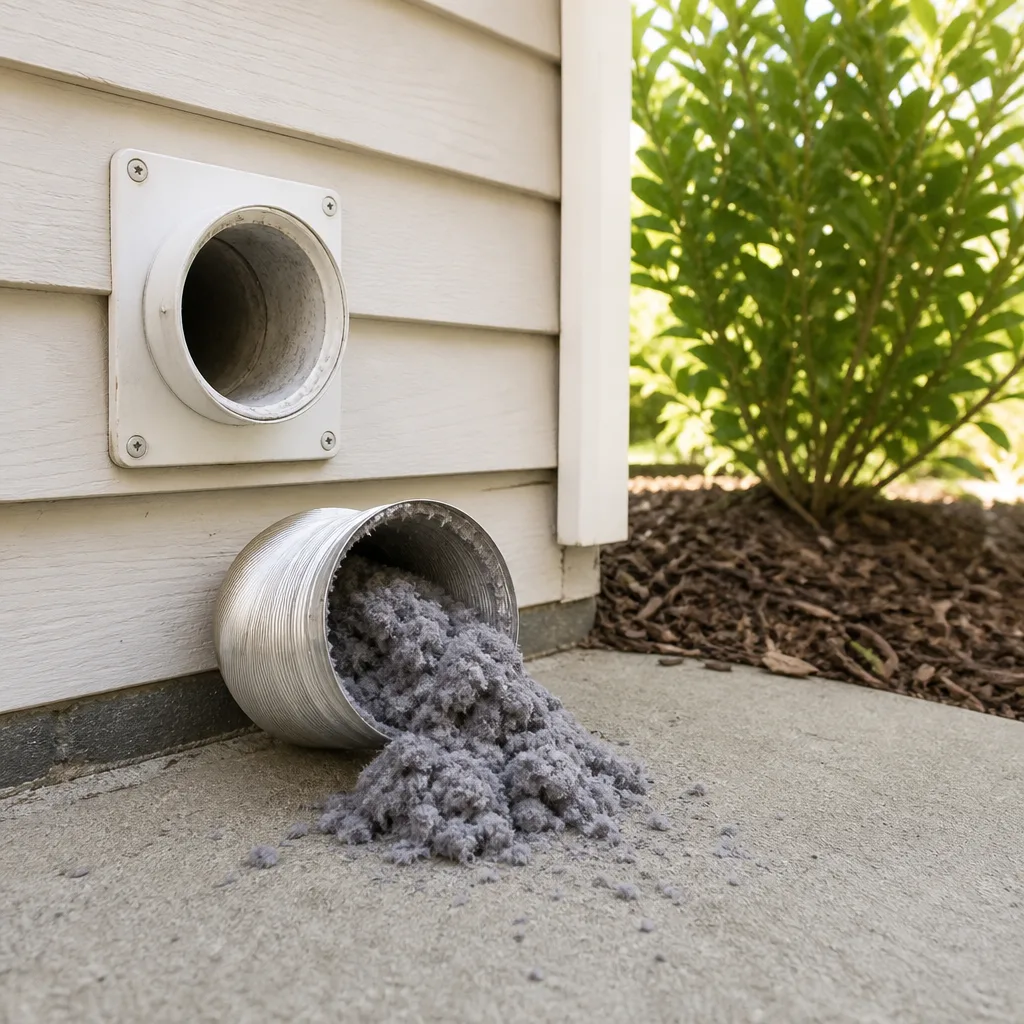
After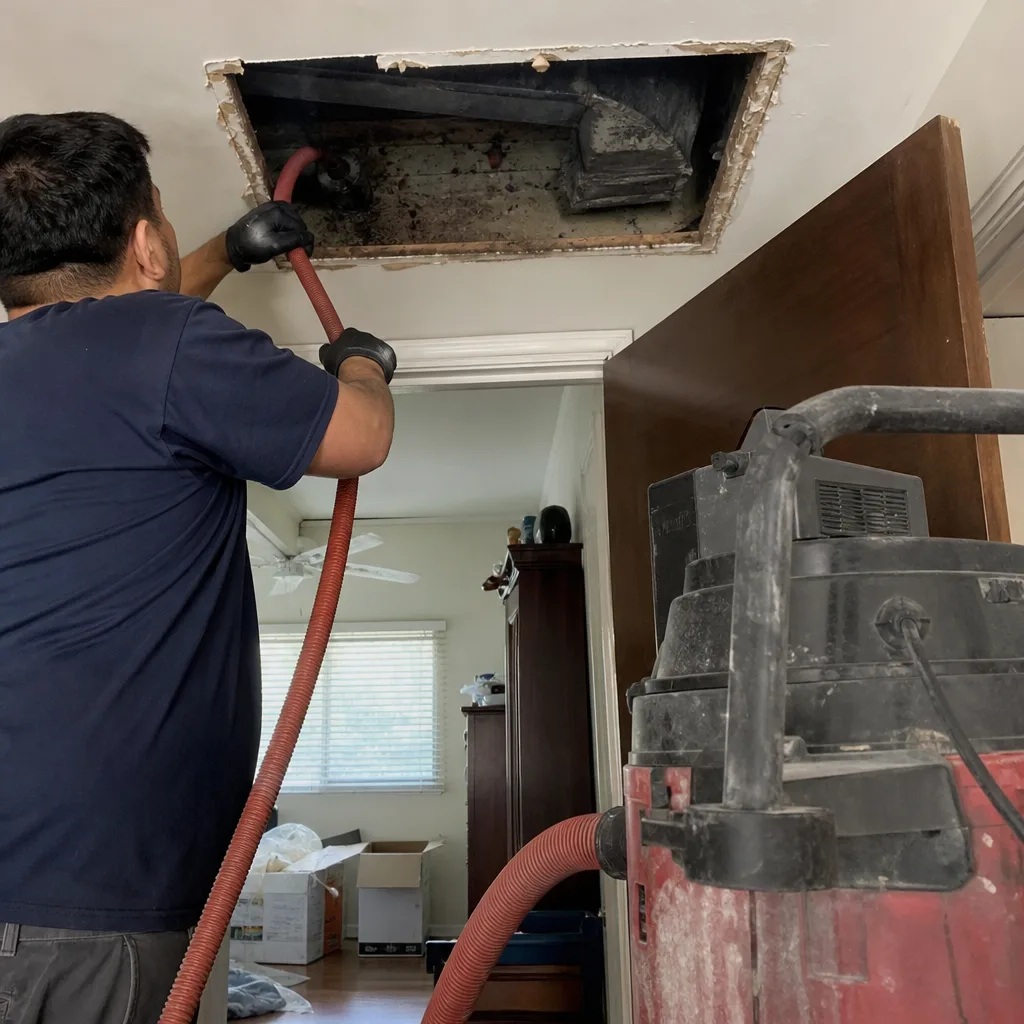 Before
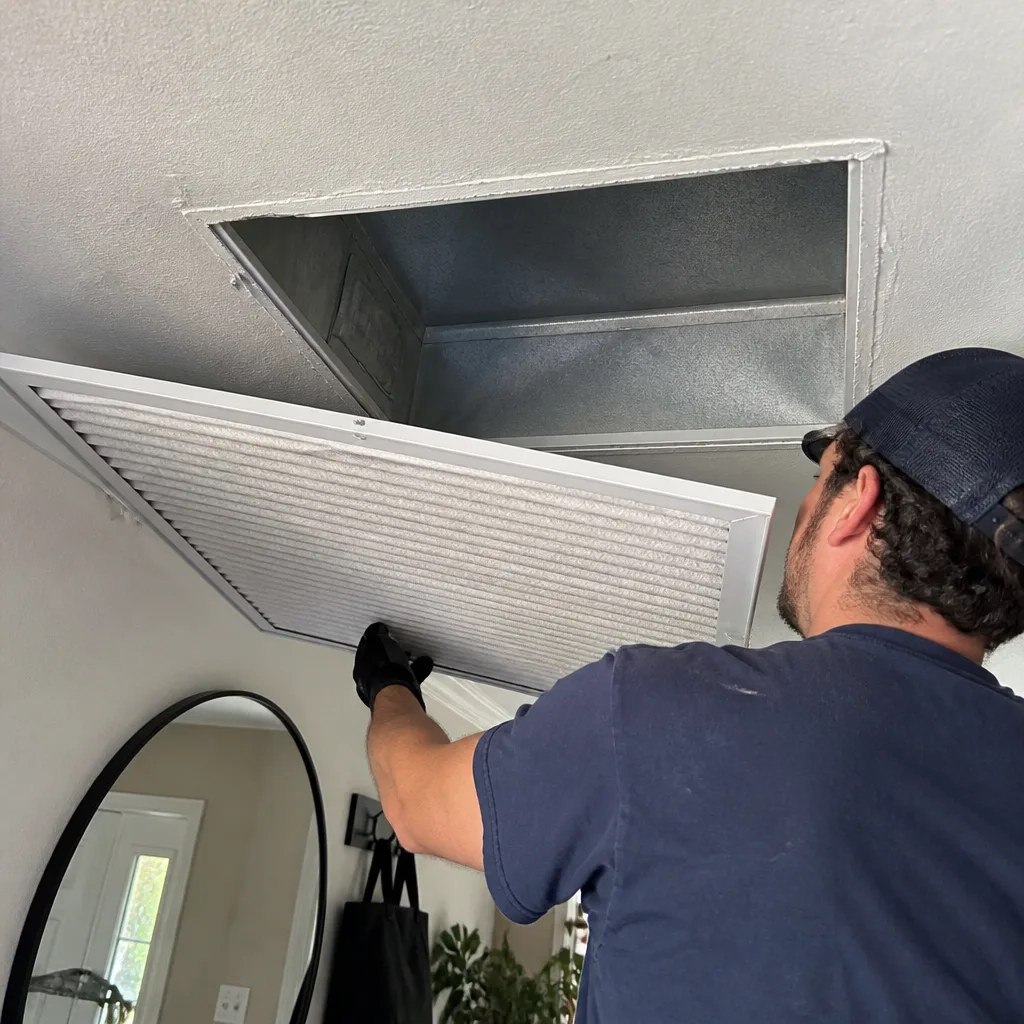 After
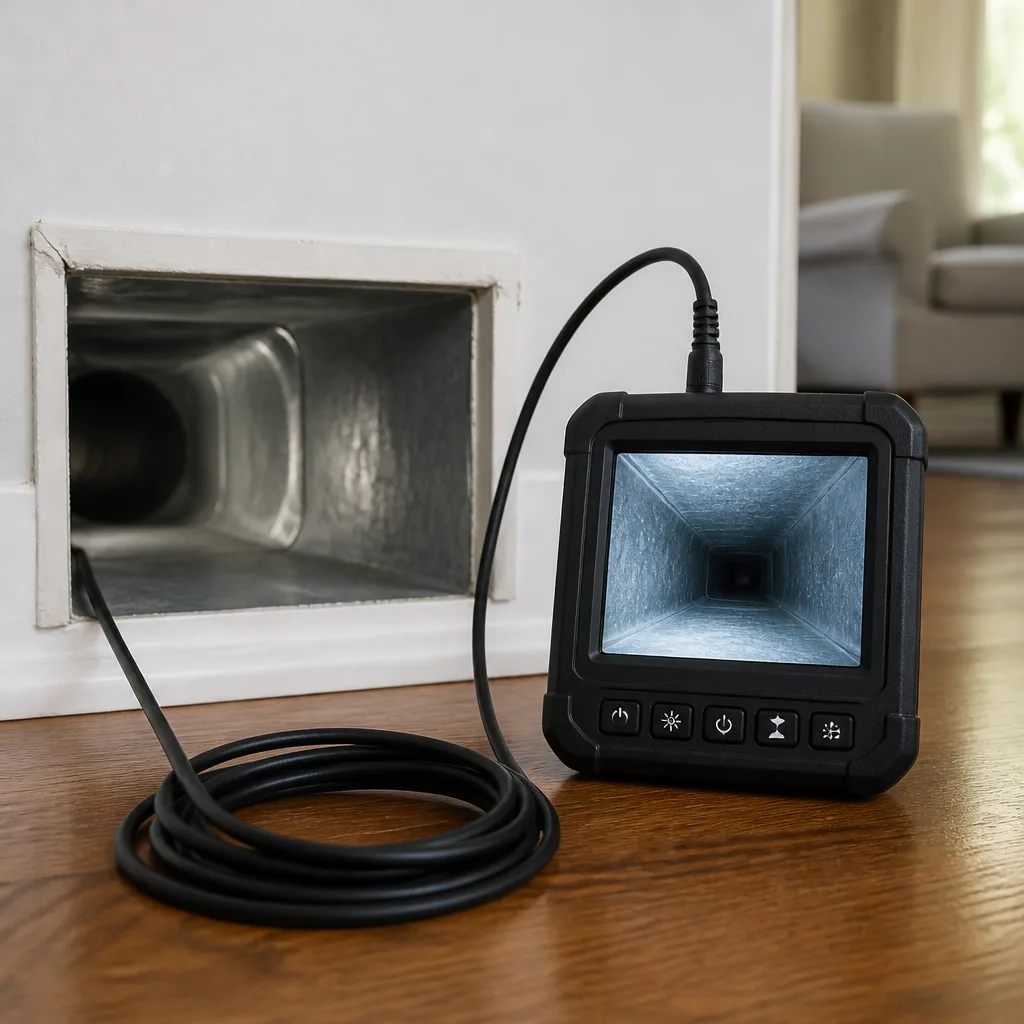
After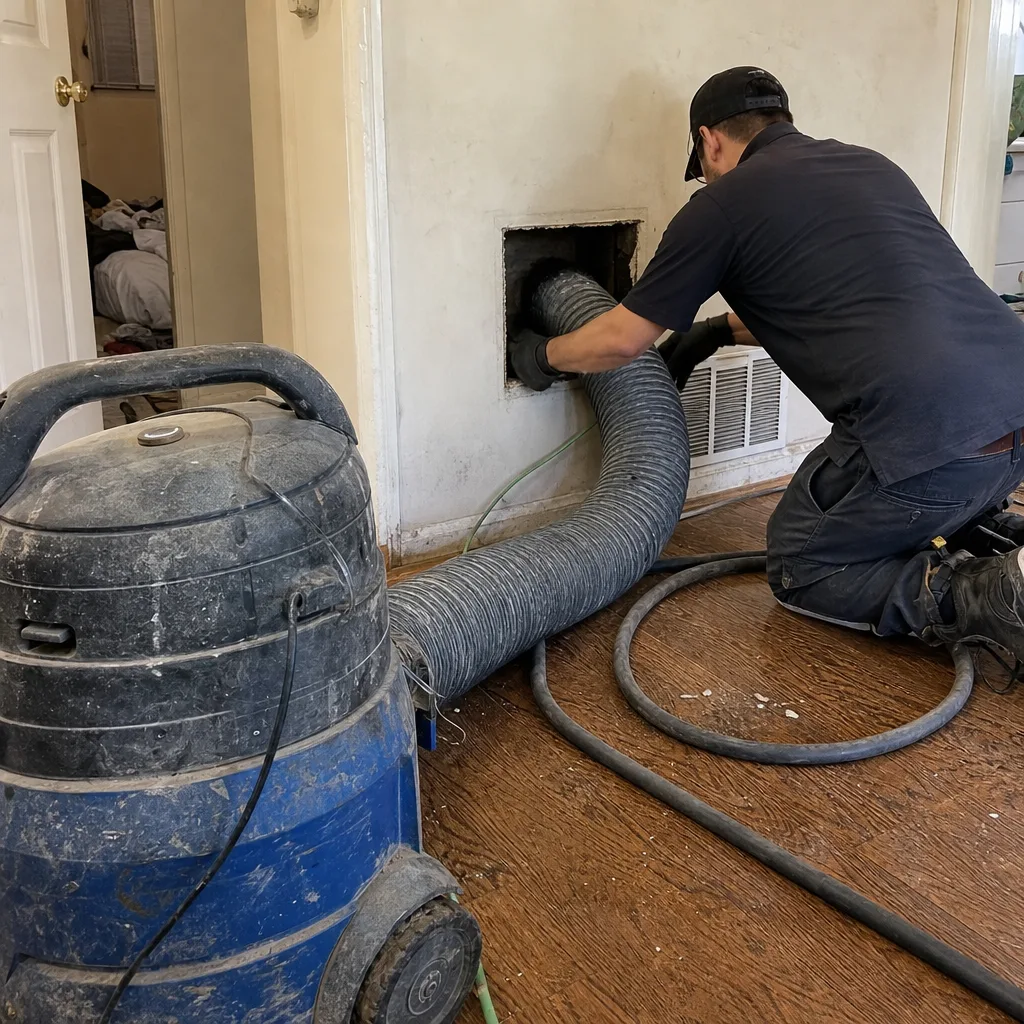 Before
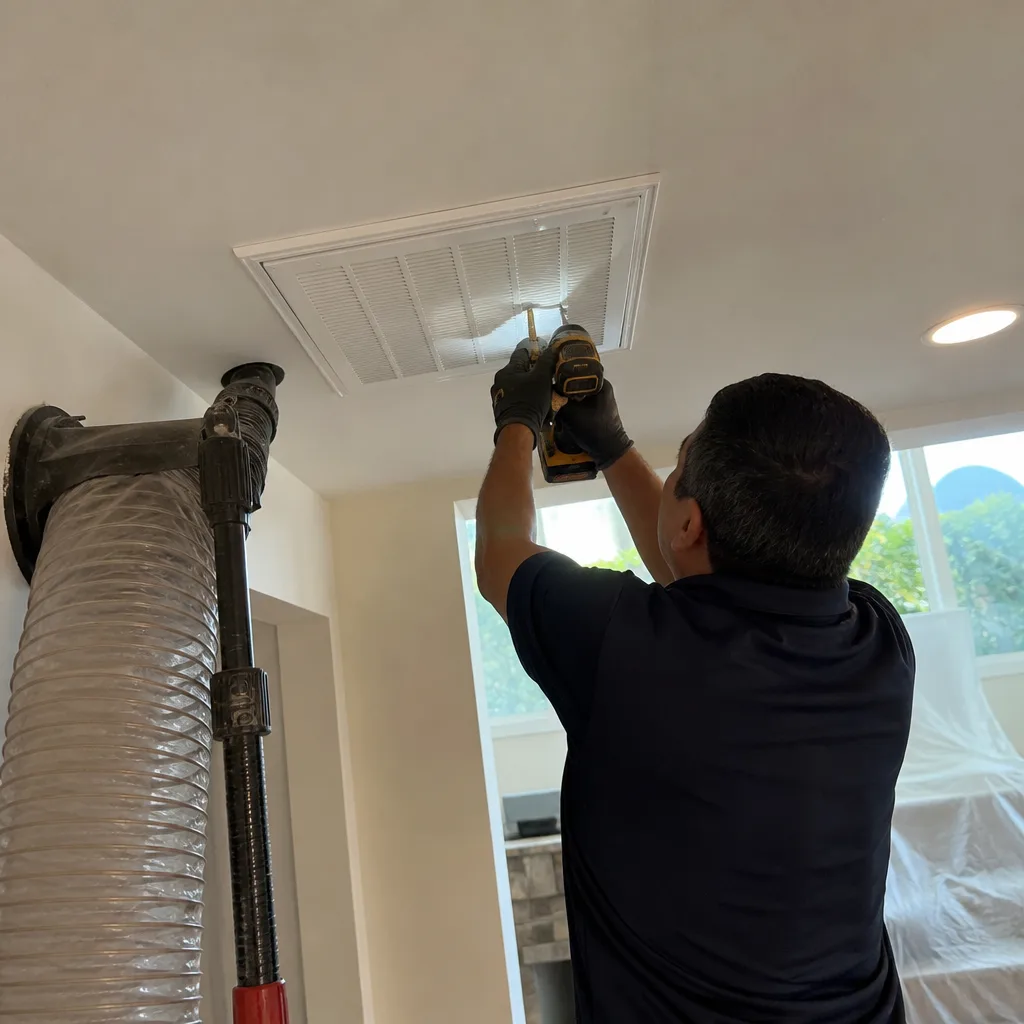 After
AfterMusty Smell from the Vents
What’s Happening
A musty smell coming from your vents almost always means moisture has gotten into your duct system – and where there’s moisture sitting in a dark, low-airflow space, mold or mildew follows. This is one of the most common things your local Linden Air Duct Cleaning team finds when they open up a system for the first time.
The smell itself isn’t the problem – it’s a signal. Something upstream in your HVAC system is wet when it shouldn’t be, or your ducts have been holding onto humidity long enough for biological growth to take hold on the interior surface. Every time the system runs, it pulls that air across the contamination and delivers it straight to your living spaces. The fix depends on which part of the system is the source, and that’s exactly what a diagnostic cleaning visit is designed to find out.
Why It Happens
Mold or Mildew Growth Inside the Ducts
Sheet metal ductwork and flexible duct lining both collect dust over time, and dust holds moisture. If your system has ever had a cooling problem, a drain backup, or just runs in a humid house, that damp dust becomes a growing surface. You can sometimes spot early signs by shining a flashlight directly into a supply register – if the interior looks dark, discolored, or fuzzy rather than dull gray, that’s worth a professional look. The smell is usually earthy or sour, and it gets noticeably worse when the air handler first kicks on.
A Dirty or Wet Evaporator Coil
The evaporator coil sits inside your air handler and pulls heat out of the air – which means it’s always wet with condensation during cooling season. A coil that hasn’t been cleaned in a few years builds up a layer of dust and debris on its face, and that wet, dirty surface is a reliable mold habitat. You won’t be able to see the coil without opening the air handler cabinet, but if the musty smell is strongest right after the system starts and fades slightly as the house cools down, the coil is a strong suspect.
A Clogged or Backed-Up Condensate Drain
Your air conditioner produces a surprising amount of water as it runs. That water is supposed to drain away through a condensate line, but those lines clog with algae and debris regularly – often once a season in humid climates. When the drain backs up, water sits in the drain pan under the coil. A pan that’s been wet for a few days smells exactly like what you’re noticing. Look for your air handler’s drain pan (usually accessible by removing a panel on the unit itself) and check whether there’s standing water in it. If there is, don’t keep running the system – a backed-up pan can overflow and cause real damage to the area around the unit.
Flex Duct That’s Torn, Disconnected, or Saturated
Flexible ductwork – the silver, accordion-style tubing used in most residential systems built in the last 40 years – can sag, tear, or pull apart at connections. When a section drops into an unconditioned crawlspace or attic, it picks up ambient moisture and sometimes sits in it. Saturated flex duct doesn’t just smell; it becomes structurally soft and can collapse, choking airflow to whole sections of the house. If certain rooms smell significantly worse than others, or if some rooms seem to get much less airflow than they used to, disconnected or damaged duct is worth investigating.
What to Do Right Now
- Don’t keep running the system if you suspect standing water in the drain pan. A backed-up condensate line that’s already overflowing can damage drywall, subfloor, and insulation. Turn the system off and call us. Running it further won’t help the smell and can make the water damage worse.
- Pull a few supply register covers and photograph what you see inside. Use your phone’s flashlight. You’re looking for visible discoloration, dark patches, or debris buildup on the duct walls within the first foot of the opening. These photos are useful to show your technician and help narrow down how far into the system the contamination goes.
- Check and replace your air filter. A filter that’s overdue holds moisture and can itself smell musty – and a clogged filter restricts airflow enough to cause the evaporator coil to ice over, which creates more moisture problems downstream. Pull it out, look at it, and if it’s dark gray and dense, replace it before the technician arrives.
- Locate your condensate drain line and check the outdoor end. The drain line usually exits through a wall or into a floor drain near the air handler. If water isn’t dripping from it during a cooling cycle, the line may be clogged. Note this for your technician – it’s a fast fix when caught early.
- Open the register closest to the air handler and take a smell. If the odor is dramatically stronger there than at registers farther away in the house, the source is likely near the air handler itself – coil, drain pan, or plenum. If the smell is more even throughout the house, the contamination is more spread through the duct network. Either way, write down what you notice before the visit.
How We Fix It
When your local Linden Air Duct Cleaning team arrives, the first thing we do is trace the smell to its source before we touch anything. That means checking the air handler, the coil area, the condensate pan, and then pulling register covers to assess duct condition throughout the system.
For most musty-smell calls, the resolution is a thorough air duct cleaning using professional-grade Rotobrush and Nikro equipment – agitating debris from duct walls and extracting it completely, not pushing it toward the registers. If the source turns out to be a damaged or disconnected section of ductwork, we also handle air duct repair, and every repair comes with a written guarantee and a free return visit if it doesn’t hold.
Before any work starts, you’ll have the price in writing – that’s not a policy we bend. A standard cleaning visit takes two to four hours depending on system size. The 365-Day Done Right Promise covers the work: if it’s not right, we come back and make it right.
Frequently Asked Questions
It can be, depending on what’s growing and how long it’s been there. Mold spores circulating through the air supply can aggravate asthma and allergies, and some mold types produce compounds that cause headaches and fatigue even in people who don’t normally have respiratory issues. A musty smell that’s new or getting stronger is worth addressing promptly – this isn’t a “wait and see” situation. Call (980) 447-2498 and we’ll help you figure out how urgent it looks based on what you’re describing.
The longer moisture sits in a duct system, the more surface area the growth covers – and the more expensive the cleaning typically becomes. A system that smells faintly musty today can smell significantly worse in three weeks if the underlying moisture source hasn’t been addressed. If you’re seeing standing water anywhere near the air handler, don’t wait. If the smell is mild and there’s no visible water, you have a short window, but not an unlimited one. Call (980) 447-2498 to get it scheduled before it gets ahead of you.
Air duct cleaning is a scheduled service – we set an appointment, confirm your technician’s name and photo in advance, and show up in a clean, marked uniform ready to work. Contact us at (980) 447-2498 and a live person will answer right now, any time of day or night, to find the first available slot with your local Linden team.
Your technician photographs inside the ducts before and after the cleaning – you’ll see what was there and what’s gone. If the smell comes back within the coverage window of the 365-Day Done Right Promise, we return at no charge and find out why. We put that in writing before work starts, so there’s no dispute about whether it’s covered.
Get It Fixed
Call (980) 447-2498 – a real person answers around the clock. Your local Linden Air Duct Cleaning team will schedule a visit, send you your technician’s name and photo in advance, and give you a written price before a single tool comes out of the van. The linden tree was planted for clean air. So were we.
Written by Marcus Veale, Owner at Linden Air Duct Cleaning, part of the Threshold Group family serving homeowners since 2004.
What Our Customers Say
"We had construction dust packed into every register after a remodel. They sealed off the returns, used negative pressure, and left the floors cleaner than they found them."
- Paul E."I liked that I knew who was coming in. Name and photo texted ahead, badge at the door. He was quiet, careful with the furniture, and thorough."
- Cheryl A."Thorough job on all eleven vents and the main trunk. Took longer than the three hours they quoted, but he told me early and kept working. Air feels fresher."
- Meredith L.