
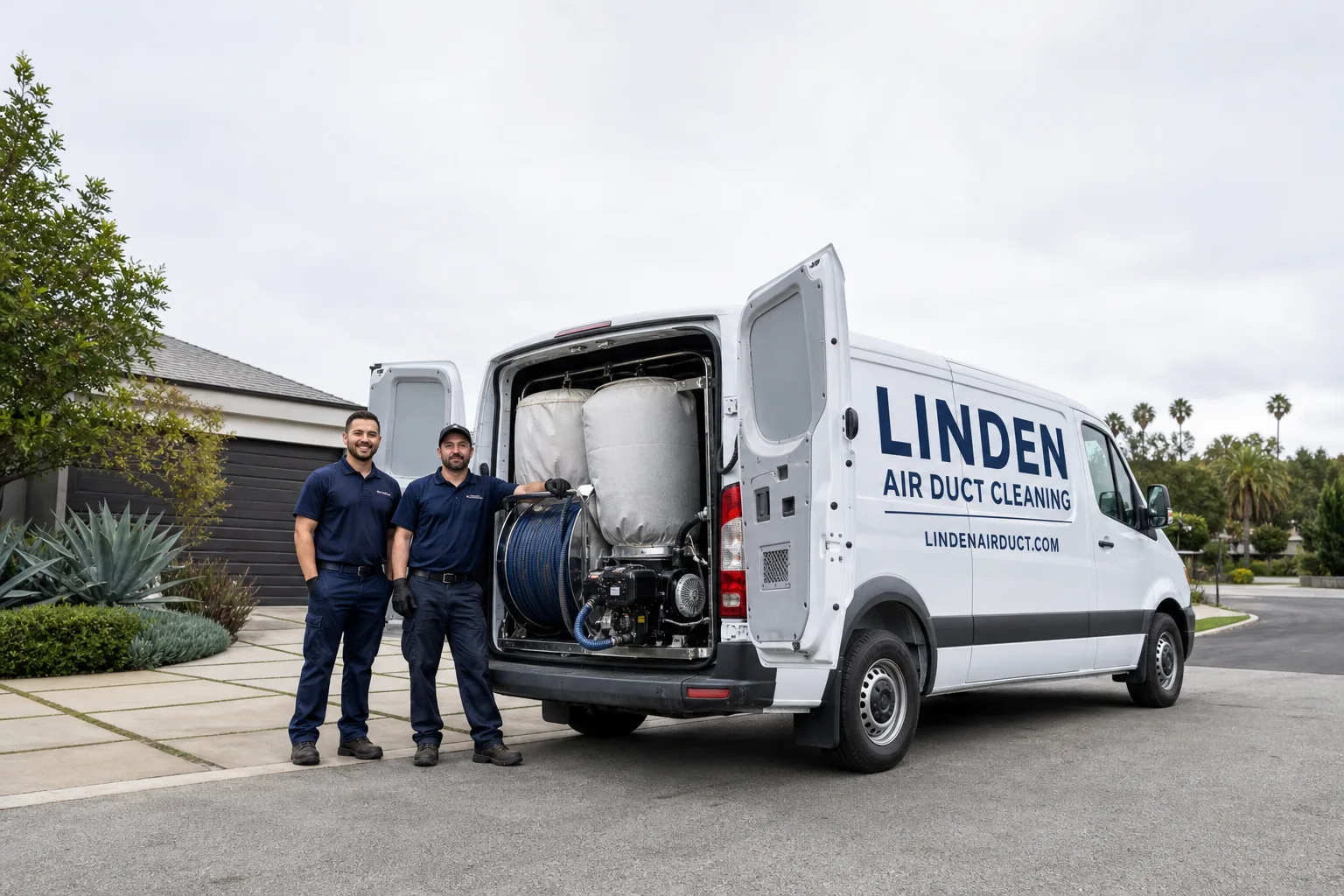
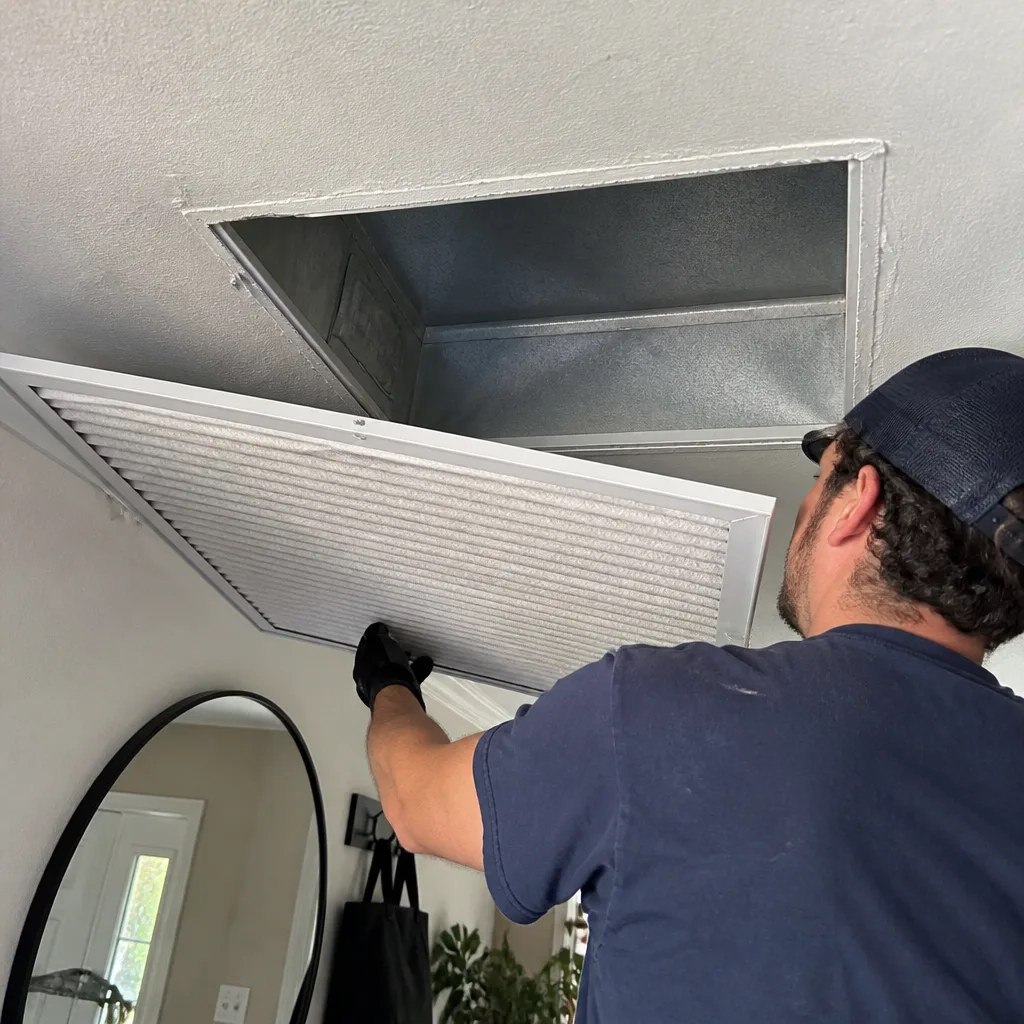
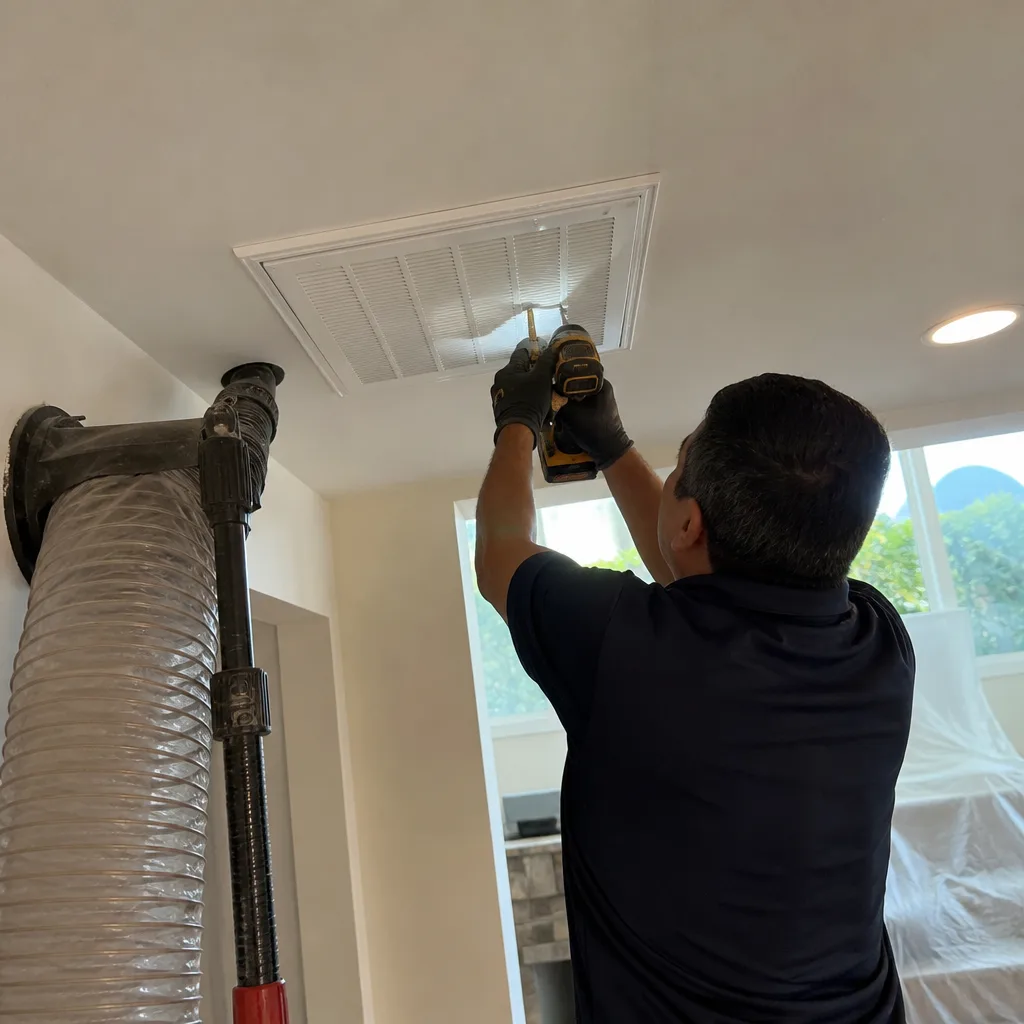
Whole-system duct and dryer vent check with before-and-after photos - you see exactly what came out of your vents
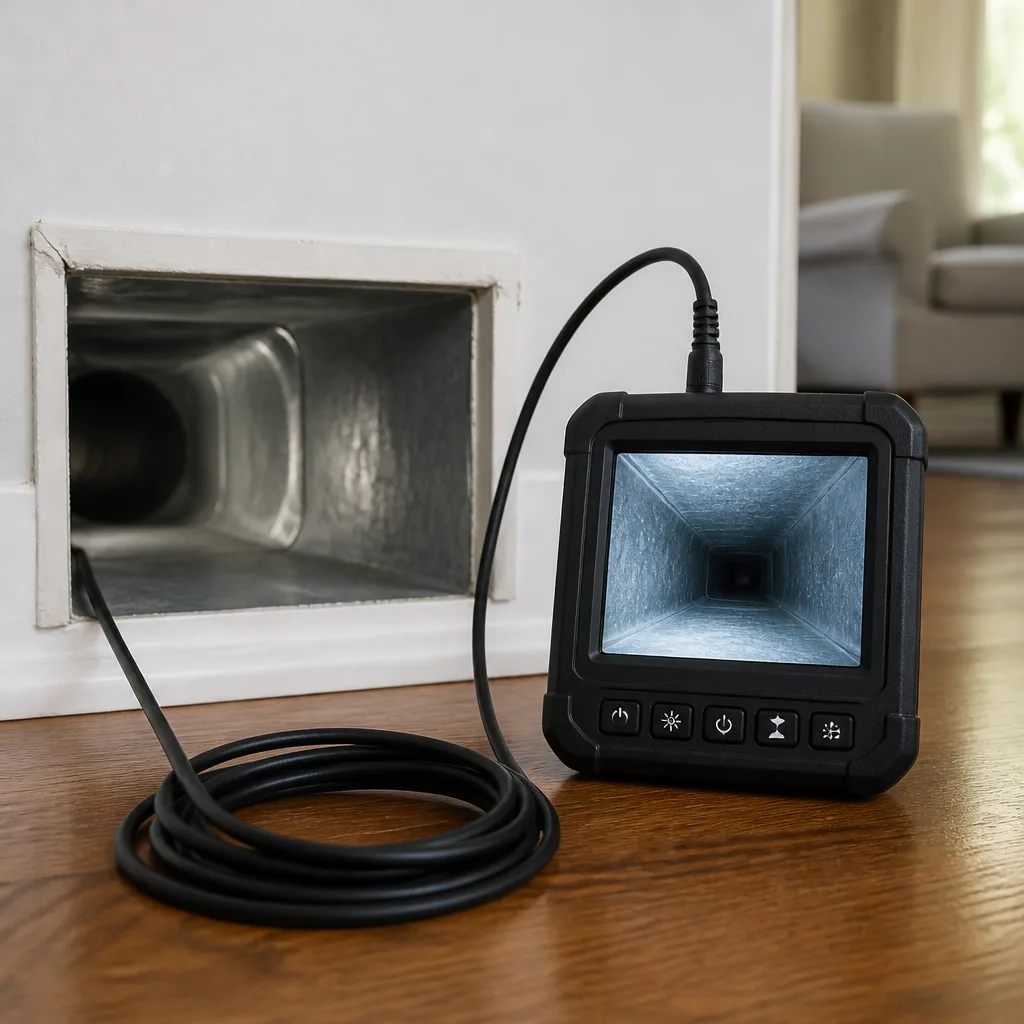
That "$99 whole-house special" is a bait ad - the real number appears once they are in your hallway, or the "clean" is a shop-vac at the register. We photograph the inside of your ducts before and after instead.
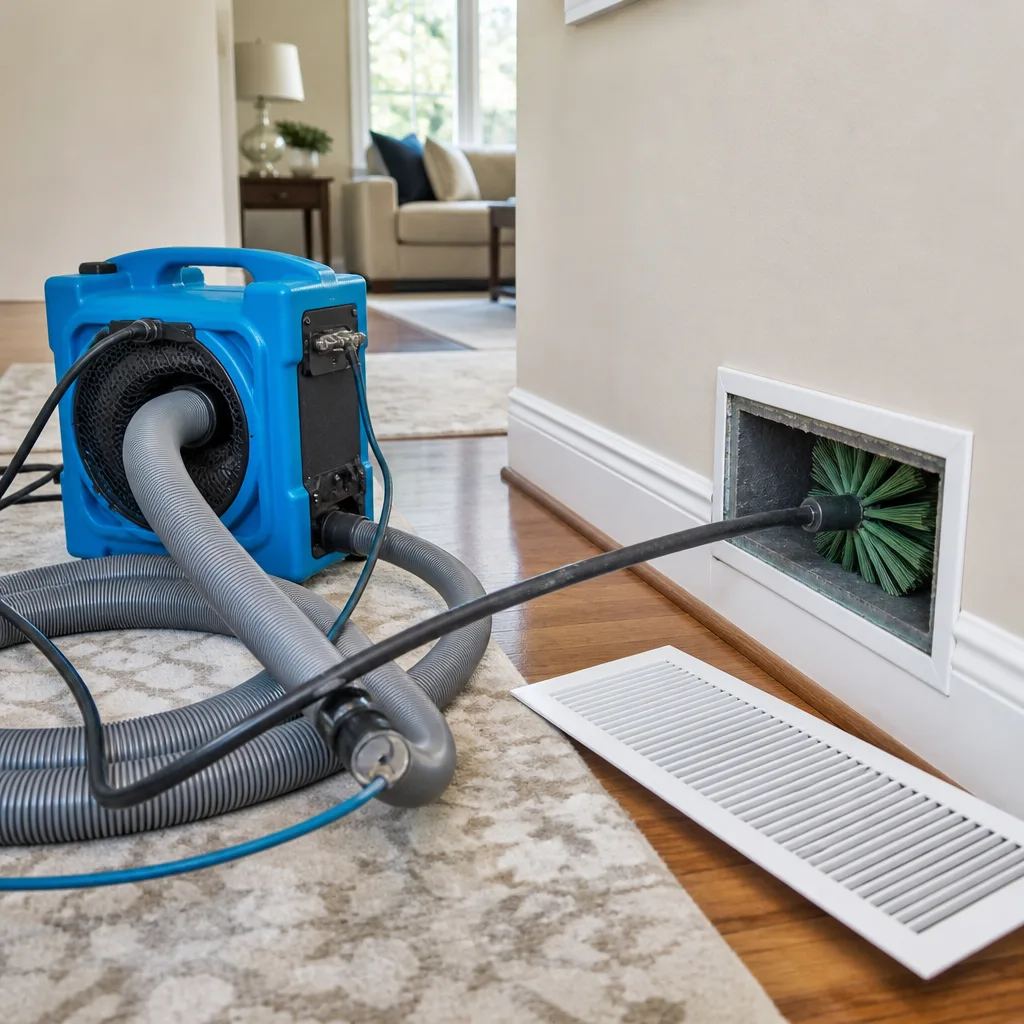
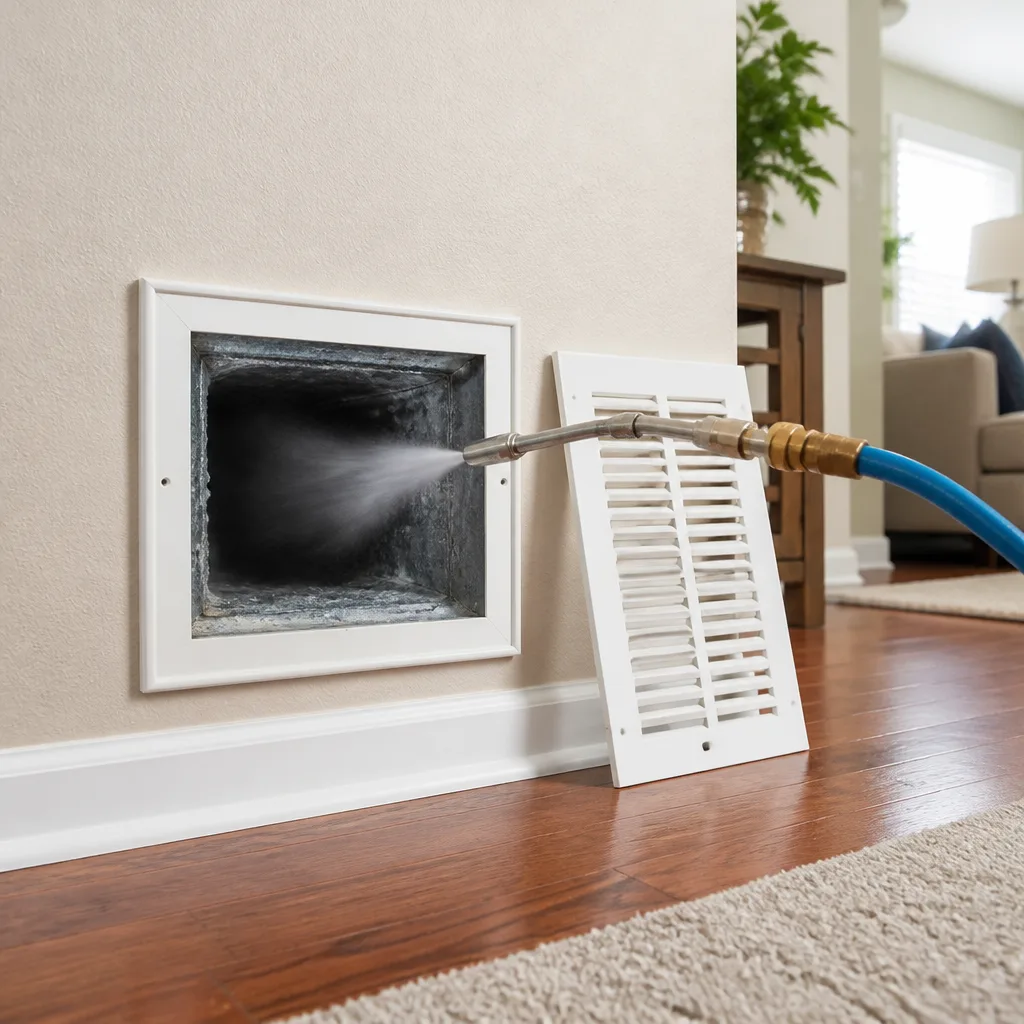
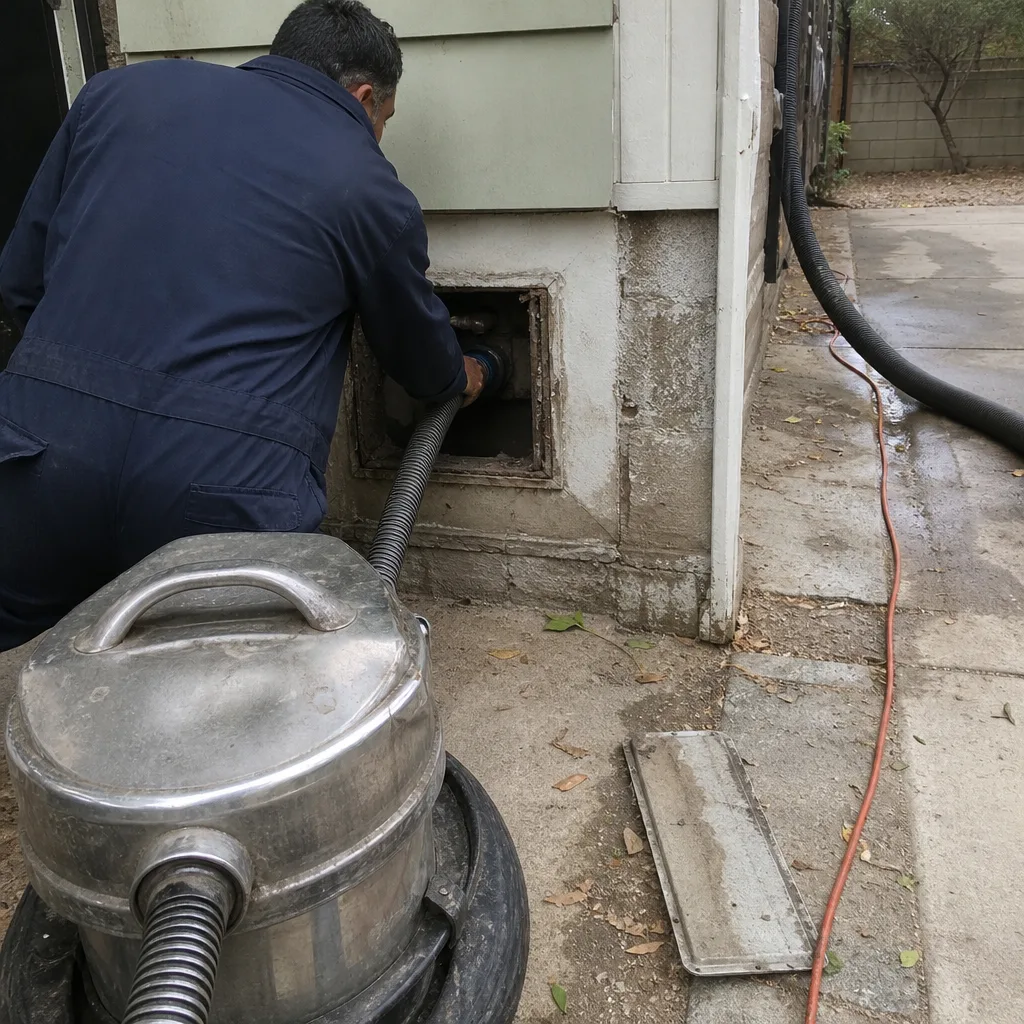 Before
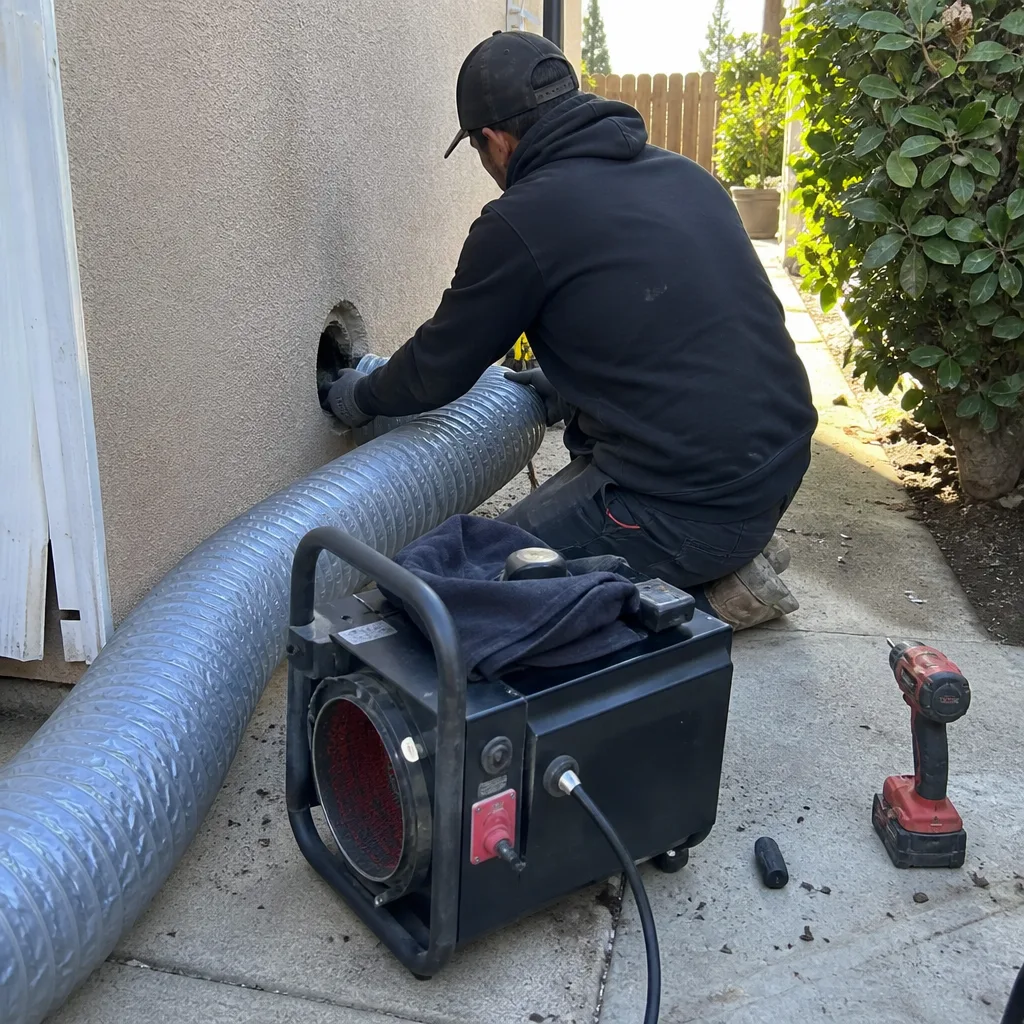 After
After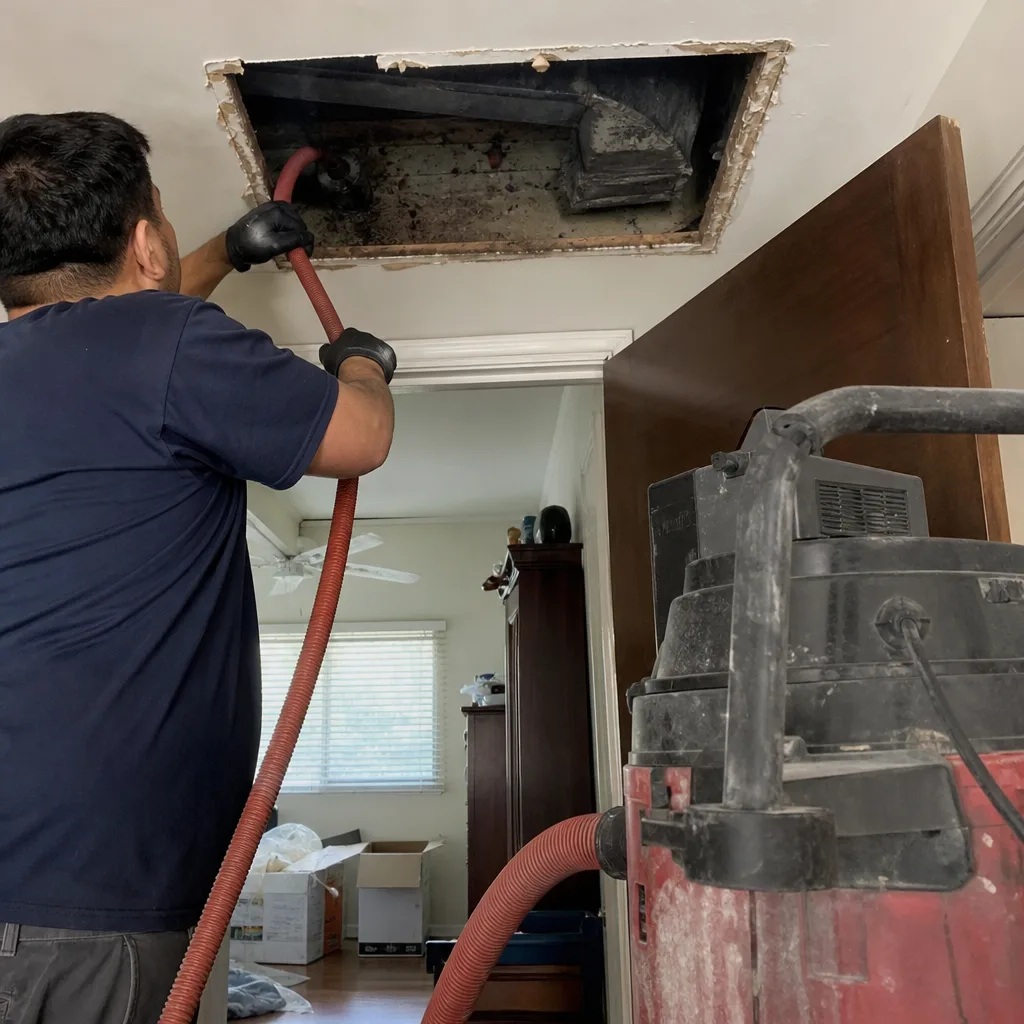 Before
 After
After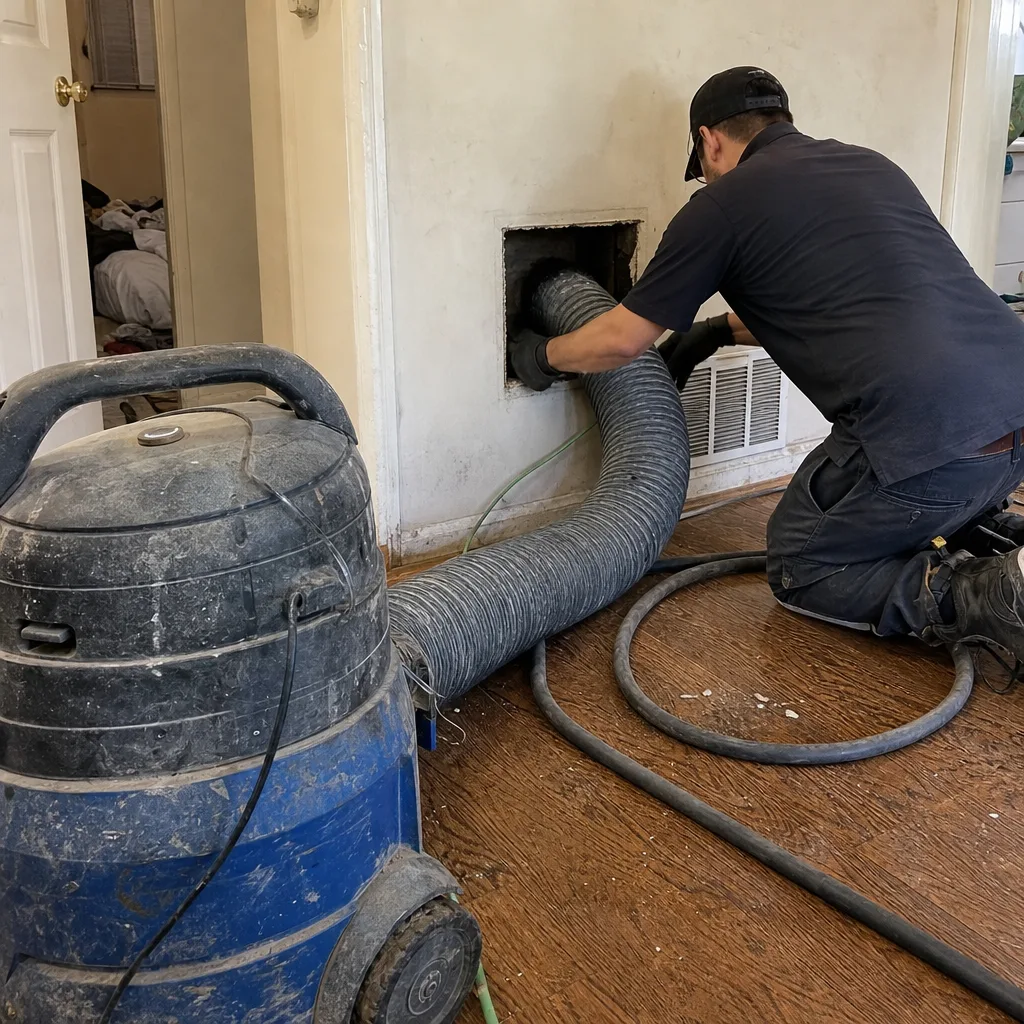 Before
 After
AfterThe dryer shuts off before the load is done
A dryer that stops mid-cycle almost always means the machine overheated. The built-in thermal safety switch tripped because hot exhaust air had nowhere to go – and in most homes, that means a blocked or partially clogged dryer vent. Clear the vent and the cycling stops. Ignore it and the risk climbs fast.
Your dryer produces a surprising amount of heat. It is designed to push that heat out through the vent line and away from the machine. When lint builds up along that line – behind the wall, through the attic run, at the exterior cap – the hot air backs up. The dryer’s thermal limiter detects the temperature spike and shuts the unit down to prevent a fire. That is the system working as it should. But the shutdown is a warning, not a solution. The blockage is still there, and the next cycle will end the same way.
Why It Happens
Lint buildup inside the vent line
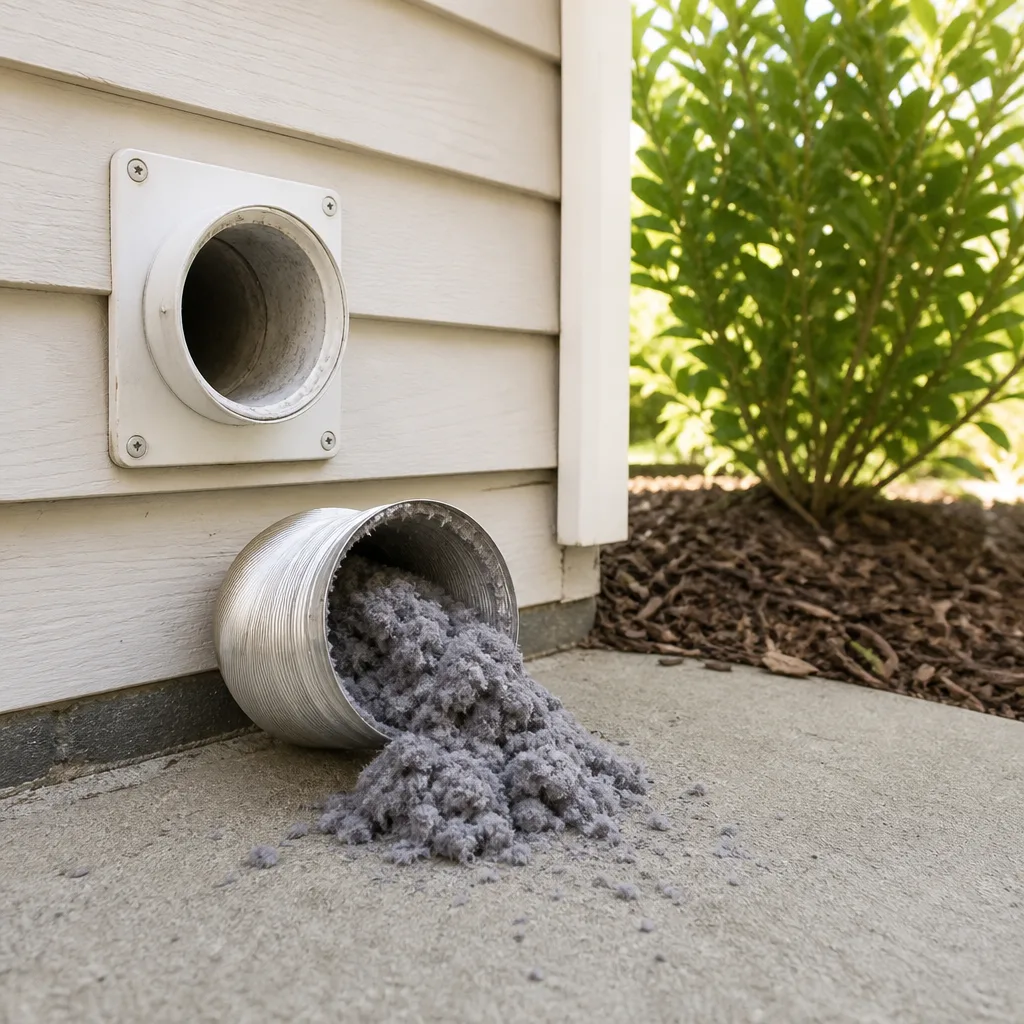
This is the cause in the great majority of cases. Lint that makes it past the screen accumulates on the inner walls of the duct over months and years, narrowing the passage the hot air has to travel through. You can suspect this is the problem if the outside of the dryer feels unusually hot to the touch, if clothes are damp but warm at the end of a truncated cycle, and if you cannot feel much airflow from the exterior vent cap when the machine is running.
A kinked, crushed, or disconnected duct section
The flexible foil or plastic transition hose that connects the back of the dryer to the wall fitting bends easily – especially when the dryer has been pushed back against the wall. A tight kink acts like a pinched straw and can cut airflow dramatically even with a clean duct. Pull the dryer a few inches out from the wall and look at the hose. If it folds sharply, collapses, or has a visible gap at either connection point, that is your issue.
A clogged or stuck exterior vent cap
Every dryer vent terminates somewhere on the outside of the house – usually on a side wall or through the soffit. That cap has a flap or louvered cover designed to keep birds, squirrels, and weather out. Lint, nests, and debris can pack that cap tight and block most of the airflow. Go outside while the dryer is running and watch the cap. If the flap barely moves, or does not move at all, the cap is the bottleneck.
A failed thermal fuse or heating element
If you have cleared everything you can see and the dryer still cuts out early, the thermal fuse itself may have blown permanently – a one-way component that has to be replaced, not reset. Unlike the cycling thermostat, a blown thermal fuse usually means the dryer runs on no heat at all: it tumbles, but clothes stay cold and damp. This is an appliance repair rather than a duct cleaning job. The duct cleaning crew can confirm airflow is fine and rule out the vent as the cause; the appliance itself needs a qualified repair technician.
What to Do Right Now
- Stop using the dryer until the vent is cleared. Every additional cycle pushes more lint into a partially blocked line and raises the temperature inside the machine. A dryer fire is not a remote possibility – it is exactly what the thermal limiter is trying to prevent. Give it a rest until someone has eyes on the vent.
- Check the lint screen and clean it completely. This will not fix a blocked duct line, but a screen that is coated with dryer-sheet residue (it looks clean but water beads on it) makes airflow worse and is worth removing now. Hold it up to a light – if you cannot see through it clearly, wash it with warm water and a soft brush and let it dry fully before use.
- Look at the transition hose behind the dryer. Pull the machine out carefully and examine the flexible hose. If it is the accordion-style plastic type, replacing it with rigid metal duct is a common and sensible improvement. If it is simply kinked, straighten it and secure the connections. Do not reach into the wall opening or disconnect anything further.
- Check the exterior vent cap from outside. Look for visible lint packing, a stuck flap, or nesting material. Do not climb a ladder to reach a high cap – any cap that requires you to be at height is a job for the technician who arrives with the proper equipment. Note what you see and take a photo if you can do it safely from the ground.
- Do not attempt to clean deep into the wall duct yourself. The vent line runs through finished walls, often makes turns, and may be 15 or 20 feet long. Pushing a vacuum hose or a brush from the laundry room end without professional equipment almost always compacts the lint further rather than removing it. Wait for a proper cleaning.
How We Fix It
When a Linden technician arrives, the first thing they do is run a quick airflow check – measuring what is actually moving through the line versus what should be moving. That tells us immediately whether the duct is the problem or whether the appliance itself needs a separate repair call.
If the vent line is the culprit, we clean it end to end using professional-grade Rotobrush and Nikro equipment: rotating brushes that break up compacted lint, combined with high-powered extraction so the debris comes out rather than being pushed deeper. We clear the exterior cap, check every connection point for gaps or kinks, and confirm airflow is restored before we pack up.
This is our Dryer Vent Cleaning service, and it typically takes under two hours. If we find a section of damaged or disconnected duct, we can address that with Air Duct Repair – covered by a written guarantee and a free second visit if the repair does not hold. Before any of that starts, you will have the price in writing. No estimate range, no “we’ll see.” One written number, agreed before we pick up a tool. That is how every Linden job works, and it is not optional.
Frequently Asked Questions
It is a genuine fire hazard and it should not wait. The thermal limiter shutting the machine down is the dryer telling you it reached an unsafe temperature – and lint-clogged vents are one of the leading causes of residential fires in the United States. Using the dryer a few more times while you wait is not a neutral choice. If you need to do laundry before the vent is cleaned, use a laundromat. Call (980) 447-2498 and let your local Linden team get out to you.
Yes, and an honest answer is: sometimes. If the dryer tumbles but produces no heat at all, a blown thermal fuse or failed heating element is the more likely cause – those are appliance parts, not a duct problem. But if the machine heats up and then shuts off partway through, a blocked vent is almost always involved. We will tell you which one it is after the airflow check. If the duct is clear and the appliance is the issue, we will say so plainly rather than clean something that does not need it.
Call (980) 447-2498 and a live person will answer – not a voicemail, not a callback queue, a real human. They will find the earliest slot your local Linden team has available and book you right then. We do not make scheduling promises on a web page, but we do answer the phone around the clock so you are not waiting until Monday morning to talk to someone.
We do not publish a flat number here because the price depends on your vent line’s length, routing, and condition – a short straight run costs less than a long run with multiple turns and a blocked cap. What we can tell you is that you will have the exact price in writing before any work begins, and that number will not change once you have agreed to it. Call (980) 447-2498 for a free written estimate specific to your home.
Get It Fixed
Call (980) 447-2498 any time – a real person picks up. Your local Linden Air Duct Cleaning team will confirm what is blocking the vent, give you a written price before anything starts, and clear it end to end so your dryer runs the way it is supposed to.
Written by Marcus Veale, Owner at Linden Air Duct Cleaning, part of the Threshold Group family, serving homeowners since 2004.
What Our Customers Say
"I liked that I knew who was coming in. Name and photo texted ahead, badge at the door. He was quiet, careful with the furniture, and thorough."
- Cheryl A."Thorough job on all eleven vents and the main trunk. Took longer than the three hours they quoted, but he told me early and kept working. Air feels fresher."
- Meredith L."Tech arrived with a badge and a printed sheet of what he'd be doing. Ran a camera through the main trunk before and after so I could see the dust difference. Vents smell cleaner already."
- Gina R.