

Whole-system duct and dryer vent check with before-and-after photos - you see exactly what came out of your vents
That "$99 whole-house special" is a bait ad - the real number appears once they are in your hallway, or the "clean" is a shop-vac at the register. We photograph the inside of your ducts before and after instead.
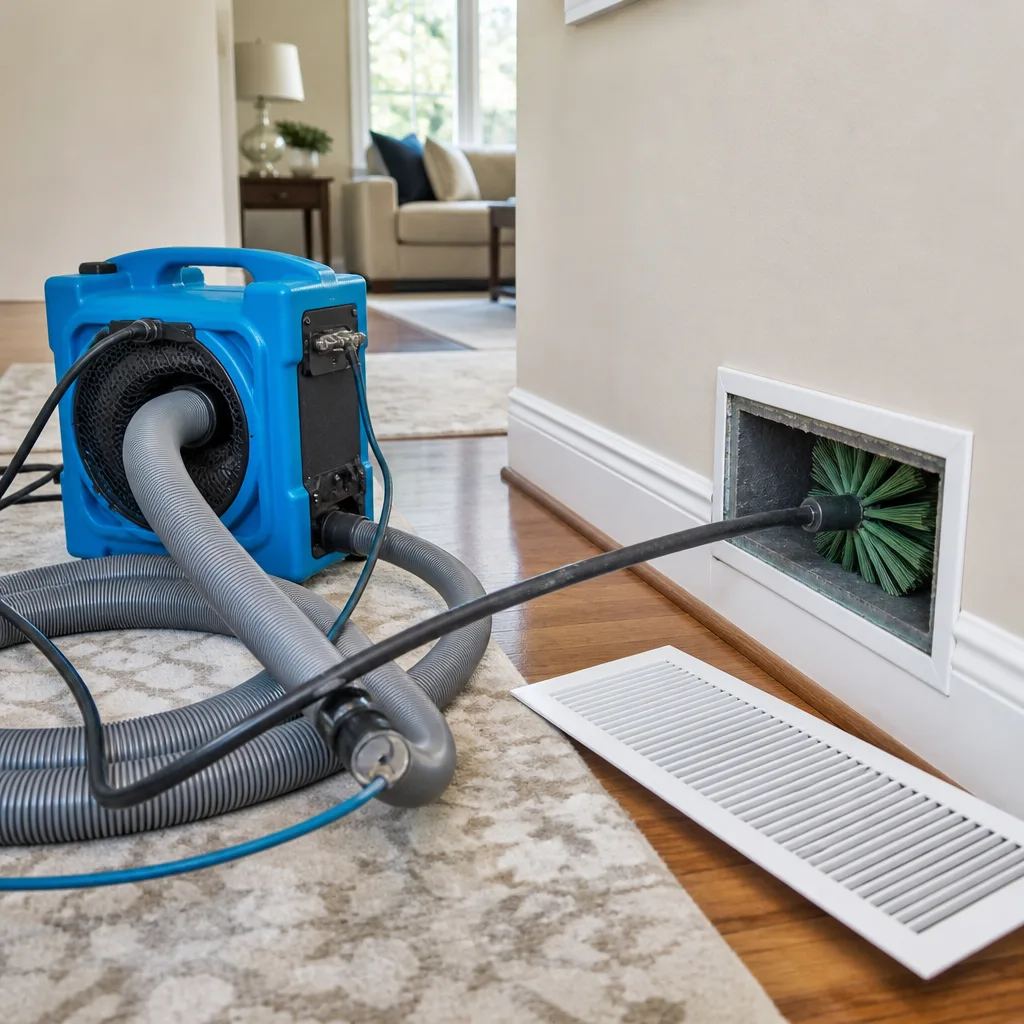
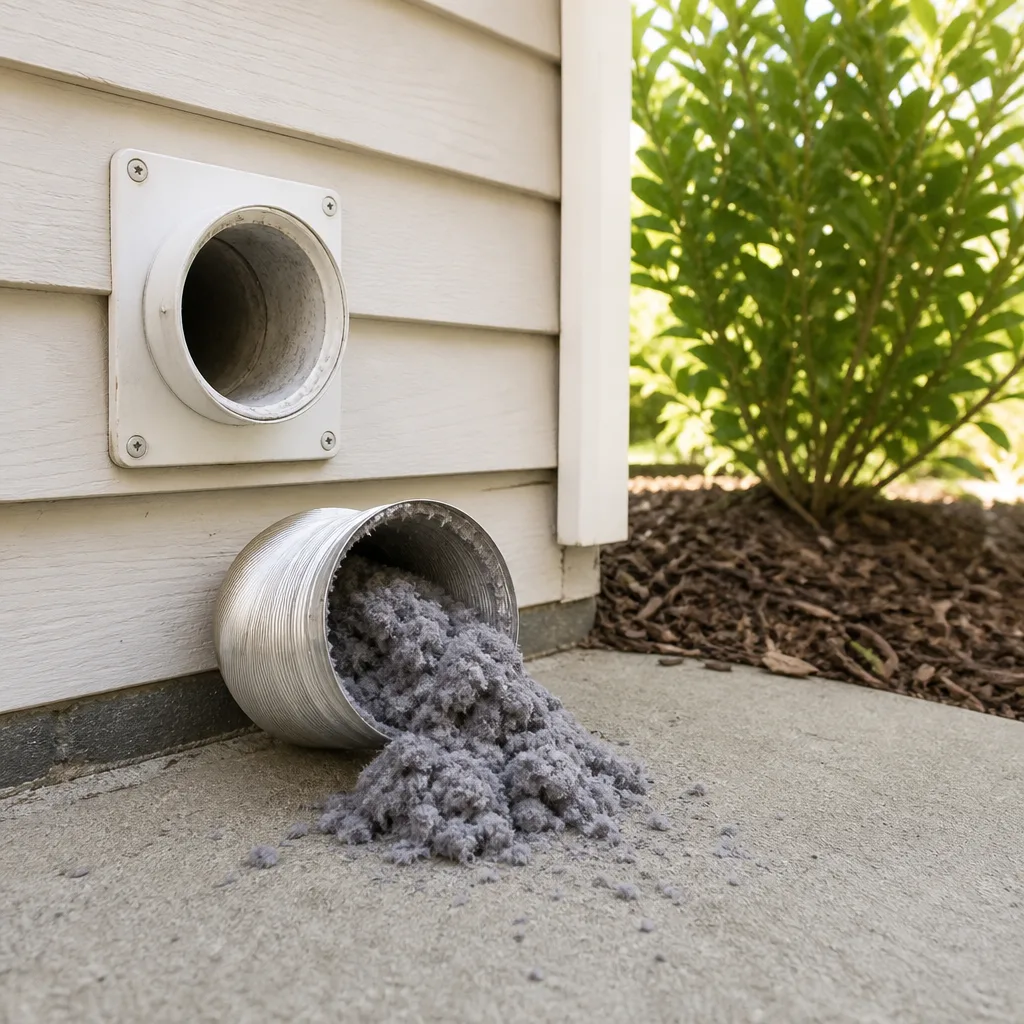
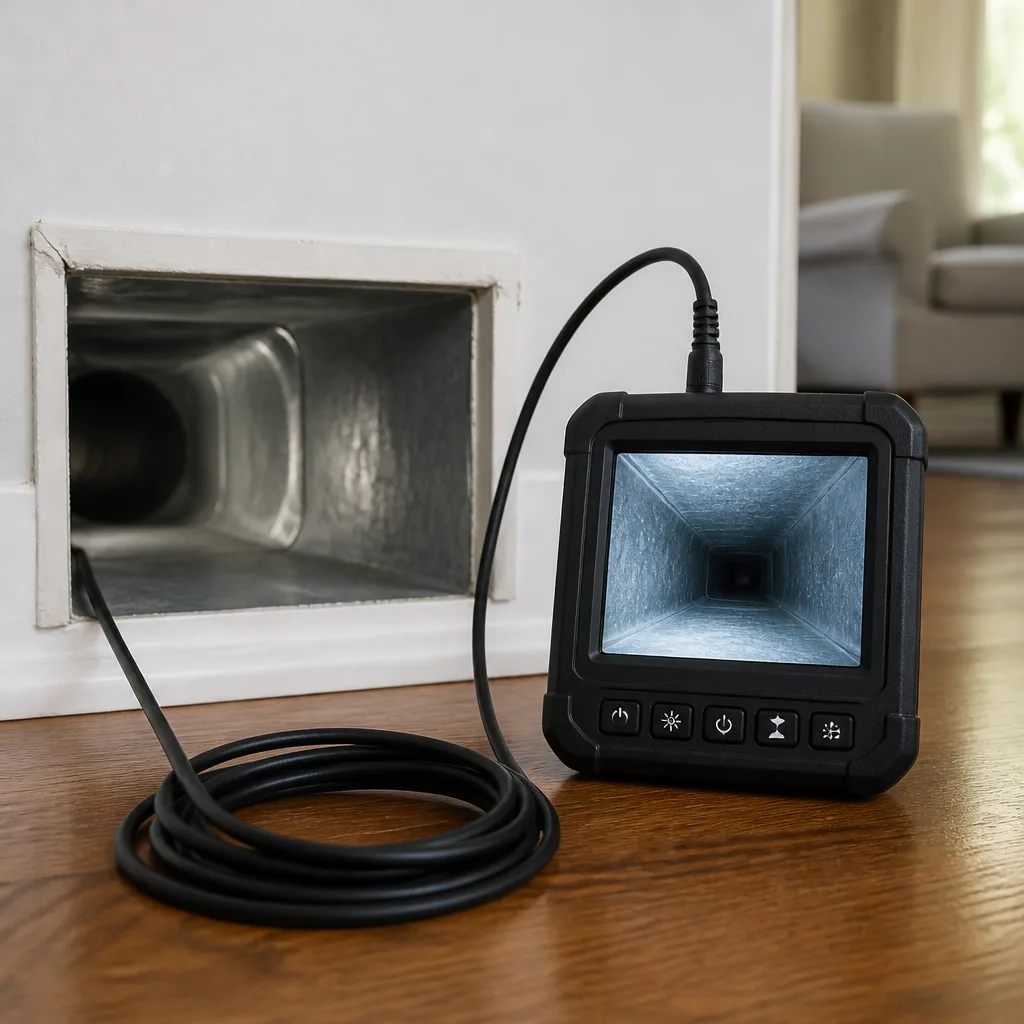
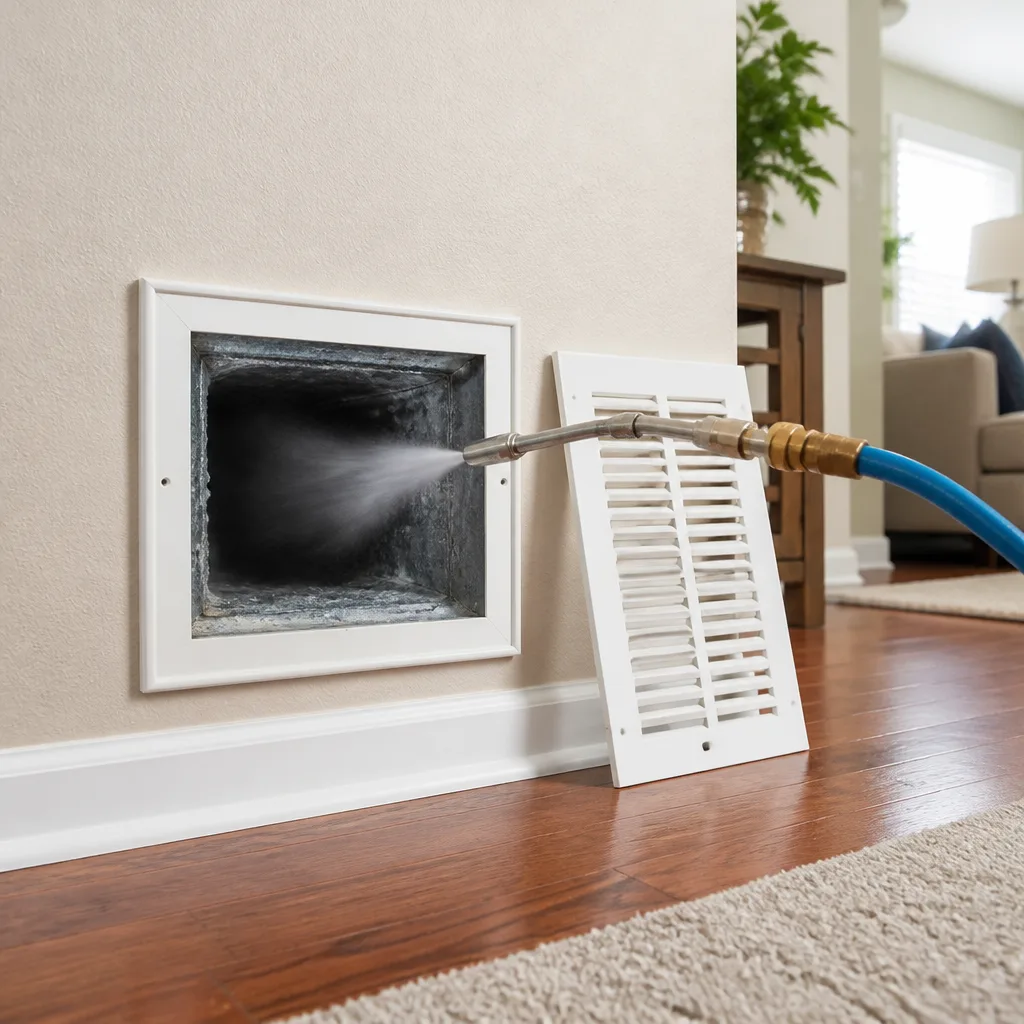
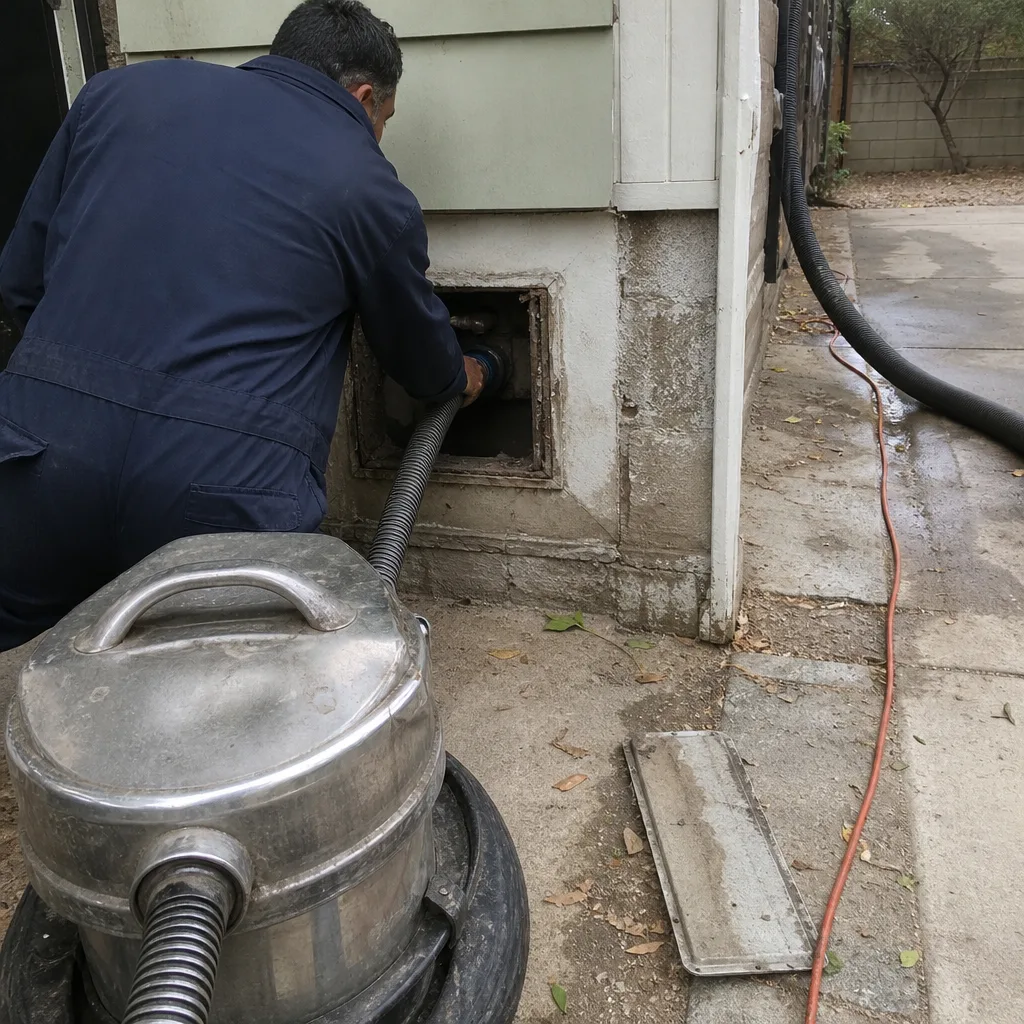 Before
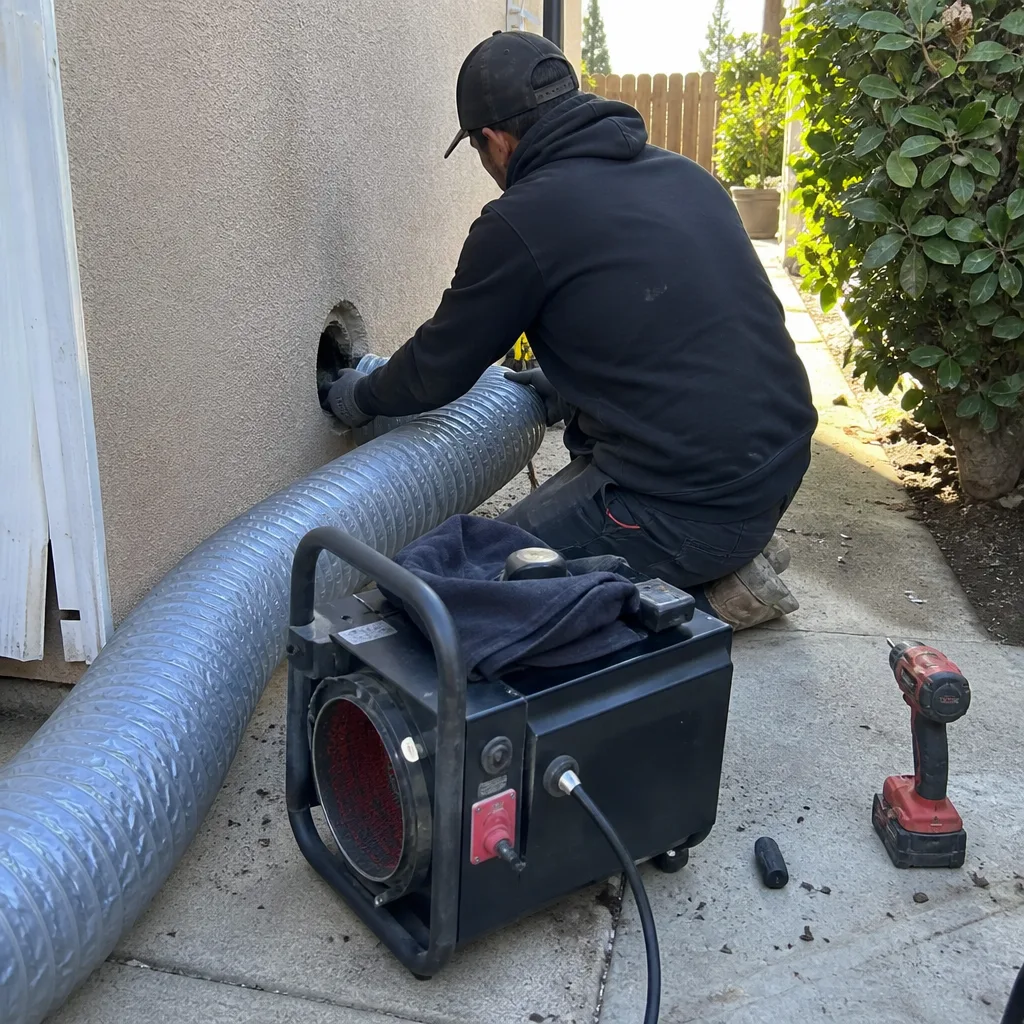 After
After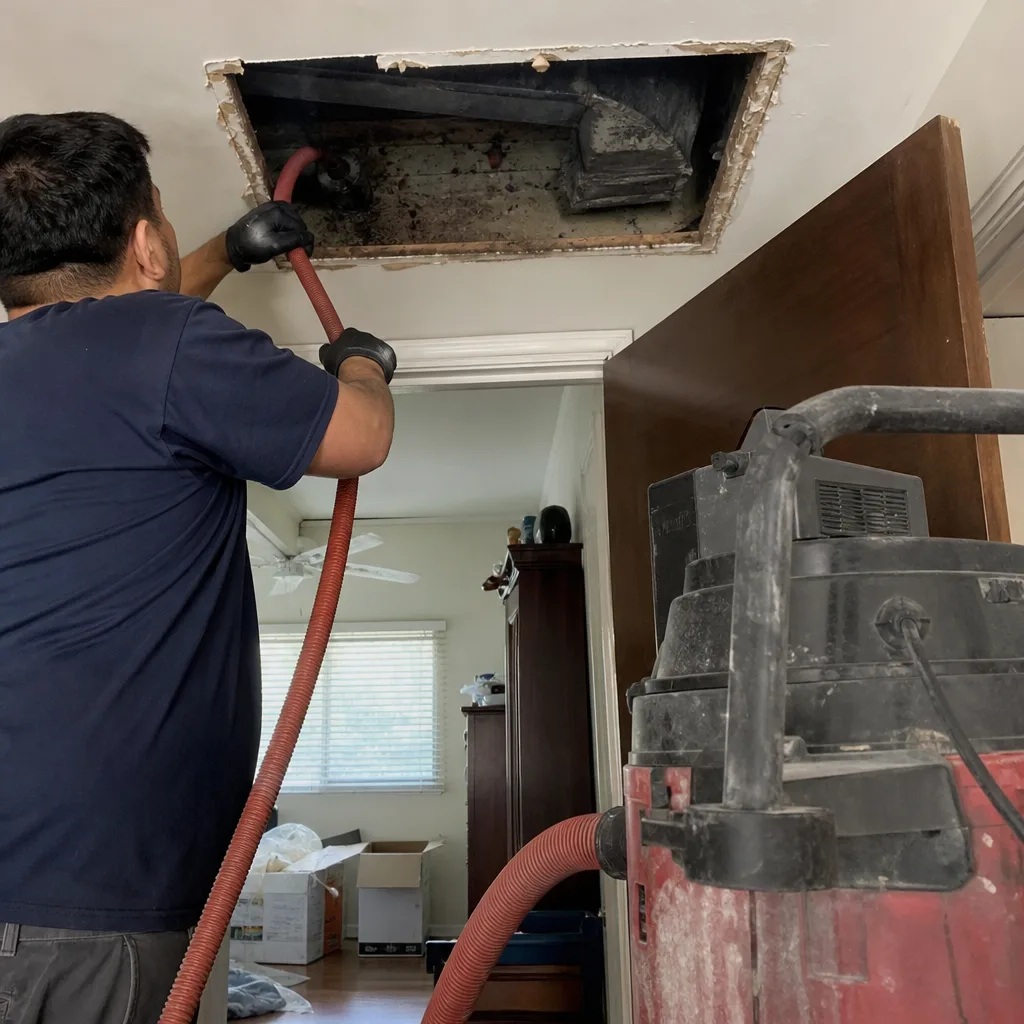 Before
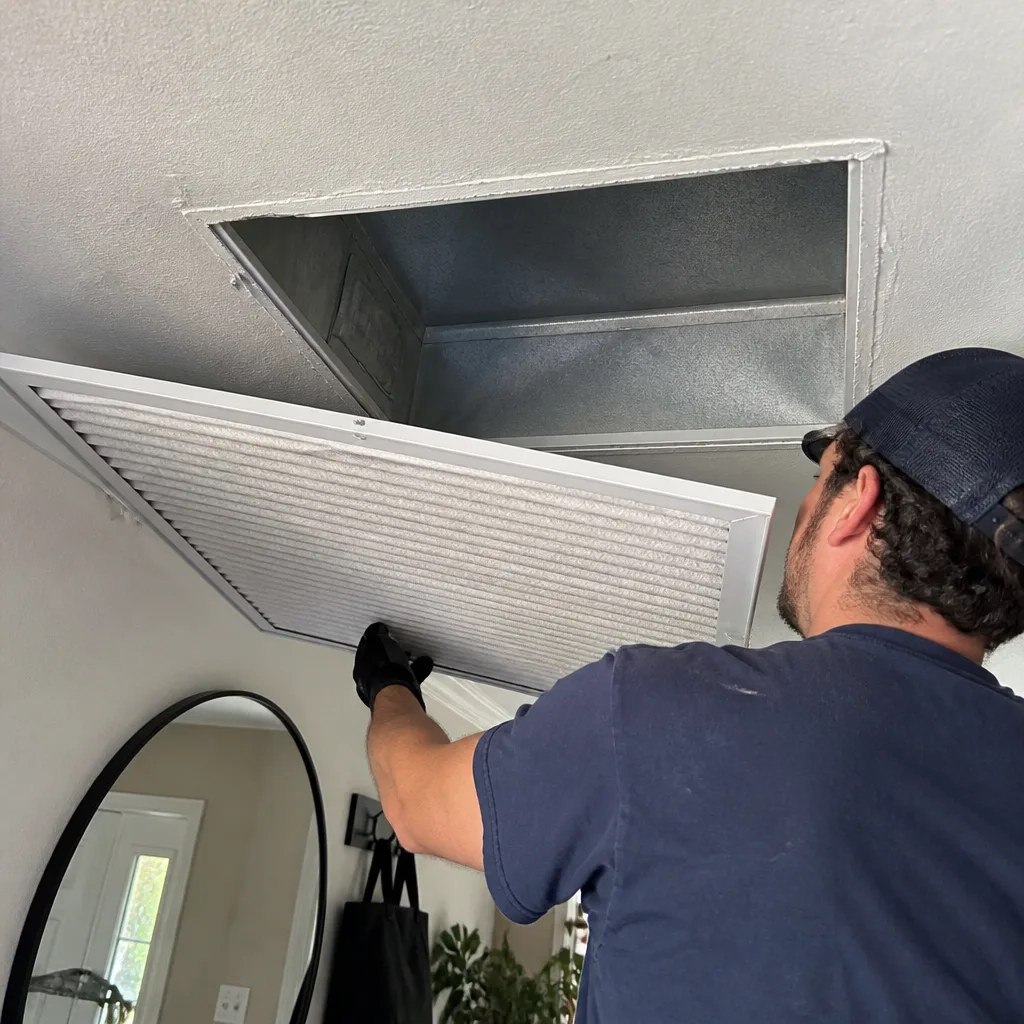 After
After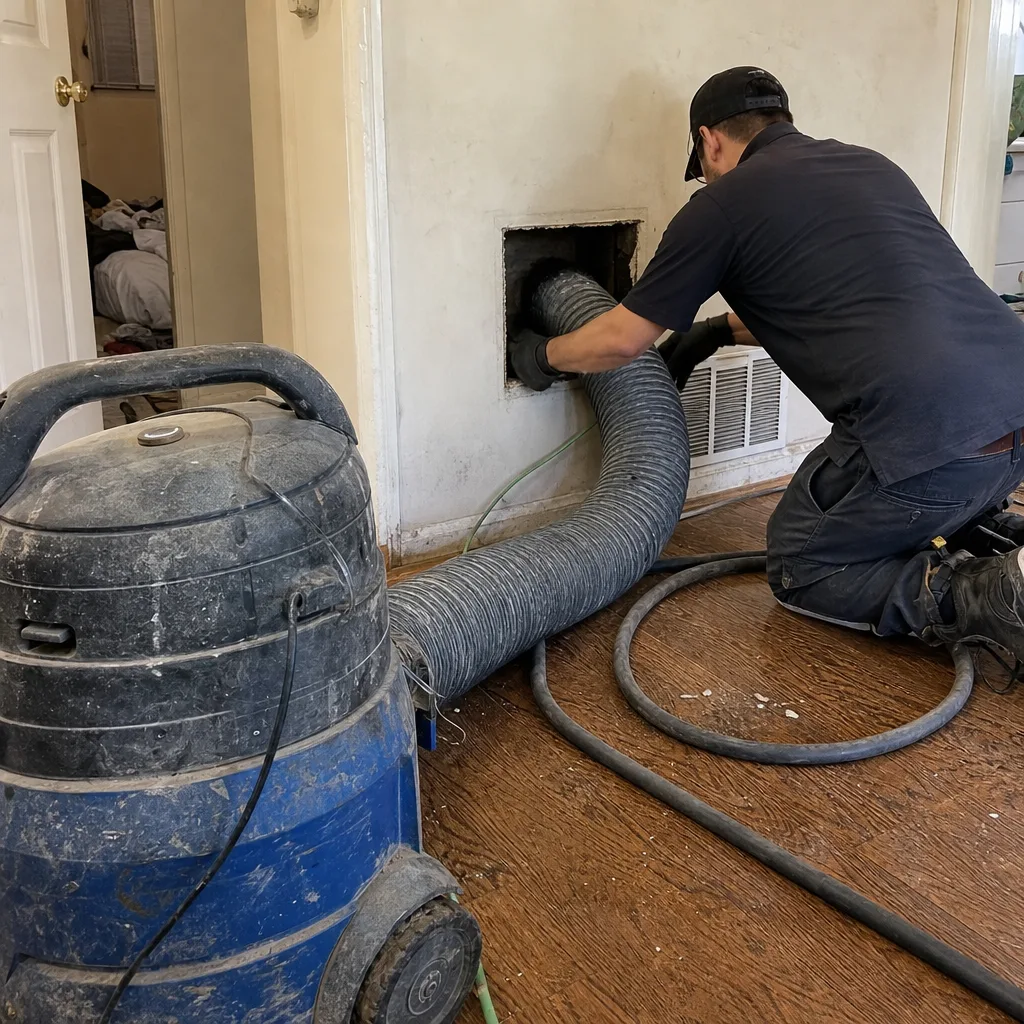 Before
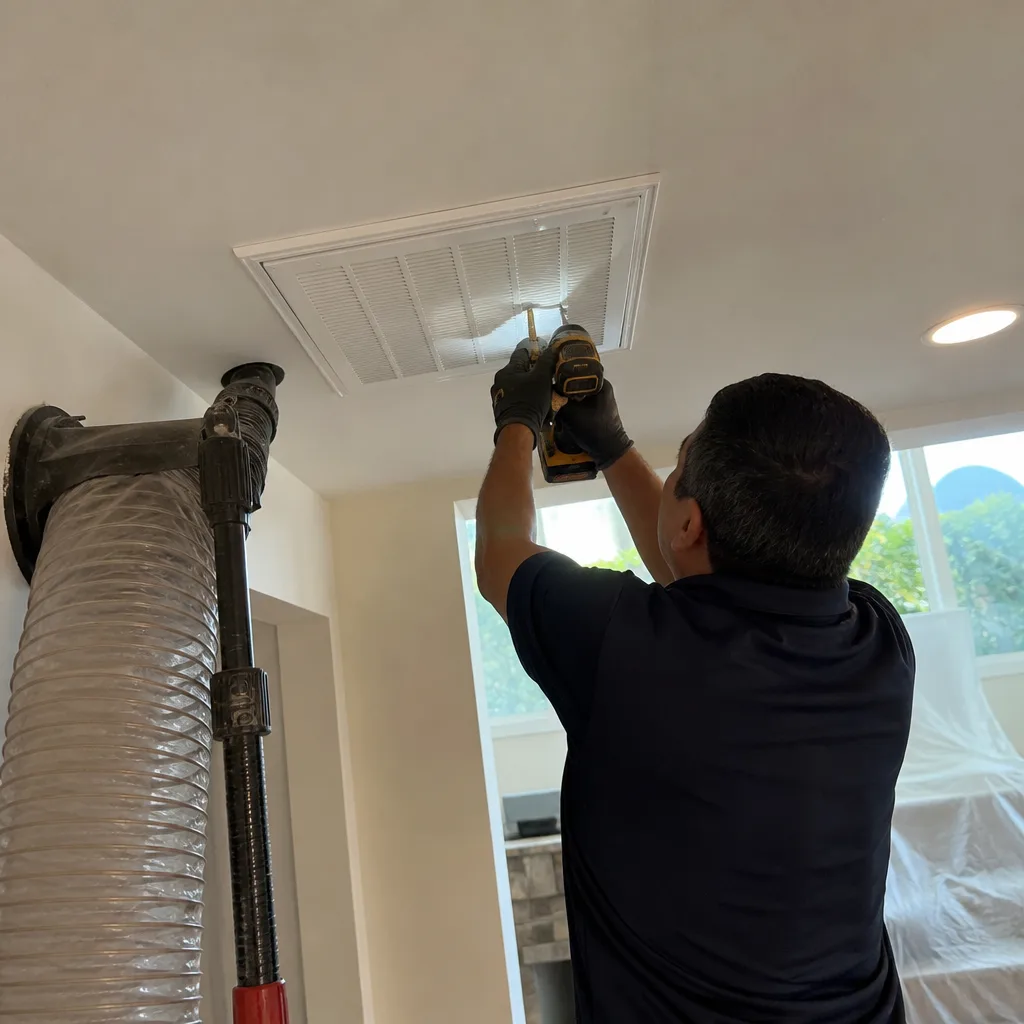 After
AfterUneven Airflow Room to Room
Uneven airflow almost always means your duct system is either partially blocked, has a break somewhere in the run, or is moving air through passages that have never been balanced correctly. It is rarely a furnace or AC problem on its own. The fix depends on which of those three things is happening – and a quick inspection usually tells you within the first few minutes.
When one room feels stuffy and another is comfortable, your HVAC system is working but the air is not reaching its destination. Ducts can accumulate years of dust, pet hair, and debris that gradually choke airflow at specific branches. A liner can collapse. A joint can separate. Any of these creates the same symptom: the system runs, the energy bill climbs, and the far bedroom stays 10 degrees warmer than the living room. The problem gets slowly worse until someone fixes the restriction.
Why It Happens
Blocked or heavily loaded ductwork
Over years of use, the inside walls of your ducts collect a felt-like layer of dust, fibers, and debris. When that buildup gets thick enough, it narrows the passage – some branches more than others, depending on how air turbulence deposits material. You can suspect this if the rooms with weak airflow are the ones at the end of long duct runs, and if the supply registers in those rooms show a gray ring of dust around the outside edge. That ring is a visual record of restricted airflow.
A disconnected or collapsed duct section
Flexible ductwork – the silver accordion-style tubing used in most homes built after the 1980s – can be pulled apart at a joint, kinked, or simply collapse under its own weight if it was not hung correctly. When a section disconnects, conditioned air pours into the attic or crawl space instead of the room. The clearest sign is a room that gets almost no airflow at all, not just reduced flow. Sometimes you can hear the system running clearly from a nearby closet or attic hatch even when the register is nearly silent.
Damper stuck or set incorrectly
Many duct systems include adjustable dampers – flat plates inside the duct that redirect airflow between zones or balance pressure across branches. A damper can stick in the closed position after years without adjustment, or it may have been set wrong during installation and never corrected. If one room has always been harder to heat or cool than the rest, a damper is a likely cause. Some dampers have a small lever or wing-nut handle visible at the duct collar near the main trunk – you may be able to see whether it is open or closed without touching anything.
Dirty or clogged return air grilles
Your system pulls air back through large return grilles – usually one or more on hallway ceilings or walls. When those grilles are clogged with dust, the system cannot draw enough air through the cycle to pressurize every branch equally. The result is low pressure across the whole system, with the weakest rooms feeling it most. Return grilles that are visibly gray and furry, or that make a faint whistling sound at high fan speed, are almost certainly reducing the performance of the whole system.
What to Do Right Now
- Walk the house and rank every room. Note which rooms have weak flow, which have strong flow, and whether the pattern follows a direction – typically the rooms farthest from the air handler are the most starved. This information is immediately useful to a technician and takes five minutes.
- Pull the covers off accessible return grilles and look inside. If you see a thick mat of dust on the filter or grille face, replace the filter and clean the grille face with a damp cloth. This costs nothing and occasionally solves the problem on its own. Do not reach inside the duct itself.
- Check your filter if you have not in the last 60 days. A completely blocked filter reduces system pressure across every branch. Swap it for a fresh one before assuming the problem is structural.
- Look at accessible duct runs in a basement or crawl space if it is safe to do so. You are looking for obvious disconnections, kinks, or sections that have pulled apart at a joint. Do not crawl into an attic or confined space alone, and do not touch any duct section that runs near electrical panels, gas lines, or older insulation materials – call us instead.
- Take a photo of the weak-flow registers and any visible duct sections. Your Linden technician will want to see what you saw. A quick photo before anything is moved or cleaned preserves information that helps speed the diagnosis.
How We Fix It
When your local Linden Air Duct Cleaning team arrives, the first thing we do is walk the house with you. We listen to what you have noticed, check airflow at each register, and inspect the accessible duct system before we quote anything. The price for this specific job is put in writing before any work starts – that is not a promotion, it is how every Linden job works.
If blockage is the issue, we clean the full duct system using Rotobrush and Nikro equipment – tools built for this trade, not consumer hardware. Agitation and extraction together, not just a shop vac pushed into a register. If we find a disconnected section, a collapsed liner, or a joint that has failed, that moves into air duct repair: we reseal or replace the affected section and cover the work with a written guarantee. If the repair does not hold, we come back at no charge.
Most visits run two to four hours depending on system size and what we find. We tell you the scope before we start and we do not add to it without asking first.
Frequently Asked Questions
It is not an emergency in the way a gas leak is, but it should not sit for months. A partially blocked or disconnected duct forces your HVAC system to work harder than it was designed to, which shortens equipment life and raises energy costs. If the weak room is a bedroom where someone sleeps, or if you have noticed musty smells alongside the airflow problem, move it up the priority list – stale air and trapped moisture in a closed room are worth addressing sooner. Call (980) 447-2498 if you want to talk through how urgent your specific situation is.
It could be, but duct problems are far more common as the cause of room-to-room imbalance. If your system is blowing strong air at the registers near the air handler but weak air at the far rooms, that pattern almost always points to the distribution system, not the equipment itself. If every room has weak airflow equally, that is more likely a blower, refrigerant, or filter issue. A technician can tell you which it is during the inspection – before any work is priced or started.
Your local Linden Air Duct Cleaning team schedules visits based on current availability in your area. The best way to find out what is open is to call (980) 447-2498 – a real person answers any time, around the clock, and they can tell you exactly what the nearest available appointment looks like. No voicemail, no automated system.
If cleaning alone does not solve it, that usually means there is a structural issue in the duct run – a disconnect, a collapsed flex section, or a damper problem – that cleaning was never going to reach. We will tell you that during the inspection rather than clean first and discover the real problem after. If a repair is done and the problem comes back within the coverage period, the 365-Day Done Right Promise means we return at no charge and make it right. That commitment is in writing on every repair job.
Get It Fixed
Call (980) 447-2498 and a real person will pick up – any time of day or night. Your local Linden Air Duct Cleaning team will schedule a visit, walk the system with you, and give you a written price before anything is touched. No guesswork, no surprises.
Written by Marcus Veale, Owner at Linden Air Duct Cleaning, part of the Threshold Group family serving homeowners since 2004.
What Our Customers Say
"Priced by the system, not by the vent, and he told me up front. No pressure to add the sanitizer and I said no without any fuss."
- Faith N."We had construction dust packed into every register after a remodel. They sealed off the returns, used negative pressure, and left the floors cleaner than they found them."
- Paul E."I liked that I knew who was coming in. Name and photo texted ahead, badge at the door. He was quiet, careful with the furniture, and thorough."
- Cheryl A.