
Last updated October 8, 2026
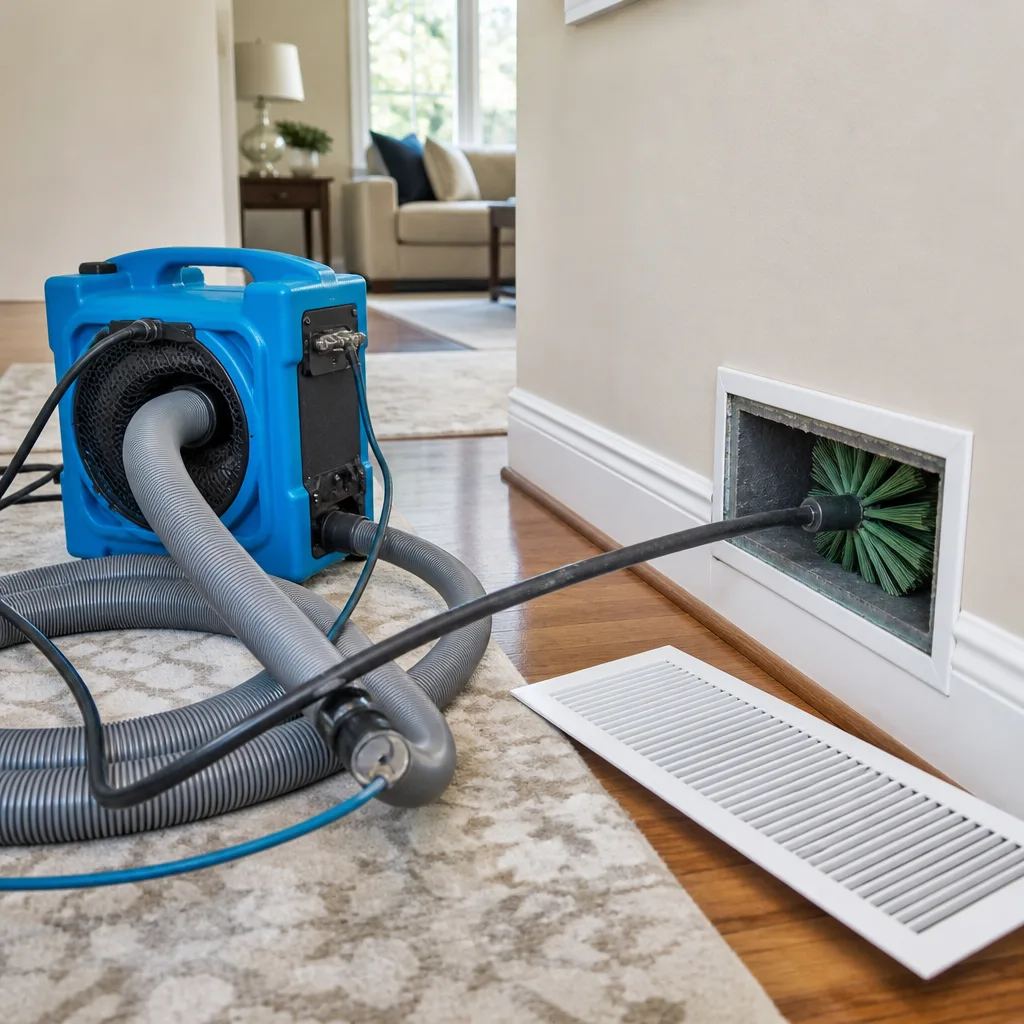
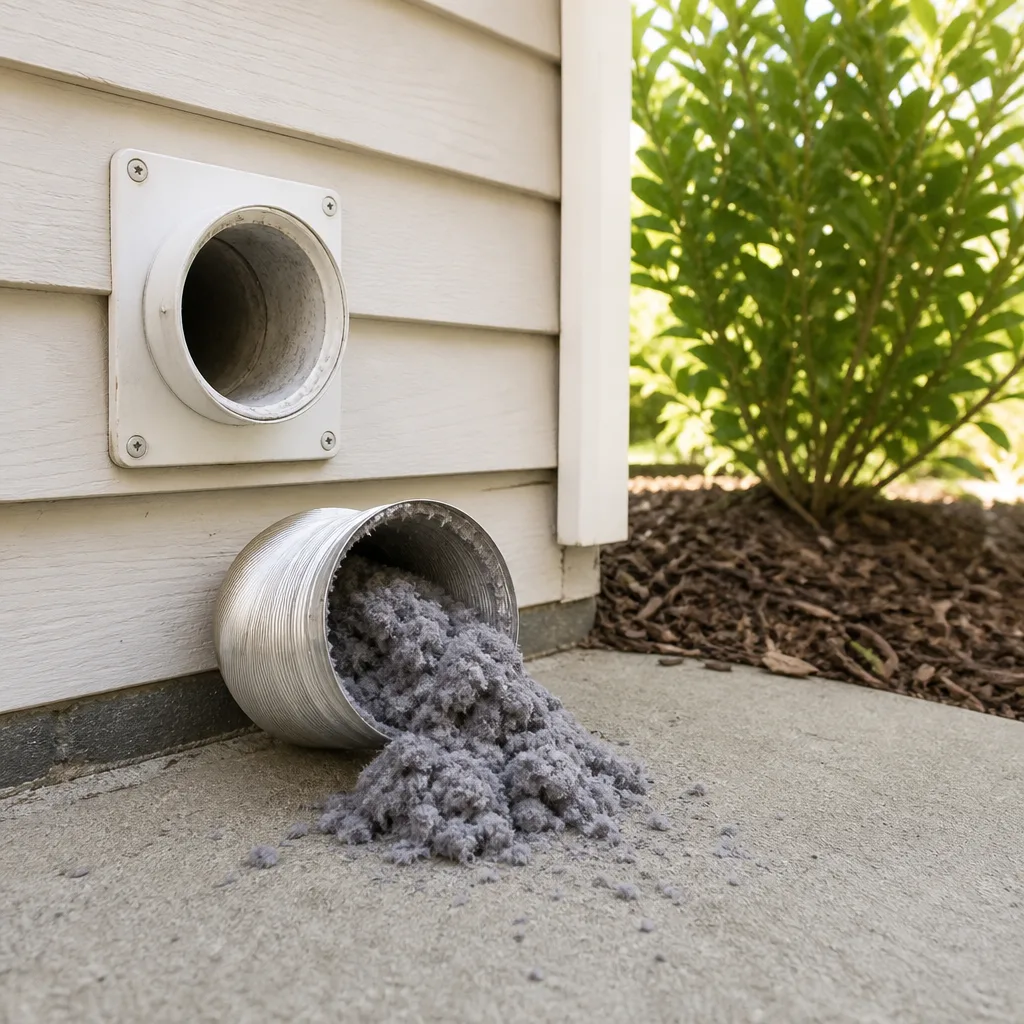
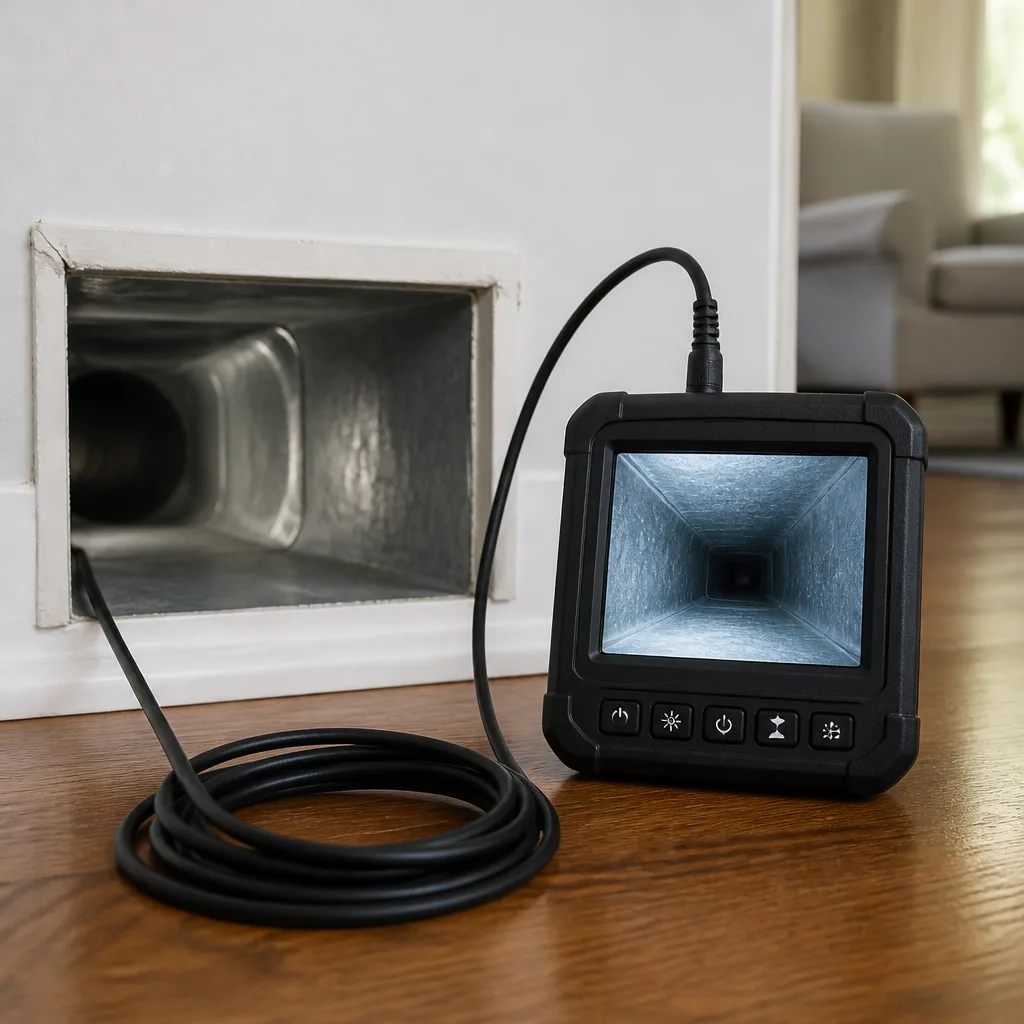
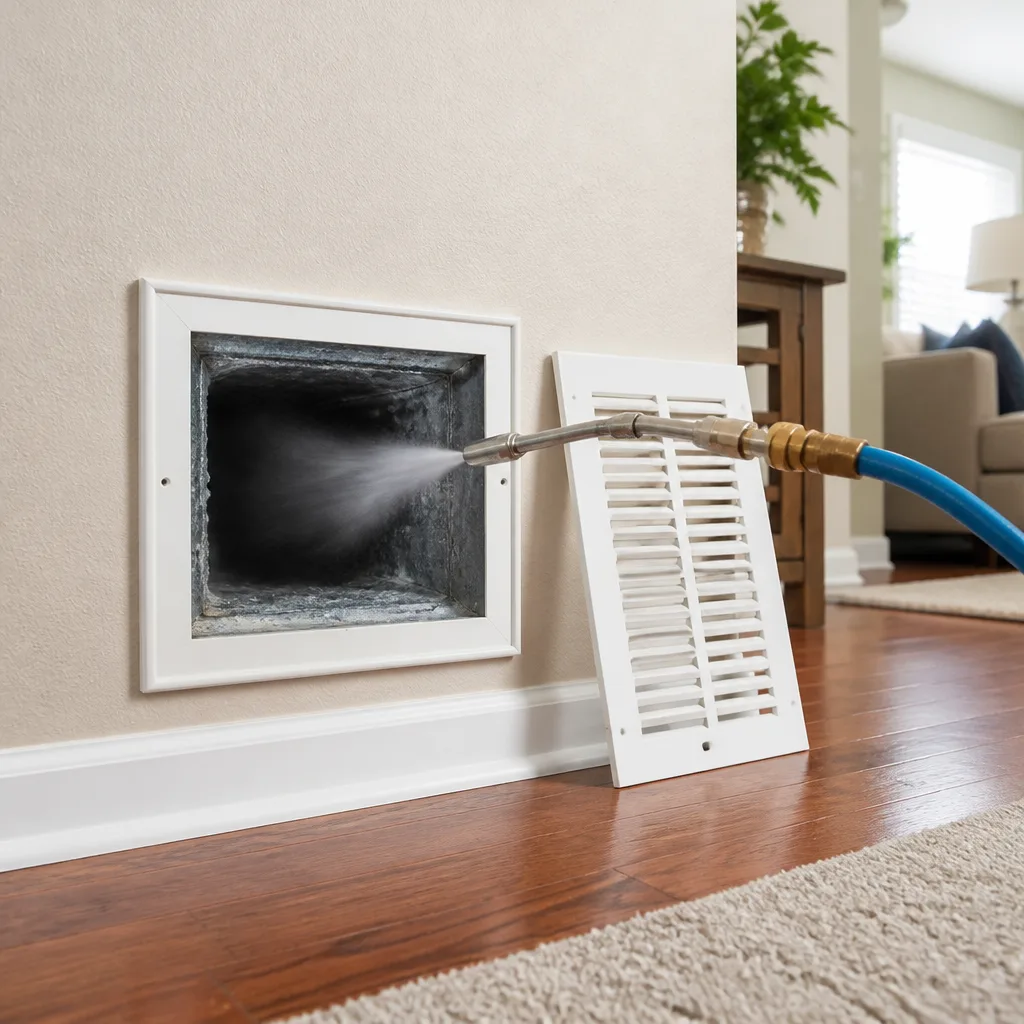
Whole-system duct and dryer vent check with before-and-after photos - you see exactly what came out of your vents
That "$99 whole-house special" is a bait ad - the real number appears once they are in your hallway, or the "clean" is a shop-vac at the register. We photograph the inside of your ducts before and after instead.
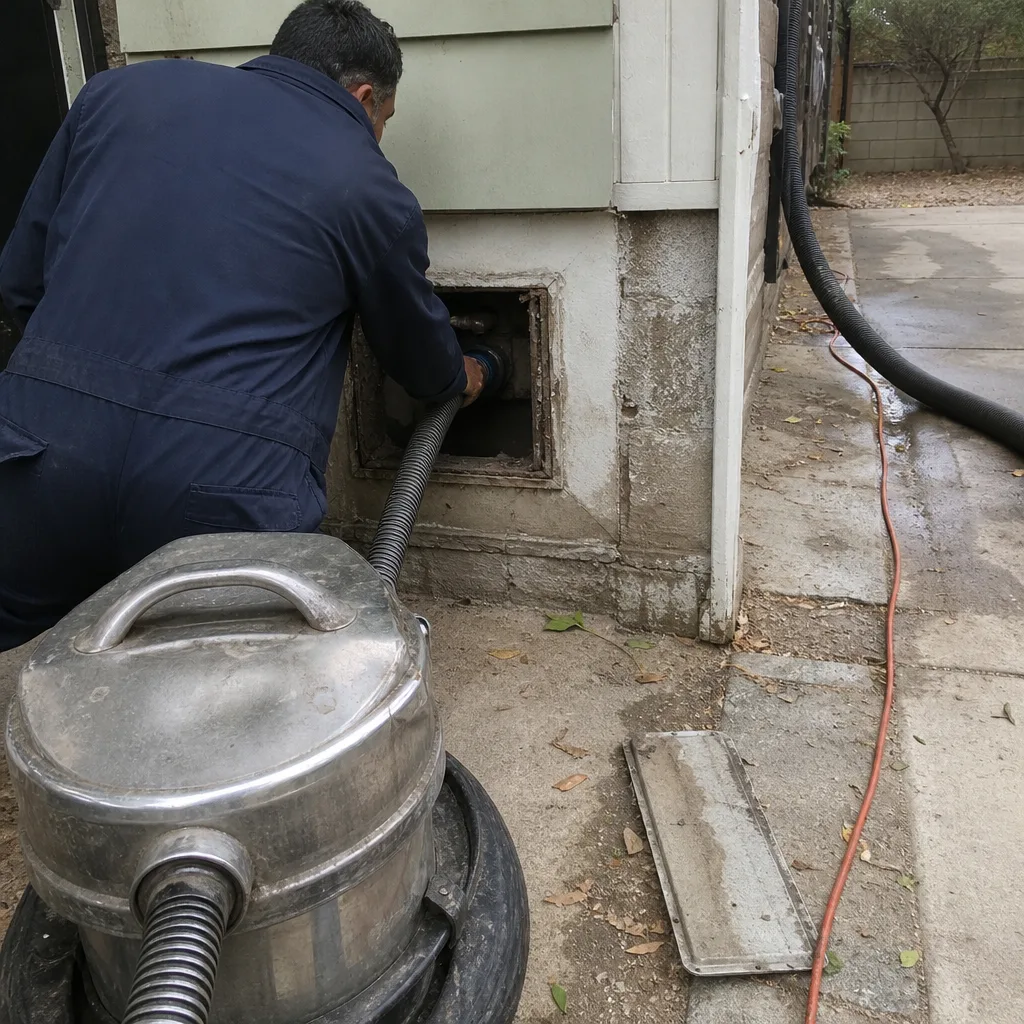 Before
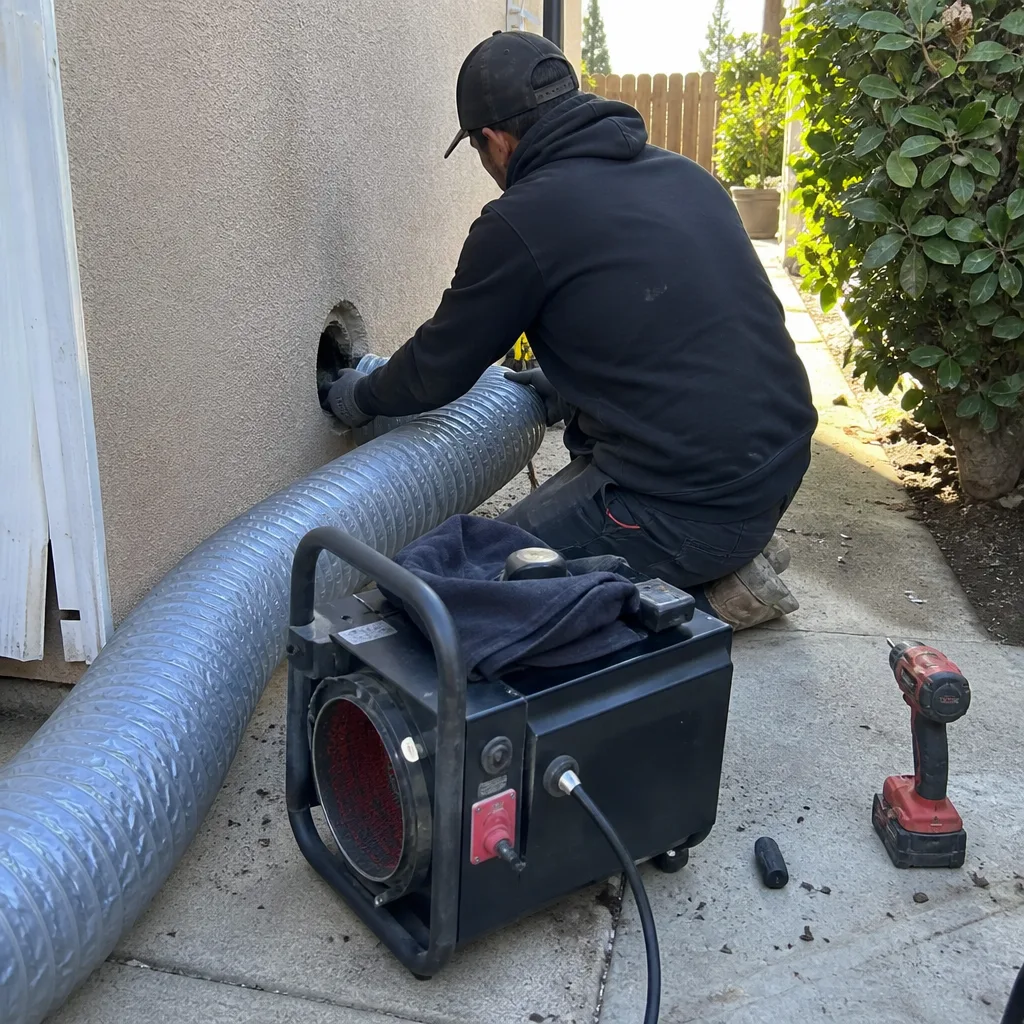 After
After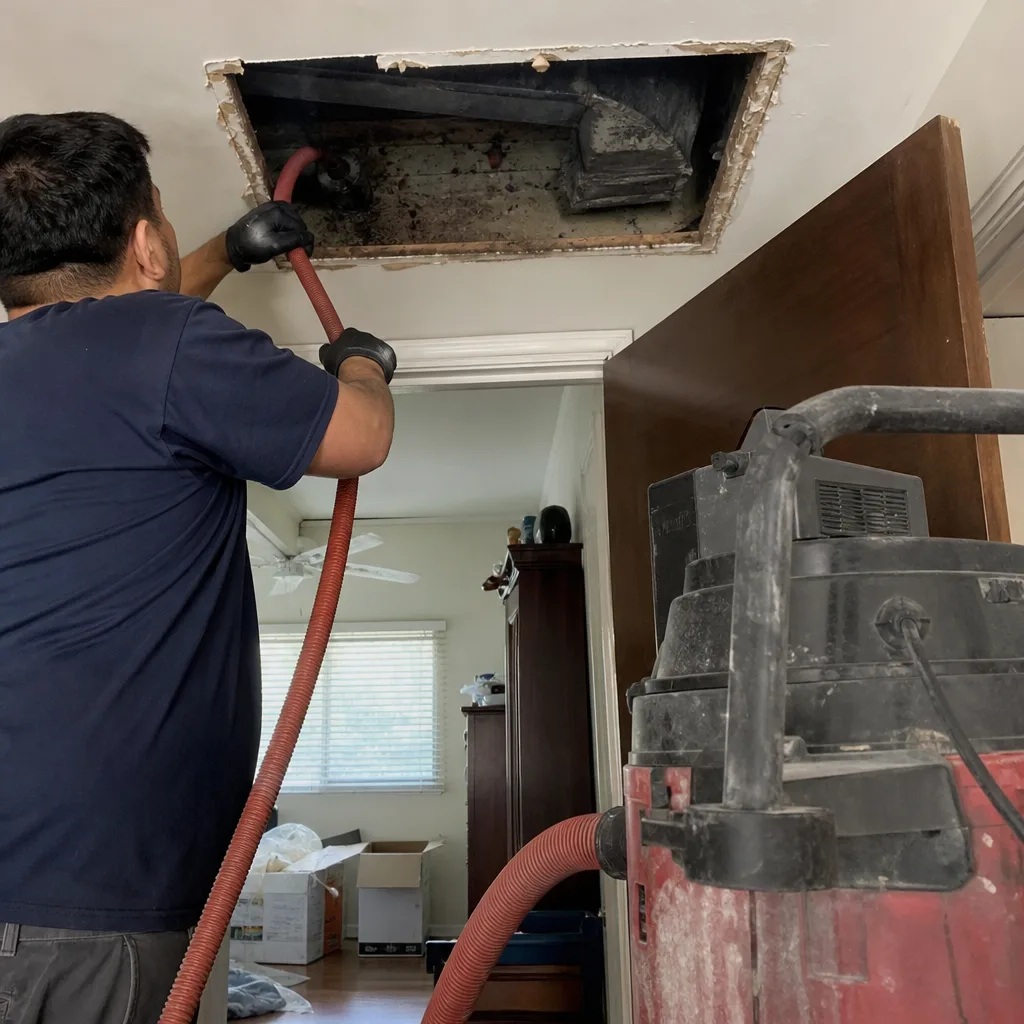 Before
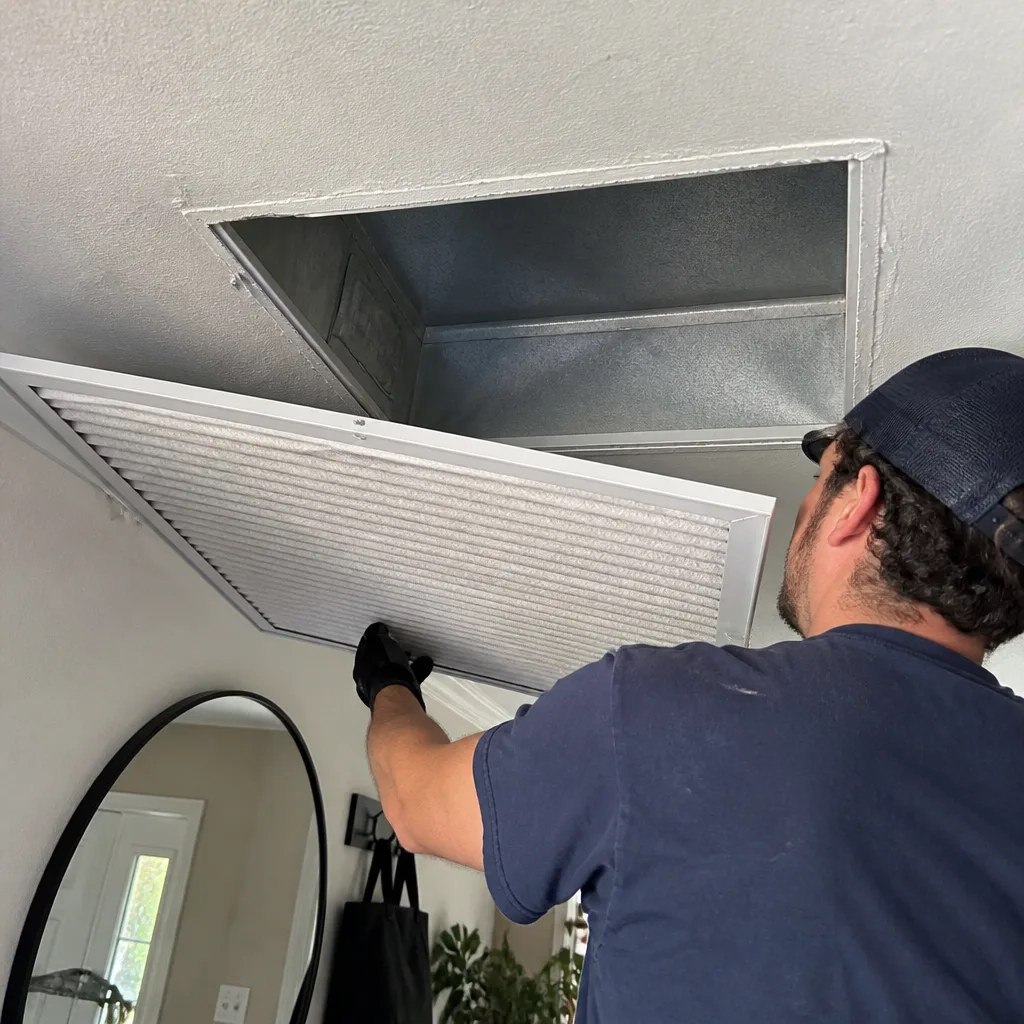 After
After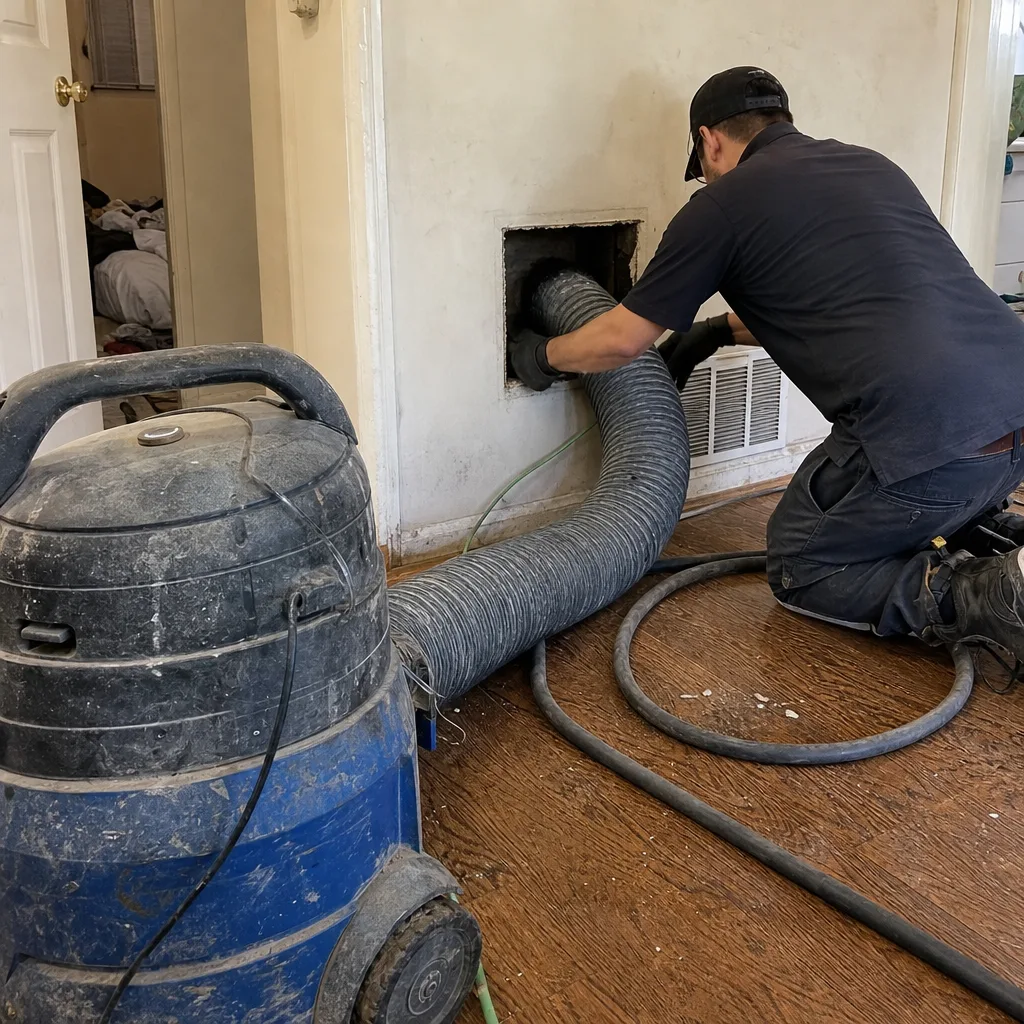 Before
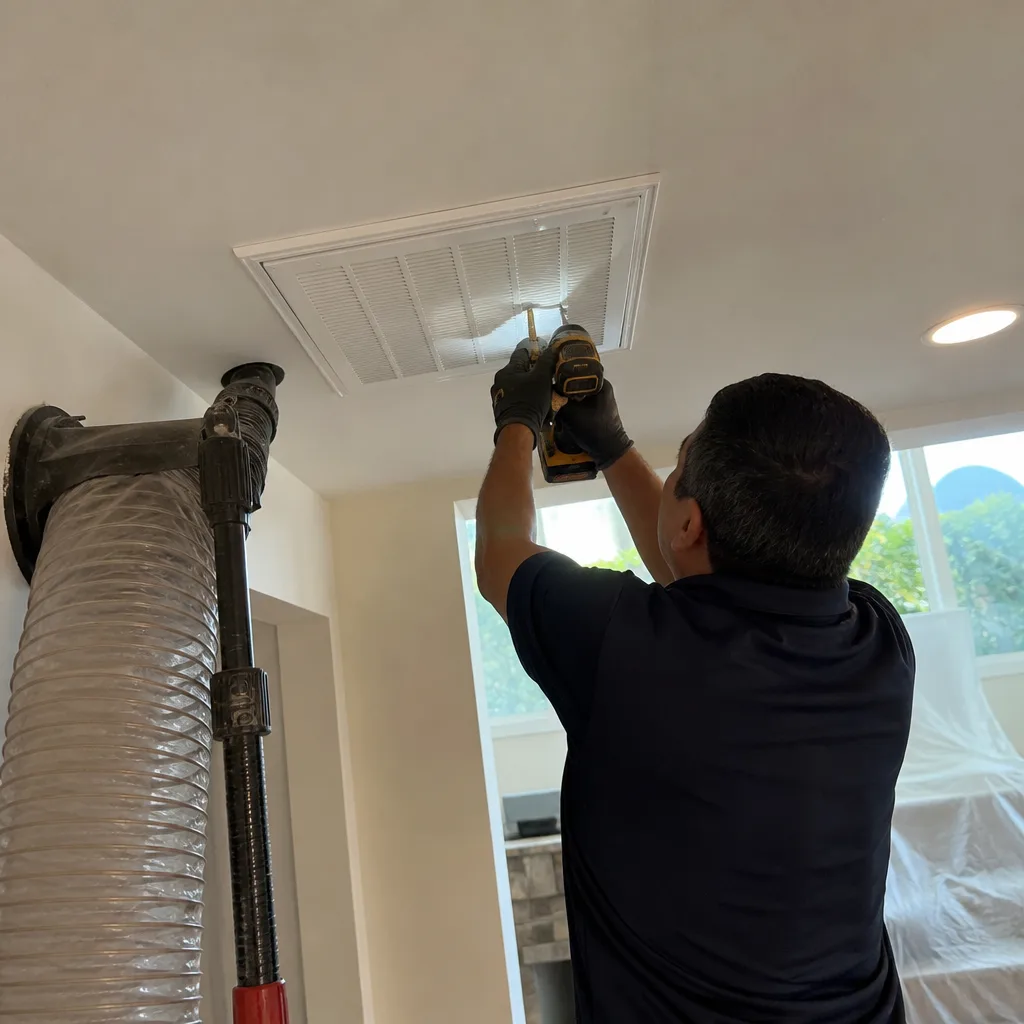 After
AfterSeasonal Air Duct Cleaning Care for Los Angeles: Year-Round Homeowner’s Guide
Most Los Angeles homeowners run their HVAC hardest in September, which is also when duct systems are carrying the most wildfire particulate and the least humidity to suppress it. Nearly every seasonal duct guide you’ll find is written for Chicago winters or Atlanta summers, not for a city where fire season and peak cooling demand collide in the same six weeks. This guide is different. It’s built around how Los Angeles actually behaves, month by month, so you know when your ducts are working hardest, when they’re most vulnerable, and when a cleaning genuinely makes sense versus when it’s money you can keep.
Quick Answer
In Los Angeles, the smartest seasonal duct care is a tiered approach: schedule visual inspections in May before marine layer humidity peaks, do your heaviest cleaning or filter work in August before September’s heat and wildfire particulate arrive together, and run a post-fire-season check in November once the first rains settle airborne ash. You don’t need a full Air Duct Cleaning services every year. You need the right intervention at the right time, based on what’s actually entering your ducts in each part of the LA calendar.
Table of Contents
- Why Los Angeles Needs Its Own Duct Care Calendar
- The Month-by-Month LA Duct Stress Calendar
- Late Summer to Fall: LA’s Highest-Risk Window
- June Gloom and Marine Layer: The Condensation Problem
- Post-Wildfire Smoke Protocol for Your Ducts
- The Tiered Approach: When a Full Clean Is Actually Warranted
- Common Mistakes to Avoid
- When to Call a Professional
- Frequently Asked Questions
- The Bottom Line
Why Los Angeles Needs Its Own Duct Care Calendar
Los Angeles doesn’t have four textbook seasons, and that’s exactly why generic duct advice fails here. The city runs on a different rhythm: a long dry stretch from April through November, a damp marine layer pattern in late spring and early summer, a fire season that now stretches from July into December, and a December-to-February period that brings rain but rarely hard cold. Each of those periods changes what’s moving through your ducts and what’s collecting inside them.
In a humid climate, the dominant duct problem is mold. In a frigid one, it’s condensation from temperature swings. In Los Angeles, the dominant problem is particulate: fine dust, pollen, soot, and during fire season, smoke residue that works its way deep into fibrous insulation and return-air pathways. That particulate doesn’t follow a Chicago calendar. It follows the Santa Ana winds, the bloom cycles of chaparral and imported landscaping, and the August-to-October convergence of peak cooling demand and peak airborne ash.
We’ve been cleaning air ducts in Los Angeles since 2004, under the Linden Air Duct Cleaning home standard, and the pattern we see in the field repeats year after year: the systems that fail inspection or trigger allergy complaints are almost always the ones maintained on a generic “spring and fall” schedule rather than an LA-specific one. The calendar below is what we’d give a homeowner who asked us how Air Duct Cleaning in Los Angeles should be timed for this city specifically.
The Month-by-Month LA Duct Stress Calendar
Here’s what’s happening to your duct system during each stretch of the Los Angeles year, and what the appropriate response looks like. This is a stress calendar, not a to-do list: some months demand action, others demand simply paying attention.
January to February: The Rain and Debris Window
Los Angeles gets most of its annual rainfall between December and February. Rain itself doesn’t enter your ducts, but it does two things: it knocks accumulated dust and pollen off roofs, trees, and exterior vent openings, and it increases indoor humidity just enough to make existing dust inside ducts clump and stick. If your return-air registers are near an exterior door or a frequently opened window, wet leaves and grit can migrate toward the return path. This is a low-risk period, but it’s the right time to check exterior vent hoods and dryer terminations for debris, especially after heavy storms. A blocked exterior vent hood is a pressure problem that makes your whole system work harder, even when the ducts inside are clean.
March to April: The Pollen Onset
By March, LA’s imported trees and grasses are pollinating hard: oaks, sycamores, junipers, and the ornamental pines that line so many Valley and basin neighborhoods. Pollen grains are large enough to be caught by your return-air filter, but only if that filter is seated correctly and changed on schedule. The bigger issue is that pollen accumulates on window screens, sliding-door tracks, and exterior condenser coils, and some of it inevitably gets pulled into the return path when doors open. If your home has an older return-air setup with gaps around the filter frame, March and April are when those gaps let the most unfiltered material through. We recommend a filter check and a quick look at return grilles in March, not because the ducts are dirty, but because this is when a small gap causes the most avoidable contamination. One of the most useful products we work with for homes that struggle seasonally is Aprilaire filtration, which does a meaningful job catching finer material than standard fiberglass panels.
May: The Preparation Month
May is the most important pre-emptive month on the LA calendar. The marine layer is beginning, heat is approaching, and your system is about to run continuously for five months. Now is the time to inspect, adjust, and prepare, before demand peaks. Walk through the house and check every register. Remove the covers, vacuum the visible interior, and look for moisture staining, which matters most in homes near the coast. Check return-air grilles for gaps. Replace filters. If you’ve been thinking about a professional inspection, May is the most logical month to schedule it. By doing this work in May, you head into the high-stress period with a system that’s running clean, which reduces the amount of summer particulate that sticks to interior surfaces when things heat up and dry out. Technicians are also less slammed in May than they will be in August, which means more scheduling flexibility and a more thorough visit.
June to July: The Marine Layer Months
The June Gloom pattern brings morning overcast, 90-plus percent relative humidity at the coast, and temperatures cool enough that many homeowners run their systems less, not more. The reduced airflow is precisely the problem: when conditioned air moves slowly or not at all through duct interiors, humidity has time to condense on cool metal surfaces, especially in unconditioned crawlspaces and attics where ducting often runs in Los Angeles. The full explanation of this condensation risk is in its own section below, because it’s the most under-appreciated duct issue in LA. For the calendar, the takeaway is that June and July are observation months: watch for musty smells when the system first kicks on, check exposed ducting in attics and crawlspaces for sweating, and note whether humidity stays above 60 percent indoors. For most systems, June and July demand no action beyond attention. That changes in August.
August to October: The High-Risk Window
This is the period that defines Los Angeles duct stress. August brings the hottest sustained temperatures of the year, which means your system runs at maximum duty cycle. September adds the cruel twist: Santa Ana winds begin, wildland fire activity peaks, and the air outside carries fine particulate that your return system will draw toward the filter. October continues the same pattern, often with the added factor of ash fall from fires that may be miles away. The combination of maximum runtime and maximum particulate load means whatever is inside your ducts gets baked, stirred, and redistributed through every room. If the system was inspected and filters were refreshed in May, this period is manageable. If it wasn’t, this is when symptoms are most noticeable: visible dust on registers, uneven heating or cooling from rooms, family members noticing more sneezing or congestion indoors, and a system that seems to run longer to hold temperature. For duct cleaning specifically, August is the month we’d recommend for a full service if your home hasn’t had one in four to five years or if any condition indicates it’s needed. The logic is simple: clean before the storm, not after it. You want clean interior surfaces entering the highest-contamination window, not a system that’s already carrying a load.
November: The Post-Season Check
By November, the first meaningful rains have usually arrived, and the Santa Ana pattern is weakening. That rain is your best friend in one specific way: it collapses airborne particulate, scrubbing ash and dust out of the atmosphere and into the soil. Once that happens, the outdoor air is genuinely cleaner than it has been since spring, and the fire-risk window is generally closing. November is the right time to do a post-season check: replace filters again, check for any soot or ash scent when the system cycles on, and look at whether any rooms accumulated visible dust during the fall. If you cleaned in August and maintained filters, November rarely requires anything beyond a filter change and a visual once-over.
December: The Downtime Assessment
December in Los Angeles is, for most homes, the lowest-demand month of the year for HVAC. Heat use is intermittent, cooling demand is gone, and the system gets its first real rest since April. That makes December the right month for forward planning, not emergency work. This is when we advise homeowners to schedule inspections for the coming year, budget for any filter upgrades they’ve been considering, and take stock of whether the system showed any consistent symptoms during the August-to-November stretch worth addressing before the next cycle begins. If you had visible dust, uneven temperatures, or allergy complaints during the fire-season window, December is the month to book the work. It’s not urgent. But going into the spring with a plan beats reacting in August.
Late Summer to Fall: LA’s Highest-Risk Window
From August through October, Los Angeles runs a simultaneous stress test on every residential duct system. The heat drives demand. The fires drive particulate. The low humidity drives static. A cleaner system handling the same load will hold up for the season with regular filter changes. A system carrying two or three years of accumulated material has no margin: every extra gram of dust acts as a sponge for smoke particulate, a host surface for whatever moisture does appear, and an irritant source that the furnace fan eventually redistributes through every room.
What we see in homes across Los Angeles during this window is remarkably consistent. Return grilles develop a visible gray film by September, even in homes where filters get changed on schedule. That film is the top layer of what’s accumulated deeper in the system. The register near the return pulls air from the rest of the house, which means if the return side looks dirty, the supply side has been receiving the same air. The good news is that the entire problem is addressed with the same intervention: a proper negative-pressure extraction cleaning, done by someone who actually connects a vacuum system to your ductwork rather than running a broom through it. Air Duct Repair in Los Angeles follows the same calendar logic: if we’re going into the high-stress period, we want the whole system tight, clean, and moving air efficiently, which is why inspections and cleanings in August often catch small tears or separated joints before they become big inefficiencies in September.
What you can do before the window arrives: replace filters in late July, even if they’re not fully loaded. Check that all registers are open and unobstructed. Walk the house while the system is running and note which rooms feel under-served. Run the fan in “on” mode during high-smoke days, but only with a clean, appropriately rated filter installed. The goal is to enter the September peak with surfaces clean, filters fresh, and airflow normal.
June Gloom and Marine Layer: The Condensation Problem
Here’s a sentence that surprises most Los Angeles homeowners: your ducts are more likely to develop mold risk in June than in August. The reason is humidity, not heat. In June, the marine layer sits over coastal and basin neighborhoods every morning. Relative humidity near the coast routinely runs 85 to 95 percent before noon. Homes without air conditioning, or homes that only run cooling in the late afternoon, keep duct interiors at ambient temperature and ambient humidity for long stretches. Any uninsulated or under-insulated section of duct running through a vented attic or crawlspace will sweat, especially where warm humid air meets cool metal surfaces after a cool night. That moisture collects on the duct exterior and eventually finds its way into the interior through seams, joints, and pinholes.
Once moisture accumulates inside a duct, mold can become established within days if organic material is present for it to feed on. And organic material is present: skin cells, pet dander, pollen, and the fine dust that accumulates in all of our systems. None of this announces itself dramatically. You might notice a musty or earthy odor when the system first starts, especially on mornings when the marine layer is heavy. You might see staining on visible duct faces in the garage or crawlspace. You might see condensation beading on the exterior of exposed ducting. Each of these is a signal worth investigating in June, not August, because by August the heat dries everything out and hides the problem. Homes without vapor barriers in attics and crawlspaces are the most exposed. Coastal neighborhoods feel this more than inland Valley homes, but every uninsulated duct in Los Angeles has some level of June condensation risk.
What you can do in June: run the system’s fan more frequently, even if cooling isn’t needed. A moving column of air is less likely to condense. Check visible ducting for sweating or staining. If you see consistent moisture or smell mustiness, that’s a call to a professional for a real evaluation, including whether a full cleaning and possible repair or insulation work is warranted.
Post-Wildfire Smoke Protocol for Your Ducts
When wildfire smoke settles over Los Angeles, which it now does every year, the questions homeowners ask us are always the same: do I run the system or shut it down? When is a cleaning genuinely needed? How long after the fires should I wait? Here’s the straight answer set, based on what we actually see working in LA homes.
During active smoke: Run your system on circulation mode if your thermostat supports it. Set the fan to “on” rather than “auto.” The filter then does continuous work pulling particulate out of indoor air. Shut off any open windows or exterior doors. Do not use a swamp cooler or any evaporative cooling system, since they pull outside air directly indoors. If your home has a fresh-air intake, close or block it until the smoke clears.
During ash fall or immediately after a close fire: Shut the system down. Ash is abrasive and enormous by filter standards. It will load a filter in hours, bypass a standard fiberglass panel, and coat the blower, coil, and interior duct surfaces. Wait until ash stops falling and the worst has settled. Then replace filters and inspect.
How to know if a cleaning is genuinely indicated after a fire:
- Scent. The system carries a smoke or ash odor when the fan runs, even after filter replacement.
- Visible deposition. Register covers, return grilles, and interior walls near vents show a gray or black film that returns after wiping.
- Symptom changes. Family members’ respiratory or allergy symptoms are noticeably worse indoors than outdoors, and stay that way for weeks.
- Presence of ash. You can see fine gray dust inside the return duct when you remove the grille and shine a light in.
If none of those four conditions is present, a post-fire cleaning is usually precautionary rather than necessary, and you can probably keep your money. The honest answer is that woodsmoke is airborne and transient. It passes through the filter, not into the ductwork, unless the system is running with poor airflow during heavy smoke. The cleaning threshold is reached when something deposited, not when something passed through.
The Tiered Approach: When a Full Clean Is Actually Warranted
The most expensive and least honest answer in our industry is “every year.” The cheapest and least honest is “$99 for any system.” Neither serves a Los Angeles homeowner. The right model is a three-tier system, keyed to what’s actually happening in your home and your neighborhood:
Tier 1: Annual self-maintenance (every year, do it yourself). This is filter replacement, register and grille cleaning, visual inspection of accessible ducting, and clearing exterior vent hoods. It costs you a few dollars and ninety minutes. In most LA homes, Tier 1 is all the routine care the system needs in a given year.
Tier 2: Professional inspection (every 2 to 3 years, or when a change occurs). A technician examines the whole system with a camera, assesses interior accumulation, measures airflow, and documents what’s actually in the ducts before recommending anything. This is also the right response to a one-time event: a renovation, a pest intrusion, a nearby fire, a water leak in the attic or crawlspace. A proper inspection tells you whether Tier 3 is needed or whether you’re fine with more Tier 1.
Tier 3: Full professional cleaning (as indicated, typically every 4 to 6 years in Los Angeles). Full negative-pressure extraction with agitation of the duct interiors, done properly with equipment like Rotobrush systems, which we run as part of our standard cleaning setup. This is the right choice when inspection shows significant accumulation, when you’ve moved into a home with no service history, when a renovation put drywall dust through the system, or when one of the four post-fire indicators above is present.
The tiered model keeps you from paying for a clean you don’t need and keeps you from skipping a clean you do. It’s also honest about what Dryer Vent Cleaning in Los Angeles requires on its own schedule: dryer vents accumulate lint on a different cycle from HVAC ducts, and the two shouldn’t be lumped together by a company looking to upsell.
Common Mistakes to Avoid
- Following a generic spring/fall schedule. In Los Angeles, the spring and fall things you’d do in New England have no local basis. Key your maintenance to the LA stress calendar above, and you’ll intervene when it actually matters.
- Assuming a dirty-looking return grille means dirty ducts. The grille catches the air before the filter. It’s normal for it to collect film. Clean the grille, then look inside the return boot with a light to see what’s actually entering the system.
- Running the system on “auto” during smoke events. Auto cycles the fan off when temperature is satisfied, which means long stagnant periods during the worst air. Run the fan on “on” during smoke where possible, with a clean filter in place.
- Calling a duct cleaner before an inspection. Any company that quotes a price before looking at the system is guessing at what’s inside. A proper approach inspects first, then quotes, then cleans. In our case, Linden Air Duct Cleaning puts every price in writing before any work begins, every time.
- Delaying post-renovation cleaning. Drywall dust, sawdust, and plaster fines from even a small remodel will pull through the system for months if the system ran during construction. If your ducts weren’t sealed during the work, assume they need attention once the project ends.
- Ignoring condensation signals in June. Musty odor on startup, sweating on exposed ducts, or water staining near registers in early summer is a mold-risk warning. It’s cheaper to investigate in June than to remediate in September.
- Treating all post-fire cleaning recommendations as equal. There’s no harm in caution, but there’s also no reason to pay for a full cleaning when the smoke passed through the filter and left no deposit. Use the four-condition checklist above, and don’t be talked into work by a photo of a generic dirty duct from another home.
When to Call a Professional
You’re not equipped to do this alone, and you shouldn’t have to be. Call a professional when you see any of the following: persistent smoke or musty odor that won’t clear after filter replacement and cleaning grilles; visible mold or water staining inside or around ducts; uneven airflow that leaves rooms consistently hot or cold despite open registers; a family member whose indoor allergy symptoms are worse than outdoor symptoms; or evidence of pests (rodents or insects) in the duct path. All of these conditions require a camera inspection and an honest assessment, not a brush and a vacuum. Linden Air Duct Cleaning offers free estimates in Los Angeles, and our technicians are background-checked, identity-verified, photo-badged, and introduced to you by name and photo before arrival under the Threshold Standard. Call (980) 447-2498.
Frequently Asked Questions
In Los Angeles, a full professional air duct cleaning for a typical single-family home runs between $450 and $900, depending on the number of systems, the number of supply and return runs, and the amount of contamination present-our Air Duct Cleaning Cost Breakdown: The Los Angeles Homeowner’s Reference for 2026 explains exactly how these factors shape your quote. That’s the honest whole-system range, written before any work begins. We never quote per-vent pricing, which is how bait-and-switch operators get a foot in the door and inflate the invoice later. You’ll get one flat price per system, in writing, before we start. Call (980) 447-2498 for an exact quote.
Because they’re not for the same job. A $99 or $149 duct cleaning is almost always a teaser price that covers a quick visual once-over followed by hard upsell pressure once the tech is in your home. A legitimate full-system cleaning in Los Angeles requires real equipment, meaningful time, and a technician you would actually want in your house. If a quote seems too cheap to sustain a professional operation, it isn’t sustaining one, and the difference gets made up later. We put the entire price in writing before any work, and there’s no upsell ladder to climb once we arrive.
For most Los Angeles homes, a full professional cleaning every 4 to 6 years is the right rhythm, assuming regular filter changes and no intervening events like fires, renovations, or pest intrusions. Our tiered approach above goes into the details: annual self-maintenance, a professional inspection every 2 to 3 years, and a full clean only when inspection or events indicate it. Some homes near the coast with persistent condensation issues may need more frequent attention, but most systems do fine with a longer interval and better filters. Call (980) 447-2498 for an honest assessment of your specific home.
You should receive before-and-after photos or video of the interior of your ducts, not just a verbal assurance. At each job, we document what the system looked like before, what it looked like after, and what equipment was used. On repair work, every job is covered by a written guarantee, and if a covered repair fails within the 365-Day Done Right Promise window, we return at no charge. A duct cleaner who won’t show you the system before and after isn’t giving you a reason to trust them.
No, and in most cases that’s overkill for a normal smoke event. Closing windows and exterior doors, sealing any obvious drafts, and running your system on recirculation mode with a clean, appropriately rated filter is the right protocol. Taping registers is only worth considering for very close, very heavy ash fall that occurs while your system is shut down. The better investment is a good filter, correctly installed, and a return-air path that isn’t leaking. Once the event passes, use the four-factor checklist above to decide whether a professional cleaning is warranted.
Not annually, no. But dust accumulation in ducts has consequences beyond allergic response: it reduces airflow, forces your system to run longer cycles to hold temperature, and provides a host surface for moisture when humidity rises in the June Gloom months. The right question isn’t whether you have allergies. It’s whether your system is moving air efficiently and staying dry. Some people need a cleaning for health reasons. Some need it for efficiency reasons. Almost everyone benefits from an inspection every few years. If you’re not sure where you stand, call (980) 447-2498 and we’ll give you an honest read without a sales script.
The Bottom Line
Los Angeles doesn’t work on a spring-and-fall duct schedule. It works on a heat-and-smoke-and-marine-layer rhythm, and the smart money is allocated to the moments that actually matter: filtering well in March and April, preparing in May, watching during the June Gloom, cleaning if needed in August before the September peak, and checking once the rains arrive in November. Most homes don’t need an annual cleaning. Most homes do need annual attention, and the difference between those two things is the difference between paying for maintenance and paying for marketing. If this guide leaves you with one action item, make it this: get an honest inspection, with a camera, before the next fire season. Then decide from evidence, not from urgency. For more guides & resources on keeping your LA home’s air clean year-round, explore our blog.
Written by Marcus Veale, Owner at Linden Air Duct Cleaning, serving Los Angeles since 2004.