
Last updated October 8, 2026
Whole-system duct and dryer vent check with before-and-after photos - you see exactly what came out of your vents
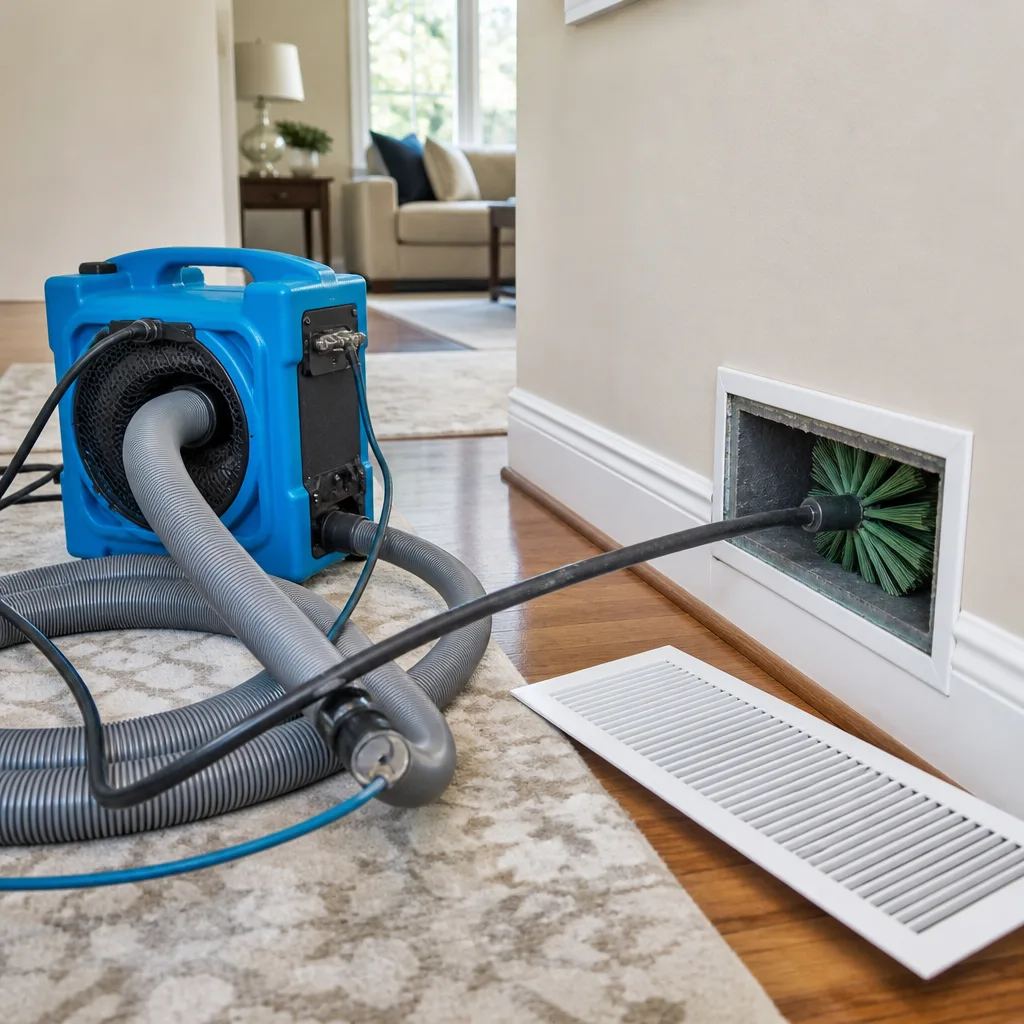
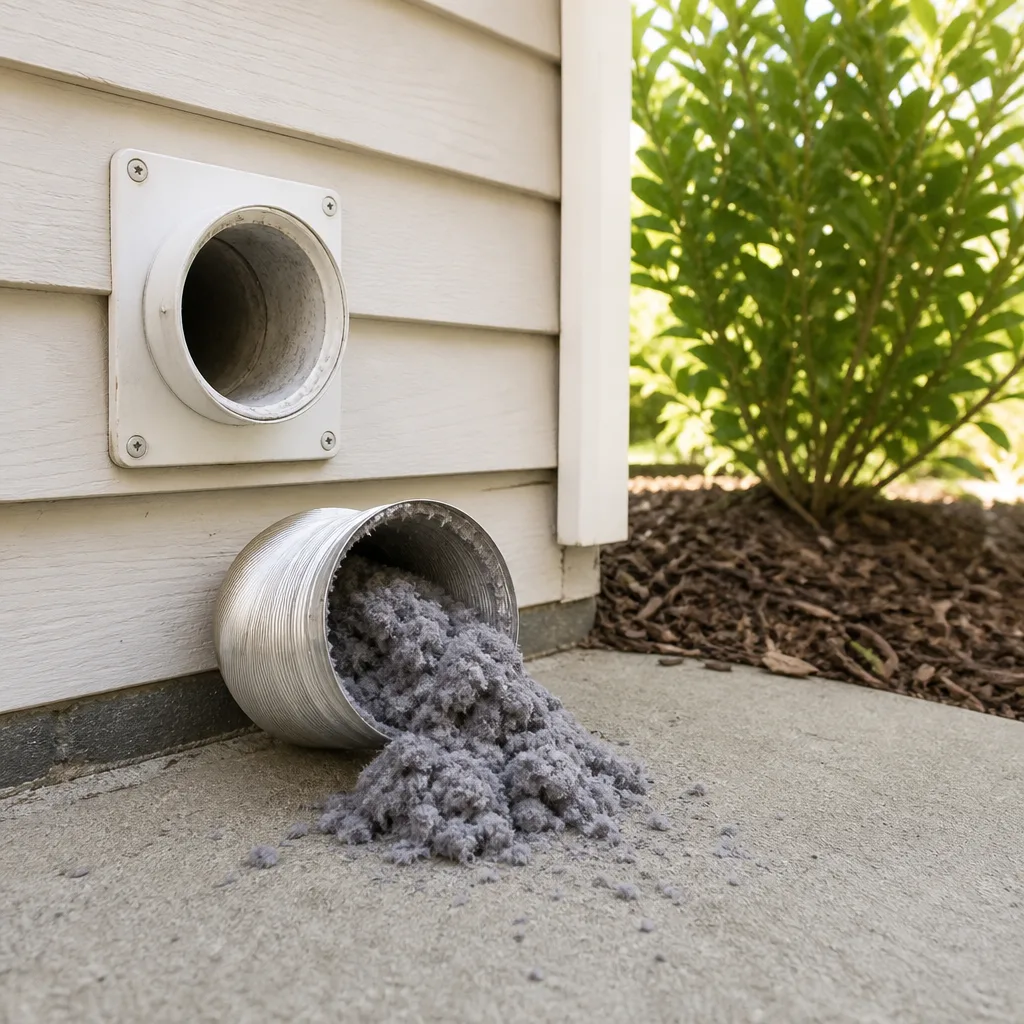
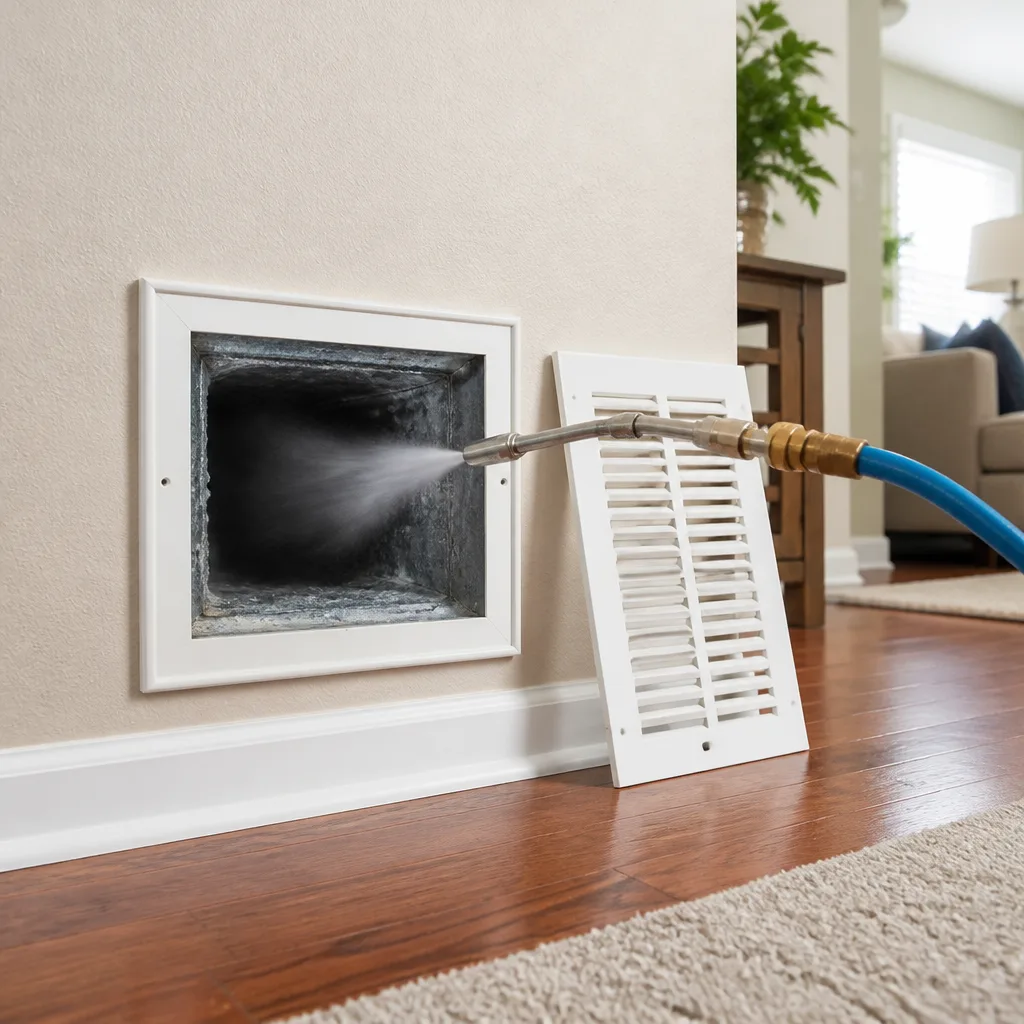
That "$99 whole-house special" is a bait ad - the real number appears once they are in your hallway, or the "clean" is a shop-vac at the register. We photograph the inside of your ducts before and after instead.
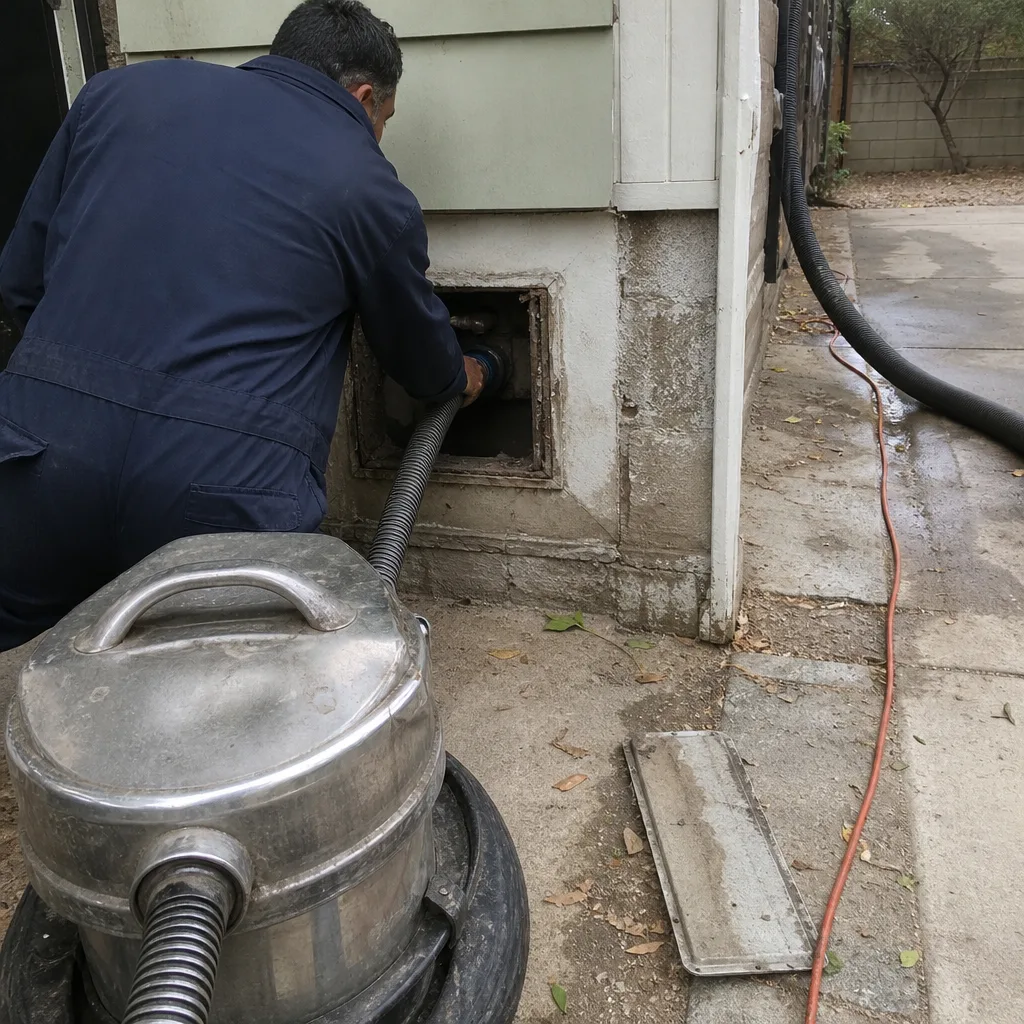 Before
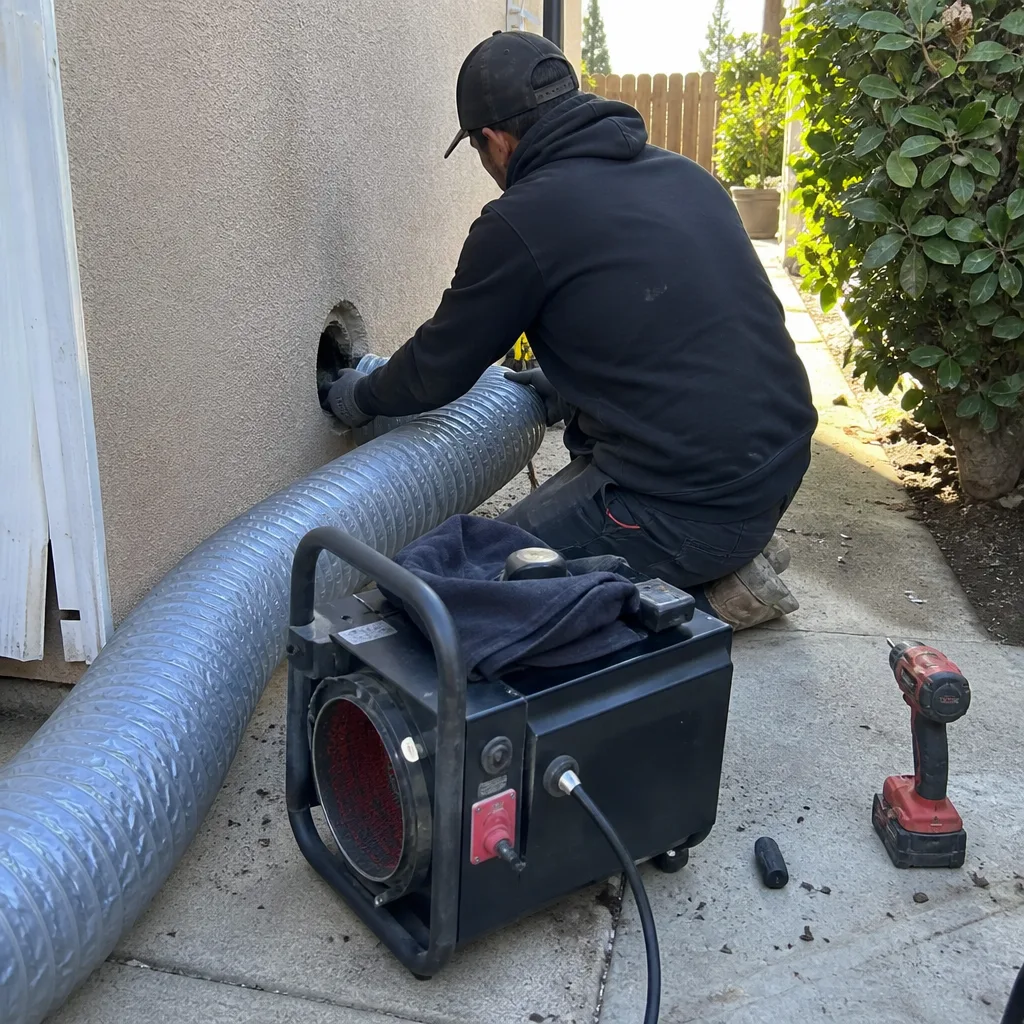 After
After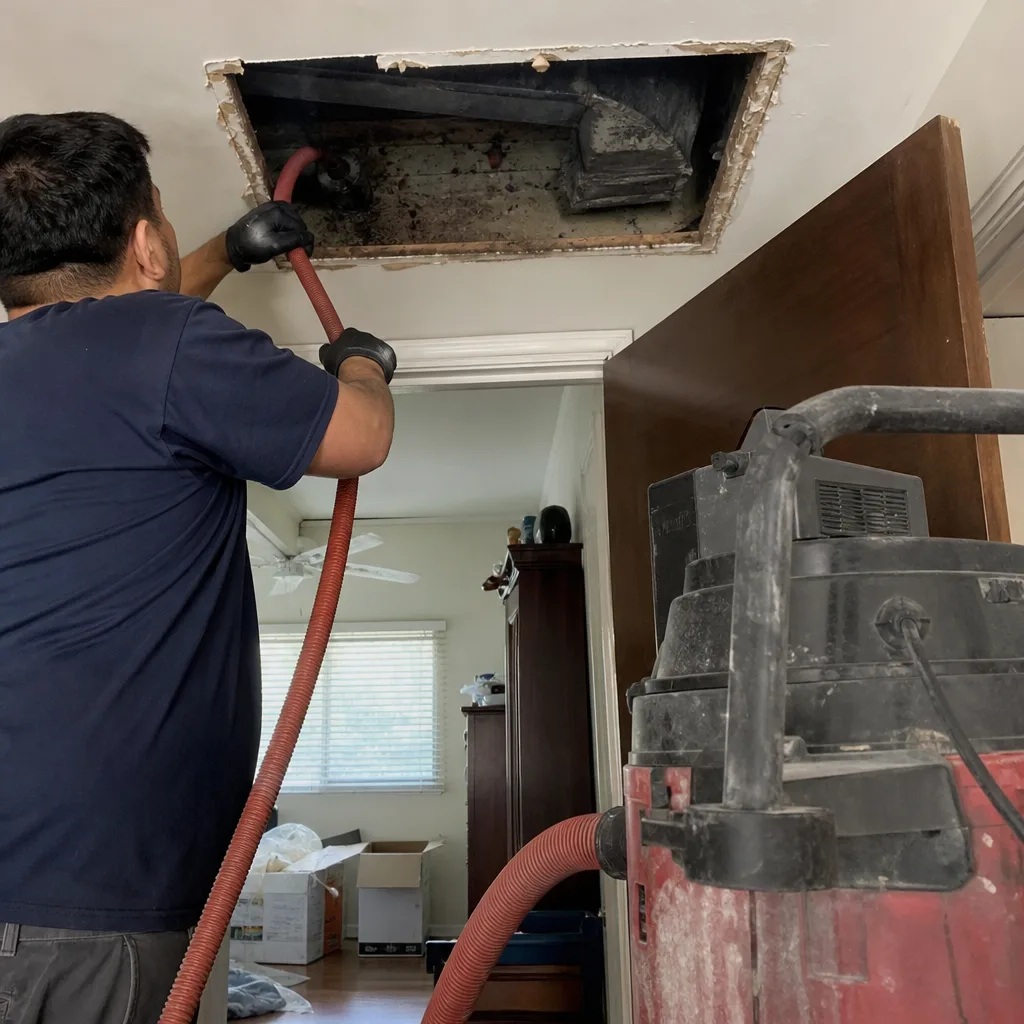 Before
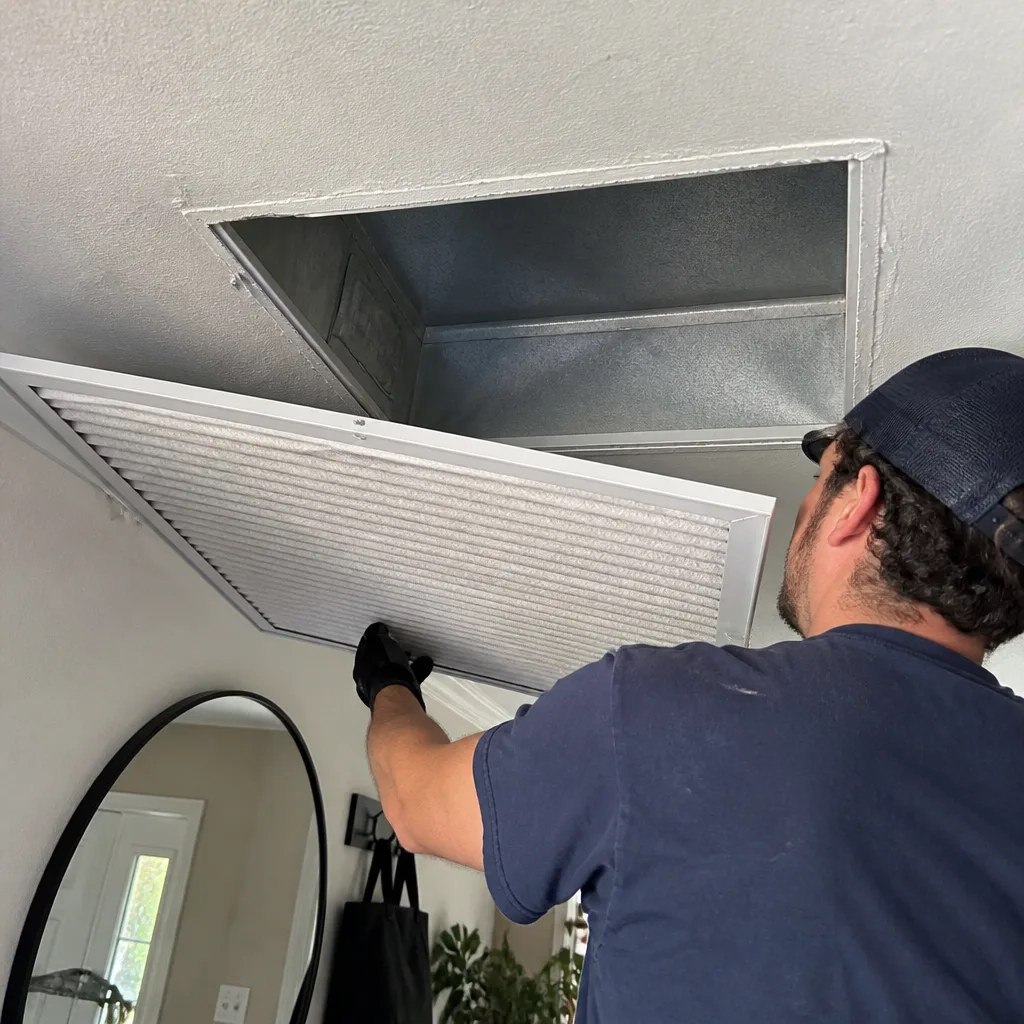 After
After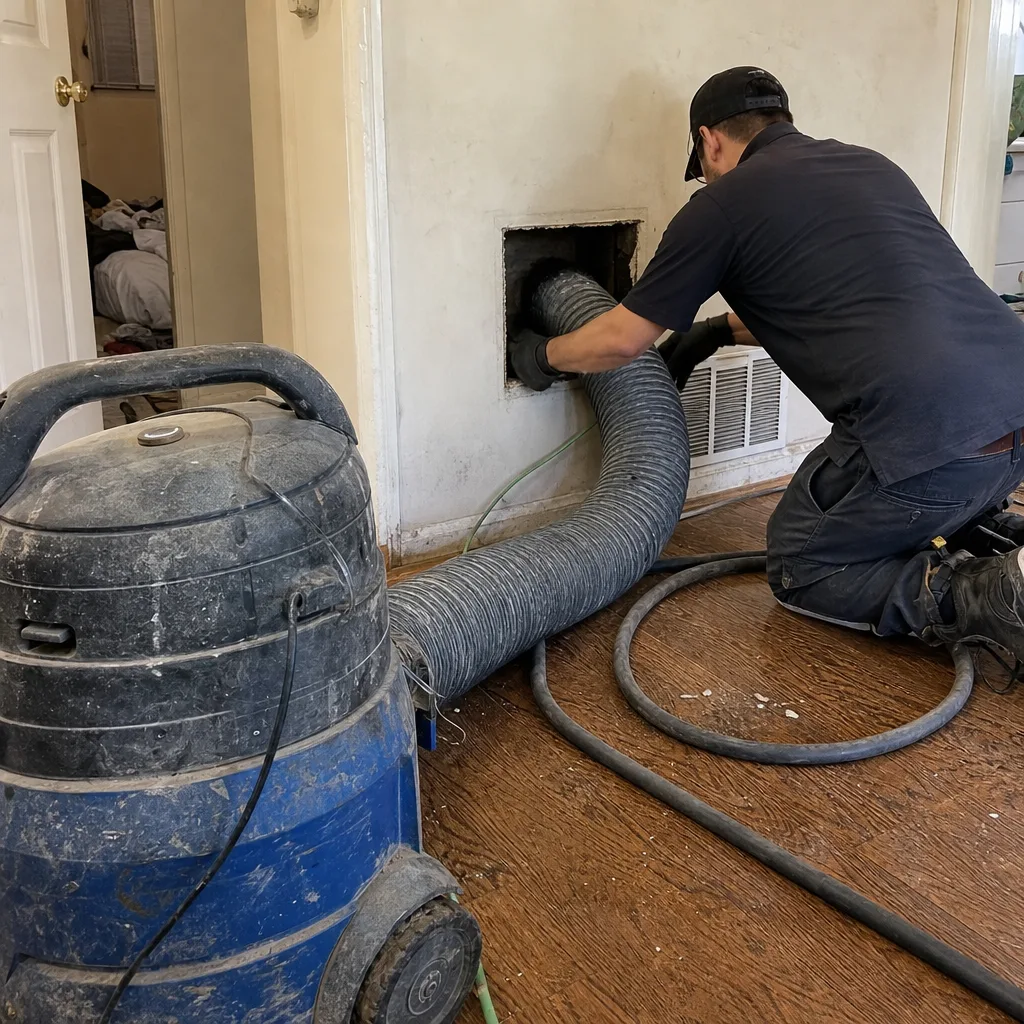 Before
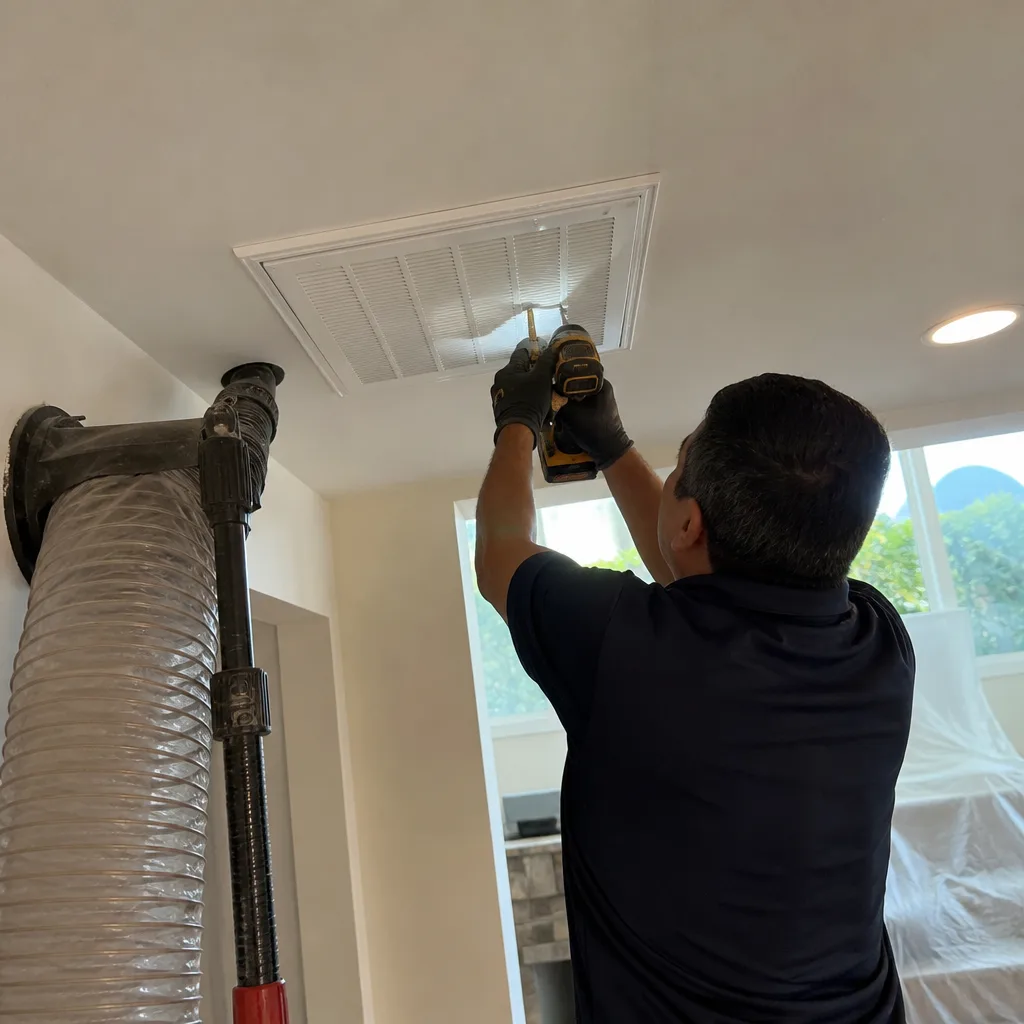 After
AfterAir Duct Cleaning Maintenance Checklist for Los Angeles Homeowners
A standard 1-inch fiberglass filter in a 1960s stucco home near the 405 during Santa Ana season is doing almost nothing. It catches large lint and the occasional pet hair, but the fine particulate that Los Angeles air pushes through return grilles during wind events sails right through it and into your ductwork. Most maintenance checklists don’t know the difference between a filter that works in Minneapolis and one that works in Mar Vista. This one does.
By the end of this guide, you’ll have a dated, printable checklist built for Los Angeles homes specifically, covering what you can verify yourself, what requires a professional Air Duct Cleaning, and how to keep a simple log that makes any future cleaning or repair visit faster and more accurate.
Quick Answer
Air duct maintenance in Los Angeles should follow a four-season rhythm: check filters monthly during wildfire and Santa Ana months, inspect visible registers each season, monitor for moisture during May Gray and June Gloom, and schedule a professional inspection every 2 to 3 years, or sooner if you notice dust returning within days of cleaning, musty odors from vents, or a spike in allergy symptoms indoors. For a detailed Air Duct Cleaning Maintenance Schedule: What to Do and When, see our dedicated guide.
Table of Contents
- The Four Functional Seasons of Los Angeles Ducts
- The Monthly 10-Minute Visual Checklist
- The Seasonal Deep Checklist
- What Your Home’s Era Means for Your Ducts
- What You Can Check Yourself vs. What Needs Instrumentation
- How to Keep a Duct Condition Log That Actually Helps
- Common Mistakes to Avoid
- When to Call a Professional
- Frequently Asked Questions
- The Bottom Line
The Four Functional Seasons of Los Angeles Ducts
Los Angeles doesn’t have winter, spring, summer, and fall the way a national maintenance template assumes. What we have is Santa Ana wind season, wildfire smoke months, May Gray and June Gloom, and summer heat cycling. Each one stresses your ductwork differently, and each one changes what you should be checking.
Santa Ana Wind Season (September through January)
When the Santa Anas blow, they carry fine dust from the high desert, pollen, and whatever’s been sitting on rooftops and in gutters across the basin. That dust gets pulled into your HVAC return and deposited inside duct runs. A checklist for this season should include a filter check every two weeks, not monthly. Look for a visible film of gray dust on the return grille itself. If you see dust accumulating on the grille, that dust is also accumulating inside the ducts behind it. We’ve pulled apart ducts in Sherman Oaks and Burbank after a long Santa Ana stretch and found a quarter inch of fine silt inside the return trunk.
Wildfire Smoke Months (May through November, Peaking August to October)
Smoke particulate from fires in the Angeles National Forest, the Santa Monica Mountains, or points further east behaves differently from ordinary household dust. It is finer, stickier, and it clings to duct walls. A filter upgrade alone won’t keep it out of your system. During active smoke events, run your HVAC fan on the “on” setting during daylight hours if feasible, check the filter weekly, and log any smoke odor coming from supply registers. Smoke odor that persists after the outside air has cleared usually means smoke residue has settled inside the duct liner or the evaporator coil. That’s a professional cleaning trigger, not a filter swap.
May Gray and June Gloom (April through July)
The marine layer that sits over the Westside and beach communities from San Pedro up through Pacific Palisades brings humidity levels your ducts don’t see during the rest of the year. Ducts with dust buildup absorb that moisture, which creates the conditions for mold growth and that specific musty smell some LA homeowners notice when the AC kicks on in July. During these months, the checklist item is humidity-driven: check supply registers for condensation, sniff for any damp or musty odor from the vents, and look for discoloration around register boots in kitchens and bathrooms.
Summer Heat Cycling (July through October)
When the AC cycles hard during heat waves, thermal expansion and contraction stresses duct connections. This is when pre-existing gaps in duct joints reveal themselves, especially in attic installations where daytime temperatures can exceed 140 degrees. During this season, walk through the house and feel for air escaping around register boots. If a bedroom feels consistently warmer than the hallway while the system runs, that’s often a duct leak, not a balancing issue. A checklist for this season is short: check all registers for airflow consistency, and log any room that’s getting noticeably less air than it did the previous summer.
Each of these seasons favors a different part of the air duct cleaning process in Los Angeles, and your maintenance routine should shift accordingly rather than staying locked to a generic “every 90 days” schedule.
The Monthly 10-Minute Visual Checklist
This is the baseline routine. You can complete it in under ten minutes with no tools beyond your eyes and a phone camera. The goal is not to diagnose anything, but to catch changes before they become failures. Do this on the first weekend of the month, and log any findings.
- Check the filter. Hold it up to a light. If you can’t see light through it, it’s overdue. In Los Angeles, a MERV 8 filter in a home with pets may need replacing every 30 to 45 days. A MERV 11 or higher may load up even faster during wildfire season.
- Inspect return grilles. Look at the return grilles in hallways and living areas. A visible dust coating on the grille louvers means airborne dust is being pulled through them at a rate your filter can’t keep up with.
- Look at supply registers. Are any registers darkened or streaked? That’s evidence of particulate blowing out of the ducts, which usually means buildup inside the duct run upstream of that register.
- Run the fan for five minutes. Stand near a supply register while the fan runs. Note any odor, even a faint one. Write it down. A daily odor log is more useful to a technician than a vague “it smells sometimes.”
- Photograph anything that looks off. Use your phone. A date-stamped photo of a discolored register or a filter full of dust is real data. When you eventually call a professional, those photos give them a head start.
Store these monthly observations in a simple note on your phone or a spreadsheet. A year of monthly logs tells a story that one quick glance at a filter never could.
The Seasonal Deep Checklist
Four times a year, aligned to the seasons described above, spend about 30 minutes going deeper. This checklist assumes you already have access to the areas around your registers and the HVAC equipment itself. It does not assume you’re opening ductwork.
Santa Ana Season Deep Check
- Inspect and possibly replace the filter every 14 days, not every 30. Santa Ana dust loads filters fast.
- Vacuum return grille louvers with a brush attachment to remove caked dust.
- Check the outdoor condenser coil for dust and leaves. A dirty condenser makes the system run longer, which moves more particulate through the ducts.
- Walk the perimeter of the house and note any gaps around windows and doors. Negative pressure from leaky ducts pulls outdoor dust in through any gap it can find.
Wildfire Smoke Season Deep Check
- Upgrade temporarily to a MERV 11 or 13 filter if your system can handle the pressure drop without tripping the limit switch. A thinner filter loaded with smoke particulate has more surface area than a high-MERV clogged one, so check it twice weekly during active smoke.
- Log any smoke odor coming from supply registers on day one of the smell, not day four. Starting the log immediately helps a technician determine whether the odor source is the ducts or the coil.
- Check the condensate drain line. Smoke residue can mix with condensation and create a sludge that clogs the line, especially in systems that run constantly during smoke events.
June Gloom Deep Check
- Feel each supply register for cool, damp air rather than dry cool air. Moisture at the register face during marine layer months is a red flag.
- Inspect visible flex duct in attics or crawlspaces, if you can access them. Look for condensation forming on the exterior of the duct insulation. Condensation on the outside of ducts means the insulation is compromised or the vapor barrier is torn.
- Sniff each register with the fan running. Musty odor in one room but not another often points to a localized duct issue, not a system-wide contamination.
Summer Heat Cycling Deep Check
- Feel supply airflow at every register. Compare the airflow in the room farthest from the air handler to the room closest. A difference you can feel by hand is significant.
- Listen for whistling or rattling when the system starts and stops. Whistling is often a duct joint that has opened up due to thermal stress.
- Inspect visible duct connections for separation. In attics, look for silver tape peeling or mastic that has cracked and fallen away at joints.
For a broader look at how these seasonal checks tie into whole-home air quality, the team at Linden Air Duct Cleaning home maintains a full service overview for Los Angeles homeowners.
What Your Home’s Era Means for Your Ducts
Los Angeles is not a uniform housing market. A 1920s bungalow in Highland Park, a 1960s stucco box in the Valley, and a 2015 podium building on the Westside all have completely different duct realities. Your checklist should be calibrated to your construction era because the failure modes are different.
Pre-1978 Homes: Asbestos Duct Wrap Risk
Homes built before 1978 may contain asbestos in duct wrap, duct tape, or insulation materials. If you own one of these homes, your checklist includes a rule many homeowners don’t know: do not disturb, pull, or remove any white or grayish fibrous material you see wrapped around ducts in an attic or crawlspace. Asbestos-containing duct wrap looks like a white or pale gray cloth-like material, often with a paper-like backing. If it is intact, leave it alone. If it is damaged, fraying, or you see debris below it, stop and call a professional who is trained to handle it. This is not a DIY item, and it’s not something any duct cleaner should touch without proper protocol.
For these homes, the maintenance checklist is observational: log the condition of the wrap, photograph it, and note any areas where it appears disturbed. If you need duct repair in a pre-1978 home, the professional you choose matters more than in any other scenario. Our air duct repair service in Los Angeles handles these situations with the care they demand, which starts with identifying what we’re dealing with before doing anything.
1980s to 2000s Tract Homes: Flex Duct Deterioration
The enormous boom of single-family tract housing in the San Fernando Valley, Santa Clarita, and the Inland Empire during the 1980s through the 2000s relied heavily on flexible ductwork. Flex duct is a wire coil wrapped in insulation and a plastic vapor barrier. It works well when new, but it has a service life. Twenty years in a hot attic, and the vapor barrier becomes brittle. Thirty years, and the insulation can separate from the inner liner. The checklist items for these homes center on the attic, if accessible:
- Look for any flex duct that is crushed, kinked, or sagging between support straps. A sag in the middle of a run means the internal wire coil has lost its tension, which disrupts airflow and can trap dust.
- Inspect the vapor barrier for tears. Any tear exposes the insulation to attic air, which can then enter the airstream.
- Check for rodent activity. Attics in these homes are prime real estate for rats and mice, and a single entry point in a flex duct means contamination throughout the run.
Newer Builds and Recent Renovations: Mastic Sealant Checks
Homes built since roughly 2010 are more likely to have rigid metal ductwork sealed with mastic, a thick adhesive paste applied at joints. Mastic is excellent when applied correctly, but it fails over time as the house settles. The checklist item for these homes is direct: inspect visible duct joints, particularly at the air handler connection and at any elbow or transition. Cracked or fallen mastic is visible to the eye and is the number one cause of duct leaks in newer Los Angeles homes. If you see a gap where mastic used to seal a joint, log it. Duct leaks in newer homes with high-efficiency systems are especially costly because the entire system was designed around tight sealing.
What You Can Check Yourself vs. What Needs Instrumentation
Some items on any duct maintenance checklist are things you can verify with your eyes and hands. Others require tools that measure things your eyes can’t see, and knowing the difference is what makes a checklist actually useful instead of just satisfying to complete.
Checklist Items You Can Verify Yourself
- Filter condition. The visual light test is enough to know when a filter is spent.
- Visible register debris. If you can see dust or debris around a register, that’s real information.
- Odor presence. Your nose is a legitimate diagnostic tool for musty, smoky, or burning odors, provided you log when and where you smell them.
- Airflow consistency between rooms. Your hand at a register face can detect major differences in airflow. It won’t quantify the difference, but it will flag the existence of a problem.
- Visual damage to accessible ducts. In an attic or crawlspace, torn insulation, disconnected joints, and crushed flex runs are visible without special equipment.
Checklist Items That Require Instrumentation
The following are professional-level measurements that a homeowner’s observational checklist cannot capture, and that’s not a failure of the checklist. It’s a boundary.
- Static pressure. This measures resistance to airflow through the entire system. Too high, and your system is working against itself. Too low, and you’re not moving enough air. Requires a manometer.
- Duct leakage percentage. A duct blaster test pressurizes the duct system and measures how much air escapes. This is the gold standard for duct seal verification and is standard practice on many utility rebate programs in Los Angeles.
- Airflow volume at each register. A flow hood or anemometer gives cubic feet per minute at each register, which tells you whether balancing is off and by how much.
- Particulate sampling. A particle counter can measure the difference in particulate count between the room air and the supply air, which indicates whether the ducts are adding to the indoor particulate load or just transporting it.
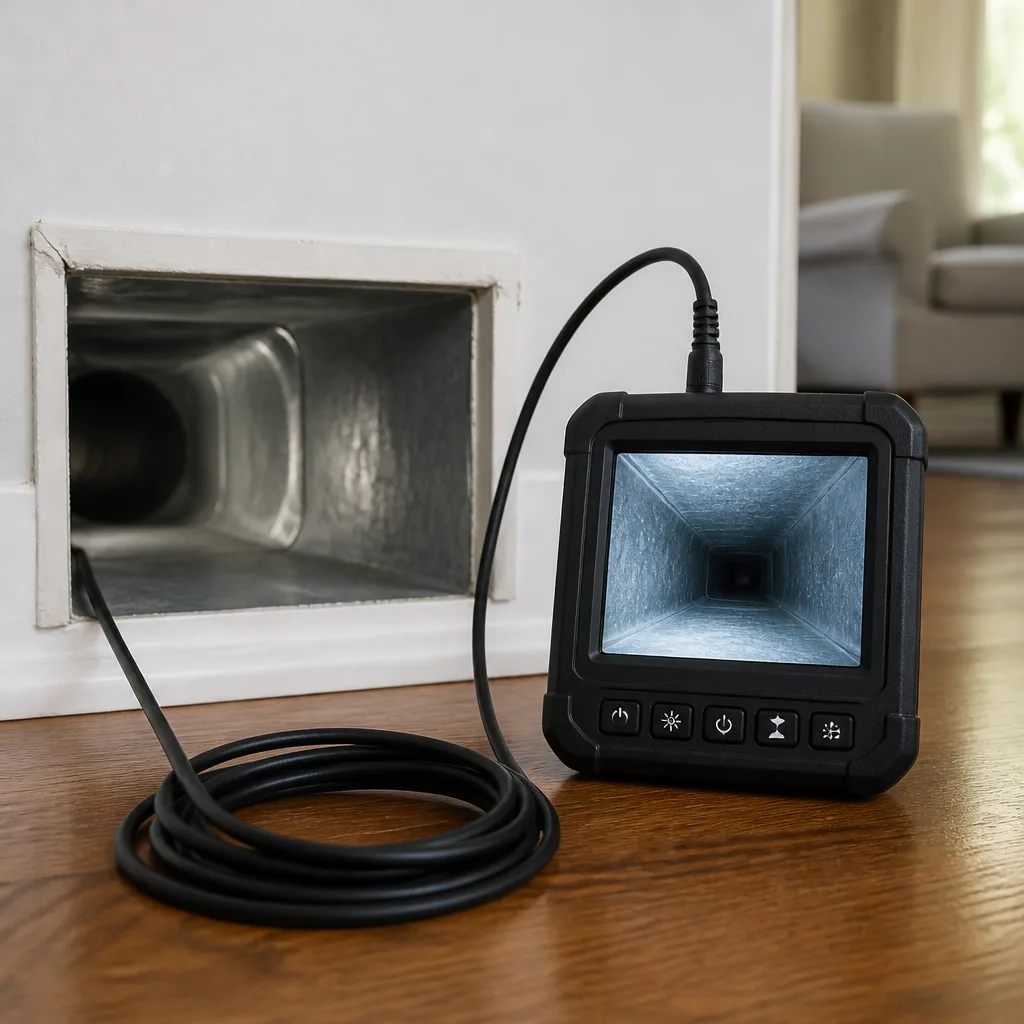
- Video inspection. A camera run through the ducts shows buildup, moisture, damage, and debris in areas you cannot see from the register. At Linden Air Duct Cleaning, a camera inspection is part of how we determine what a duct system actually needs, rather than assuming every home requires the same full cleaning.
How to Keep a Duct Condition Log That Actually Helps
Most homeowners who call a duct cleaning company in Los Angeles describe their problem from memory, which is vague. For more guides & resources on preparing for service visits, see our blog. By contrast, a homeowner who hands a technician a simple log has just cut the diagnostic time in half and increased the odds that the technician finds the actual issue rather than just recommending a full cleaning by default.
Here is the simple format we recommend. It’s designed to take under two minutes per entry and to give a professional exactly what they need:
- Date and general weather context. Example: “Aug 14, Santa Ana winds started two days ago.” This tells the technician what environmental conditions were in play.
- Filter status. New, loaded, or needs replacement. Note the MERV rating and brand if you have it.
- What you observed. One or two sentences. Specific observations only: “Return grille in hallway has visible gray dust coating. Two supply registers in bedrooms show dark streaks.”
- Any odors. Location and character: “Musty smell strongest at register in guest bath, only when AC runs.”
- Any changes from the previous check. This is the most valuable line because it gives a timeline of progression. “Dust on hallway return grille is noticeably heavier than last month.”
A log like this, kept for even three or four months, gives a duct professional the equivalent of a medical history. It tells us whether the issue is new or chronic, localized or systemic, environmental or mechanical. It also protects you from being sold a service you don’t need, because the evidence leads the conversation instead of a sales script.
For homeowners who prefer a physical document, print a simple table with columns for date, weather, filter status, observations, and odors. Keep it near the air handler or on the refrigerator. Photograph each completed page as a backup.
Common Mistakes to Avoid
- Treating a dirty filter as the whole story. A filter that loads up quickly is a symptom, not a diagnosis. If you’re replacing filters every two weeks in a Los Angeles home without pets, you likely have duct leakage pulling in unfiltered attic or wall-cavity air, and a new filter won’t fix that.
- Ignoring one room’s specific symptoms because the rest of the house feels fine. Duct systems are interconnected, but localized problems are real. A single supply register with musty odor often means a localized duct issue that won’t spread evenly through the house, but it also won’t resolve on its own.
- Closing registers to save energy. Closing more than about 20% of your registers raises static pressure and forces air through the remaining leaked joints, pulling more dust and attic air into the system. This is a common habit in Los Angeles homes where one or two rooms get too much airflow and the answer is balancing, not blocking.
- Running the fan continuously during wildfire season without changing the filter. The “on” setting pulls smoke particulate through the filter around the clock. That’s good for air cleaning if the filter is fresh, but it loads the filter in days rather than weeks, and a loaded filter restricts airflow and stresses the blower.
- Using high-MERV filters in older systems without verifying static pressure. A MERV 13 filter in a 1990s system with undersized return ducting can reduce airflow enough to freeze the evaporator coil in humid coastal air. Higher MERV is not automatically better.
- Skipping the moisture check during June Gloom because it looks fine from the living room. Duct moisture problems develop in attics and crawlspaces, not in the living room. If you wait until you see a water stain on the ceiling, you’ve missed the early warning.
- Hiring based on price alone for duct cleaning in Los Angeles. The low-price duct cleaning ads that circulate in LA are frequently bait-and-switch operations. They book a job for a teaser price, then the technician arrives and claims the system needs a “deep clean” at three times the quoted cost. A written price before work starts is the single most effective protection against this, and it’s standard practice at Linden Air Duct Cleaning. If a company won’t put the price in writing before they arrive, that’s the end of the conversation.
When to Call a Professional
Most checklist findings are maintenance items you can address with a filter change or a vacuum. But some findings are not. Call a professional when you see visible mold growth on or inside registers or duct surfaces, when you have persistent musty odor that does not resolve with filter changes and cleaning, when you find rodent droppings or nesting material in the duct system, when you see separated or disconnected ducts in an accessible attic or crawlspace, or when your system has not been cleaned or inspected in more than five years and you’re seeing dust settle within days of cleaning.
If you decide the checklist has surfaced enough signs that a professional look is warranted, Linden Air Duct Cleaning offers free estimates in Los Angeles. Call (980) 447-2498 and we’ll walk through what you’re seeing before scheduling anything.
Frequently Asked Questions
Every 2 to 3 years for most Los Angeles homes, with the interval shorter if you live near a freeway, in a wildfire-prone area, have pets that shed heavily, or recently completed a renovation. Homes near the 405 or the 10 often accumulate dust faster than homes in quieter residential streets because vehicle particulate settles inside the duct system. The best evidence for scheduling is not a calendar; it’s your monthly checklist log. If the filter loads up in half the expected time, or dust reappears on surfaces within days of cleaning, you’re due.
A whole-system air duct cleaning in Los Angeles typically ranges from $350 to $650 for an average single-family home, depending on system size, accessibility, and the extent of buildup. Homes with long attic runs or multiple HVAC systems fall higher. Be wary of quotes under $200 for a whole-system cleaning; that price is almost always a bait to get into the house, with the final invoice landing far higher. Every Linden Air Duct Cleaning job gets a written price before any work begins, so the number you approve is the number you pay. For a precise quote, call (980) 447-2498.
Cleaning ducts removes accumulated dust, pollen, and other particulate that recirculates through your home every time the HVAC runs, which can reduce the indoor allergen load. But ducts are only one part of the indoor air equation. For allergy relief in Los Angeles, where pollen seasons stretch through much of the year, duct cleaning works best alongside regular filter replacement with an appropriate MERV rating and keeping windows closed during high pollen and Santa Ana dust days. A technician who promises duct cleaning alone will eliminate your allergies is overselling.
Cheap duct cleaning quotes in Los Angeles usually reflect one of three things: a technician paid by volume rather than by the job, equipment that lacks the negative-pressure extraction power to actually remove debris, or a bait-and-switch model where the low price is only the entry point. The difference between a $150 job and a $500 job is often the difference between a visual wipe-down of the first few feet of each vent and a full-system cleaning using professional-grade equipment like Rotobrush and Nikro systems, which we run at Linden. If a quote seems too low to reflect real labor and equipment, it is.
Yes, especially if the home is a resale. You have no reliable record of whether the previous owners ever cleaned the ducts, whether they kept pets, or whether they changed filters regularly. New construction also warrants a cleaning or at minimum an inspection, because drywall dust and construction debris routinely ends up inside duct runs during the build process. A video inspection before you get comfortable in the house is the most direct way to know what you’re breathing.
Ask for before-and-after photos of your own ducts. At Linden Air Duct Cleaning, we photograph the interior of your ducts before we start and after we finish, so you can see the difference for yourself rather than taking anyone’s word for it. You should also expect a written receipt detailing exactly what was cleaned. If a company refuses to show you photos of the work or can’t explain exactly what their process involves, that is a legitimate red flag. Our dryer vent cleaning in Los Angeles follows the same documentation standard.
The Bottom Line
A useful duct maintenance checklist for Los Angeles is not a static list of quarterly tasks. It is a seasonal rhythm that responds to Santa Ana dust, wildfire smoke, coastal humidity, and summer heat cycling. It distinguishes between what you can see with your own eyes and what requires a manometer, a camera, or a particle counter. It accounts for whether your home was built in 1962 or 2016, because those homes fail differently. And it produces a written log that turns vague complaints into specific evidence. Keep the checklist, log the findings, and when the evidence says call someone, call someone who puts the price in writing before the work begins. For a free estimate in Los Angeles, call (980) 447-2498 and speak to a live person, any hour of the day or night.
Written by Marcus Veale, Owner at Linden Air Duct Cleaning, serving Los Angeles since 2004.