
Last updated October 8, 2026
Whole-system duct and dryer vent check with before-and-after photos - you see exactly what came out of your vents
That "$99 whole-house special" is a bait ad - the real number appears once they are in your hallway, or the "clean" is a shop-vac at the register. We photograph the inside of your ducts before and after instead.
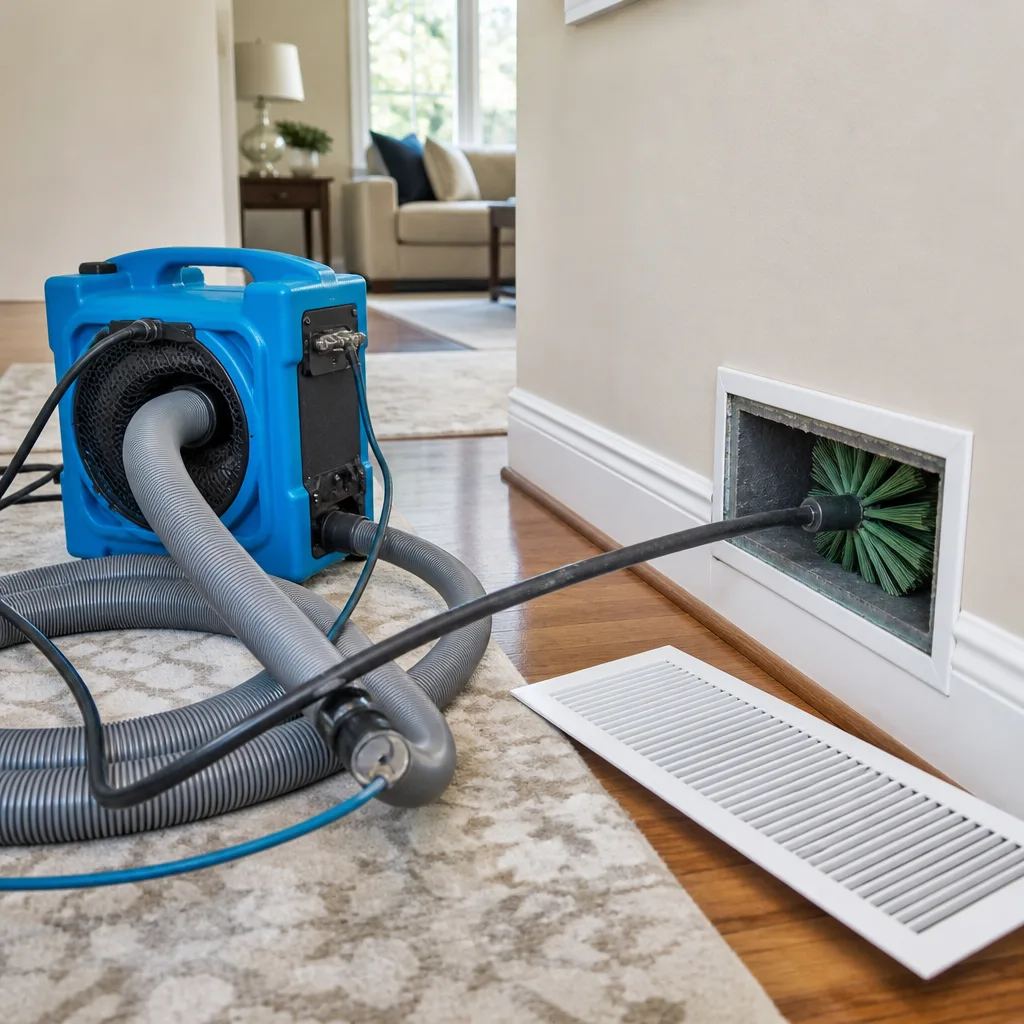
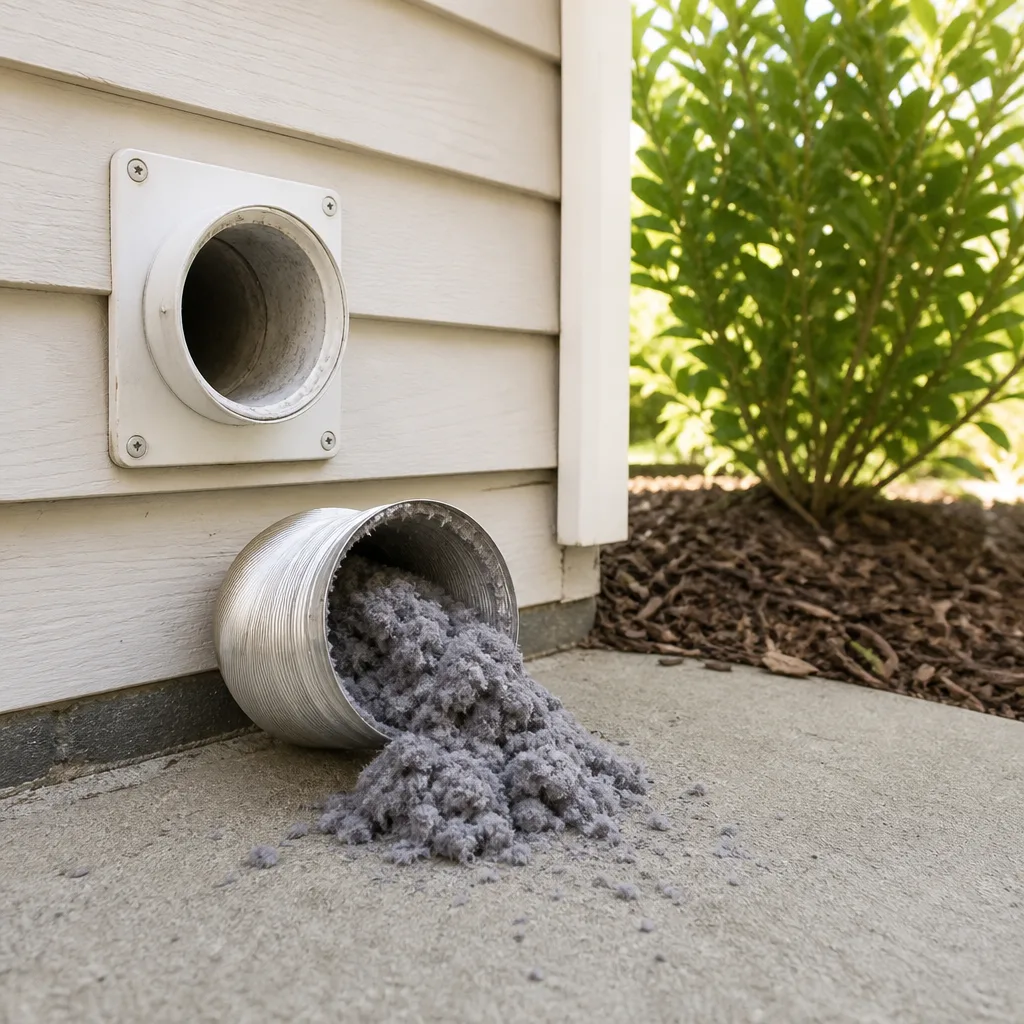
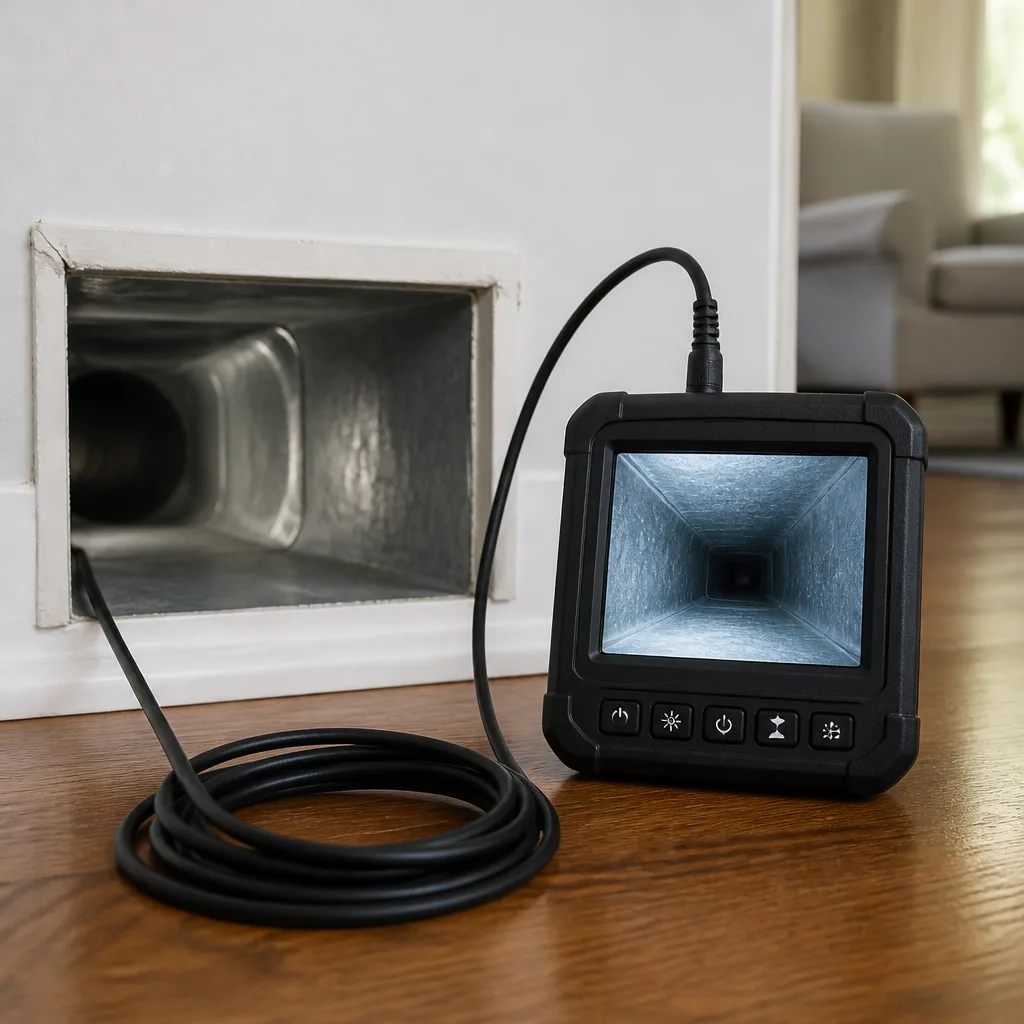
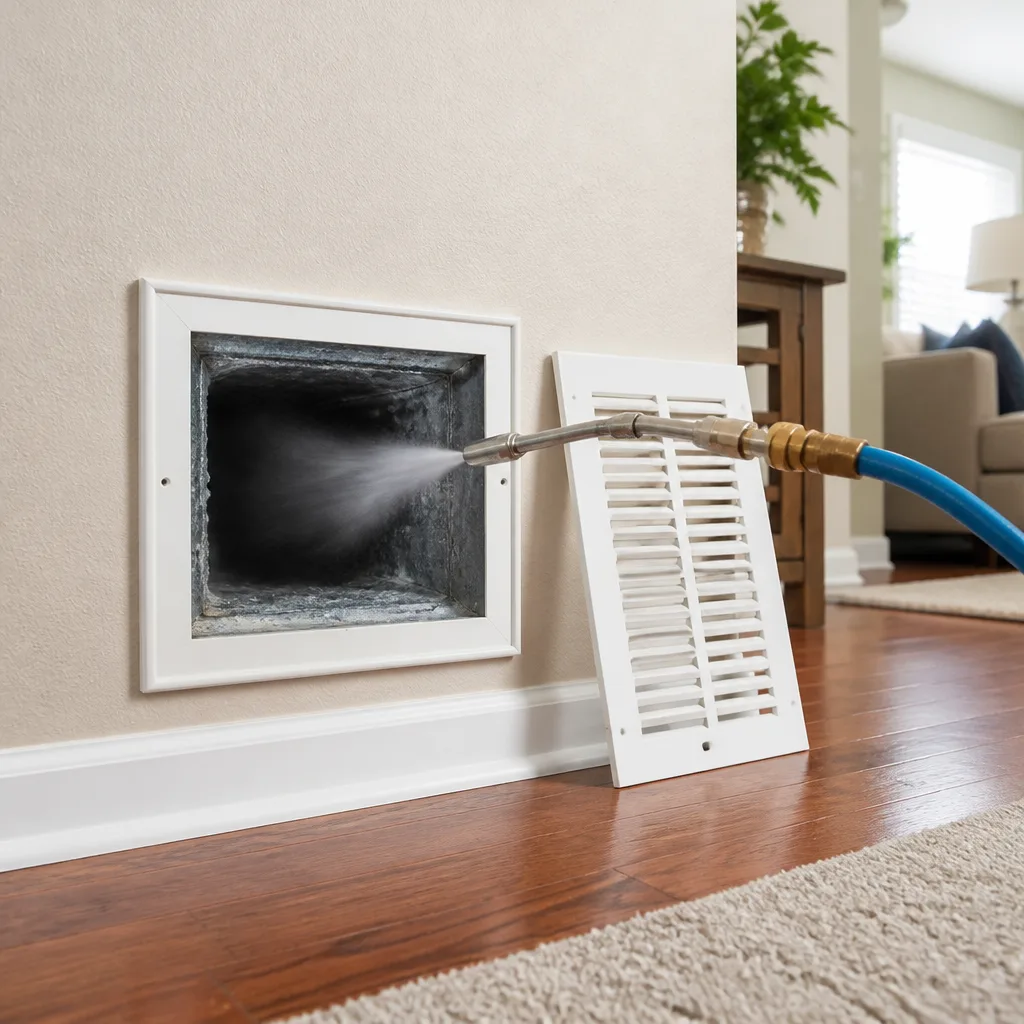
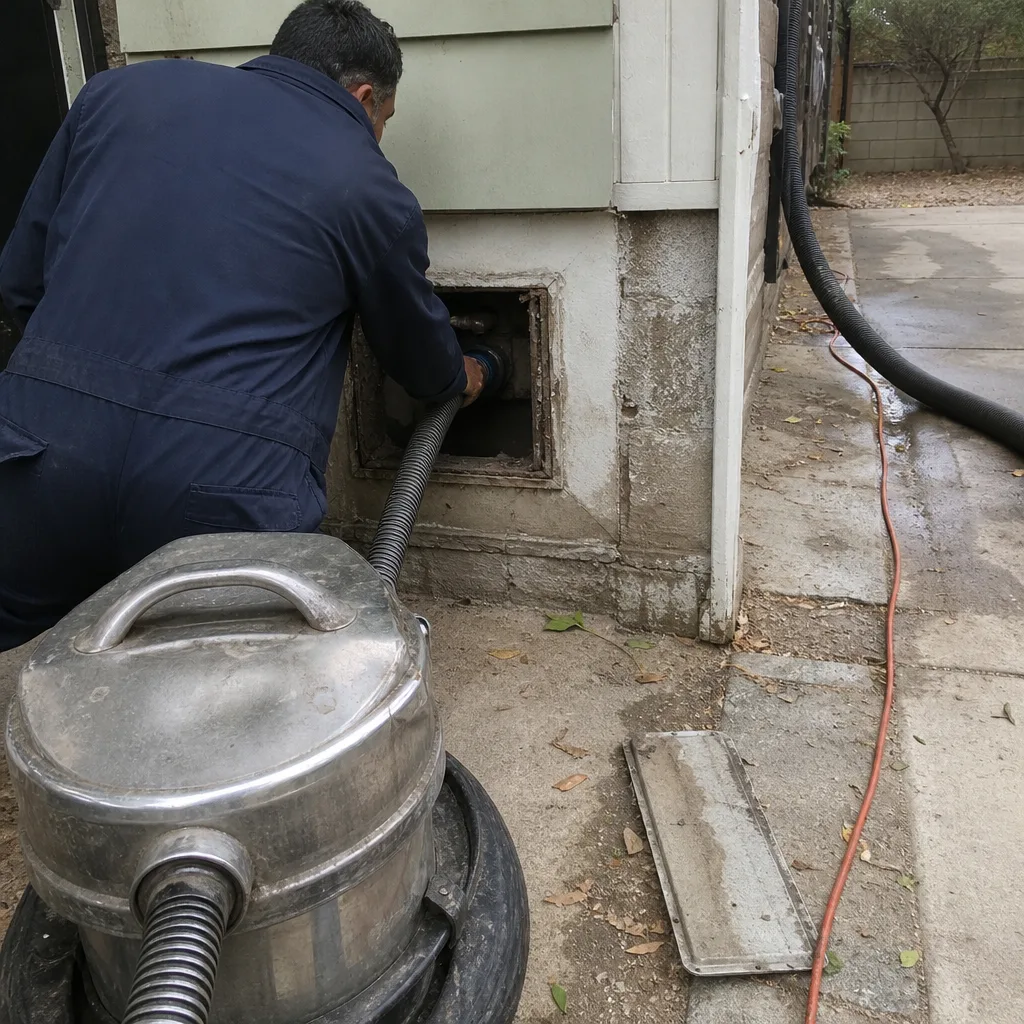 Before
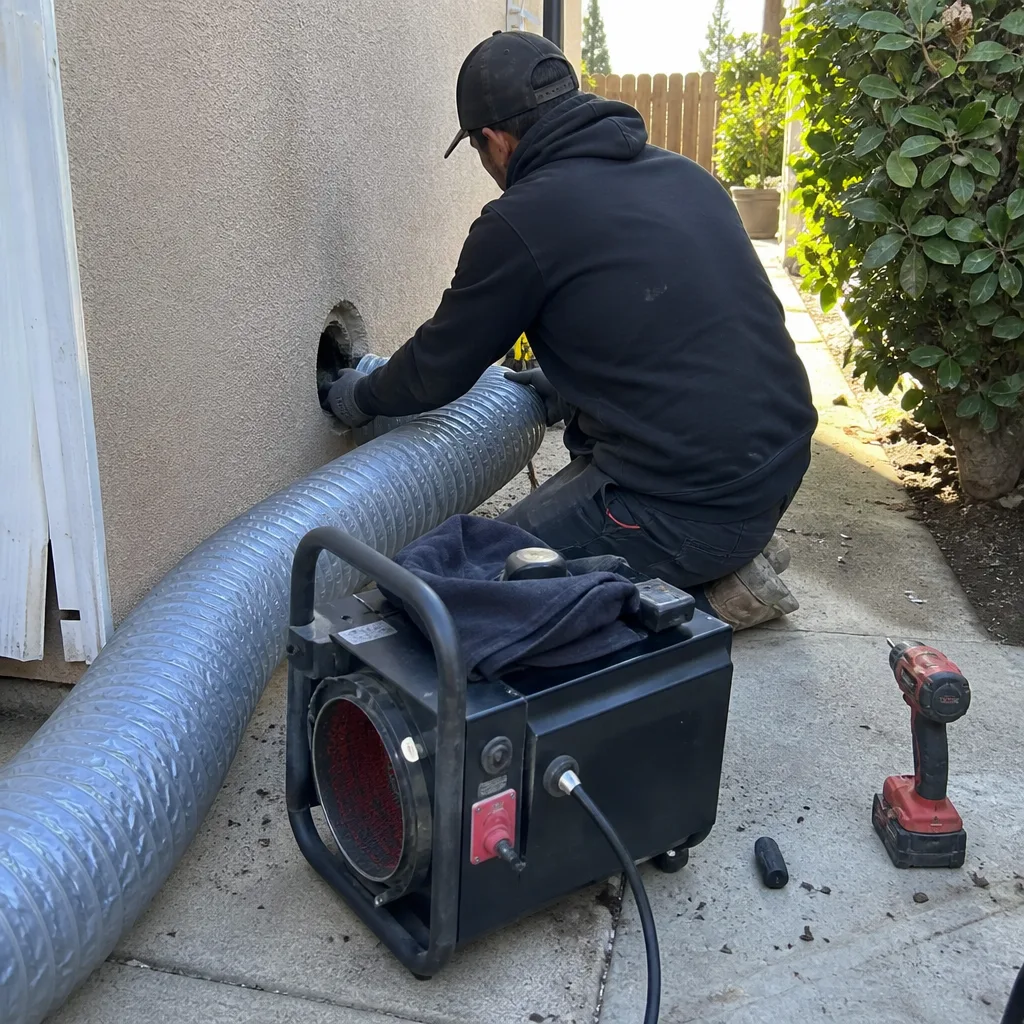 After
After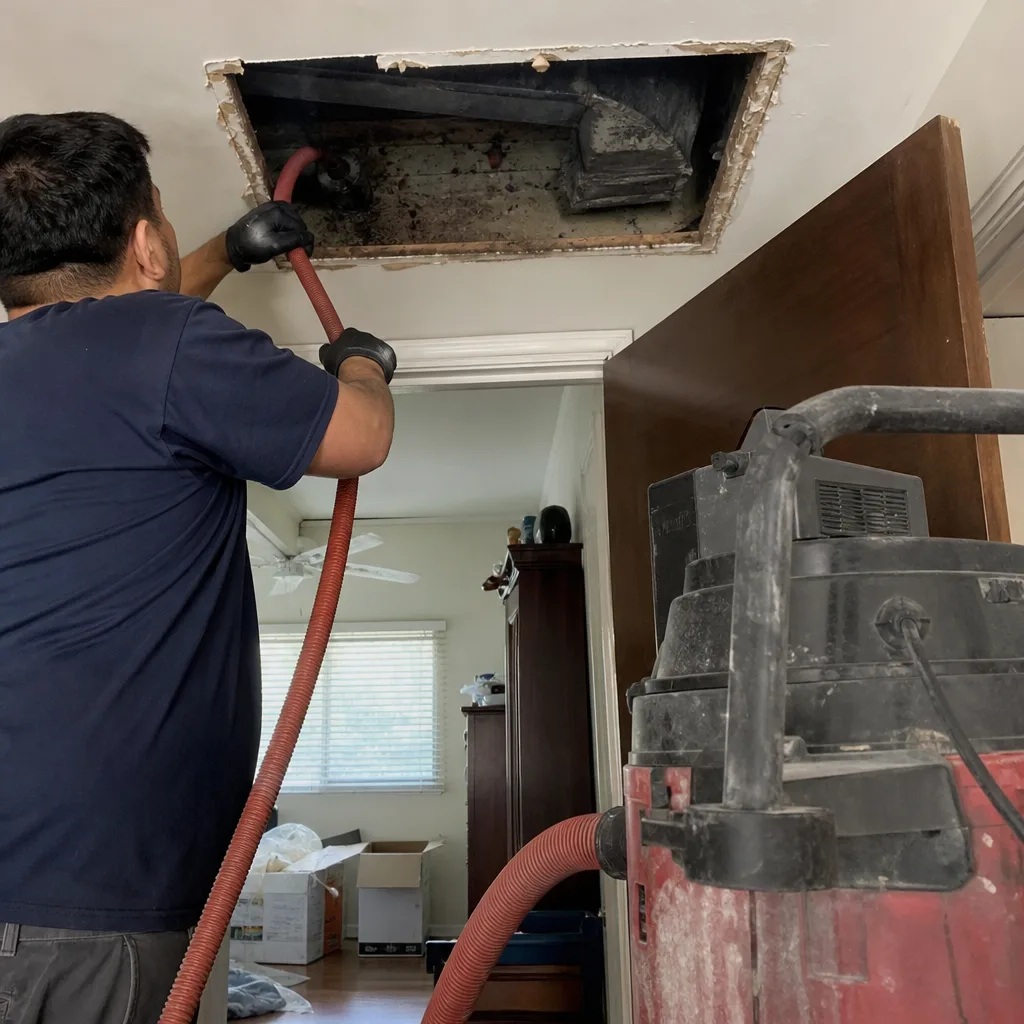 Before
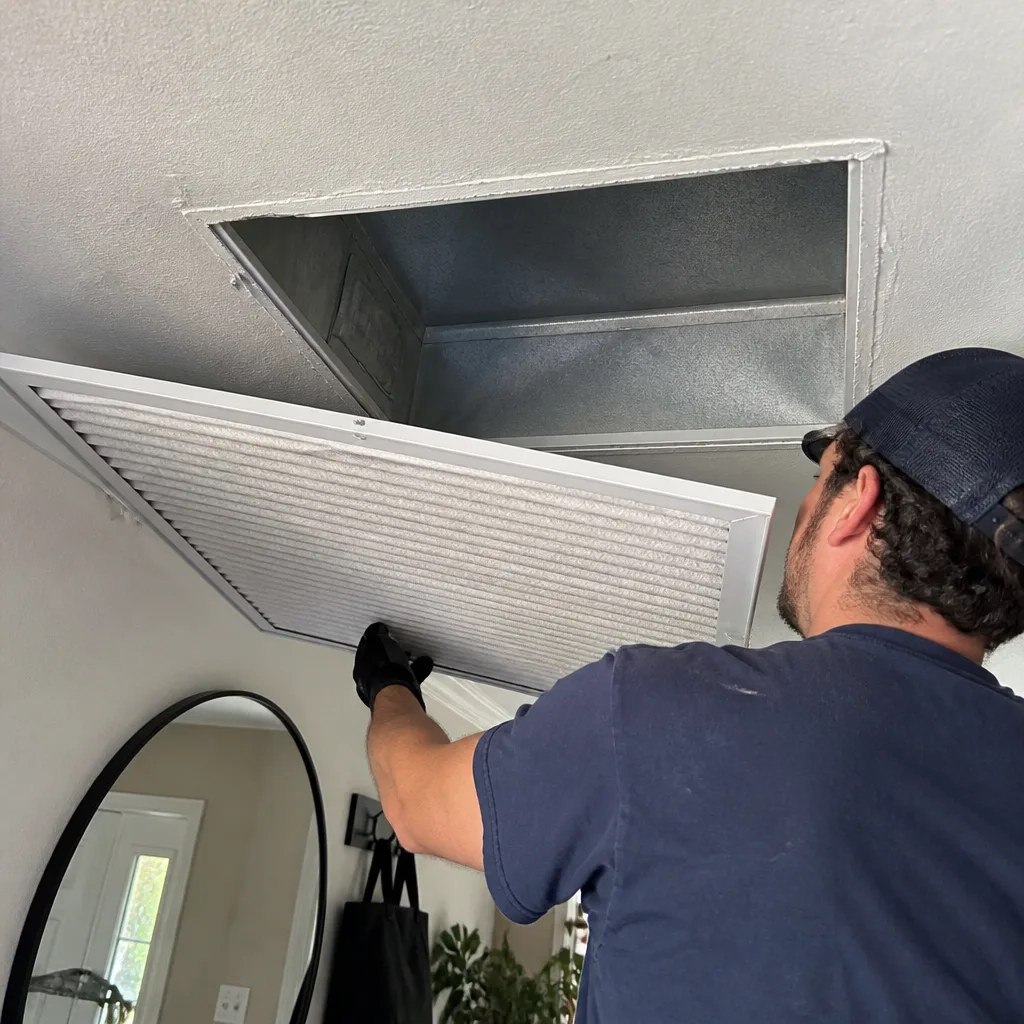 After
After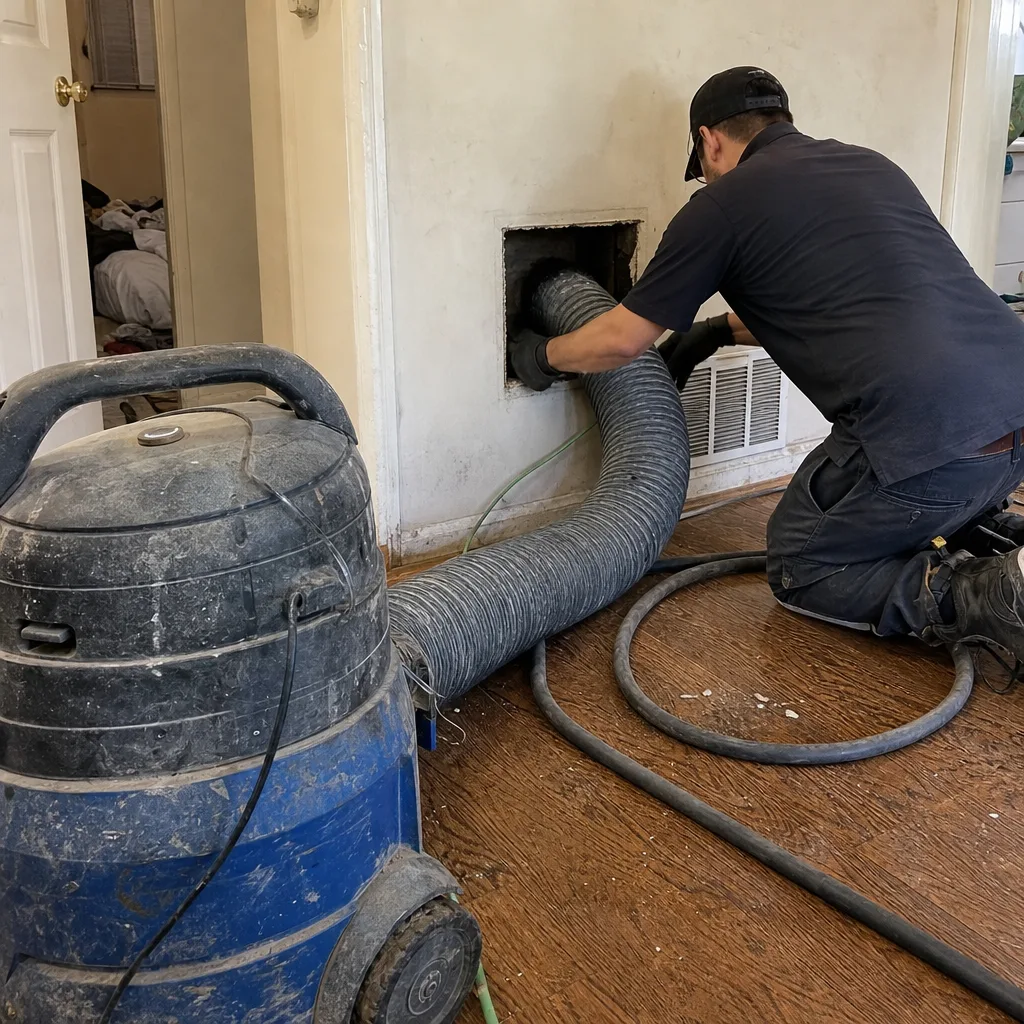 Before
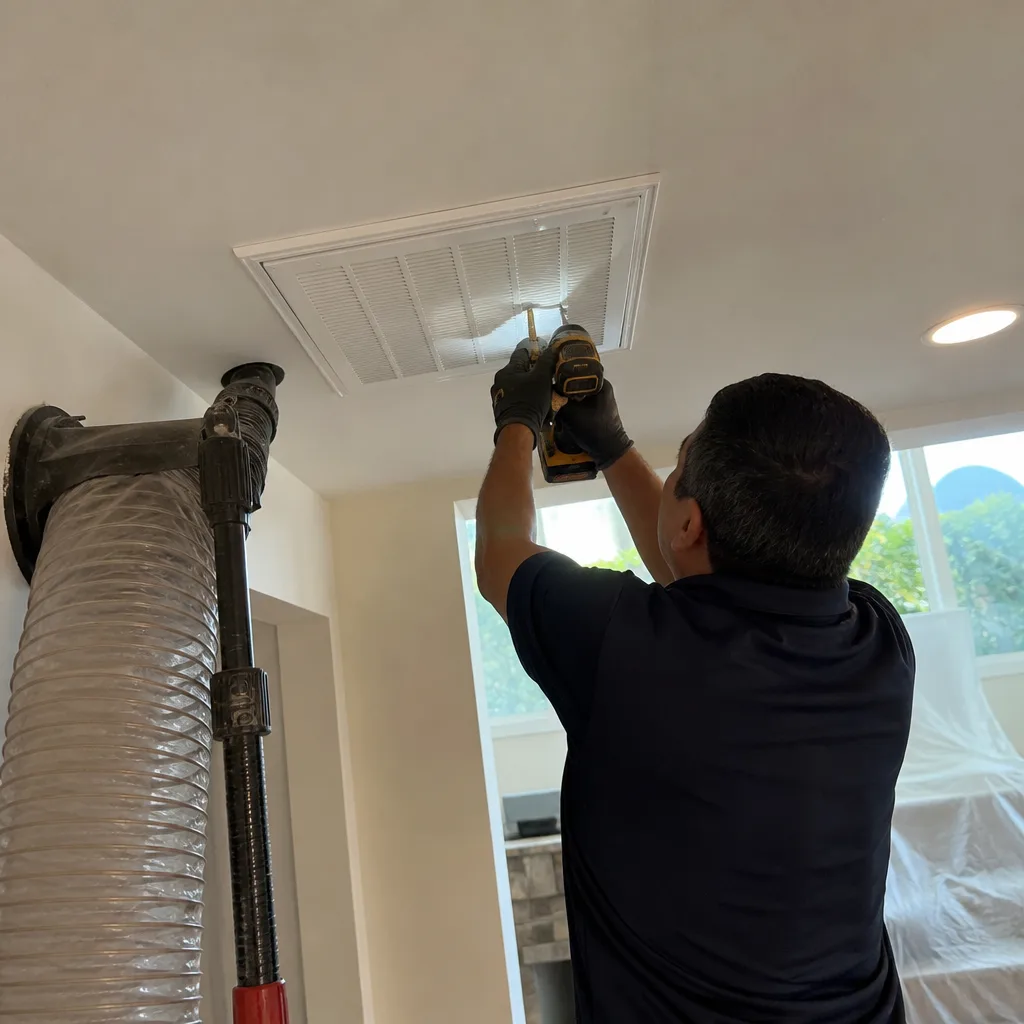 After
AfterAir Duct Cleaning Troubleshooting: Common Problems and How to Fix Them
If your home smells musty two weeks after a duct cleaning, the most likely cause isn’t your ducts. It’s a drip pan or evaporator coil that was never touched, and you may have paid for a job that missed the actual source entirely. This guide walks through the most common post-cleaning complaints we hear from homeowners across Los Angeles, from persistent dust in Sherman Oaks to stale odors in Pasadena, and gives you a clear map to diagnose which problem you actually have. For related reading, see our Air Duct Cleaning Warning Signs Every Homeowner Should Know. You’ll learn how to separate a failed cleaning from a duct system that needs sealing or repair, what documentation to keep, and exactly what a legitimate company’s callback process should look like.
Quick Answer
Most air duct cleaning complaints fall into four buckets: persistent dust, lingering odors, reduced airflow, and higher energy bills. Each points to a different root cause, and most trace back to process failures during the cleaning, not problems inside the ducts themselves. Before calling a company back, document the symptoms with photos and dates, then use the symptom-by-symptom guide below to figure out whether you need a re-clean, a repair, or a second look at the HVAC unit itself.
Table of Contents
- Persistent Dust After Cleaning: What It Actually Means
- Lingering Odors: Separating Ducts, Coils, and Drip Pans
- Reduced Airflow: Blockage, Leak, or Both?
- Higher Energy Bills After a Cleaning: What Changed
- Re-Cleaning vs. Sealing vs. Repair: Knowing the Difference
- Documentation Steps Before You Call Back
- What a Legitimate Callback and Remediation Process Looks Like
- Common Mistakes to Avoid
- When to Call a Professional
- Frequently Asked Questions
Persistent Dust After Cleaning: What It Actually Means
You paid for a duct cleaning. Two weeks later, the same gray film is back on your bookshelf. Frustrating, yes, but the cause is usually identifiable within ten minutes of looking at the right spot.
Persistent dust within weeks of a cleaning generally means one of three things: the return-side ducts were never fully cleaned, the system has a breach pulling attic or crawlspace air into the ducts, or the cleaning equipment couldn’t reach the full duct run. In Los Angeles, where many homes built before 1990 have return-air pathways running through wall cavities rather than dedicated ductwork, that third cause shows up more often than homeowners expect.
Here’s the diagnostic sequence we use:
- Check the return registers first. Pull one off and look inside with a flashlight. If the return duct walls are coated while the supply ducts look clean, the cleaning likely focused on the supply side. Dust keeps cycling because the return side keeps feeding it into the system.
- Look for a fresh dust pattern near specific registers only. If one room gets dusty faster than the rest, that specific branch line may have a separation joint or a torn flex duct. Dust from the attic gets pulled directly into that run.
- Confirm what was actually done. A legitimate cleaning report should itemize the return ducts, supply ducts, trunk lines, and plenums separately. If you only received a single-line invoice, you don’t have documentation of what was cleaned.
If the dust is uniform across the house and appeared gradually over several weeks, the more common culprit in Los Angeles is the HVAC filter setup. A filter that’s the wrong size, installed backward, or left in place for six months allows bypass dust to coat the system from the inside. We’ve seen this in homes throughout the Valley where a previous handyman installed a 1-inch filter in a slot built for a 4-inch media filter, leaving a gap around the frame that pulled unfiltered air into the return plenum.
The fix starts with confirming what was and wasn’t cleaned, then checking the filter bay and return-side integrity before scheduling another full cleaning. If the return side was skipped, the company should return and complete it at no charge. That’s baseline professionalism, and in our experience, the companies that push back are the same ones that skipped it the first time.
Lingering Odors: Separating Ducts, Coils, and Drip Pans
This is the most common call we get from Los Angeles homeowners after a cleaning: “the musty smell is still there.” In the majority of those cases, the odor was never coming from the ducts to begin with.
The source of a persistent musty smell after duct cleaning is usually the evaporator coil, the drip pan beneath it, or microbial growth on the blower housing. None of those components are touched during a standard duct cleaning, which is why the smell doesn’t change. A competent Air Duct Cleaning is not the same as an HVAC component cleaning, and if the company didn’t explain that distinction before starting, you didn’t get the information you paid for.
Here’s how to isolate the source:
- Run the fan only, no cooling. If the smell appears, the source is inside the air handler, not the ducts. Ducts only carry air; they don’t create smells on their own. The odor is being picked up as air passes over the coil, blower, or drip pan.
- Switch the system to heat briefly. If the smell fades, condensation is involved, pointing to the drip pan or coil. In Los Angeles’s coastal humidity, drip pans that don’t fully drain breed odor within days, especially in older homes with slightly unlevel air handlers.
- Sniff a supply register directly with the system off. If the odor is strongest at the register rather than at the unit, the duct lining itself may have absorbed moisture from past condensation issues, or a section of flex duct may be sagging and holding water.
What does not fix a coil or drip pan problem is another duct cleaning. If a company suggests that, walk away. The fix is a coil cleaning, drip pan treatment, and often a condensate drain line flush, which is a different service with different equipment. Some companies use antimicrobial products from brands like Honeywell or Abatement Technologies when treating coils and pans, which helps prevent recurrence for a year or more in typical Los Angeles conditions.
Persistent odor that smells like damp cardboard rather than mildew can also indicate a duct breach pulling air from a musty crawlspace or attic. That points to a sealing issue, which we cover in the airflow section below.
Reduced Airflow: Blockage, Leak, or Both?
You expected the cleaning to improve airflow. Instead, the bedroom at the end of the hall feels weaker than before. Something changed, or something was never addressed.
Reduced airflow after a duct cleaning has three typical causes: a section of flex duct was left kinked or disconnected when registers were reinstalled, a significant leak was exposed once surface debris was removed, or the cleaning itself pushed debris into a section that was already partially blocked. The first step is identifying the pattern.
In homes across Los Angeles, from older mid-century builds in the Valley to newer townhomes on the Westside, we see the same airflow distribution issue: long branch runs lose pressure when any upstream leak exists. For a local perspective, read our Air Duct Cleaning Warning Signs: A Los Angeles Homeowner’s Reference Guide. Here’s the diagnostic sequence:
- Map the weak rooms. If one or two registers are weak and the rest are fine, the problem is local to those branch lines. A disconnected joint or kinked flex section is the likely culprit.
- Compare before and after. If airflow dropped system-wide after the cleaning, the cleaning process may have dislodged debris that is now compacted at a restriction point, or a return-side register was left partially closed.
- Check the basics yourself. Look at every return register and supply register the techs touched. A return vent left 50% closed, or a supply register pointed at a curtain, changes airflow noticeably. These are five-minute homeowner checks that save you a service call.
If the pattern points to a leak, the fix is sealing, not re-cleaning. Leaks in Los Angeles duct systems cost homeowners money in two ways: conditioned air leaks into an attic or crawlspace where it does nothing, and the low-pressure zone pulls in attic air, dust, and insulation fibers. We regularly find separation at the plenum connection and at register boots, both accessible and sealable with mastic and mechanical fastening. Duct sealing is part of air duct repair in Los Angeles, and a company that diagnoses a leak without trying to sell you a full system replacement is the one you want.
Airflow that is weak everywhere, on every register, may indicate a filter that is now too restrictive because it’s clogged with the dust the cleaning loosened. If you haven’t changed your filter since the cleaning, start there. It’s a five-dollar fix that resolves a surprising number of “the cleaning made it worse” calls.
Higher Energy Bills After a Cleaning: What Changed
A duct cleaning should not increase your energy bill. When it does, something was disrupted during the work, and the increase is a diagnostic clue, not a coincidence.
The most common cause of a post-cleaning energy spike is a return-side leak that was either created during the cleaning or exposed by it. In Los Angeles, where summer cooling runs from May through October, a return leak pulls 120-degree attic air into the system every time the AC runs. The system works harder to cool air that’s already hot, and the bill climbs accordingly. If your July bill is noticeably higher than last year under the same usage pattern, return-side integrity is the first thing to check.
Less commonly, a supply-side leak sends conditioned air into the attic. You’re paying to cool a space no one lives in. Supply leaks are harder to spot from inside the home because the effect is diffuse, but the energy signature is the same: longer runtimes, uneven room temperatures, and a bill that doesn’t match the thermostat setting.
A third possibility applies to older Los Angeles homes with original flex ductwork from the 1980s or 1990s. If that duct liner was brittle, the cleaning process can accelerate deterioration, and a section that was borderline before the cleaning begins leaking afterward. This is a material age issue, not a technician error, but a good company should have identified fragile duct sections during the inspection and flagged them before cleaning started.
If your bill is higher and airflow is unchanged, check the thermostat. A duct cleaning sometimes requires powering down the system, and thermostats don’t always come back to the same settings. A system running on “fan on” instead of “auto” increases electrical consumption even when heating and cooling aren’t needed.
Re-Cleaning vs. Sealing vs. Repair: Knowing the Difference
Homeowners waste money when companies blur the line between these three distinct services. Knowing which one you actually need means you can’t be sold the wrong one.
Re-cleaning is appropriate when the first cleaning was incomplete, poorly executed, or performed with inadequate equipment. Signs include visible debris remaining at the registers, dust resettling within days across the whole house, or a cleaning report that lists no verification steps. The fix is to have the work redone properly, which is why our Linden Air Duct Cleaning home service documentation includes before-and-after photos of the ducts themselves. If a company can’t show you what the inside of the duct looked like before and after, you have no proof any cleaning occurred.
Sealing is appropriate when the ducts are leaking, whether at the plenum connections, branch takeoffs, or register boots. Sealing uses mastic or foil tape applied to joints, plus mechanical fastening where sections have separated. In Los Angeles, the forced-air systems in most single-family homes lose 15 to 25 percent of conditioned air to leaks, and sealing recovers that loss. A cleaning cannot fix a leak, and a company that suggests re-cleaning as a solution to a diagnosed leak is either uninformed or padding the invoice.
Repair is appropriate when duct sections are crushed, torn, water-damaged, or separated beyond what sealing can address. This may mean replacing a section of flex duct, rebuilding a plenum connection, or replacing damaged rigid duct. Repair work is part of air duct repair in Los Angeles, and it should come with a written guarantee stating exactly what was replaced and what happens if it fails.
Documentation Steps Before You Call Back
The quality of the callback depends on what you bring to the conversation. A technician who arrives with context works differently than one who starts from zero.
- Take dated photos. Photograph the dust accumulation, the register condition, the filter, and any visible duct sections you can access in the attic or crawlspace. Phone timestamps create the timeline.
- Write down exactly when symptoms appeared. “Dust appeared within one week of the cleaning” and “odor started after the first heavy rain” lead to different diagnoses. Specificity matters.
- Keep the original invoice and any communication. The invoice should itemize what was cleaned. If it doesn’t, that omission is itself a finding.
- Test the system in different modes. Run fan-only, cooling, and heating briefly, and note which modes trigger the symptom. This isolates the source before the technician even arrives.
- Note which rooms are affected. One bedroom versus the entire upstairs floor points to entirely different causes.
Ten minutes of documentation saves you a diagnostic visit. It also tells you a lot about the company you’re calling back. A company that asks for your notes and photos before scheduling is working the way a professional works. A company that ignores your documentation and just rebooks the job may be running volume through a crew that will repeat the same incomplete process.
What a Legitimate Callback and Remediation Process Looks Like
Every company makes mistakes. The difference between a professional operation and a fly-by-night is what happens after the mistake is identified.
A legitimate callback process starts with a specific diagnosis, not a redo. The technician should be told what you’re experiencing, should arrive with your documentation in hand, and should verify the problem before any work begins. If the finding is a skipped section or an incomplete cleaning, the remediation is a re-clean of the missed areas at no charge. If the finding is a new issue, like a duct that separated after the cleaning, you should get a plain-language explanation of why it happened and a written price for the fix before any money changes hands.
This is where the difference between a rebate-mill cleaning company and a serious one becomes obvious. A company that stands behind its work has a standing guarantee. Ours is called the 365-Day Done Right Promise: if the work is not right, Linden makes it right, backed in writing on every job. That means a specific, dated commitment, not a vague “satisfaction guaranteed” slogan. It covers the work we performed, and we’re upfront about what it doesn’t cover: a new leak from a duct section we never touched, a failed component that’s unrelated to the cleaning, or an odor that was present before we arrived and isn’t affected by duct cleaning at all. If you’re calling a company back and they can’t tell you what their warranty does and doesn’t cover in fifteen seconds, that’s not a warranty, it’s a marketing line.
In Los Angeles, where the cost of a reputable whole-home duct cleaning typically runs from $450 to $900 depending on system size and accessibility, a company that’s genuinely accountable treats a callback as a cost of doing business, not an argument. We solve the issue, document what we did, and send you the photos. That’s the standard.
Common Mistakes to Avoid
- Calling a different company for the callback without documenting the first job. The new company has no idea what was done, and you’ll pay for diagnostic time that wouldn’t have been needed if you’d called the original contractor first. A professional fixes their own work; call the company you paid.
- Accepting “your ducts just need another cleaning” as an answer. If the first cleaning didn’t solve the problem, a second identical cleaning won’t either. The problem is either incomplete work, a leak, or an HVAC component issue, and none of those are fixed by running the same equipment through the same ducts.
- Ignoring the filter bay. In Los Angeles, where dust from wildfires and construction settles quickly, a clogged or ill-fitting filter causes more “cleaning didn’t work” complaints than any other single factor. Change the filter, check the fit, and look for gaps around the frame before blaming the duct work.
- Confusing a duct cleaning with an HVAC service. Duct cleaning addresses the pathways. Coil cleaning, drip pan treatment, and blower cleaning address the equipment. These are different services, different prices, and different outcomes. A company that bundles them should explain what it’s actually doing for the money.
- Waiting six months to call about a symptom that appeared within days. The longer you wait, the harder it is to connect the symptom to the work. Call when you notice it, with photos and dates in hand.
- Choosing the cheapest bid without asking what it actually includes. In Los Angeles, a $99 whole-house duct cleaning means someone is not cleaning your whole house. Ask what’s included, what equipment they use, and whether you’ll get verification photos. Brands like Rotobrush and Nikro are standard professional equipment; a company running a small shop vac and a brush drill is not performing the same service.
When to Call a Professional
Some problems are homeowner-diagnosable. Others need trained eyes and professional equipment. Call a professional when airflow drops suddenly after a cleaning, when an odor persists after you’ve checked the filter, or when dust returns within weeks despite a new, correctly sized filter. Also call when you see visible duct damage in an accessible attic or crawlspace: crushed flex, separated joints, or sagging runs where condensation can collect. In Los Angeles, where summer heat puts real strain on attic-installed systems, a small separation grows quickly into a significant leak. If you’re not sure what you’re looking at, Air Duct Cleaning in Los Angeles with a professional inspection gives you an honest answer, not a sales pitch. Linden Air Duct Cleaning offers free estimates in Los Angeles, call (980) 447-2498.
Frequently Asked Questions
In Los Angeles, a reputable whole-home air duct cleaning typically runs from $450 to $900, depending on system size, the number of registers, and accessibility of the duct work. Single-story homes with accessible attics fall on the lower end; two-story homes with tight crawlspaces run higher. Beware of quotes under $200, which generally mean the return side gets skipped or the “cleaning” is just a high-powered vacuum at the registers. Call (980) 447-2498 for an exact quote in writing, estimates are free.
The price difference usually comes down to three things: what’s included, what equipment is used, and whether the crew is trained, background-checked labor or day workers paid by the job. A cheap quote often means the return ducts are skipped, the equipment is a shop vac rather than a professional negative-pressure system, and there’s no before-and-after verification. The cheaper quote isn’t cheaper if it leaves the actual problem in place and you pay again to have it done right. Call (980) 447-2498 and we’ll show you what’s included line by line.
A professional duct cleaning includes verification: before-and-after photos of the inside of the ducts, taken with a camera probe at the registers and main trunk. If the company can’t produce those photos, you have no proof any cleaning occurred beyond what you can see at the register face. We provide photos of your ducts on every job, because you deserve to see what your money bought. Call (980) 447-2498 and ask us about our verification process.
For most Los Angeles homes, every three to five years is the honest interval, not the every-year schedule some companies market. Browse our more guides & resources for deeper maintenance guidance. You’ll know it’s time when dust accumulation on surfaces returns quickly after cleaning, when you can see debris at the register faces, or after major construction or wildfire smoke events that introduce particulate into the system. Homes with pets, heavy foot traffic, or nearby construction may need it more often. If a company pushes an annual plan automatically, ask what they’re seeing in your specific ducts.
You can change a filter, check register positions, and document symptoms. You should not climb into an attic in Los Angeles in July to reseal a duct joint, and you should never attempt to cut or re-tape duct work you can’t see clearly. Duct work in unconditioned spaces gets hot enough to make safe work genuinely dangerous, and a bad seal job leaks just as much as no seal at all. A professional brings the right material, the right access equipment, and the experience to confirm the fix holds.
The 365-Day Done Right Promise covers the work Linden Air Duct Cleaning performed. If the duct cleaning we completed does not hold up, if a repair we made fails within 365 days, we come back and make it right. It does not cover new problems that develop from causes unrelated to our work, like a new duct separation from an unrelated issue or an HVAC component failure. What it means for you is a dated, written commitment on every job, not a vague assurance. Call (980) 447-2498 and ask us to explain it in full.
The Bottom Line
Most post-cleaning complaints are fixable, but only if you diagnose the right problem. Persistent dust points to a skipped return side or a breach. Persistent odor points to coils and drip pans, not ducts. Reduced airflow points to a leak or a kinked run, not a need for another cleaning. Higher bills point to a return-side leak pulling attic air into the system. Document the symptoms, check the simple things yourself, and then call a company that gives you written pricing, verification photos, and a dated, specific guarantee. Los Angeles homeowners deserve that standard, and if your current company can’t meet it, Dryer Vent Cleaning in Los Angeles is a related service worth evaluating as part of a whole-system approach. Call (980) 447-2498 for a free estimate, and we’ll help you figure out what’s actually going on, with no obligation and no pressure.
Written by Marcus Veale, Owner at Linden Air Duct Cleaning, serving Los Angeles since 2004.