
Last updated October 8, 2026
Whole-system duct and dryer vent check with before-and-after photos - you see exactly what came out of your vents
That "$99 whole-house special" is a bait ad - the real number appears once they are in your hallway, or the "clean" is a shop-vac at the register. We photograph the inside of your ducts before and after instead.
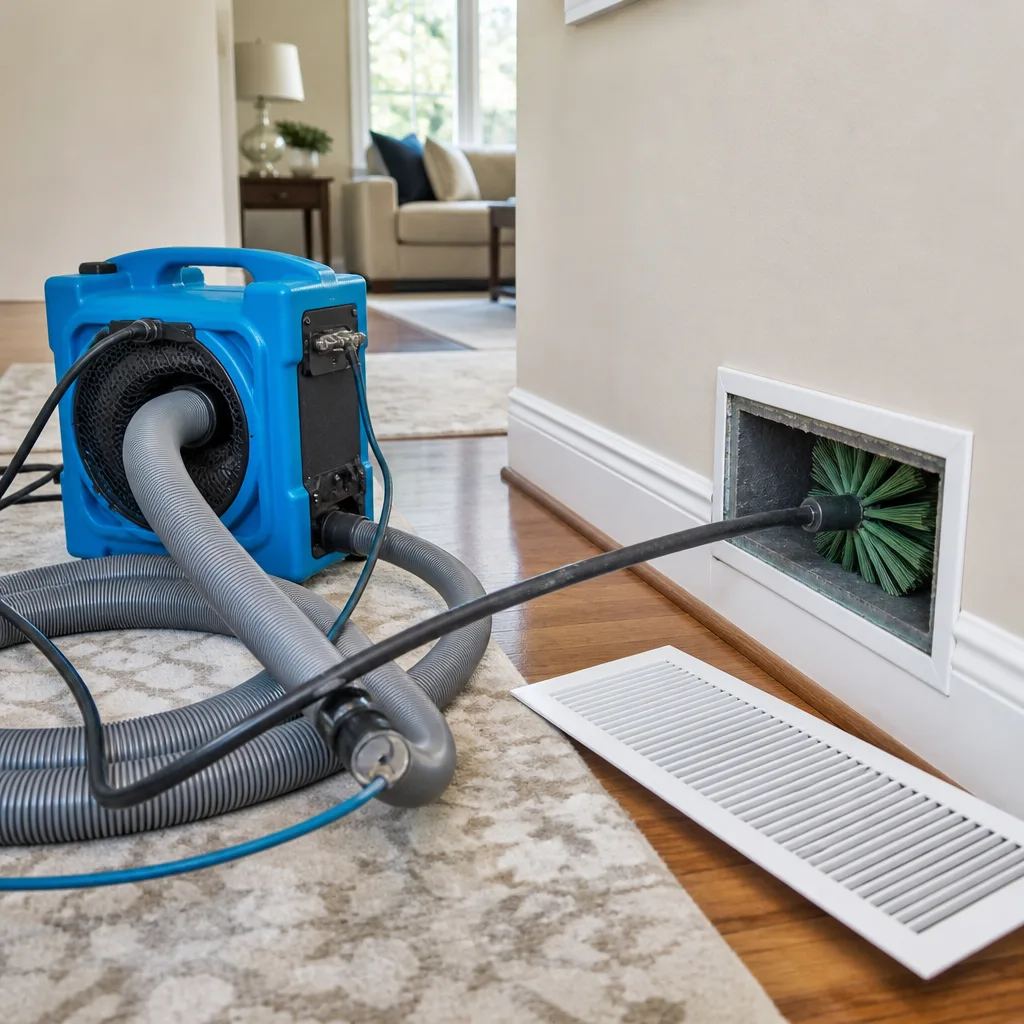
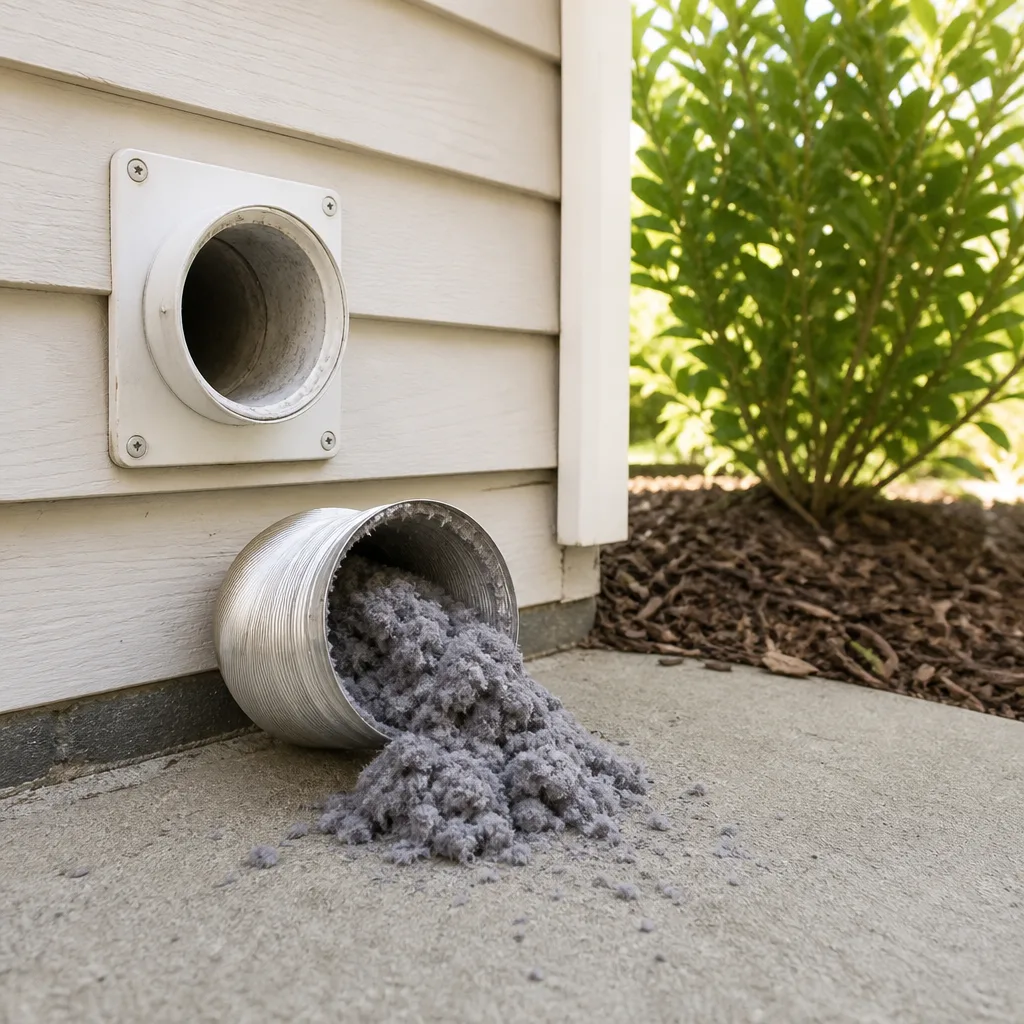
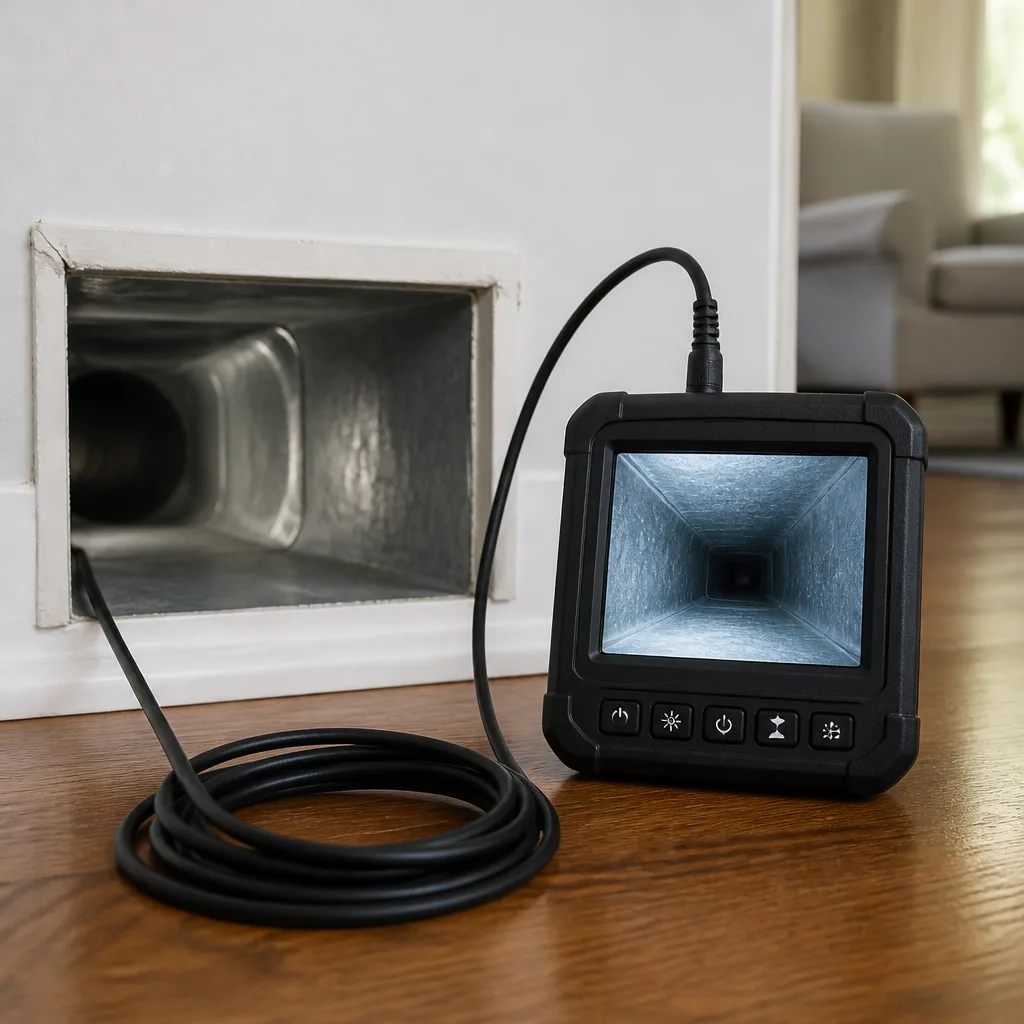
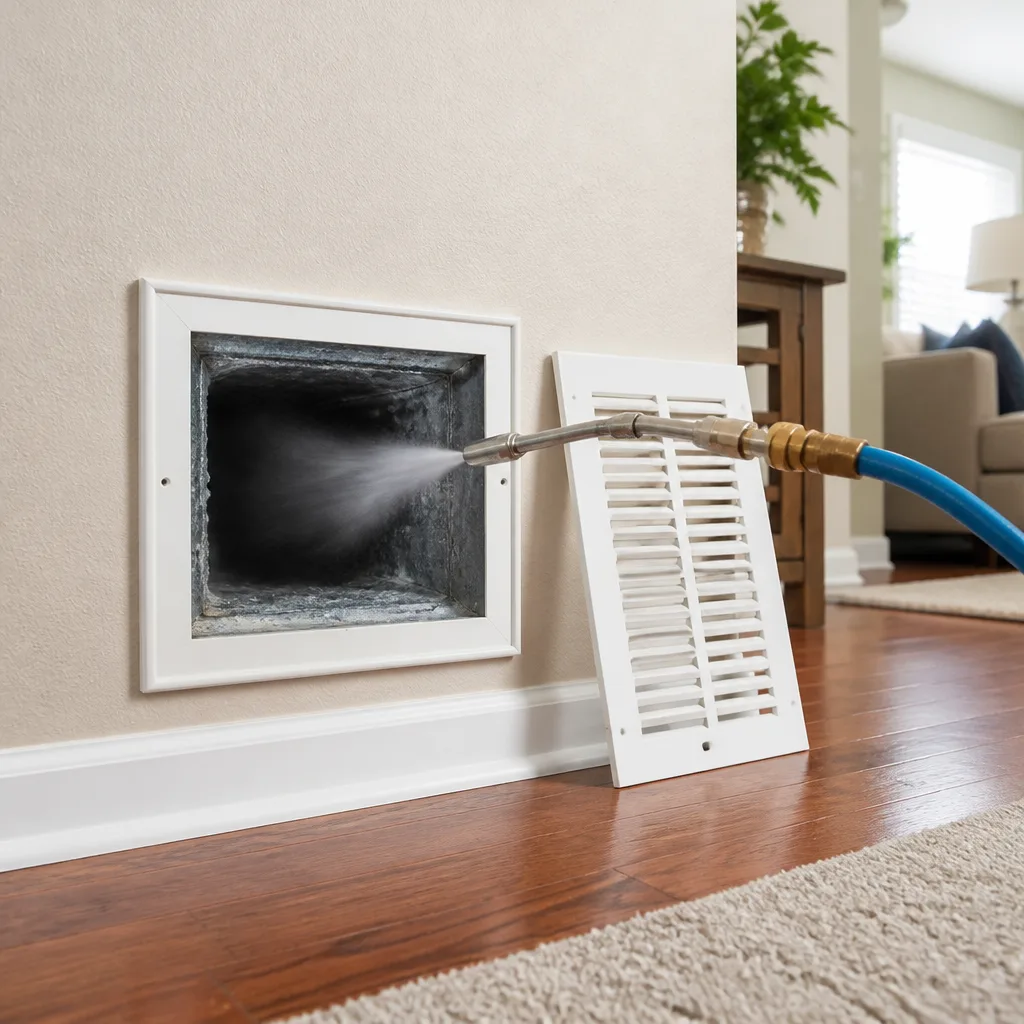
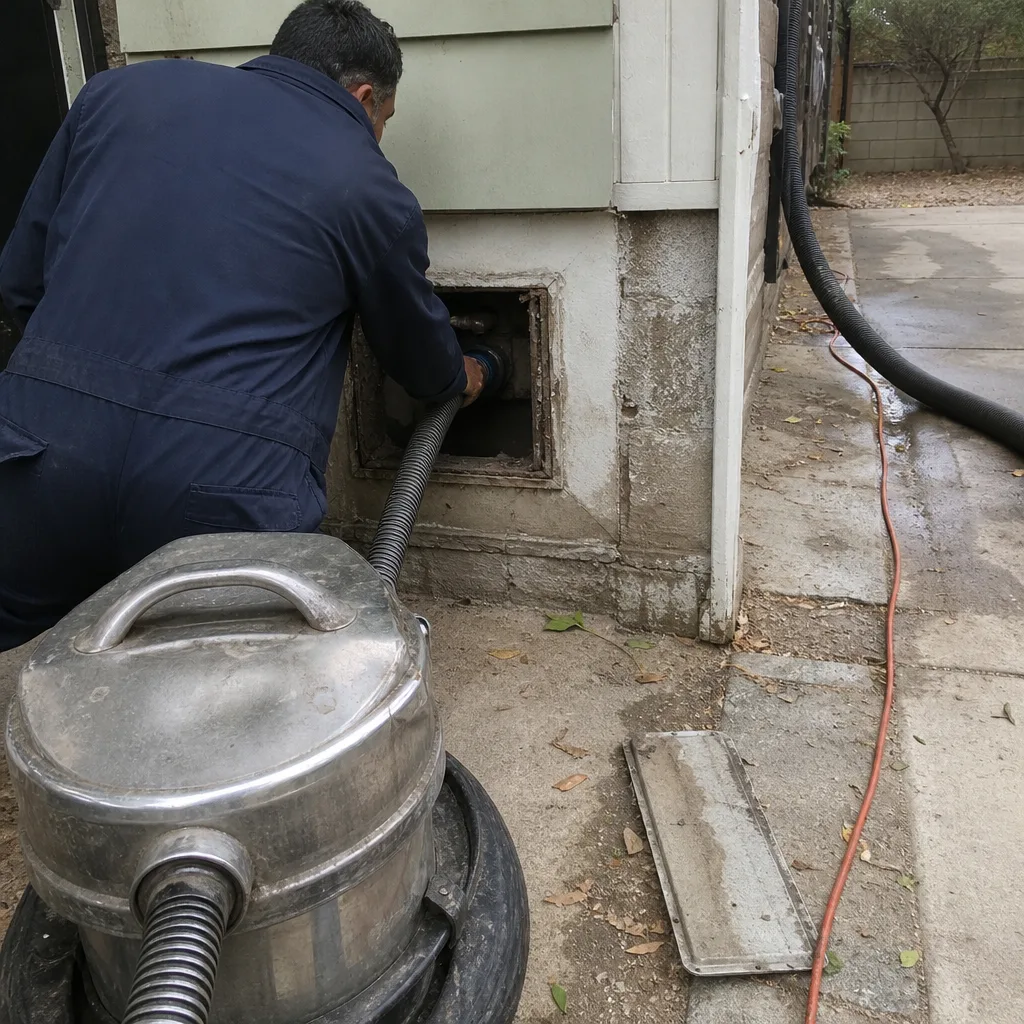 Before
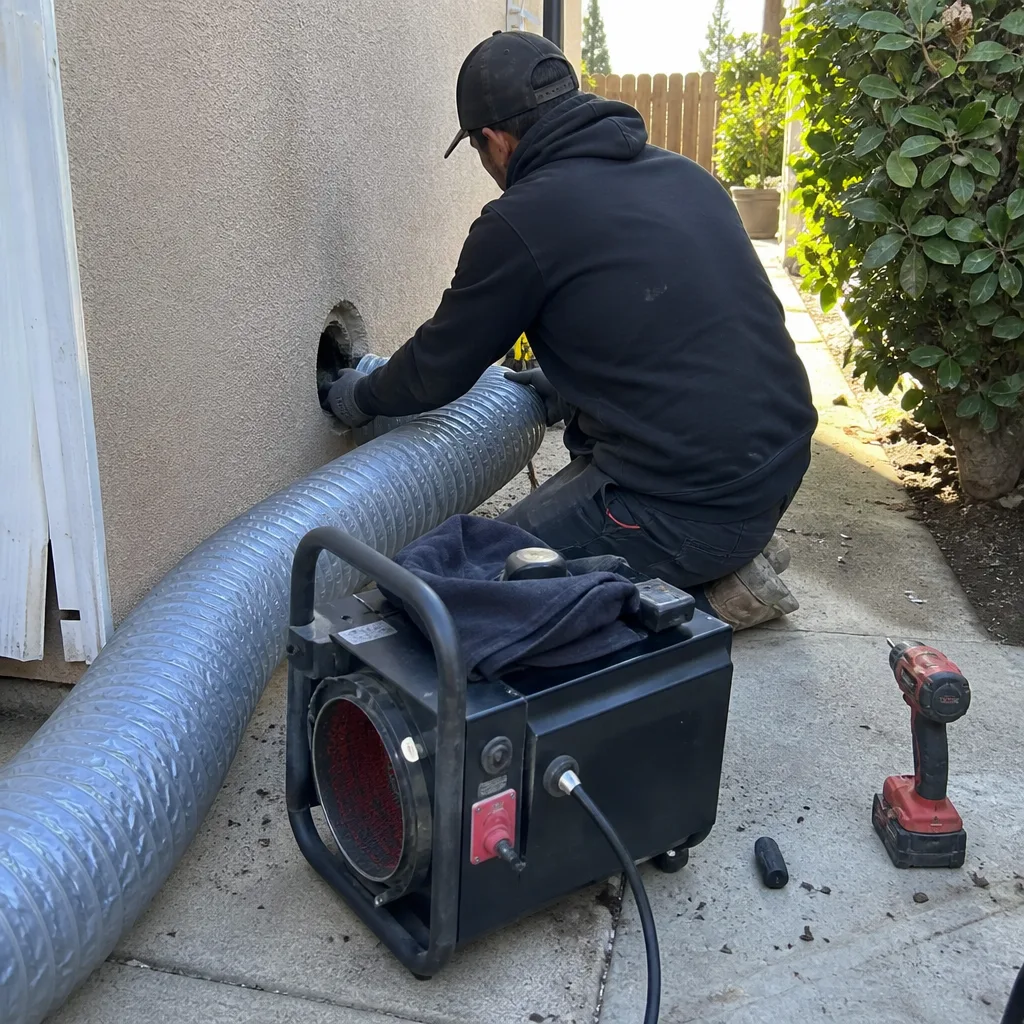 After
After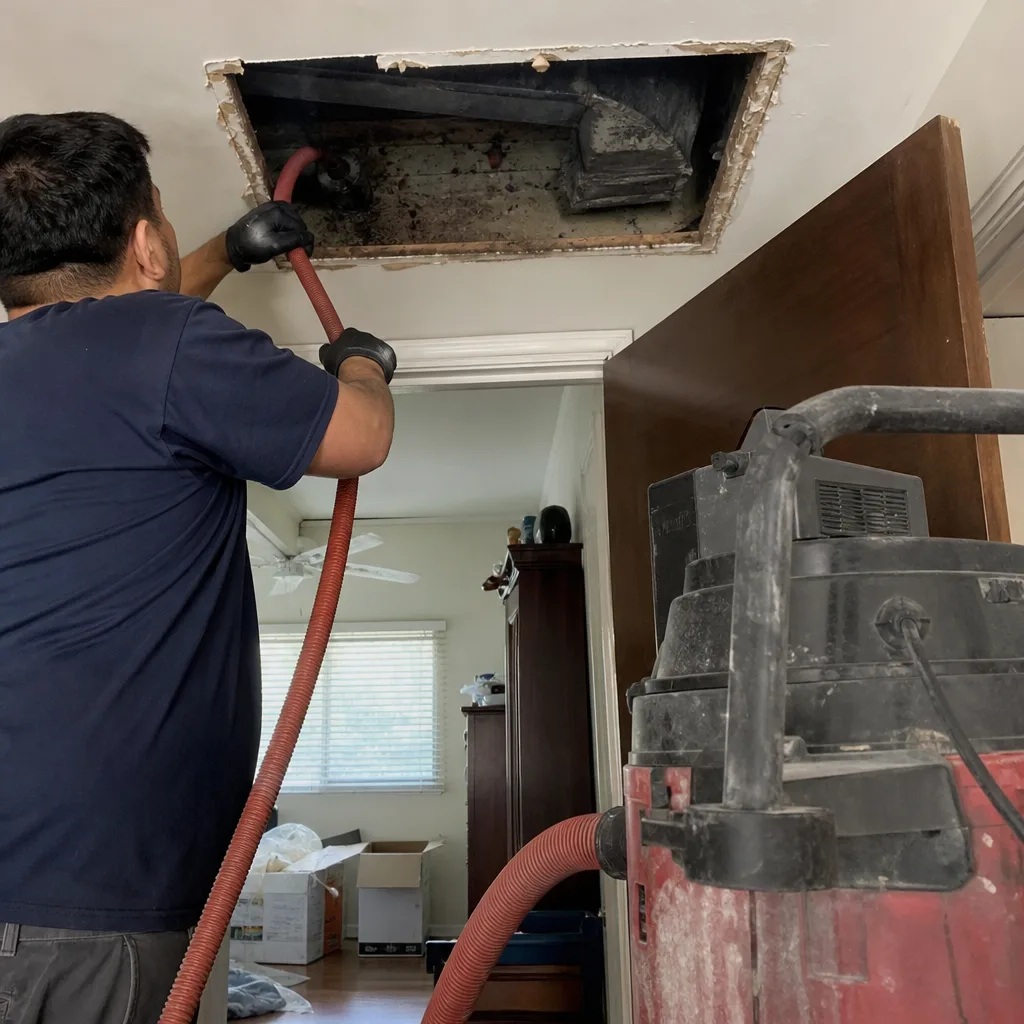 Before
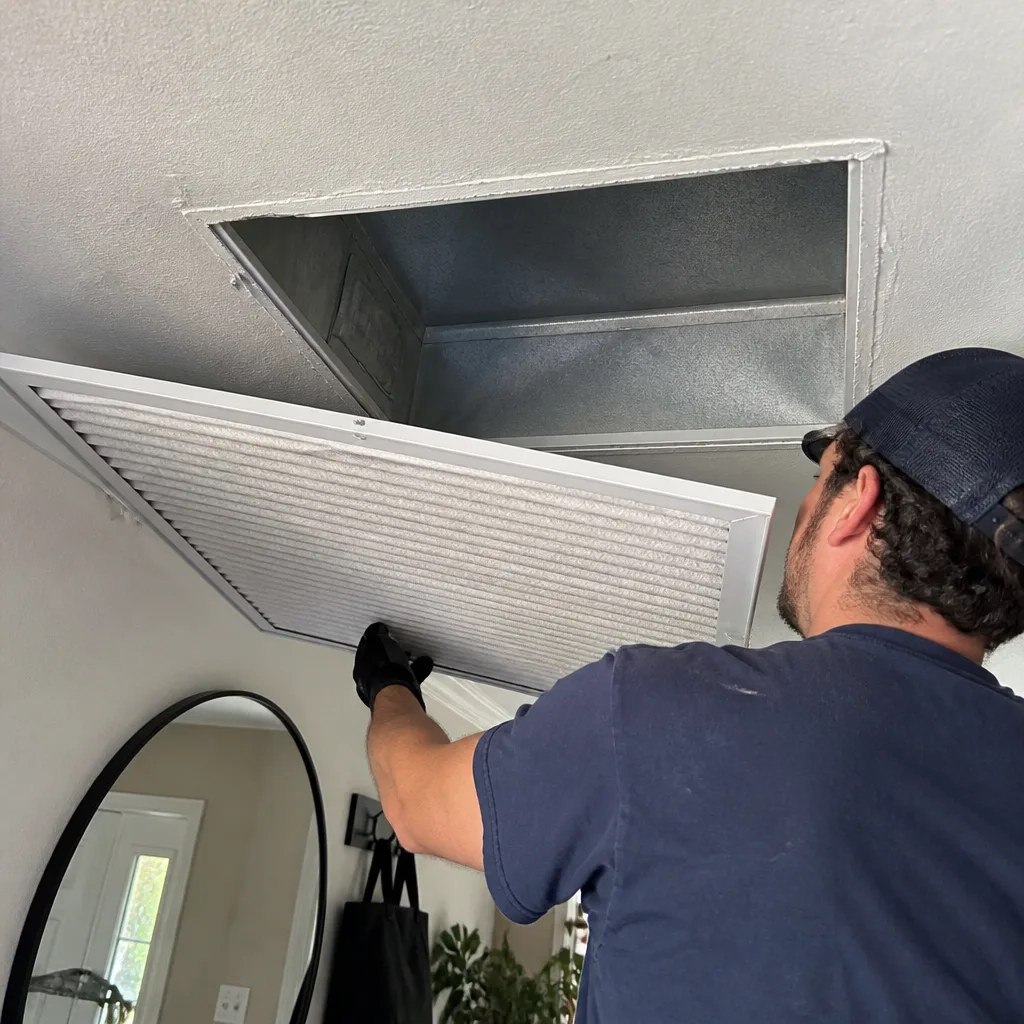 After
After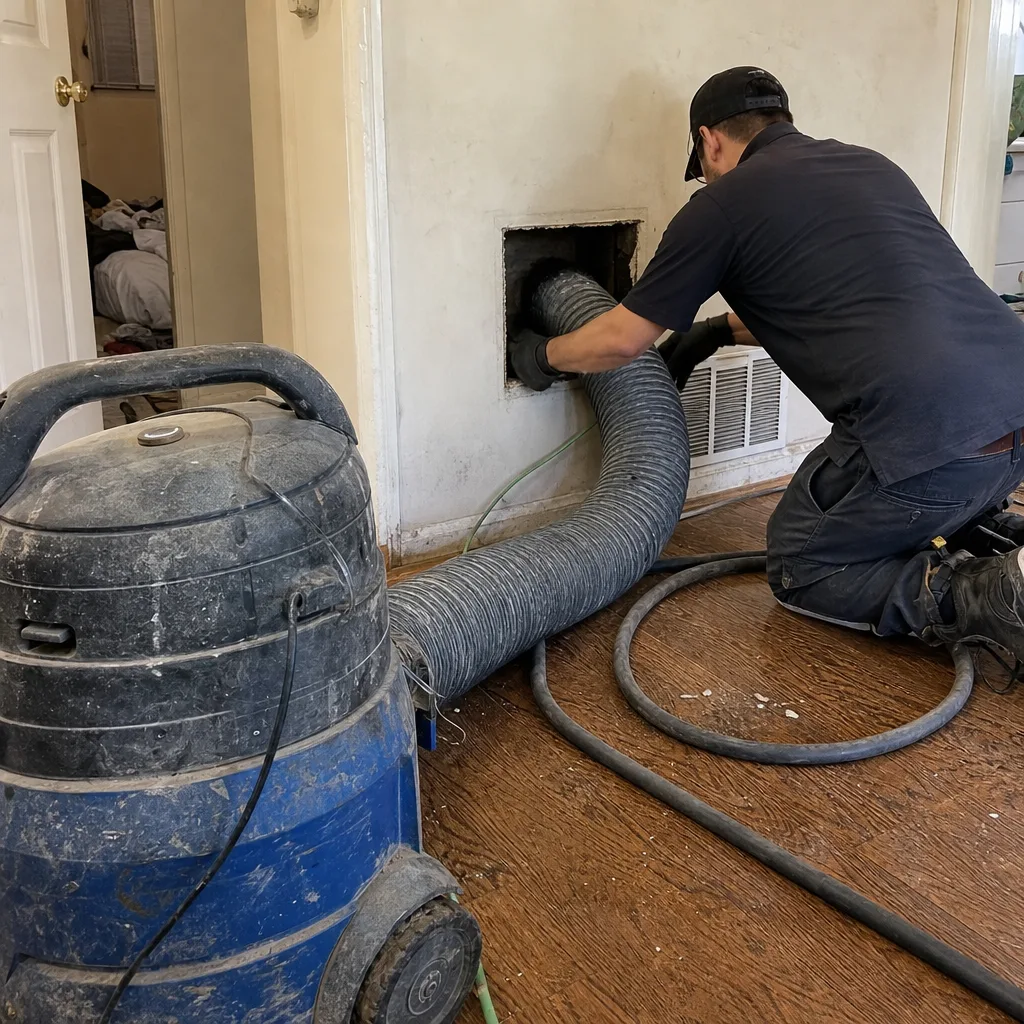 Before
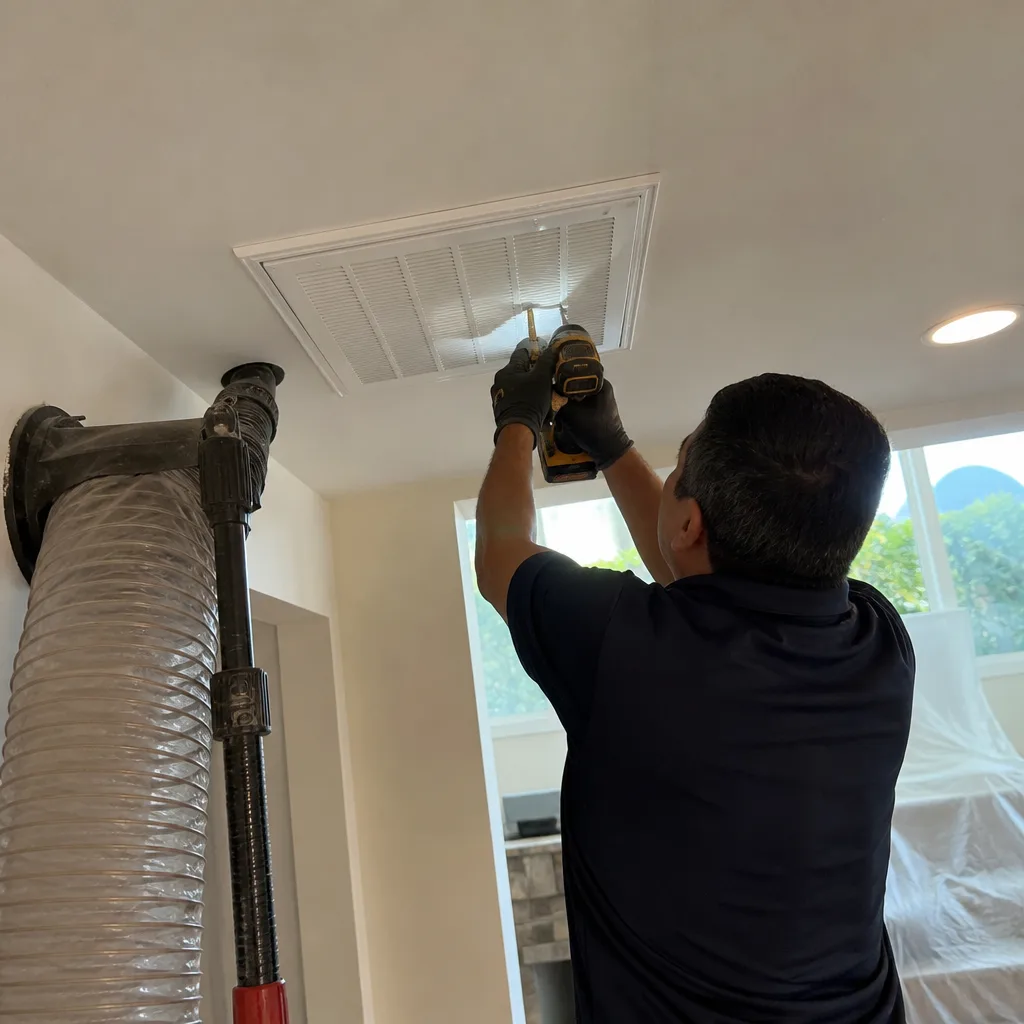 After
AfterAir Duct Cleaning Warning Signs Every Homeowner Should Know
Most Los Angeles homeowners only think about their air ducts when something visibly wrong appears at the vent register. By that point, the system has usually been compromised for 12 to 18 months. Ducts are the body’s circulatory system of your house, and like circulatory problems in the human body, the earliest symptoms show up where blood (or air) is being pushed to, not where the blockage sits. This guide walks through the Air Duct Cleaning Warning Signs: A Los Angeles Homeowner’s Reference Guide that actually matter, in the order they tend to appear, so you can catch duct contamination before it becomes a visible, expensive mess. Here’s what we’ve learned from inspecting thousands of Los Angeles homes since 2004.
Quick Answer
The most reliable early warning signs that your air ducts need cleaning are: furnace filters that clog or look dirty noticeably faster than usual, rooms that consistently run warmer or cooler than the rest of the house with no clear reason, a faint musty or stale smell that appears only when the HVAC system first kicks on, and household members experiencing more frequent allergy or respiratory symptoms while indoors. Visible dust or debris around vent registers is typically a late-stage sign, not an early one. Filter loading rate, room-to-room temperature drift, and symptom patterns tied to HVAC runtime are the indicators that show up first, often 12 to 18 months before visible contamination appears at the registers. In Los Angeles, post-wildfire season and renovation projects with shared ductwork should move Air Duct Cleaning from routine to urgent.
Table of Contents
- The Early-Stage Signals Most Guides Skip
- Filter Loading Rate: Your Canary in the Coal Mine
- Room-to-Room Temperature Inconsistency
- The Faint Musty Smell When the System Kicks On
- Visible Dust at Registers: The Late-Stage Warning
- Los Angeles-Specific Triggers That Make Cleaning Urgent
- Duct Contamination vs. HVAC Unit Issues: How to Tell the Difference
- The 30-Minute Home Walkthrough: What to Look For
- Common Mistakes to Avoid
- When to Call a Professional
- Frequently Asked Questions
- The Bottom Line
The Early-Stage Signals Most Guides Skip
Most air duct cleaning articles start with the obvious: dust clouds at the vent, rodent droppings, mold spots. Those are real signs, but they’re also late signs. By the time you see that, the contamination has been accumulating for months, sometimes longer. The earliest signals are subtle and easy to dismiss as something else. They include: your furnace filter getting dirty faster than the replacement schedule suggests, rooms that don’t hold temperature the way they used to, a faint smell when the system cycles on that fades within a minute, and allergy symptoms that spike when the HVAC runs and settle when it doesn’t. Individually, any one of these can be written off. Together, they form a pattern that points directly at the ductwork.
Here’s the key insight most guides miss: your ducts are the last part of the system to show visible signs because they’re the part with the least visual access. The interior of a supply duct can be lined with dust, pet dander, and construction debris and you’ll never know it from looking at the outside. What you can see is the effect it’s having on the air coming out. The filter works harder. The blower works harder. The air carries a faint odor. Those are the signs that appear first, and they’re the ones homeowners most often attribute to something else entirely.
Filter Loading Rate: Your Canary in the Coal Mine
If there’s one warning sign that deserves more attention than it gets, it’s how quickly your filter gets dirty. A filter’s job is to catch airborne particles before they reach your HVAC equipment. When the ducts upstream of the filter are clean, the filter captures normal household dust at a predictable rate. When the ducts are loaded with accumulated debris, the air moving through them picks up that debris and carries it to the filter far faster. The result is a filter that looks visibly dirty two or three weeks after you install it, when it used to last two or three months.
Now, filters naturally load faster in certain situations: if you have dogs or cats that shed heavily, if you run the system more during a hot LA summer, or if you live near a busy road or construction area. But if none of those variables have changed and you’re suddenly changing filters twice as often, the dust is coming from somewhere. In our experience inspecting Los Angeles homes, a sudden spike in filter loading rate is the single most reliable early indicator of duct contamination. It’s a signal the system is sending you before the problem ever becomes visible at the register.
A simple test: note the date you install a fresh filter, then check it every two weeks. If it’s heavily discolored before the 30-day mark and your household situation hasn’t changed, that’s a sign worth acting on.
Room-to-Room Temperature Inconsistency
Every Los Angeles house has a warm room and a cool room. That’s normal. What’s not normal is when a room that used to hold its temperature suddenly doesn’t, or when the spread between the warmest and coolest rooms widens without explanation. Restricted airflow through dirty ducts changes how much conditioned air reaches each register. Rooms at the end of the longest duct runs are affected first because they’re already getting the least airflow. When the ducts load with debris, those rooms get even less. The air coming through them is also picking up heat or losing it as it passes through layered dust on the duct walls, so by the time it arrives, it’s less effective at doing its job.
This is one of the harder warning signs to pin down because temperature inconsistency has multiple causes: an undersized system, poor duct design, a failing damper, or a refrigerant issue. But when combined with other signals on this list, particularly accelerated filter loading, it strengthens the case for duct contamination. In our Los Angeles service area, we’ve seen this pattern countless times in older homes where decades of dust has reduced effective duct diameter. The fix, when contamination is the cause, is straightforward: clean the ducts and restore the airflow path. The Air Duct Cleaning in Los Angeles service we provide addresses this directly.
The Faint Musty Smell When the System Kicks On
This is a warning sign that almost every homeowner notices but few connect to the ducts. The system kicks on. For the first five or ten seconds, you smell something musty, stale, or faintly damp. Then it fades. Most people assume it’s just the normal smell of an HVAC system starting up. It’s not. What you’re smelling is air passing over accumulated dust, pet dander, and potentially microbial growth on the duct surfaces. When the system is off, that material sits undisturbed. When it kicks on, the first air moving through the duct picks up whatever has been sitting there and pushes it into your living space. After a few seconds, the air stream stabilizes and the smell recedes. That’s why it’s only noticeable at startup.
In Los Angeles, this issue is compounded by our humidity patterns relative to other parts of Southern California. Coastal areas of Los Angeles see marine layer moisture that can introduce enough humidity into ductwork to create the conditions where dust binds to surfaces more readily. That’s why the smell can be more noticeable in coastal homes than inland ones. If you catch this early, cleaning resolves it before it escalates into a full mold situation. If you wait, moist dust can consolidate into a more difficult problem that requires Air Duct Repair in Los Angeles to address fully.
Visible Dust at Registers: The Late-Stage Warning
If you see dust escaping from a register when the system turns on, or a film of gray dust building up on the wall or ceiling near a vent, you’re not looking at an early warning sign. You’re looking at the final stage of a problem that’s been building for a year or more. The dust you see at the register is only the dust that’s loose enough to be blown off the duct surfaces by the air stream. The denser, more settled accumulation stays behind. In other words, what you see is the tip of the iceberg. There’s usually significantly more inside the ductwork that isn’t yet mobile enough to reach the register.
This is the point where most homeowners finally call. It’s also the point where the system has been circulating that air through the house for months. The visible dust is a confirmation, not a discovery. If you’re at this stage, the cleaning is overdue and the system likely has more extensive buildup than a system caught at the filter-loading or musty-smell stage. In Los Angeles, where many homes run HVAC year-round, this stage often coincides with peak allergy season and homeowners mistake the dust for a seasonal issue.
Los Angeles-Specific Triggers That Make Cleaning Urgent
Certain situations in Los Angeles should move duct cleaning up your priority list regardless of what other warning signs you see. These are environmental and situational triggers specific to our region.
Post-wildfire season. If you lived in Los Angeles during any recent wildfire season, you know the smoke and ash that settle over entire neighborhoods. What many homeowners don’t realize is that ash particles don’t just land on patios and cars. They get pulled into the HVAC system through outdoor air intakes and settle inside the ductwork. That fine ash sits there and gets circulated through the house for months after the fires are out. If your neighborhood was exposed to wildfire smoke, even for a few days, that’s a legitimate reason to have the ducts professionally cleaned. The particles are fine enough to bypass the filter and accumulate throughout the system.
Renovation in any room with shared ductwork. If you’ve had drywall work, flooring replacement, or any construction that generated dust inside your home while the HVAC system was running, that dust is now in your ducts. Construction dust is abrasive and dense. It doesn’t just sit in the ducts; it recirculates every time the system runs. Swapping out a bathroom vanity might not warrant cleaning. A kitchen remodel or room addition almost certainly does.
New pest evidence near vents. If you’ve seen rodent droppings, heard scratching in walls, or found evidence of insects near your vent registers, the ducts may have become a highway or a home. Rodents in particular can nest inside ductwork, leaving behind droppings, urine, and nesting material. That’s not a routine cleaning situation; that’s a contamination issue that requires professional attention. Pest waste in ducts is a respiratory hazard and can’t simply be swept out.
Duct Contamination vs. HVAC Unit Issues: How to Tell the Difference
Symptoms overlap. Restricted airflow, uneven temperatures, musty smells at startup, reduced system efficiency: these can be caused by dirty ducts or by a failing HVAC component. Getting the diagnosis wrong wastes money. If you spend on duct cleaning when the real problem is a failing compressor or a cracked heat exchanger, you’ll be out the cleaning cost and still have the same symptoms. Here’s how to narrow it down.
First, isolate the source of any smell. A musty smell that comes from the vents only when the system runs points toward the ducts. A smell that’s always present in a specific room, regardless of HVAC status, points toward the room itself: carpet, walls, or a water intrusion issue. A burning smell that appears when the system runs often points toward the blower motor or electrical components, not the ducts.
Second, check the filter. If the filter is loading abnormally fast (as described above), the ducts are the more likely suspect. If the filter looks relatively clean but airflow is still weak, the issue may be in the blower motor, the evaporator coil, or a collapsed duct rather than accumulated debris.
Third, check the temperature spread. If one room is consistently 5 degrees warmer or cooler than the rest of the house, that could be an airflow issue caused by dirty ducts or a ductwork design issue. But if the entire house struggles to reach the set temperature, that points more toward the HVAC unit itself: undersized equipment, a failing compressor, or a refrigerant leak.
Here’s the practical sequence: rule out the simple stuff first (filter, thermostat settings, closed registers, blocked return vents). Then have an HVAC technician assess the equipment. If the equipment checks out and symptoms persist, duct contamination is the next most likely culprit. Our team has walked many Los Angeles homeowners through this exact diagnostic process, and the answer is often not what they first assumed.
The 30-Minute Home Walkthrough: What to Look For
Before you call anyone, spend 30 minutes assessing your own system. This step-by-step walkthrough gives you a better sense of what you’re working with and gives whoever you call a clearer picture of the problem. Do this on a day when the HVAC has been running for at least 30 minutes so the system is in a steady state.
- Check every supply register (where air blows out). Remove the register cover if you can. Look inside the visible section of the duct with a flashlight. You’re looking for a visible layer of gray or brown dust coating the interior walls, any sign of moisture staining, or any object that shouldn’t be there (toy, construction debris, food wrapper).
- Check the return vents (where air is pulled in). These typically get dirtier faster than supply registers because they’re pulling unfiltered air into the system. A thick layer of dust or pet hair on the grille itself is normal; what matters is whether the duct behind it is visibly loaded.
- Inspect the filter. Note the date you installed it and how it looks now relative to that timeline. If it’s visibly dark or clogged with debris significantly earlier than expected, that’s a signal.
- Stand in each room for 2-3 minutes while the system runs. Note the room temperature and whether airflow feels notably weaker than in other rooms. A visible drop in air velocity from one register to another suggests an obstruction in that duct run.
- Smell the air at the register during the first 10 seconds of system startup. This is when any musty or stale smell will be most noticeable. Do this in the room where you spend the most time.
- Look at the area around each register. You’re looking for shadow-like discoloration on walls or ceilings, particularly above or beside the register. This is dust impaction from air being blown past the register’s edges.
By the end of this walkthrough, you’ll have a concrete list of what you saw and smelled at each register. That list is your baseline. It helps you decide whether to call, and it helps whoever you call understand the scope of the issue.
When to Call a Professional
Here’s the distinction we draw for Los Angeles homeowners: some warning signs allow a scheduled appointment within normal lead time, and some warrant immediate assessment. A mild filter loading increase, a very faint startup smell, or minor temperature inconsistency between rooms: those allow a scheduled appointment. You’re not in danger; you’re in the early stages of a problem. Get on the calendar and address it.
These warrant immediate professional assessment: visible mold or moisture staining at any register, evidence of rodent or insect activity in or near the ductwork, a strong musty or sewage-like odor that persists while the system runs, visible dust actively blowing from a register, or any recent renovation project that generated heavy dust while the HVAC ran. If you’re uncertain where you fall, call us. Our team is available to answer questions and schedule a free estimate anywhere in Los Angeles.
Linden Air Duct Cleaning offers free estimates in Los Angeles. Call (980) 447-2498 and talk to a real person.
Common Mistakes to Avoid
- Waiting until you see visible dust at the register. By that point, the contamination has been present for 12 to 18 months or longer. You’ve been breathing the air from those ducts the entire time. The visible dust is confirmation of a long-standing issue, not the starting gun.
- Assuming a dirty filter means the filter is doing its job and nothing else is wrong. A filter loading at 3-4 times its normal rate is not a sign of a hardworking filter. It’s a sign that something upstream of the filter is sending far more debris into the system than it should.
- Attributing musty smells to “old house” or “just how it smells.” Los Angeles homes built before 1980 have ductwork that’s had decades to accumulate dust, and that dust binds with whatever moisture enters the system. The smell is not a feature of the house; it’s a symptom of the ducts.
- Doing a partial cleaning or spot-cleaning registers yourself. Wiping down a register grille makes it look better and does nothing for the duct behind it. The register is the visible 5% of the system. The other 95% is the duct run behind the wall.
- Assuming a recent wildfire season didn’t affect the ducts because the windows were closed. Outdoor air enters the system through the HVAC compressor and fresh air intakes regardless of window status. Fine smoke and ash circulate through the system and settle inside the ductwork.
- Buying the cheapest duct cleaning group deal without verifying who’s actually showing up. The air duct cleaning industry in Los Angeles has a well-known problem with bait-and-switch pricing and unverified subcontractors. Every Linden Air Duct Cleaning tech is background-checked, identity-verified, photo-badged, and introduced to you by name and photo before arrival, per the Threshold Standard.
- Overlooking the return side. Homeowners focus on supply registers because that’s where air comes out. But return ducts pull in unfiltered air from your living space, and that air is often dustier than what’s already inside the system. Return side contamination is one of the most common findings in our Los Angeles inspections.
Frequently Asked Questions
Whole-system air duct cleaning in Los Angeles typically ranges from $350 to $700 for an average single-family home with 8 to 15 vents, depending on system size, accessibility, and the degree of contamination. Larger homes or systems with significant buildup may run higher. Linden Air Duct Cleaning puts the exact price in writing before any work begins, every time. Call (980) 447-2498 for a free estimate with a specific number for your home.
For most Los Angeles homes, every 3 to 5 years is a reasonable Air Duct Repair Maintenance Schedule: What to Do and When, with two exceptions: post-wildfire exposure and post-renovation dust both move the timeline up significantly. Homes with pets, smokers, or residents with respiratory conditions often benefit from cleaning every 2 to 3 years. Anyone who tells you ducts need annual cleaning is selling you something. Anyone who tells you they never need it is ignoring how Los Angeles air actually behaves.
Because many companies in the Los Angeles market use a bait-and-switch model: they advertise a low per-vent or whole-house teaser price, then find reasons to increase the invoice once the technician is on site. The low quote is designed to get the van in the driveway, not to reflect the actual job. Honest operators give you a specific number up front and stick to it. Linden Air Duct Cleaning operates on a one-flat-price-per-system model: the price is written before work begins and does not change.
A reputable company should be able to show you what changed, not just tell you. Linden Air Duct Cleaning provides before-and-after documentation of your own system so you can see what was removed and what the ducts look like when we’re finished. We also walk you through the system afterward and point out exactly what was done. The 365-Day Done Right Promise means if anything is not right, we come back and make it right, in writing.
The honest answer is nuanced. Dirty ducts are not a primary source of illness for most people, but they are a meaningful source of airborne particulate matter: pet dander, dust mite debris, pollen, and fine ash. For someone with allergies, asthma, or other respiratory conditions, that particulate load makes a real difference in day-to-day symptoms. Think of it as an air quality burden rather than a disease vector. Cleaning the ducts reduces the total amount of particulate the system recirculates every time it runs, and for sensitive occupants, that reduction is significant.
The Threshold Standard is the verification protocol every Linden Air Duct Cleaning technician operates under: each tech is background-checked, identity-verified, and issued a photo ID badge that is shown at the door before any work begins. We also send the tech’s name and photo to you before the visit. This matters because the air duct cleaning industry has a long history of unverified contractors selling cheap service. The Threshold Standard is how we answer the question every homeowner should ask: who exactly is coming into my home? For more about our approach to verified trust, visit the Linden Air Duct Cleaning home page.
The Bottom Line
The warning signs that matter most are the subtle ones: filters loading faster than they should, rooms drifting out of temperature sync, a faint musty smell at system startup, and allergy symptoms that track with HVAC runtime. Visible dust at registers is a late-stage confirmation, not an early warning. In Los Angeles, post-wildfire exposure and renovation projects are legitimate reasons to move cleaning up the priority list. If you’re seeing any combination of these signs, the cheapest next step is a professional assessment. Linden Air Duct Cleaning serves Los Angeles with verified technicians, written pricing before any work begins, and a 365-Day Done Right Promise. Call (980) 447-2498 for a free estimate, or visit our Dryer Vent Cleaning in Los Angeles page if you’re also due for dryer vent service.
Written by Marcus Veale, Owner at Linden Air Duct Cleaning, serving Los Angeles since 2004. Explore our more guides & resources.