
Last updated October 8, 2026
Whole-system duct and dryer vent check with before-and-after photos - you see exactly what came out of your vents
That "$99 whole-house special" is a bait ad - the real number appears once they are in your hallway, or the "clean" is a shop-vac at the register. We photograph the inside of your ducts before and after instead.
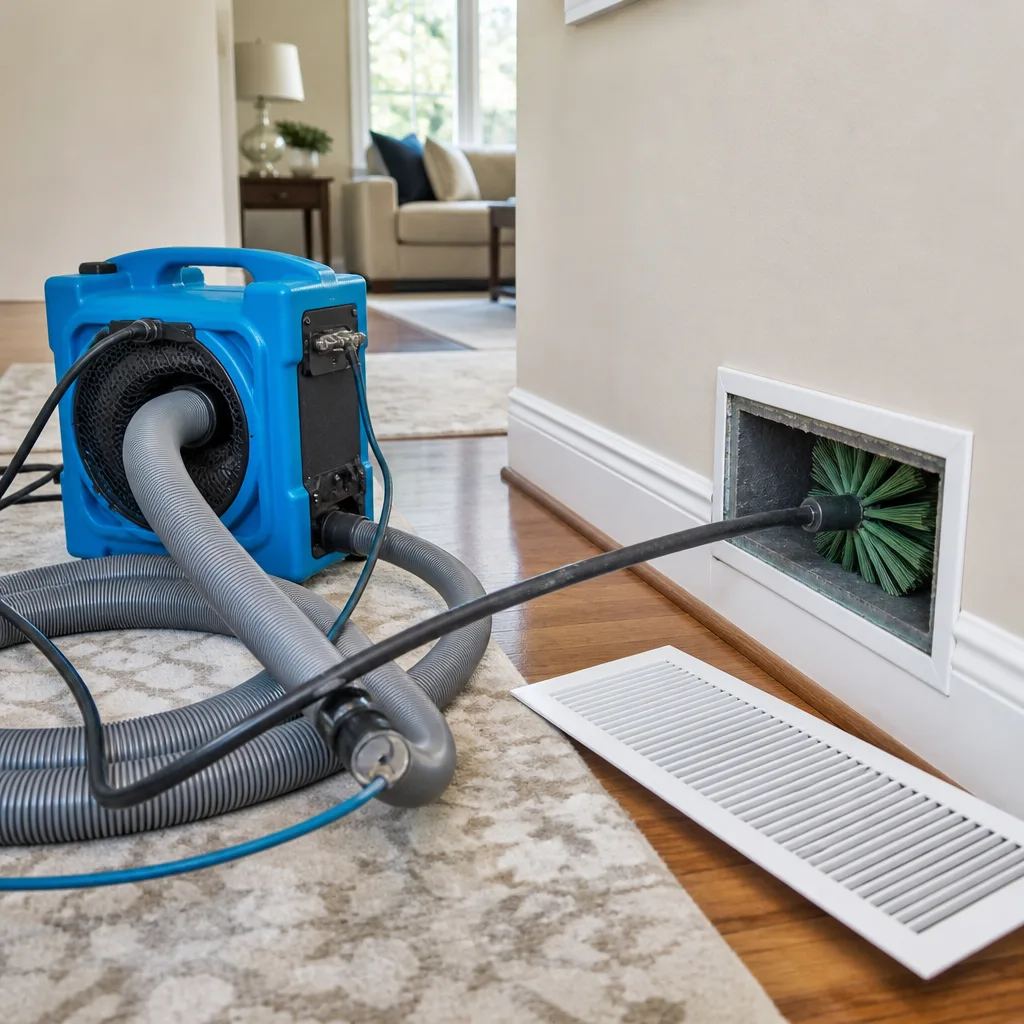
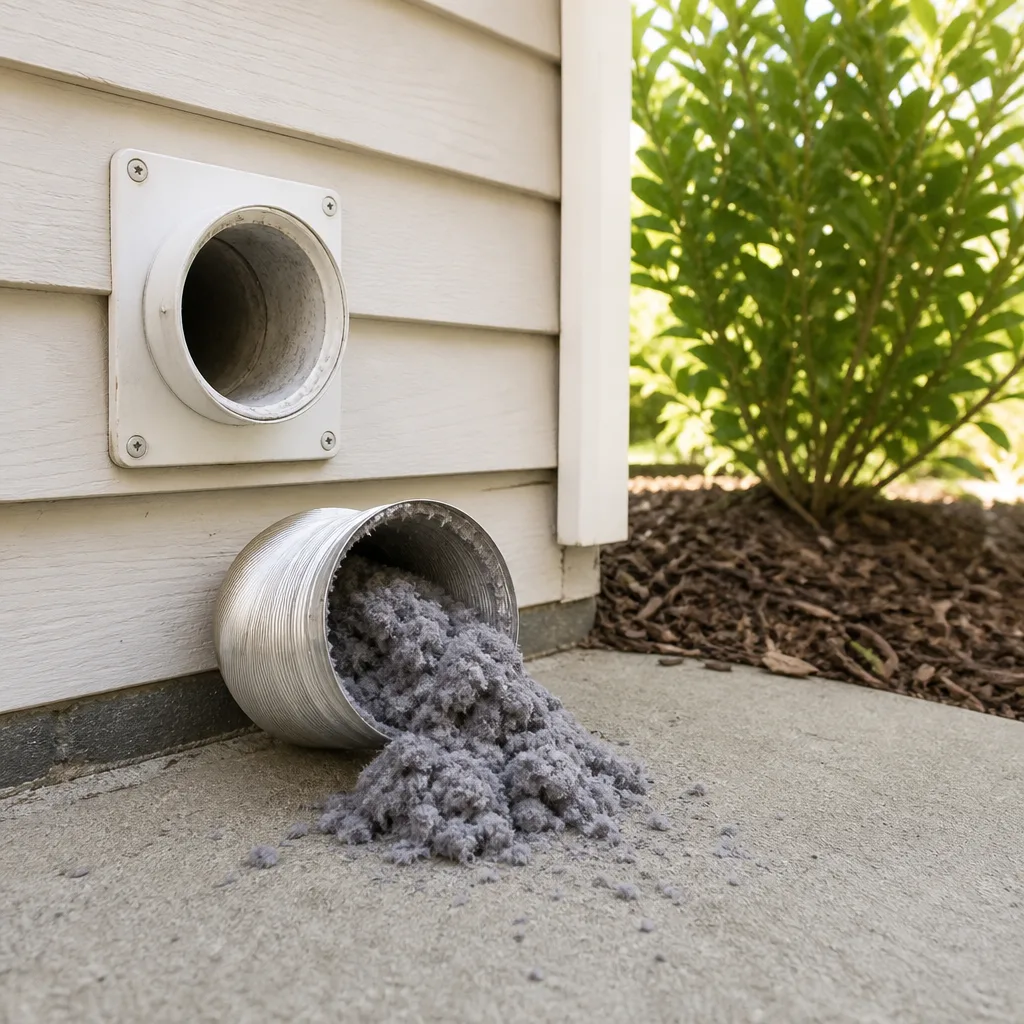
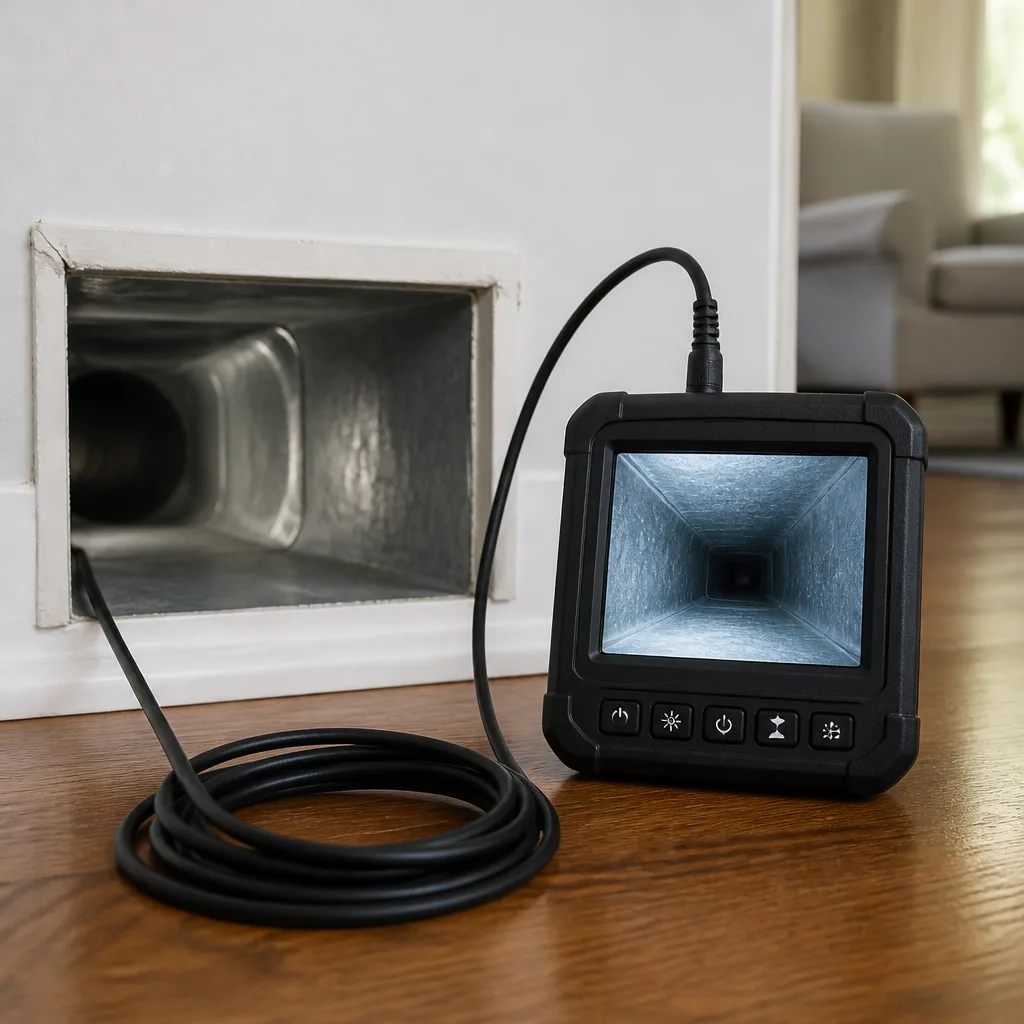
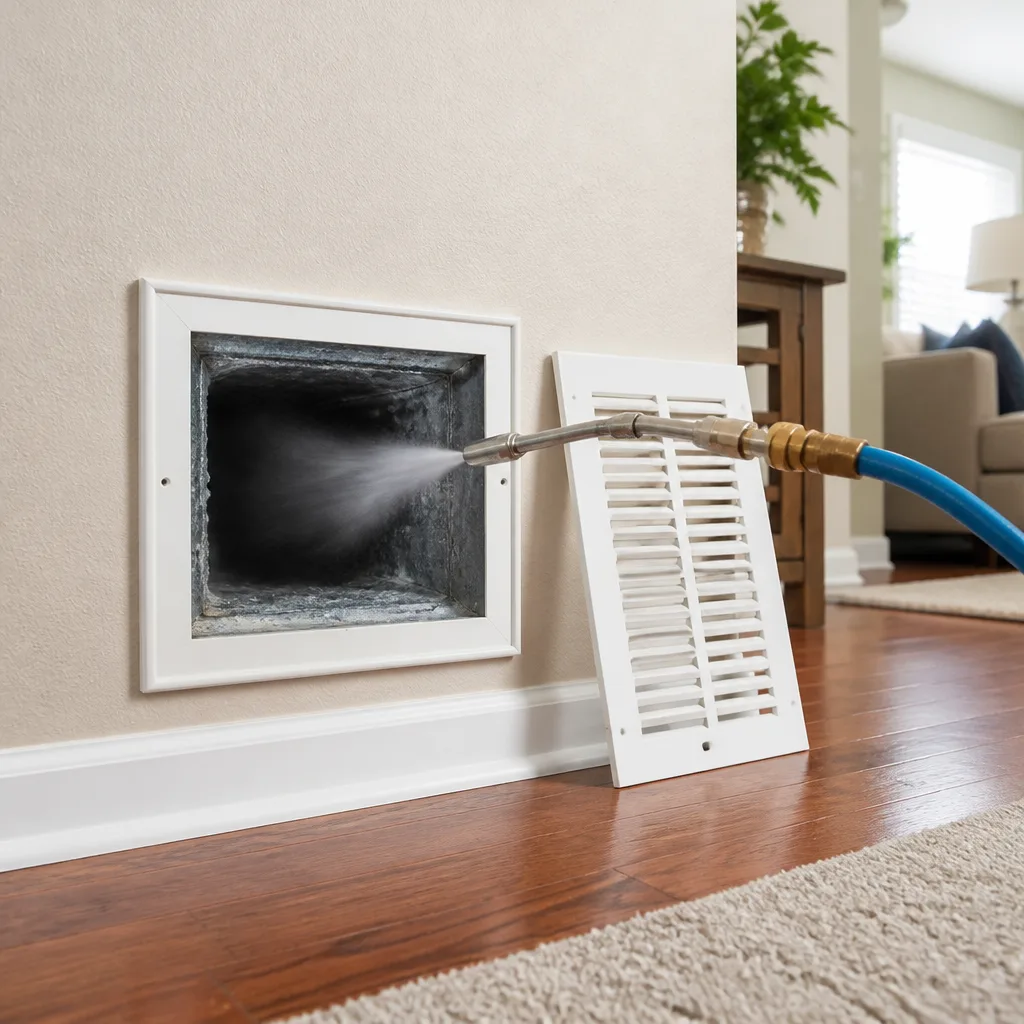
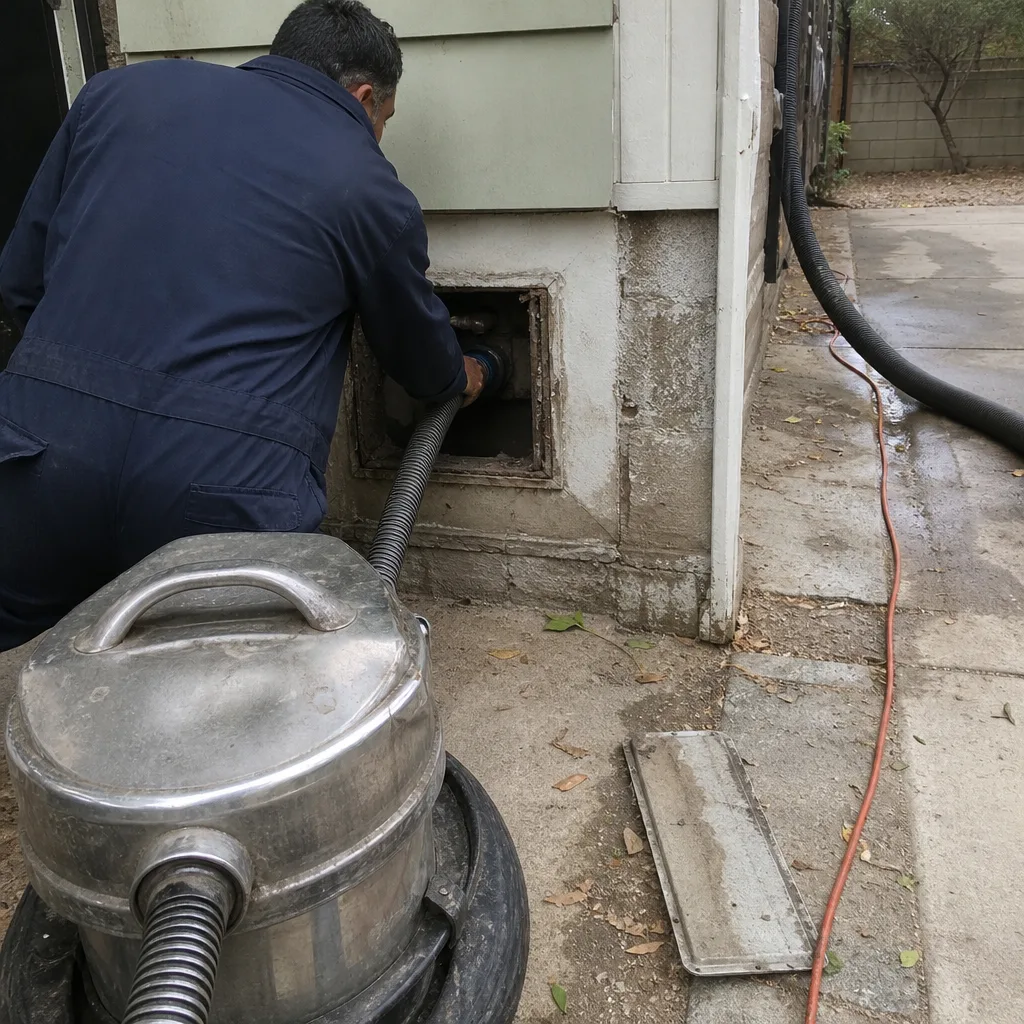 Before
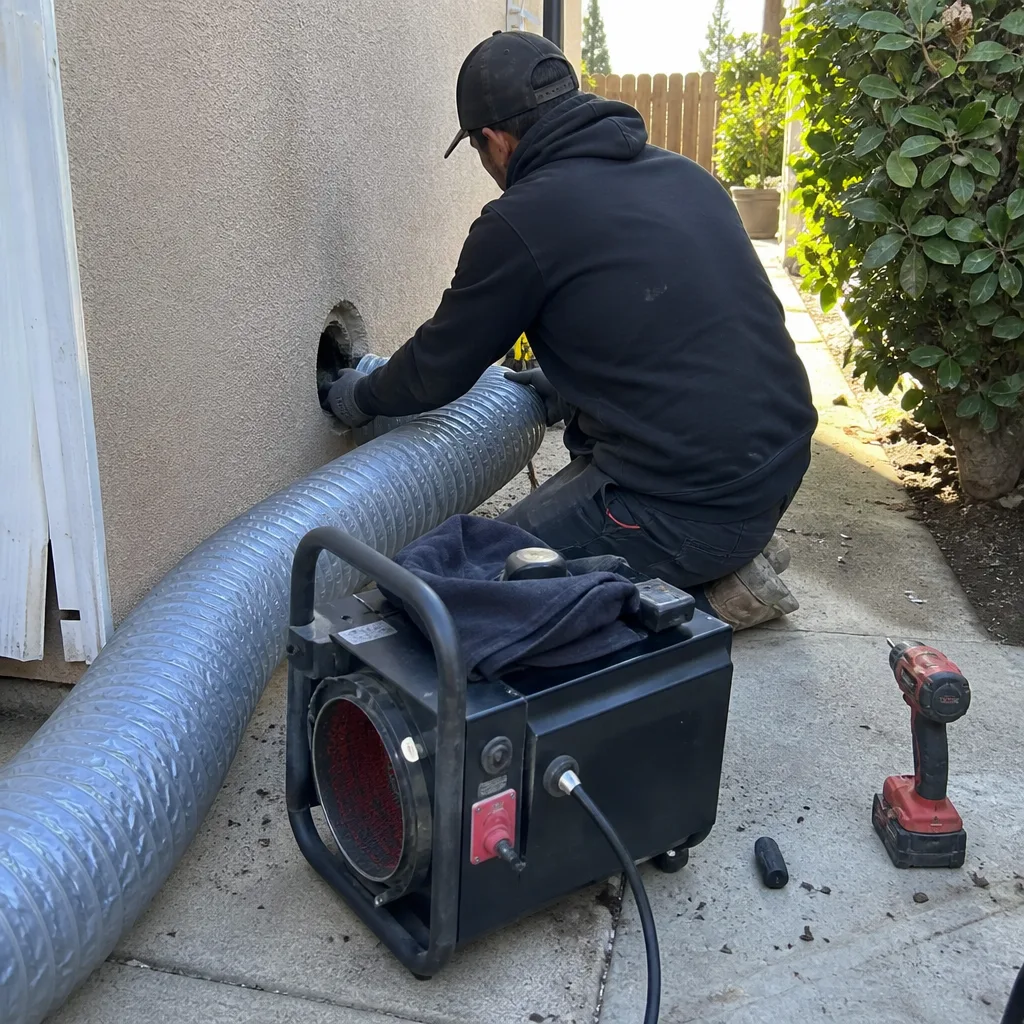 After
After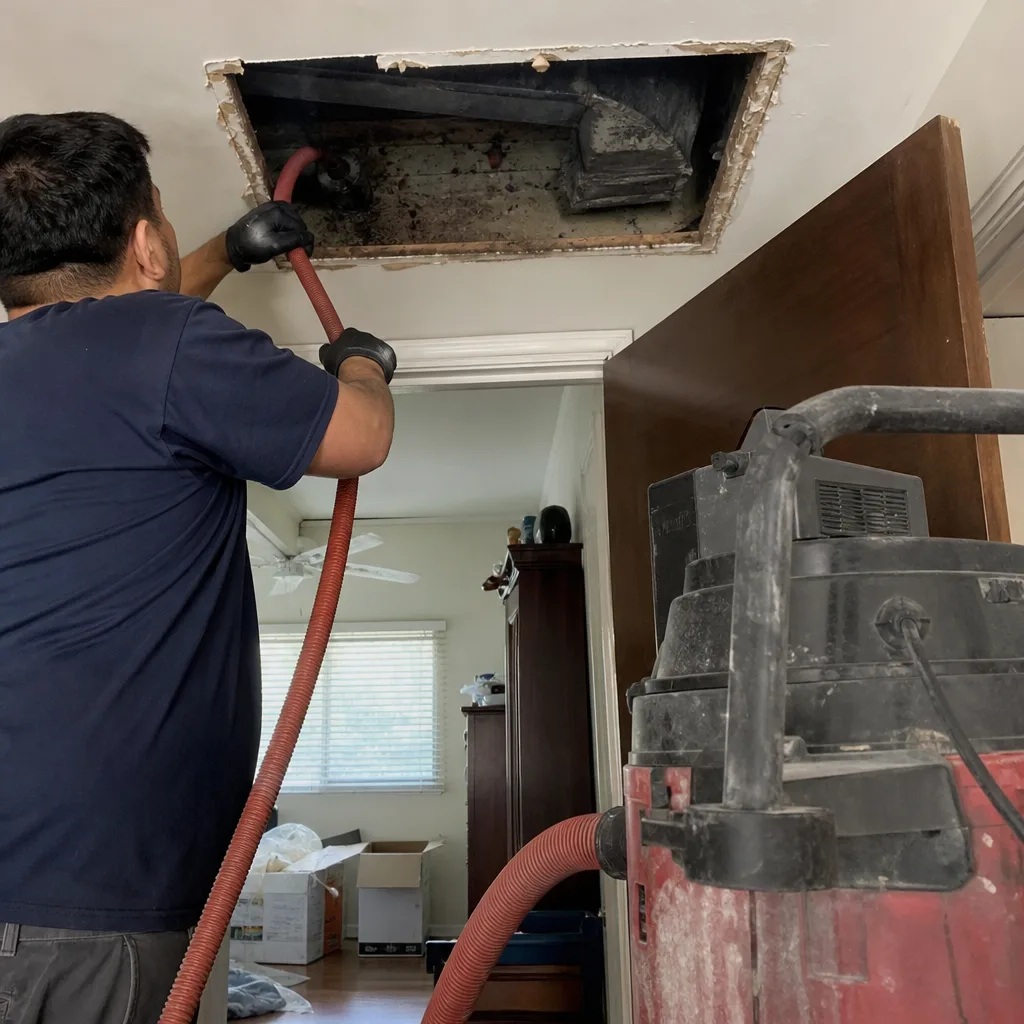 Before
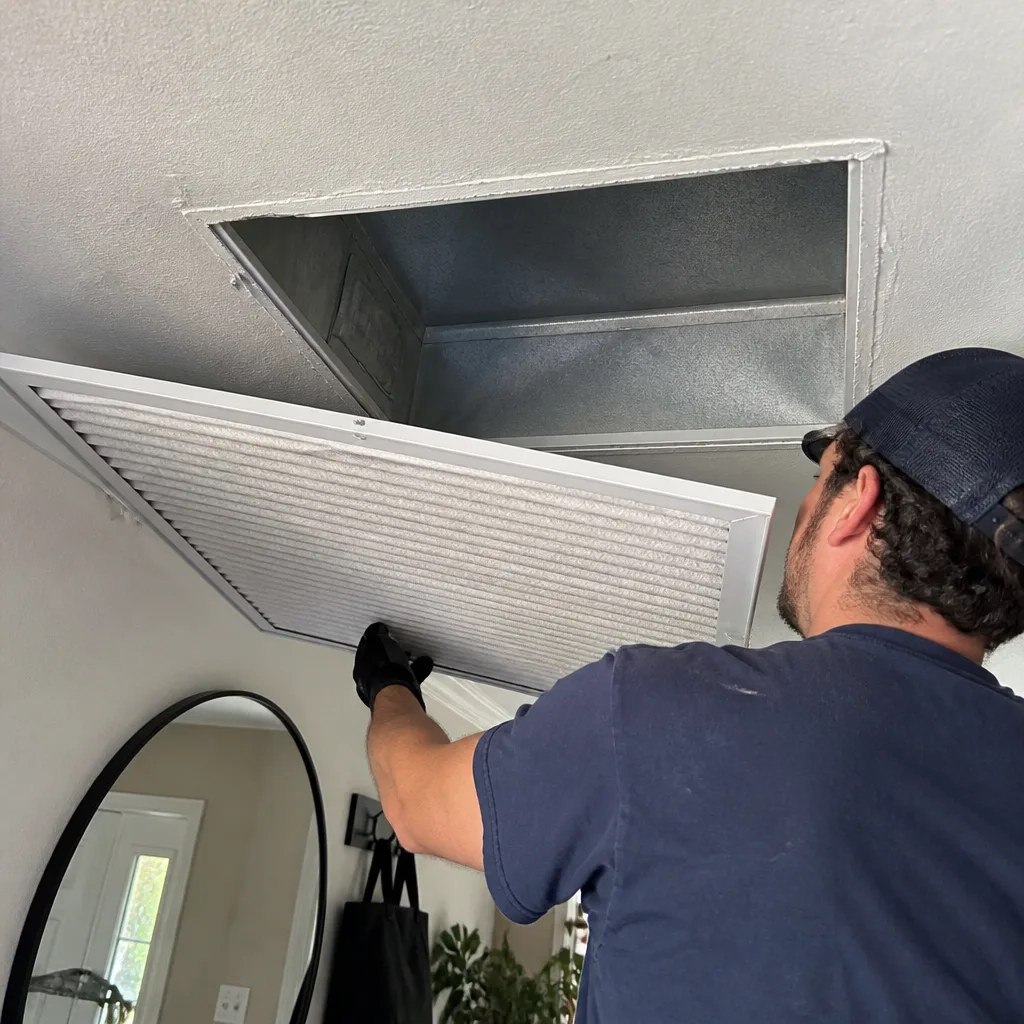 After
After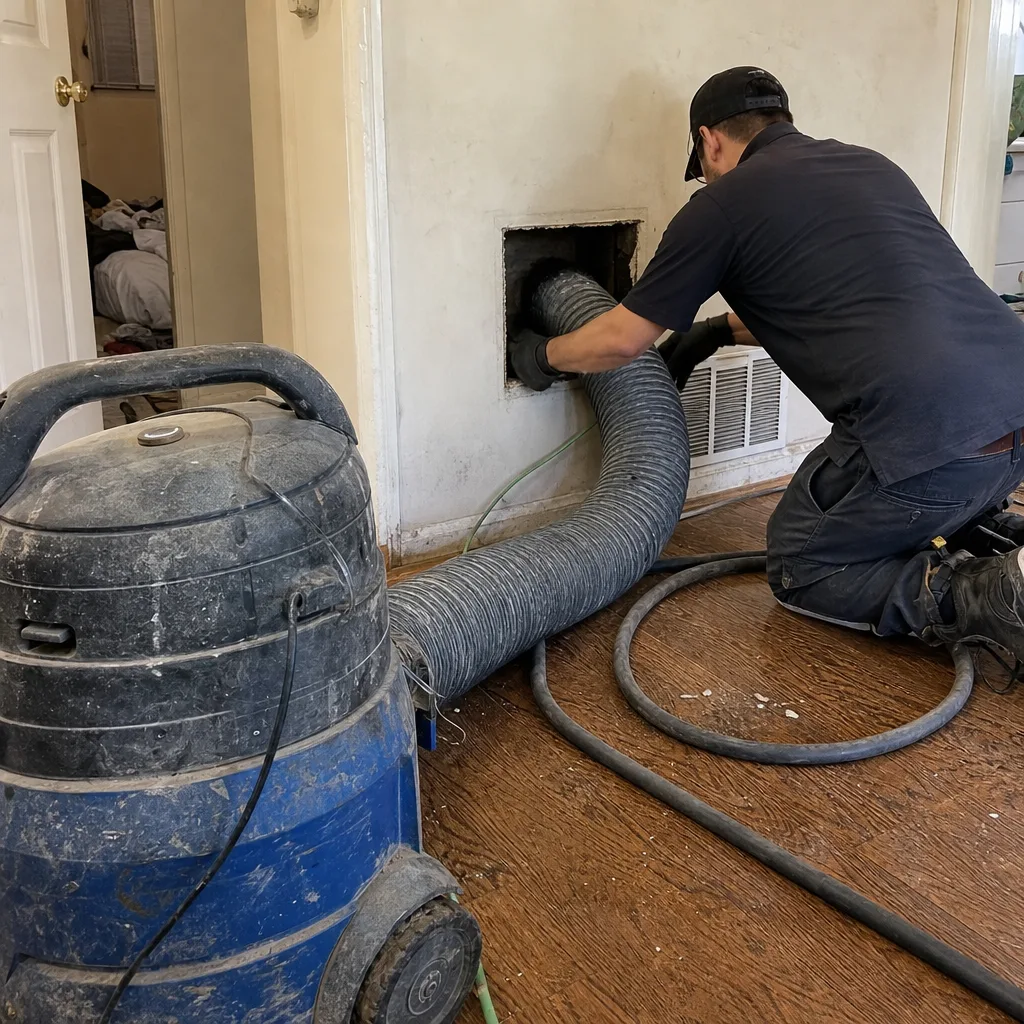 Before
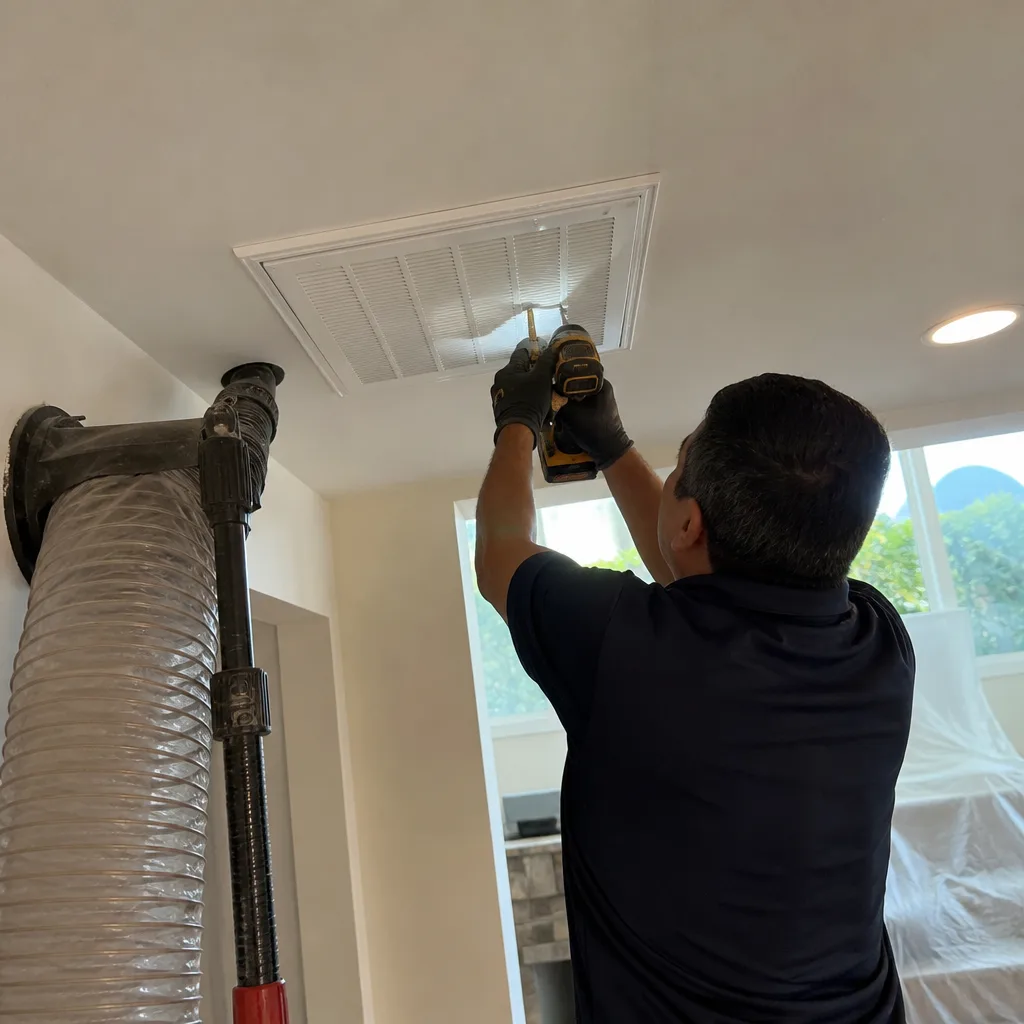 After
AfterThe Complete Dryer Vent Cleaning Guide for Los Angeles Homeowners
FEMA attributes 34% of home dryer fires to failure to clean the venting system. But in Los Angeles, that national statistic doesn’t tell the whole story. Our city’s housing stock, with its long duct runs through multi-story homes, rooftop terminations that collect everything from eucalyptus leaves to Santa Ana dust, and high dryer usage in dense households, puts the real risk point further from the dryer than most homeowners realize. This guide explains why LA homes fail differently, what a proper Dryer Vent Cleaning actually covers, and how to verify the job was done right.
Quick Answer
Dryer vent cleaning in Los Angeles typically costs $120 to $250 for a standard single-story home and $200 to $400 for a multi-story home with a rooftop termination. A proper cleaning removes lint from the entire duct run, not just the section behind the dryer, and should include an airflow verification reading before and after the work. For most LA households, annual cleaning is the right interval, though homes with rooftop vents or long duct runs may need service every 6 to 9 months.
Table of Contents
- Why Los Angeles Homes Have a Different Dryer Fire Profile
- What a Proper Dryer Vent Cleaning Actually Covers
- Rooftop Terminations: LA’s Quiet Problem
- What California Building Code Says About Your Duct
- How Much Dryer Vent Cleaning Costs in Los Angeles
- How to Verify the Entire Run Was Cleaned
- What a Restricted Vent Does to Your Dryer’s Lifespan
- Common Mistakes to Avoid
Why Los Angeles Homes Have a Different Dryer Fire Profile
The national guidance on dryer vent cleaning assumes a short, straight duct run that exits through an exterior wall near the appliance. That assumption falls apart quickly across Los Angeles, where geography and building style work together to create longer, more complicated vent paths.
Homes built in the 1960s through the 1990s, which make up a large share of LA’s single-family stock, often place laundry rooms in the center of the house or in a garage conversion. That means the duct has to travel further before it reaches daylight. Every foot of duct and every bend is another spot where lint can accumulate. A duct that runs 25 feet with three elbows, a common configuration in mid-century LA homes, has far more restriction risk than the 10-foot straight run that national guides picture.
The hillside and canyon neighborhoods add another layer. Homes in areas like Mount Washington, Studio City, and the Hollywood Hills frequently route vents upward through the structure to terminate on the roof. That upward path works against gravity when it comes to lint removal, and any moisture in the duct condenses and makes lint stick to the walls. We’ve seen rooftop vents in Los Angeles that were effectively half-closed with accumulated debris, while the homeowner had no idea because the vent cap was out of sight.
Density matters too. Multi-family buildings in neighborhoods like Koreatown, Palms, and Westlake often share stacked dryer vent risers. If one unit has a restricted vent, it affects the airflow for everyone sharing that riser. In larger apartment buildings, the cleaning responsibility typically falls to the owner or management company, but condo owners and townhouse residents need to understand that their vent may run through common building space.
The Santa Ana winds are worth a mention as well. Those dry, gusty winds carry fine dust and vegetation particles across the city. Rooftop vent caps with inadequate screening draw that material in, where it mixes with lint and forms a denser, more stubborn blockage than pure lint alone. LA homeowners deal with a specific combination of factors that makes the “clean it when you remember” approach genuinely risky.
What a Proper Dryer Vent Cleaning Actually Covers
A legitimate dryer vent cleaning is a mechanical process, not a quick vacuum pass at the wall connection. The goal is to remove accumulated lint from the entire duct run, from the dryer connection point all the way to the exterior termination.
Here’s what a proper cleaning in Los Angeles includes:
- Dryer disconnect and inspection: The technician pulls the dryer away from the wall, disconnects the transition duct, and checks the connection point inside the machine housing.
- Full-run agitation: Professional equipment brushes the duct walls to dislodge adhered lint. This matters because lint in LA ducts often gets compacted with dust and debris from the Santa Ana winds, forming a layer that vacuum suction alone won’t remove.
- Negative-pressure extraction: The technician runs a high-powered vacuum at one end of the duct while agitating from the other. The vacuum creates negative pressure inside the duct, which pulls loosened debris out rather than letting it fall back into the run.
- Rooftop or wall termination clearing: The exterior vent cap gets cleared of built-up lint and debris. Bird nests, leaf litter, and eucalyptus debris are common at LA terminations.
- Airflow verification: The technician measures airflow before and after the cleaning. A healthy duct should show a clear improvement in airflow volume through the run.
What you shouldn’t accept is a technician who only cleans the accessible section of duct near the dryer and calls the job done. In Los Angeles, where longer runs are the norm, the hardest-to-reach portion of the duct is usually the section with the most accumulated lint. Insisting on full-run cleaning is not picky, it’s the entire point.
For perspective, our team at Linden Air Duct Cleaning home has worked on LA vents that were 60 to 70 percent blocked. The homeowners often tell us the dryer was “still working” before the cleaning. It was working harder, longer, and hotter than it should have been, and that’s the condition that leads to fires and appliance failures.
Rooftop Terminations: LA’s Quiet Problem
If your dryer vent exits through the roof, you have a different maintenance situation than a homeowner with a wall termination. Rooftop terminations are common in Los Angeles, particularly in single-story ranch homes and hillside builds where the laundry room sits against an interior wall. They require more attention because they collect more debris and fail more quietly.
A wall vent cap sits at eye level, or close to it. You can see lint build-up on the flap, and you notice when the flap isn’t opening properly during a dry cycle. A rooftop vent is invisible. Lint accumulates around the cap, leaves and twigs collect against the screen, and in some LA neighborhoods, birds find the warm, protected termination an appealing place to settle. A partially blocked rooftop cap creates backpressure in the duct, which slows airflow and forces the dryer to work against resistance it was never designed to handle.
Cleaning a rooftop run properly means getting onto the roof and removing the cap, clearing the termination point manually, and then running the full duct cleaning from below. That’s not a DIY job for most homeowners. Roof work in Los Angeles carries heat exposure, slope, and footing concerns that make it genuinely dangerous without proper equipment and training. We include rooftop access as a standard part of our Dryer Vent Cleaning in Los Angeles service, and we use fall-protection gear every single time. If a company quotes you a price without asking whether your vent terminates on the roof, treat that as a red flag. The access method changes the job.
Rooftop terminations also need more frequent attention. We recommend homeowners with rooftop vents schedule cleaning every 6 to 9 months, even if the dryer seems to be performing fine. The first sign of a rooftop vent problem is often a dryer that runs two cycles to dry one load, and by that point the restriction is already significant.
What California Building Code Says About Your Duct
California’s mechanical code sets clear rules for dryer exhaust ducts, and many existing Los Angeles homes are technically out of compliance without the homeowner ever knowing it. The relevant standards come from the California Mechanical Code, which incorporates the Uniform Mechanical Code with state-specific amendments.
The code requirements are straightforward:
- Duct material: Dryer exhaust ducts must be constructed of metal, with a smooth interior surface. Flexible foil or plastic ducts are not code-compliant for dryer venting.
- Maximum developed length: The duct run, measured from the dryer connection to the exterior termination, should generally not exceed 35 feet. Each 90-degree elbow reduces the allowable length by 5 feet.
- No screws in joints: Duct sections should be joined with metal tape or clamps, not sheet metal screws. Screws protrude into the airflow path and catch lint, creating blockages over time.
- Independent termination: The dryer vent must terminate independently to the exterior. It cannot be combined with other exhaust systems, and it should not terminate into an attic, crawl space, or garage.
The gap between code and reality is wide in Los Angeles. Homes built before current code updates often have foil transition ducts that are past their safe service life. Garage laundry rooms in homes from the 1970s and 1980s sometimes terminate into the garage, which is a code violation and a fire hazard. Rooftop runs that snake through the structure frequently exceed the practical length limit once elbows are factored in.
If your Los Angeles home has a long duct run or an older installation, part of the cleaning visit should be a basic compliance check. We tell homeowners exactly what we see, whether that’s a duct that meets current standards or one that would fail inspection if the home were sold today. You may not need to replace everything immediately, but you deserve to know what you’re working with. Our Air Duct Repair in Los Angeles team handles replacement work when a vent needs more than cleaning to be safe.
How Much Dryer Vent Cleaning Costs in Los Angeles
Dryer vent cleaning prices in Los Angeles vary based on property type, duct length, and accessibility. Here’s what you can reasonably expect to pay:
- Standard single-story home with wall termination: $120 to $180
- Single-story home with rooftop termination: $150 to $220
- Two-story home with extended duct run: $180 to $280
- Hillside home or complex roof access: $200 to $400
- Condo or townhouse (duct runs through common space): $130 to $250
Those ranges reflect honest, whole-job pricing. Here’s the thing about dryer vent cleaning that LA homeowners should know: this is an industry with a bait-and-switch reputation. Some companies advertise a low teaser price, then once the technician is at your home, the price climbs with add-ons, per-vent charges, and “discovered” issues that need immediate attention. It’s a real problem across the country, and Los Angeles is no exception.
At Linden Air Duct Cleaning, we put the price in writing before any work begins. Every single time. You’ll know the exact cost of the job before the technician touches the dryer, and that number doesn’t change unless you approve additional work in writing. We don’t charge per vent, we don’t add surprise fees, and we don’t invent problems to pad the invoice. The price Marcus Veale quotes is the price you pay.
For a more detailed breakdown, see our full Air Duct Cleaning in Los Angeles pricing guide. And if you want a specific quote for your home, call (980) 447-2498. Estimates are free, and a live person answers the phone 24/7.
How to Verify the Entire Run Was Cleaned
The most common complaint we hear from Los Angeles homeowners is that a previous cleaning company “cleaned” the vent but the dryer still didn’t perform any better. In most cases, the technician cleaned the accessible section near the dryer and never touched the rest of the run. Here’s how to know the difference.
Step 1: Ask whether the cleaning includes rooftop access, if applicable. If your vent terminates on the roof and the company doesn’t mention roof work in the quote, they’re not planning to clean the full run.
Step 2: Request before and after airflow readings. A professional technician should be able to measure airflow at the dryer connection point using an anemometer or manometer. The numbers should improve after cleaning. If a technician can’t provide any airflow measurement, ask why.
Step 3: Ask what equipment they use. Reputable companies run professional-grade equipment. At Linden, we run Rotobrush and Nikro systems, which use rotating brushes and negative-pressure extraction to loosen and remove lint throughout the entire duct run. A shop vacuum attached to the wall connection is not sufficient for a long LA duct run.
Step 4: Request photos. Ask the technician to photograph the vent termination before and after cleaning. A rooftop cap cleared of debris is visible in a photo, and any professional should be willing to provide that documentation. We show our customers before and after photos at every job, because seeing the work is the only way to know it happened.
Step 5: Check the dryer’s drying time. Run a normal load and time it. If the dryer was taking two cycles to dry before cleaning and still takes two cycles after, the vent likely wasn’t fully cleared, or there’s another issue like a failing heating element. Either way, you should have gotten more for your money.
The 365-Day Done Right Promise at Linden works simply: if the vent cleaning isn’t right, we make it right, and that commitment is in writing on every job. If a covered repair fails within a year, we come back at no charge. When a company refuses to put its commitments in writing, you’re being asked to take their word for it, and in this industry, that’s not enough.
What a Restricted Vent Does to Your Dryer’s Lifespan
A dryer vent problem in Los Angeles isn’t just a fire safety concern. It’s also a financial one, because a restricted vent forces your dryer to work harder, run longer, and fail sooner. The connection between vent restriction and appliance lifespan is documented and direct.
When the exhaust path is blocked, heated air can’t escape efficiently. The dryer’s internal temperature climbs. The high-limit thermostat cycles more frequently. The heating element runs longer per load. Every component that manages heat, from the thermal fuse to the motor bearings, experiences accelerated wear. In our experience, dryers in homes with chronically dirty vents fail one to two years sooner than they should, and they need repair calls more frequently along the way.
Longer drying times are the first symptom. If a load that used to dry in 45 minutes now takes 75, the vent is likely part of the problem. The moisture that can’t escape through a clogged vent has to go somewhere, and some of it stays in the drum and the cabinet. That trapped moisture contributes to rust, electrical connections that corrode, and control boards that short. A dryer vent cleaning that costs $150 in Los Angeles can prevent a $400 thermal fuse repair, a $900 heating element replacement, or a $1,200 premature appliance replacement.
There’s also the lint trap bypass factor. The lint trap in your dryer, the removable screen you clean after each load, catches only a portion of the lint generated during a cycle. The rest travels through the duct and accumulates along the walls. That’s why a clean lint trap doesn’t mean a clean vent. The vent is the part of the system that catches what the trap misses, and in a long LA duct run, it misses a lot.
Common Mistakes to Avoid
- Assuming a clean lint trap means a clean vent. The trap catches a fraction of the lint. The rest travels through the duct, where it builds up at bends, joints, and the termination point. Los Angeles homeowners with longer duct runs accumulate more lint in the duct than the trap ever captures.
- Using a foil or plastic transition duct. Some older LA homes still have flexible foil or plastic ducting behind the dryer. These materials are not code-compliant in California and are a fire hazard. They sag, they trap lint aggressively, and they can melt or ignite if the dryer overheats.
- Ignoring a dryer that takes two cycles to dry one load. That’s not a quirk of an older machine. It’s the classic symptom of restricted airflow in the vent. Every additional cycle adds wear to the dryer and heat to the duct.
- Hiring based on the lowest price. The bait-and-switch model in dryer vent cleaning is real. A $49 advertised price usually becomes a much larger invoice once the technician is in the home. In Los Angeles, a legitimate whole-run cleaning costs $120 to $250 for most homes, and anyone quoting dramatically less is planning to make it up elsewhere.
- Skipping rooftop terminations during cleaning. If a company doesn’t ask where your vent terminates, they’re not going to clean the roof cap. And in LA, the roof cap is often where the worst blockage lives.
- Waiting for a problem to appear before cleaning. By the time you notice longer drying times, odd smells, or excessive heat, the vent has been restricted for a while. Annual cleaning removes lint before it becomes a performance problem, which is cheaper than reacting to one.
- Letting just anyone into your home. You’re letting a stranger into your house. Ask whether the technician is background-checked. Ask how you’ll know who’s coming to your door. At Linden, every technician is background-checked, identity-verified, and photo-badged under the Threshold Standard, and we send you the tech’s name and photo before the visit.
When to Call a Professional
Some home maintenance tasks are reasonable DIY projects. Dryer vent cleaning is not one of them, particularly in Los Angeles, where ducts run long and rooftops are involved-see our DIY vs Professional Air Duct Cleaning: What’s Safe to Do Yourself for more context. Call a professional if your dryer takes more than one cycle to dry a load, if you can’t remember the last time the vent was cleaned, if your vent terminates on the roof, if you smell a musty or burning odor during a dry cycle, or if you’ve never had the vent inspected since buying the home. Also call a professional if you’re not comfortable on a ladder or roof. The risk isn’t worth the savings. Linden Air Duct Cleaning offers free estimates in Los Angeles. Call (980) 447-2498 to speak with a live person, any time, day or night.
Frequently Asked Questions
Annual cleaning is right for most Los Angeles homes with wall terminations. Homes with rooftop terminations, longer duct runs over 15 feet, or households that run the dryer daily should schedule cleaning every 6 to 9 months. LA’s dry, dusty air and rooftop debris add material to the vent faster than in wetter climates.
Expect to pay $120 to $250 for a standard single-story home, $180 to $280 for a two-story home, and $200 to $400 for hillside homes with complex roof access. Legitimate companies quote a flat price for the whole job, not a per-vent rate. Call (980) 447-2498 for an exact quote on your home; estimates are free.
Low-price quotes usually cover only the section of duct near the dryer, not the full run. In Los Angeles, that means the worst blockages, often at rooftop terminations or mid-run bends, never get touched. Some low-price offers are also entry points for upselling. A legitimate whole-run cleaning in LA costs what it costs because the job takes real equipment and time. If a quote seems too good, ask exactly what sections of the duct will be cleaned.
Ask for before and after photos of the vent termination, request airflow readings, and check whether your dryer’s drying time improves after the visit. A professional company should offer all of those without hesitation. At Linden, before and after photos are standard on every job, and we put our 365-Day Done Right Promise in writing.
DIY kits can clear the first few feet of a short, straight duct, but they can’t reach the full length of a typical Los Angeles duct run, and they won’t clear a rooftop termination. A partially cleaned long duct still functions poorly, and DIY attempts can damage duct joints or push blockages deeper into the run. Professional equipment used by trained technicians handles the full run, including roof access.
No. Dryer vent cleaning is considered routine maintenance, not an insurable loss. In Los Angeles rental properties, the owner or property manager is typically responsible for vent maintenance, so check your lease if you’re a tenant. If the vent hasn’t been cleaned and your dryer is struggling, requesting cleaning in writing is reasonable, and the same request can protect you if a fire-related claim ever arises.
The Bottom Line
Dryer vent cleaning in Los Angeles isn’t optional maintenance when you live in a city with long duct runs, rooftop terminations, and dense housing. For a deeper look at local air duct systems, read The Complete Guide to Air Duct Cleaning in Los Angeles. The fire risk is real, the appliance wear is measurable, and the solution is straightforward: get the full duct run cleaned by a professional, verify the work, and keep it on a schedule. At Linden Air Duct Cleaning, we’ve served Los Angeles homeowners since 2004 with written pricing, the Threshold Standard for technician verification, and a 365-Day Done Right Promise on every job. Call (980) 447-2498 for a free estimate. A live person answers, any time.
Written by Marcus Veale, Owner at Linden Air Duct Cleaning, serving Los Angeles since 2004.