
Last updated October 8, 2026
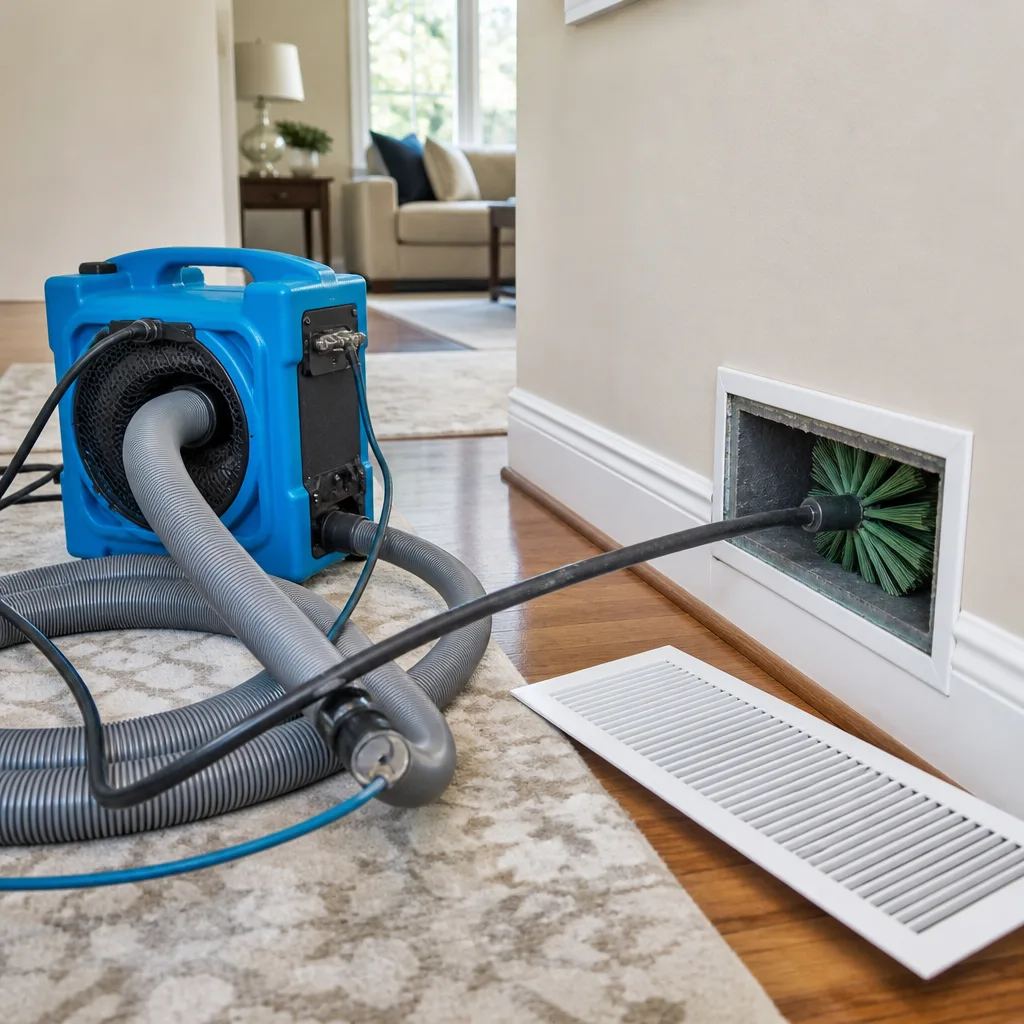
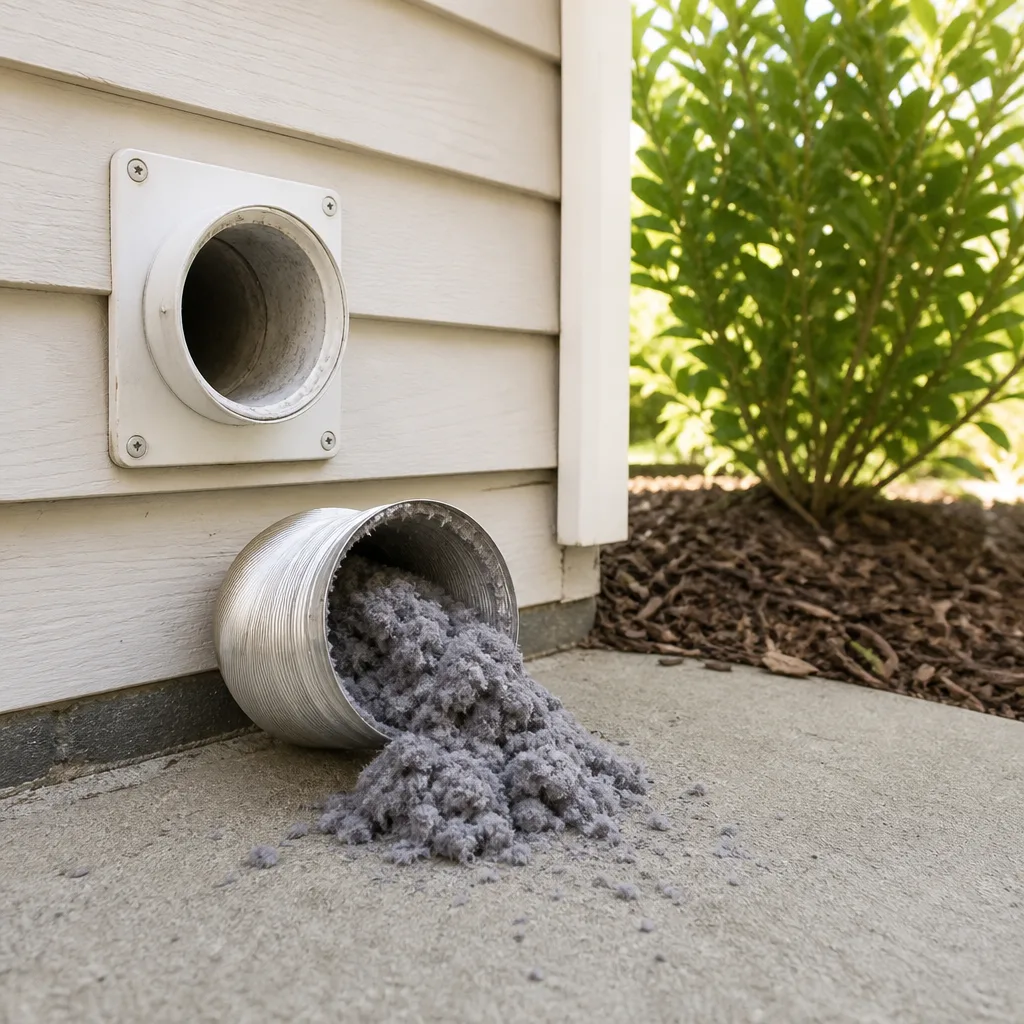
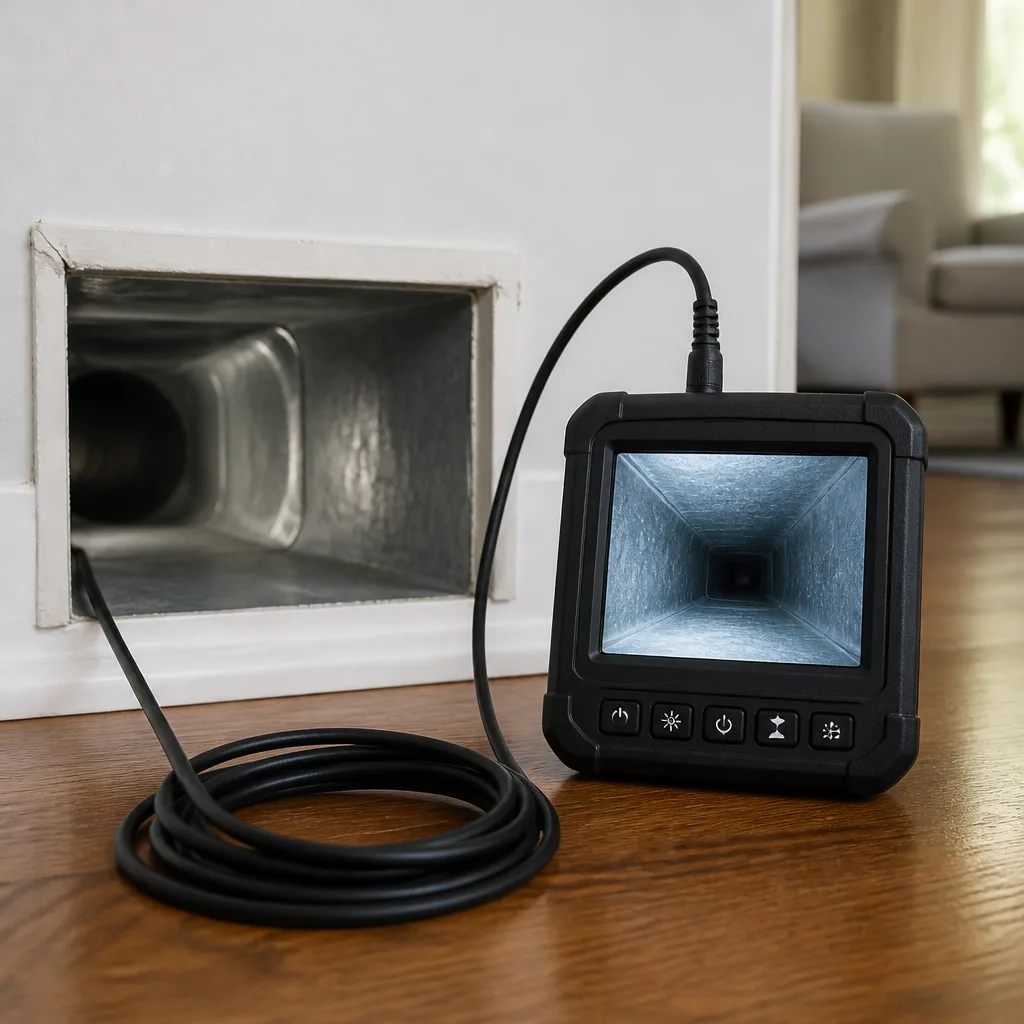
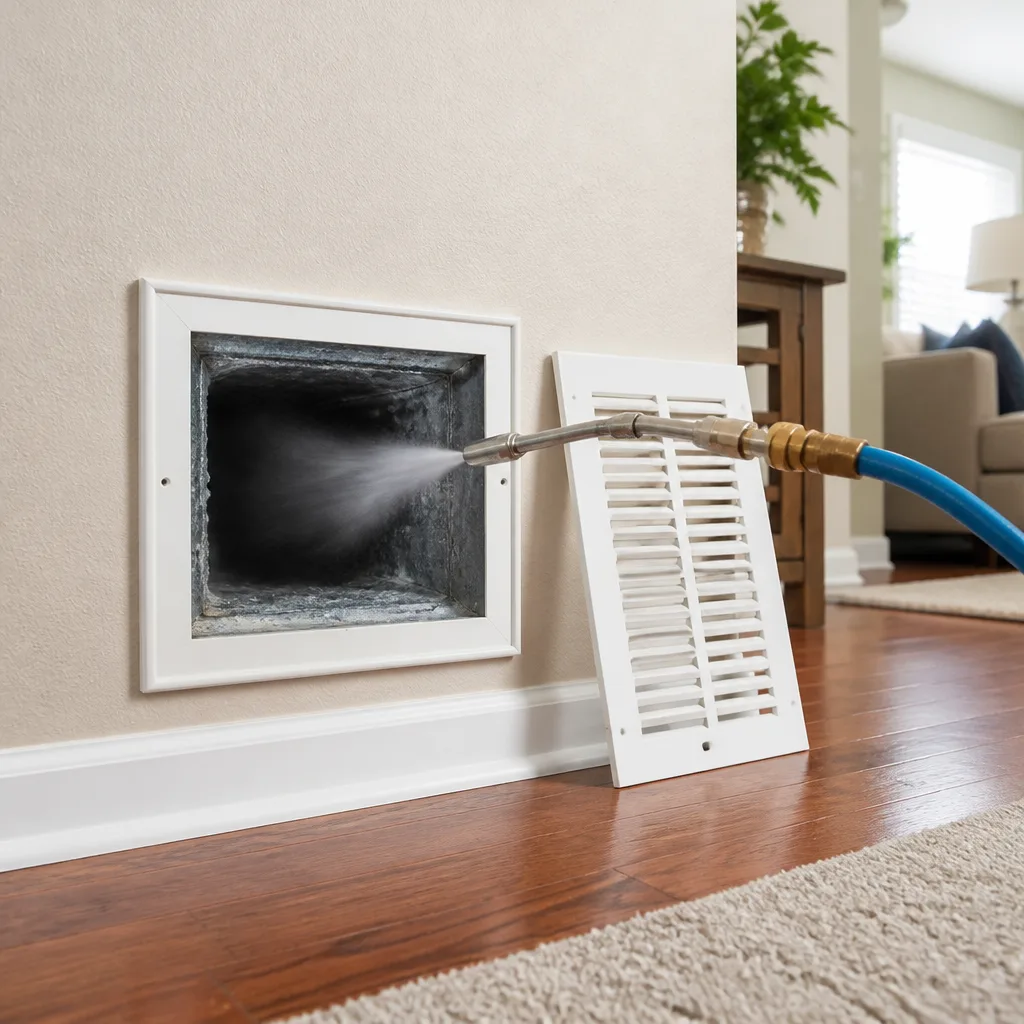
Whole-system duct and dryer vent check with before-and-after photos - you see exactly what came out of your vents
That "$99 whole-house special" is a bait ad - the real number appears once they are in your hallway, or the "clean" is a shop-vac at the register. We photograph the inside of your ducts before and after instead.
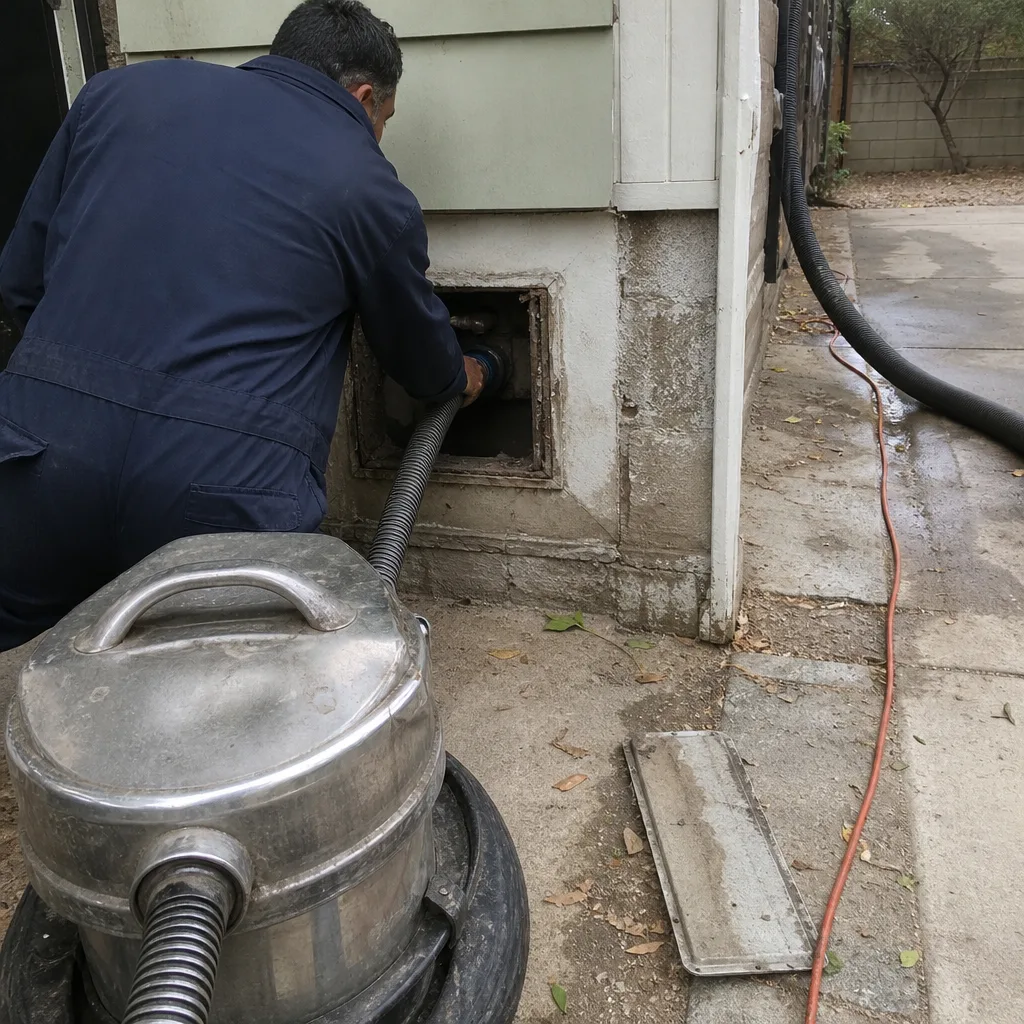 Before
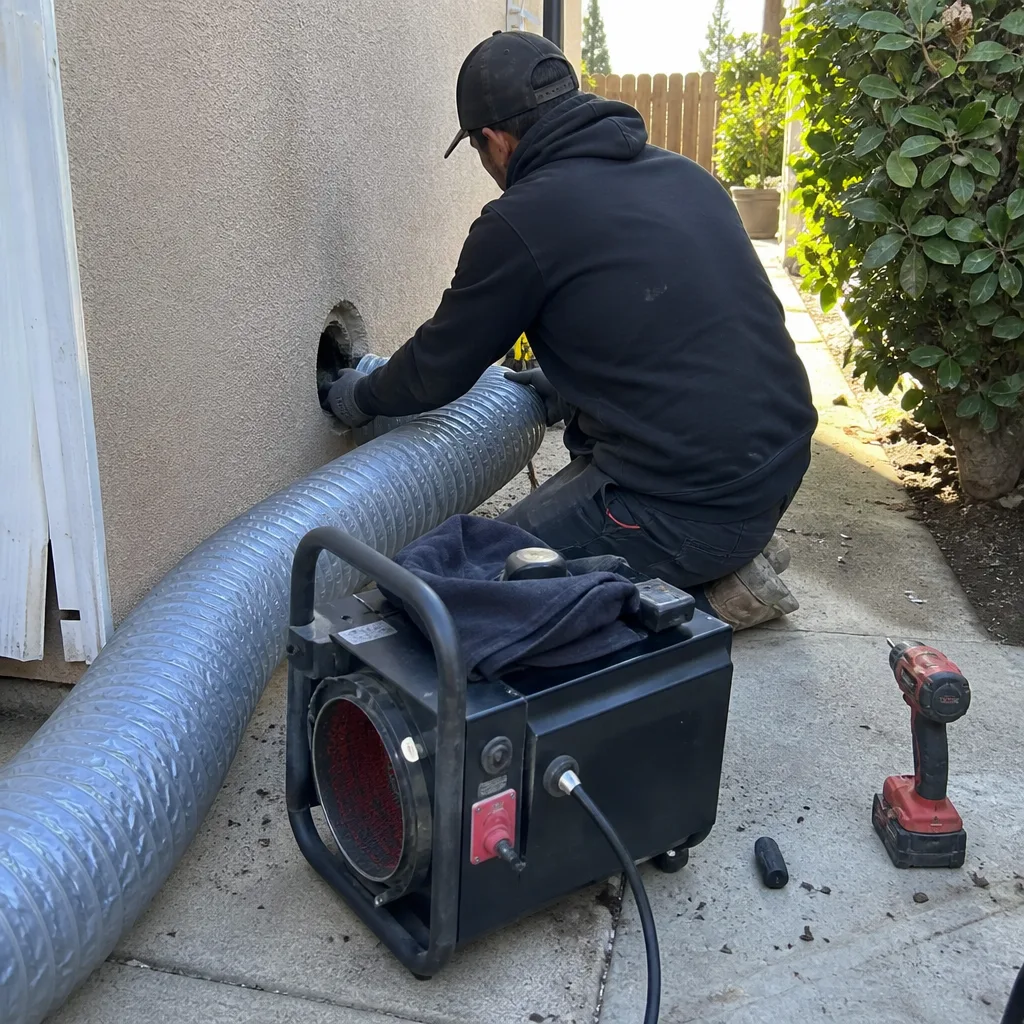 After
After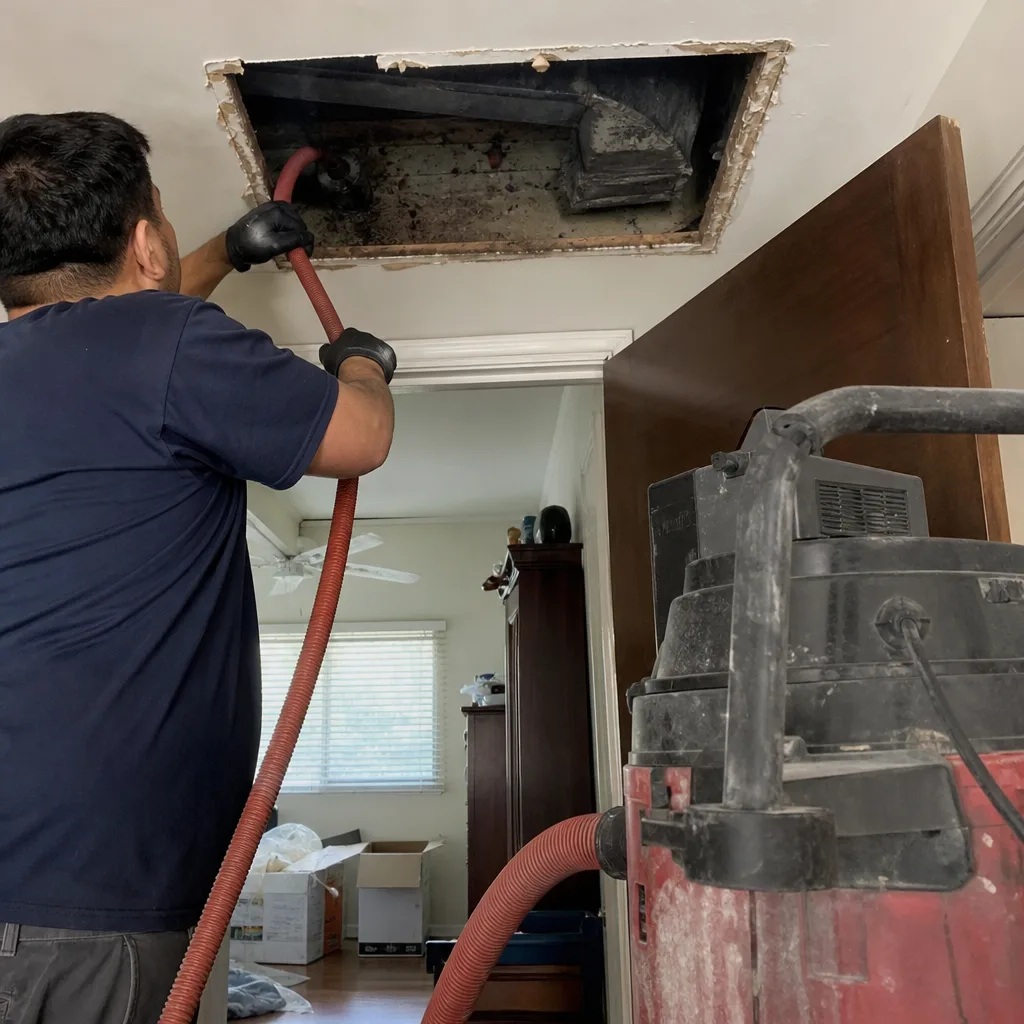 Before
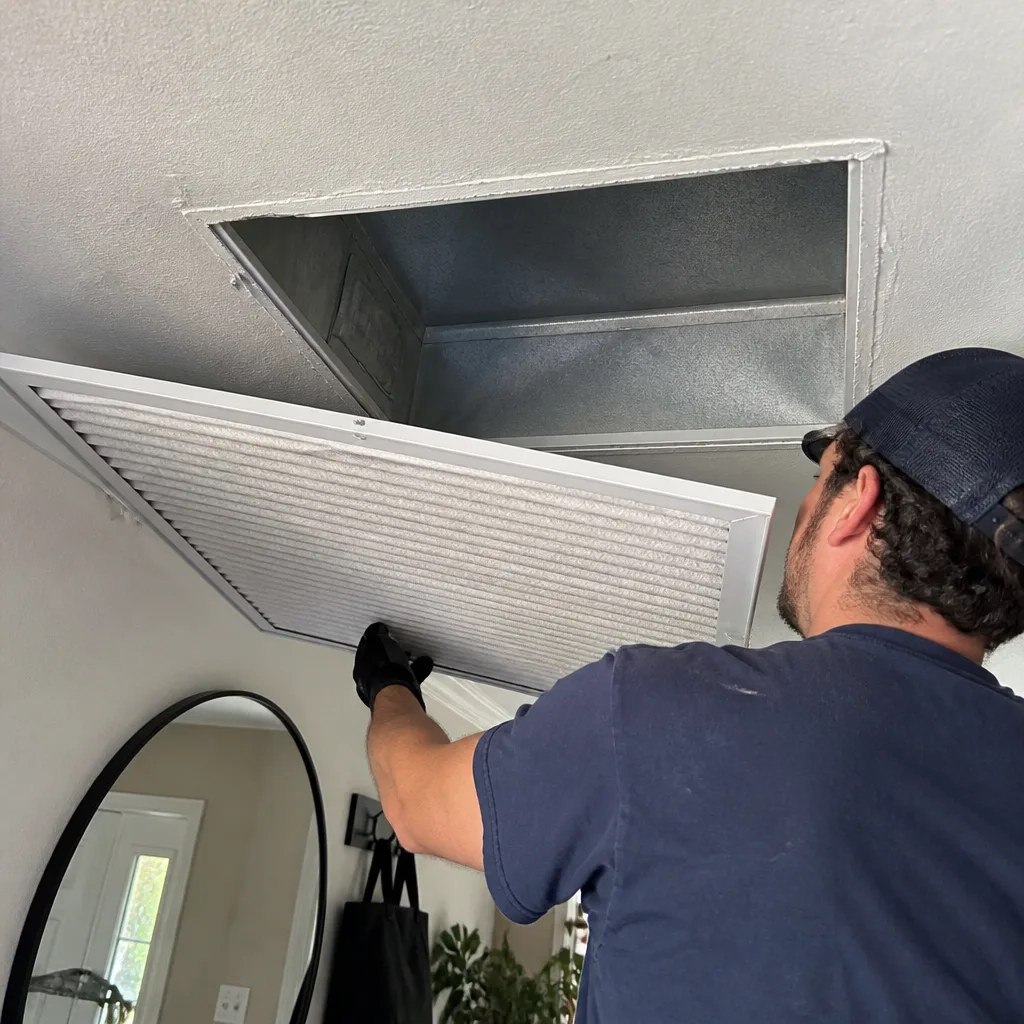 After
After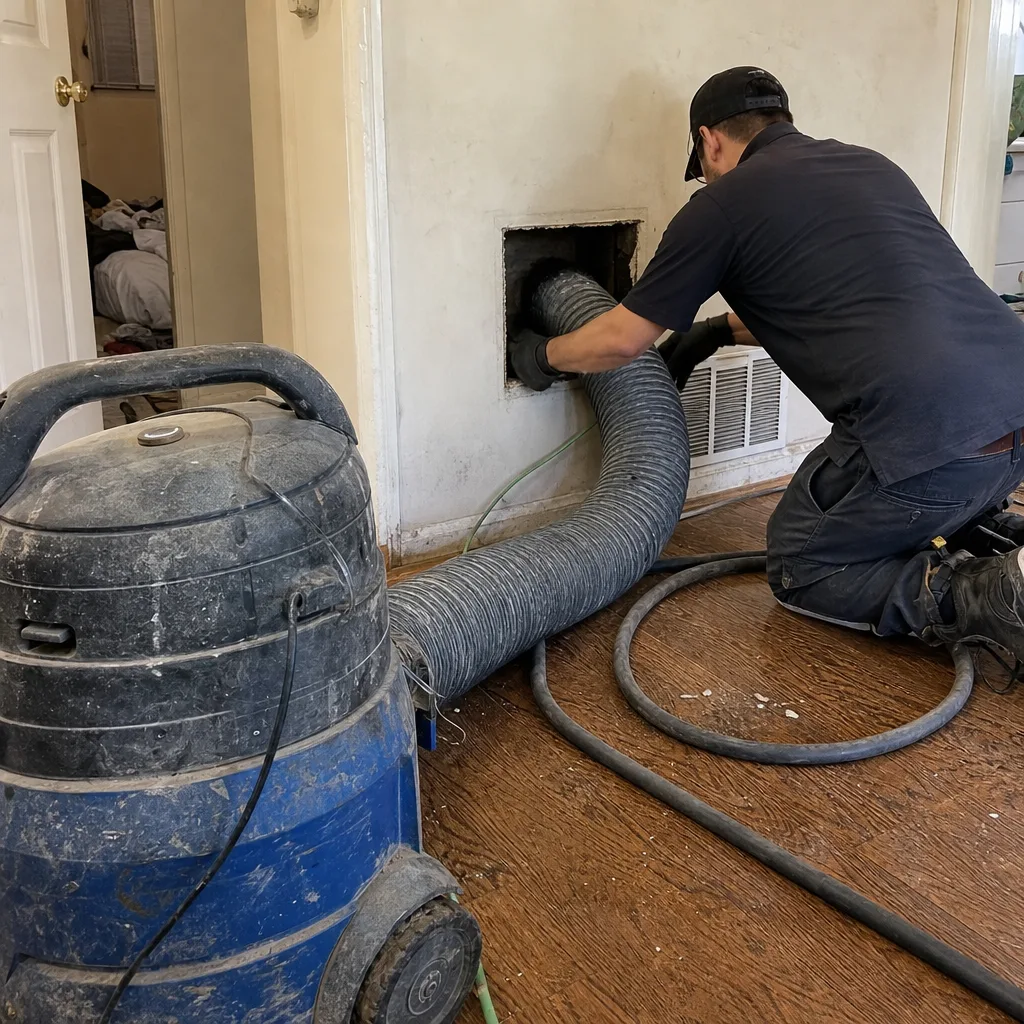 Before
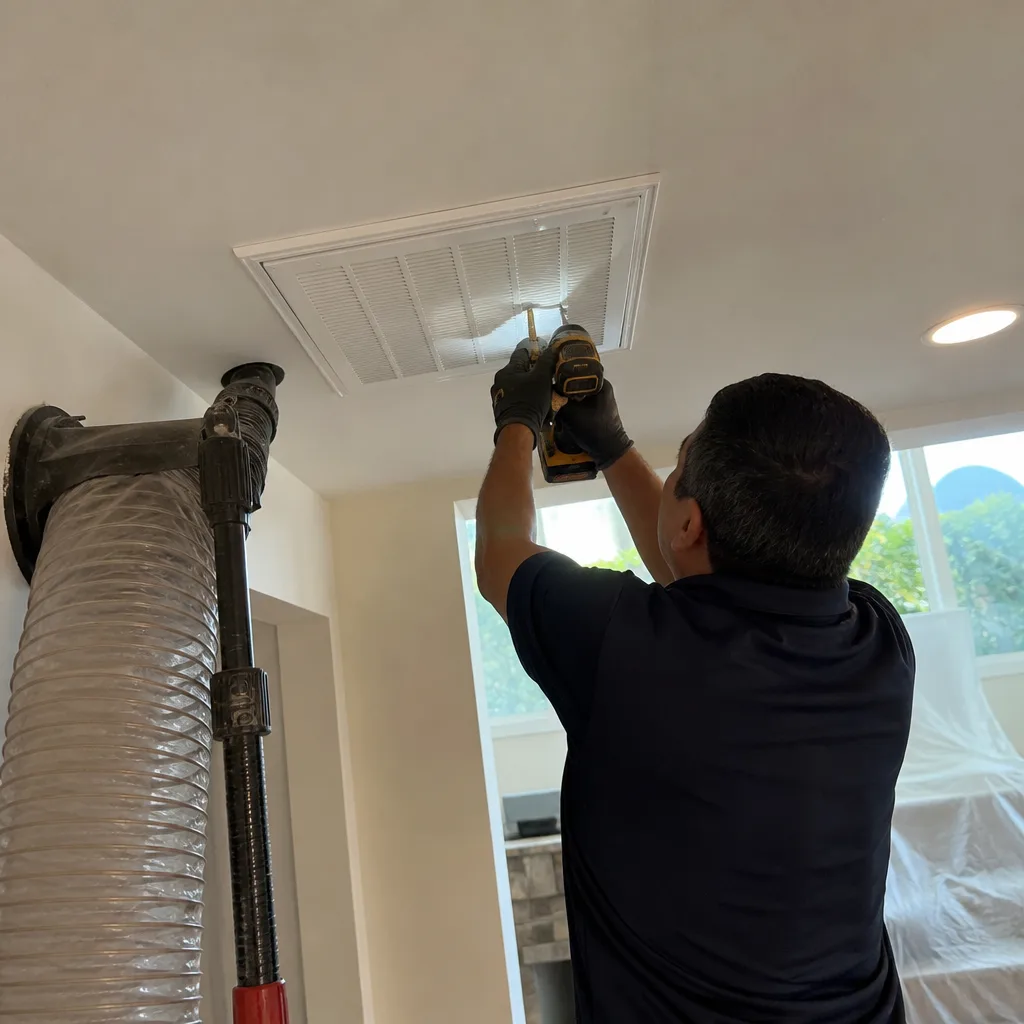 After
AfterDIY vs Professional Air Duct Cleaning: What’s Safe to Do Yourself
Here’s something most DIY air duct cleaning articles won’t tell you: a shop vac shoved into a floor register without negative pressure containment pulls debris toward the opening, then blows the finest particles straight back into the room. A homeowner in Los Angeles who tries this on a Saturday morning can walk into a visibly dustier living room by Sunday afternoon, and the indoor air quality often stays measurably worse for 24 to 48 hours after the attempt. What you’ll learn in this guide-and in our DIY vs Professional Air Duct Cleaning: The Los Angeles Homeowner’s Decision Guide-is where the real line sits between what you can safely handle yourself and what requires professional-grade equipment and training, why that line exists for physical reasons rather than gatekeeping, and how to protect both your HVAC system and your lungs in the process.
Quick Answer
Safe DIY air duct cleaning is limited to register faceplate removal and washing, HVAC filter changes, and visual inspection with a phone camera. Anything that touches the interior of the main duct trunk lines, return plenums, or blower compartments should be handled by a professional with negative-pressure extraction equipment, because homeowner tools cannot contain the particulate load and will redistribute contaminants throughout the home. Professional cleaning in Los Angeles typically costs $350 to $750 for a whole system, while meaningful DIY savings are limited to the $50 to $100 in maintenance tasks that professionals recommend you do yourself anyway.
Table of Contents
- What DIY Can Actually Accomplish (And Where It Fails)
- Why Negative Pressure Is Not Optional
- The 3 Safe DIY Tasks: A Step-by-Step Guide
- The Real Cost Math: What DIY Saves vs. What It Risks
- How to Verify a Professional’s Equipment Setup
- The One Scenario Where DIY Is the Right Call
- What Los Angeles Homeowners Specifically Face
What DIY Can Actually Accomplish (And Where It Fails)
Let’s be direct about what’s physically accessible to a homeowner. Your duct system has several components: supply registers (the grates where conditioned air enters rooms), return grilles (where air gets pulled back into the system), branch ducts (the smaller runs feeding individual rooms), trunk lines (the main distribution channels), the plenum (the box connecting the trunk to your HVAC unit), and the blower compartment inside your furnace or air handler. A homeowner can reach the first two or three inches of a supply register and the surface of a return grille. Everything beyond that requires tools that don’t fit through a 4-by-10 inch opening and techniques that don’t become learnable from a YouTube video in one afternoon.
We’ve walked into Los Angeles homes where the homeowner spent an entire weekend trying to clean ducts with a shop vac, a dryer vent brush, and a leaf blower. What they accomplished was pulling loose debris from the first foot of each branch duct, then spreading the finer dust across their carpet, curtains, and upholstery. The visible result looked like progress. The actual air quality testing told a different story: particle counts for PM2.5 and PM10 were higher after the DIY attempt than before it. This isn’t a knock on homeowner effort. It’s a physical reality: duct systems are under negative pressure when they operate properly, and cleaning them requires maintaining that negative pressure while agitating debris, so the loosened particles get captured rather than released.
Why Negative Pressure Is Not Optional
Negative-pressure extraction is the trade term for creating a strong, contained vacuum inside the duct system while cleaning tools are in operation. In practice, a professional crew connects a large vacuum unit to the main trunk line, seals off all other registers, and maintains suction throughout the process. When agitation tools loosen debris from duct walls, the airflow carries that debris directly into the vacuum’s HEPA filtration system. The air entering your home during a professional cleaning is filtered through the same technology used in hospital isolation rooms, and the debris never has a chance to escape into living spaces.
What happens without negative pressure is simple physics. Any agitation, whether it’s a rotating brush, compressed air, or a shop vac nozzle waving around inside a duct, kicks up settled particles. Without contained suction, those particles follow the path of least resistance. That path is often the same register opening where you inserted the tool. The result is what air quality researchers call resuspension: particles that had settled out of your air get stirred back into circulation. For a Los Angeles homeowner, this matters more than in most cities. Our climate pushes dust into homes year-round, the wildfire season adds particulate load that settles in ducts, and many homes near freeways deal with brake dust and tire particles that accumulate in HVAC systems. Disturbing that material without proper containment puts a concentrated dose of exactly what you were trying to remove back into your breathing air.
There’s a liability angle too. If a homeowner disturbs settled particulates in a duct system that contains asbestos insulation or has accumulated pest waste, the exposure risk shifts from passive to active. Professional crews in Los Angeles undergo training specifically for identifying materials that should not be agitated without containment protocols. Our team at Linden Air Duct Cleaning home has been operating to the Threshold Verified standard since 2004, and that standard includes identifying potential hazards before any equipment touches a duct surface.
The 3 Safe DIY Tasks: A Step-by-Step Guide
There are three tasks every Los Angeles homeowner should do without hesitation. These don’t save you from needing professional cleaning, but they extend the life of a professional cleaning and improve system performance between visits. None of them require opening duct work, and all of them are genuinely useful.
Task 1: Register and Return Grille Cleaning
- Turn off your HVAC system at the thermostat. You want zero airflow while registers are off because an open register without a cover creates an unrestricted path for debris to enter the duct.
- Unscrew or lift off each supply register and return grille. Most registers in Los Angeles homes have two screws or simply lift off a friction fit bracket.
- Fill a sink or tub with warm water and a few drops of dish soap. Submerge the registers and scrub with a soft-bristled brush. Don’t use abrasive pads on painted or powder-coated finishes.
- While registers are off, use a damp microfiber cloth to wipe the visible interior surface of the register box. You can reach about two inches into the opening without specialized tools. This removes the dust and small debris that accumulates where the register meets the duct.
- Let registers dry completely before reinstalling. Check for bent fins or broken damper controls while they’re off, and replace any registers that are damaged enough to restrict airflow.
Task 2: HVAC Filter Replacement
- Locate your filter. In most Los Angeles homes, it’s in the return air grille, the air handler cabinet, or a dedicated filter slot near the furnace. If you have a central return, the filter is usually behind the large grille in a hallway or central room.
- Note the filter’s dimensions and MERV rating before removing it. Standard residential filters range from 1 to 4 inches thick and MERV 4 to MERV 13. Don’t jump to a higher MERV rating without checking your system’s static pressure tolerance. A MERV 13 filter in a system designed for MERV 8 can restrict airflow enough to shorten equipment life.
- Set a calendar reminder. In Los Angeles, with our particulate-heavy air and occasional wildfire season smoke, monthly checks are appropriate during high-pollution months and every 60 to 90 days otherwise. If the filter looks loaded at the 30-day check, replace it without waiting for the recommended interval.
- Install the new filter with the airflow arrow pointing toward the blower. The arrow should face away from the return grille and toward the furnace or air handler.
Task 3: Phone Camera Visual Inspection
- Turn off the system and remove a register or return grille.
- Set your phone’s camera to video mode and turn on the flash. Insert the phone lens-first into the opening and record a slow 360-degree pan of the visible duct interior.
- Look for three things: visible dust accumulation thicker than a light film on the duct walls, moisture staining or water marks, and any signs of pest activity such as droppings, nesting material, or dead insects.
- Repeat at three or four registers around the house. Branch ducts that connect to the same trunk should look similar. If one register shows significantly more accumulation than others, note which one. That’s useful information when you call a professional.
- Wipe the register and surrounding drywall before reinstalling the cover. Your phone picked up dust, but so did the air around the opening.
None of these tasks require skills beyond careful observation and basic household tools. If your inspection reveals anything beyond uniform surface dust, like moisture staining or pest evidence, the DIY window closes and a professional assessment-or our Air Duct Cleaning services-becomes the responsible next step.
The Real Cost Math: What DIY Saves vs. What It Risks
A DIY air duct cleaning attempt costs somewhere between $40 and $150 in equipment. That covers a shop vac with a long hose attachment, a dryer vent brush kit, maybe a leaf blower, and some cleaning supplies. What that money buys is access to the first few inches of each duct opening. A professional cleaning of a typical Los Angeles home, defined as a 1,500 to 2,500 square foot house with a single HVAC system and 10 to 14 registers, runs $350 to $750. That’s the honest range in this market. Larger homes with multiple systems, and homes in older Los Angeles neighborhoods with legacy duct work, trend toward the higher end.
Here’s what the $350 to $750 includes that the $150 DIY setup cannot replicate:
- Negative-pressure extraction equipment capable of maintaining at least 2,000 CFM of contained airflow through the duct system. A consumer shop vac produces roughly 100 to 180 CFM at the nozzle, and none of it is contained.
- HEPA filtration on the vacuum exhaust. The air leaving a professional extraction unit passes through filtration that captures 99.97% of particles down to 0.3 microns. A shop vac’s filter catches large debris and lets fine particles through. Running a shop vac inside your duct system is effectively aerosolizing the fine particle fraction.
- Agitation tools designed for specific duct materials. Rigid metal ducts respond to different agitation than flex ducts or fiberglass duct board. Using the wrong tool on the wrong material can tear flex duct inner liners or break down fiberglass surfaces.
- Access to the blower compartment, evaporator coil, and plenum areas. These are the components that most affect system efficiency, and they’re behind panels that homeowners should not remove due to electrical and moving-part hazards.
The cost risk of DIY goes beyond the wasted $150 in equipment. Improper handling of your HVAC system can void manufacturer warranties. Most furnace and air handler manufacturers include language in their warranty documents specifying that the system must be serviced and maintained by qualified personnel. If a DIY cleaning attempt damages a flex duct liner or contaminates the blower motor, the repair cost lands entirely on the homeowner. A new blower motor for a modern variable-speed system in Los Angeles runs $800 to $1,500 installed. One mistake in a DIY attempt can consume five times the cost of a professional cleaning.
How to Verify a Professional’s Equipment Setup
If you’ve decided to hire a professional, knowing what proper equipment looks like protects you from the bottom-tier operators who do nothing more than a homeowner could do with a shop vac. Every Los Angeles homeowner should know how to spot a real setup versus a van-and-a-vacuum operation. Here’s what a legitimate professional setup includes, and what you should look for as a homeowner standing in your own driveway.
A professional crew should arrive with a truck-mounted or trailer-mounted extraction unit, or a large portable unit rated for commercial use. Trade-trusted brands include Nikro and Rotobrush. These units are visually distinct: they have large diameter collection hoses, typically 8 to 12 inches, and the unit generates audible airflow that’s unmistakable. The crew should seal all registers except the one they’re actively working, and they should run the extraction unit continuously while agitating debris. The entire process typically takes 2 to 4 hours for an average Los Angeles home, not the 45 minutes that low-effort operations quote.
Additional things to verify before work begins:
- Does the company put its price in writing before any work starts? At Linden Air Duct Cleaning, every job receives a written price before the crew begins. No exceptions, no surprise invoices at the end.
- Does the technician arrive with identification you can verify? To the Threshold Standard, every technician is background-checked, identity-verified, and photo-badged. You should receive the tech’s name and photo before the visit, and they should show a photo ID badge at your door.
- Does the company stand behind the work in writing? Ask specifically what happens if the cleaning doesn’t resolve the issue. Our Air Duct Cleaning in Los Angeles work carries the 365-Day Done Right Promise: if the work isn’t right, we make it right, backed in writing on every job.
- Does the company use professional-grade equipment from recognized brands? Nikro and other commercial manufacturers build equipment designed specifically for contained extraction. If a company shows up with equipment indistinguishable from what’s at Home Depot, that’s a red flag.
Your role as the homeowner isn’t to understand every detail of the equipment. It’s to verify that the company has a contained extraction setup, a written price, and a written guarantee. If those three things are present, the equipment and process behind the work are almost certainly legitimate.
The One Scenario Where DIY Is the Right Call
There is one specific situation where skipping professional cleaning and handling things yourself is not just acceptable, but the technically correct decision: newly installed duct work in a recently completed or renovated home where the only contaminant is construction dust. In this scenario, the ducts have zero accumulation of the biological material, pest debris, or years of settled particulate that make older systems candidate for professional extraction. The contamination is drywall dust, sawdust, and general construction debris that entered the system during installation and hasn’t had time to bond with duct surfaces.
Even in this scenario, the DIY scope is still limited. You can clean registers, replace the filter, and wipe accessible duct openings. You should also check with the HVAC contractor who installed the system, because many include a post-construction cleaning as part of the installation contract. If the system has been running during construction, which happens frequently in Los Angeles renovation projects, the dust may have already reached the blower compartment and evaporator coil. At that point, the DIY window closes. A professional evaluation of those components, which are behind electrical panels and require safe handling, is the only way to remove construction dust without risking system damage.
For every other scenario, which means essentially any home in Los Angeles that’s been lived in for more than a year, the responsible approach is professional equipment and a professional’s judgment. The physics of contained extraction don’t bend for homeowner effort or good intentions.
What Los Angeles Homeowners Specifically Face
Los Angeles presents a unique duct contamination profile compared to most of the country. Our dry climate keeps relative humidity low, which means biological growth like mold is less common than in humid markets. What replaces it is a heavier load of inorganic particulate: dust from the desert and mountain regions, brake dust and tire particles from the freeway systems that run through every Los Angeles neighborhood, and during wildfire season, fine smoke particulate that penetrates homes and settles in duct systems. The particulate that accumulates in a Los Angeles duct system is finer and denser than the lint and pet hair that dominates in other climates. Fine particulate is precisely what escapes a shop vac filter and gets redistributed by an uncontained DIY attempt.
Los Angeles also has a housing stock that includes a significant percentage of homes built before 1960. Neighborhoods like Silver Lake, Hancock Park, and parts of the Valley feature original duct work that may include materials and configurations that are fragile enough to require careful handling. Older Los Angeles homes often have rigid metal ducts wrapped in insulation that should not be disturbed without professional judgment, and some pre-1960 homes may have insulation materials that require testing before any agitation occurs. Our team has worked on Los Angeles duct systems since 2004, and a meaningful percentage of our inspections in older neighborhoods involve material identification before we recommend any cleaning approach. This is exactly the kind of judgment that homeowner DIY cannot replicate.
The Los Angeles market also has its share of low-effort operators. The barrier to entry for calling yourself an air duct cleaning company is essentially a van and a shop vac, and this city’s size means there’s enough volume for substandard operations to survive. That’s a big reason Homeowners who are often home alone, parents with young children, and older homeowners, the people who most need to know who is walking through their door, end up paying for work that was never done properly. A company that sends you the technician’s name and photo before the visit, shows photo ID at the door, and puts the price in writing before work begins eliminates the uncertainty that defines a bad experience. Those aren’t conveniences. They’re the minimum standard for letting a stranger into your home and trusting them around your air.
Common Mistakes to Avoid
- Running a shop vac inside a duct without sealing off other registers. This creates an airflow path that draws loosened debris through the entire duct system and deposits it in other rooms. The dust you disturbed in the hallway vent ends up layered inside the bedroom branch duct until the system next runs.
- Using a leaf blower pointed into a register. This pressurizes the duct system and forces dust backward through the return path and into the blower compartment. In Los Angeles homes with attic-mounted systems, loose debris gets blown directly into the air handler.
- Waiting for visible dust before doing anything. Duct contamination builds gradually, and the 20 to 40% of HVAC energy that a clogged system wastes happens long before dust becomes visible at the register. If your filter loads in under 30 days in a Los Angeles home, the ducts are overdue for evaluation.
- Over-tightening register screws or forcing register covers back into place. Registers in older Los Angeles homes are often painted into place, and prying them off can damage drywall. A careful removal technique, scoring the paint seal with a utility knife first, prevents the kind of cosmetic damage that turns a maintenance task into a drywall repair.
- Replacing a standard filter with a high-MERV filter without checking system compatibility. A MERV 13 filter in a system designed for MERV 8 restricts airflow enough to raise energy consumption and shorten blower motor life. If you want better filtration, install a dedicated air cleaner rather than over-filtering at the return grille.
- Ignoring the dryer vent while thinking about air ducts. Dryer Vent Cleaning in Los Angeles addresses a different system but a related hazard. Clogged dryer vents cause thousands of house fires each year, and the lint bypass that accumulates in a dryer vent needs professional tools for removal.
When to Call a Professional
If your phone camera inspection shows visible dust accumulation beyond a light film, moisture staining, pest evidence, or uneven accumulation between registers, the DIY approach has already reached its limit. If your energy bills have climbed for no obvious reason, if the house gets dusty quickly after cleaning, or if anyone in the home has respiratory sensitivities that track with system runtime, a professional evaluation is the next step. If the home is new to you and you don’t know the duct cleaning history, assume the system has never been cleaned and treat it accordingly. And if the system was installed before you bought the home, any contractor warranty documentation applying to the HVAC equipment may already hinge on professional maintenance history. Linden Air Duct Cleaning offers free estimates in Los Angeles, call (980) 447-2498, and every job gets a written price before work begins. The Air Duct Repair in Los Angeles work covers damaged sections that cleaning alone won’t fix.
Frequently Asked Questions
Professional air duct cleaning in Los Angeles typically costs $350 to $750 for a single-family home with one HVAC system, which covers all supply ducts, return ducts, the plenum, the blower compartment, and the evaporator coil. Larger homes with multiple systems trend toward $700 to $1,200. Call (980) 447-2498 for an exact quote based on your system, and you’ll get a written price before any work begins.
You can safely clean register faceplates, replace HVAC filters, and visually inspect duct interiors with a phone camera, but you cannot clean the interior of trunk lines, branch ducts, or the plenum without negative-pressure extraction equipment. Attempting to clean what you cannot contain redistributes fine particles into your living spaces and makes air quality worse for 24 to 48 hours.
Professional crews use negative-pressure extraction units producing contained airflow in the thousands of CFM, paired with HEPA filtration on the exhaust side, and agitation tools sized for specific duct materials. Brands like Nikro and Rotobrush build this equipment specifically for contained duct cleaning. Consumer shop vacs produce roughly 100 to 180 CFM at the nozzle and cannot generate the airflow or filtration needed to clean a duct system safely.
Visible dust accumulation thicker than a light film on duct walls, visible mold growth, evidence of rodent or insect activity, unexplained increases in energy bills, or dust that returns quickly after house cleaning are all signs the ducts need evaluation. In Los Angeles specifically, monthly HVAC filter replacement intervals shrinking to under 30 days are a reliable indicator that the duct system itself is holding a particulate load worth addressing.
Professional cleaning by a qualified company does not void HVAC warranties, and in many cases, documented professional maintenance supports warranty claims. DIY cleaning attempts that damage flex duct liners, contaminate the blower motor, or disturb insulation can void warranty coverage because the damage resulted from unqualified handling. If your system is under warranty, the risk calculus of a $150 DIY attempt versus a $350 to $750 professional cleaning is not close.
Low quotes in the Los Angeles market often come from operators using shop vac equipment rather than contained negative-pressure extraction, people who quote a per-vent price that multiplies into something else once the crew is on site, or companies that spend 45 minutes instead of 2 to 4 hours on a job that requires that time to do safely. A legitimate company puts the full system price in writing before work begins and stands behind it. That’s the difference between a quote and a starting bid.
The Bottom Line
The line between DIY and professional air duct cleaning sits exactly where containment ends, and you’ll find more guides & resources on making that call. What you can reach, see, and wipe without opening duct work is yours to handle. What requires negative-pressure extraction, HEPA filtration, and material-specific agitation is a professional’s work, and that’s not a sales pitch; it’s physics. In Los Angeles, with our fine particulate load and older housing stock, the stakes of doing it wrong are higher than in most markets. A professional job costs $350 to $750, comes with a written price and a written guarantee, and includes verification of who is entering your home. The alternative is a $150 attempt that makes your air worse, risks your HVAC equipment, and leaves the actual contamination untouched. For a Los Angeles homeowner, the math and the judgment both point the same direction.
For a free estimate on professional air duct cleaning, dryer vent cleaning, or air duct repair in Los Angeles, call Linden Air Duct Cleaning at (980) 447-2498. Every job gets a written price before work starts, and a real person answers the phone.
Written by Marcus Veale, Owner at Linden Air Duct Cleaning, serving Los Angeles since 2004.