
Last updated October 8, 2026
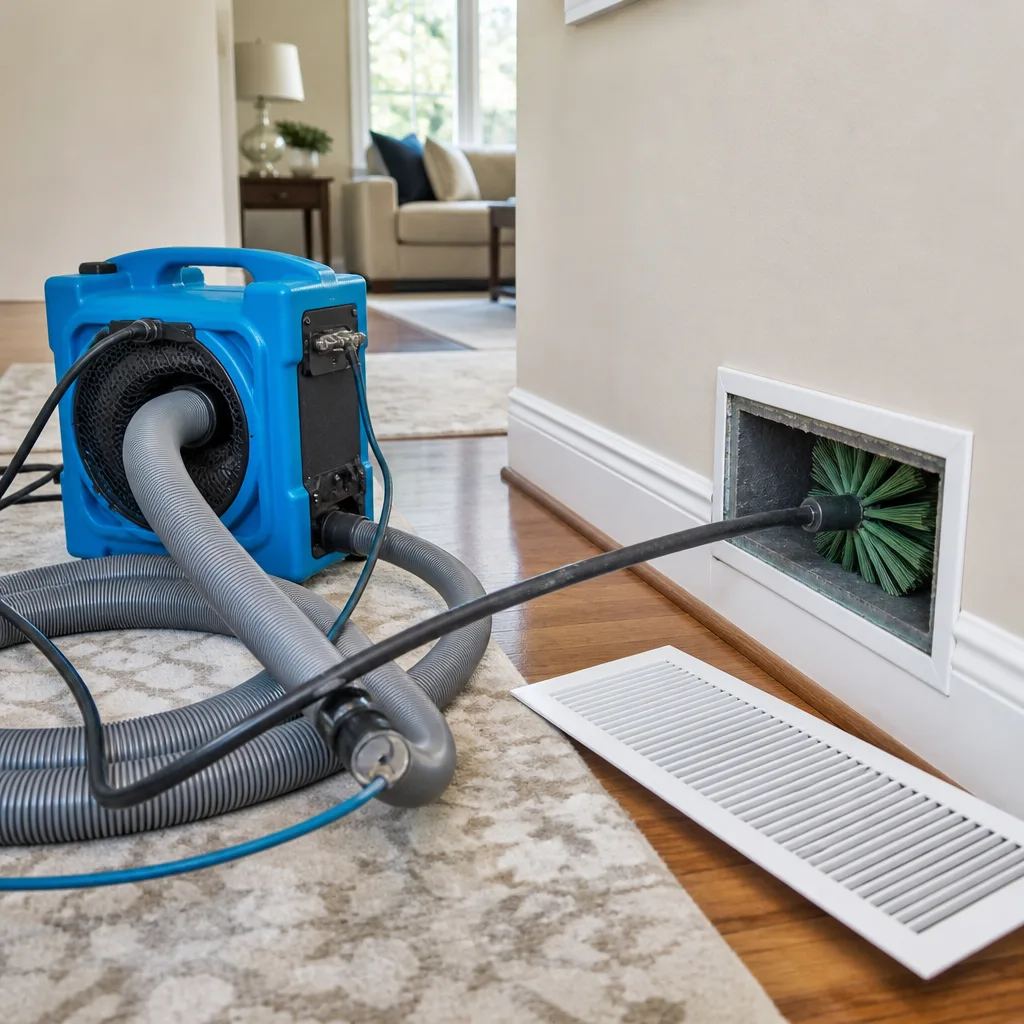
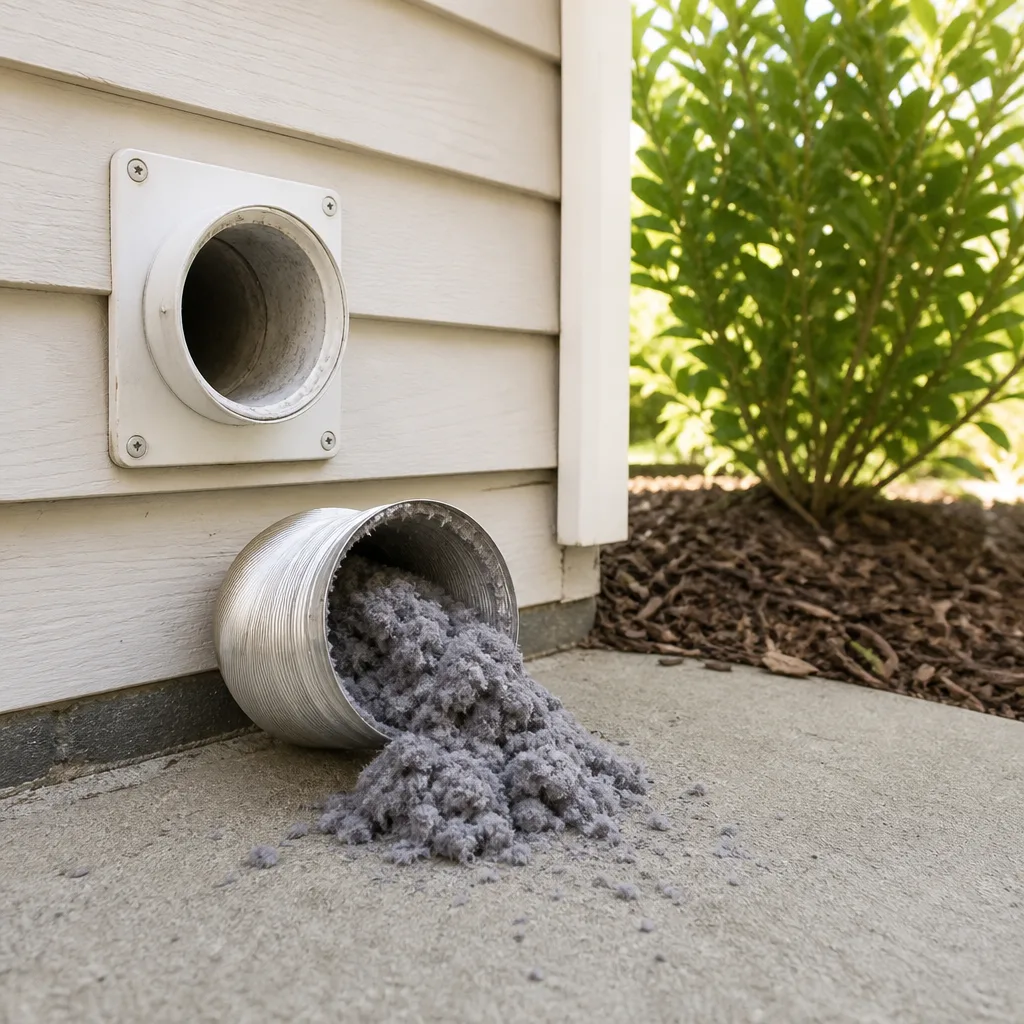
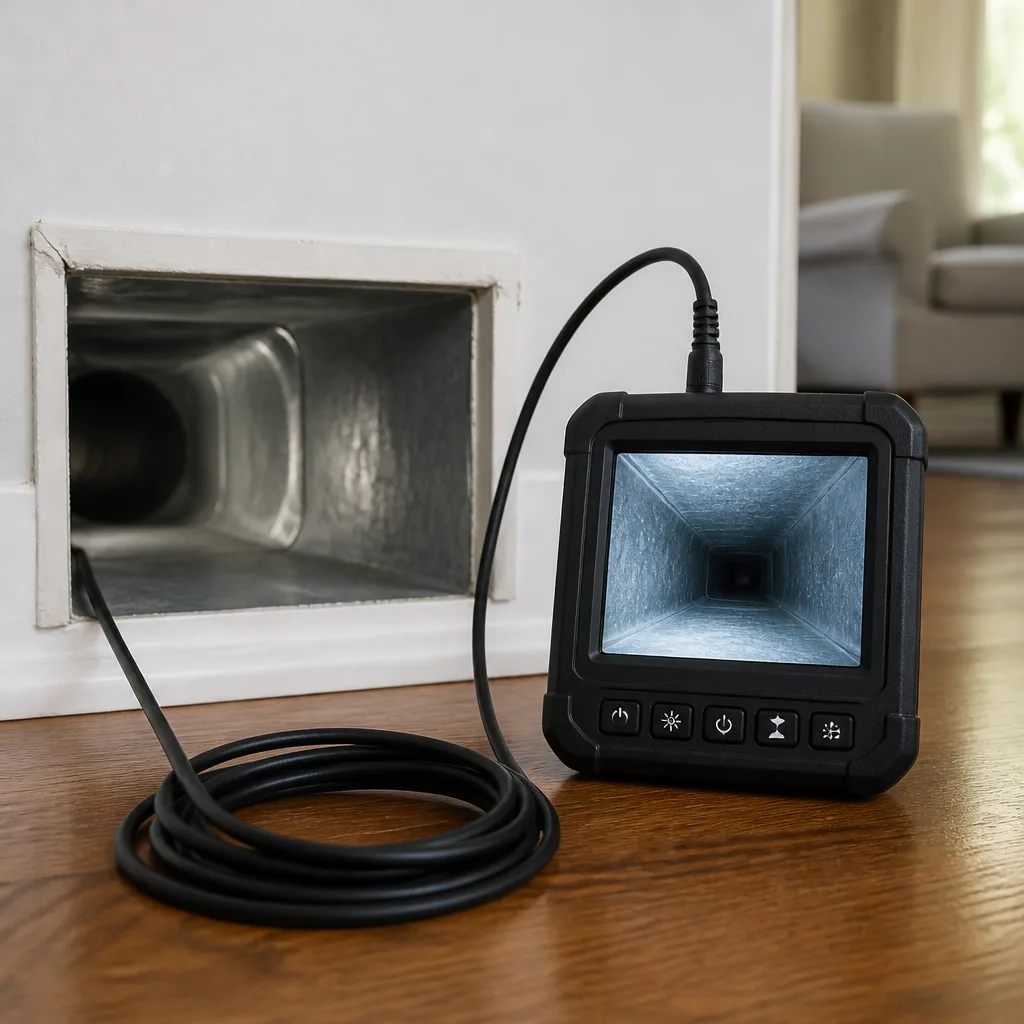
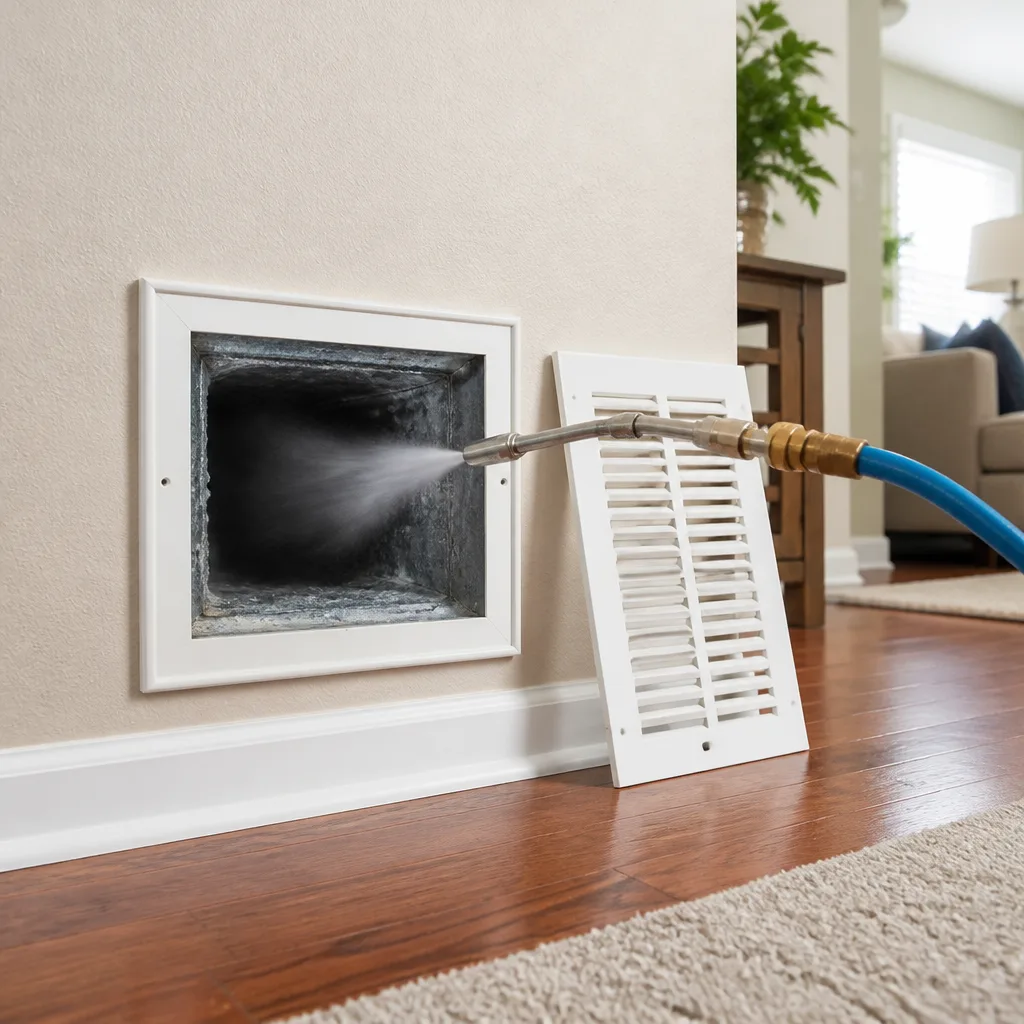
Whole-system duct and dryer vent check with before-and-after photos - you see exactly what came out of your vents
That "$99 whole-house special" is a bait ad - the real number appears once they are in your hallway, or the "clean" is a shop-vac at the register. We photograph the inside of your ducts before and after instead.
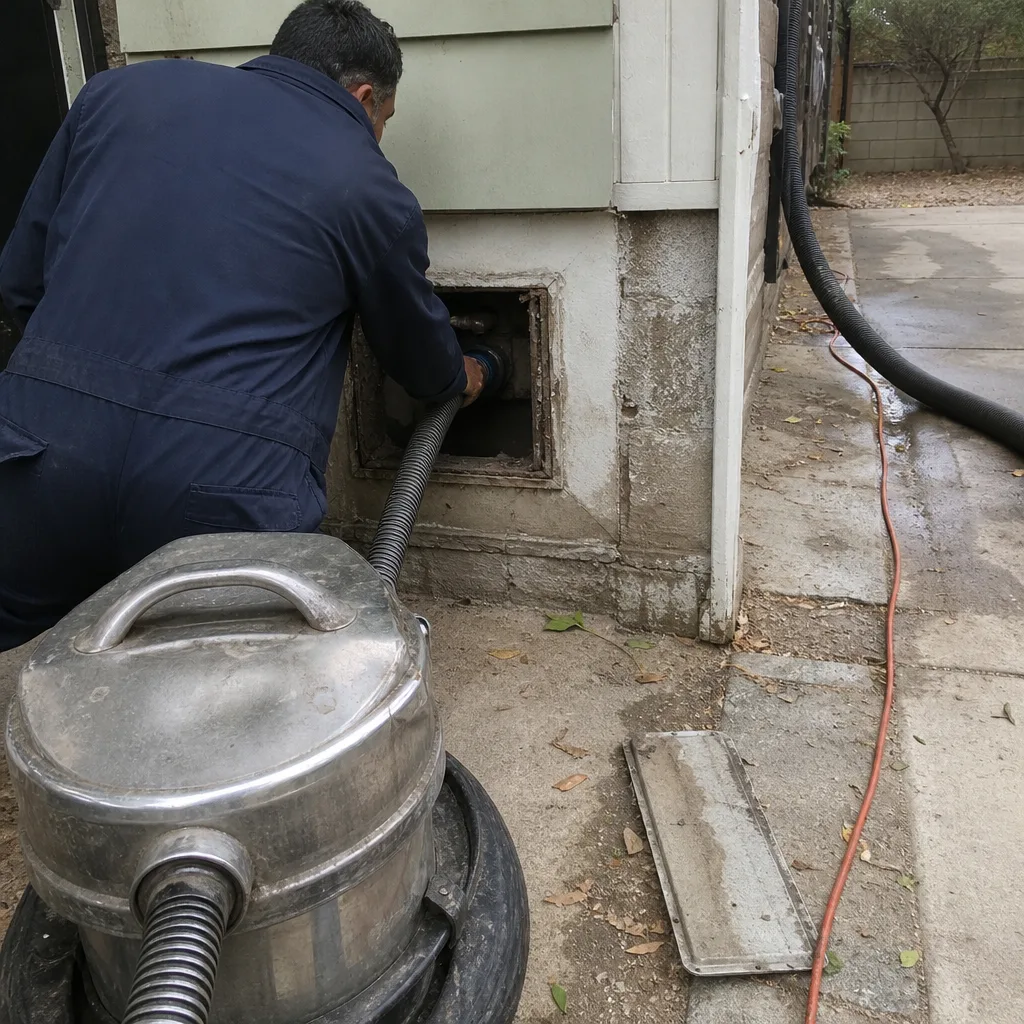 Before
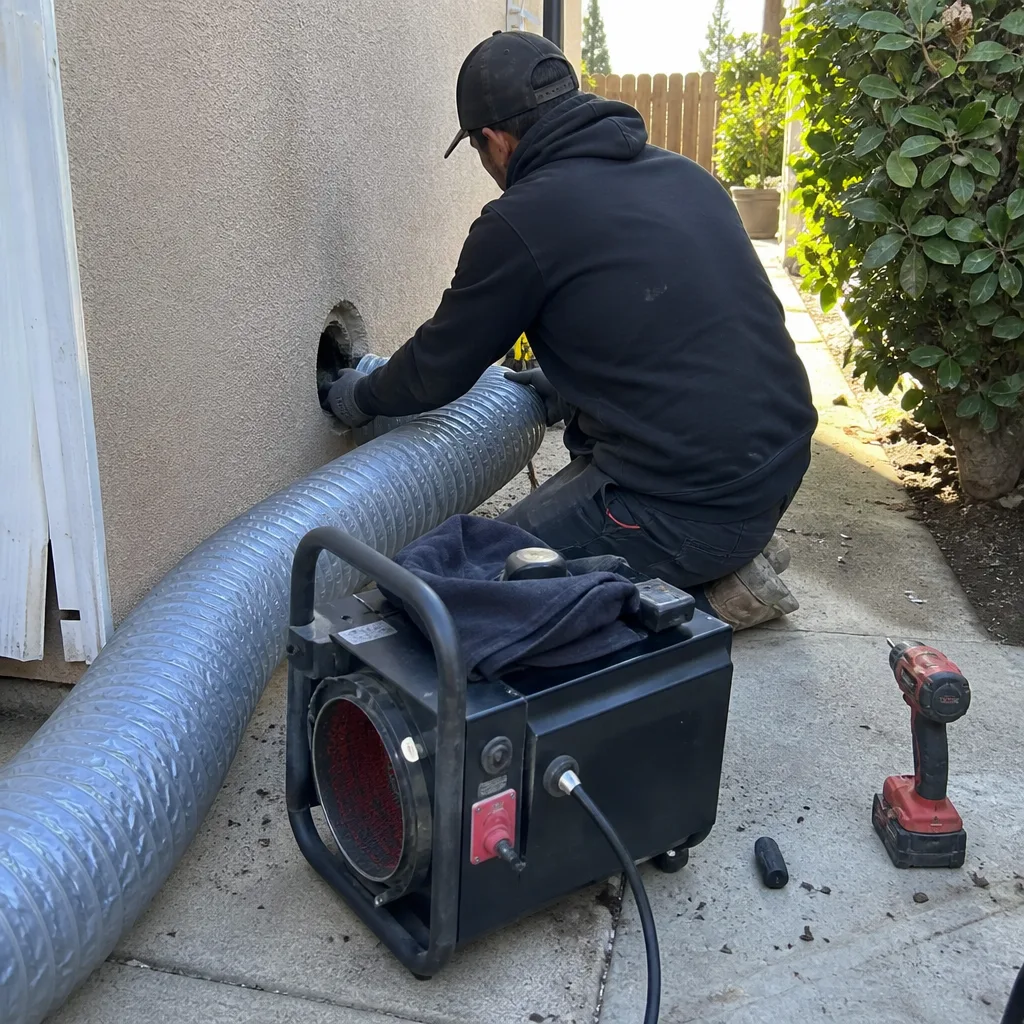 After
After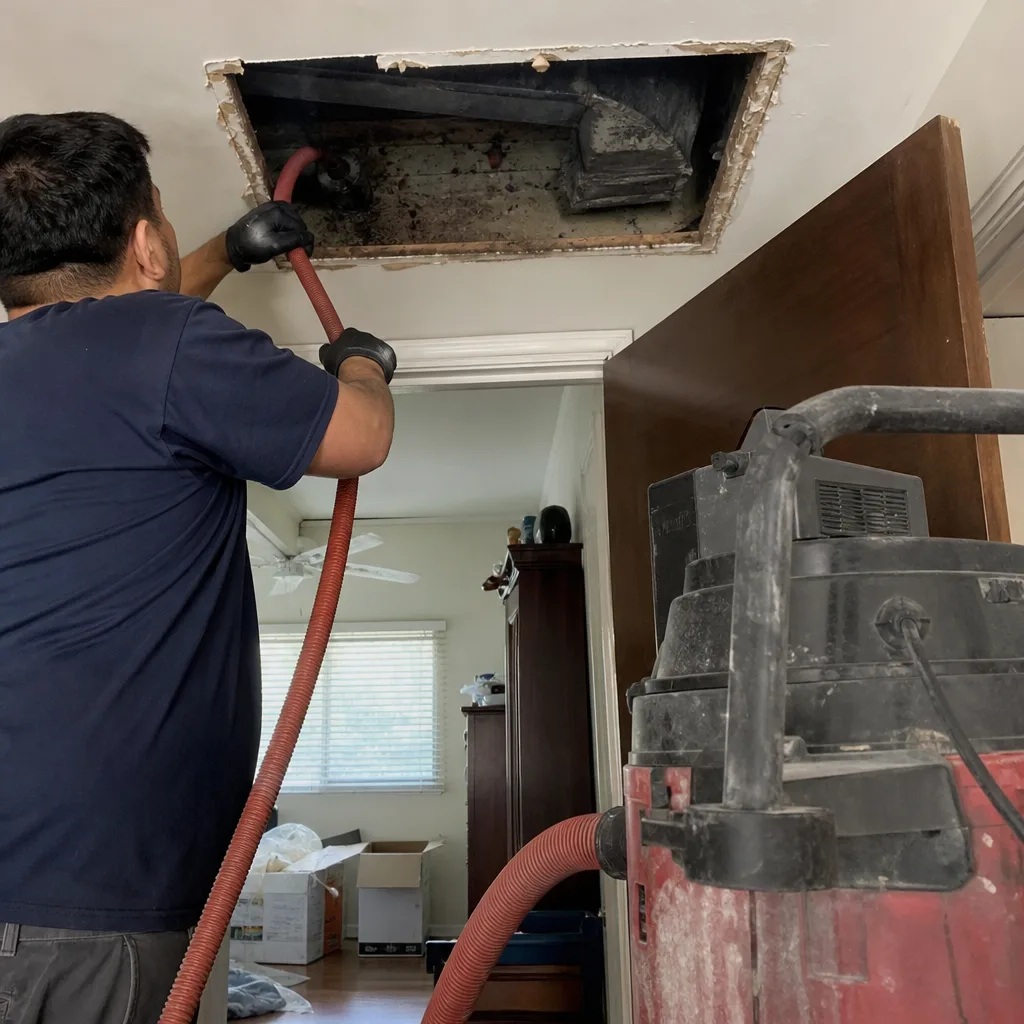 Before
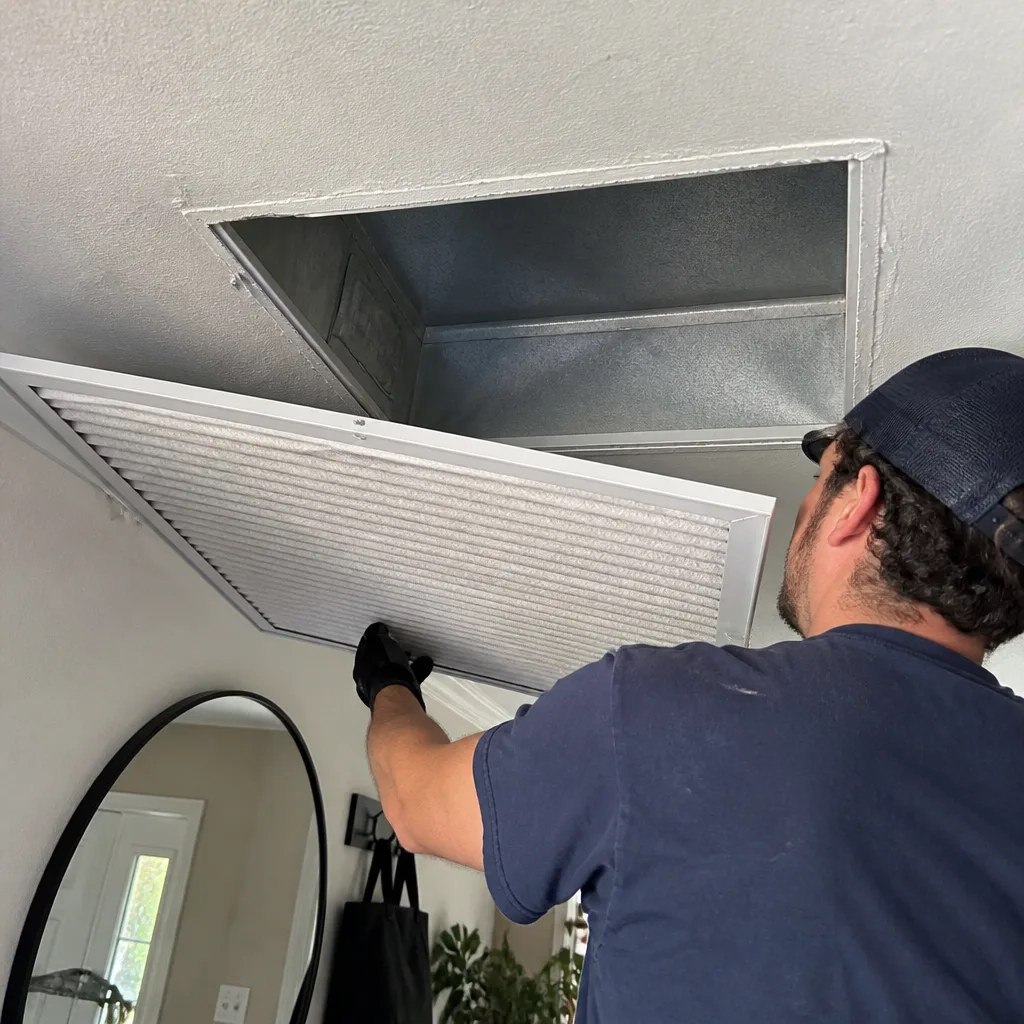 After
After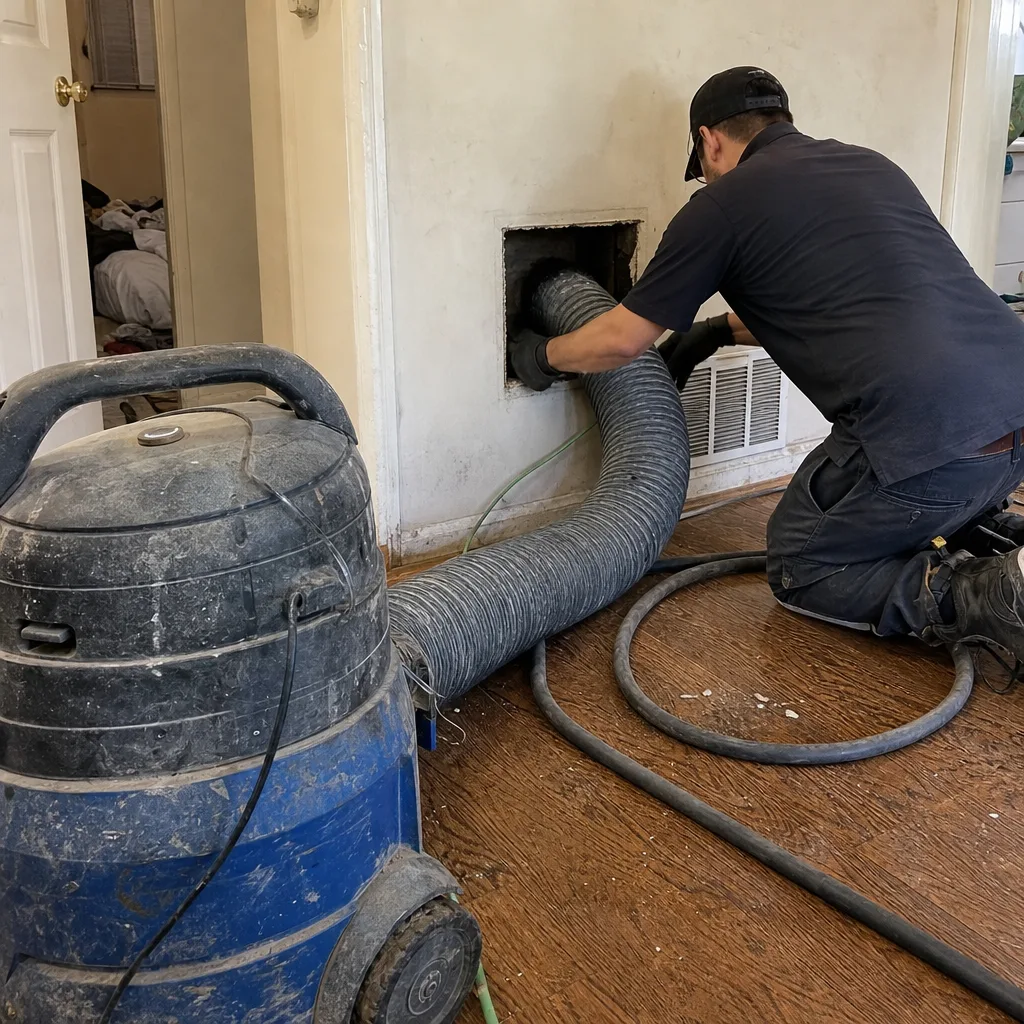 Before
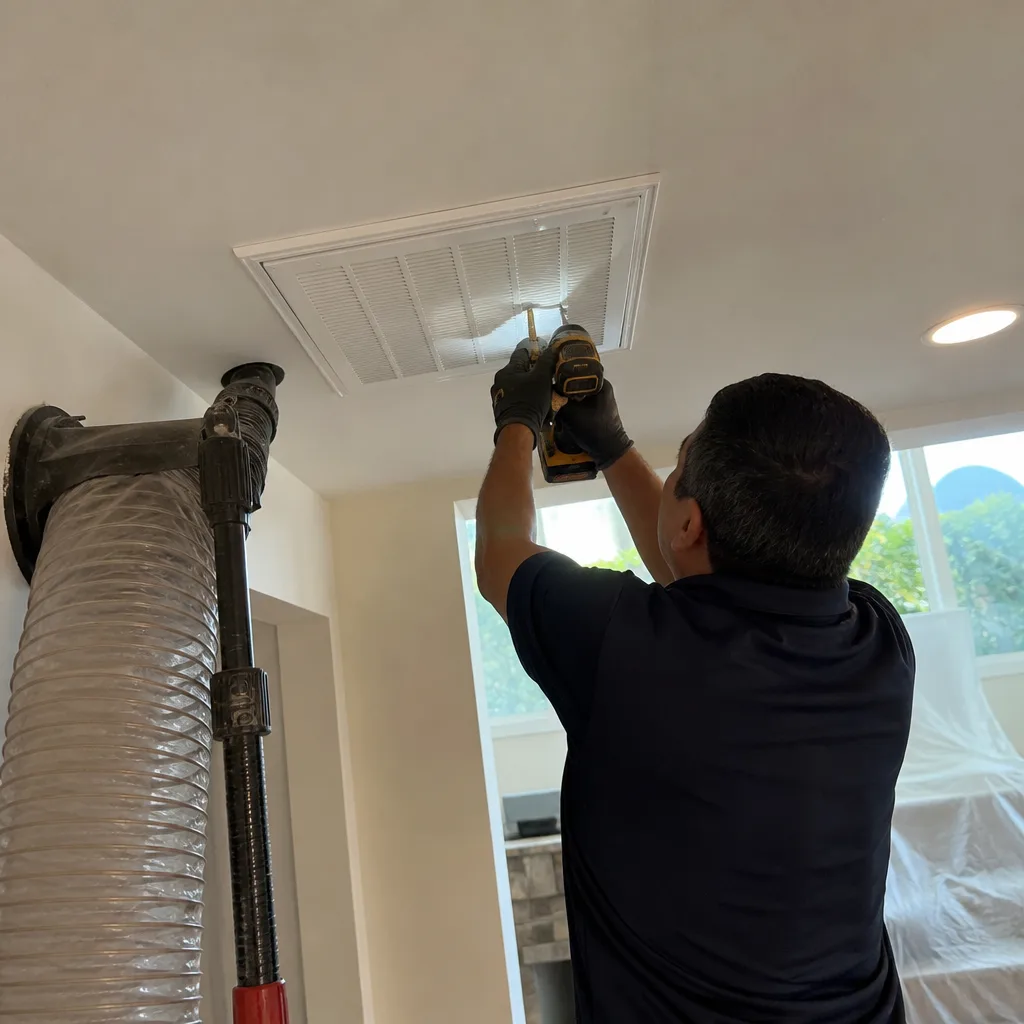 After
AfterDryer Vent Cleaning Maintenance Schedule: What to Do and When
The “once a year” dryer vent cleaning rule assumes a medium-use household with a short, straight duct run – and that configuration represents a minority of homes in Los Angeles, where long runs, multiple elbows, and rooftop terminations are the norm, not the exception. A family of five doing nine loads a week through a 25-foot duct with two bends needs a fundamentally different schedule than a retired couple drying twice-weekly through a short exterior wall vent. This guide replaces the generic calendar rule with a usage-and-configuration model we’ve developed from two decades of inspecting Los Angeles dryer vents, and it gives you the between-cleaning tasks that make the interval decision obvious instead of guessed.
Quick Answer
Dryer vent cleaning intervals should be set by how many loads you run and how hard your duct configuration makes the dryer work, not by the calendar. Most Los Angeles households need Dryer Vent Cleaning every 12 to 18 months, but a high-use household with a rooftop termination or a duct run longer than 15 feet should shorten that to every 6 to 12 months. If your drying time increases by 20% or more between cleanings, the schedule shortens regardless of what the calendar says.
Table of Contents
- The Usage-and-Configuration Matrix: What Actually Drives Lint Buildup
- How Weekly Dryer Loads Set Your Baseline Interval
- Duct Length, Elbows, and Why a Rooftop Termination Changes Everything
- Between-Cleaning Maintenance: What Every Homeowner Should Do
- The One Airflow Check That Predicts When Cleaning Is Due
- How to Build a Cleaning Log That Creates Accountability
- Los Angeles Factors That Shorten Intervals: Wildfire Ash, Pests, and High-Use Periods
- The Warning That Overrides Any Schedule: The 20% Drying Time Rule
The Usage-and-Configuration Matrix: What Actually Drives Lint Buildup
Lint accumulation is a mechanical process, not a seasonal one. Every load of laundry sends moisture and microfibers through the dryer’s blower and into the vent run. The volume of lint deposited per load is fairly constant for a given fabric mix; what changes is how much of it sticks before reaching the exterior cap. Three variables control that: how many loads you run, how far and how tortuously the duct travels, and what kind of termination the duct ends in. A two-person household running four loads weekly through an eight-foot straight run ending at an exterior wall cap might genuinely need service only every two years. The same household in a Los Angeles hillside home with a 28-foot duct climbing to a rooftop cap, with two 90-degree elbows, can accumulate a dangerous restriction in under ten months. The matrix below is the reference we use when homeowners ask us to translate their specific situation into a schedule.
| Variable | Low Demand | Moderate Demand | High Demand |
|---|---|---|---|
| Weekly dryer loads | 1-4 loads | 5-8 loads | 9+ loads |
| Duct length | Under 10 feet | 10-20 feet | Over 20 feet |
| Number of elbows | 0-1 | 2 | 3 or more |
| Termination type | Exterior wall cap | Eave or soffit cap | Rooftop or steep-pitch cap |
| Recommended interval | 18-24 months | 12-18 months | 6-12 months |
The takeaway: if your configuration puts you in the high-demand column for any two variables, default to the shorter interval. If you’re high-demand on all three, schedule inspection at six months and let airflow readings tell you whether cleaning is required. In our experience across Los Angeles, most homes fall into at least the moderate column on duct length alone, which is why the blanket annual rule often runs long.
How Weekly Dryer Loads Set Your Baseline Interval
Load count is the single most predictive variable for lint accumulation, because there is no way to run a dryer without depositing lint into the vent. A load of bath towels produces more lint than a load of nylon athletic wear, but the variability between fabric types washes out over a week of normal mixed laundry. What matters is the total number of cycles, because every cycle pushes the previous cycle’s lint further down the run and adds a fresh deposit on top of it. A household of six running the dryer twice daily will produce roughly four times the lint volume of a single occupant running it twice a week. That is not a linear progression problem: the heavier user also compacts the lint more densely, because the warm, moist air stream is nearly continuous. Compacted lint binds into a felt-like layer that a homeowner’s lint brush will not remove; it requires professional negative-pressure extraction and a rotary agitation tool to break up.
To set a baseline interval, count your actual weekly loads for two consecutive weeks, not an idealized number. Write it down. If you’re at eight or more loads weekly, plan professional cleaning at least every 12 months, and expect the duct to need attention at the shorter end of that range if any configuration factors are also adverse. If you’re under five loads weekly, you have some breathing room, but only if the duct run is short and straight. The interaction effect is what the calendar rule misses: a light user with a bad duct can need more frequent service than a heavy user with an ideal run.
Duct Length, Elbows, and Why a Rooftop Termination Changes Everything
Duct length is not merely a measure of distance; it is a measure of resistance. A dryer’s blower is designed to push air through a limited amount of static pressure, and every foot of duct, every elbow, and every vertical climb adds resistance. The building code standard in Los Angeles permits a maximum developed length of 35 feet for dryer exhaust ducts, with each 90-degree elbow counting as an additional 5 feet of equivalent length. A 20-foot run with two elbows is therefore already at 30 equivalent feet before accounting for the termination cap. Rooftop terminations add a vertical component that wall caps do not have: the air column must be pushed upward against gravity, and any lint that fails to exit falls back down the vertical section, where it accumulates at the base of the riser. We see rooftop-terminated ducts in the hillside neighborhoods of Los Angeles – Los Feliz, Mount Washington, Baldwin Hills, and the canyon communities – that are functionally overdue for cleaning at nine months even with moderate use, because the vertical riser traps lint that a horizontal run would carry out.
Elbows are lint traps by geometry. Every change of direction creates a low-velocity zone on the inside of the bend, and that is precisely where lint deposits first. The transition from the dryer outlet to the duct run is itself a 90-degree turn in most installations, so even a nominally straight run has one built-in restriction point. If your duct has visible elbows at both the floor and the wall or ceiling transition, you have at least three effective bends, and the interval should reflect that. When we inspect a duct, we map the entire run from appliance to termination, because a homeowner often cannot see the middle of the run and may not know how many elbows are hidden in wall or floor cavities.
Between-Cleaning Maintenance: What Every Homeowner Should Do
Professional cleaning is the corrective measure; between cleanings, there are Dryer Vent Cleaning Warning Signs Every Homeowner Should Know to watch for and maintenance tasks that extend the interval and catch restriction before it becomes a fire hazard. None of these require special tools beyond a flashlight and a few minutes.
- Clean the lint trap before every load. This is non-negotiable and takes ten seconds. A lint trap loaded with residue from previous cycles passes more lint downstream. If your lint trap has tears or gaps in the mesh, replace it immediately – a damaged trap is a directed lint injector into the duct.
- Wash the lint trap monthly. Fabric softener sheets and certain detergents leave a waxy film on the mesh that restricts airflow even when the trap looks empty. Run the trap under warm water; if water beads rather than sheets through the mesh, the film is present. Scrub gently with a soft brush and dish soap, then dry before reinstalling.
- Inspect the exterior cap monthly. Go outside with a flashlight and look at the termination. The flapper or louvers should open freely when the dryer runs and close fully when it stops. If you see lint hanging from the cap, remove it by hand. If the cap is damaged, missing, or the flapper is stuck open, it is an invitation for birds, rodents, and ash.
- Check the visible duct section quarterly. Pull the dryer out far enough to see the transition duct. Kinks, crush points, or gaps at the connection need to be corrected – a crushed flex duct can halve airflow and accelerate the schedule.
- Run the airflow check described below. Do this every three months. It is the cheapest early warning system available, and the trend data is more valuable than any single reading.
One note specific to Los Angeles homes: many exterior terminations in the city are located in side yards or behind gates, where the cap is not visible from the street. If you cannot find your exterior cap, that itself is a reason to schedule a professional inspection, because a hidden cap is frequently a neglected one, and we have found terminations that were blocked for years without the homeowner knowing the cap existed at all.
The One Airflow Check That Predicts When Cleaning Is Due
There is a simple, equipment-free test that gives you an objective airflow trend. It works because a properly functioning dryer vent system moves air at a predictable velocity, and restriction causes a measurable drop in that velocity long before drying performance degrades noticeably.
- Run the dryer empty on the timed-dry setting with the heat on for five minutes to warm the duct.
- Shut the dryer off and open the door.
- Place a single sheet of standard printer paper against the lint trap opening while the dryer is in the middle of a normal cycle with wet clothes.
- Observe what the paper does. A healthy system will hold the paper firmly against the trap opening due to strong suction. As the duct restricts, the suction weakens until the paper barely clings or falls away.
Record the result in your cleaning log with a simple three-category rating: strong, weak, or no hold. The trend matters more than any individual observation. If a system that held strong three months ago now barely holds the paper, the restriction is progressing and the interval needs to shorten. The beauty of this check is that it is free, takes three minutes, and cannot be gamed. A homeowner who performs this check quarterly will know they need professional cleaning before the dryer tells them through longer cycle times, and certainly before the lint reaches a combustible depth.
How to Build a Cleaning Log That Creates Accountability
A dryer vent cleaning log is a record of what was done, when, by whom, and what the measurable condition of the system was on that date. It creates accountability between you and the service provider, it documents the work for resale, and it removes any doubt about whether the interval you have chosen is working.
The log does not need to be elaborate. A simple notebook page or a spreadsheet works. At minimum, record these fields every time professional cleaning is performed:
- Date of service. The actual date the work occurred, not the scheduling date.
- Technician name and company. If the service provider does not tell you who performed the work, that is a red flag. Linden Air Duct Cleaning sends a technician’s name and photo before the appointment, and the tech shows a photo ID badge at the door – a protocol we call the Threshold Standard, and one you should expect from any provider you invite into your home.
- Airflow reading before and after cleaning. Reputable duct cleaning companies measure static pressure or airflow velocity before and after the service. The before number tells you how restricted the system was; the after number tells you whether the cleaning actually restored full flow. A provider that cannot produce before-and-after readings is not measuring their work.
- Lint volume removed. Quantified or estimated. This is the direct measure of how much the interval needed to be shorter or could have been longer.
- Photos of the interior before and after. Before-and-after photos of their own ducts are a standard deliverable in our industry, or should be. They are the only way a homeowner can verify that cleaning actually occurred inside the duct run, rather than at the two visible ends.
- Next recommended service date. Based on the findings, not a generic calendar reminder.
This log becomes evidence. When you sell the home, a documented service history with airflow readings demonstrates that a known fire-safety maintenance item was managed responsibly. When you compare providers, the log lets you see whether your chosen interval is holding. And if a repair fails or a cleaning was inadequate, the written record is what makes any guarantee enforceable. Every dryer vent cleaning from Linden Air Duct Cleaning’s Los Angeles service includes written documentation, and every repair is covered by a written guarantee with a free second visit if the covered repair does not hold.
Los Angeles Factors That Shorten Intervals: Wildfire Ash, Pests, and High-Use Periods
Los Angeles is not a generic climate, and dryer vent maintenance here reflects that. Three local factors shorten the interval for every household, regardless of usage level.
Wildfire ash. During and after wildfire events, fine particulate ash enters exterior terminations by passive settlement and by active suction when the dryer runs. This ash is chemically alkaline, and when it binds with the moisture and heat of the dryer exhaust, it creates a crust that accelerates lint adhesion. Homes in the San Fernando Valley and the foothill communities experience more of this than coastal homes, but a major fire event affects air quality citywide. If you live anywhere in Los Angeles within 15 miles of a wildfire burn scar, expect the next cleaning interval to be shorter by three to six months, even if your usage did not change.
Pest nesting season. Exterior terminations with damaged or missing flappers become nesting sites for starlings, sparrows, and rodents, particularly in the spring months of March through May. A nest inside a duct run is not merely an airflow restriction; it is a fuel load. We have extracted nests from vents in Los Angeles homes in every part of the city, often in ducts that had been cleaned within the previous year. The prevention is simple: a functional termination cap with an intact damper. The inspection is equally simple: look at the cap monthly, and if anything has entered the duct, call a professional before running the dryer again. Never attempt to remove a live nest from an energized duct run.
High-use periods. Los Angeles households do not run dryers evenly through the year. Summer sports seasons, pool towel use, and back-to-school transitions spike laundry volume, and the weeks between Thanksgiving and New Year’s push many households into two-a-day dryer operation. A cleaning interval that worked at five loads per week will be too long at nine loads per week. The cleaning log exists precisely for this: when your actual usage changes, the schedule changes with it.
The Warning That Overrides Any Schedule: The 20% Drying Time Rule
Every schedule is a starting point, not a commitment. The one signal that overrides any interval, any matrix, and any calendar is this: if your drying time increases by 20% or more between cleanings, the interval needs to shorten. We have told Los Angeles homeowners this for years because it is the most reliable functional indicator of restriction, and it works for every configuration and every usage level.
Establish your baseline drying time for a full load of bath towels when the vent system is known-clean. That is your reference number. If that load typically takes 45 minutes and you now find it taking 54 minutes or longer, the duct is restricting. Do not wait for the calendar. Do not wait for the dryer to shut itself off on thermal overload. Call for professional cleaning before the restriction deepens. The reason this rule matters is that drying time is not linear with restriction: a 20% increase in drying time corresponds to a much larger percentage increase in operating temperature inside the dryer cabinet, and that heat is what ignites lint. The lint itself is always present; the question is whether the heat can dissipate.
Two other warnings should trigger immediate professional attention, regardless of schedule. The first is a burning smell that persists through a full cycle – that means lint is already charring or the dryer’s high-limit thermostat is activating. Stop using the dryer, unplug it if accessible, and call a professional. The second is visible lint accumulation at the exterior cap while the dryer is running, which indicates the cap is blocked or the duct is so restricted that lint is no longer carried out. Both are failures of prevention, and both are solvable with a cleaning interval that matches how you actually use the dryer. For homes in Los Angeles where the dryer vent runs through an attic or an inaccessible crawlspace, we strongly recommend leaving interior duct inspection and cleaning to a trained technician – confined spaces, vertical climbs, and energized appliances are not DIY territory.
Common Mistakes to Avoid
- Cleaning on the calendar instead of by condition. A fixed annual clean in a high-use Los Angeles household can leave the vent dangerously loaded for months before the service date arrives. Use the airflow check and the 20% drying time rule to decide when cleaning is actually due, and treat the calendar as a fallback.
- Assuming a clean lint trap means a clean duct. The lint trap catches only a fraction of total lint volume – the rest passes downstream. A clean trap is necessary but not sufficient, and the buildup it fails to catch is exactly what professional cleaning removes.
- Ignoring the damper on the exterior cap. A flapper that stays open all night lets moisture, pests, and fine wildfire ash into the duct. The cap is a maintenance item; check it monthly, and replace it if it does not seal.
- Using flexible foil ducting. Foil transition ducts are fragile, kink easily, and are prohibited by current building codes in favor of semi-rigid metal. If you have foil ducting, replace it now – it is both a restriction point and a fire risk.
- Running the dryer on high heat every cycle. High heat accelerates lint deposition by baking moisture out of the fabric more aggressively, and it raises duct temperatures during the later stages of the cycle when trapped heat cannot escape. Use the medium or low heat setting for most loads.
- Putting off professional cleaning because the dryer still works. Restriction develops gradually, and a dryer that still dries clothes can be weeks or months into a dangerous level of lint buildup. The whole point of a maintenance schedule is to clean before the symptoms become obvious.
- Accepting a low price without verifying the work was done. A cheap cleaning that only brushes the visible ends of the duct leaves the restriction in place. Always ask for before-and-after photos and airflow readings – a provider who cannot produce them is not doing the job.
When to Call a Professional
A homeowner can handle monthly cap inspections and the quarterly airflow check, but professional cleaning is not a task to attempt with a hardware-store brush kit. The duct interior needs negative-pressure extraction to remove lint without sending it into the wall cavity, and a rotary agitation tool to break up the compacted felt that forms over time. For Dryer Vent Cleaning Troubleshooting: Common Problems and How to Fix Them, consult a trained technician rather than attempting DIY methods. In Los Angeles, where ducts commonly run through inaccessible wall cavities and vertical risers to rooftop caps, the work often requires roof access and fall-protection equipment. If your vent has not been professionally cleaned in over 18 months, if your drying time has increased by 20% or more, if you see a visible lint accumulation at the cap, or if you smell burning during a cycle, call a professional now – do not run the dryer again until the duct is inspected and cleared.
Linden Air Duct Cleaning offers free estimates in Los Angeles – call (980) 447-2498.
Frequently Asked Questions
Most Los Angeles homes need dryer vent cleaning every 12 to 18 months, but the correct interval depends on your weekly dryer loads, duct length, and termination type. Households with long duct runs, rooftop terminations, or heavy usage should clean every 6 to 12 months, and the 20% drying-time rule overrides any calendar schedule. Call (980) 447-2498 for an exact recommendation based on your home’s configuration – estimates are free.
Dryer vent cleaning addresses the exhaust duct that carries hot, moist, lint-laden air from the dryer to the exterior. Air duct cleaning addresses the HVAC supply and return ductwork that distributes conditioned air through the house. They are separate systems with different contamination profiles and different cleaning protocols. A reputable provider will quote them separately because the work is different, and Lindens provides a written price before any work begins, every time.
The low price is usually for a partial job: a brush pass through the accessible ends of the duct without full-length agitation, no before-and-after airflow readings, and no roof access. The full job – negative-pressure extraction, rotary agitation through the entire run, cap and damper inspection, and documentation – costs more because it requires more equipment, more time, and more skill. If a price is dramatically below market, ask what the quote excludes before saying yes. Ask for written scope-of-work and written pricing upfront.
You should receive before-and-after photos of the duct interior, and airflow readings before and after cleaning. If a provider cannot produce both, the work cannot be verified. At Linden Air Duct Cleaning, every technician follows the Threshold Standard: background-checked, identity-verified, photo-badged, and introduced to you by name and photo before arrival. The written price comes before any work begins, and the written guarantee on any repair comes with a free second visit if the covered repair does not hold.
You can maintain the accessible sections – the lint trap, the transition duct behind the dryer, and the exterior cap – but a homeowner cannot reach the full interior of a long duct run, and you cannot generate the negative pressure that removes loosened lint without spreading it into wall cavities. For ducts over 10 feet with multiple bends, or for any rooftop termination, professional cleaning is the only way to confirm the entire run is clear. The exterior cap and the first few feet are safe to inspect; the interior of a hot, energized duct system is not.
Wildfire ash enters exterior terminations by settlement and active suction, and it binds with moist dryer lint to create a crust that accelerates restriction. If your Los Angeles home is within 15 miles of a burn scar, shorten your next cleaning interval by three to six months, and inspect the exterior cap more frequently during and after fire season. The same applies to pest nesting season in spring: a damaged damper invites birds and rodents, and a nest inside a duct run is both a restriction and a fuel load.
The Bottom Line
Dryer vent maintenance is a usage-and-configuration calculation, not a calendar date. Count your actual weekly loads, map your duct run, check your exterior cap monthly, and perform the airflow test quarterly. Record every professional cleaning with before-and-after readings and photos. If drying time increases by 20% or more, act immediately regardless of what the calendar says, and in Los Angeles, shorten your intervals when wildfire ash, pest season, or high-use periods change the picture. The goal is not to schedule cleaning – it is to clean before the restriction develops, and that requires knowing your system, not trusting a generic rule. Linden Air Duct Cleaning has been serving Los Angeles homeowners since 2004, and we offer dryer vent cleaning in Los Angeles and air duct repair in Los Angeles with written pricing before any work begins, every single time.