
Last updated October 8, 2026
Whole-system duct and dryer vent check with before-and-after photos - you see exactly what came out of your vents
That "$99 whole-house special" is a bait ad - the real number appears once they are in your hallway, or the "clean" is a shop-vac at the register. We photograph the inside of your ducts before and after instead.
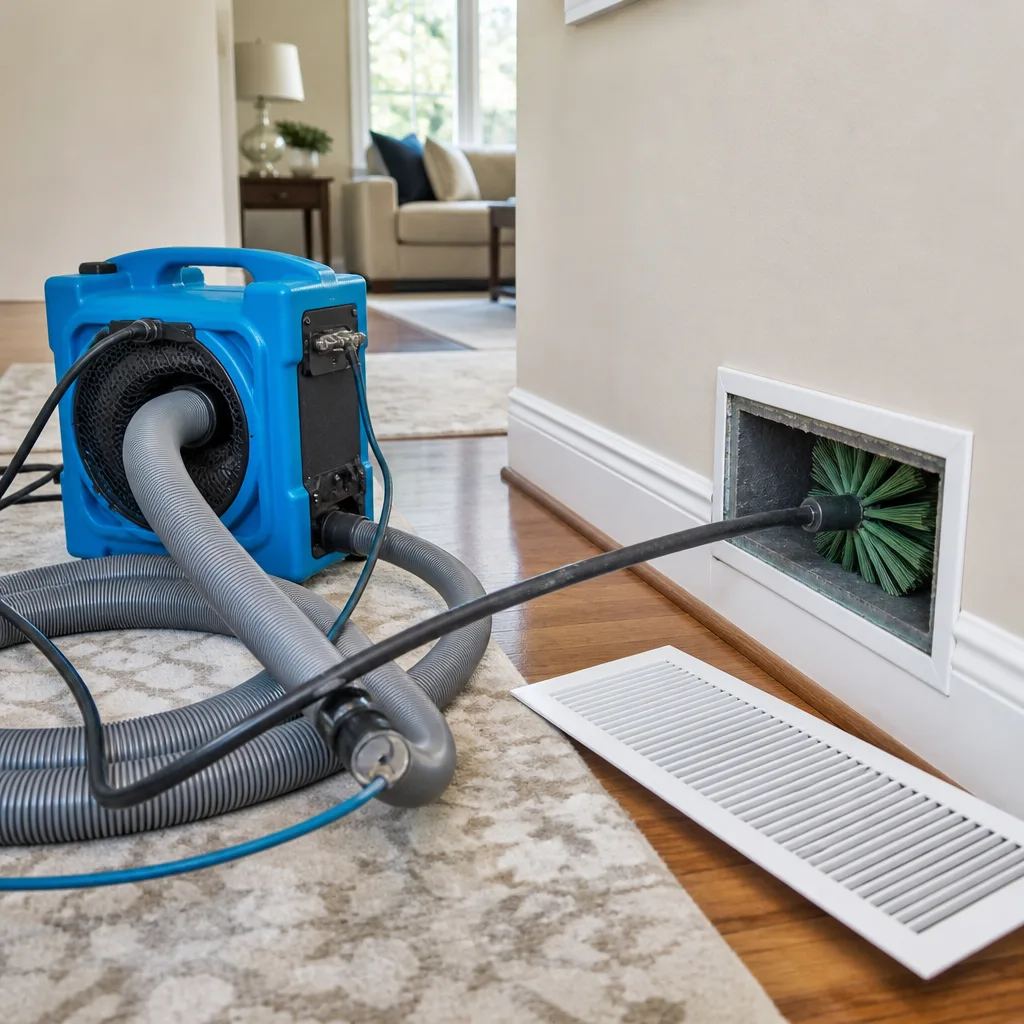
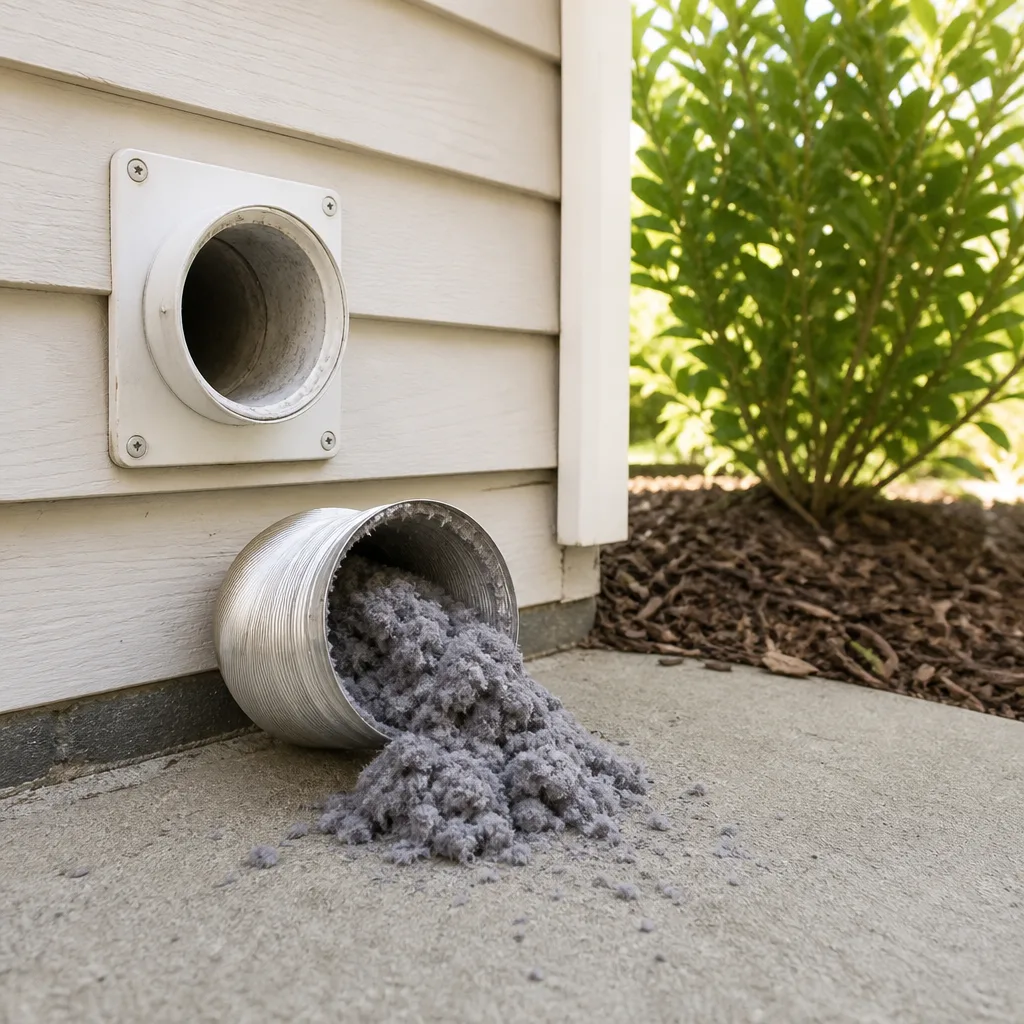
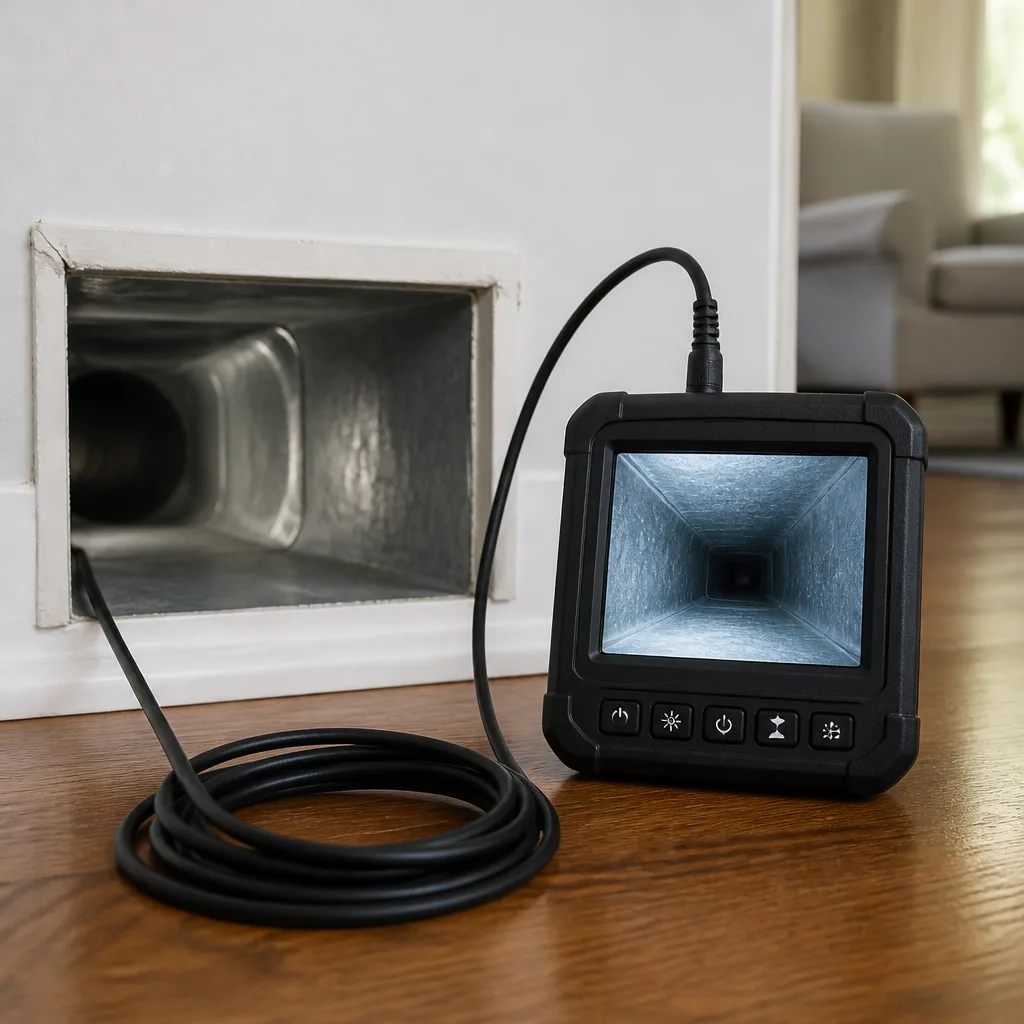
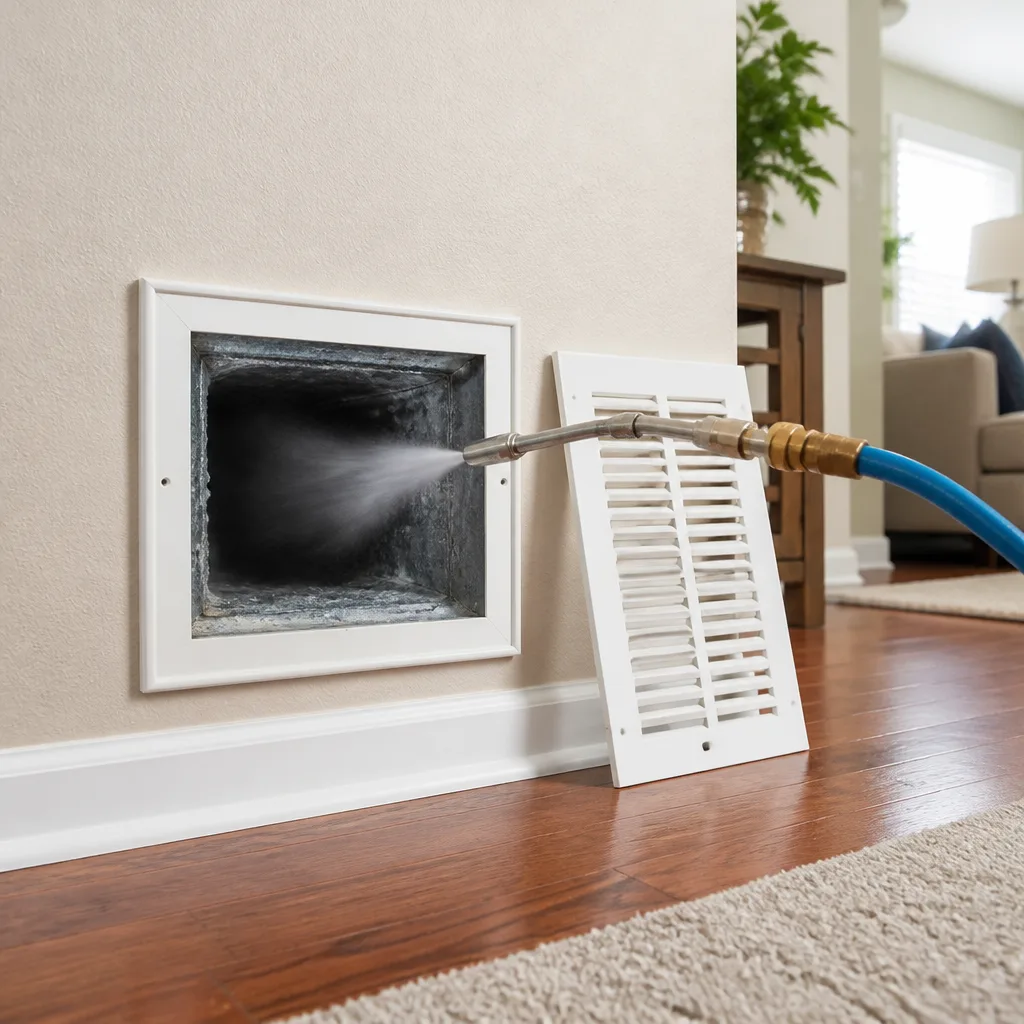
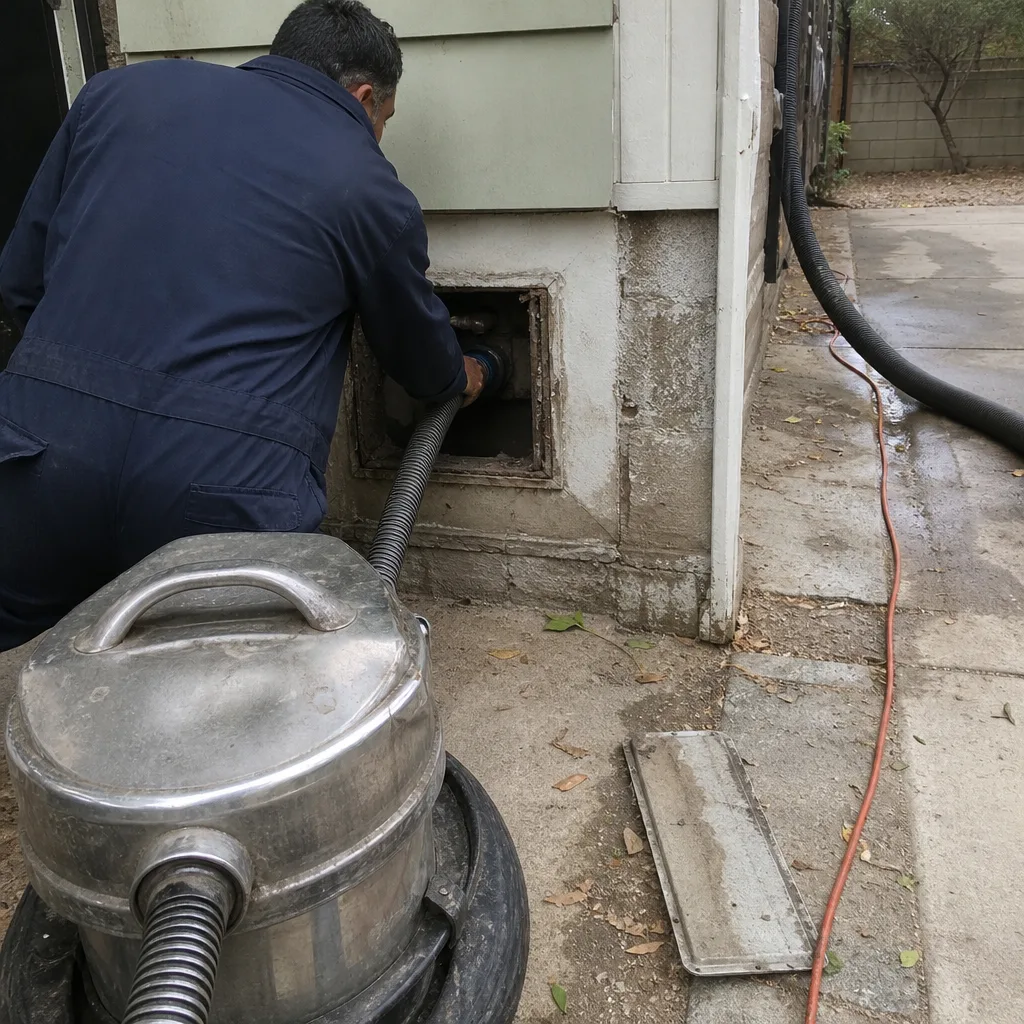 Before
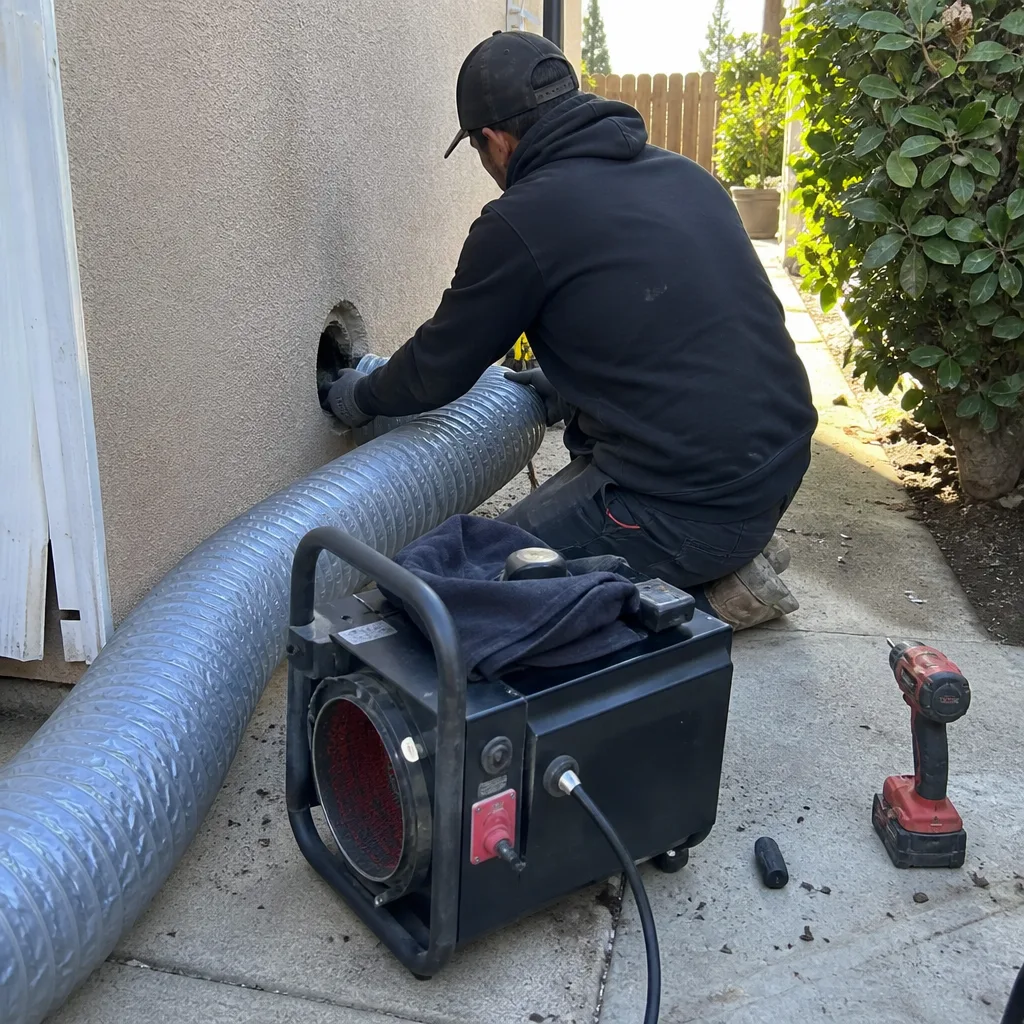 After
After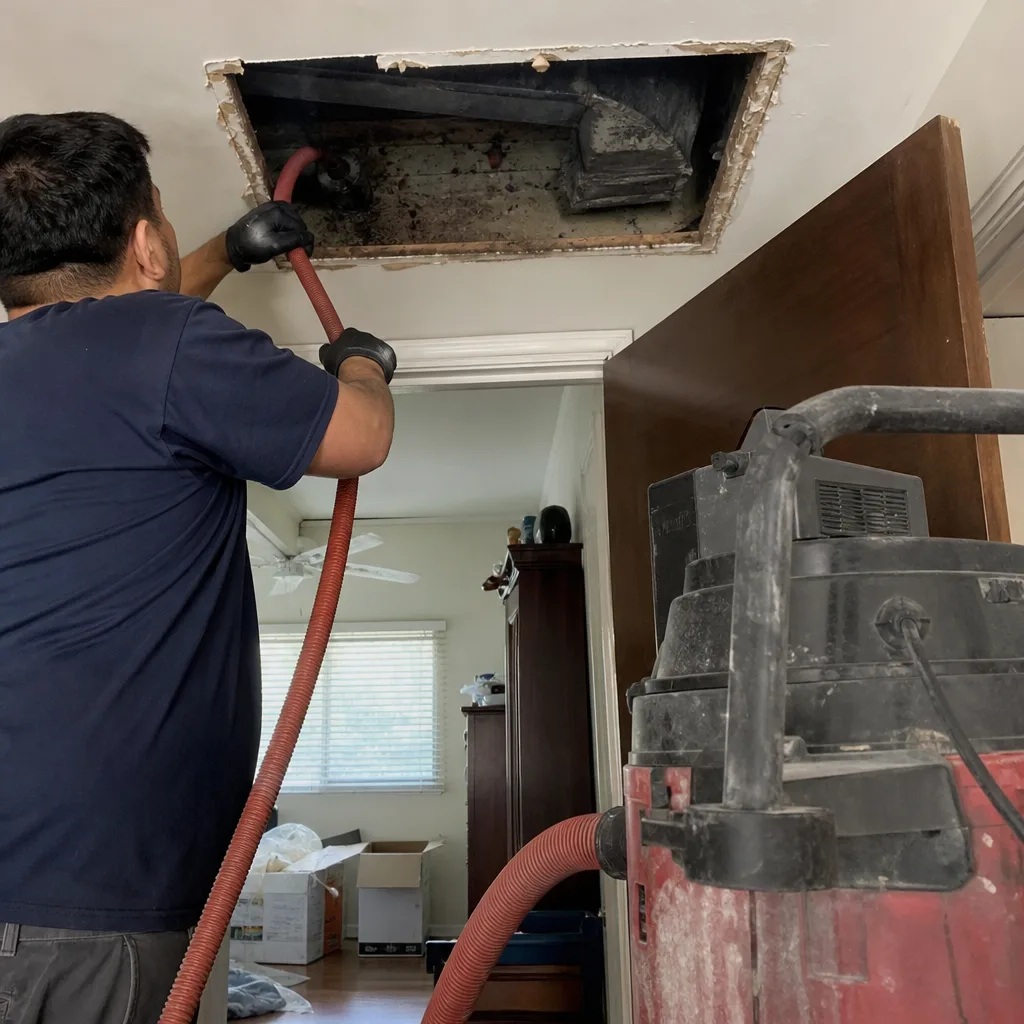 Before
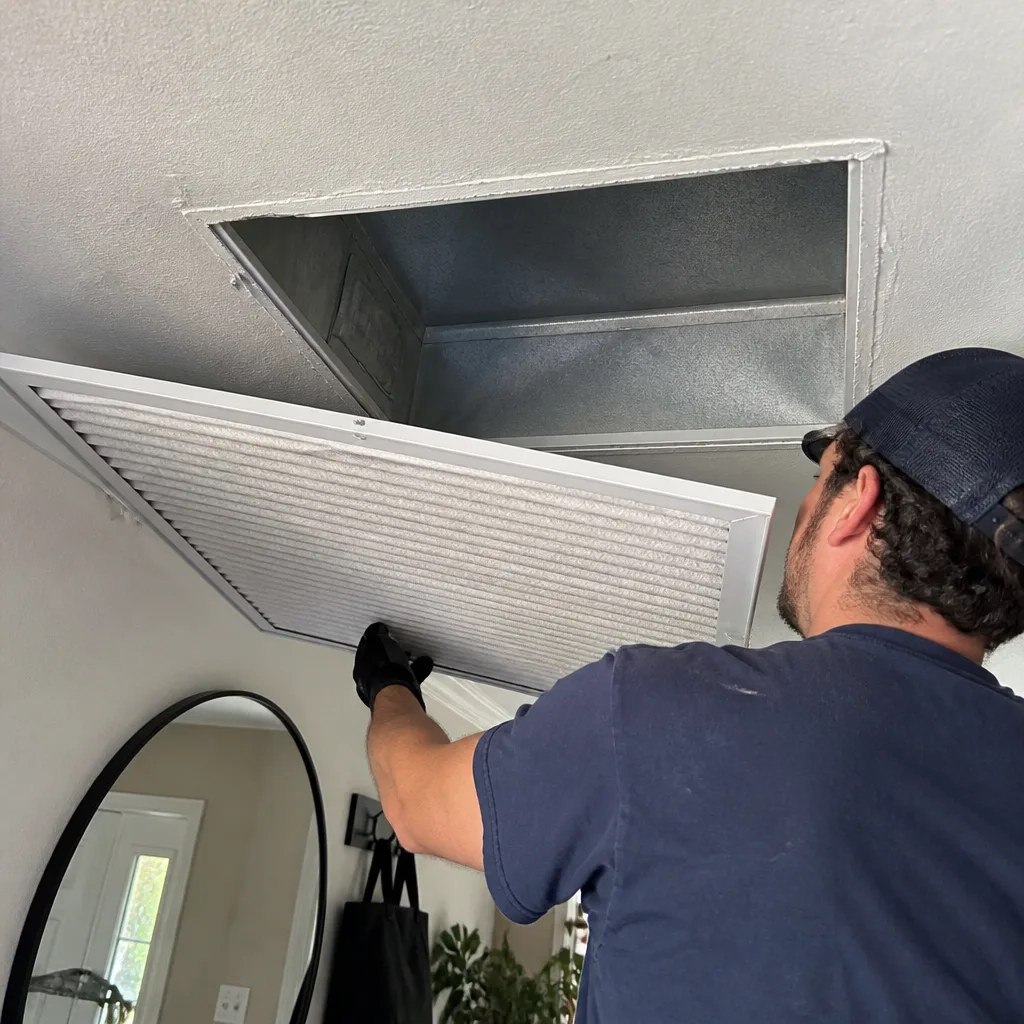 After
After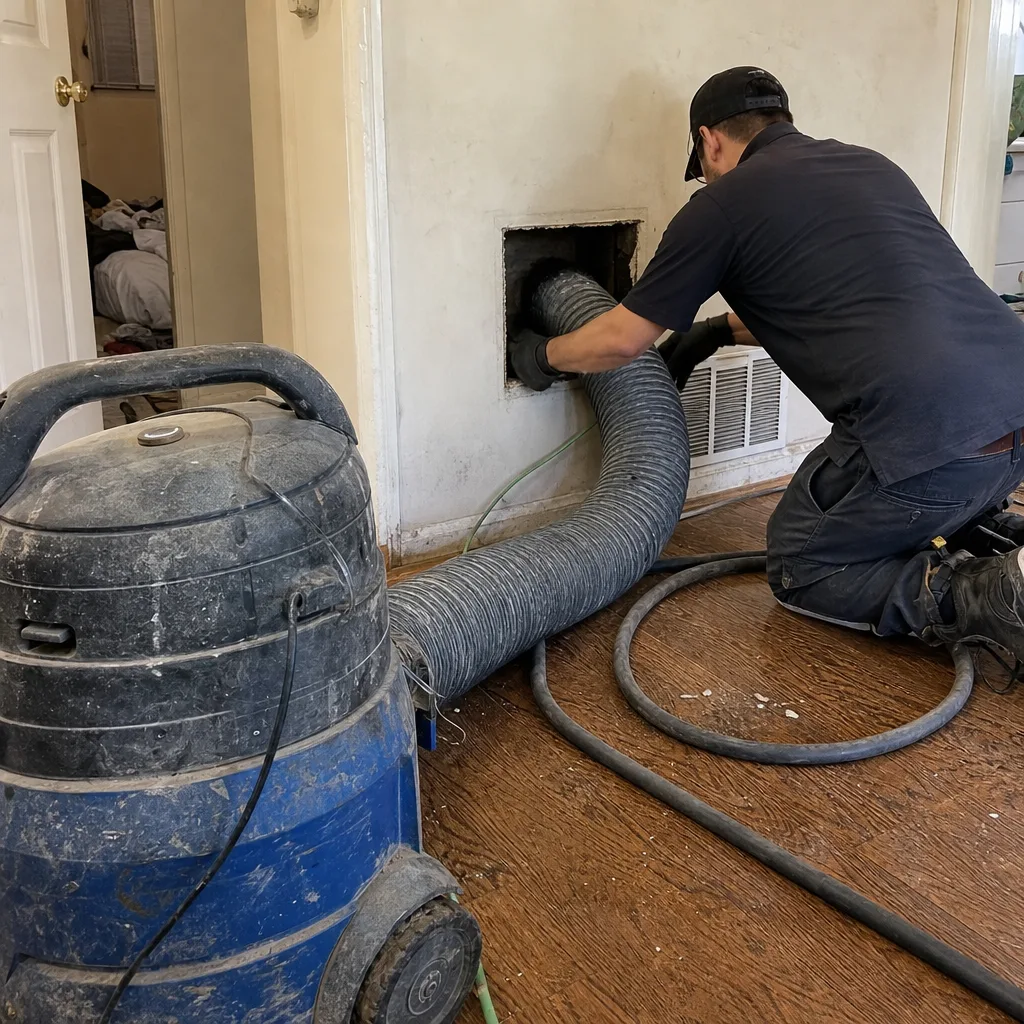 Before
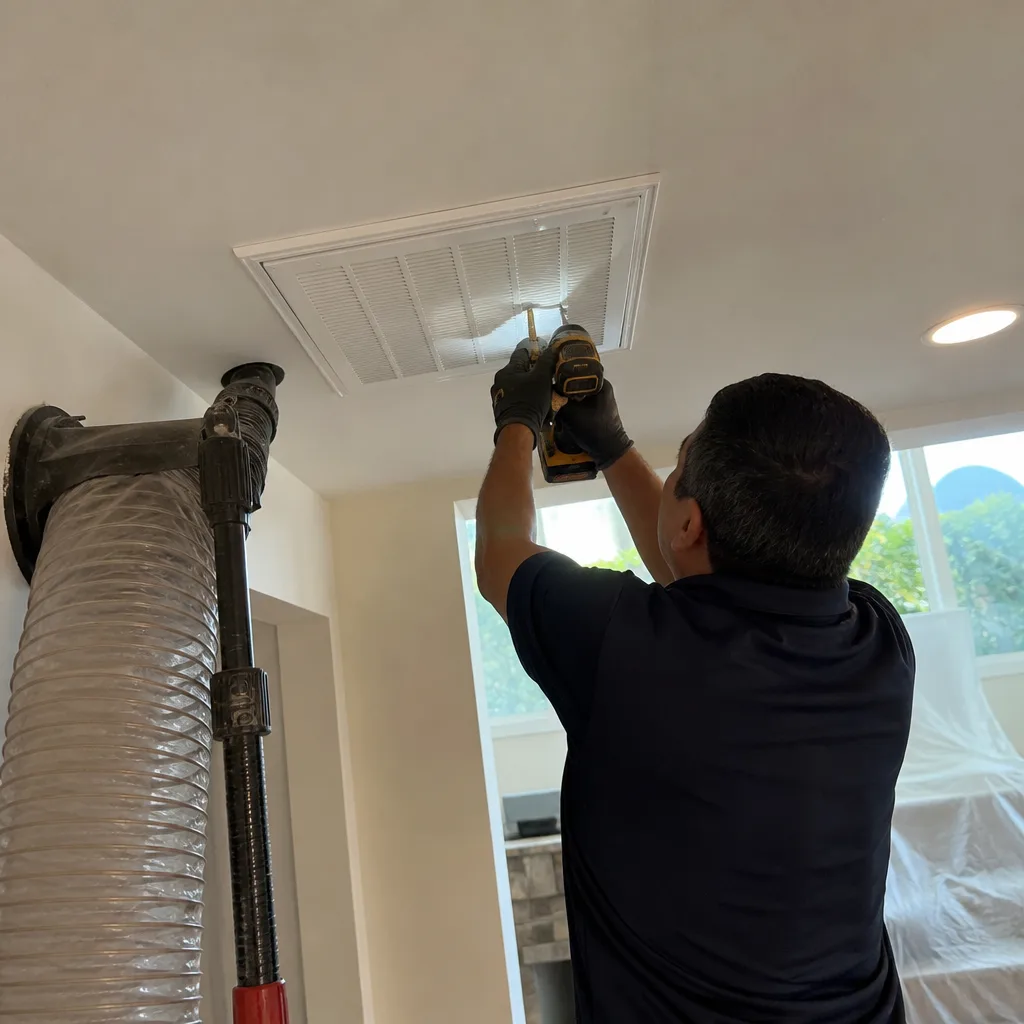 After
AfterHow Long Does Air Duct Cleaning Take? Timelines and What to Expect
Here’s a statistic that should make every homeowner pause: the Federal Trade Commission’s consumer alert on air duct cleaning explicitly warns that “blow and go” companies often finish an entire house in under an hour, and that unusually short job times are a red flag for incomplete work. Yet most duct cleaning booking pages still advertise speed as their main selling point. That’s backwards. In Los Angeles, where homes range from 1,100-square-foot bungalows in West Adams to 4,000-square-foot two-story builds in Encino, Air Duct Cleaning job duration is one of the most reliable ways to tell whether you’re getting a real cleaning or a theatrical one. This guide gives you the time benchmarks, phase-by-phase breakdowns, and on-the-day quality checks you need to hold any company accountable before they pack up and leave.
Quick Answer
A proper air duct cleaning for a typical 2,000-square-foot Los Angeles home takes 3 to 5 hours from setup to final walkthrough. Smaller single-story homes and condos often run 2 to 3 hours, while larger homes with multiple HVAC zones or added room additions can take 5 to 7 hours. Any company that finishes a full system in under 90 minutes has almost certainly skipped critical steps, and you should ask direct questions before they leave your driveway.
Table of Contents
- Time by Home Size: A Square Footage and Duct Count Chart
- Phase-by-Phase Breakdown: What Happens During Each Step
- Why Los Angeles Homes Often Take Longer
- How to Use Job Duration as an On-the-Day Quality Check
- Legitimate Efficiency vs. Shortcuts: Knowing the Difference
- What Slows a Job Down (and Why That’s Usually a Good Sign)
- What Happens After the Cleaning: Final Inspection and Documentation
- Common Mistakes to Avoid
- When to Call a Professional
- Frequently Asked Questions
- The Bottom Line
Time by Home Size: A Square Footage and Duct Count Chart
Most air duct cleaning companies quote by the number of systems, vents, or ducts, but job duration scales more consistently with square footage and the number of supply and return registers. The chart below is based on what we’ve seen across hundreds of homes in Los Angeles neighborhoods like Sherman Oaks, Torrance, and Pasadena. It assumes a standard single HVAC system with accessible ductwork. Homes with crawl-space ducting, attic-mounted air handlers, or older rigid metal ducts will run toward the longer end.
| Home Size | Typical Registers | Expected Duration | Notes |
|---|---|---|---|
| 800 – 1,200 sq ft (condo, small bungalow) | 6 – 10 | 2 – 3 hours | Single system, shorter duct runs |
| 1,200 – 1,800 sq ft | 10 – 14 | 3 – 4 hours | Standard single-family layout |
| 1,800 – 2,500 sq ft | 14 – 18 | 4 – 5 hours | Common in Mid-City, Culver City |
| 2,500 – 3,500 sq ft | 18 – 24 | 5 – 6 hours | Often two zones or two systems |
| 3,500+ sq ft or multiple systems | 24+ | 6 – 8 hours | Zoned HVAC, multiple returns |
These ranges assume negative-pressure extraction with rotary brushing on every supply and return line. If a company quotes you 45 minutes for a 2,000-square-foot home, they are not doing the work described here. The math doesn’t work.
Phase-by-Phase Breakdown: What Happens During Each Step
A legitimate cleaning follows a repeatable sequence. Here’s what each phase involves and roughly how long it should take, so you know what to expect when the technician arrives and what to watch for while they work. At Linden Air Duct Cleaning home, we walk every customer through this sequence before we start, and the written price covers every phase.
- Setup and protection (20 – 40 minutes): The technician lays drop cloths or floor protection from the entry point to the furnace closet, covers the immediate work area, and sets up the negative-pressure vacuum unit at the main trunk line. In Los Angeles homes with narrow hallways or steep stairs, setup takes longer. Any company that skips floor protection is cutting corners before the job even begins.
- System inspection and access (15 – 30 minutes): The tech removes supply and return grilles, inspects the plenum and main trunk, and checks for obstructions, mold, pest debris, or disconnected duct sections. This step often uncovers problems that change the scope, which is why we document everything with before photos before touching a single duct.
- Negative-pressure extraction (1 – 3 hours, depending on home size): The vacuum creates continuous suction on the main trunk while the technician works register by register. This is the core of the cleaning. Using rotary brushes and compressed air agitation, the tech loosens debris from each duct wall and lets the vacuum pull it through the system. No reputable company skips the agitation step. Vacuum alone removes loose dust; it does not dislodge the caked-on film that builds up over years of cooking, pet dander, and Los Angeles dust.
- Register and grille cleaning (15 – 30 minutes): Every supply and return cover gets washed or wiped down before being reinstalled. This step is small but visible, and it’s one of the easiest things for a homeowner to check.
- Final inspection and documentation (15 – 20 minutes): The technician walks you through after photos of the main trunk and several supply lines, confirms every register is reinstalled, and reviews the written report.
Why Los Angeles Homes Often Take Longer
Los Angeles is not one housing market. It’s a patchwork of 1920s Spanish Colonials in Hancock Park, 1950s post-war ranch houses in the Valley, and 1990s stucco builds in the South Bay. Each of these has different duct realities, and some of them add real time to a job.
Zoned HVAC systems. Many larger Los Angeles homes, particularly those built or remodeled after 2000, have two or three separate HVAC zones. Each zone often has its own trunk line, dampers, and sometimes its own air handler. A proper cleaning treats each zone as a separate system, which adds 45 to 90 minutes per additional zone. This is a primary reason a 3,500-square-foot Encino home takes twice as long as a 1,400-square-foot bungalow in Highland Park.
Room additions and remodeled layouts. Los Angeles has a long history of unpermitted additions and creative remodels. Homes that were originally 1,200 square feet frequently grow to 2,000 or more, with ductwork extended in phases. These added sections often have undersized ducts, non-standard connections, or ducts run through tight crawl spaces. A technician who knows Los Angeles construction patterns will check for these before quoting, rather than discovering them mid-job and revising the price at your door. If you know your home has an addition, say so when you book. It changes both the time estimate and the quote.
Climate and dust loading. The Santa Ana winds and our long dry season mean Los Angeles ducts accumulate fine, powdery dust faster than homes in humid climates. That dust is also harder to remove. It compacts in the duct corners and on the return side, especially in homes near freeways or major boulevards. Ducts near the 405 in West LA or the 10 in Mid-City routinely carry noticeably heavier soil loading than comparable homes in quieter residential pockets, and that translates to more agitation time per register.
How to Use Job Duration as an On-the-Day Quality Check
You hired a company based on a quote. The technician arrives, works, and starts packing up. If the timing doesn’t match the ranges in this guide, you have every right to ask questions before they leave. For How Long Does Air Duct Repair Take? Timelines and What to Expect, see our related guide. Here’s how to handle it without feeling awkward.
Know your expected window before the appointment. When you book, ask the company directly: “How long should this job take for my home size?” Write it down. If the answer is dramatically shorter than the chart above, that’s useful information before you even schedule.
If they finish in under 90 minutes on a home larger than 1,200 square feet, speak up. Say something like: “That seemed faster than I expected. Can you show me the after photos of the main trunk and a few register lines?” A legitimate technician will have photos. A technician who has not actually cleaned the ducts will not.
Check the registers before they leave. Pop off one or two supply grilles yourself and look inside with a phone flashlight. The duct walls should look clean, not coated with a gray film. You should also be able to see that the register openings were wiped down. If there’s visible dust buildup an inch inside the duct, ask the tech to redo that section while the equipment is still set up. It takes ten minutes to fix on the spot and much longer to schedule a return visit.
At Linden Air Duct Cleaning, every job includes before-and-after documentation as standard, and the technician walks you through the after photos before leaving. That’s part of the written accountability we commit to on every job in the Los Angeles area, alongside our air duct cleaning service.
Legitimate Efficiency vs. Shortcuts: Knowing the Difference
Not every fast job is a scam. An experienced two-person crew with professional-grade equipment can clean a 1,800-square-foot home faster than a single technician with a portable unit, and the quality can be just as high. The difference is in what gets skipped, not in raw time. For How Long Does Dryer Vent Cleaning Take? Timelines and What to Expect, see our breakdown. Here’s how to tell them apart.
Legitimate efficiency looks like:
- A negative-pressure vacuum unit connected to the main trunk, running continuously while the crew works register by register.
- Rotary brush agitation at every supply and return, not just a vacuum hose waved at the opening.
- Floor protection laid from the entry to the work area, even in homes with hard flooring.
- Before and after photos of the main trunk and representative registers, shown to you without being asked.
- A final walkthrough where the tech confirms every grille is reinstalled and the system is running.
Shortcuts look like:
- A “cleaning” done with only a portable vacuum and no full-system negative pressure.
- Return registers left untouched because they’re “not that dirty.”
- No agitation on supply lines. A vacuum alone cannot remove adhered dust film.
- No access to the main trunk. If the tech never opens the plenum or trunk line, debris stays put.
- Wrapping up before the equipment has run long enough to establish proper airflow through the entire system.
In our experience in Los Angeles, the companies that advertise the lowest prices are also the ones most likely to run 45-minute jobs. You’re not paying for time alone. You’re paying for the physical removal of years of accumulated material, and that takes the time it takes. The professional-grade equipment we use from Rotobrush and Nikro is designed for exactly this kind of thorough extraction, not for speed records.
What Slows a Job Down (and Why That’s Usually a Good Sign)
Some homes simply take longer, even when nothing is wrong. If your technician is thorough, you’ll notice these time factors. None of them are red flags on their own.
Return-side access in older homes. Many pre-1980 Los Angeles homes have a single large return, often in a hallway ceiling or wall cavity, with no dedicated return ductwork. Cleaning these properly means accessing the return plenum at the air handler and working from there. It’s slower, but skipping it means leaving the largest dust reservoir in the house untouched.
Crawl space ducting. Homes in neighborhoods like Mar Vista, Westchester, and parts of the Valley with raised foundations often have ducts running through crawl spaces. Working in those conditions is slower by nature: access is tighter, the technician works on their knees or back, and every register line has to be reached from below. A company that rushes this work will leave debris at the far end of long runs.
Pest debris or moisture issues. If the inspection turns up rodent droppings, nesting material, or signs of past moisture in the ducts, the job changes. The technician should stop and document what they found, and you should be told before additional cleaning proceeds. In Los Angeles, roof rats are common in the hillside neighborhoods south of the 134 and around Griffith Park, and their debris shows up in attic ducts more often than most homeowners expect. This may also be the point where the work crosses into air duct repair territory, if the ducts themselves are damaged or disconnected.
Multiple air handlers. Two-story homes in Los Angeles frequently have one system for the lower floor and another for the upper. Each gets its own full cleaning sequence. If both systems are cleaned in under three hours, ask to see the documentation for each one separately.
What Happens After the Cleaning: Final Inspection and Documentation
The job is not done when the vacuum turns off. The final 20 to 30 minutes matter as much as the extraction itself, and this is where you, the homeowner, should be paying the most attention.
A proper final inspection includes:
- Confirming every supply and return grille is reinstalled and seated correctly.
- A system startup so the technician can confirm airflow is normal and no ducts were dislodged during cleaning.
- Before and after photos, shown to you on the spot, of the main trunk, the return plenum, and several supply lines.
- A written report of what was cleaned, what was found, and any recommendations for follow-up.
If the technician packs up and heads for the door without showing you photos or offering a walkthrough, stop them and ask. The after photos are your proof that the work was actually done, and any company that takes them but won’t show them is hiding something. We include this documentation as a standard part of every cleaning we do in Los Angeles, not as an upsell or a special request.
Common Mistakes to Avoid
- Booking solely on price. The lowest quote in Los Angeles is often a teaser number that becomes a much larger invoice once the van pulls up. If a price seems too good to be true for a 3-hour job, it likely is. Ask what the quote includes and what would trigger a change before the technician arrives.
- Not asking about job duration before booking. You should hear a realistic range that matches your home’s size and layout. If the company won’t give one, or gives a number far below the ranges in this guide, that’s useful data about how thorough they plan to be.
- Leaving the register check until after the crew has packed up. The time to look inside a duct is while the equipment is still connected. Once the hoses are coiled and the van door is closed, getting someone back is much harder.
- Assuming a bigger company is automatically more thorough. National franchises and large local operations both run the same risk of corner-cutting techs. What matters is the process, the equipment, and the documentation, not the logo.
- Skipping the dryer vent because it wasn’t mentioned in the quote. Many Los Angeles homeowners don’t realize their dryer vent is a separate service from whole-house duct cleaning. It’s worth asking about, especially if you’ve never had it done, since lint buildup is a fire hazard independent of your HVAC ducts. Our dryer vent cleaning service handles this as its own focused job.
- Not disclosing additions or remodels when booking. If your home has been expanded or had ductwork extended, the job will take longer and may cost differently. Disclosing it upfront means no surprise quote changes at the door.
- Ignoring the one-year warranty question. Ask what happens if you’re not satisfied after the job. At Linden Air Duct Cleaning, every job is backed by the 365-Day Done Right Promise in writing. If something isn’t right, we come back and make it right.
When to Call a Professional
Duct cleaning is not a DIY job. The equipment used for proper negative-pressure extraction is commercial-grade, and the knowledge required to access every duct without damaging drywall, registers, or the system itself comes from experience. If you’ve noticed visible dust buildup on your supply grilles, dust returning to surfaces within days of cleaning, musty smells when the AC cycles on, or you simply haven’t had the ducts cleaned since you moved in, it’s time. In Los Angeles, where the dry season keeps dust suspended in the air and the AC runs from May through October, most homes benefit from a thorough cleaning every 3 to 5 years, more often if there are pets or recent construction. Linden Air Duct Cleaning offers free estimates across Los Angeles. Call (980) 447-2498 and speak to a live person, any time.
Frequently Asked Questions
A proper air duct cleaning takes 3 to 5 hours for a typical 2,000-square-foot home, including setup, extraction, register cleaning, and final inspection. Smaller condos and single-story homes run 2 to 3 hours, while larger or zoned homes can take 5 to 7 hours. If a company finishes in under 90 minutes, ask to see the before and after photos before they leave. Call (980) 447-2498 for a specific time estimate for your Los Angeles home.
If a duct cleaning took 45 minutes, the company almost certainly skipped key steps like full-system negative pressure, rotary brush agitation, or return-side access. The FTC specifically flags unusually short job times as a warning sign for “blow and go” duct cleaning scams. A legitimate cleaning simply cannot be done in under an hour on a standard home, because the physical work of agitating and extracting debris from every register line takes longer than that. If you’re in Los Angeles and want a documented, thorough cleaning, call (980) 447-2498 for a free estimate.
Yes. Two-story Los Angeles homes frequently have two HVAC systems or zoned ductwork, with separate trunk lines for each level. Each system gets a full cleaning sequence, which adds 45 to 90 minutes per additional system. Homes with attic-mounted air handlers on the second floor also take longer simply because the technician has to work in tighter access. When you book, tell the company whether your home has one system or two so the time estimate and quote are accurate from the start.
While the equipment is still set up, politely ask to see the after photos of the main trunk and several supply lines. Then pop off one or two register covers yourself and look inside with a flashlight. If duct walls still show a gray dust film, ask the technician to redo that section before packing up. A legitimate technician will have documentation and will not be defensive.
Most Los Angeles homes benefit from air duct cleaning every 3 to 5 years. Homes with pets, homes near freeways or busy boulevards, and homes where residents have allergies or asthma often need it on the shorter end of that range. If you’ve done recent remodeling, had a pest issue, or notice dust returning within days of cleaning, schedule sooner. Call (980) 447-2498 and we’ll help you figure out whether it’s time based on your actual home and situation.
Legitimate efficiency means an experienced crew with professional-grade negative-pressure equipment working through the job’s full sequence faster than a one-person operation could. A shortcut means skipping the sequence itself: no full-system vacuum, no agitation, no return access, no documentation. You can tell the difference by the equipment on site, the photos offered, and whether the time spent matches the home’s size and register count.
The Bottom Line
Job duration is not a marketing detail. It’s a diagnostic tool. A thorough air duct cleaning in Los Angeles takes 3 to 5 hours for a typical home because that is how long the actual work takes: setting up containment, establishing negative pressure, agitating every register line, cleaning the returns, and documenting the result. Any company that promises to do it in under an hour is telling you, honestly or not, that they will skip the parts that make the service worth buying. Know your home’s expected window before the technician arrives, ask for the after photos, and if something feels off, speak up while the equipment is still running. Browse our more guides & resources to stay informed. The difference between a real cleaning and a theatrical one is visible. You just have to know what to look for.
Written by Marcus Veale, Owner at Linden Air Duct Cleaning, serving Los Angeles since 2004.