
Last updated October 8, 2026
Whole-system duct and dryer vent check with before-and-after photos - you see exactly what came out of your vents
That "$99 whole-house special" is a bait ad - the real number appears once they are in your hallway, or the "clean" is a shop-vac at the register. We photograph the inside of your ducts before and after instead.
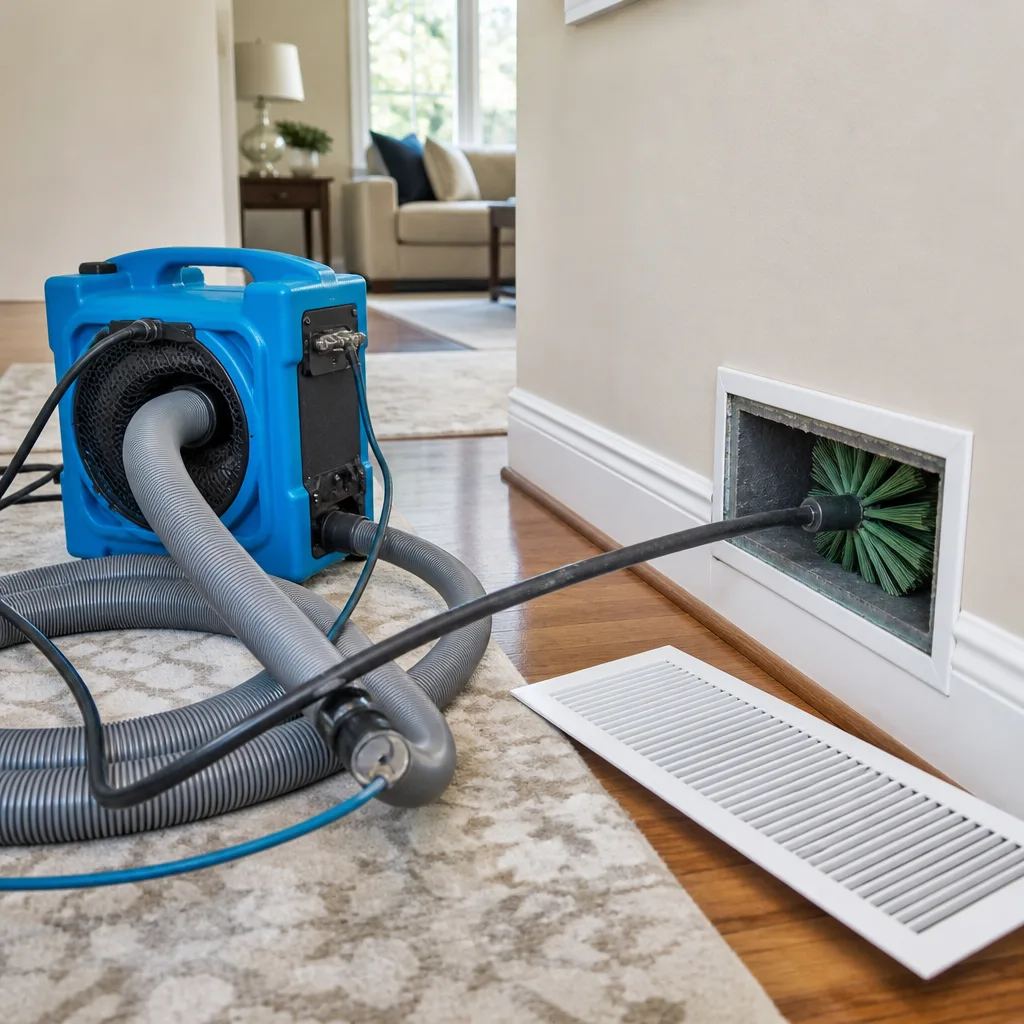
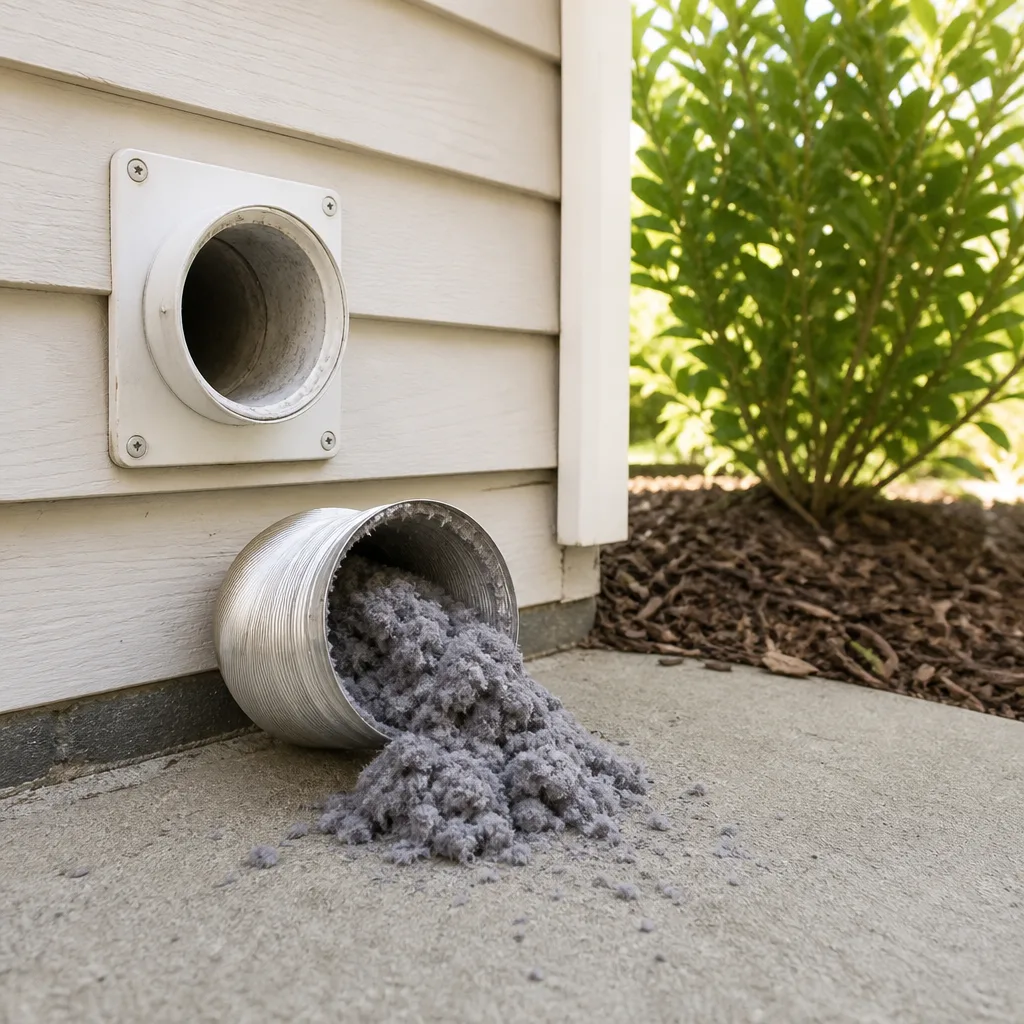
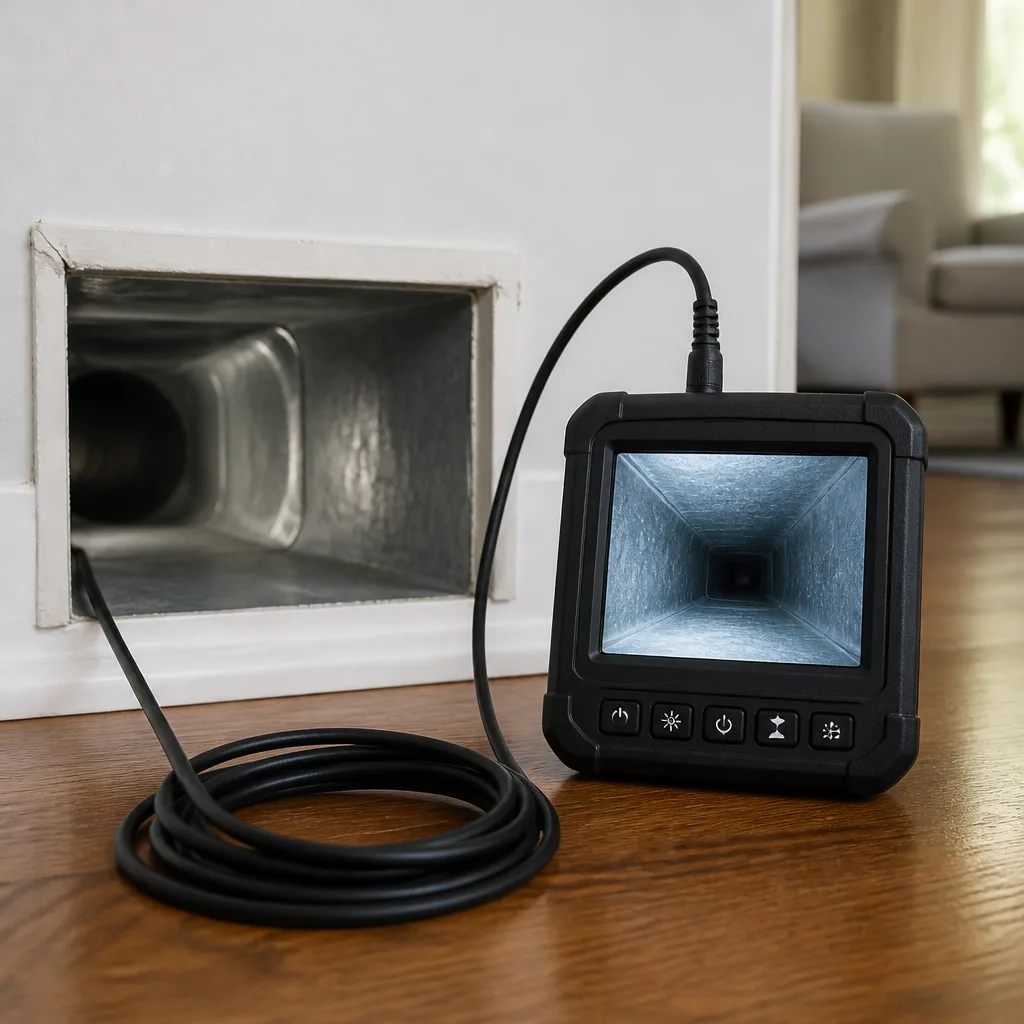
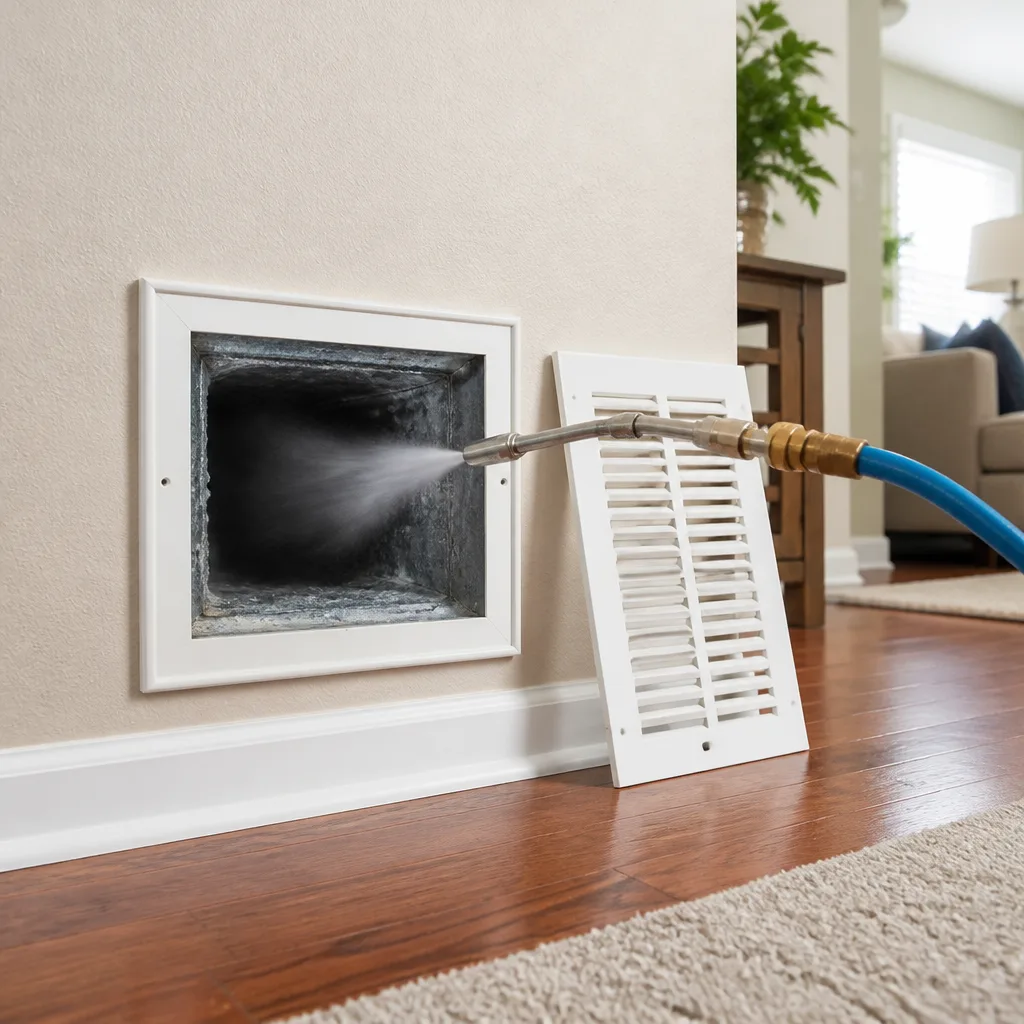
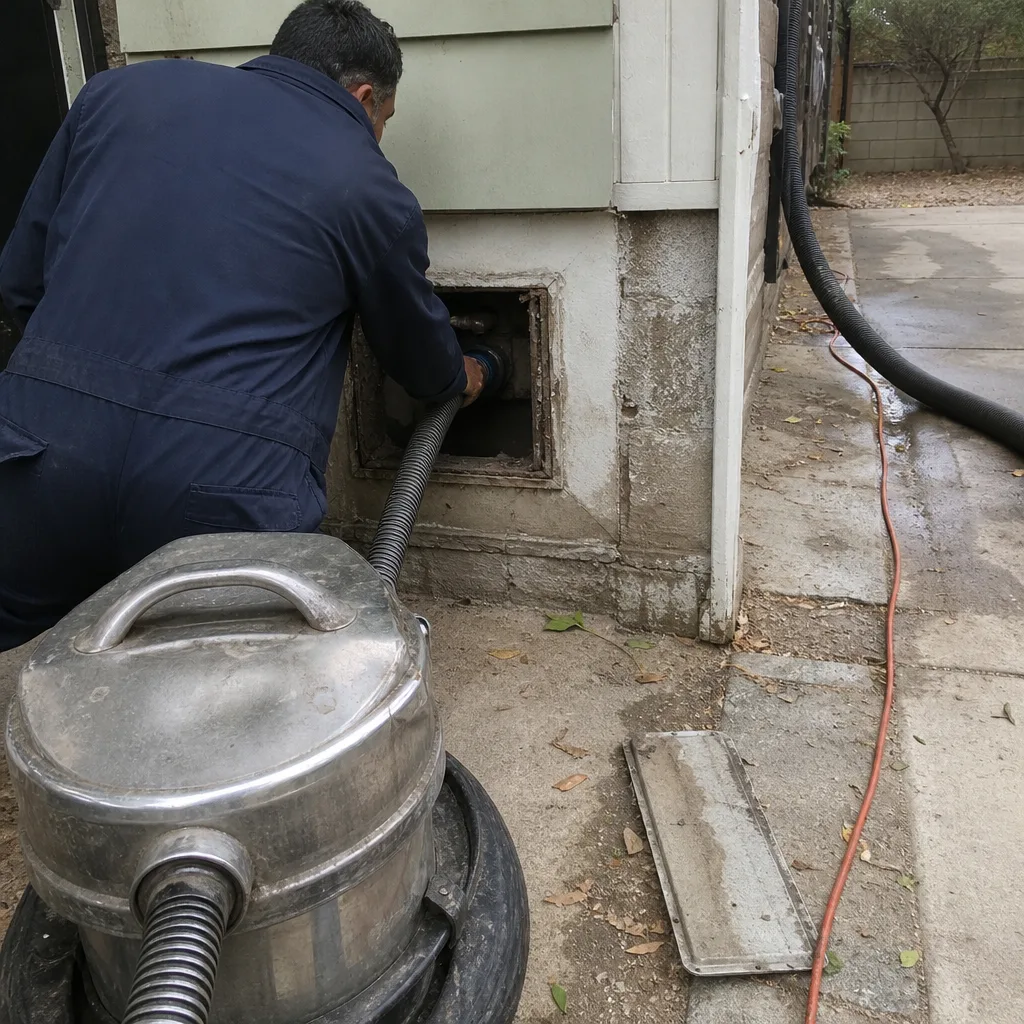 Before
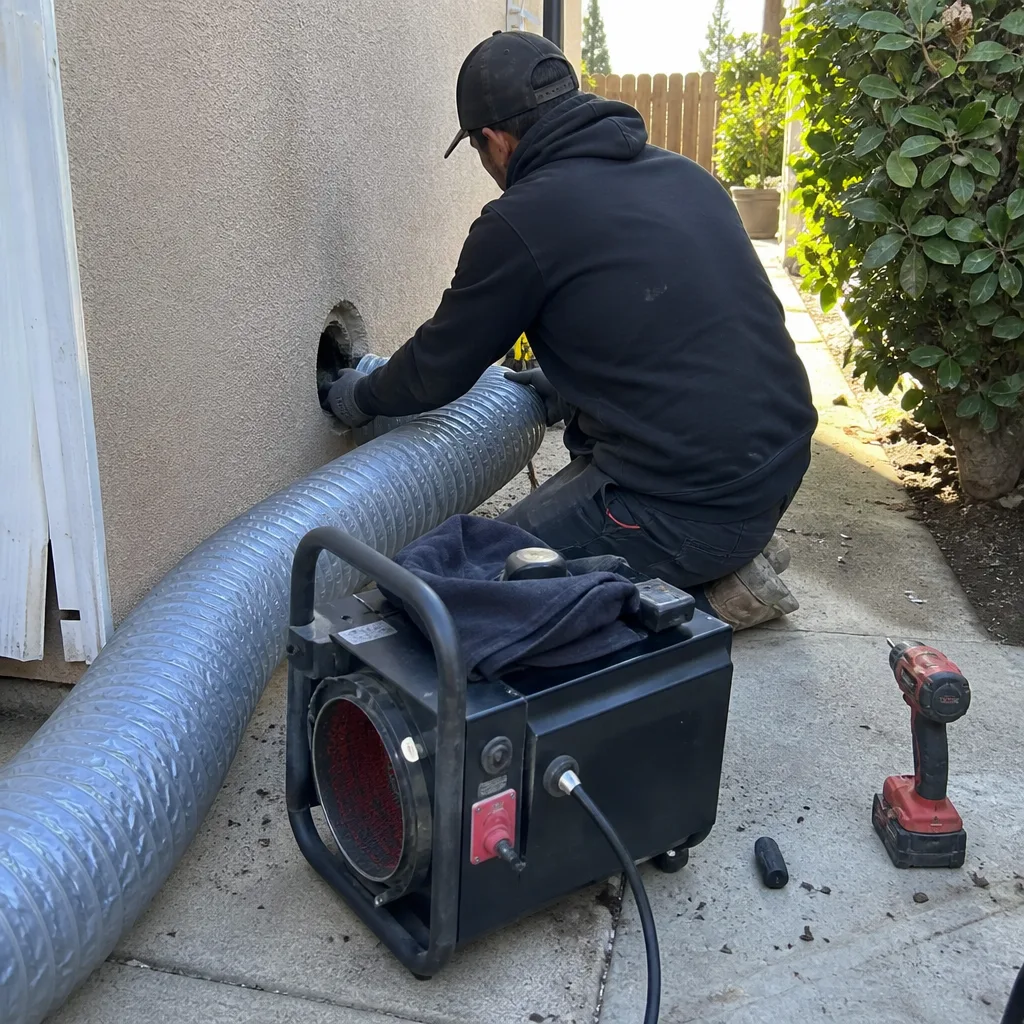 After
After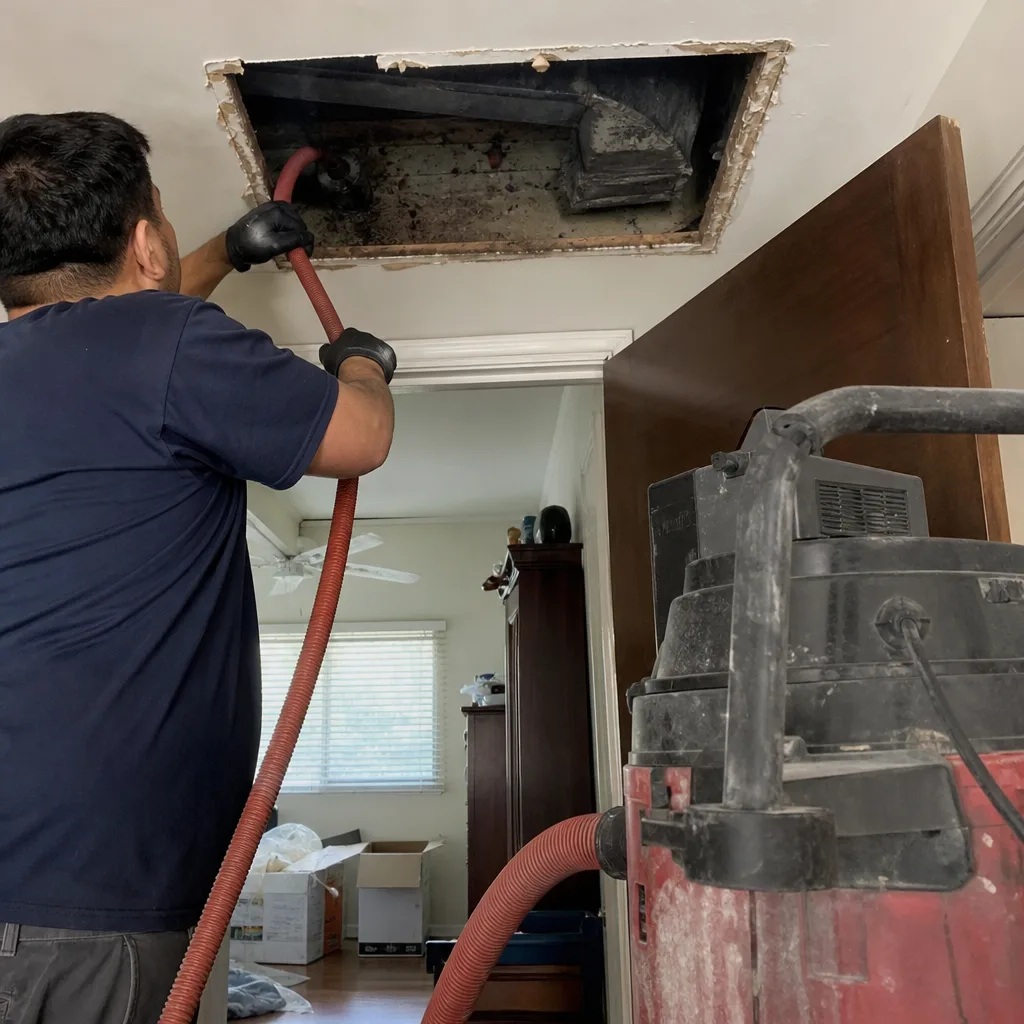 Before
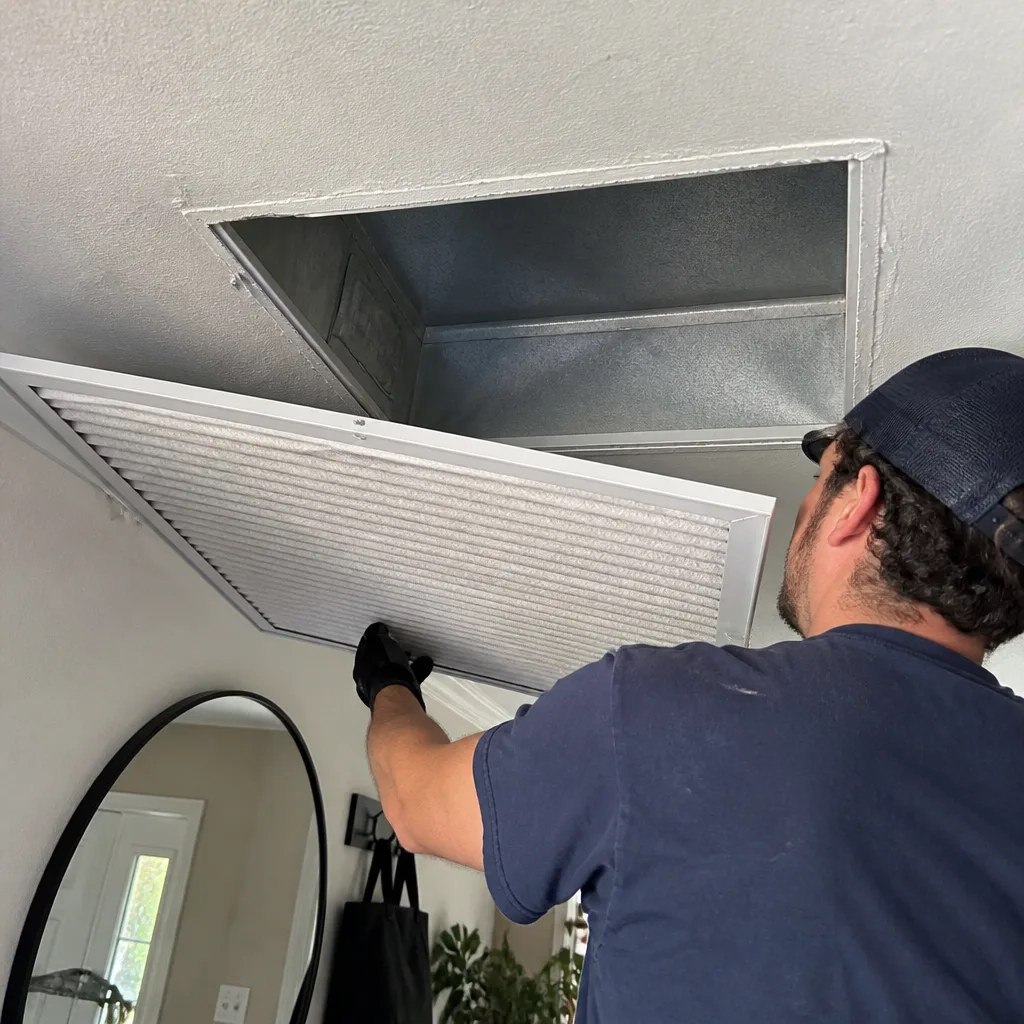 After
After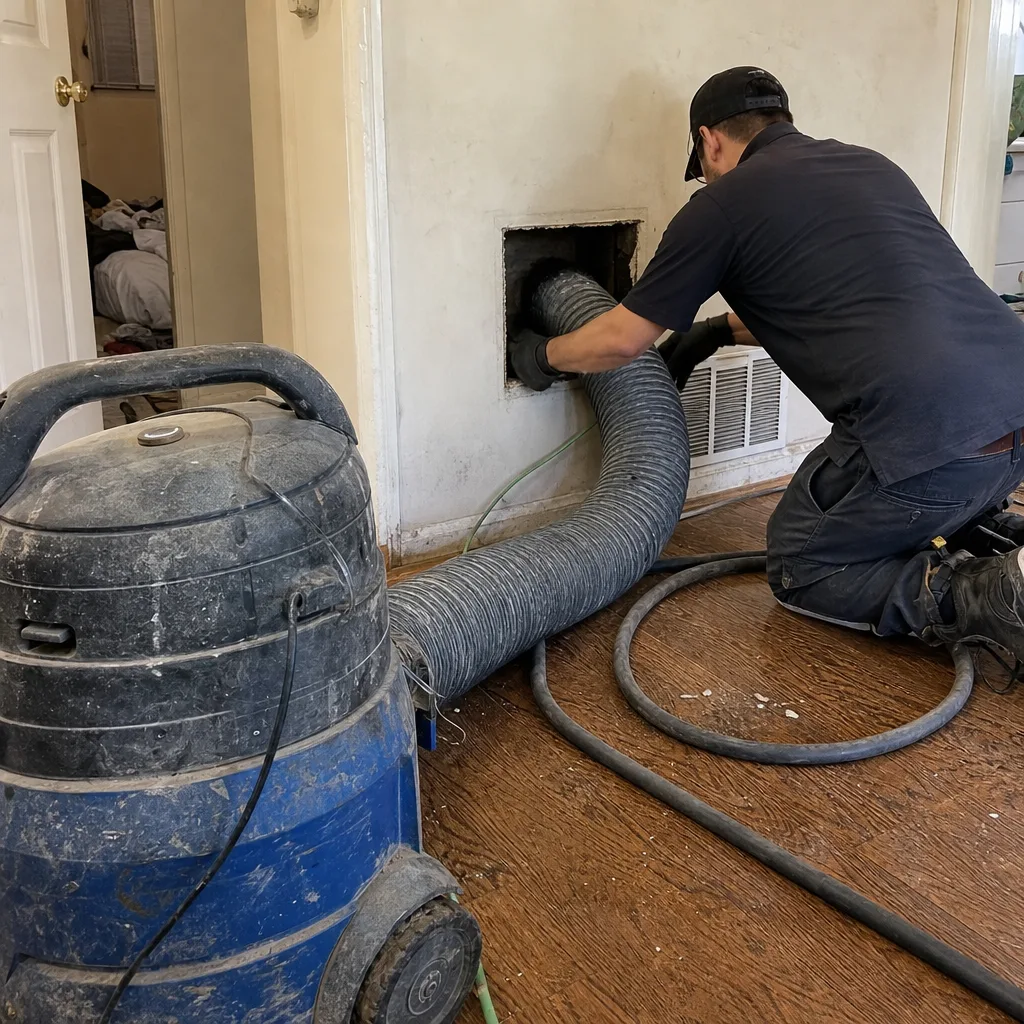 Before
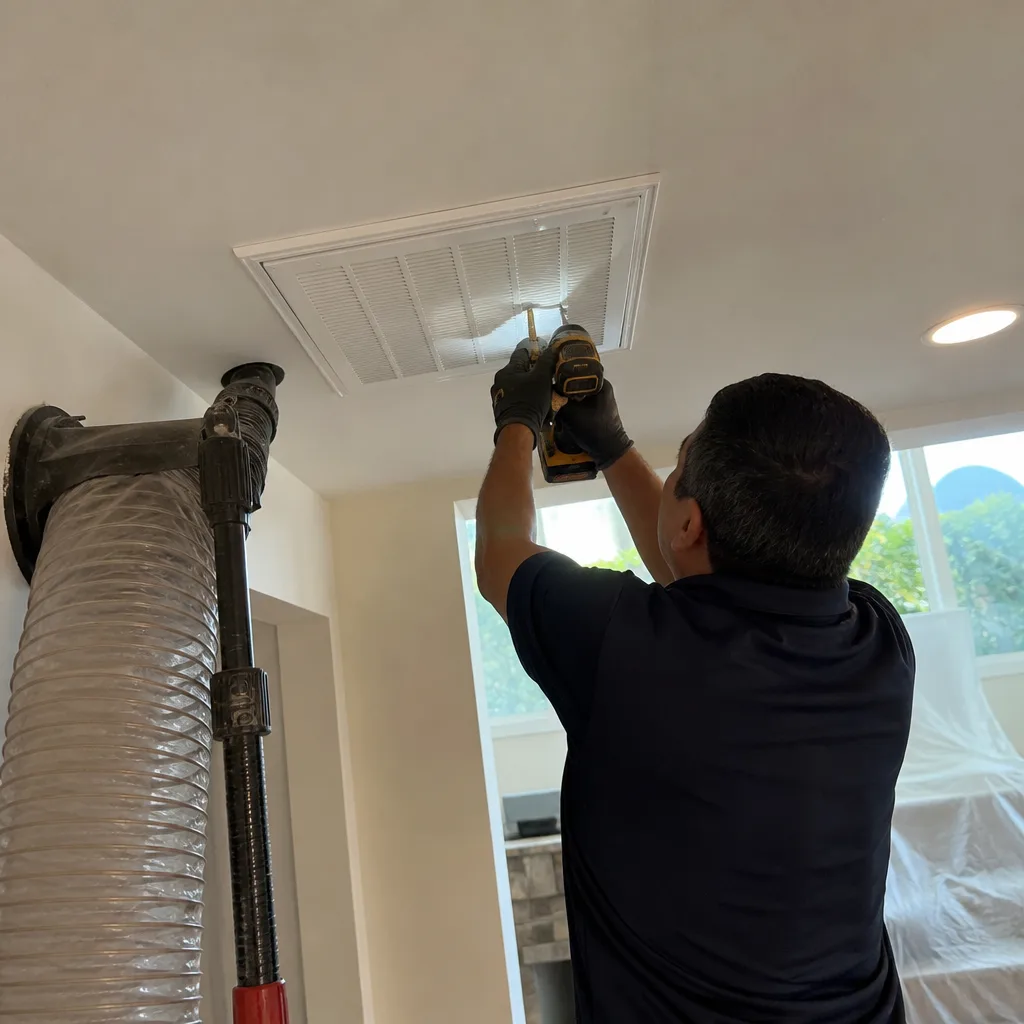 After
AfterHow Long Does Air Duct Repair Take? Timelines and What to Expect
A disconnected duct section takes about 20 minutes to fix. Finding that same disconnected section in a low, unlit Los Angeles crawl space with two-foot clearance can take 90 minutes. That’s not inefficiency on the technician’s part. That’s the actual work you’re paying for. Most homeowners think of Air Duct Repair services as a single task with a single duration, but the truth is the clock runs on three separate activities: diagnosing the problem, getting to the problem, and fixing the problem. This guide breaks down each one so you can plan your day accurately and ask the right questions when a quote doesn’t match your home’s layout.
Quick Answer
Air duct repair in Los Angeles typically takes 2 to 4 hours for a single access point repair, with most jobs completed in a single visit. Simple fixes like resealing a joint or patching a small hole may take under an hour once the technician reaches the duct, while multi-zone systems or hard-to-access attics and crawl spaces can push the job to a full day and occasionally require a scheduled return visit for parts or specialized access.
Table of Contents
- Diagnosis Time: The Part Nobody Quotes
- Access Difficulty: The Real Driver of Repair Time
- The Actual Fix: What Each Repair Type Involves
- How Attic Type Changes Everything in LA Homes
- Multi-Zone Systems and Two-Story Homes
- What Your Technician Should Tell You Mid-Job
- Same-Day Fixes vs. Scheduled Return Visits
- Common Mistakes to Avoid
Diagnosis Time: The Part Nobody Quotes
Before anyone touches a screwdriver or pulls out a roll of metallic tape, a competent technician spends time figuring out what’s actually wrong. In our experience across Los Angeles homes, diagnosis typically takes 30 to 60 minutes. A technician who skips this step is guessing, and guessing leads to repairs that don’t hold.
Diagnosis includes several distinct activities:
- Visual inspection of accessible ductwork: In attics, crawl spaces, and basements where ducts are exposed, the technician looks for obvious separations, crushed sections, disconnected joints, and visible tears. This takes 15 to 30 minutes depending on how much of your ductwork is reachable.
- Pressure and airflow testing: A technician may seal off registers and measure static pressure to identify leaks that aren’t visible. This process takes 15 to 25 minutes and reveals problems hidden inside walls or under insulation.
- Supply and return register walkthrough: Checking each register in the home for airflow consistency takes 10 to 20 minutes and often pinpoints which branch of the duct system has failed.
- Thermal imaging or smoke testing when warranted: For hard-to-find leaks, some technicians use thermal cameras or smoke pencils to trace airflow. This adds 15 to 30 minutes but prevents opening up the wrong section of ceiling or wall.
You should expect a written diagnosis before any repair quote. At Linden Air Duct Cleaning, the price goes in writing before any repair work starts, so diagnosis is never a hidden line item that inflates the final invoice.
Access Difficulty: The Real Driver of Repair Time
Here’s the counterintuitive truth most guides gloss over: the actual repair is usually the fastest part of the job. Access is what eats the clock. A technician can patch a duct in 15 minutes, but if that duct sits behind a water heater in a crawl space with 18 inches of clearance, the job just became a two-hour operation.
Typical access scenarios in Los Angeles homes break down like this:
- Walk-in attic with plywood flooring: Best case. The technician reaches the duct directly. Access adds maybe 10 minutes. Total job time stays at the low end of any estimate.
- Pull-down stair attic with partial flooring: The technician works from joists and must move carefully across blown-in insulation. Access adds 20 to 40 minutes. Total job time lands mid-range.
- Hatch-only attic with no flooring: Common in older LA homes and Spanish-style ranches. The technician enters through a small opening and balances across joists while carrying tools and repair materials. Access adds 45 to 90 minutes spread across setup, navigation, and breakdown.
- Crawl space under the house: Often the most time-intensive. Limited clearance, low light, dust, and sometimes pests. Access adds 60 to 120 minutes. If the foundation is post-and-pier with uneven ground, the technician works on their back or stomach.
This is why two identical repairs in two different Los Angeles homes can land hours apart in total time. It’s not that one technician is slower. It’s that one house has a walkable attic and the other has a 1950s crawl space under hardwood floors.
The Actual Fix: What Each Repair Type Involves
Once the technician has access, the repair itself is usually straightforward. Here are realistic time ranges for the most common duct repairs we handle in Los Angeles:
- Resealing a separated joint: 15 to 30 minutes. The technician cleans the joint surfaces, applies a UL-listed duct sealant or foil-backed tape, and tests for leaks.
- Patching a small hole or tear: 20 to 40 minutes. This includes cutting a metal or foil patch, sealing around the edges, and confirming the repair holds under pressure.
- Reconnecting a fully disconnected duct section: 20 to 45 minutes. The challenging part isn’t the reconnection. It’s the reconnection done correctly so the duct doesn’t separate again. This means mechanical fasteners plus sealant, not just tape.
- Replacing a crushed or collapsed flex duct run: 45 to 90 minutes per section. The technician removes the damaged material, measures and cuts the replacement, attaches it at both ends, and seals. If the crushed section runs through a wall cavity, this time increases significantly.
- Replacing a damaged rigid duct elbow or transition: 60 to 120 minutes. Rigid duct work requires custom fitting, sheet metal screws, and sometimes fabrication on site. This is rarely a “quick fix.”
Add these to your access and diagnosis times and you’ll get a realistic picture of your day. A disconnected flex duct in a walk-in attic might total 75 minutes. The same repair in a crawl space could total three hours.
How Attic Type Changes Everything in LA Homes
Los Angeles housing stock is remarkably varied, and that variety shows up in attic design. A 1920s bungalow in Highland Park has a fundamentally different attic than a 1990s tract home in the San Fernando Valley or a 2010s infill build in Silver Lake. The type of attic you have is the single biggest variable in total repair time.
Here’s what each attic type means for your repair timeline:
- Walkable attic with finished flooring and good headroom: Add 10 to 20 minutes to any repair estimate. The technician works standing up or kneeling. Tools go in and out easily. Expect the shortest total job time of any LA home type.
- Pull-down stair attic with partial plywood decking: Add 30 to 45 minutes. The technician can mostly reach the ducts but may need to lay planks across joists for the last few feet of access. Most common in mid-century and 1970s-1990s LA homes.
- Hatch-only attic with exposed joists and blown-in insulation: Add 60 to 90 minutes. The technician enters through a small scuttle hole, works on hands and knees across joists, and works around insulation. Very common in older LA neighborhoods like Echo Park, West Adams, and parts of Long Beach.
- No attic at all, ducts in a raised foundation crawl space: Add 60 to 120 minutes. This is the most time-intensive access scenario. Homes in Inglewood, Torrance, and older sections of Pasadena frequently have this layout. The crawl space entrance may be outside the house, and the technician works in tight quarters the entire time.
Before you accept a flat-rate repair quote, ask the technician to confirm they know which type of attic or crawl space your home has. A quote that doesn’t account for your actual access situation is a guess, and guesses often become surprise change orders.
Multi-Zone Systems and Two-Story Homes
If your Los Angeles home has separate heating and cooling zones, your repair timeline may effectively double. Multi-zone systems route through separate duct branches, often in different parts of the house. Upstairs ducts might run through attic space while downstairs ducts run between floors or through a crawl space. That means two different access scenarios on the same job.
What this looks like in practice:
- Two-story home with one system in the attic and one in the crawl space: The technician completes one full diagnosis, access, repair cycle for the attic, then packs up and moves to the crawl space access point. Total time is closer to two separate jobs than one long one.
- Two-story home with a single system but long vertical duct runs: Vertical ducts between floors are the hardest to access. If the leak is in a chase behind the second-floor hallway, the technician may need to open drywall to reach it. This shifts from a duct repair to a coordinated repair with drywall work, which can stretch the job across multiple days.
- Zoned system with motorized dampers: Damper failures are rare but do happen. Replacing a zone damper motor takes 30 to 60 minutes, but diagnosis can take longer since the technician must test each zone’s control wiring separately.
In our experience, homeowners with multi-zone systems are the most likely to be surprised by repair times. A single quote for “duct repair” on a two-story Los Angeles home with separate upstairs and downstairs HVAC should include line items for both zones, or at minimum a written acknowledgment of how access differs between them.
What Your Technician Should Tell You Mid-Job
Sometimes the repair you approved turns out to be smaller than the repair you need. A pinhole leak becomes a four-foot section of collapsed flex duct once the insulation is pulled back. A disconnected joint reveals corrosion that’s eaten through three feet of rigid pipe. It happens. What matters is how your technician communicates it.
A good technician will do the following when the scope expands mid-job:
- Stop work and show you the problem. Either in person if you’re home, or with photos sent to your phone. You should never learn about a larger repair from the invoice at the end.
- Explain the new price in writing before proceeding. A verbal “this is going to cost more” isn’t enough. You should see the revised number, know what changed, and approve it consciously.
- Give you a realistic revised timeline. If the expanded scope adds 90 minutes, the technician should tell you that, not let you assume the original finish time still holds.
- Offer the option to schedule the additional work separately. You’re not obligated to approve everything in one go. If the expanded repair can wait a week, a good technician will honestly tell you.
At Linden Air Duct Cleaning, the written price before any work starts is a standing commitment. If something changes mid-job, you get a new written price before the expanded work begins. No surprises at the end of the invoice.
Same-Day Fixes vs. Scheduled Return Visits
Most air duct repairs in Los Angeles are completed the same day. The technician arrives with common replacement materials and tools, and the repair itself is usually within the scope of standard equipment. But some situations genuinely require a return visit, and knowing which is which helps you tell the difference between a legitimate scheduling need and a technician padding the job.
Repairs that justify a return visit:
- Custom fabrication needed: Older LA homes sometimes have non-standard duct dimensions. If the technician needs to fabricate a replacement elbow or transition, that work often happens at a shop and gets installed on a second visit.
- Rare or proprietary parts: Certain zoned systems and commercial-grade dampers have components that aren’t stocked on service vans. If the part ships from the manufacturer, a return visit is unavoidable.
- Coordination with other trades: If the repair requires opening and patching drywall, the technician may complete the duct work in one visit and a drywall contractor handles the cosmetic work on another day.
- Hazardous conditions discovered: If the crawl space has exposed wiring or signs of pest infestation, the technician may pause the work until the safety issue is addressed. This is a responsible call, not foot-dragging.
Return-visit claims worth questioning:
- “We need to order standard flex duct.” Standard flex duct in common diameters is carried on most professional service vehicles. If your repair involves a standard 6-inch or 8-inch run, this excuse deserves a second opinion.
- “The sealant needs to dry overnight.” Modern UL-listed duct sealants cure within 2 to 4 hours and many are functional immediately. An overnight wait for sealant is rarely necessary.
- “We need a second technician for safety.” Most duct repairs are single-technician jobs. Unless your home requires specialized access equipment, this claim is usually a red flag for padding the labor hours.
If a technician tells you they need to come back, ask for the specific reason and a written note on what will be done on the return visit. Legitimate reasons have specific answers.
Common Mistakes to Avoid
- Accepting a quote before the technician sees your attic or crawl space. Any quote that doesn’t account for access is a placeholder. In Los Angeles, where attic types vary dramatically by neighborhood and era, this matters more than in most markets. Ask the technician to confirm they’ve factored in your specific access situation.
- Paying for a “diagnostic fee” that doesn’t include a written diagnosis. You should receive a written explanation of what’s wrong, where it is, and what the repair entails. A technician who diagnoses verbally and quotes orally is not giving you anything to hold them to.
- Skipping the written work order because the repair seems small. Even a 20-minute joint reseal should have a written scope and a written price. The paperwork protects you if the repair doesn’t hold. At Linden Air Duct Cleaning, every repair includes a written guarantee, so the work order is your documentation for that guarantee.
- Assuming two repairs on opposite sides of the house will take the same time. A duct near the attic access point is a fundamentally different job than a duct at the far end of a low-slope roof line. Time estimates should differ based on location within the same house.
- Letting a technician work without checking identification. You should know exactly who is in your home. Every Linden Air Duct Cleaning technician is background-checked, identity-verified, and arrives in a clean, marked uniform. The tech’s name and photo are sent to you before the visit, and a photo ID badge is shown at the door.
- Approving expanded scope verbally and being surprised by the invoice. If the repair grows beyond the original quote, stop and get the new price in writing before authorizing more work. A technician who balks at this request is not someone you want finishing the job.
- Confusing “we cleaned your ducts” with “we repaired your ducts.” These are different services. If you called for a repair and the technician spends most of the time with vacuum equipment, ask what specifically was repaired and written confirmation that the leak is sealed.
When to Call a Professional
Air duct repair is not a DIY project. The work happens in confined spaces, often in attics that hit 120 degrees in Los Angeles summer months, or in crawl spaces with poor ventilation and uncertain footing. Beyond the discomfort, a repair that isn’t sealed correctly will fail again within months, and a separated duct can pull attic insulation and dust into your home’s air stream every time the HVAC runs. If you’ve noticed weak airflow from specific registers, a spike in your energy bills, rooms that never reach the thermostat temperature, or visible dust accumulating unusually fast, these are signs of duct problems that warrant a professional look. For How to Hire a Air Duct Cleaning Contractor in Los Angeles: A Step-by-Step Guide, or to schedule service, Linden Air Duct Cleaning offers free estimates in Los Angeles; call (980) 447-2498 to schedule a diagnostic visit.
Frequently Asked Questions
Air duct repair in Los Angeles typically costs between $350 and $1,200 for a single repair point, with whole-system resealing or multi-section replacement running higher. The final price depends on access difficulty, the type of repair, and whether custom fabrication is needed. For an exact quote on your home, call (980) 447-2498. Estimates are free.
Yes, most air duct repairs in Los Angeles are completed the same day, especially resealing jobs, patching, and reconnecting separated sections. Repairs that require custom fabrication, rare parts, or coordination with drywall work may need a return visit-see How Long Does Dryer Vent Cleaning Take? Timelines and What to Expect for a related timeline breakdown. Ask the technician to confirm before you book whether your repair is expected to be same-day.
Quotes vary because companies are often pricing different scopes of work. One quote may cover resealing a single joint while another covers replacing a full flex duct run with new material. The access situation also drives price differences, since working in a hot Los Angeles attic or a tight crawl space takes more labor time. Ask each company to break down their quote by diagnosis, access, and repair so you can compare apples to apples, and check our more guides & resources for additional pricing insights.
A competent technician will show you the repair before sealing up the access point, or provide photos of the completed work if you’re not able to see it in person. You should also receive a written work order describing exactly what was repaired. At Linden Air Duct Cleaning, every repair includes a written guarantee. If the repair fails within 365 days, we come back at no charge.
Yes. During Los Angeles summer months, attic temperatures can exceed 120 degrees, which limits how long a technician can safely work in the space without breaks. This can extend total job time by 30 to 60 minutes compared to the same repair in cooler months. It’s one reason scheduling early morning visits makes sense when possible.
Absolutely. You should feel comfortable being present for the entire job. At Linden Air Duct Cleaning, every technician is background-checked, identity-verified, and introduced to you by name and photo before the visit. A photo ID badge is shown at the door. You’ll know exactly who is in your home before they step inside.
The Bottom Line
Air duct repair time in Los Angeles depends almost entirely on access. A simple fix in an easy-to-reach attic is a one-hour job. The same fix in a crawl space or hatch-only attic can stretch to four hours. Diagnosis typically takes 30 to 60 minutes before any work begins, and the fix itself is usually the shortest part of the process. Understanding this distinction helps you plan your day and evaluate quotes with a clear eye. Expect a written diagnosis, a written price before work starts, and written confirmation of what was repaired. When you call a professional, you should know exactly who is coming, what they’ll do, and what you’ll pay. At Linden Air Duct Cleaning, that’s how every repair works. For a free estimate, call (980) 447-2498. If you’re looking for more information on the services we offer, visit the Linden Air Duct Cleaning home page, read about Air Duct Repair in Los Angeles, or explore our Air Duct Cleaning in Los Angeles page. We also handle Dryer Vent Cleaning in Los Angeles for homeowners who want the whole system running right.
Written by Marcus Veale, Owner at Linden Air Duct Cleaning, serving Los Angeles since 2004.