
Last updated October 8, 2026
Whole-system duct and dryer vent check with before-and-after photos - you see exactly what came out of your vents
That "$99 whole-house special" is a bait ad - the real number appears once they are in your hallway, or the "clean" is a shop-vac at the register. We photograph the inside of your ducts before and after instead.
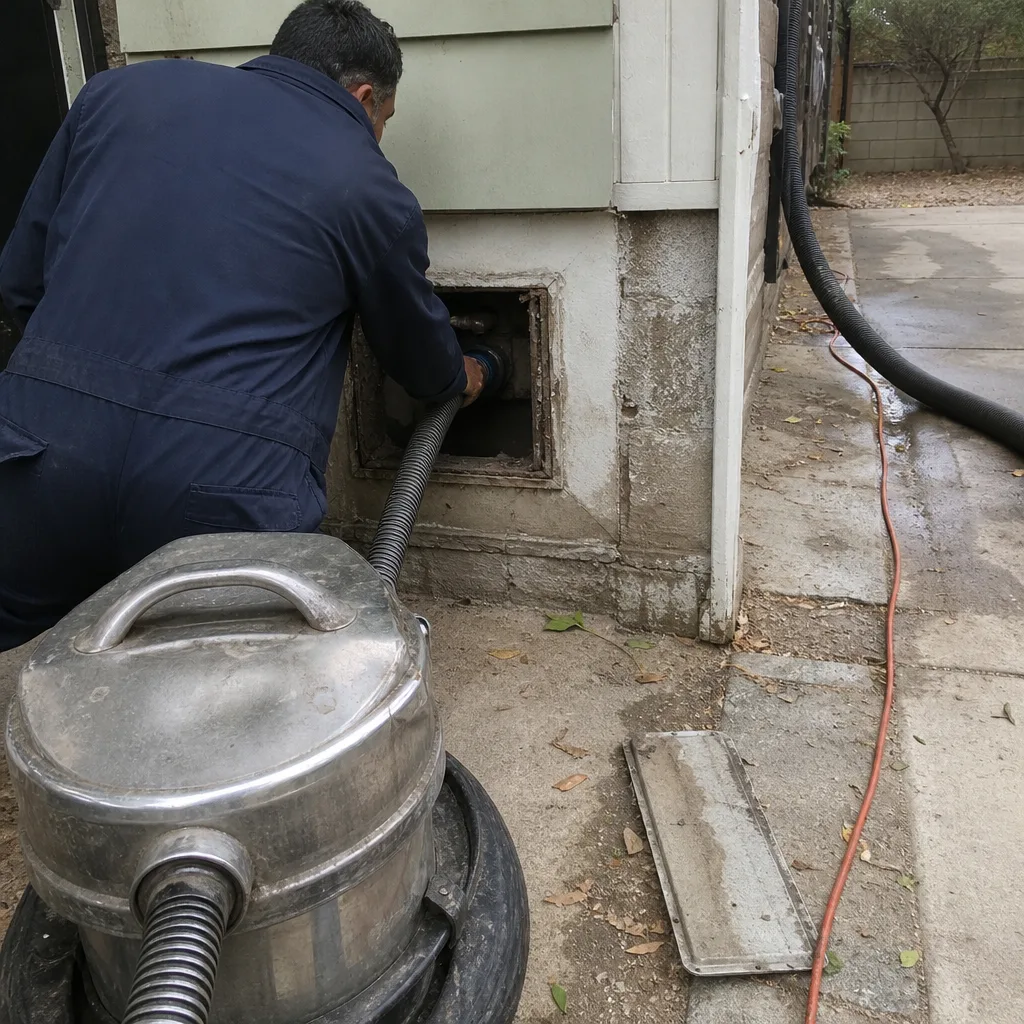 Before
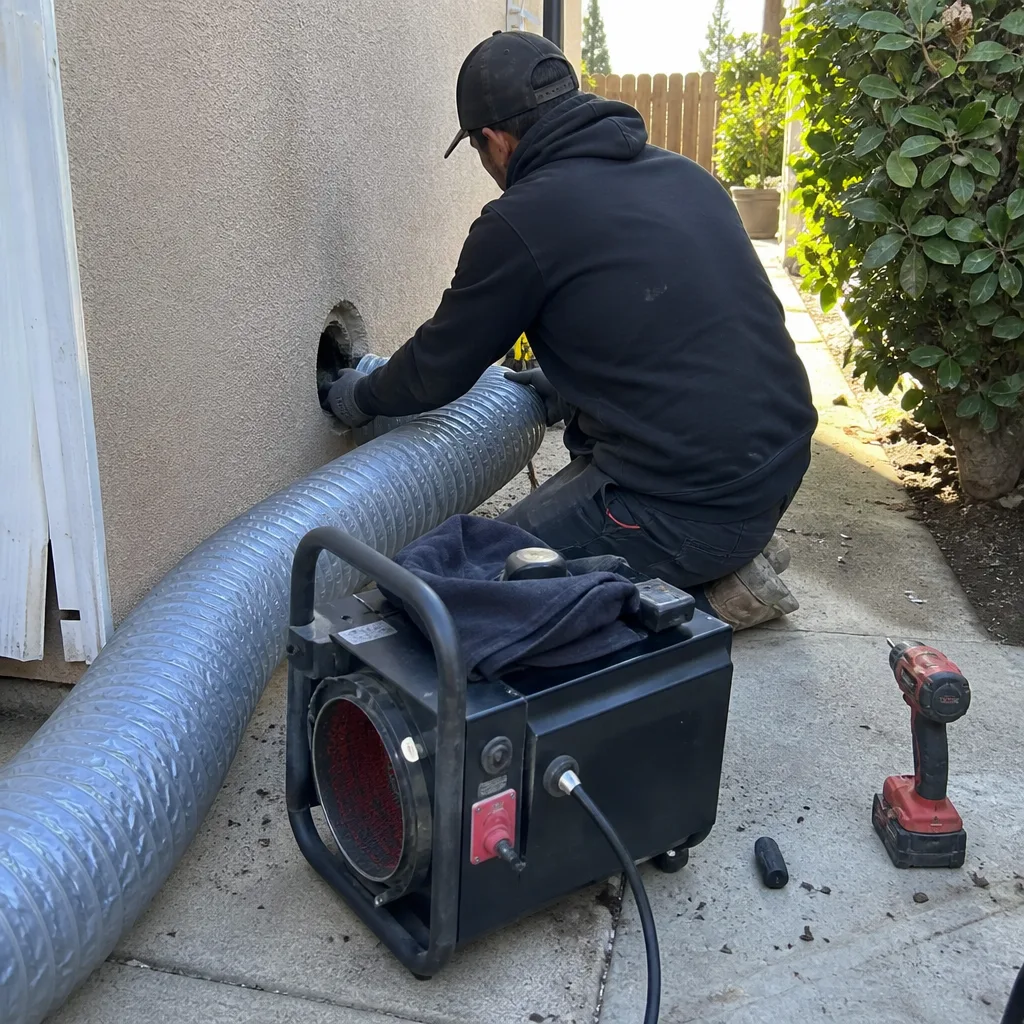 After
After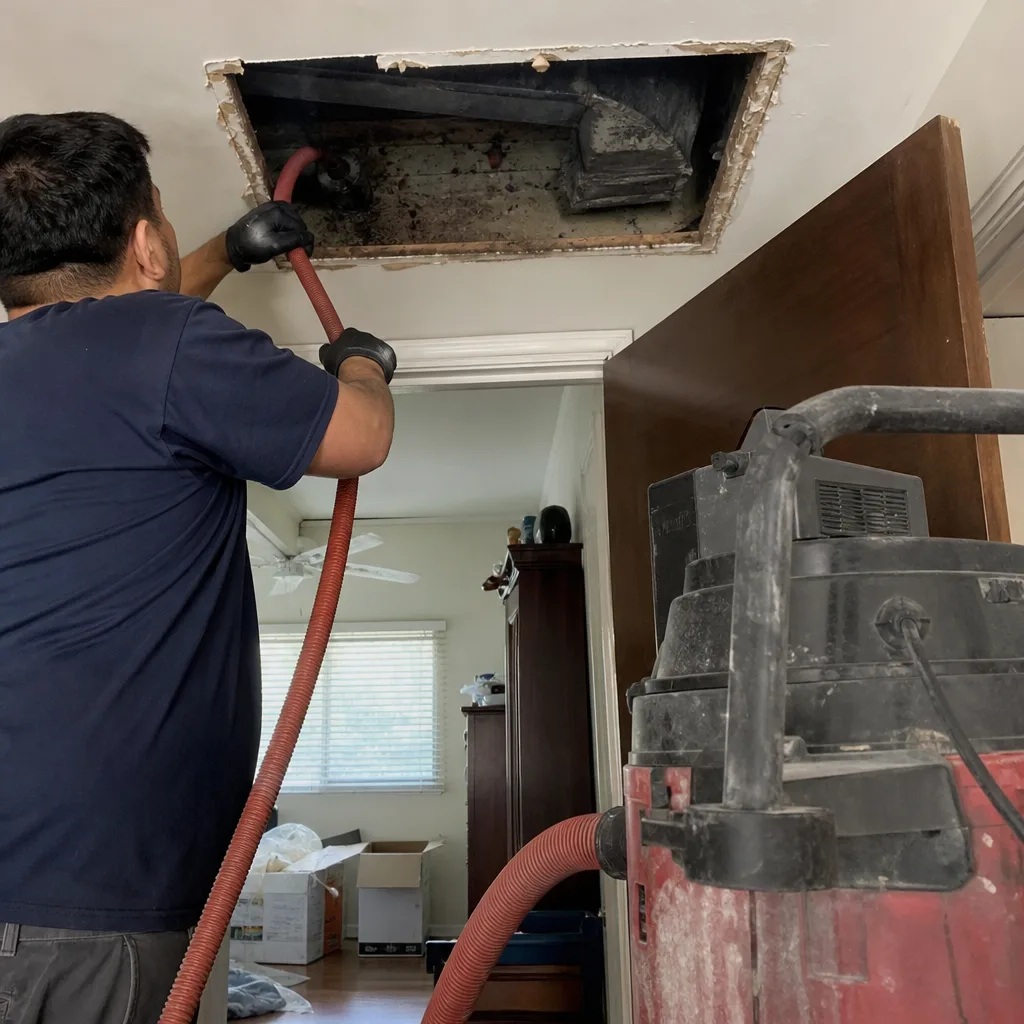 Before
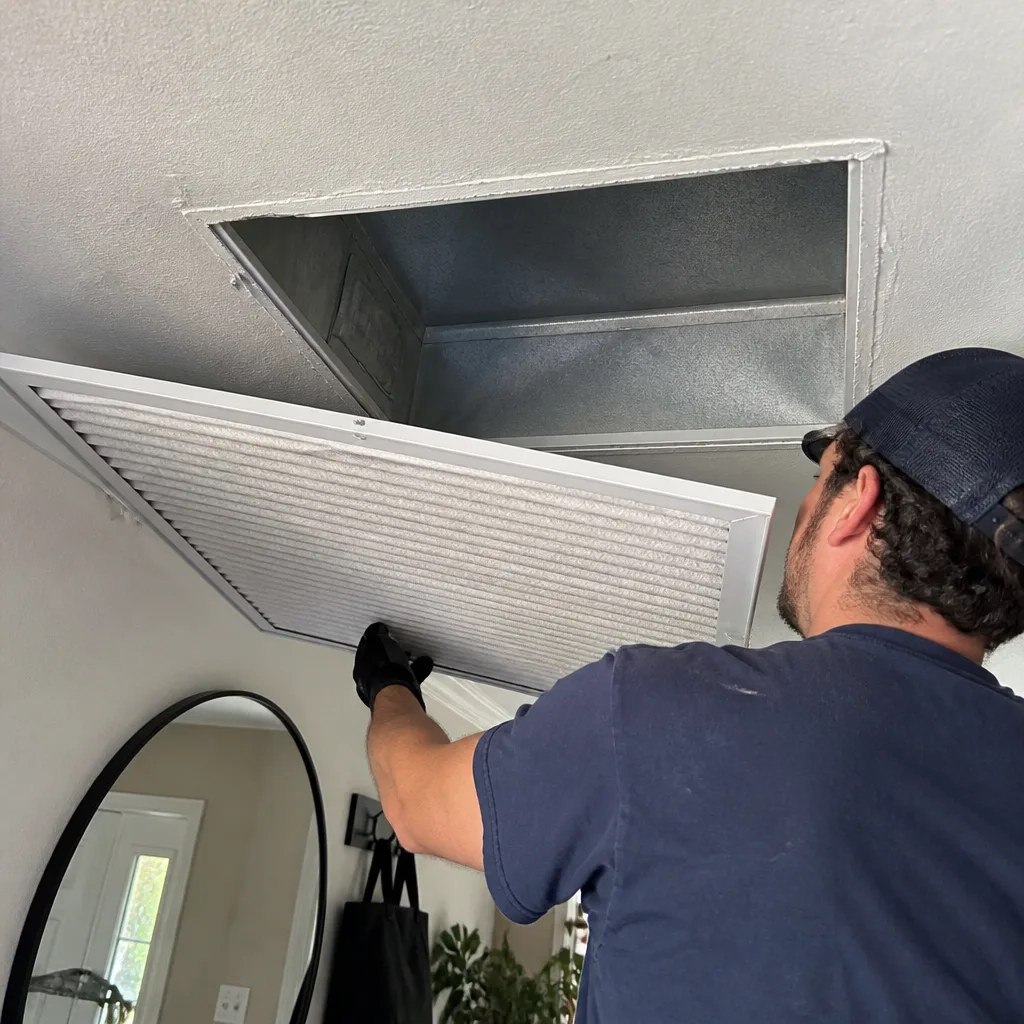 After
After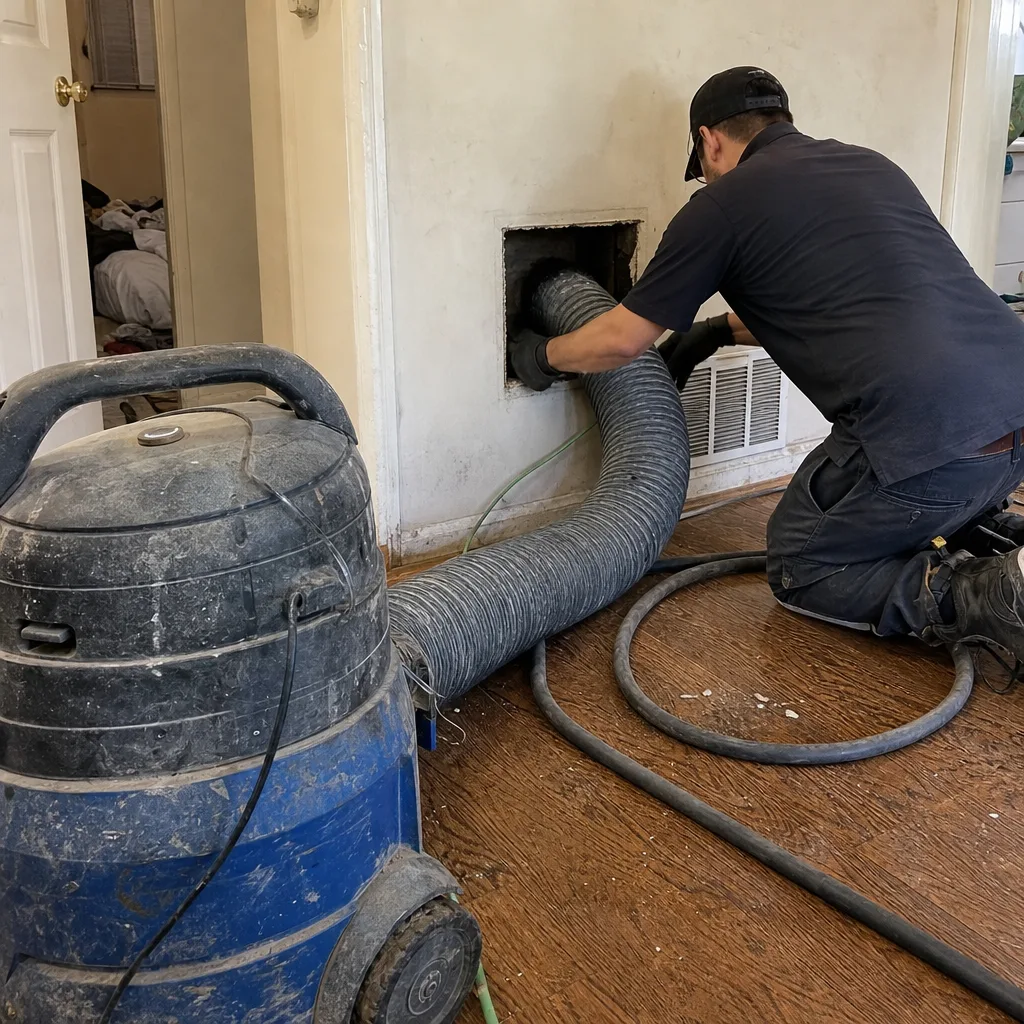 Before
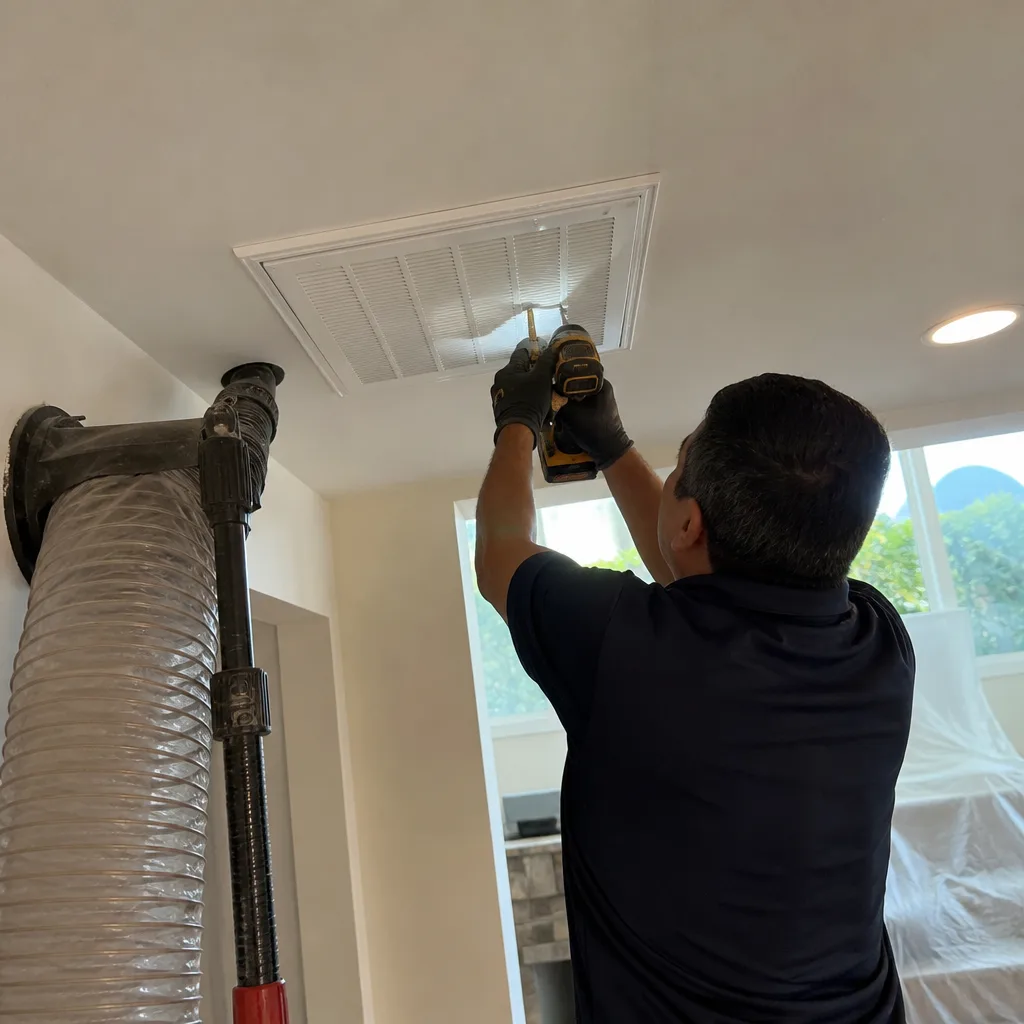 After
AfterThe Complete Air Duct Cleaning Guide for Los Angeles Homeowners
After the Woolsey and Eaton fires, air quality researchers measured particulate intrusion in duct systems miles beyond the burn perimeters. Ash doesn’t respect evacuation zones. It rides the wind, settles on stucco roofs, and gets pulled into return registers by central air systems. Yet most duct cleaning guides still open with “dust builds up over time.” That generic advice doesn’t account for Santa Ana winds, marine layer humidity, or the specific way 1950s-era Los Angeles homes were built. This guide covers what actually happens inside LA ducts, what cleaning should cost, how to verify the work, and how to choose someone you’d feel safe opening your door to.
Quick Answer
Our Air Duct Cleaning services in Los Angeles typically cost $450 – $800 for a whole-home system in an average 1,500 – 2,500 square foot house, take 3 – 6 hours, and should include source-removal cleaning (brushing plus negative-pressure extraction) rather than just vacuuming the registers. The most important factor isn’t the equipment or the price, it’s getting a written quote before work starts and documented proof of what was done after. In LA specifically, you want this done by a verified technician who can show you before-and-after photos of your own ducts, not stock images.
Table of Contents
- Why Los Angeles Ducts Get Dirtier Than Most Cities
- How Professional Duct Cleaning Actually Works
- What Air Duct Cleaning Costs in Los Angeles
- Older LA Housing Stock and Non-Standard Duct Configurations
- What ‘Threshold Verified’ Actually Means
- How to Read a Post-Cleaning Report
- Questions to Ask Any LA Duct Cleaner Before You Book
- What You Should Receive Before the Technician Leaves
Why Los Angeles Ducts Get Dirtier Than Most Cities
Los Angeles combines three contamination sources that most other American cities deal with one at a time. First, wildfire smoke. The Santa Ana winds push ash and fine particulate matter across the basin from October through January, and increasingly into spring during drought years. That particulate settles on roofs, gets pulled into attic vents, and works its way into supply and return ductwork. Second, the marine layer. Coastal humidity in LA neighborhoods like Playa del Rey, Venice, and San Pedro keeps ducts damp enough for dust to cake onto interior surfaces rather than blow through. That caked layer then traps more debris. Third, everyday urban particulate: brake dust from the 405, tire wear from surface streets, and construction dust from the constant remodeling cycle in older neighborhoods like Silver Lake, Echo Park, and the Valley. We regularly see return ducts in Sherman Oaks homes that look like they’ve been sprayed with a gray-brown film, which is exactly what you get when wildfire ash, brake dust, and humidity combine. Ducts in Los Angeles aren’t just dusty. They develop a layered, adhered coating that a simple vacuum pass won’t remove.
How Professional Duct Cleaning Actually Works
There are two basic approaches to duct cleaning, and the difference matters more than the price. The cheap approach is register vacuuming: a technician inserts a vacuum hose into each floor or wall register, sucks out loose debris near the opening, and calls it done. This removes maybe 10 – 15% of the debris in a typical system and does nothing for the caked-on layer inside the main trunk lines.
The legitimate approach is source-removal cleaning. It combines three steps:
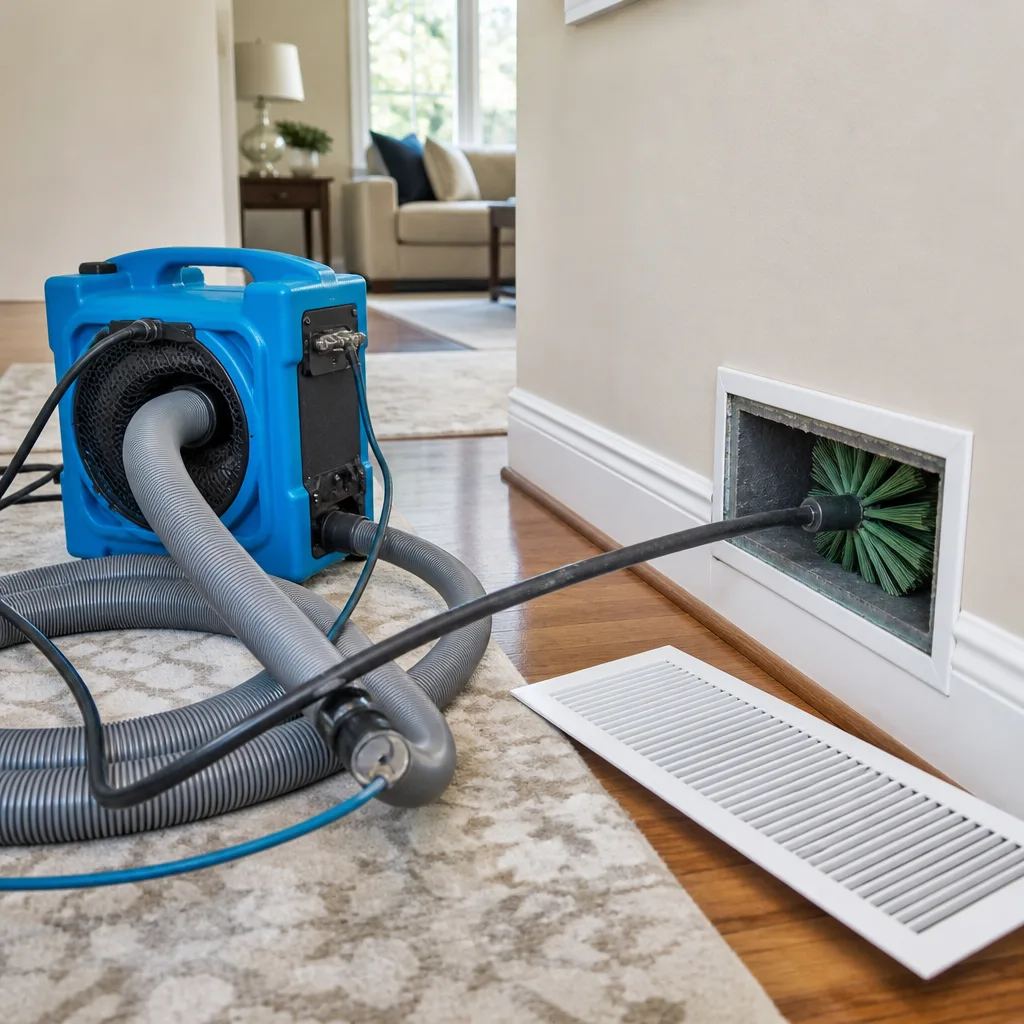
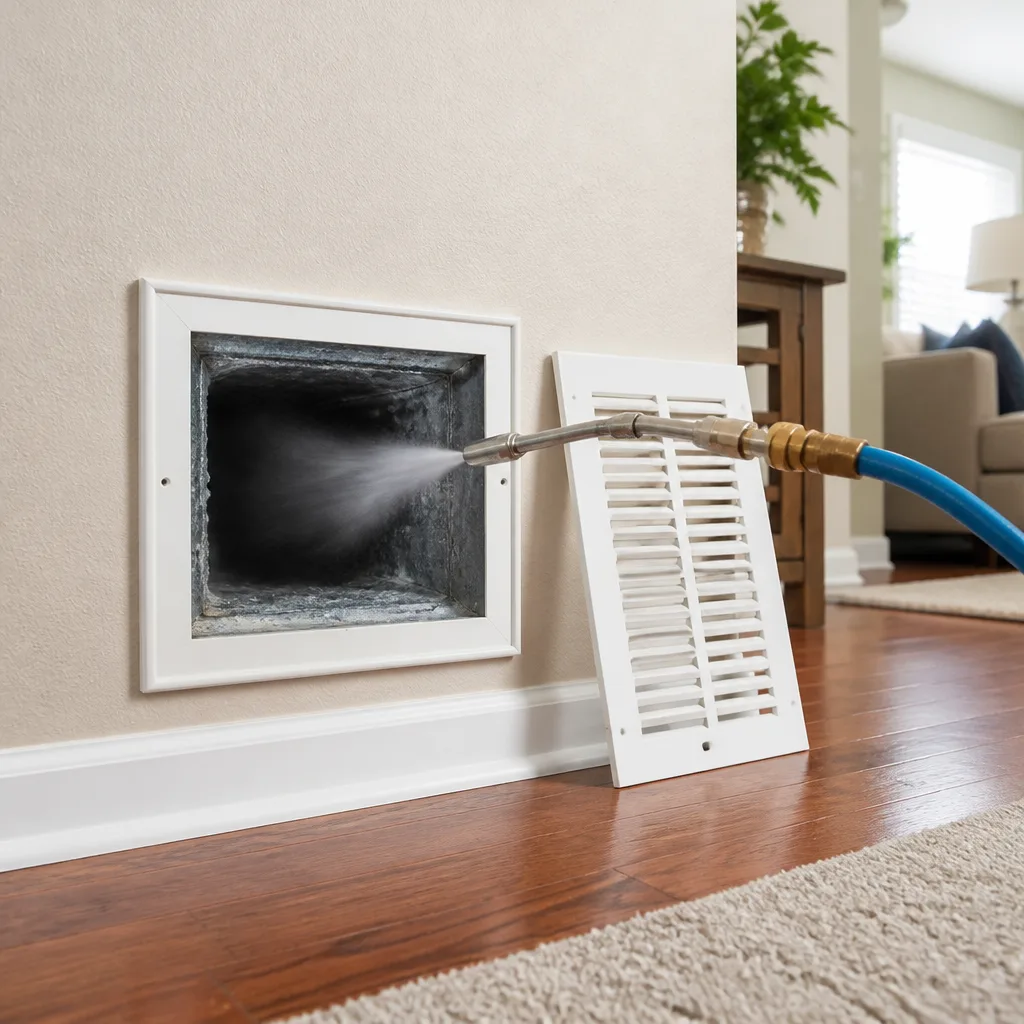
- Agitation: A rotating brush system or compressed air whip breaks the adhered dust and ash layer off the interior duct walls. Trade brands like Rotobrush and Nikro make dedicated agitation equipment for exactly this purpose.
- Negative-pressure extraction: A high-powered vacuum system is connected to the main trunk line, creating negative pressure throughout the duct system. As debris is dislodged, it’s pulled toward the vacuum rather than blown into your living space.
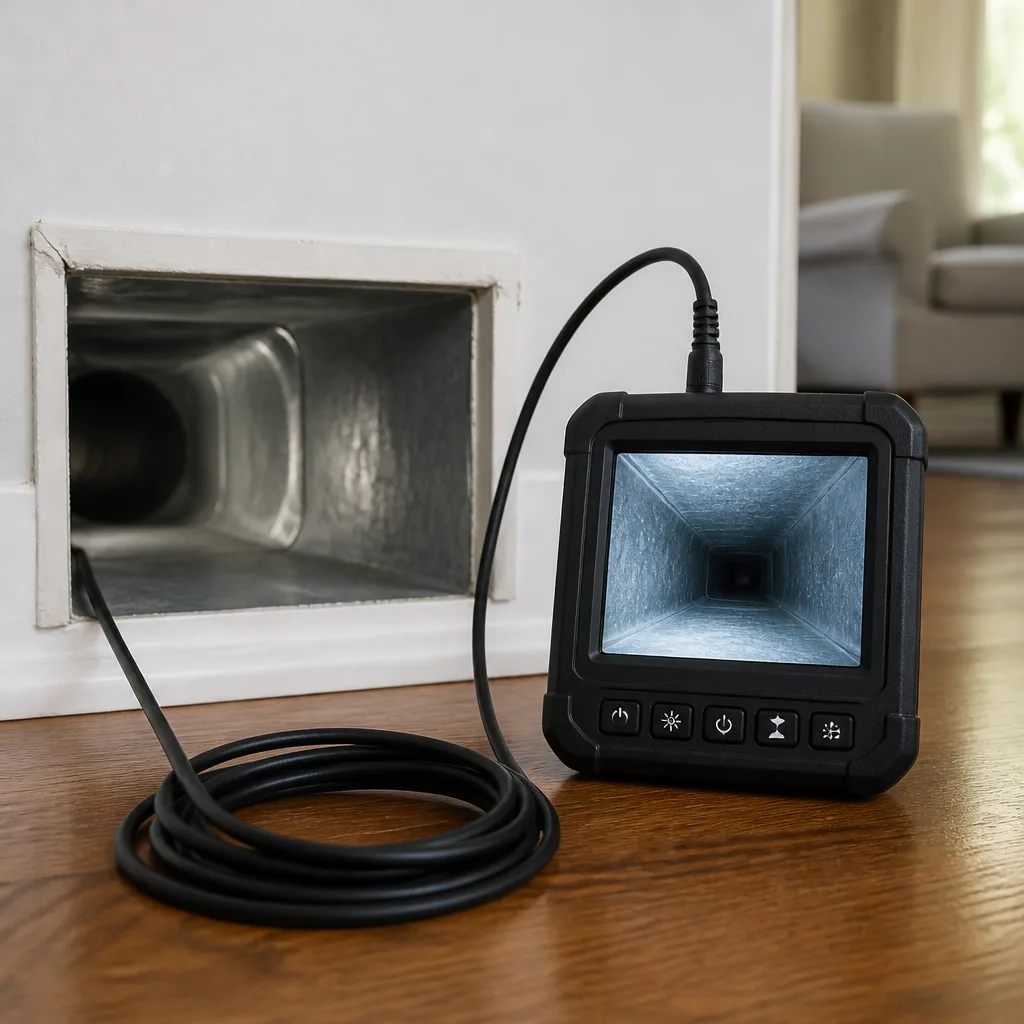
- Containment and verification: Supply and return registers are sealed during the process, and the technician should inspect the system afterward with a camera or inspection scope. You should receive photos of the cleaned interior.
In our experience across Los Angeles, source-removal cleaning removes 90 – 95% of visible debris from a typical system. Register vacuuming is what you get when a quote seems suspiciously low. It’s not the same job at a better price; it’s a different job entirely.
What Air Duct Cleaning Costs in Los Angeles
Los Angeles pricing runs higher than the national average for two reasons: the age and configuration of the housing stock, and the fact that LA duct systems typically have more debris per linear foot than systems in lower-pollution cities. Here’s what we see as the realistic range for a whole-home cleaning:
- Small home or condo (800 – 1,200 sq ft, 1 system): $350 – $500
- Average single-family home (1,500 – 2,500 sq ft, 1 – 2 systems): $450 – $800
- Large home (3,000+ sq ft, 2 – 3 systems, multiple returns): $700 – $1,200
- Add-on: dryer vent cleaning bundled with duct cleaning: $75 – $150
- Add-on: air duct repair discovered during cleaning (loose joints, small holes): $150 – $600 depending on access and materials
What you should never see is a per-vent price. The “we’ll clean each vent for $19” model is where the bait-and-switch reputation of this industry comes from. A 20-vent home at $19 per vent sounds like $380, then the technician arrives and explains that the main trunk line cleaning, the return air drop, the coil box, and the “sanitizing” are all extra. The final invoice is $900. At Linden Air Duct Cleaning, we put one flat price for the entire system in writing before any work begins. No per-vent pricing, no surprise line items at the end. That’s the only way a homeowner can actually compare quotes.
For a detailed breakdown of what’s included at each price point, see our Air Duct Cleaning in Los Angeles page.
Older LA Housing Stock and Non-Standard Duct Configurations
Los Angeles grew fast between the 1950s and 1970s, and a huge portion of the single-family housing in neighborhoods like Westchester, Reseda, Torrance, and the San Fernando Valley was built in that window. Many of those homes have duct configurations that don’t match what a technician trained on newer construction expects to see. You’ll find rectangular sheet metal trunk lines running through the slab, asbestos-wrapped ducts in pre-1978 builds, flex duct retrofits done during 1980s renovations, and return air paths that were modified when window units got replaced by central air.
Why this matters for pricing and scope: a standard quote assumes a standard system. In Los Angeles, “standard” is the exception. An accurate quote requires the technician to actually look at the system before pricing it, which is why we always provide a written price after an on-site assessment rather than a blind phone quote. If you have a 1960s home in the Valley with original rigid ducts and someone quotes you $299 over the phone without seeing the house, they’re quoting a job they haven’t looked at.
Homes built between 1950 and 1978 may also have asbestos-containing tape or wrap on duct joints. That requires specialized handling and is a hard stop for any reputable cleaner. If a technician doesn’t mention asbestos when you describe a pre-1978 home, that’s a red flag. A real professional will ask about the home’s age before scheduling. This is also covered in depth on our Air Duct Repair in Los Angeles page, since repairs on these systems often reveal what cleaning alone can’t fix.
What ‘Threshold Verified’ Actually Means
Most duct cleaning companies talk about their equipment. Very few talk about the person who rings your doorbell. That’s a problem, because you’re not letting a vacuum truck into your house; you’re letting a person in. In Los Angeles, where homeowners are rightly cautious about who comes to the door, the technician’s credentials matter more than the machine’s specs.
Threshold Verified is the standard that Linden Air Duct Cleaning has operated under since 2004 as part of the Threshold Group family. In practice, it means four specific things happen on every job:
- Background check before hire: Every technician passes a criminal background check before they’re eligible to enter a customer’s home. This isn’t a one-time check; it’s a condition of employment.
- Identity verification before arrival: After you book, we send you the name and photo of the technician who will be at your door. You know who to expect before you open it.
- Visible ID at the door: The technician shows a photo ID badge before stepping inside. No badge, no entry, no exceptions.
- Clean, marked uniform and vehicle: The technician arrives in a uniform that identifies them as Linden Air Duct Cleaning, in a marked vehicle. No unmarked vans, no generic outfits.
A contractor who simply shows up with equipment and a clipboard is asking you to take a lot on faith. The Threshold Standard exists so you don’t have to. You should be able to verify who is in your home at every moment. If a company can’t tell you who’s coming, that tells you something.
How to Read a Post-Cleaning Report
The difference between a real duct cleaning and a drive-by vacuum job is visible in the documentation. A thorough contractor will give you a report that includes specific, verifiable evidence of what was done. Here’s what should be in the report when the technician hands it to you:
- Before-and-after photos of your actual ducts: Not stock photos. Not “representative examples.” Your house, your ducts, your camera run. You should be able to see the interior surface change from coated to clean metal.
- Scope of work performed: Which systems were cleaned (supply, return, both), which registers were accessed, and whether the main trunk line was included. If the main trunk line isn’t listed, it probably wasn’t cleaned.
- Any findings or repair recommendations: Loose joints, holes, disconnected sections, mold-adjacent moisture issues. Reputable cleaners document what they saw, even if they don’t fix everything that day.
- Written price confirmation: The price you agreed to before work started, confirmed in writing at the end. No surprises, no additions.
If a company offers before-and-after photos of your own ducts and a written scope of work, that’s a company that isn’t worried about you seeing the evidence. If a company avoids photos or says the camera “wasn’t working” that day, you don’t have to run them out of the house, but you should be skeptical about what was actually done. Air duct repair findings should also come with something in writing. Every repair Linden performs comes with a written guarantee covering 365 days, and if a covered repair fails, we come back at no charge. That’s not a promotion; it’s how the job has been done since 2004.
Questions to Ask Any LA Duct Cleaner Before You Book
The right questions tell you more than a dozen online reviews do. A company that answers these directly and specifically is a company that does the work. A company that deflects, vague-answers, or gets annoyed is telling you something you should hear.
- “Will I get a written price before any work begins?” The answer should be an immediate yes. If there’s hesitation or a “depends on what we find” without a clear process, walk away.
- “Who exactly is coming to my home, and can you send me their name and photo before the appointment?” This is the Threshold Standard question. A company that can’t or won’t identify their technicians before arrival is asking you to take an unnecessary risk.
- “Does the price include the main trunk line, the return air drop, and the coil box?” This is where cheap quotes fall apart. Ask it point-blank. If the price only covers registers, it’s not a duct cleaning.
- “What equipment do you use for agitation and extraction?” Listen for brand names like Rotobrush, Nikro, or equivalent professional equipment, and for the phrase “negative pressure” or “source removal.” If they say they have “a powerful vacuum,” that’s a register vacuum job.
- “Will I see before-and-after photos of my own ducts?” The answer should be yes, without conditions. This is the single most reliable verification that the work was actually done.
- “What happens if I’m not satisfied or something isn’t right after the job?” Listen for a specific, written answer. “We’ll make it right” is vague. “We’ll come back at no charge, and it’s covered in writing for 365 days” is specific.
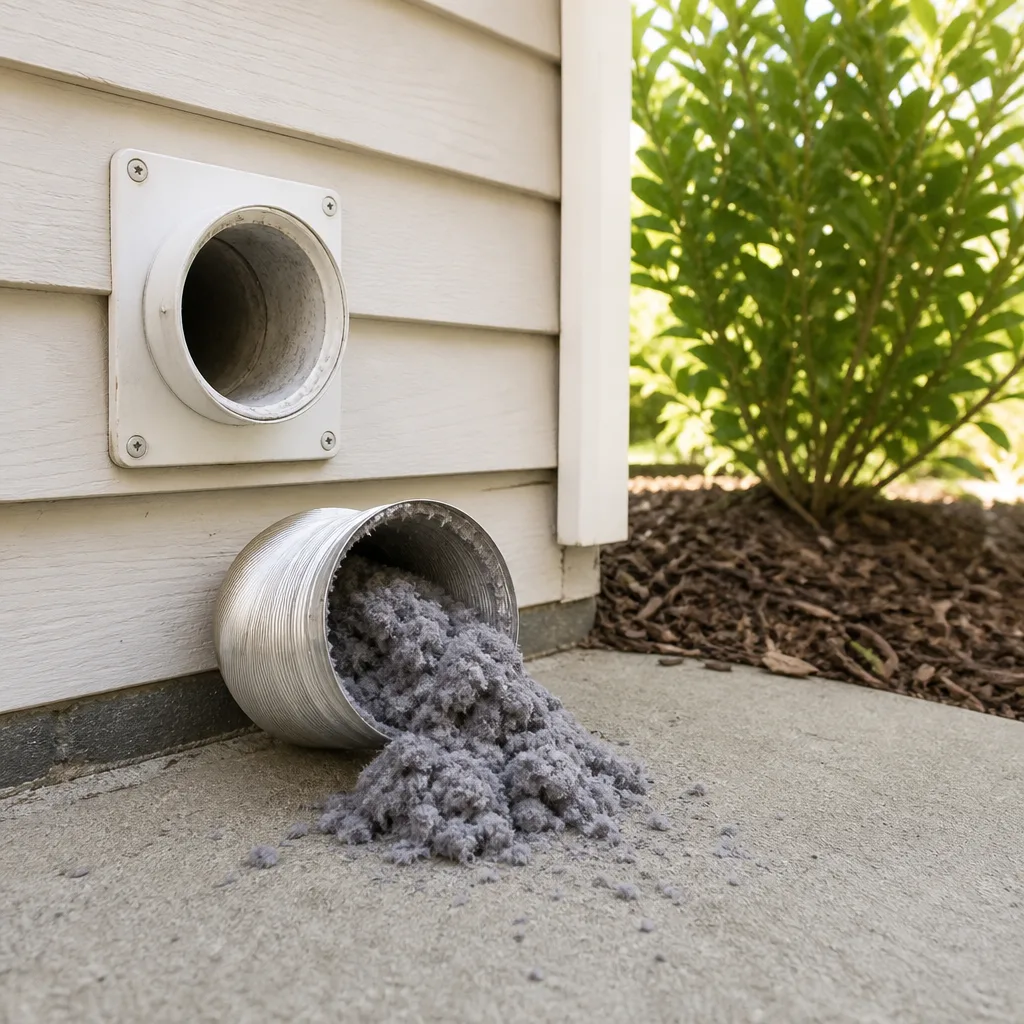
If you’re also considering Dryer Vent Cleaning in Los Angeles, ask the same questions. Dryer vents are a fire safety issue, and the same verification standards apply. A lint-clogged vent in an LA laundry room with a gas dryer is a serious risk, and you want the same proof of work.
What You Should Receive Before the Technician Leaves
Here’s the checklist to keep on your phone or print out for the day of the appointment. Every item should be in your hands before the technician walks out the door:
- A written confirmation of the price you agreed to – before work starts, not after. This is non-negotiable.
- The technician’s name and photo – sent before the arrival, confirmed by the photo ID badge shown at the door.
- Before-and-after photos of your duct interiors – your home, your system, taken with an inspection camera during the job.
- A written scope of work – what was cleaned, what was inspected, what was left alone and why.
- If any repairs were made: a written guarantee – at Linden, that guarantee covers 365 days and includes a free second visit if the repair fails.
- A contact for follow-up questions – a real phone number answered by a real person, not a voicemail tree. Ours is answered by a live person 24 hours a day, 7 days a week.
For homeowners in Los Angeles, this documentation is the difference between knowing the job was done and hoping it was. It’s also the only thing that protects you financially if something isn’t right. A company that provides all of it in writing is a company that expects you to check.
Common Mistakes to Avoid
- Choosing the lowest per-vent quote without asking what it includes. This is the number one way Los Angeles homeowners end up paying more than the listed price. Per-vent pricing is designed to sound cheap and balloon fast.
- Hiring a company that won’t tell you who’s coming. If there’s no name, no photo, and no background-check policy, you’re opening your door to a stranger with a truck. In a city the size of Los Angeles, that’s a risk you don’t need to take.
- Skipping the question about the main trunk line. Register cleaning and system cleaning are different jobs at different prices. If the trunk line isn’t included, you’re paying for a cosmetic touch-up.
- Assuming all pre-1978 homes are the same. Asbestos-containing duct wrap was common in Los Angeles housing stock from the 1950s onward. A reputable cleaner will ask about home age before scheduling and will know what to look for. If no one asks, that matters.
- Accepting “sanitizing” or “deodorizing” as a substitute for cleaning. Fogging a duct system with a scented product masks odor; it doesn’t remove the adhered layer of ash, dust, and particulate that’s actually in there.
- Not asking for before-and-after photos. This is the single easiest verification step, and most homeowners skip it. Do not skip it.
- Assuming dryer vents are automatically included. They almost never are. It’s a separate service. Given LA’s fire risk profile, it’s a service worth scheduling.
When to Call a Professional
Visible dust blowing from registers when the system kicks on, a persistent musty smell that gets worse with the AC running, or allergy symptoms that spike indoors are all signals that the ducts need real attention. So is any remodeling project that produced drywall or plaster dust, even with registers covered, because fine particulate finds its way into the system. If you’ve lived through a wildfire smoke event, even at a distance, it’s worth an inspection. And if you’ve never had the ducts looked at in a home built before 1990, the system predates modern filtration standards and almost certainly has an adhered contamination layer. Linden Air Duct Cleaning offers free estimates in Los Angeles; call (980) 447-2498 for an exact quote or explore more guides & resources. You’ll get a written price before any work begins.
Frequently Asked Questions
Expect to pay $450 – $800 for a whole-home cleaning in an average 1,500 – 2,500 square foot Los Angeles house, with larger homes running higher. Any per-vent quote is a red flag; you want one flat price per system in writing before work starts. Call (980) 447-2498 for a free estimate and an exact written quote.
In Los Angeles, every 3 – 5 years is a realistic interval for most homes, but wildfire smoke events, major remodeling, or homes with pets and older HVAC systems may justify more frequent cleaning. The highest-signal factor is what a camera inspection actually shows in your ducts, not a date on a calendar.
Because they’re quoting a different job. Register vacuuming costs a fraction of source-removal cleaning and removes a fraction of the debris. Ask point-blank whether the price includes the main trunk line, return air drop, and coil box. If it doesn’t, the “cheaper” quote is actually more expensive per unit of actual cleaning done.
Demand before-and-after photos of your own duct interiors, taken with an inspection camera during the job. Any legitimate company does this as standard practice. If a company won’t or can’t show you the inside of your own ducts after cleaning them, assume the work didn’t happen.
Yes, and it’s not close. Wildfire ash is finer than household dust, adheres more aggressively to interior duct surfaces, and penetrates systems miles from any burn perimeter. LA ducts develop a layered ash-and-humidity coating that requires mechanical agitation and negative-pressure extraction to remove. Standard vacuuming won’t get it.
Yes, and we recommend it for every Los Angeles homeowner. Dryer vent lint is one of the most common causes of preventable house fires, and the vent is almost never included in a duct cleaning quote. It’s a separate service, and it’s worth scheduling at the same appointment. See our Dryer Vent Cleaning in Los Angeles page for details.
The Bottom Line
Air duct cleaning in Los Angeles is not a commodity service, and the city’s specific combination of wildfire ash, marine layer humidity, and older housing stock makes generic advice unreliable. The right job is source-removal cleaning with mechanical agitation and negative-pressure extraction, priced as one flat rate per system in writing before work begins. The right company tells you exactly who is coming to your door, proves it with a photo ID badge at the threshold, and hands you before-and-after photos of your own ducts before leaving. That’s the standard the job should meet, and it’s the standard we’ve held ourselves to since 2004. If you’re ready for a real answer on your system, start with our Linden Air Duct Cleaning home page, or just call us.
Written by Marcus Veale, Owner at Linden Air Duct Cleaning, serving Los Angeles since 2004.