
Last updated October 8, 2026
Whole-system duct and dryer vent check with before-and-after photos - you see exactly what came out of your vents
That "$99 whole-house special" is a bait ad - the real number appears once they are in your hallway, or the "clean" is a shop-vac at the register. We photograph the inside of your ducts before and after instead.
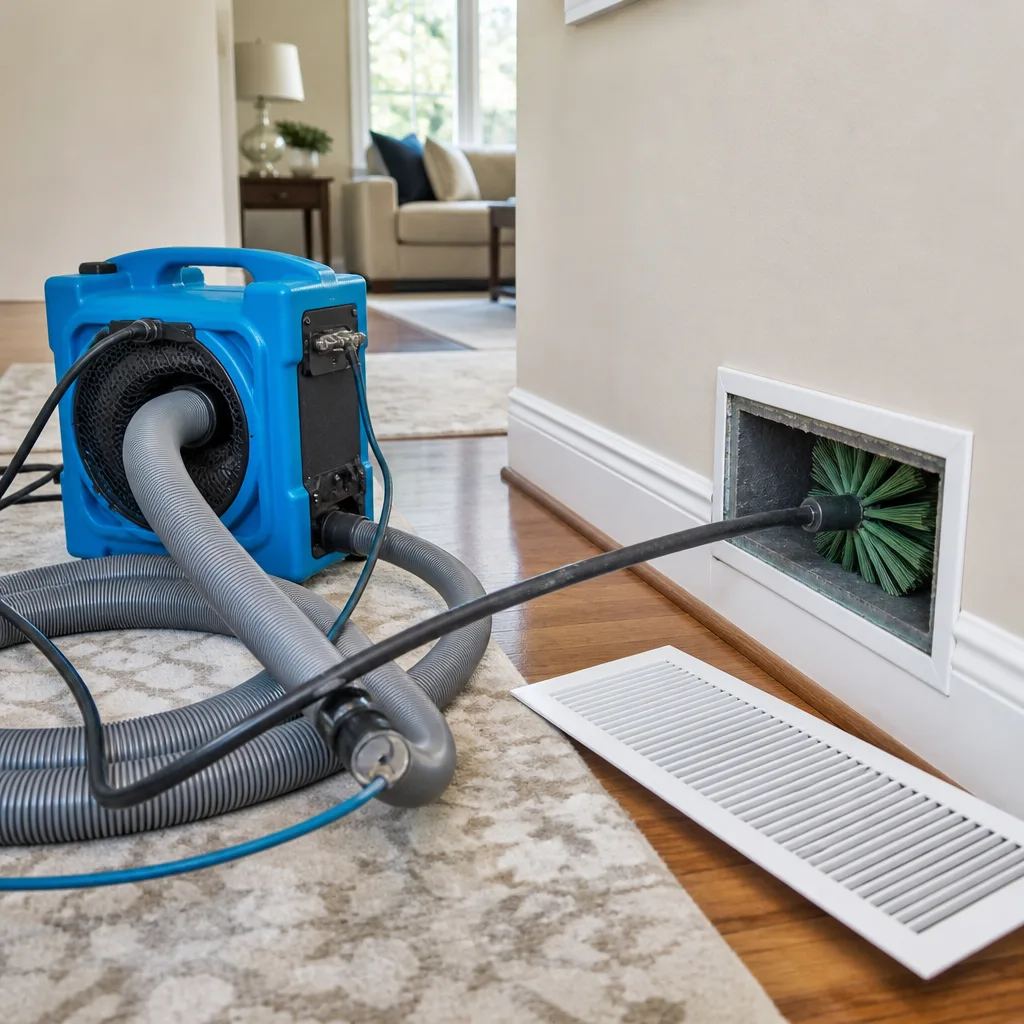
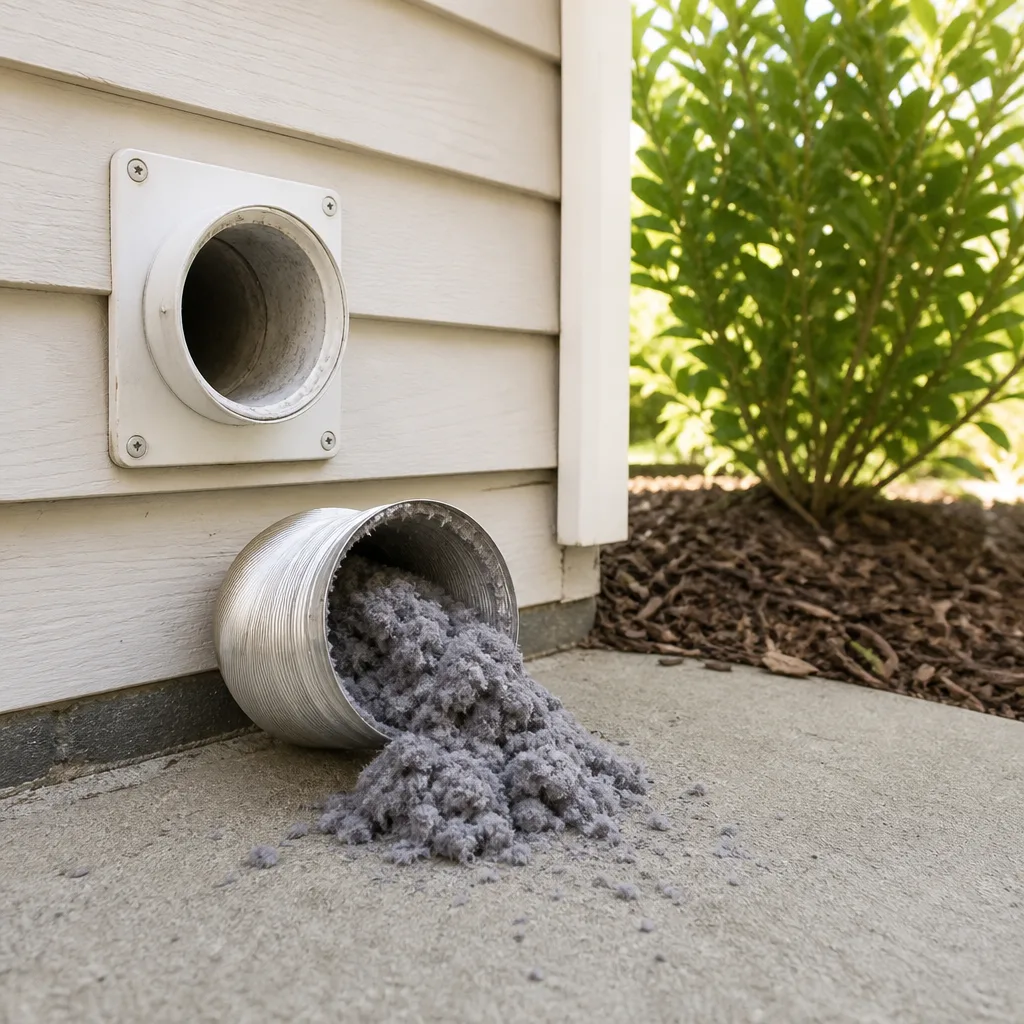
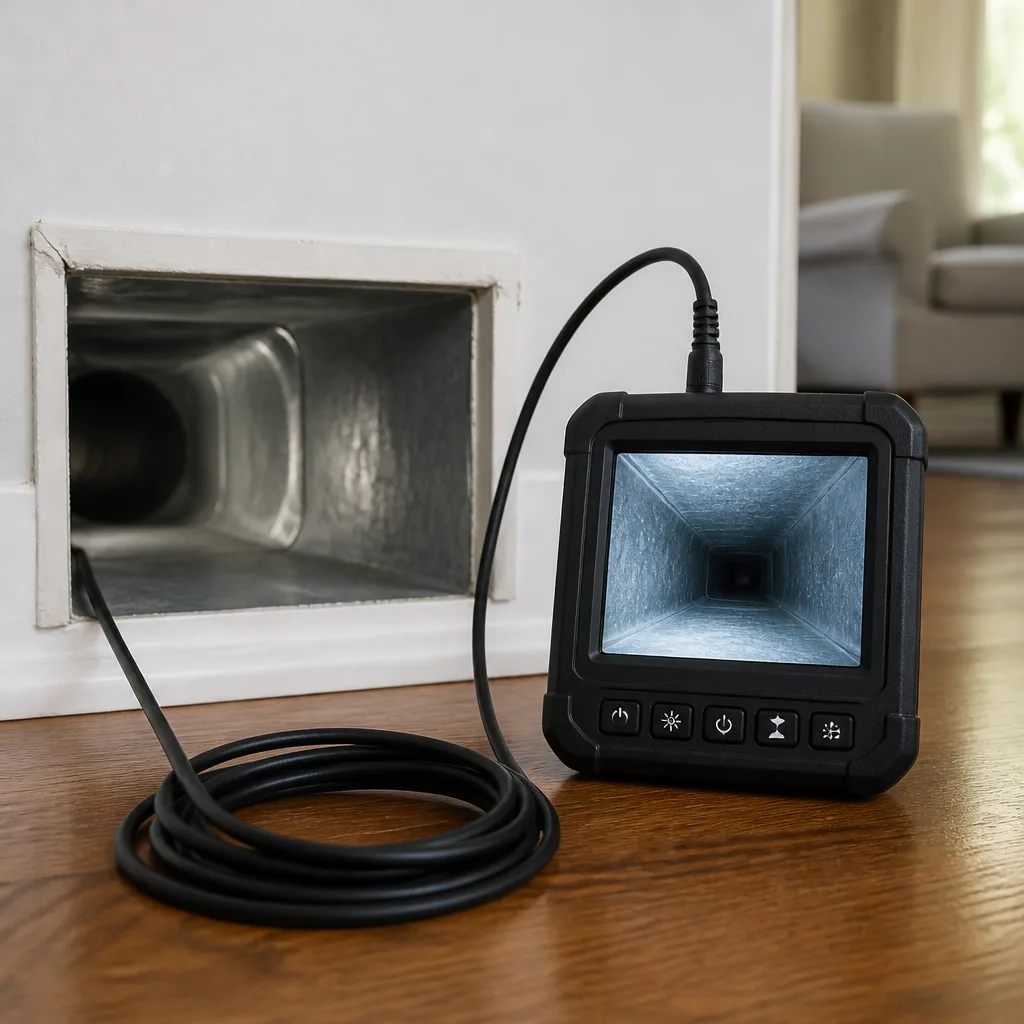
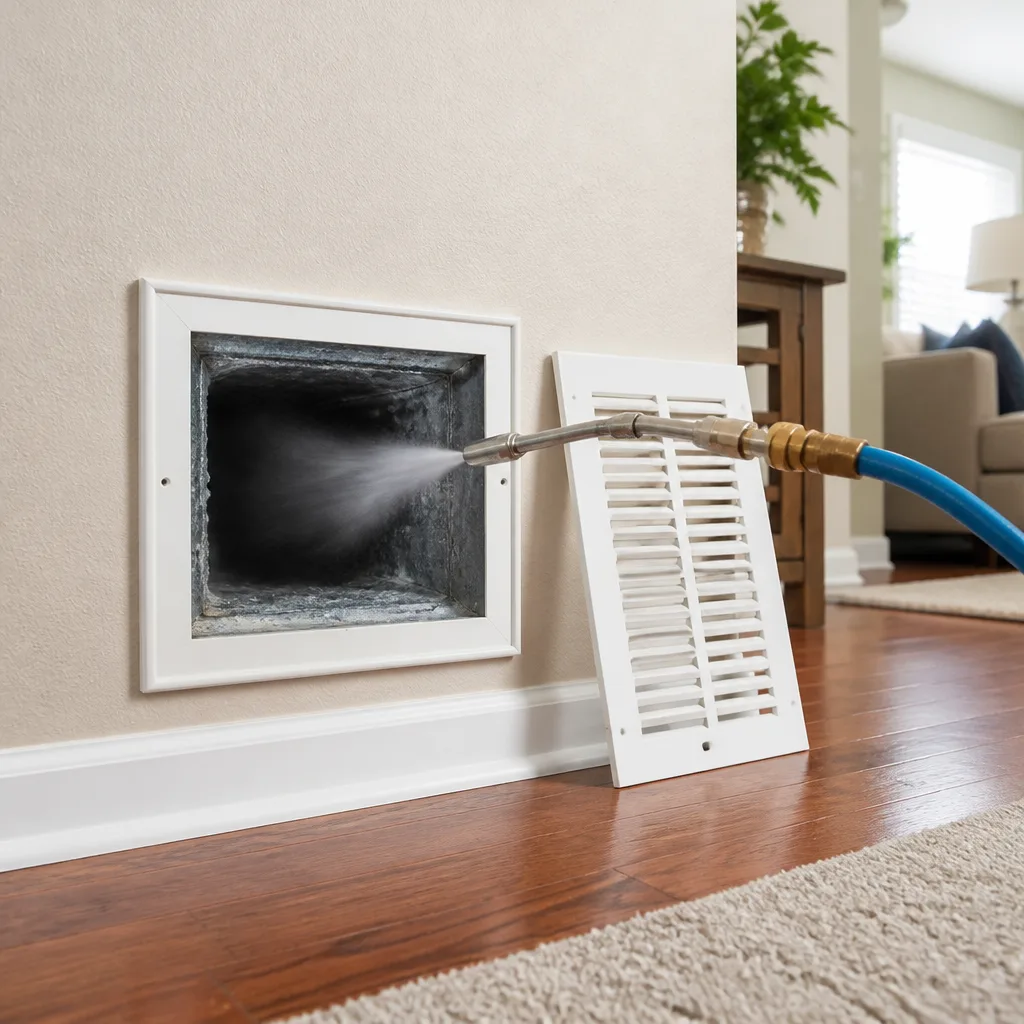
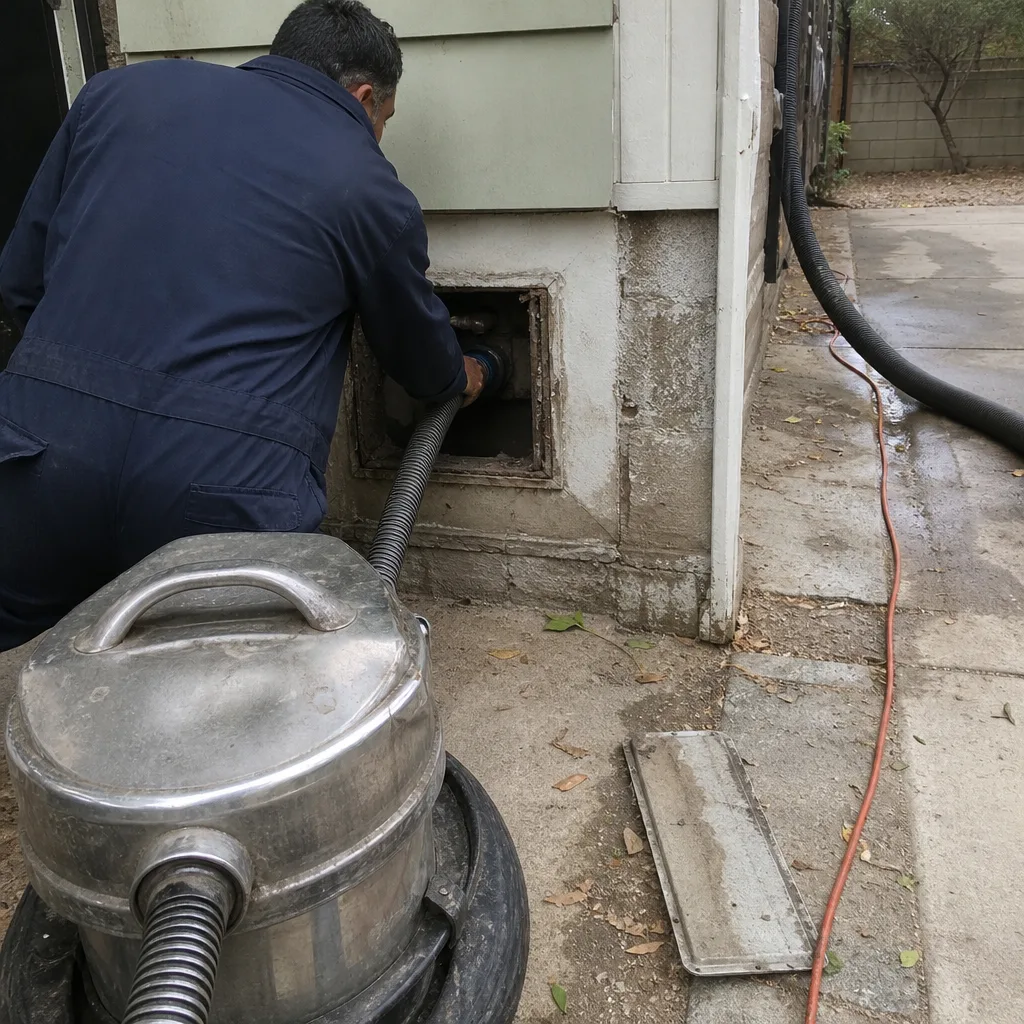 Before
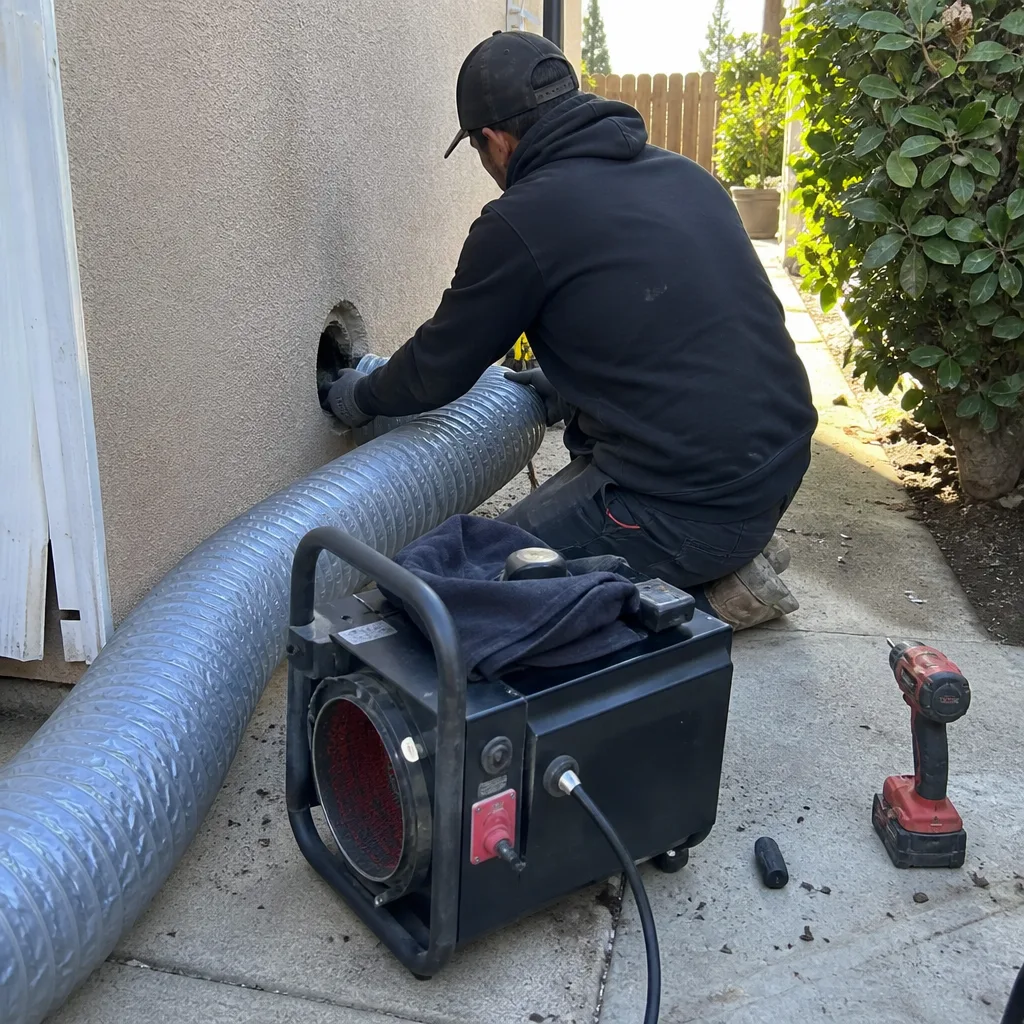 After
After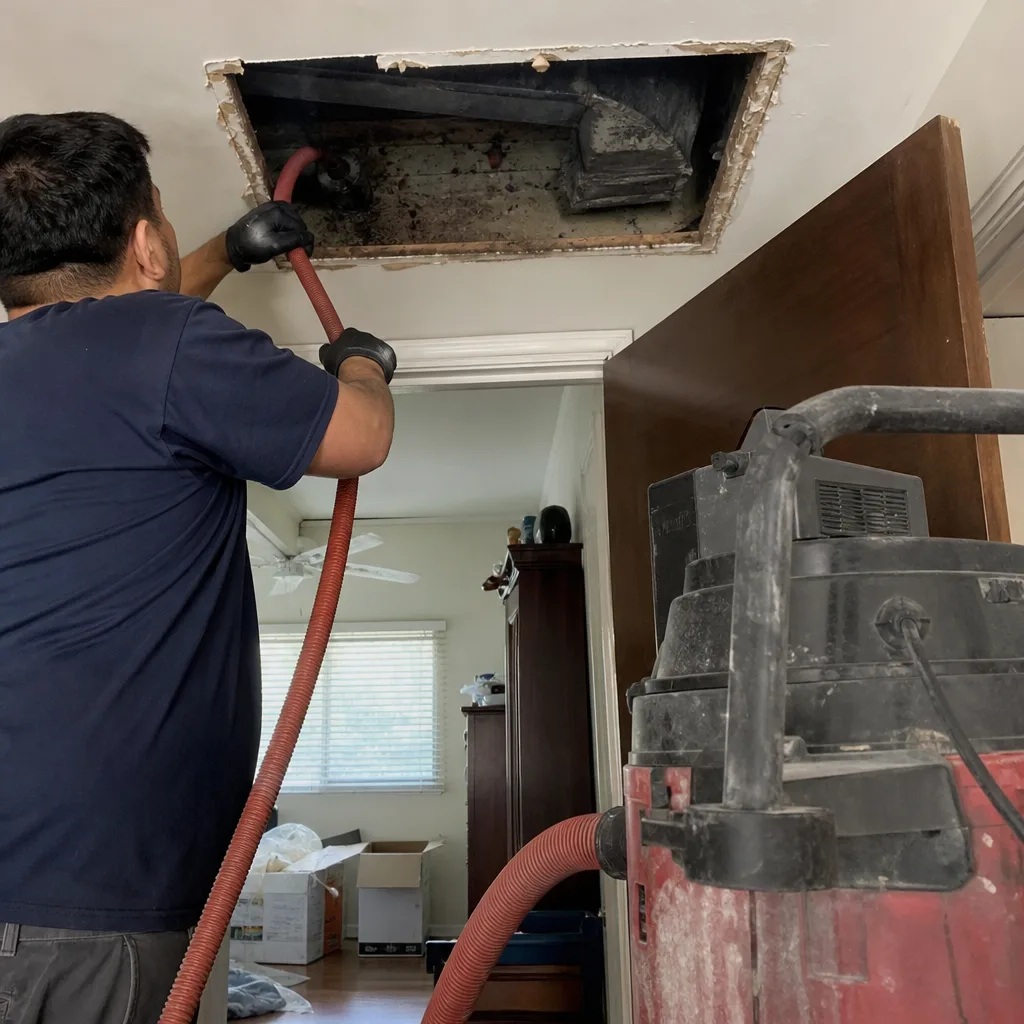 Before
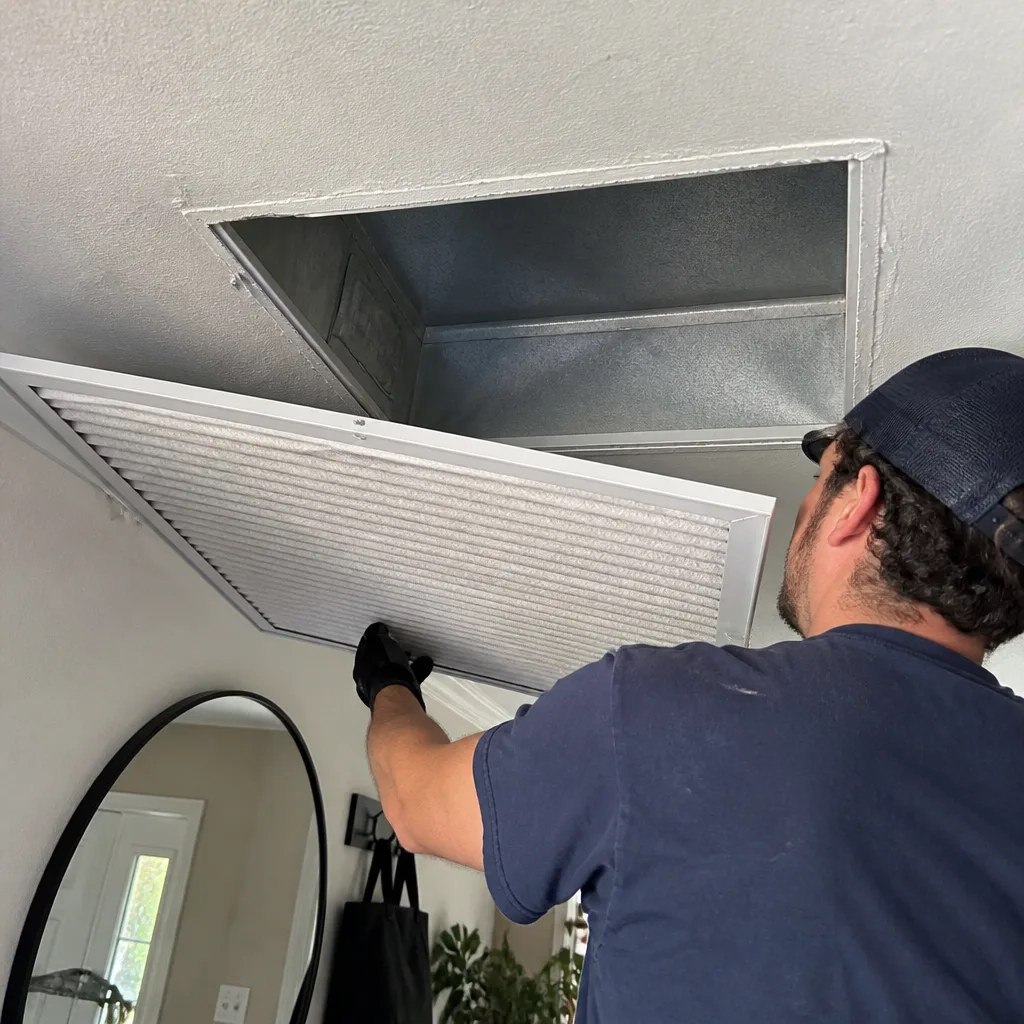 After
After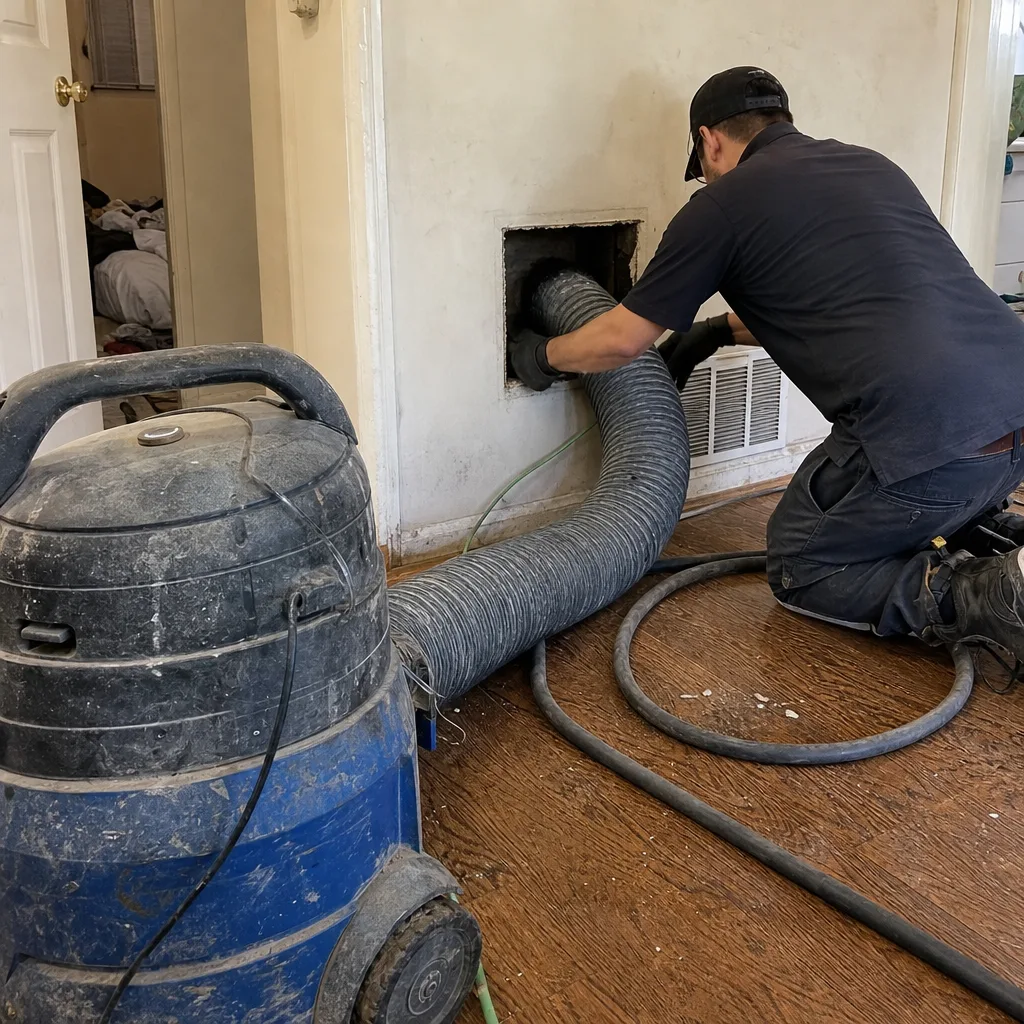 Before
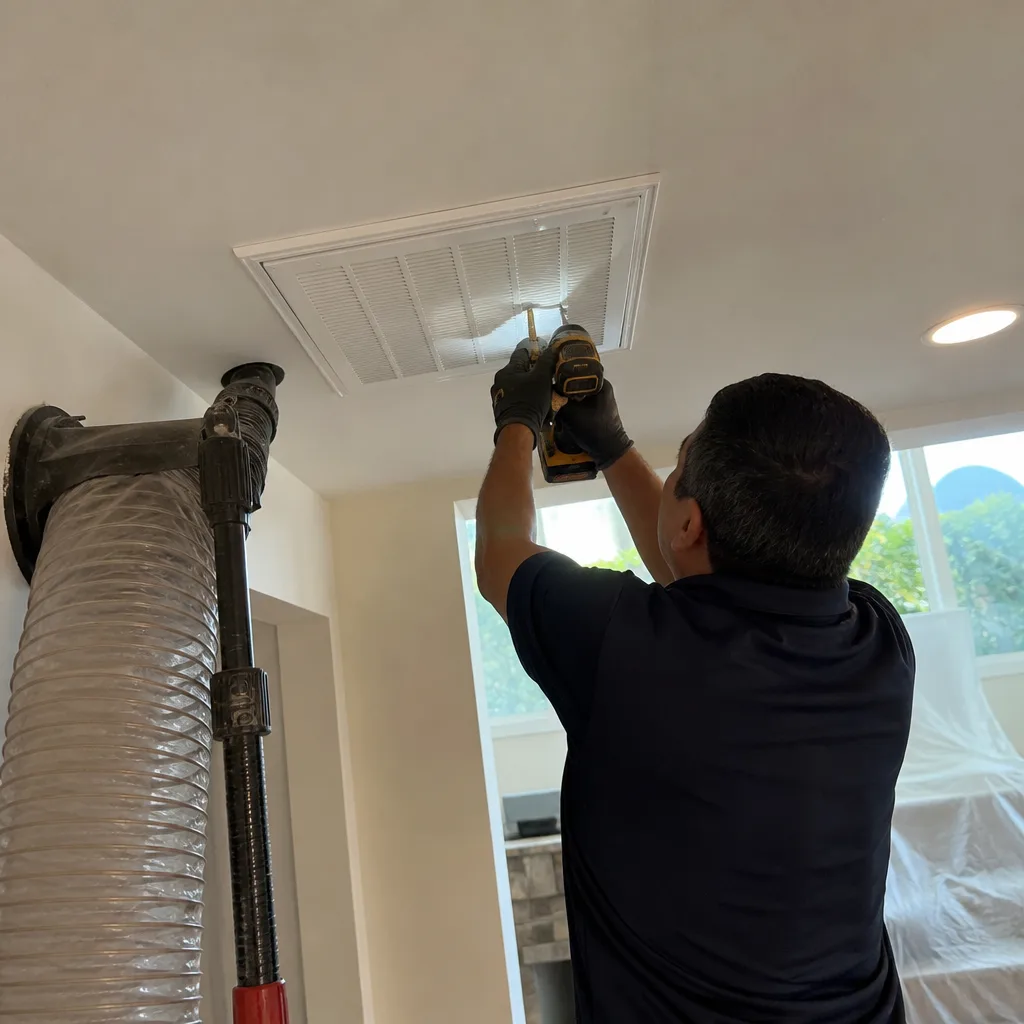 After
AfterAir Duct Repair Maintenance Schedule: What to Do and When
Here’s a fact most maintenance guides won’t tell you: a homeowner in Los Angeles with flexible duct running through a hot attic who follows generic “inspect every 5 years” advice is systematically under-maintaining a system that degrades roughly twice as fast as sheet metal duct in a mild climate. Your duct material, your home’s age, and two LA-specific factors that almost no national guide mentions determine your real maintenance calendar. This guide gives you the exact schedule for each duct type, the Los Angeles events that should trigger an unscheduled inspection, what you can check yourself versus what needs a pro, and how to document your duct condition so no technician can ever overstate a problem. For Air Duct Repair Warning Signs Every Homeowner Should Know, see our dedicated guide.
Quick Answer
Air Duct Repair maintenance in Los Angeles follows a tiered schedule: perform your own visual inspection of accessible ducts and vent registers every 12 months, schedule a professional inspection every 3 years for sheet metal duct, every 3 years for fiberglass duct board, and every 2 to 3 years for flexible duct in attic spaces. Unscheduled professional inspections should follow any earthquake of 4.0 magnitude or greater felt at your home, any roof or HVAC replacement project, or a significant wildfire smoke season that left visible soot at your registers.
Table of Contents
- Why One Schedule Doesn’t Fit All Duct Systems
- The Three Duct Types and Their Real-World Failure Timelines
- Two Los Angeles Triggers Most Maintenance Guides Ignore
- What a Homeowner Can Check Every 12 Months
- When to Schedule Professional Inspections by Duct Type
- How to Document Duct Condition with Dated Photos
- Post-Wildfire Smoke Season as a Maintenance Trigger
- Common Mistakes to Avoid
- When to Call a Professional
- Frequently Asked Questions
- The Bottom Line
Why One Schedule Doesn’t Fit All Duct Systems
The average national maintenance guide treats every duct system as if it were identical. That assumption fails in Los Angeles, where a single-family home in Sherman Oaks might run flexible duct through a 140-degree attic while a mid-century condo in Westwood uses sheet metal in a conditioned chase. The material, the installation environment, and the age of the home all change how fast duct seals degrade, insulation breaks down, and connections loosen.
We’ve inspected ducts in Los Angeles homes of the same age, in the same neighborhood, with completely different internal conditions. A 1960s home in the San Fernando Valley with original sheet metal duct often shows surface rust and failing tape at joints but structurally sound metal. A 2005 home in the same area with flex duct in an unconditioned attic frequently shows collapsed inner liners and separated collars within 15 years. If both homeowners follow the same five-year inspection cycle, the flex-duct owner is catching failures years after they started leaking conditioned air.
The maintenance schedule that protects your home and your HVAC budget starts with knowing which kind of duct you have. From there, Los Angeles adds two factors no generic guide includes: seismic activity that shakes duct connections loose, and construction work on your roof or HVAC system that disturbs duct runs. We’ll cover each in detail below.
The Three Duct Types and Their Real-World Failure Timelines
Los Angeles homes built across the past seventy years contain three primary duct materials, and each one ages on a different curve. Knowing which one runs through your ceiling, attic, or crawlspace tells you how often to schedule an inspection and what failure signs to look for.
Sheet Metal Duct (Common in Homes Built Before 1980)
Sheet metal duct is the workhorse of mid-century Los Angeles construction. Galvanized steel holds up structurally for decades, which is why many homeowners assume it needs no attention. The weak points are the joints, not the metal itself. The adhesive tape used in the 1960s and 1970s dries out, loses adhesion, and peels away. Each separated joint leaks conditioned air into unconditioned space.
Realistic inspection interval: Every 3 years.
Typical failure points: Dried or detached tape at joints, surface rust in humid coastal areas like Santa Monica or Playa del Rey, loose connections where duct meets register boots, and separated sections from seismic movement.
What we see in LA specifically: Sheet metal duct in beach-adjacent homes corrodes faster due to salt air, even inside walls and attics. A homeowner in Mar Vista might need joint re-sealing at year 10 that a Sherman Oaks homeowner doesn’t need until year 20.
Fiberglass Duct Board (Common in Homes Built 1980 – 2000)
Fiberglass duct board became popular in Los Angeles during the 1980s as a quieter, insulated alternative to bare sheet metal. The material is compressed fiberglass with a foil facing. It resists air leaks when properly sealed, but the interior fiberglass surface is porous. It holds dust, absorbs moisture, and degrades when exposed to sustained humidity or water intrusion.
Realistic inspection interval: Every 3 years.
Typical failure points: Deteriorated interior lining that releases fiberglass particles into the air stream, sagging sections that restrict airflow, foil facing peeling away at joints, and musty odors after any moisture exposure.
What we see in LA specifically: Duct board installed in crawlspaces under homes in the foothills, like La Cañada or Altadena, picks up moisture from soil evaporation. The interior liner breaks down faster than the same material in a dry attic. After a major wildfire smoke event, the porous interior of duct board holds smoke particulates longer than any other duct type.
Flexible Duct (Common in Homes Built After 2000)
Flexible duct, or flex duct, is the most common material in Los Angeles homes built since 2000 and in HVAC retrofits of older homes. It consists of an inner plastic or foil liner wrapped in insulation and an outer vapor barrier. It is inexpensive to install and handles air flow efficiently when new, but it is the most fragile of the three materials.
Realistic inspection interval: Every 2 years in hot attic installations. Every 3 years in conditioned or shaded spaces.
Typical failure points: Collapsed or kinked inner liner from overheating, separated fittings at plenum connections, torn outer vapor barrier from rodents or foot traffic in the attic, and compressed insulation that reduces thermal performance.
What we see in LA specifically: Attic temperatures in Los Angeles regularly exceed 130 degrees Fahrenheit from June through September, with peak readings near 150 degrees in the Valley. The plastic inner liner of flex duct becomes soft and pliable at those temperatures. Over repeated summer cycles, sections that were slightly kinked at installation collapse permanently. We see flex-duct failures in Los Angeles attics at year 8 to 12 routinely, while the same material in a cooler climate lasts 15 to 20 years. This is the single biggest reason a universal maintenance schedule fails LA homeowners.
Two Los Angeles Triggers Most Maintenance Guides Ignore
National maintenance schedules cover seasons and years. They don’t cover earthquakes or construction crews. In Los Angeles, both are routine events that directly affect duct integrity.
Earthquake: Any 4.0+ Felt at the House
Seismic shaking does not need to damage your home’s structure to damage your ducts. A 4.0 magnitude earthquake produces enough lateral movement to separate duct sections at joints, shift hanging straps, and pull flex duct connections loose at plenum collars. The damage is often invisible from the register. You won’t see it, but your HVAC system feels it: reduced airflow, whistling at registers, rooms that suddenly heat or cool unevenly, or a spike in your energy bill.
Our recommendation: After any earthquake of 4.0 or greater that you feel at your home, put a professional duct inspection on your list. It doesn’t need to be an emergency appointment within days, but schedule it within a month. Seismic loosening compounds: each subsequent quake works the same joint further until the connection separates entirely. Inspecting after the first felt event catches the problem when it is a $200 re-seal, not a $1,500 duct run replacement.
Roof or HVAC Replacement Work
When a roofing crew tears off shingles and replaces sheathing in Los Angeles, they are working directly above your attic duct runs. Foot traffic, dropped tools, and shifted insulation routinely compress flex duct, puncture the outer vapor barrier, or knock sheet metal sections out of alignment. The same applies when an HVAC contractor replaces your furnace or air handler: the plenum connections to existing duct are disturbed, and old sealing material frequently gives way during the work.
Our recommendation: After any roof replacement or major HVAC component change, schedule a duct inspection once the project is complete. The contractor who did the roofing or HVAC work may not be responsible for, or even aware of, damage to your duct runs. Having your own inspection and dated photo documentation before and after the project protects you from paying for pre-existing issues and catches new damage while the work is still under warranty.
What a Homeowner Can Check Every 12 Months
You don’t need a technician to establish a maintenance baseline. A 15-minute visual check once a year catches most early warning signs. Here is the exact checklist:
- Walk every room and inspect the visible register covers. Look for dust streaking on the wall or ceiling around the register, which indicates air escaping around the boot connection rather than through the register. Check for bent fins or loose screws that cause rattling.
- Remove the register cover and photograph the first 12 inches of the duct boot. Use your phone’s flash. You’re looking for visible dust accumulation, debris, or signs of water staining. Save the photo with the date. This becomes your baseline for next year’s comparison.
- Check airflow strength in each room. With the HVAC fan running, hold a tissue near each register. Compare rooms. A noticeably weaker flow in one room suggests a disconnected or crushed section of duct between the plenum and that register.
- Look at the attic or crawlspace access point. Without entering unsafe spaces, shine a flashlight at visible duct runs. Look for hanging sections that have drooped, obvious kinks in flex duct, or separated insulation wrapping.
- Check the filter change pattern. If you replace your air filter on a normal schedule and it suddenly loads with dust much faster than usual, a duct leak upstream is pulling attic or crawlspace air into the system. A sudden increase in filter loading is a diagnostic signal, not just a dirty house.
- Sniff the air at the first HVAC start-up of the season. A musty blast when the system kicks on suggests moisture in the duct or in the insulation surrounding it. A persistent stale odor after the first few minutes points to a duct board interior degradation problem, especially in homes built between 1980 and 2000.
These checks take under half an hour total. Do them every 12 months, ideally in spring before cooling season begins in Los Angeles. If anything on the list looks wrong, that’s your cue to call for a professional inspection rather than waiting for the next scheduled interval.
When to Schedule Professional Inspections by Duct Type
A professional inspection catches what your flashlight cannot: leaks inside wall cavities, separation at connections you can’t reach, and degradation of materials that looks fine from the outside. The right interval depends on your duct type and installation environment.
Recommended Professional Inspection Schedule for Los Angeles Homes
- Sheet metal duct in a conditioned space: Every 3 years. The metal itself lasts. Joint sealing and connection integrity are the things that need checking.
- Sheet metal duct in an unconditioned attic or crawlspace: Every 3 years, with additional attention to rust in coastal areas. If you’re within three miles of the ocean, consider every 2 years for corrosion-related inspections.
- Fiberglass duct board: Every 3 years. The interior liner condition requires a professional camera inspection to evaluate properly. After any wildfire smoke event that reached your neighborhood, schedule an inspection regardless of the calendar.
- Flexible duct in a conditioned or shaded space: Every 3 years. The degradation curve is slower than attic installations.
- Flexible duct in a hot Los Angeles attic: Every 2 years. This is the highest-risk installation in Southern California. The combination of 130+ degree summer attic temperatures, seismic activity, and the inherent fragility of flex duct makes this the one category where under-inspecting is most costly.
During a professional inspection, the technician should camera the interior of the duct runs where accessible, pressure-test or visually verify connection integrity at the plenum, inspect insulation condition on exterior duct runs, and document everything with photos. At Air Duct Repair in Los Angeles, we provide a written condition report with dated photos after every inspection, so you have a third-party baseline even if you choose a different company for any repair work.
How to Document Duct Condition with Dated Photos
The single most valuable habit in duct maintenance is creating a visual baseline. When a technician later tells you that a section of duct is “failing” or “urgently needs replacement,” your own photos tell you whether the condition actually changed since your last inspection, or whether it looked the same two years ago and the urgency is being manufactured.
Here is the documentation system we recommend to Los Angeles homeowners:
- Label every photo. Use your phone’s built-in tagging or a simple naming convention: “Master bedroom register – March 2025.” When you photograph inside a register boot, note which room it serves.
- Photograph the same points every time. Pick your register interiors, attic access point views of visible duct runs, and the plenum area if accessible. Consistency across years is what makes comparison possible.
- Include a reference object for scale. A quarter or a ruler in the photo gives you a sense of whether a gap or tear is actually growing.
- Store photos in a dedicated album. Cloud storage with date stamps works fine. The key is that the photos are findable when you need them, which is usually when a contractor is standing in your hallway.
- Ask your inspector for their photos too. Any professional duct inspection should include a written report with photographs. Keep that report with your own documentation. If you schedule a repair with the same company years later, you’ll have a direct comparison.
This practice matters most for older Los Angeles homes with original duct work. A 1970s sheet metal system in a home in the Hollywood Hills is going to show some surface rust and joint wear. That’s normal for its age. What’s not normal is rapid change between inspections. Your dated photos tell the difference.
Post-Wildfire Smoke Season as a Maintenance Trigger
Los Angeles homeowners now live with a maintenance variable that didn’t exist in national guides written even ten years ago: wildfire smoke intrusion. When smoke settles over the LA basin, as it does with increasing frequency during late summer and fall, it doesn’t just sit outdoors. Your HVAC system pulls it inside, and your ductwork filters, absorbs, and holds it.
The concern is highest for older homes with fiberglass duct board or deteriorating internal insulation. The porous interior surface of duct board acts like a sponge for smoke particulates. After the outdoor air clears, the ducts continue to release those captured particles into your living space for weeks or months. You’ll smell it as a lingering campfire odor when the system cycles on, even with windows closed and a clean filter.
Our recommendation for Los Angeles homeowners: After a significant smoke event in your area, replace your HVAC filter immediately, whether or not it was due. Then conduct your own register check. If you see gray or brown residue at register interiors or smell persistent smoke when the system runs, schedule a professional duct inspection. For homes with fiberglass duct board or ducts older than 20 years, we recommend scheduling the inspection regardless, because the porous materials in these systems hold smoke particles that visual checks won’t reveal.
We work with air-quality products from Honeywell and Aprilaire for homeowners in Los Angeles looking to add whole-home air cleaning or upgraded filtration after repeated smoke seasons. The right filtration, combined with verified duct condition, makes a measurable difference in indoor air quality during the next event.
Common Mistakes to Avoid
- Following a universal maintenance schedule. A five-year inspection interval written for sheet metal in a mild climate is wrong for flex duct in a Los Angeles attic. Know your duct type, then set your calendar accordingly.
- Skipping the inspection after a felt earthquake. A 4.0 quake that rattles your dishes also rattles your duct connections. Waiting until airflow drops noticeably means the failure already progressed.
- Assuming the HVAC contractor inspected the ducts. Most furnace and AC replacement quotes do not include a duct system inspection. The contractor connects to the existing plenum and moves on. Schedule your own duct assessment after major HVAC work.
- Treating filter loading changes as unimportant. A filter that suddenly collects dust twice as fast as it used to is telling you about a leak upstream. Diagnose the cause, not just the symptom.
- Replacing duct sections without identifying the root cause. If flex duct collapsed last summer and you replace it with the same material in the same attic, you’re scheduling the same failure for a future year. Discuss routing, support, and insulation improvements during the repair.
- Accepting a verbal assessment without photos. Any technician claiming damage should be willing to show you camera images or photographs of the specific condition. If they can’t, get a second opinion.
- Waiting until the energy bill doubles. Duct leaks are inefficient long before they’re catastrophic. The summer electric bill spike in Los Angeles is often the last sign of a problem that started with a separated joint two years earlier.
When to Call a Professional
Call a professional when your 12-month check reveals anything unusual: visible dust streaking at registers, a room that heats or cools noticeably slower than the rest of the house, a musty odor at system start-up, or faster-than-normal filter loading. Call after any felt earthquake of 4.0 or greater, after any roof or HVAC replacement, and after a significant wildfire smoke season. Call when your duct system has reached its inspection interval for its material type and installation environment. Air Duct Cleaning in Los Angeles and Dryer Vent Cleaning in Los Angeles are the other two core services we handle, and a duct inspection often reveals whether cleaning, repair, or both are the right next step. Linden Air Duct Cleaning offers free estimates in Los Angeles. Call (980) 447-2498 to schedule yours.
Frequently Asked Questions
Air ducts should be professionally inspected every 2 to 3 years in Los Angeles, depending on your duct type. Flexible duct in a hot attic needs inspection every 2 years. Sheet metal and fiberglass duct board generally need inspection every 3 years. Additionally, schedule an inspection after any felt earthquake of 4.0 magnitude or greater, after roof or HVAC replacement work, and after significant wildfire smoke events. Call (980) 447-2498 for a free estimate and we’ll help you set the right schedule for your home.
You can perform a 12-month visual check yourself: inspect register covers, photograph register boot interiors, compare room airflow, check attic access views of visible duct runs, monitor filter loading patterns, and note start-up odors. This establishes a baseline and catches early warning signs. Professional inspection is still needed every 2 to 3 years because most duct runs are hidden in walls, attics, and crawlspaces where you cannot assess connection integrity, interior material condition, or insulation degradation.
A Los Angeles earthquake of 4.0 magnitude or greater can separate duct sections at joints, shift hanging straps, and pull flex duct connections loose at plenum collars, even when the home shows no structural damage. The damage is often invisible from the register but shows up as reduced airflow, uneven room temperatures, whistling at registers, or higher energy bills. Schedule a professional duct inspection within a month of any felt earthquake of 4.0 or higher.
Yes, especially for homes with fiberglass duct board or duct systems older than 20 years. Porous interior surfaces in older Los Angeles duct work absorb smoke particulates that continue releasing into your living space for months after the outdoor air clears. Replace your HVAC filter immediately after a significant smoke event, then check register interiors for gray or brown residue and note any persistent smoke odor when the system runs. If either is present, schedule a professional inspection. Call (980) 447-2498 for a free estimate.
Air duct repair in Los Angeles typically costs between $200 and $750 for localized work like joint re-sealing, connection repair, or replacing a short section of duct. For Air Duct Repair Troubleshooting: Common Problems and How to Fix Them, check our detailed walkthrough. More extensive repairs such as replacing multiple flex duct runs or addressing significant duct board deterioration can run $1,000 to $2,500 or more depending on accessibility and the extent of the damage. Every job we do at Linden Air Duct Cleaning receives a written price before any work begins, and every air duct repair includes a written 365-Day Done Right Promise. Call (980) 447-2498 for an exact quote.
Cleaning addresses accumulated dust, debris, and biological growth inside an otherwise intact duct system. Repair addresses physical problems: separated joints, collapsed flex duct, corroded sheet metal, damaged insulation, or disconnected boot connections. The distinction matters because cleaning a duct with a separated joint just sends conditioned air into your attic through a slightly cleaner opening. A professional inspection with camera imaging tells you which condition applies, and a written report with photos documents the findings. Call (980) 447-2498 and we’ll assess your system and tell you honestly what it needs.
The Bottom Line
The right air duct maintenance schedule for a Los Angeles home depends on three things: what your ducts are made of, where they are installed, and what environmental events your home has been through. Flex duct in a hot attic needs professional attention every 2 years. Sheet metal and duct board can usually go 3 years. Felt earthquakes, roof or HVAC replacement, and wildfire smoke each trigger an unscheduled inspection regardless of the calendar. A 12-month homeowner checklist with dated photos keeps you aware of changes between professional visits and protects you from inflated urgency when a technician sees your system for the first time. Set your schedule by your duct type, document everything, and call (980) 447-2498 when conditions warrant a professional look. For more guides & resources, visit our blog.
Written by Marcus Veale, Owner at Linden Air Duct Cleaning, serving Los Angeles since 2004.