
Last updated October 8, 2026
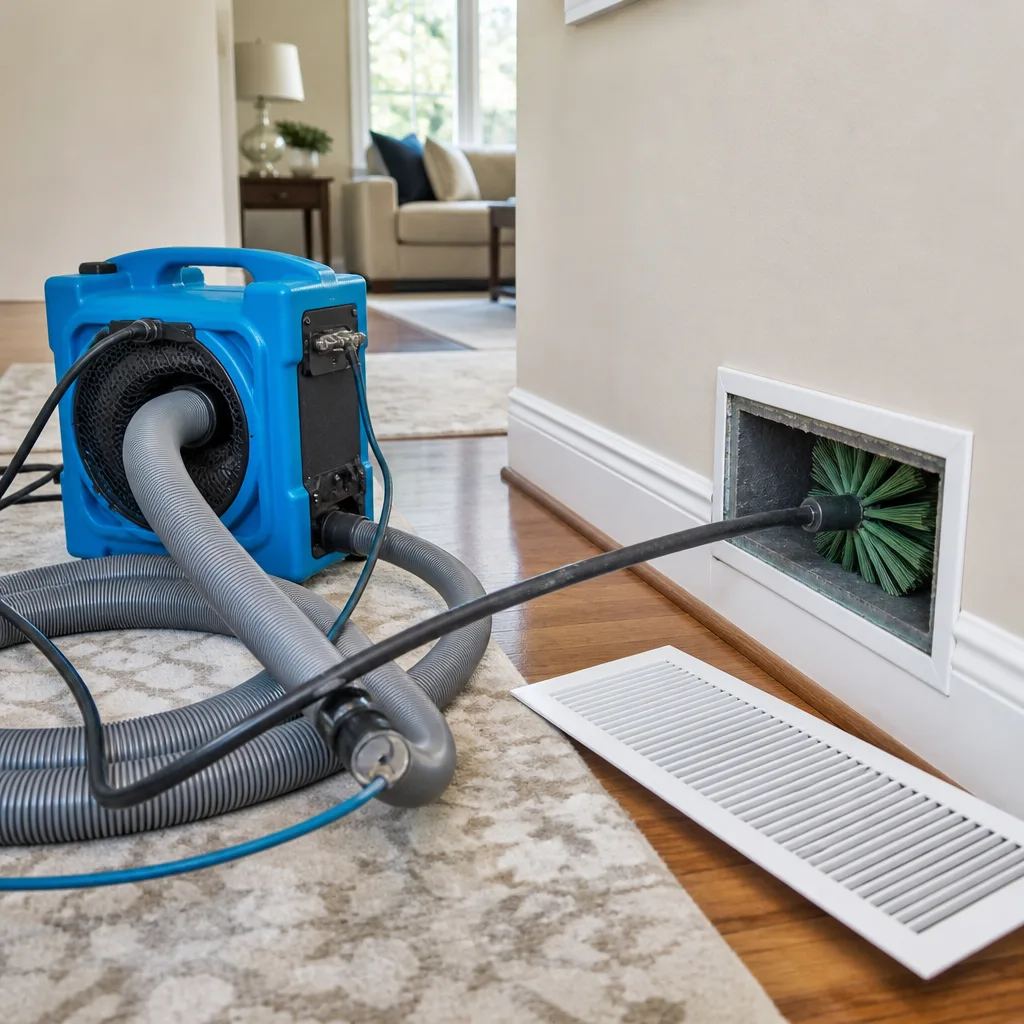
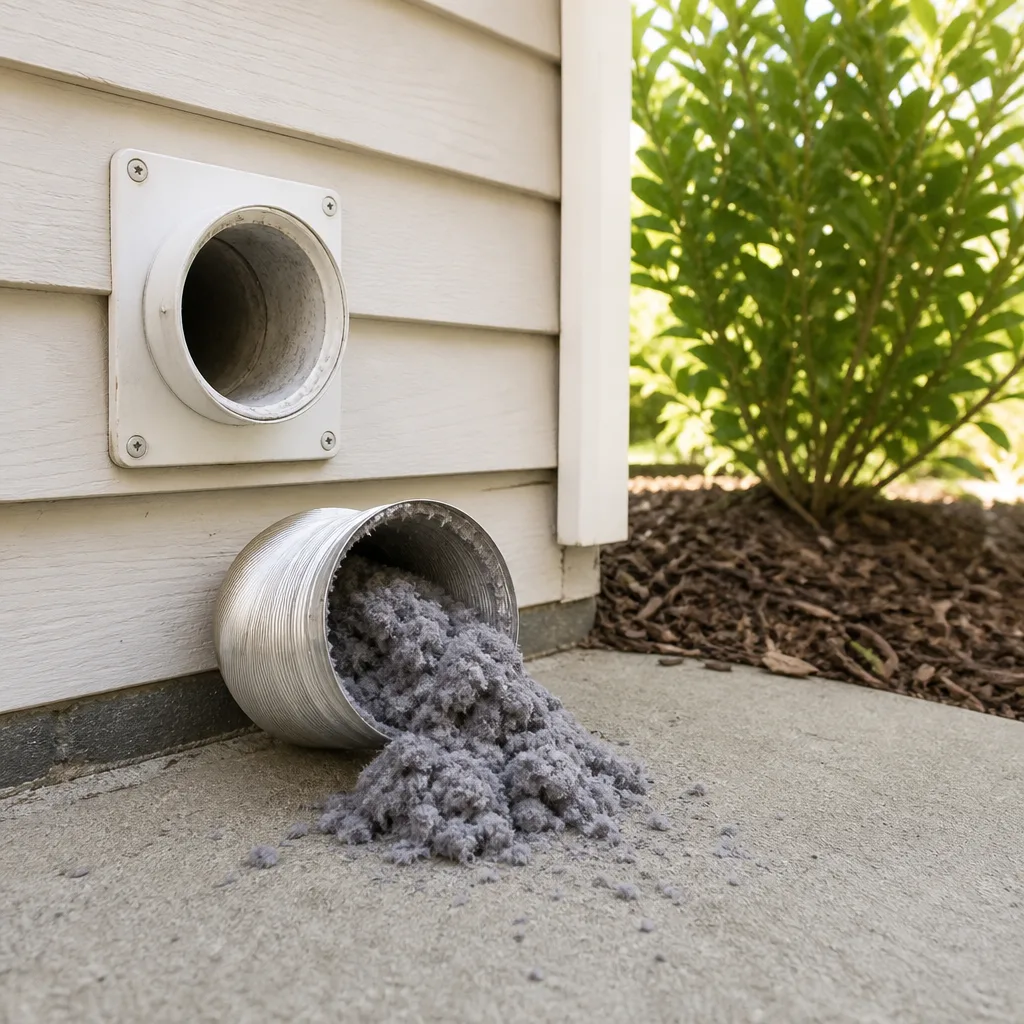
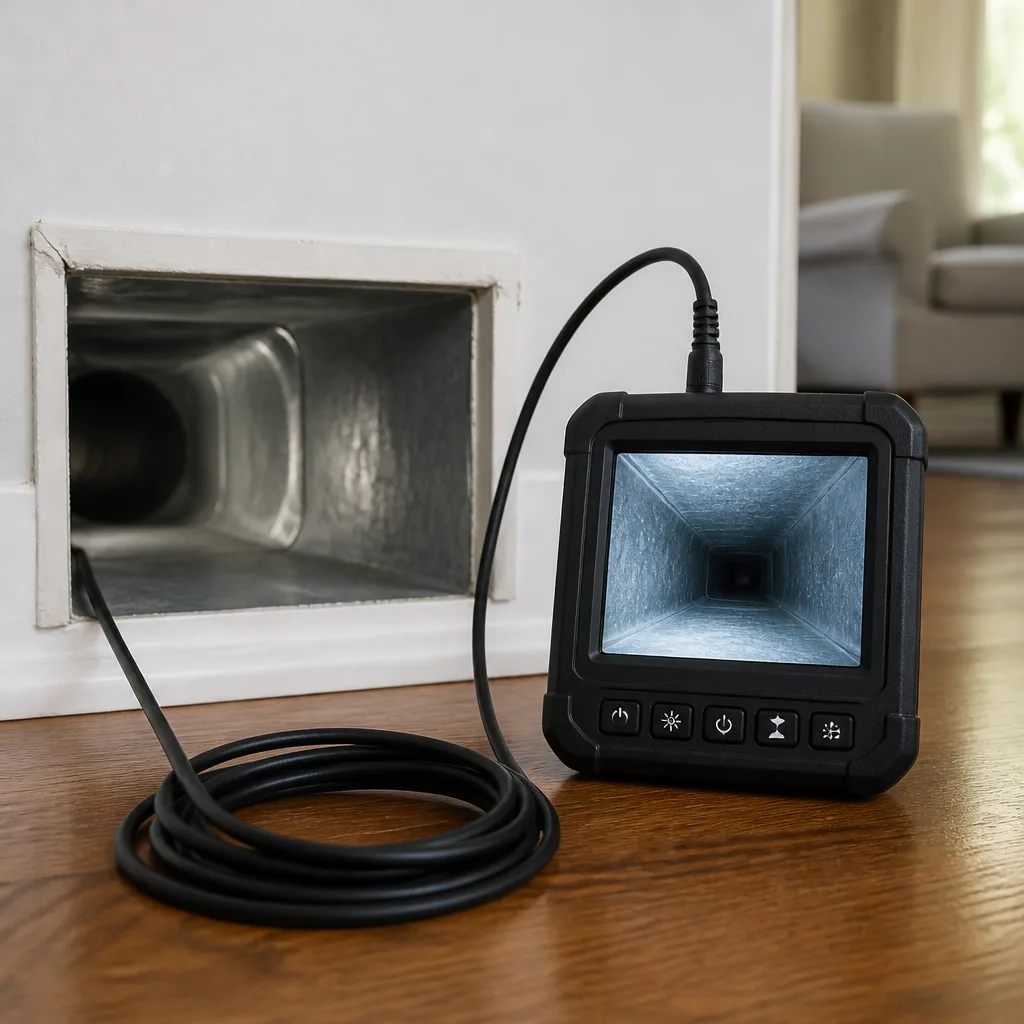
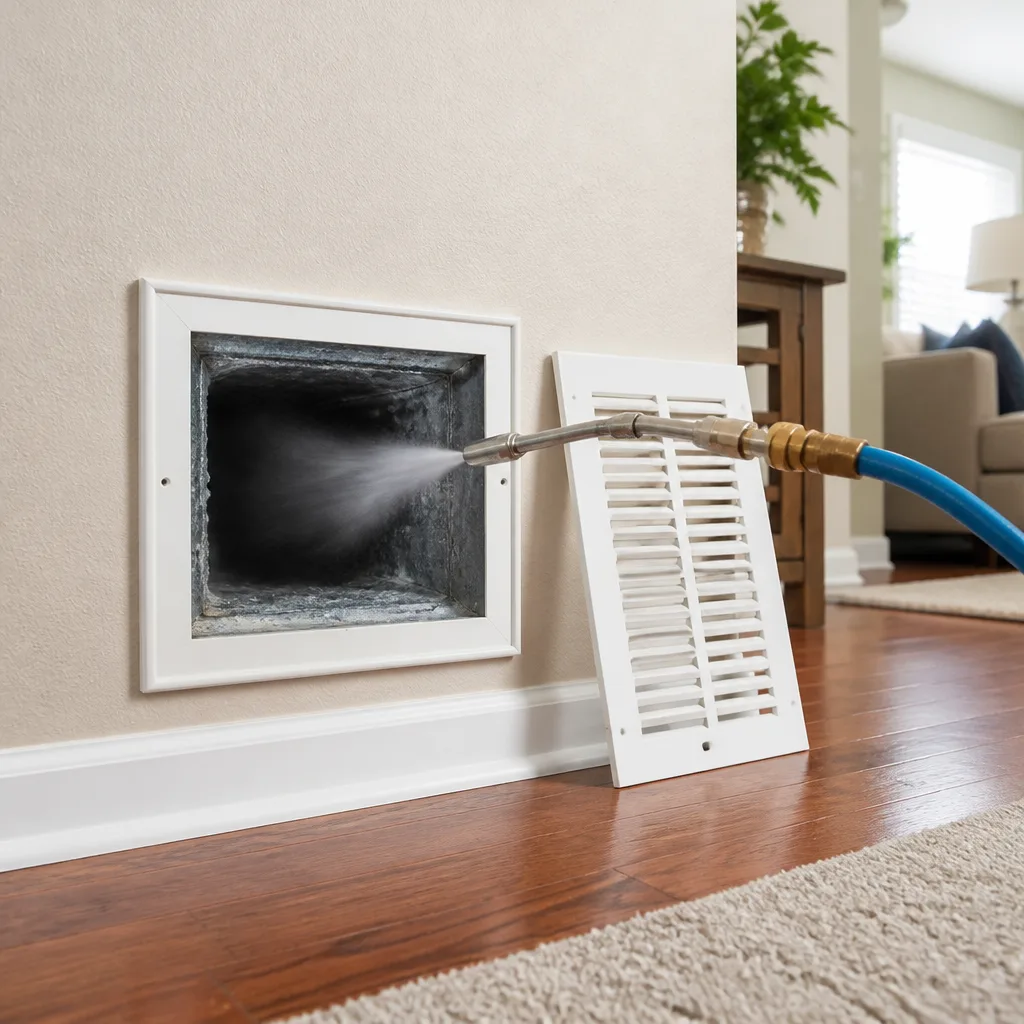
Whole-system duct and dryer vent check with before-and-after photos - you see exactly what came out of your vents
That "$99 whole-house special" is a bait ad - the real number appears once they are in your hallway, or the "clean" is a shop-vac at the register. We photograph the inside of your ducts before and after instead.
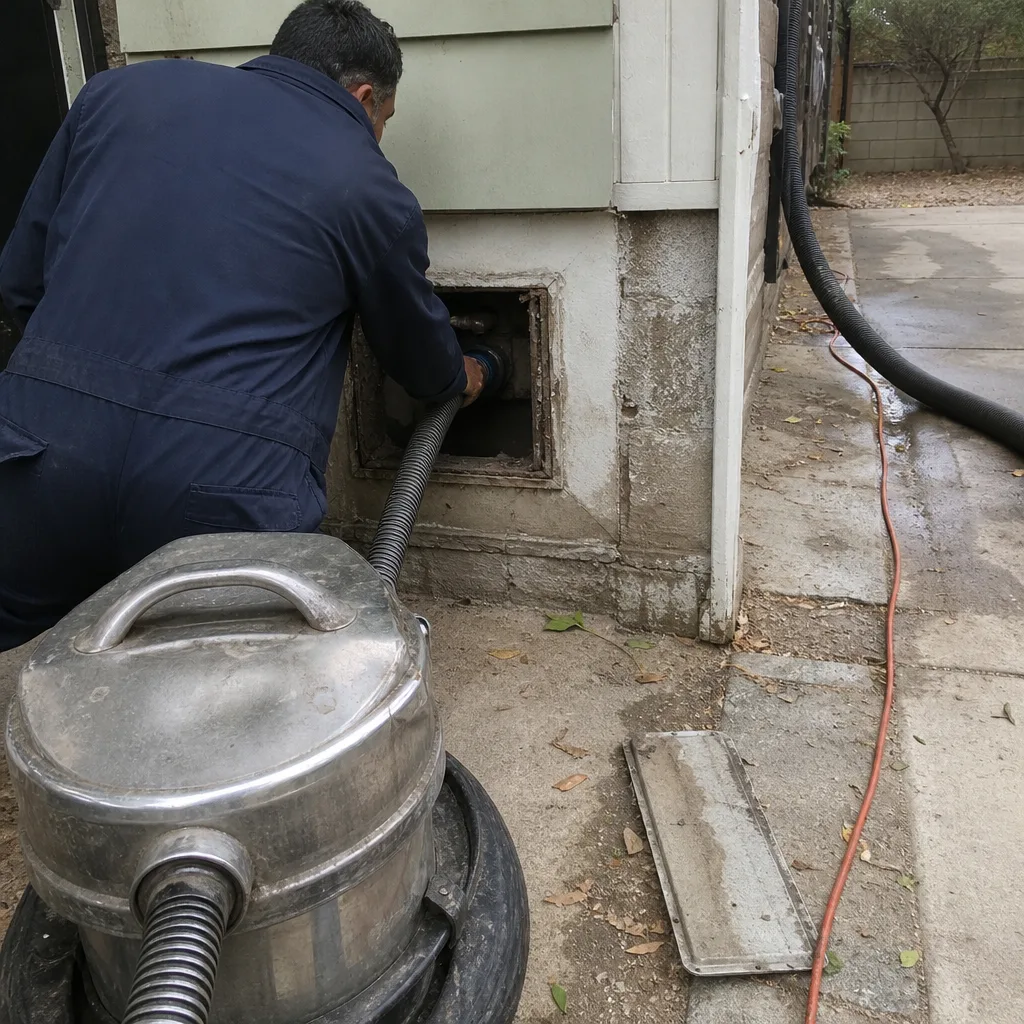 Before
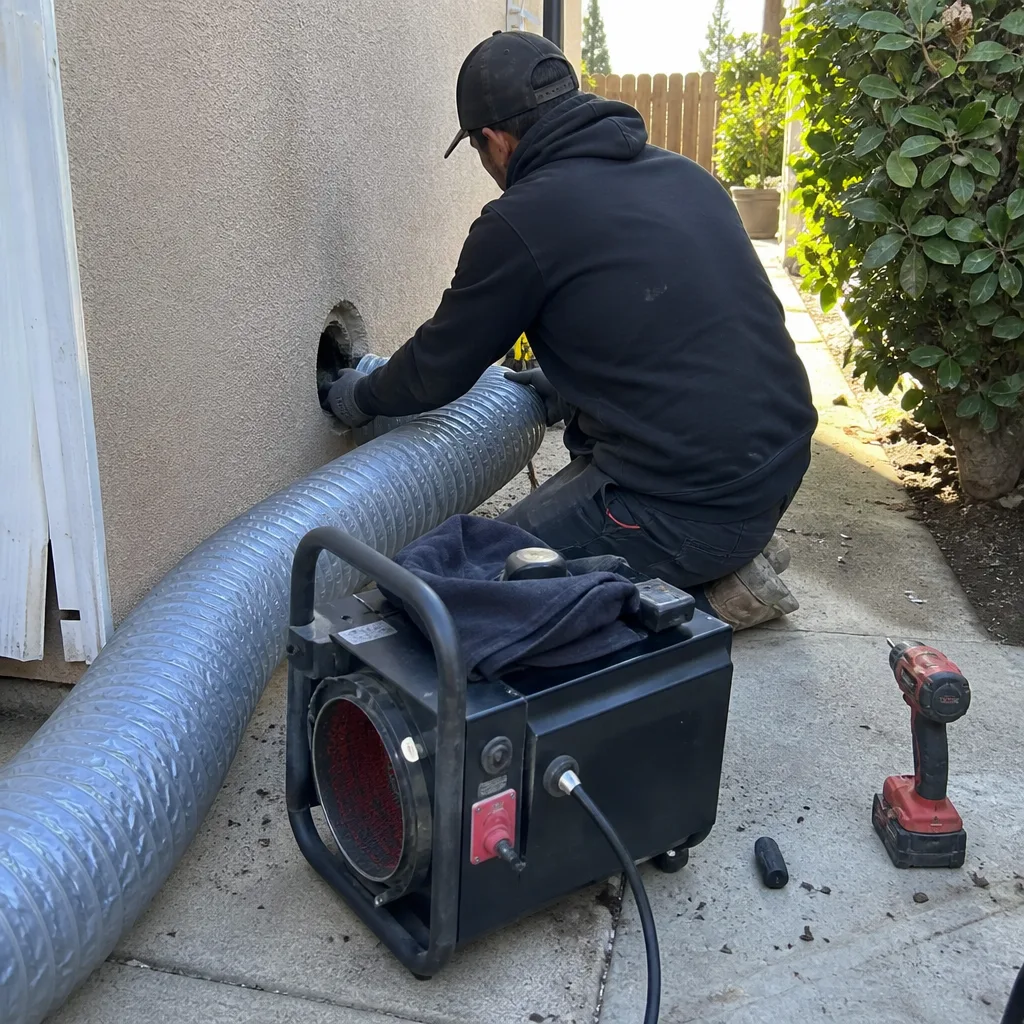 After
After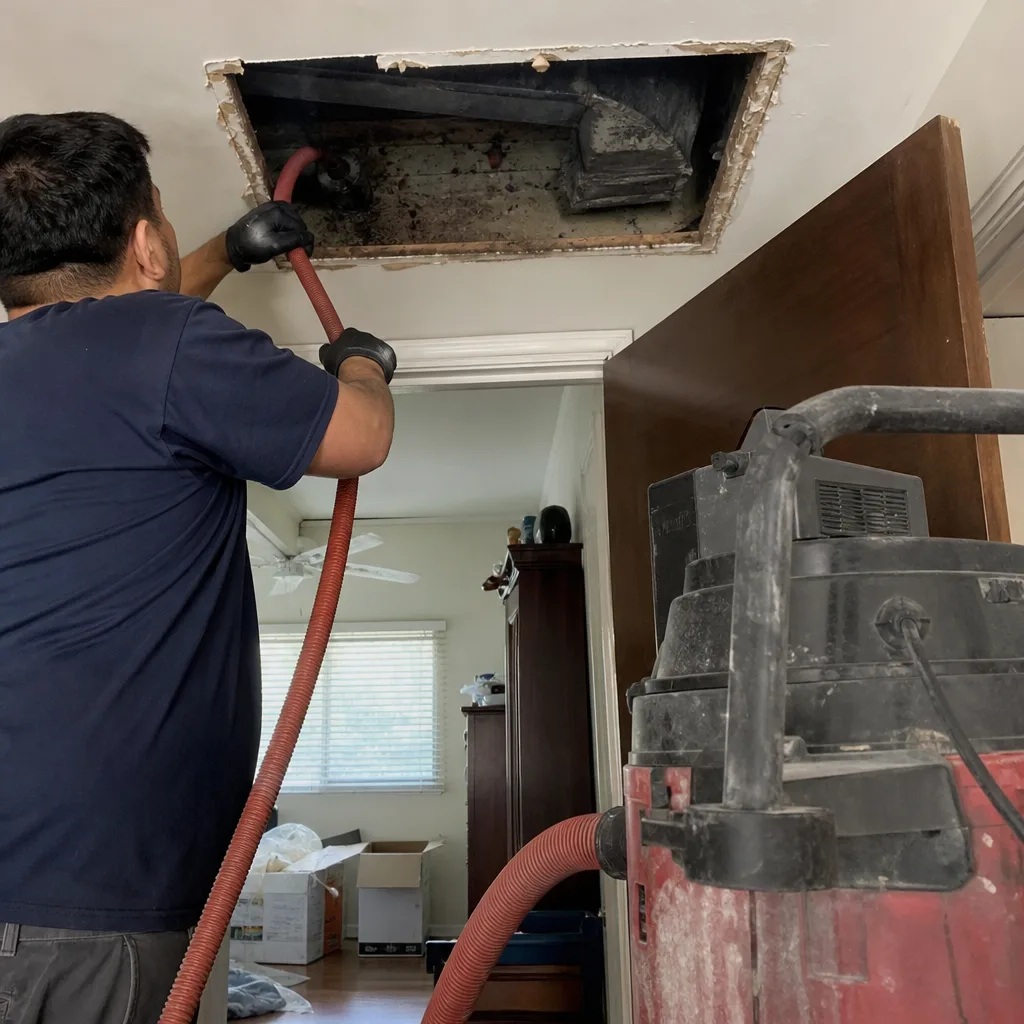 Before
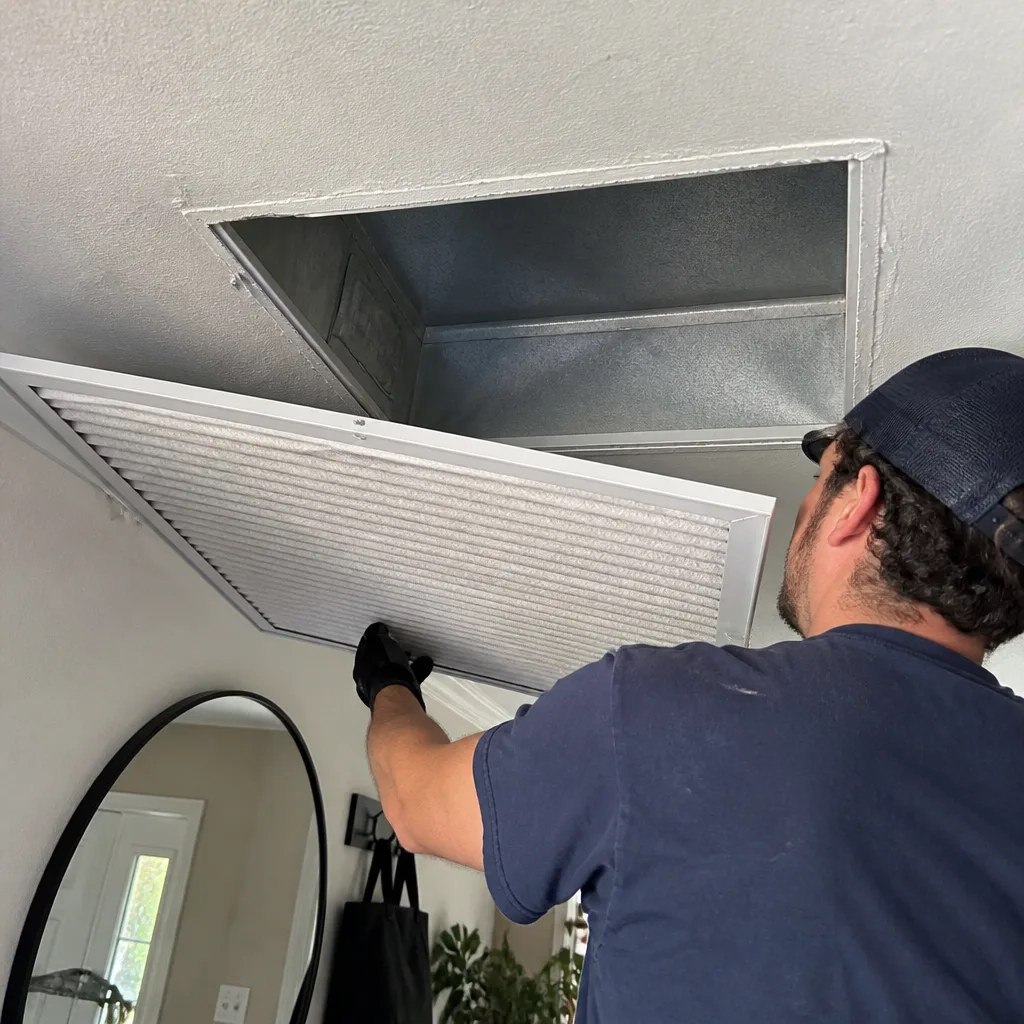 After
After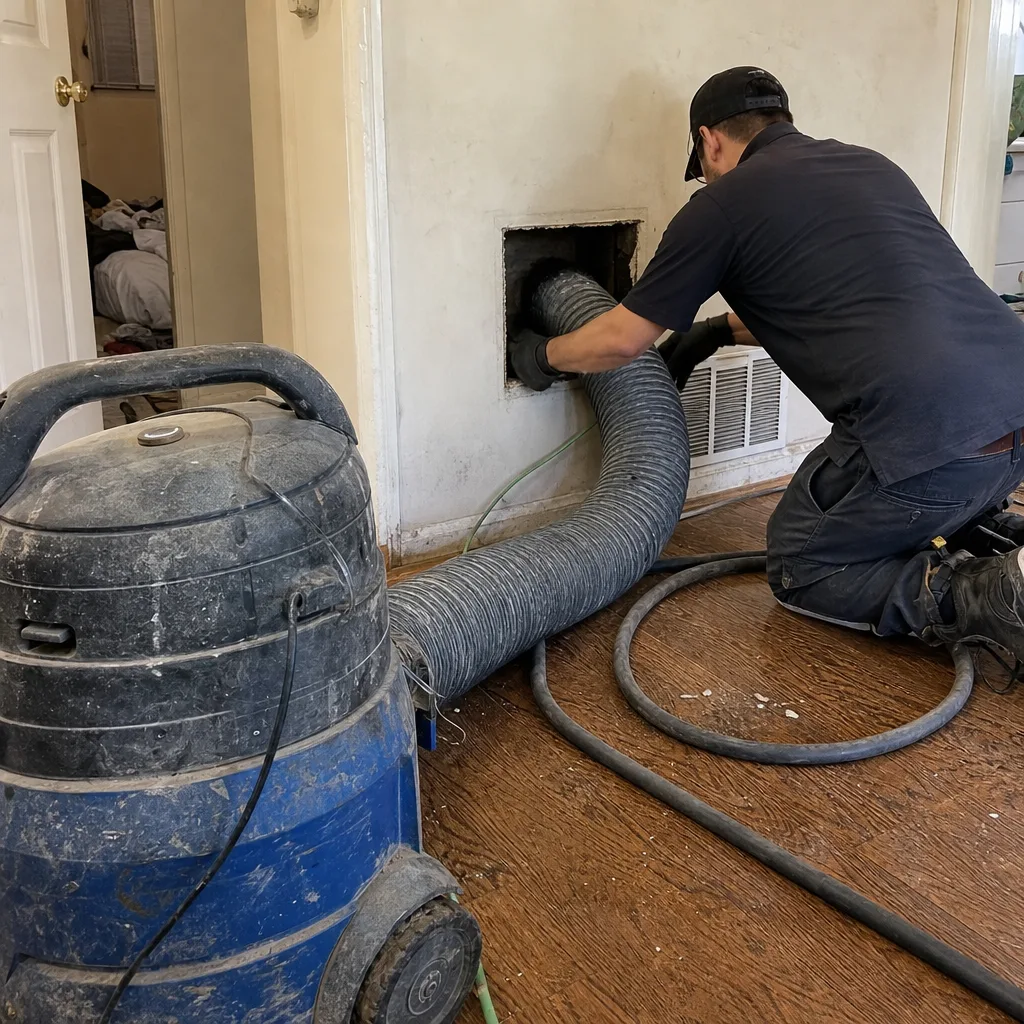 Before
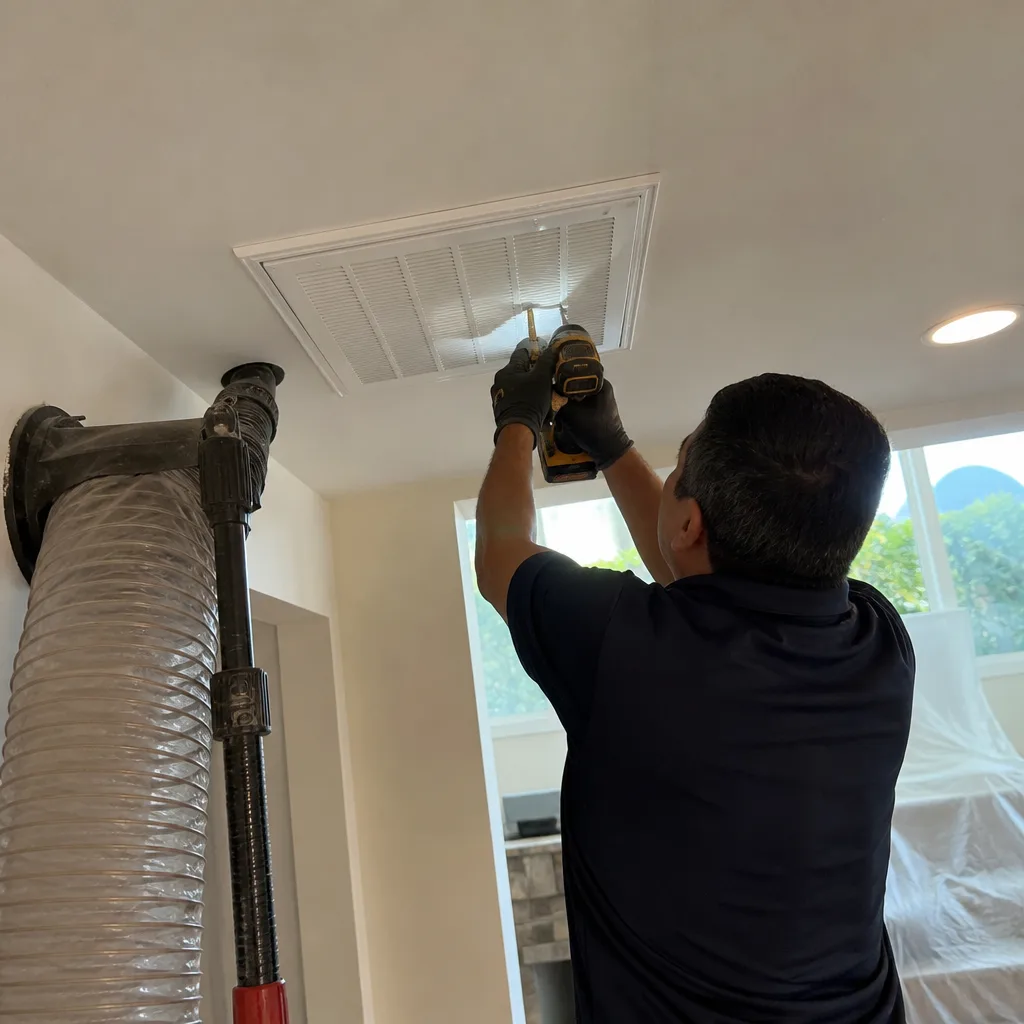 After
AfterDIY vs Professional Air Duct Cleaning: The Los Angeles Homeowner’s Decision Guide
A shop vac and a dryer vent brush can genuinely clean a short, straight duct run in a newer tract home. That same approach applied to a 1970s Los Angeles home with 60 feet of flex duct snaking through a hot attic will leave you sweat-soaked, frustrated, and likely worse off than when you started. This guide maps the real boundary between what a weekend DIY effort can accomplish and what actually requires professional equipment, so you can make an honest call about your specific Los Angeles duct system without marketing pressure from either direction. For a deeper comparison, see our article on DIY vs Professional Air Duct Repair: What’s Safe to Do Yourself.
Quick Answer
DIY air duct cleaning in Los Angeles works reasonably well for short, straight metal duct runs in newer homes where you can access the full length of the duct from the register openings. It falls short in most LA homes built before 1990, where long flex duct runs, asbestos-era insulation, and hard-to-reach attic configurations mean a shop vac simply cannot reach or agitate the debris that matters. Professional cleaning with truck-mounted negative pressure costs more, but it actually extracts what DIY tools only loosen.
Table of Contents
- What DIY Duct Cleaning Can Actually Do
- Where DIY Falls Short: The Technical Boundary
- Los Angeles Home Types: A Practical Decision Framework
- The Hidden Risks in Older LA Homes
- DIY vs Professional: A Real Cost Comparison
- The Hybrid Approach: DIY Maintenance Plus Professional Service
- Common Mistakes to Avoid
- When to Call a Professional
- Frequently Asked Questions
What DIY Duct Cleaning Can Actually Do
Let’s be direct about this: DIY duct cleaning is not a scam, and it’s not useless. In the right Los Angeles home, a homeowner with a decent shop vac, a good brush kit, and a Saturday afternoon can remove visible dust from the first few feet of ductwork behind each register. That’s a real, measurable improvement.
Here’s what DIY tools can genuinely accomplish:
- Register and grille cleaning: Removable metal registers collect a surprising amount of lint, pet hair, and dust on their vanes. Soaking them in warm water with dish soap and scrubbing them clean takes 20 minutes and makes an immediate visual difference.
- First 3-5 feet of accessible duct: A shop vac with a long hose attachment can reach the immediate duct run behind most wall registers in newer construction. If you see dust bunnies within arm’s reach, you can get them.
- Return air cavity cleaning: The return cavity, where your filter sits, is often accessible without tools. Vacuum it out when you change your filter and you’ll reduce what gets pulled into the system.
- Filter replacement: This is the single highest-impact HVAC maintenance task, and no professional is needed. In the Los Angeles climate, where dust and wildfire ash load your filters faster than most of the country, a monthly check during fire season is the right cadence.
- Visible debris removal in short, straight metal duct sections: Homes built in the last 15-20 years often have short metal trunk lines with minimal bends. In these systems, you can reach further than you’d think with a properly sized brush head.
In our experience serving homeowners across Los Angeles since 2004, the homes where DIY makes sense are the exception, not the rule. But they do exist, and we’ll tell you honestly when yours is one of them if you call us. That’s the kind of straight answer this guide is built on.
Where DIY Falls Short: The Technical Boundary
The core difference between DIY and professional cleaning is not effort. It’s physics. A shop vac creates localized suction of maybe 80-120 CFM (cubic feet per minute) at the hose end. A truck-mounted professional system like the Rotobrush or Nikro equipment we run generates 2,000-4,000 CFM of negative pressure across the entire duct system, pulling air at high velocity from every register back to a central collection point.
Here’s why that matters technically:
- Reach without access: Your duct system runs through walls, floors, and attic spaces. The parts you can reach from your living room registers represent maybe 20% of the system. The other 80% is inaccessible without professional tools, inspection cameras, and know-how.
- Agitation vs extraction: A brush agitates debris, loosening it from the duct walls. Without high-velocity negative pressure pulling it out of the system, what you’ve loosened settles back down or, worse, gets pushed further into the ductwork. Agitation without extraction just relocates the problem.
- System-wide airflow: Professional cleaning uses access points cut into the duct system to seal off sections and pull air through each one sequentially. This creates turbulent airflow that scrubs all four walls of the duct, not just the bottom surface your brush touches.
- Collection and containment: Whatever the professional system extracts is captured in a sealed containment unit outside your home. Whatever your shop vac misses stays in your ducts or gets blown into your living space.
The honest technical summary: DIY tools agitate visible debris within a limited reach. Professional equipment extracts debris from the entire system using airflow physics you can’t replicate with consumer-grade tools. Neither statement dismisses the other. But pretending they’re equivalent is how homeowners end up paying twice.
Los Angeles Home Types: A Practical Decision Framework
Los Angeles is not one housing market. It’s four or five distinct construction eras, each with different duct systems, different common problems, and different DIY viability. Here’s the practical breakdown across Los Angeles neighborhoods, from Echo Park bungalows to Sherman Oaks ranches to Santa Clarita tract homes.
Newer tract homes (built 2000-present): These homes, common in neighborhoods like Porter Ranch, Playa Vista, and Valencia, typically have short, well-sealed metal or semi-rigid duct systems with accessible main trunks. DIY register cleaning and first-run vacuuming is reasonable here. Professional cleaning is still more thorough, but the gap is smaller.
Mid-century homes (1950s-1980s): This is the bulk of Los Angeles’s housing stock, from the San Fernando Valley to the Westside. These homes typically have long flex duct runs, often 40-70 feet, snaking through tight attic spaces. Flex duct is impossible to effectively clean with consumer tools because the internal spiral wire structure traps debris and the ribbed interior walls hold dust that a shop vac brush simply glances off. DIY is ineffective here. Period.
Pre-1950s homes: Think Hancock Park, Silver Lake, Leimert Park. These homes often have original metal ducts wrapped in asbestos-containing insulation. You should not be disturbing these materials without professional assessment. More on that below.
Post-remodel homes with mixed systems: Los Angeles homeowners remodel constantly, and duct systems often get pieced together across decades. A 1940s beach bungalow in Venice might have 1980s flex duct scabbed onto original trunk lines. These mixed systems require professional inspection just to understand what you’re working with.
Here’s the decision table, simplified:
- Built after 2000, short accessible metal runs: DIY maintenance is reasonable. Professional cleaning every 3-5 years is still the gold standard.
- Built 1950-1999, flex duct in the attic: DIY is not going to reach or clean the system. Professional cleaning is the right call every time.
- Built before 1950, original ductwork: Don’t DIY. Period. Professional inspection before any cleaning is mandatory.
- Remodeled system, mixed materials: Don’t guess. Professional assessment first, then you can decide if DIY maintenance is worth your time.
The Hidden Risks in Older LA Homes
DIY YouTube videos don’t operate in your specific attic. They operate in a filmed studio or a clean, empty space with ideal conditions. Your Los Angeles home has realities that change the risk equation dramatically.
Asbestos duct insulation. Homes built before the late 1970s commonly used asbestos-containing tape or wrap on duct seams and joints. Disturbing this material by scrubbing or even aggressive vacuuming releases fibers into the air. If you have a pre-1980 home in Los Angeles and haven’t had your ducts inspected for asbestos, do not open duct boots and start poking around. The risk is not theoretical. Asbestos exposure is linked to mesothelioma and lung cancer, and duct insulation is one of the most common residential asbestos sources in LA’s older housing stock.
Deteriorated fiberglass duct lining. Many homes from the 1960s-1990s use internally-lined fiberglass duct board or insulated flex duct. As this lining ages, it breaks down. Aggressive DIY brushing accelerates this degradation, releasing fiberglass particles into your air stream. Professional cleaning uses controlled negative pressure so that loosened fiberglass particles are extracted from the home rather than circulated through it.
Improperly reconnected flex duct joints. This is one we see regularly in Los Angeles homes. A homeowner climbs into the attic, disconnects a flex duct section to clean it, then reconnects it without properly sealing the joint. What happens next? The duct joint leaks conditioned air into a hot attic, wasting energy and pulling attic dust into the system. In the Los Angeles climate, where summer attic temperatures regularly exceed 140 degrees Fahrenheit, a leaky duct joint is a fast track to a $600 energy bill and inescapable dust.
Falling through the ceiling. Attics in Los Angeles homes are not engineered for foot traffic. Ceiling joists are 16-24 inches apart with nothing but drywall between them. One misstep and you’re through the ceiling. Every year, homeowners in Los Angeles go through their ceilings attempting attic work. We’re not going to tell you not to go in the attic, but go in knowing exactly what you’re stepping on.
Compressed flex duct coils. If your home has flex duct, moving it to clean it compresses the internal insulation and can kink the duct, reducing airflow. This is the ironic outcome we’ve seen too many times: a homeowner cleans their ducts and ends up with worse airflow than before.
DIY vs Professional: A Real Cost Comparison
Cost is the reason most Los Angeles homeowners consider DIY in the first place, so you deserve real numbers rather than vague warnings. Here’s what each path actually costs in the Los Angeles market as of 2026.
DIY Cost Breakdown
- Shop vac (if you need to buy one): $60-$120 for a 4-6 gallon model with a decent hose. If you already own one, $0.
- Duct cleaning brush kit: $25-$60, depending on the length and number of heads.
- Vent register cleaning supplies: $10-$20.
- Replacement filters (one-year supply, MERV 8-11): $40-$80.
- Protective gear (mask, gloves, goggles): $25-$50.
- Total DIY, first time: $160-$330, or $75-$150 if you already have a shop vac.
Professional Cost Breakdown (Los Angeles Market)
- Whole-home air duct cleaning (typical 1,500-2,500 sq ft LA home): $400-$850, depending on system size, number of returns, accessibility, and whether your system has never been cleaned.
- Add-on dryer vent cleaning: $75-$150, and at Linden Air Duct Cleaning we recommend it alongside duct cleaning since both systems share the same lint and debris sources in most Los Angeles homes.
- Air duct repair, if professional cleaning reveals issues: $150-$500 per repair point. Our Air Duct Repair in Los Angeles service always includes a written guarantee on any repair, so you’re not paying twice if the original fix doesn’t hold.
The real cost math: DIY saves you $250-$500 upfront. But evaluate the downside honestly. If you disturb a duct joint in a 1980s attic and it starts leaking, the repair costs $200-$400. If you damage insulation and fiberglass starts cycling through the system, professional cleaning plus repairs runs $600-$900. And if you go through the ceiling, that’s a $500-$1,500 drywall repair. DIY is not cheaper when it goes wrong, and older Los Angeles homes are the most likely place for it to go wrong.
Our recommendation: if you have a newer home with accessible metal ducts, DIY maintenance is a legitimate cost-saving move. If you have an older LA home with flex duct in an attic, the DIY attempt costs you time and either does nothing or creates a problem. The professional call is the cheaper call in that scenario.
The Hybrid Approach: DIY Maintenance Plus Professional Service
This is the approach we recommend to most Los Angeles homeowners, and it starts with a clear split of responsibilities.
What homeowners should absolutely do themselves, on a regular schedule:
- Check and replace your filter monthly during LA fire season (May-November) and quarterly the rest of the year. Your filter is the first line of defense for everything else. A clogged filter forces air through the system faster, kicking up settled dust and recirculating it through the house.
- Vacuum all register covers and grilles every quarter. Remove them, wash with warm soapy water, dry, and reinstall. Five minutes per register, done four times per year, keeps visible surface dust out of the air stream.
- Visual inspection of return cavities every six months. Pull the filter, look into the cavity with a flashlight, and vacuum out visible debris you can safely reach.
- Keep vents and registers clear of furniture, rugs, and drapes. Blocked registers create pressure imbalances that pull dust from wherever it can get in. In a Los Angeles home, that usually means the garage, the attic, or the crawlspace.
- Listen for rattles, hissing, or unusual airflow changes. These can be early signs of loose duct joints or internal damage. The earlier you catch it, the cheaper the repair.
What professionals should handle:
- Whole-system cleaning with truck-mounted negative pressure, typically every 3-5 years in a Los Angeles home, more often if you have pets, live near a freeway, or have experienced wildfire smoke intrusion.
- Dryer Vent Cleaning in Los Angeles, where lint accumulates faster in the dry heat of the LA climate and can create genuine fire risk. A DIY dryer vent brush only reaches the first few feet of a vent run; a professional cleaning clears the full run through the wall or roof.
- Any repair to the duct system itself, including re-taping joints, repairing failed flex duct, or sealing leaks. Every repair from Linden Air Duct Cleaning comes with a written guarantee and a free second visit if the repair fails, so you’re never paying twice for the same fix.
- Post-renovation cleaning. Construction dust is fine and invasive, and it gets into every surface of the duct system. If you’ve had a Los Angeles remodel, that drywall dust is in your ducts until someone removes it properly.
This hybrid approach is the most cost-effective, the most technically sensible, and the most honest reflection of what DIY can and can’t do well. You maintain the accessible parts and call in professional equipment for the parts only professional equipment can reach. At Linden Air Duct Cleaning, we’d rather give you an honest recommendation than sell you a service you don’t need yet. Browse our more guides & resources for additional home maintenance tips. That’s been our approach since 2004, and we’re not changing it.
Common Mistakes to Avoid
- Using a leaf blower into a register to “blow the dust out.” We’ve actually seen this attempted in Los Angeles homes. What it does is pressurize the duct system and blow years of accumulated dust through every register in the house. Now the entire home is covered in the dust that was previously contained.
- Buying the cheapest brush kit and scrubbing aggressively in flex duct. The spiral wire inside flex duct tears fiberglass insulation from the walls of the duct when you scrub hard. You now have insulation particles circulating through the house and no way to remove them without professional negative-pressure extraction.
- Forgetting to seal a duct boot after reconnecting it. In a Los Angeles attic that hits 140 degrees in the summer, even a small joint leak bleeds conditioned air into an oven. Your AC works harder, your energy bill rises, and attic dust pours into the system.
- Ignoring the return side of the system. Homeowners focus on the supply vents they can see, but the return side is where air enters the system. A dirty return cavity or restricted return air pulls dust from walls, floors, and the garage instead of through the filter.
- Disturbing old asbestos-era duct insulation without realizing it. Pre-1980s Los Angeles homes commonly have asbestos-wrapped duct seams. Scrubbing these areas releases fibers into the air stream. These homes need professional assessment before any cleaning, period.
- Attempting dryer vent cleaning with a hand brush and assuming you got the full run. A dryer vent that runs through an LA crawlspace or up through a second story roof is 15-30 feet of accumulated lint. Your hand brush reaches four feet. The remaining lint is still packed in the vent, and now it’s looser than before.
- Using duct cleaning as a substitute for regular filter changes. The filter protects the system between cleanings. Skip the filter maintenance and you’ll be back to dirty ducts within a year, no matter how well they were cleaned.
When to Call a Professional
The honest threshold is this: if you’ve read this guide and your Los Angeles home has flex duct, an attic you can’t walk through safely, a pre-1980 build, or mixed duct materials from remodels, the DIY route isn’t going to work and may create a problem. If you have a newer home with short, accessible metal runs and you’re happy doing register-level maintenance yourself, that’s a perfectly reasonable approach until the system is due for a deep clean. For anything between those poles, call a professional who can assess your actual system rather than guessing. Air Duct Cleaning in Los Angeles from Linden Air Duct Cleaning includes a free estimate and clear written pricing before any work begins, so you know exactly what you’re deciding before you decide it. Call (980) 447-2498 and we’ll tell you honestly whether your system needs cleaning or whether your time and money are better spent on filter maintenance and register upkeep.
Frequently Asked Questions
Professional air duct cleaning in Los Angeles typically runs $400-$850 for a whole-home system in a 1,500-2,500 square foot home, with simple systems at the lower end and complex flex-duct systems at the higher end. The price should be written in full before any work starts. Call (980) 447-2498 for a free estimate on your specific system.
In our experience, cheap Los Angeles duct cleaning quotes usually come from companies using a portable vacuum rather than truck-mounted negative pressure, which simply cannot extract debris from the full system. Other cheap quotes are loss leaders: a low price to get the van in your driveway, followed by pressure to add on unneeded services. If the quote is under $200 for a whole home, ask what equipment they’re using and what exactly the price covers.
You should be able to verify it yourself. Request before-and-after photos of the inside of your ducts, taken with the inspection camera at several access points. Reputable companies document their work this way and show you the collection tank contents after the job. At Linden Air Duct Cleaning, our technicians photograph the duct interior before and after cleaning as standard practice, so you see what was in your system and what remains after the work.
Most Los Angeles homes benefit from professional cleaning every 3-5 years, with more frequent service if you have pets, smoke indoors, live within a mile of a freeway, or have experienced wildfire smoke intrusion. Homes near the 405, the 10, or the 110 freeways accumulate particulate matter faster than homes in quieter neighborhoods, simply because those corridors generate constant airborne dust that settles in ductwork.
Yes, partially. In a newer Los Angeles home with short, straight metal duct runs, you can effectively maintain the visible portions: registers, the first few feet behind them, and the return cavity. What you cannot do is clean the full length of the system, the interior walls of the ducts, or any flex duct runs, because consumer tools can’t generate the airflow required to extract loosened debris. DIY maintenance is a legitimate supplement to periodic professional cleaning, not a replacement for it.
Air duct cleaning is worth it when the system actually needs cleaning and the work is done with proper equipment by a company that documents what it did. The scam problem is real in this industry: bait-and-switch pricing, portable vacuums passed off as professional systems, and cleaning jobs that never happen but are invoiced anyway. The surest protections are written pricing before work starts, before-and-after photo documentation, and a company that stands behind the work with a written guarantee. Those are exactly the protections our Threshold Standard has been built around since 2004.
The Bottom Line
DIY air duct cleaning has a legitimate but narrow role in Los Angeles homes: newer construction, accessible metal ducts, and register-level maintenance. In the majority of LA’s housing stock, which includes decades-old flex duct systems in tight attics, the DIY approach is at best ineffective and at worst actively damaging. If you’re also considering your dryer vent, read our guide on DIY vs Professional Dryer Vent Cleaning: What’s Safe to Do Yourself. The honest decision comes down to knowing which home type you live in, understanding the physics of what cleans ducts effectively, and spending your money where it actually improves your indoor air. That’s the guide. You know your home better than we do.
Written by Marcus Veale, Owner at Linden Air Duct Cleaning, serving Los Angeles since 2004.