
Last updated October 8, 2026
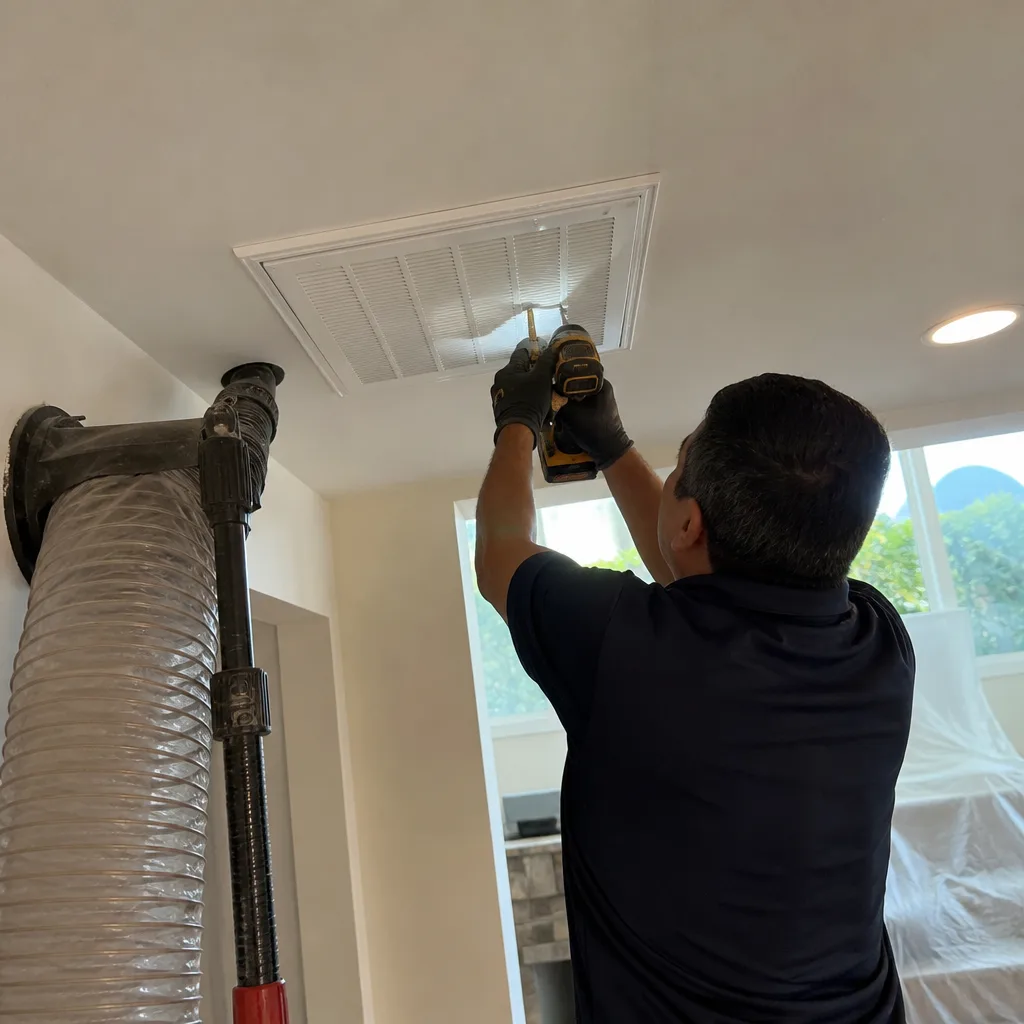
Whole-system duct and dryer vent check with before-and-after photos - you see exactly what came out of your vents
That "$99 whole-house special" is a bait ad - the real number appears once they are in your hallway, or the "clean" is a shop-vac at the register. We photograph the inside of your ducts before and after instead.
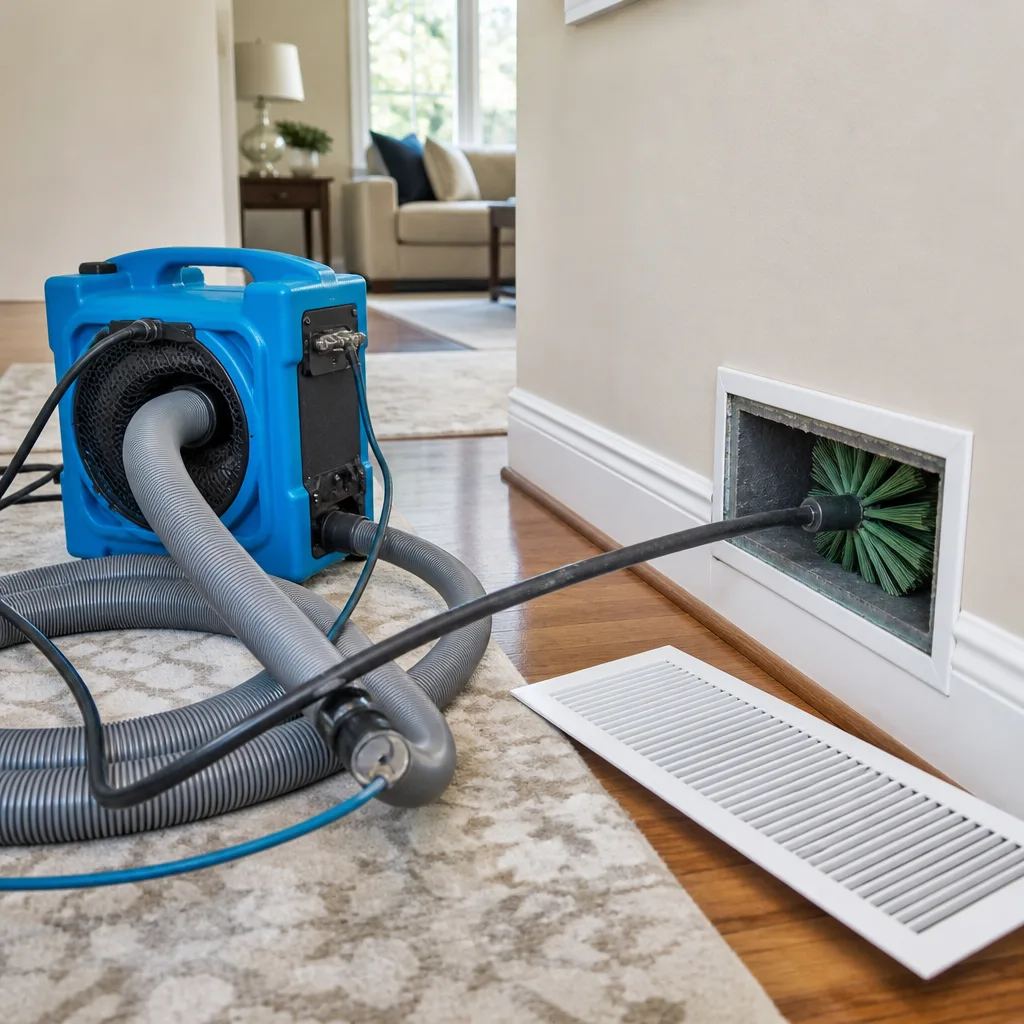
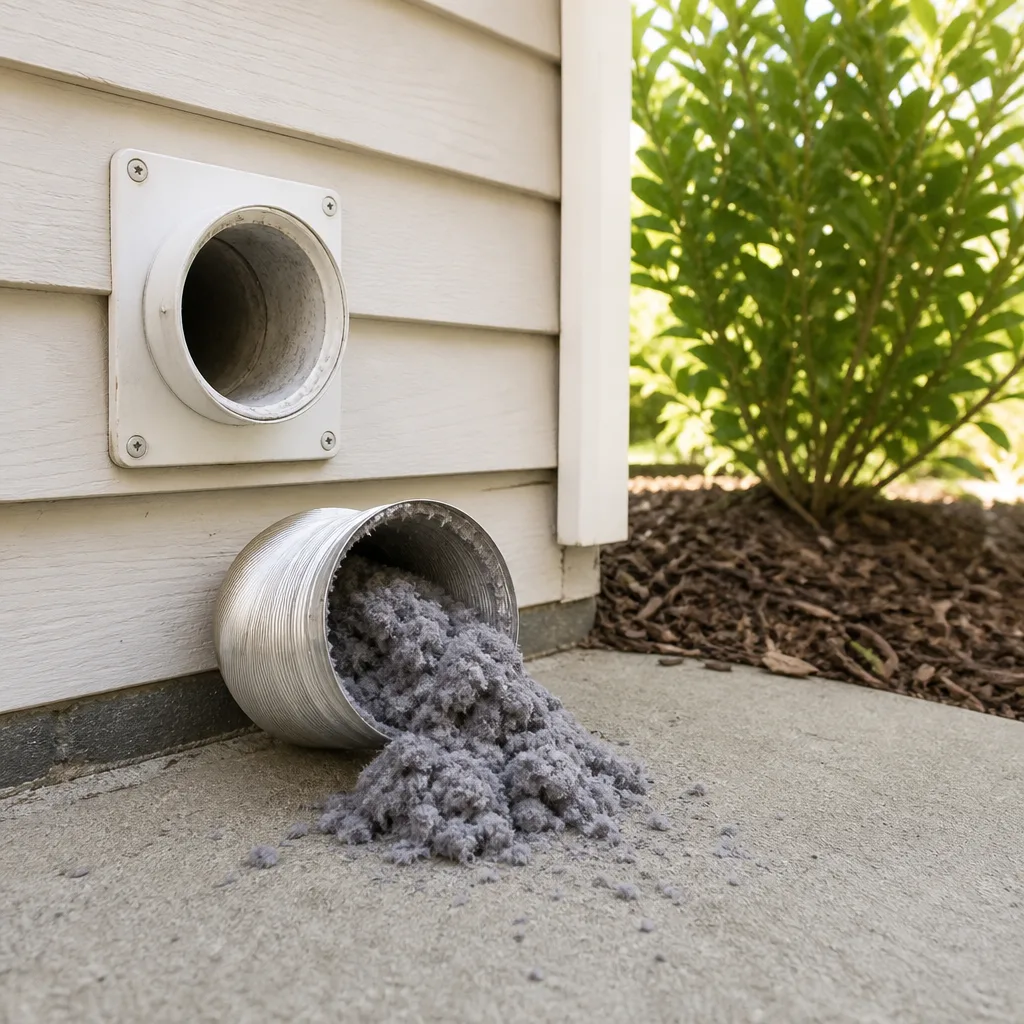
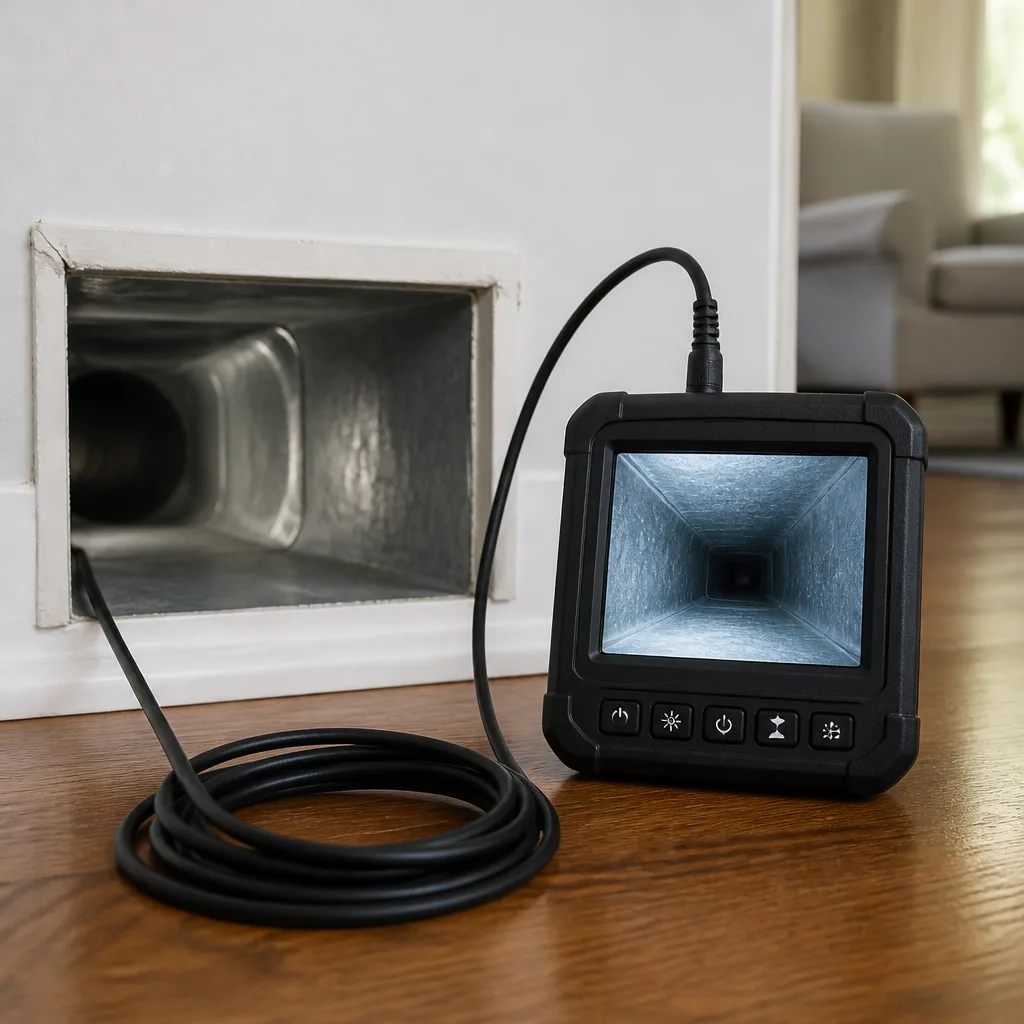
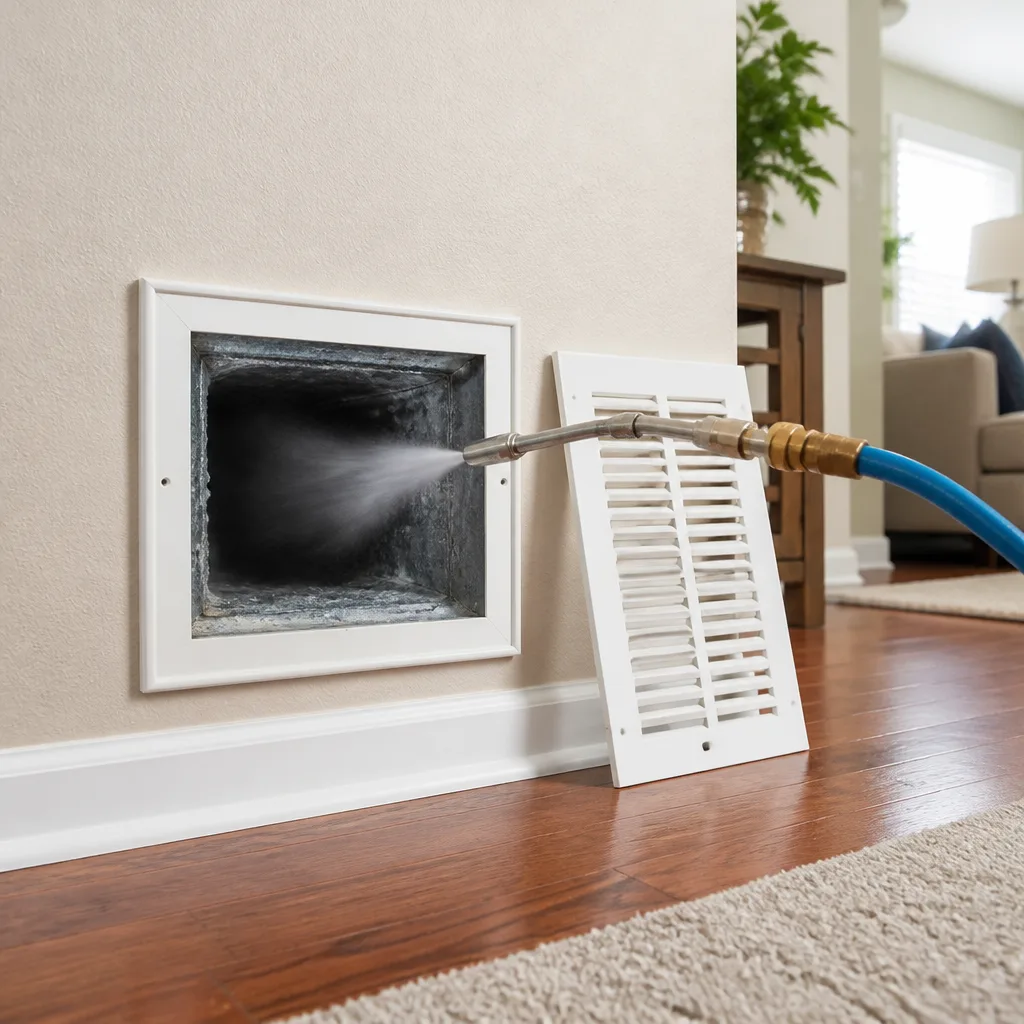
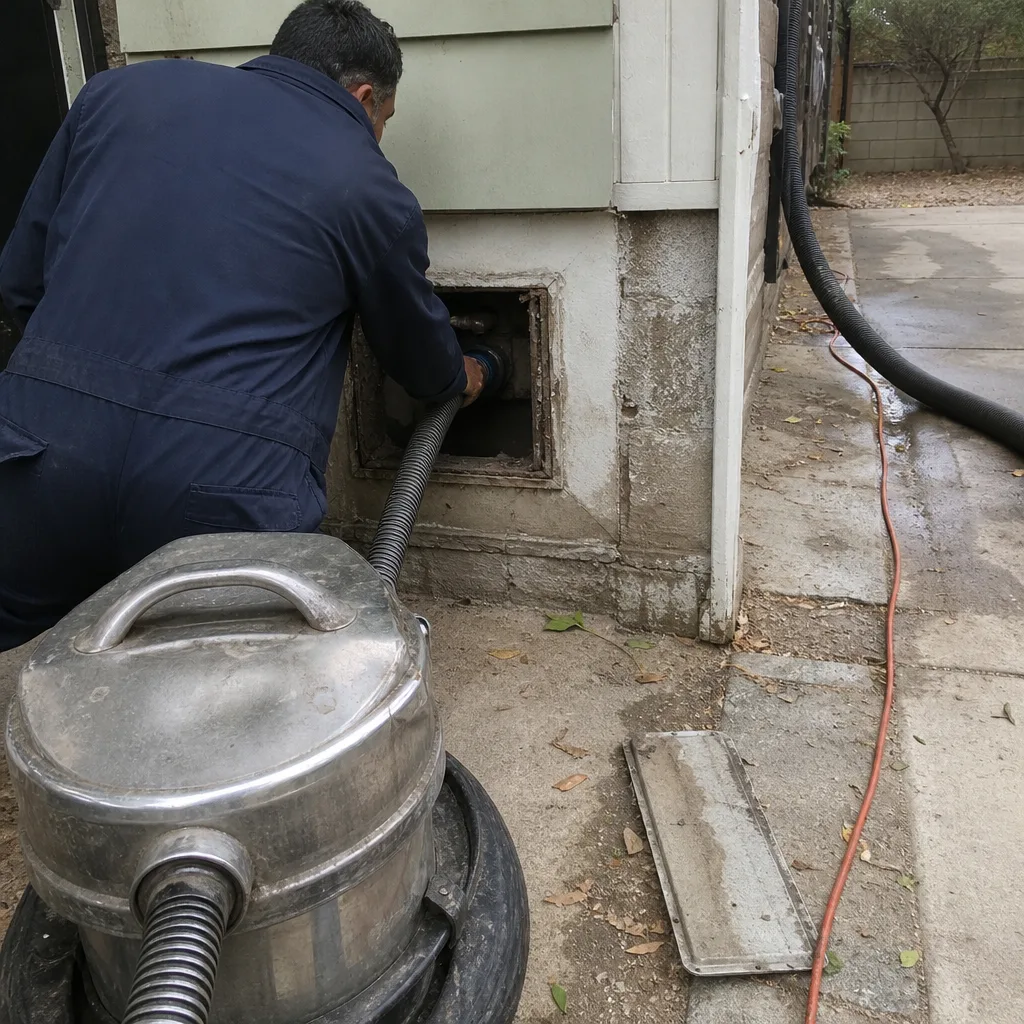 Before
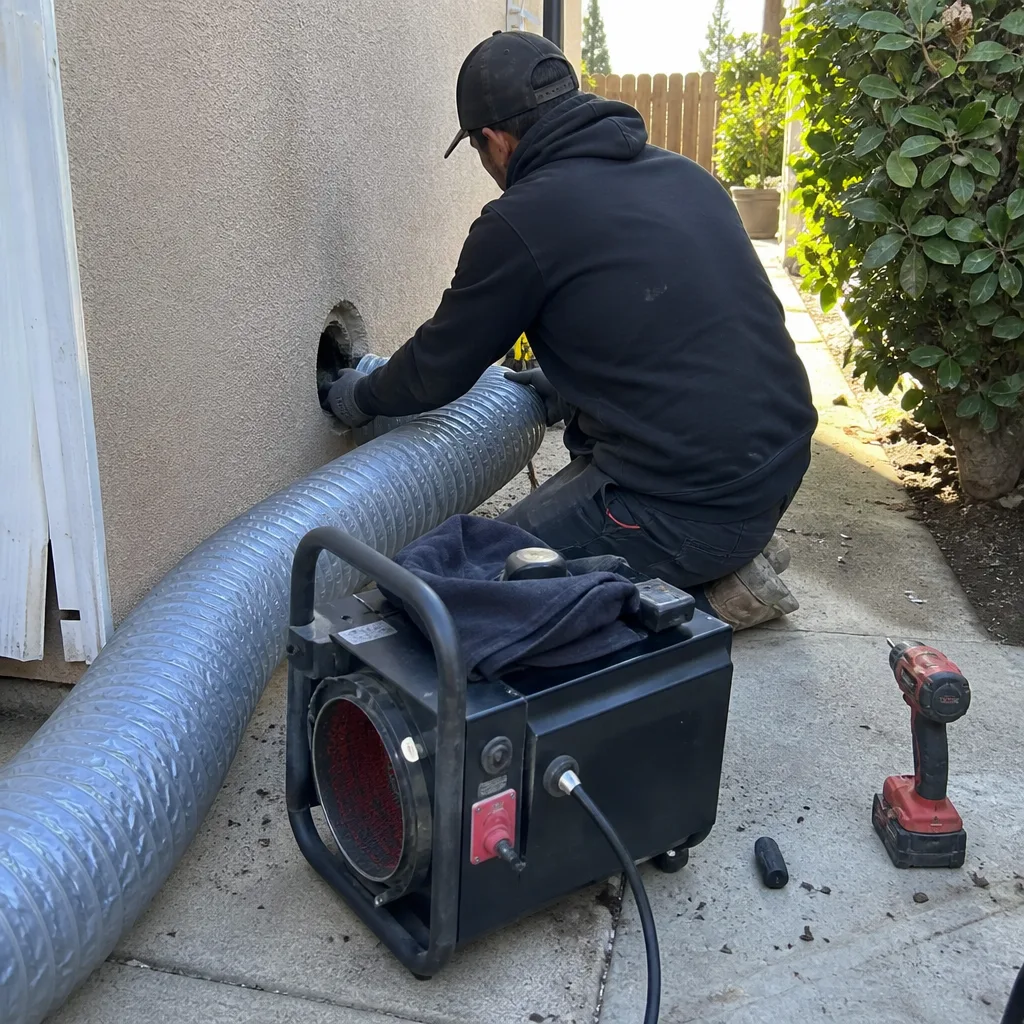 After
After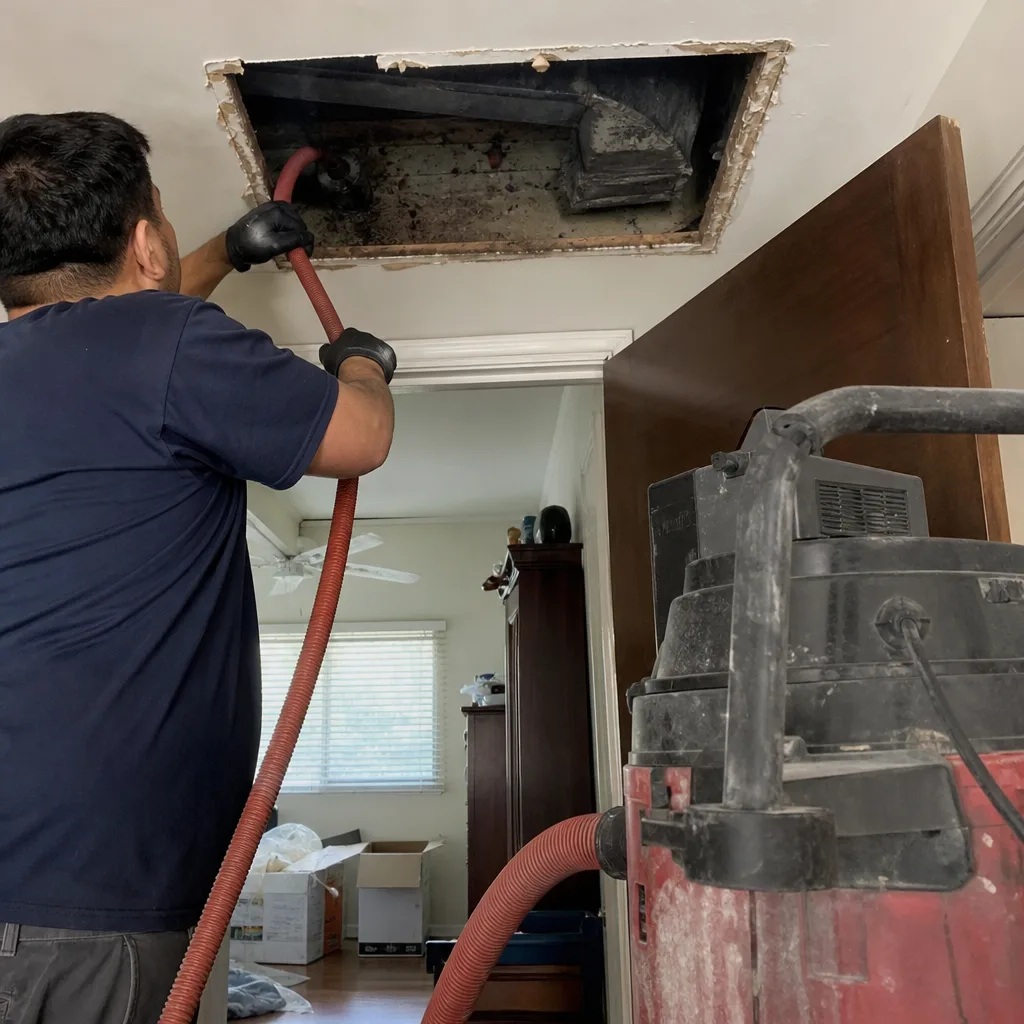 Before
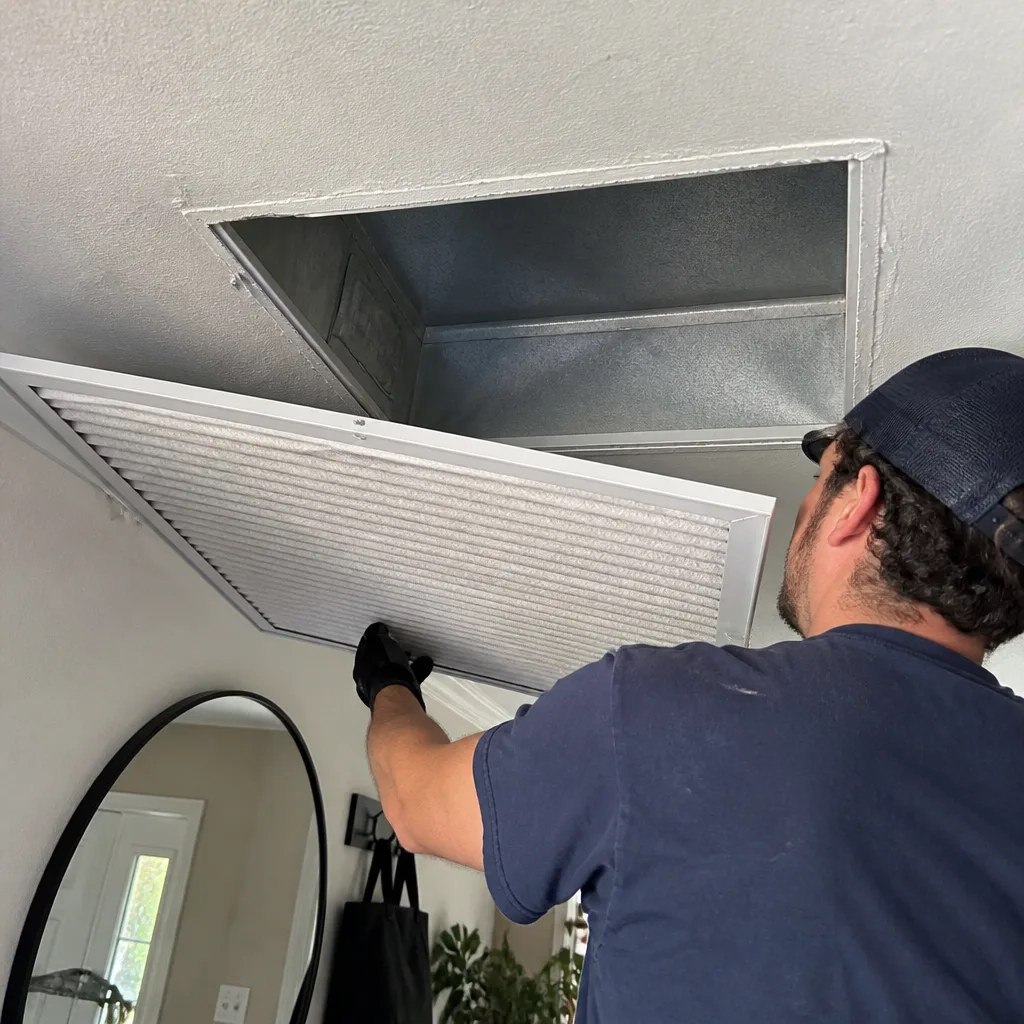 After
After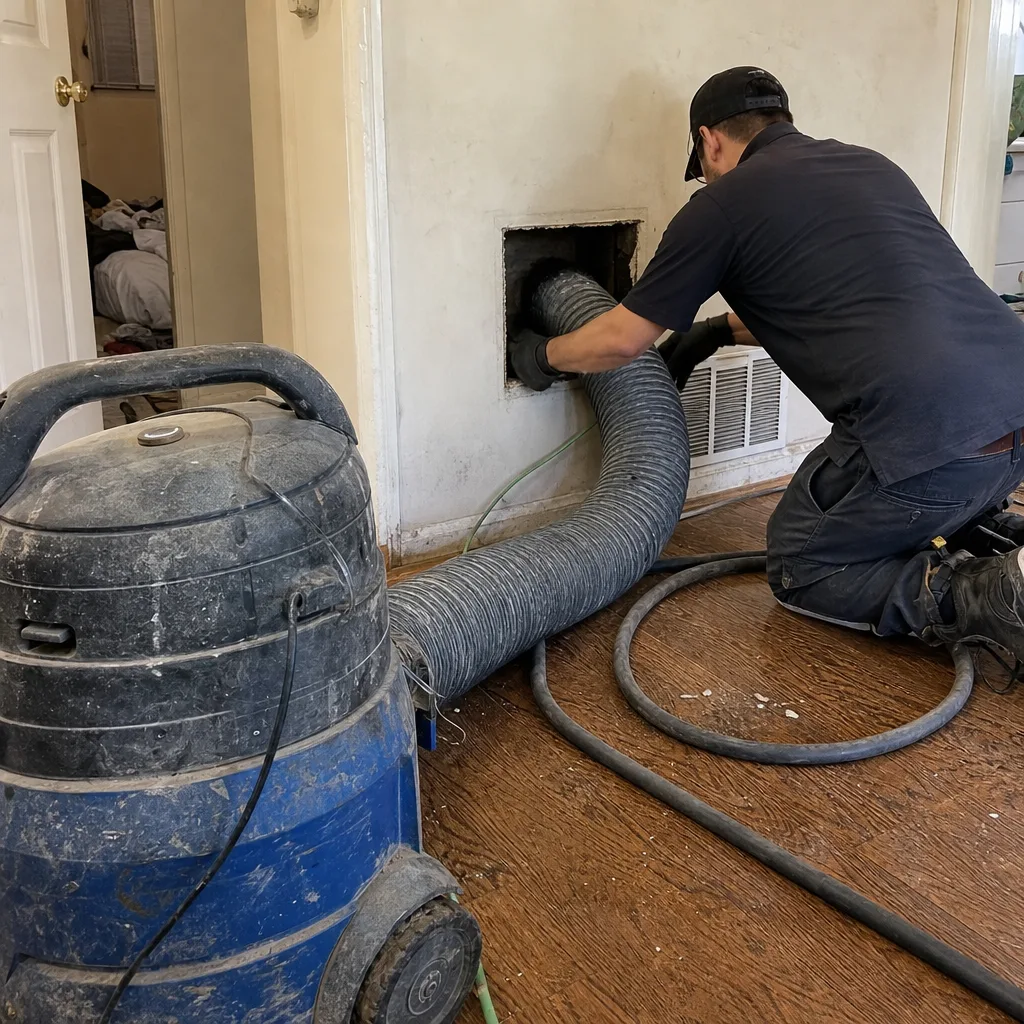 Before
 After
AfterAir Duct Cleaning Emergency Preparedness Guide for Los Angeles Homes
After the 2023 Thousand Oaks fire, researchers found something that should make every Los Angeles homeowner pause: air quality inside homes with intact HVAC systems running on “auto” was worse than outside. The ducts had become a concentration point for PM2.5. Those fine particles settle into ductwork, then recirculate every time the blower kicks on. This guide covers what wildfire smoke and earthquakes do to the duct systems in Los Angeles homes, how to prepare before the next red flag day, and how to know when professional cleaning is genuinely necessary versus precautionary.
Quick Answer
Air duct emergency preparedness for Los Angeles homes means having a shutdown protocol for heavy smoke days, knowing what post-earthquake duct damage looks like, and documenting your system before disaster strikes. During a heavy wildfire smoke event, switch your HVAC from “auto” to “off” (or “fan on” if you have a MERV 13 or higher filter installed), because running the system on auto recirculates smoke particles through your ducts and concentrates them inside. After an earthquake or major smoke event, inspect accessible duct connections, change filters, and schedule a professional assessment if you see visible soot, feel grit at supply registers, or smell smoke when the system runs.
Table of Contents
- What Wildfire Smoke Does to Your Ducts in the First 48 Hours
- When to Shut Your System Down vs. When It Is Safe to Run It
- Post-Earthquake Duct Inspection Protocol for Los Angeles Homes
- The Pre-Disaster Checklist: What to Have Ready Before the Next Red Flag Day
- How to Tell If Post-Disaster Duct Cleaning Is Genuinely Necessary
- Documenting Duct Contamination for Insurance Claims
- Common Mistakes to Avoid
- When to Call a Professional
What Wildfire Smoke Does to Your Ducts in the First 48 Hours
Wildfire smoke is not just an outdoor problem. In Los Angeles, where Santa Ana winds push smoke across the basin and into the Valley, homes with central HVAC systems can pull significant particulate matter indoors through fresh-air intakes, leaky return ducts, and the natural stack effect of a warm house. Within 24 to 48 hours of a heavy AQI event, several things happen inside a typical duct system.
First, the fine particles settle. PM2.5 particles are small enough to stay suspended in air for hours, but once they enter the low-velocity environment inside return ducts and plenums, they begin to deposit on interior surfaces. Ducts are not smooth: seams, joints, and flex duct ridges all create turbulence that drops particles out of the airstream. In our experience at Linden Air Duct Cleaning home, the heaviest deposition zones are the return-side ductwork near the filter housing and the first few feet of supply trunk line after the coil.
Second, the particles bond. Duct interiors accumulate a thin film of household dust, skin cells, and cooking aerosols under normal conditions. Wildfire smoke particles mix with this film and create a sticky residue that does not blow away once the outdoor air clears. That residue holds odor compounds, which is why homes in the Valley and the foothills often smell like smoke for weeks after the AQI returns to normal.
Third, the filter loads unevenly. A standard MERV 8 filter catches larger ash particles but lets most PM2.5 pass through. The filter may look dark and clogged, giving a false sense that the system protected itself, while the fine fraction has already traveled into the ductwork and the coil. Homes in Los Angeles neighborhoods with older housing stock, such as parts of North Hollywood, Echo Park, and West Adams, often have return paths that bypass the filter entirely: gaps at the filter slot, unsealed return plenums, or returns pulling from attics and garages. In those homes, smoke bypasses the filter completely during a heavy smoke event.
When to Shut Your System Down vs. When It Is Safe to Run It
The core question Los Angeles homeowners ask us during wildfire season is simple: should I run my AC or not? The answer depends on your filter and your duct condition. Here is the practical protocol.
Shut the system down when:
- Outdoor AQI is above 150 and your system has a standard MERV 8 or lower filter. Running the blower pulls smoke through the filter, past it, and into the ducts. Shut it off and use portable air purifiers if you have them.
- You smell smoke at the supply registers when the system runs. That means smoke is already entering the return path, likely through a filter bypass or a leaky return duct in a garage or attic.
- You see visible ash on window sills or outdoor surfaces. Ash is coarse enough to clog a filter rapidly and can coat the blower wheel and coil, reducing airflow and creating a fire hazard at the motor in extreme cases.
It is safer to run the system when:
- You have a MERV 13 or higher filter installed and it is seated correctly in a filter slot with no gaps. A properly seated high-MERV filter removes a meaningful fraction of PM2.5. Keep the fan running continuously rather than on auto: continuous fan keeps positive pressure on the supply side, but understand that in a leaky duct system, continuous fan can also draw more smoke through return leaks. A professional duct seal resolves this.
- The system is running on a fresh filter and you have a dedicated portable air purifier handling the occupied rooms. The central system then does not need to fight the smoke alone.
- You turned the system off during the worst of the event and are now running it after replacing the filter post-event. Replace filters after the AQI drops below 100, not during the event, to avoid pulling a smoke-loaded filter’s trapped particles loose.
A note on Los Angeles climate: our wildfire season overlaps with our hottest months. Shutting off the AC entirely for days is not always realistic in the San Fernando Valley, where August afternoons routinely pass 100°F. The better answer is preparation: install a high-MERV filter before smoke season, seal the return path, and know your system’s filter slot condition now, not when the sky turns orange.
Post-Earthquake Duct Inspection Protocol for Los Angeles Homes
Los Angeles homes sit on a patchwork of soil types and fault lines, and our duct systems take the hit every time the ground moves. Rigid metal ducts are fastened with screws and supported by strapping. Flex ducts are pulled tight between register boots and plenum takeoffs. In a quake, those connections separate, straps fail, and ducts shift against framing. A compromised duct system does more than leak air: it pulls from attics, crawlspaces, and wall cavities, which means a post-earthquake HVAC run can distribute fiberglass, rat droppings, and decades of accumulated dust into living spaces.
Here is the inspection protocol we recommend after any quake above roughly magnitude 4.5 in Los Angeles, and after any quake that knocks items off shelves in your home:
- Shut the system off at the thermostat. Do not run the HVAC until you have checked accessible duct connections. A separated return duct in a garage or crawlspace can pull carbon monoxide from a water heater or car exhaust into the living space.
- Check accessible ductwork. In many Los Angeles homes, portions of the duct system run through attics, under-floor crawlspaces, or garage ceilings. Look for separated joints, sagging flex duct, detached straps, and visible gaps at register boots. Damage often shows at the connection points: where flex duct meets the plenum, where the plenum meets the air handler, and where register boots pass through drywall.
- Check the air handler and plenum. The air handler is heavy. If it shifted on its platform, the plenum connection may have separated. Look for gaps, torn mastic, or movement. In older Los Angeles homes with platform-mounted furnaces in interior closets, the furnace can shift without any visible duct damage, but the return plenum behind the wall may have pulled loose.
- Check registers. Walk the house and check every supply register and return grille. A register that feels loose, has cracked surrounding drywall, or no longer sits flush indicates movement behind the wall.
- Replace the filter. Earthquakes shake house dust into the air. The filter catches a lot of it immediately. Replace it before running the system again, and keep a spare on hand.
- Run the system briefly and listen. After you have done the visual checks, run the system for a few minutes. Whistling at registers, rattling in walls, or reduced airflow at some vents and not others all point to separated ductwork.
In older Los Angeles housing stock, particularly homes built before 1980 in neighborhoods like Highland Park, Leimert Park, and Van Nuys, duct systems were often retrofitted rather than designed. Those retrofits use long flex runs, sharp bends, and improvised connections that are more vulnerable to quake damage than the rigid systems in newer construction. If your home falls into this category, err on the side of a professional inspection after any quake you felt strongly.
Running a compromised system spreads more than air. It spreads whatever is in the spaces your ducts now leak from, and it wastes energy moving conditioned air into attics and crawlspaces. If you see separated ducts after a quake, that is duct repair territory, not just cleaning. See our guide to Air Duct Repair in Los Angeles for what repair looks like and what it costs.
The Pre-Disaster Checklist: What to Have Ready Before the Next Red Flag Day
Preparedness for Los Angeles duct systems is not complicated, but it requires doing a few things now, before the next Santa Ana wind event or seismic swarm. Here is the checklist we walk our Los Angeles customers through.
Filter Upgrades
- Buy a supply of MERV 13 filters that fit your system. Check the actual filter slot dimensions, not the nominal size printed on the old filter. Keep at least three on hand.
- If your filter slot is loose or has visible gaps around the filter, seal it now. High-MERV filters only work if air is forced through them, not around them.
- If you have a 1-inch filter slot, understand its limits: a 1-inch MERV 13 filter increases static pressure and can strain older blowers. A professional can advise whether your system will tolerate it or whether a media cabinet upgrade makes sense.
Documentation Photos
- Photograph your duct system now. Open the access panels you can safely reach and photograph the plenum, the coil, the filter slot, and any exposed duct runs in the attic, garage, or crawlspace. These photos establish a pre-disaster baseline that insurance adjusters and contractors both understand.
- Photograph the registers and grilles in every room. If an earthquake shifts a register boot, before and after photos make the change evident.
- Save your photos to a cloud service, not just your phone. Phones get damaged in disasters.
HVAC Shutdown Procedure
- Write down your system’s shutdown sequence and post it near the thermostat: “Thermostat OFF → breaker OFF (if smoke is heavy) → close fresh-air intake damper (if accessible).” During a heavy smoke event, shutting off at the thermostat alone may not stop the blower if a smart thermostat runs a ventilation schedule.
- Locate your system’s fresh-air intake, if it has one. Many newer Los Angeles homes have a fresh-air intake connected to the return plenum. During heavy smoke, close the damper if it is accessible. Mark the damper handle now with bright tape so you can find it in a hurry.
- Know where the breaker for the air handler is. In some Los Angeles homes, the air handler is on a separate circuit from the condenser. Label both breakers now.
Know Your Duct Condition
If you have never had your ducts inspected, you do not know what you are starting with. A pre-disaster baseline inspection identifies existing leaks, filter bypasses, and contamination that will only get worse when wildfire smoke or earthquake dust enters the system. Homes that have not had duct cleaning in years start a smoke event with a particle load already in the ducts. When smoke arrives, the problem compounds. See our guide to Air Duct Cleaning in Los Angeles for a clear breakdown of what cleaning involves and what it costs in the LA market.
How to Tell If Post-Disaster Duct Cleaning Is Genuinely Necessary
Not every smoke event or earthquake requires professional duct cleaning. Los Angeles homeowners should know the difference between precautionary cleaning and genuine necessity, because duct cleaning is a real job with real costs, and it should be done when the ducts are actually contaminated, not as a reflexive response to a frightening week of bad air.
Specific indicators that post-disaster duct cleaning is warranted:
- Visible soot at supply registers. If you wipe a supply register with a clean white cloth and it comes away gray or black, soot has traveled through the supply side. This is contamination, not normal dust, and it warrants professional cleaning.
- Smoke odor that persists after filter replacement and surface cleaning. If you replace the filter, wipe down surfaces, and still smell smoke when the system runs, the odor is coming from the ducts or the coil. Duct cleaning with appropriate agitation and extraction addresses this.
- Grit or ash at multiple registers after an earthquake. Quakes shake loose debris that has settled in ducts for years. If multiple registers show fine grit, the system has accumulated debris that now sits in the airstream.
- Post-quake duct separation that exposed the system to attic or crawlspace air. If the system ran while separated, it pulled unfiltered air from spaces that may contain vermiculite insulation, pest debris, or rodent droppings. This is a health issue, not a preference.
- Reduced airflow that is not explained by a clogged filter. Smoke residue and earthquake dust can coat the blower wheel and the evaporator coil. A coil with a layer of smoke-laden film loses heat transfer efficiency and airflow.
When precautionary cleaning is probably NOT necessary:
- Your system was off during the entire smoke event, your filter was clean and properly seated, and you do not smell smoke when the system runs. In this case, replace the filter and move on.
- The earthquake was minor, you saw no damage on visual inspection, and airflow feels normal at every register. Monitor for a week. If nothing changes, no cleaning is needed.
- You already had your ducts cleaned within the last two to three years and the system has been maintained. Ducts do not need cleaning after every event. They need cleaning when contamination is actually present.
The honest test is simple: can you see contamination, smell contamination, or document that the system pulled unfiltered air from a dirty space? If yes, cleaning or repair is justified. If no, replace the filter and keep monitoring. At Linden Air Duct Cleaning, we tell Los Angeles homeowners the same thing we would tell a neighbor: do not pay for work the ducts do not need.
Documenting Duct Contamination for Insurance Claims
Wildfire damage and earthquake damage are frequently covered perils under Los Angeles homeowners insurance policies, but duct contamination claims are often denied for one specific reason: insufficient documentation. Insurers need to see that the contamination exists, that it was caused by the covered event, and that professional remediation was necessary. Here is what to document, in order, to support a claim.
- Pre-event baseline photos. This is why the pre-disaster checklist matters. Photos of your ducts, registers, and HVAC components taken before the event establish a comparison point. Without them, an adjuster may reasonably conclude the contamination pre-existed the event.
- Event correlation. Document the dates of the smoke event or earthquake. Screenshot AQI readings from AirNow for your Los Angeles zip code. Note the dates the system ran during the event. If your neighborhood was under evacuation warning or had visible ash fall, photograph that too.
- Soot and debris evidence. Photograph blackened filters, sooty register faces, and the white cloth test before cleaning. Keep the filter in a sealed plastic bag: it is physical evidence.
- Professional assessment. A professional duct inspection before cleaning should document observed contamination, note the likely source, and provide a written report. At Linden Air Duct Cleaning, our post-service reports include before and after photographs of the duct interiors, which is the single most useful piece of evidence an adjuster can receive.
- Post-cleaning verification. After cleaning, photos of the same locations show the contamination was removed. This closes the loop and justifies the invoice.
One practical note for Los Angeles homeowners: policies often cover “smoke damage” but define it narrowly. Duct cleaning may be covered under smoke damage provisions if the soot and odor are documented as described above. If the damage is from an earthquake, duct separation and contamination may fall under structural damage provisions. Every policy differs, and the threshold for evidence is high. A contractor’s post-service report that includes interior duct photography and a written description of observed contamination is the strongest supporting document you can provide. Before scheduling post-disaster duct cleaning, confirm with your insurer what documentation they require, then make sure your contractor will provide it. We cover the service side of this in our Air Duct Cleaning in Los Angeles guide.
Common Mistakes to Avoid
- Running the HVAC on “auto” during a heavy smoke event. Auto mode cycles the blower on and off, pulling smoke through the ducts each cycle and depositing particles. Switch to “off” or “fan on” with a high-MERV filter, depending on your setup.
- Thinking a black filter means the system protected the ducts. A dark filter catches large particles and lets fine ones through. It proves the system was running during the smoke event, not that the ducts are clean.
- Replacing the filter during the smoke event and running the system again. Each filter replacement exposes the slot and disturbs trapped particles. Wait until the outdoor AQI drops below 100, then replace the filter.
- Ignoring post-earthquake airflow changes. Reduced airflow at some registers and not others after a quake means a duct has separated or collapsed. Running the system spreads debris and wastes energy. Shut it off and inspect.
- Relying on a smart thermostat to protect the system. A smart thermostat with a ventilation schedule may run the blower even when the system appears “off.” Check the ventilation schedule and disable it during smoke events.
- Paying for post-disaster duct cleaning without interior duct photos. If a contractor will not photograph the duct interiors before and after the work, you cannot verify the work was done or support an insurance claim. Insist on photo documentation.
- Skipping the pre-disaster baseline photos. After an event, you cannot go back and take “before” photos. Los Angeles homeowners who document their duct systems now are in a materially better position after the next fire or quake.
When to Call a Professional
Call a professional when you see visible soot at registers, smell smoke that persists after filter changes, find separated ducts after an earthquake, or notice sustained airflow changes that you cannot explain. Call when your system ran during a heavy smoke event and you do not know whether the return path was sealed. Call when an insurance claim requires documented interior duct photography before and after remediation. In the dry-vent world, a similar post-event check applies: check our Dryer Vent Cleaning in Los Angeles guide for that protocol. Linden Air Duct Cleaning offers free estimates in Los Angeles. Call (980) 447-2498 and a live person answers, any hour, any day.
Frequently Asked Questions
Wait until the outdoor AQI has dropped below 100 and stayed there for several days, then evaluate. Cleaning during the event is pointless: the smoke is still entering the system. After the air clears, change the filter, wipe register faces, and run the system briefly. If you smell smoke or see soot, schedule a professional assessment. Call (980) 447-2498 for a free estimate.
Smoke particles and odor compounds can bond to the dust film inside ducts and to the evaporator coil, creating a residue that does not blow away on its own. That residue holds odor and reduces coil efficiency. Professional negative-pressure extraction with appropriate agitation removes the residue. Permanent damage is rare, but untreated contamination can persist for months. Call (980) 447-2498 to discuss your specific situation.
Look for separated flex duct at the plenum and register boot connections, sagging flex runs where straps failed, gaps at the air handler plenum, and registers that no longer sit flush in the ceiling or wall. In older Los Angeles homes with retrofitted duct systems, the vulnerable points are the improvised connections: flex taped to rigid boots, long runs with sharp bends, and return paths that rely on wall cavities. If you see separation, that is repair work, not cleaning. See our Air Duct Repair in Los Angeles guide for what to expect.
A MERV 13 filter is the practical minimum for meaningful PM2.5 capture in a residential system. It must be seated correctly with no gaps, and you should understand that a 1-inch MERV 13 increases static pressure, which some older blowers cannot tolerate. A media cabinet with a 4- or 5-inch MERV 13 filter is a better long-term solution for Los Angeles homes that face annual smoke season. A professional can assess your system’s tolerance.
Coverage depends on your policy language and your documentation. Smoke damage provisions may cover duct cleaning if you can document that the contamination was caused by the covered event, not by pre-existing conditions. Pre-event baseline photos, AQI records, soot evidence, and a professional post-service report with interior duct photography are the evidence adjusters look for. Confirm with your insurer before scheduling the work.
Every three to five years is the practical interval for most Los Angeles homes, depending on pets, renovation history, and occupant sensitivity. Homes that ran their HVAC during heavy smoke events, or that experienced duct separation after earthquakes, may need cleaning sooner. If you have never had them cleaned and the home is older, start with an inspection. Call (980) 447-2498 for a free assessment.
The Bottom Line
Los Angeles homes face a particular reality: the outdoor environment periodically becomes the thing your indoor environment must be protected from. Wildfire smoke and earthquakes both attack the duct system, and the duct system is what distributes the result through every room. Preparation is simple: install the right filter, document your system, and know your shutdown procedure. Response is also simple: inspect before you run the system, document everything, and call a professional who will show you before and after photos of your own ducts. A clean, sealed duct system is the difference between a house that recovers and a house that holds the event inside its walls.
Written by Marcus Veale, Owner at Linden Air Duct Cleaning, serving Los Angeles since 2004.